
Top deals signed at Dubai Airshow 2025
27 November 2025
The Dubai Airshow 2025 drew to a close on 21 November, with deals exceeding $202bn, double the $101bn secured at the 18th edition in 2023.
This new milestone reinforces Dubai’s position as a global aviation hub and central force shaping the future of the aviation and space industries, according to a statement from the Government of Dubai Media Office.
The 19th edition of the event, held at Dubai World Central under the theme ‘The Future is Here’, also drew record attendance, welcoming 248,788 visitors, including industry leaders, government officials and aviation specialists from across the globe.
More than 1,500 exhibitors took part, with 440 participating for the first time, along with 490 military and civil delegations from 115 countries. The show also included 21 national pavilions, 98 chalets, an extra 8,000 square metres of display space, and a startup ecosystem with 120 startups and 50 investors.
One of the most globally diverse editions to date, this year’s airshow featured the usual mega-orders, but also a surprise fleet pivot and an emerging picture of the region’s biggest players taking control of their futures by influencing the development of tomorrow’s jets and securing their supply chains.
Anchor customer
UAE national carriers placed orders for 502 aircraft during the five-day event, with Emirates leading the charge. On the first day of the airshow, Emirates announced a $38bn order for 65 new Boeing 777-9 aircraft. The airline also ordered 130 GE9X engines from GE Aerospace, which power the new twin-engined planes.
The deal gives Boeing a boost after the 777-9’s debut was delayed to 2027 – but equally significantly, it provides strong backing for Boeing’s feasibility study to develop the 777-10, a larger variant of its 777X family, as Emirates pushes to replace its Airbus A380 fleet.
“Emirates has been open about the fact that we are keen for manufacturers to build larger capacity aircraft, which are more efficient to operate, especially with projected air traffic growth and increasing constraints at airports,” said Sheikh Ahmed Bin Saeed Al-Maktoum, chairman and chief executive of Emirates Airline and Group.
“We fully support Boeing’s feasibility study to develop the 777-10 and have options to convert our latest 777-9 order to the 777-10 or the 777-8.”
Several days later, Emirates also ordered eight more A350-900 aircraft, worth $3.4bn and powered by Rolls-Royce Trent XWB84 engines, while also urging Airbus to explore a larger version of its A350-1000 wide-body.
Emirates’ commitment to new aircraft at the Dubai Airshow 2025 is worth $41.4bn at list prices, and brings the airline’s total wide-body aircraft orders to 375, with deliveries scheduled through 2038.
It was also announced that Emirates would deploy Starlink Wi-Fi across its entire in-service fleet, beginning with Boeing 777 aircraft in November 2025 and completing the rollout by mid-2027.
Airbus pivot
Flydubai also signed a memorandum of understanding (MoU) with Boeing to purchase 75 Boeing 737 MAX aircraft valued at $13bn. In one of the show’s biggest strategic shifts, a further MoU was signed with Airbus for 150 A321neo aircraft, making the airline a new Airbus customer.
Sheikh Ahmed, also chairman and CEO of flydubai, said this addition would diversify the airline’s narrow-body fleet and “enable flydubai to play a key role in the success of Dubai World Central’s expansion plans, an airport we aim to become the largest airport in the world”.
“We look forward to establishing a strong and enduring partnership between flydubai and Airbus,” he said.
Etihad Airways confirmed an order for 32 new Airbus aircraft, including freighters, marking a significant expansion of its wide-body fleet, while Gulf Air, Bahrain’s national carrier, finalised a firm order for 15 787 Dreamliners with options for three more as the carrier looks to further develop its international network. The order adds three Boeing 787s to the airline’s commitment this July and brings Gulf Air’s order book to 17 of the versatile widebody jets.
Saudi Arabia's emerging airline, Riyadh Air, confirmed a purchase of 120 CFM LEAP-1A engines for its incoming A321neo fleet.
Taking control
In a clear sign that Gulf airlines are taking charge of their supply chains, Emirates and France's Safran Seats signed an MoU to bring a manufacturing and plane seat assembly factory to Dubai. The joint industrial cooperation, the first of its kind, will initially focus on Emirates’ business and economy class seats for cabin retrofit projects, with plans to expand into new aircraft in the future.
“This agreement with Safran marks a pivotal and strategic cooperation that establishes Dubai as an aerospace manufacturing hub,” commented Sheikh Ahmed. “We're bringing world-class seat production capabilities and supply chain to our doorstep, creating highly skilled jobs, and developing capabilities to support Emirates and produce seats for export to other carriers.”
Emirates is also securing its own engine maintenance capabilities, signing an MoU with Rolls Royce to conduct engine maintenance, repair and overhaul on its own A380 fleet at a new plant in Dubai from 2027.
Green airline fuel
Sustainability was a core priority at the airshow, with initiatives including the supply of sustainable aviation fuel (SAF) for participating aircraft, the use of electric and propane-powered ground support equipment in partnership with Jetex, and exhibition halls run entirely on renewable energy.
On the sidelines of the event, Emirates and Enoc Group signed a memorandum of understanding to explore and develop joint initiatives for the supply of SAF to Emirates at its Dubai hub.
Defence deals
Capping the exhibition were the 36 deals signed on behalf of the Ministry of Defence and Abu Dhabi Police by the UAE’s Tawazun council – the national authority mandated to enable, regulate and sustain the UAE’s defence and security industrial ecosystem. Valued at AED25.455bn, the deals included contracts for drones, rescue gear, aircraft parts and support.

Register for MEED's guest program now to access this article.
Exclusive from Meed
-
 Conflict has limited impact on GCC projects
4 March 2026
-
 Saudi Arabia’s private sector steps up
4 March 2026
-
-
-
 Iraq under pressure as oil exports slashed
4 March 2026
All of this is only 1% of what MEED.com has to offer
Subscribe now and unlock all the 153,671 articles on MEED.com
- All the latest news, data, and market intelligence across MENA at your fingerprints
- First-hand updates and inside information on projects, clients and competitors that matter to you
- 20 years' archive of information, data, and news for you to access at your convenience
- Strategize to succeed and minimise risks with timely analysis of current and future market trends

Related Articles
-
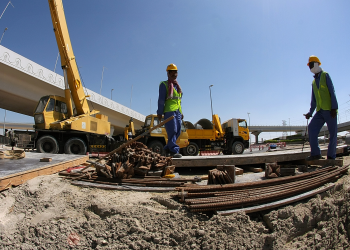
Conflict has limited impact on GCC projects
4 March 2026

The conflict in the Gulf has so far had a limited impact on projects in the GCC, with most sites operating normally since hostilities began on 28 February. In total, there are 6,738 projects under execution across the GCC, with a combined value of $951bn, according to regional projects tracker MEED Projects.
Contracting companies in the region say that the majority of their projects have not been affected by the conflict, and work has continued onsite without disruption. However, a few sites have temporarily halted operations, either at the request of the authorities or because they were considered at risk due to their strategic locations.
“Work has continued on our projects in Dubai. We have only one site where we were asked to stop work,” says a contractor overseeing projects across Dubai.
Another contractor operating across the UAE has also continued work but halted operations at one site following a nearby security incident. “We have one site that was close to a facility that was struck by debris, so we stopped work,” the contractor says.
Work has also continued on projects outside of the UAE. In Saudi Arabia and Qatar, contractors continue to work on projects, including strategically sensitive oil and gas projects. “We have continued work on most of our projects. There are a few sites where we have been asked to stop work, but this is the minority, and at most sites we are still working,” says an international contractor.
Supply chain concerns
While operations largely continue as normal, there are concerns that projects could be impacted later due to supply chain disruption. Ports in the region have been targets, and with international shipping passing through the Strait of Hormuz effectively stopping, there is an expectation that international shipments will be delayed. A related concern is the sharp spike in oil prices that will be inflationary.
How the disruption is handled will depend on the terms of specific contracts and on how companies choose to navigate the issue. The general consensus among contractors and lawyers is that it is not a force majeure event. Instead, it is general disruption that should be noted and documented, should there be cost or time implications later in the project.
One Dubai-based contractor said the strategy for now is to support clients as best as possible amid this uncertainty, while noting that there may be cost implications later.
The region has been considered a safe place for tourism, and also for the rich to live in a tax-free haven. The attacks on Dubai may change that perception, and that will impact the market in the future
International contractorFuture prospects
There are also concerns about the market’s future. There have been record levels of contract awards in recent years, and the worry is that the pace of contract awards may slow as uncertainty grips the market.
At the same time, some contract awards have been expedited. One Dubai-based contractor has signed two contracts since the conflict started. “We have signed deals that had been lingering for a while. I think the logic is that the client wants to lock in resources before prices or anything else changes,” says the contractor.
Longer term, it is expected that priorities for construction could shift. Contractors say that defence will become more of a priority for governments in the future, and so will strategic infrastructure projects such as power and water.
There might also be increased interest in making infrastructure more secure, which will add an additional layer of complexity for construction companies. “Facilities like data centres may be located underground in the future to protect them from attacks,” says a UAE-based contractor.
The outlook for other sectors is more challenged, particularly real estate and tourism.
“The region has been considered a safe place for tourism, and also for the rich to live in a tax-free haven,” says the international contractor. “The attacks on Dubai may change that perception, and that will impact the market in the future. Tourism is a key component of national visions across the GCC, so I think there will have to be a rethink of economic strategies for the future.”
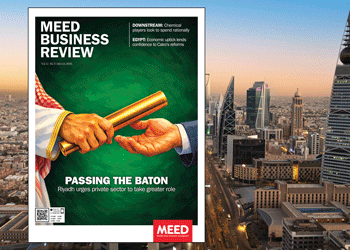
 READ THE MARCH 2026 MEED BUSINESS REVIEW – click here to view PDF
Riyadh urges private sector to take greater role; Chemical players look to spend rationally; Economic uptick lends confidence to Cairo’s reforms.
Distributed to senior decision-makers in the region and around the world, the March 2026 edition of MEED Business Review includes:
> RAMADAN: Data disproves the Ramadan slowdown story> INDUSTRY REPORT: Chemicals producers look to cut spending> INDUSTRY REPORT: Global petrochemical project capex set to rise until 2030> MARKET FOCUS: Egypt’s crisis mode gives way to cautious revival> LEADERSHIP: Delivering Saudi Arabia’s next phase of rail growth> INTERVIEW: Abu Dhabi’s Enersol charts acquisitions pathTo see previous issues of MEED Business Review, please click herehttps://image.digitalinsightresearch.in/uploads/NewsArticle/15855051/main.jpg -
Saudi Arabia’s private sector steps up
4 March 2026
 Commentary
Colin Foreman
EditorRead the March issue of MEED Business Review
At the Future Investment Initiative (FII) in Riyadh in 2019, a head of a regional family business voiced a guarded concern. The worry was that the scale and speed of the Public Investment Fund’s (PIF’s) projects were crowding out the private sector, leaving little space for traditional players to compete.
 Fast forward more than six years and much has changed. In 2026, the era of the PIF acting as the principal driver for development is giving way to a new phase where the private sector is taking a more active role.
At February’s Private Sector Forum (PSF), officials acknowledged that the kingdom’s priorities have evolved since 2016. This has led to reprioritisation, including the indefinite postponement of the 2029 Asian Winter Games in Trojena and the scaling back of projects such as The Line – moves framed as strategic adjustments amid global economic uncertainty.
With the 2034 Fifa World Cup and Expo 2030 on the horizon, alongside the rapid ascent of artificial intelligence, Riyadh is right to realign its capital. It is far more reassuring to see a government adapt its strategy to a changing global economy than to blindly pursue an outdated plan. The PIF, now managing $913bn in assets, is seeking ‘escape velocity’, allowing sectors such as tourism and real estate to stand independently.
The private sector is beginning to respond. Recent agreements signed at the PSF – ranging from King Salman International airport’s mixed-use developments to Roshn’s logistics partnership with Agility – show that local and regional firms are rising to the challenge.
There is still work to be done. Some sectors are more ready for investment than others, and scaling back projects has dented the confidence of some investors.
But overall, the tide is turning. The crowding out fears of 2019 have been replaced by a drive to get the private sector more involved, and while it will take time for momentum to fully develop, the process of passing the baton has already begun.
READ THE MARCH 2026 MEED BUSINESS REVIEW – click here to view PDFRiyadh urges private sector to take greater role; Chemical players look to spend rationally; Economic uptick lends confidence to Cairo’s reforms.
Distributed to senior decision-makers in the region and around the world, the March 2026 edition of MEED Business Review includes:
> RAMADAN: Data disproves the Ramadan slowdown story> INDUSTRY REPORT: Chemicals producers look to cut spending> INDUSTRY REPORT: Global petrochemical project capex set to rise until 2030> MARKET FOCUS: Egypt’s crisis mode gives way to cautious revival> LEADERSHIP: Delivering Saudi Arabia’s next phase of rail growth> INTERVIEW: Abu Dhabi’s Enersol charts acquisitions pathTo see previous issues of MEED Business Review, please click herehttps://image.digitalinsightresearch.in/uploads/NewsArticle/15842555/main.gif -
Etihad Rail conducts passenger rail trial run in Abu Dhabi
4 March 2026
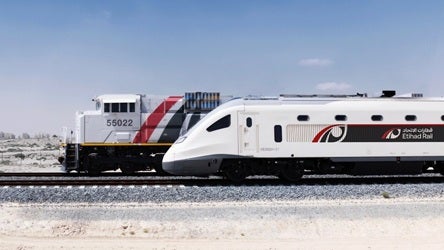
Etihad Rail, the UAE’s national rail operator, has carried out a passenger train trial on the line linking Al-Ghuwaifat station at the Saudi border with Al-Faya station in Abu Dhabi.
The test was organised in coordination with the Emergencies, Crises and Disasters Management Centre Abu Dhabi (ADCMC).
In a statement, ADCMC said the exercise is intended to help maintain essential services and offer safe, dependable transport options as conditions change.
It also highlighted the route’s strategic value in supporting movement for citizens and residents, while giving authorities the ability to activate alternate corridors in line with approved emergency response plans.
ADCMC added that running this route with Etihad Rail fits within a wider set of coordinated measures designed to reinforce logistical security, aligned with business continuity planning and multi-scenario risk management frameworks.
The UAE’s first national passenger rail network is due to begin operations soon, using the existing 900-kilometre (km) railway stretching from Al-Ghuwaifat to Fujairah.
The system will include 11 stations. Early services are expected to connect Mohammed Bin Zayed City (Abu Dhabi), Jumeirah Golf Estates (Dubai), University City (Sharjah) and Al-Hilal (Fujairah).
Other stops include Al-Sila’, Al-Dhannah, Al-Mirfa, Madinat Zayed, Mezaira’a and Al-Faya in Abu Dhabi, along with Al-Dhaid in Sharjah.
The passenger fleet is planned to include 13 trains, each with a capacity for up to 400 passengers.
Target travel times include 57 minutes between Abu Dhabi and Dubai, 105 minutes from Abu Dhabi to Fujairah, and 70 minutes from Abu Dhabi to Ruwais.
On the operations side, Etihad Rail and France’s Keolis agreed in October 2025 to form a joint venture to oversee passenger services.
In June 2022, Etihad Rail awarded Spain’s CAF Group a AED1.2bn ($327m) contract covering the design, manufacture, supply and maintenance of the passenger trains.
Freight services are already running, with operations spanning 11 terminals: Ruwais Inland Terminal, Ruwais Port, ICAD, Khalifa Port, Dubai Industrial City, Jebel Ali Port, Al-Ghail Dry Port, Fujairah Port, Ghuwaifat Terminal, Shah Terminal and Habshan Terminal.
READ THE MARCH 2026 MEED BUSINESS REVIEW – click here to view PDFRiyadh urges private sector to take greater role; Chemical players look to spend rationally; Economic uptick lends confidence to Cairo’s reforms.
Distributed to senior decision-makers in the region and around the world, the March 2026 edition of MEED Business Review includes:
> RAMADAN: Data disproves the Ramadan slowdown story> INDUSTRY REPORT: Chemicals producers look to cut spending> INDUSTRY REPORT: Global petrochemical project capex set to rise until 2030> MARKET FOCUS: Egypt’s crisis mode gives way to cautious revival> LEADERSHIP: Delivering Saudi Arabia’s next phase of rail growth> INTERVIEW: Abu Dhabi’s Enersol charts acquisitions pathTo see previous issues of MEED Business Review, please click herehttps://image.digitalinsightresearch.in/uploads/NewsArticle/15854553/main.jpg -
Iraq’s Atrush and Sarsang oil fields stop production due to Iran conflict
4 March 2026
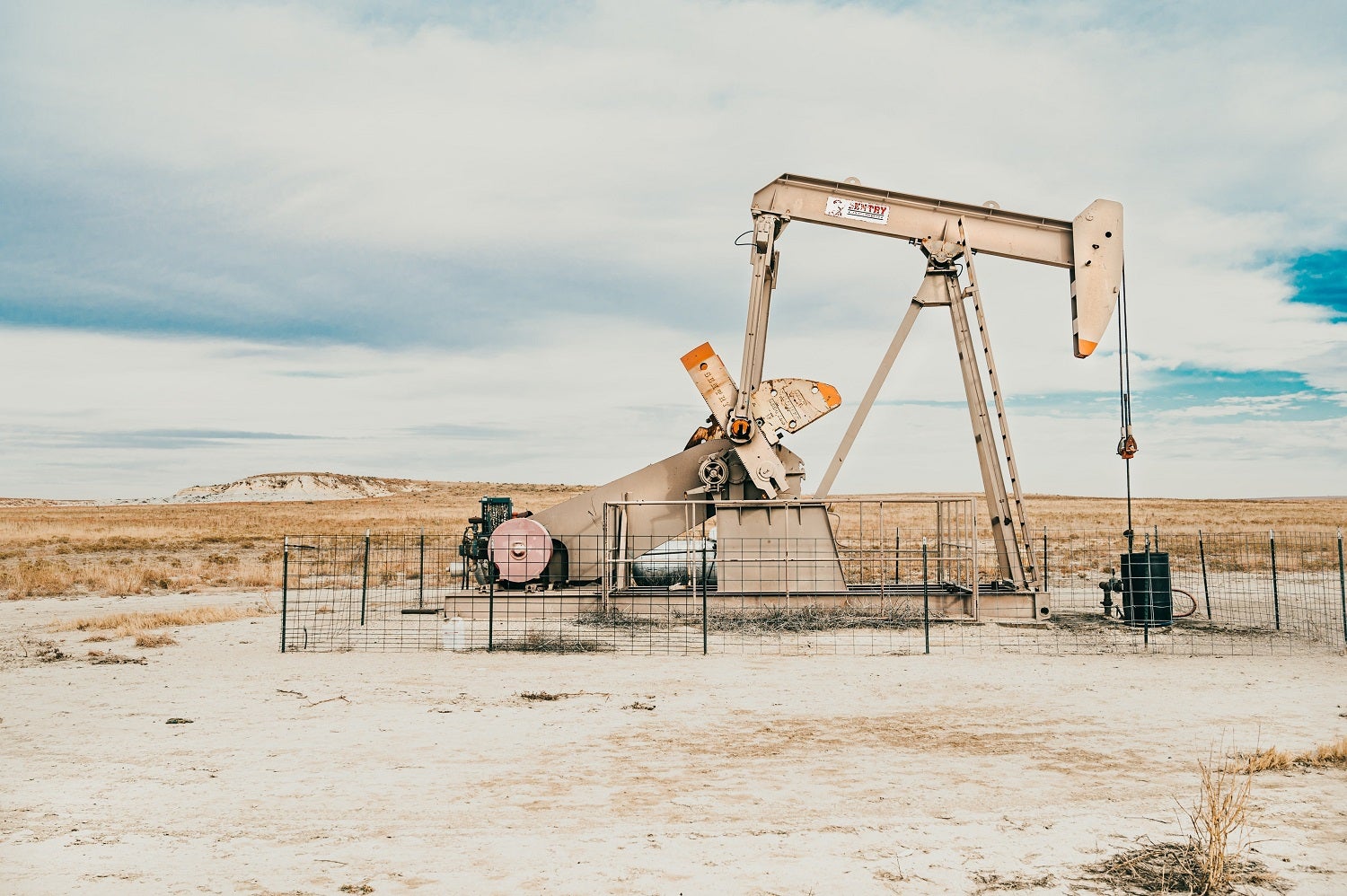
Production has stopped at the Atrush and Sarsang blocks in the Kurdistan Region of Iraq, and output has been slashed at key fields in the south of the country.
Canada-based ShaMaran Petroleum Corporation, which holds stakes in Atrush and Sarsang, said that production had stopped at both fields as a precautionary measure due to “the deterioration in the regional security environment” related to the US and Israel’s conflict with Iran.
ShaMaran holds a 50% working interest in the Atrush Block and an 18% working interest in the Sarsang Block.
Erbil-headquartered HKN Energy is also a partner in both fields.
Prior to the latest shutdown, in the company’s most recent quarterly report, it said that Atrush had produced an average of 29,400 barrels a day (b/d) over the three-month period, and Sarsang produced 18,200 b/d.
Due to the field closures in Iraqi Kurdistan, it has been reported that exports to the Turkish port of Ceyhan via the Iraq-Turkiye pipeline have fallen to zero while all of the crude produced in the region is used domestically.
Iraq’s Rumaila field, in the south of the country, is also being severely impacted by the ongoing conflict.
On 3 March, the decision was taken to completely stop production at the South Rumaila field, after Iran’s Islamic Revolutionary Guard Corps declared the Strait of Hormuz closed.
The Rumaila oil field, which is made up of North Rumaila and South Rumaila, is the second-biggest oil field in the world.
The oil field normally has the capacity to produce around 1.2 million b/d, but has cut production by at least 700,000 b/d due to overloaded storage.
Also in the south of the country, there have been cuts to production at the West Qurna-2 and Maysan fields.
Several other Iraqi oil and gas fields have shut down recently amid the US and Israel’s ongoing war with Iran.
The Shaikan field in northern Iraq’s semi-autonomous Kurdistan region has stopped production due to security concerns.
The field is operated by London-listed Gulf Keystone Petroleum, which has said in a statement that it had “temporarily shut-in production operations and has taken measures to protect staff in light of the developing regional security environment”.
Shaikan is one of Iraqi Kurdistan’s largest producing fields and produced more than 41,500 barrels a day in 2025.
The production stoppage at Shaikan came days after gas production was halted at Iraqi Kurdistan’s Khor Mor field on 28 February.
UAE-based Dana Gas stopped supplying power plants from the field due to the “abnormal situation and war taking place in the area”, according to a joint statement from the Kurdistan region’s natural resources and electricity ministries.
The gas halt is expected to cut electricity generation capacity by 2,500-3,000MW, with authorities seeking alternative supply to limit the shortfall, the ministries said.
 https://image.digitalinsightresearch.in/uploads/NewsArticle/15853790/main.jpg
 -
Iraq under pressure as oil exports slashed
4 March 2026
 Analysis
Wil Crisp
Oil & gas reporterIraq’s oil and gas sector is facing mounting challenges as production levels drop sharply amid the US and Israel’s ongoing war with Iran.
In the south of the country, oil exports have been paralysed by the closure of the Strait of Hormuz, and, in the country’s northern region of Iraqi Kurdistan, exports via the Iraq-Turkiye Pipeline (ITP) have fallen to zero.
Industry insiders are expecting the impact to be felt for some time to come.
On 2 March, Iran’s Revolutionary Guard Corps (IRGC) said the Strait of Hormuz is closed and warned that any vessel attempting to pass through will be attacked.
Ebrahim Jabari, a senior adviser to the IRGC’s commander-in-chief, said: “The strait is closed. If anyone tries to pass, the heroes of the Revolutionary Guard and the regular navy will set those ships ablaze.”
Stakeholders in Iraq’s oil and gas sector believe that the closure of the Strait by Iran is likely to have a long-term impact on companies operating in the south of the country.
One source said: “The outlook for the companies operating in the south is very bad right now.
“Potentially, a lot of companies in the south are going to be very anxious about the Strait of Hormuz for a very long time.
“There are hardly any other export routes they can use, and even if Iran’s military capabilities are substantially eroded, it’s going to be very hard to defend ships that are passing through there.”
On 3 March, the decision was taken to completely stop production at the South Rumaila field, after Iran’s IRGC declared the Strait of Hormuz closed.
The Rumaila oil field, which is made up of North Rumaila and South Rumaila, is the second-biggest oil field in the world.
The oil field normally has the capacity to produce 1.2 million barrels a day (b/d), but has cut production by at least 700,000 b/d due to overloaded storage.
Also in the south of the country, there have been cuts to production at the West Qurna 2 and Maysan fields.
Pipeline problem
The main export route for oil producers in Iraqi Kurdistan is the ITP.
This key pipeline, which reopened on 27 September last year, was closed again after production from the region dropped dramatically due to multiple oil fields closing as a safety precaution.
The fields that have temporarily stopped production include the Atrush and Sarsang fields.
Canada-based ShaMaran Petroleum Corporation, which holds stakes in both fields, said that the closures were due to “the deterioration in the regional security environment”.
On top of this, the Iraqi Kurdistan’s Shaikan field, which London-listed Gulf Keystone Petroleum operates, has stopped production due to security concerns.
Shaikan is one of Iraqi Kurdistan’s largest producing fields and produced more than 41,500 b/d in 2025.
“When it comes to the outlook for future oil exports, the calculation is completely different for these companies in Iraqi Kurdistan compared to the companies in the south of the country,” said one source.
“It’s possible that the pipeline will be easier to open in the near future than the Strait of Hormuz.
“It’s not so close to Iran and, so far, no damage has been sustained by the pipeline or the oil fields.
“With prices so high right now, everyone involved in exporting oil via the pipeline is highly motivated to see it restarted.”
The disruption to global oil and gas supplies caused by the Iran conflict has driven global oil prices up by around 15%, with Brent crude oil briefly rising above $85 a barrel on 3 March, the highest it has been since July 2024.
One source said: “These high oil prices are going to be a nightmare for consumers – but if you are an oil company, it’s an opportunity to make some serious money.
“However, you can only make that money if you can ship your oil – and a lot of oil companies in Iraq are going to struggle to do just that.”
Another source said: “There’s nothing technically wrong with the Kurdistan fields or the pipeline at the moment, and a lot of people believe they could be brought back online relatively quickly.
“The pipeline has only been shut down because of the oil field closures. All of the oil that is currently being produced in Iraqi Kurdistan is being used domestically.”
Key staff at Iraqi Kurdistan’s oil companies remain in the country, and the companies are planning quick restarts to cash in on current high prices, according to sources.
One said: “While many of these companies have plans in place for evacuations by land to Turkiye if the situation worsens, right now it seems more likely that things will stabilise and the companies will bring their fields back online soon.
“Workers have been told to stay inside – but many are used to the threat of drone and rocket attacks, and they are still going to the pub and living their lives as normal.”
Uncertain future
While many stakeholders in Iraqi Kurdistan believe the outlook for oil companies in the region is better than in the south of the country, significant challenges remain, and the situation could change dramatically due to the chaotic nature of the ongoing conflict.
One factor that is likely to remain challenging in Iraqi Kurdistan is logistics for key personnel.
One source said: “Airport closures and flight cancellations are likely to dog this region for some time to come, so getting people in and out is expected to remain difficult.”
Another concern is potential attacks on oil fields by militant groups in the region that are loyal to Iran.
“We’ve seen that Iran wants to lash out and do damage to oil assets in nearby countries – so an attack on key fields in Iraqi Kurdistan would not be a surprise,” the source added.
An attack on the ITP pipeline itself could dramatically change the outlook for Iraqi Kurdistan.
Drone attacks or rockets could potentially put the pipeline out of action for months, dealing a serious blow to the outlook for the region’s oil companies.
While the future for the oil sector in both federal Iraq and the Kurdistan region remains highly uncertain, it is clear to everyone involved that the disruptions to the country’s oil and gas sector are causing severe economic damage to the oil-reliant country.
On 3 March, Baghdad-based research organisation Eco Iraq Observatory estimated that Iraq was losing $128m a day after the shutdown of the Rumaila and Kurdistan fields.
It said a one-week shutdown could cost the Iraqi treasury nearly $900m, and a month could result in losses exceeding $3.8bn.
With Iraq relying on oil for more than 90% of government revenues, it is likely that the country will rapidly enter an economic crisis if it does not find a way to bring exports back online over the coming days.
https://image.digitalinsightresearch.in/uploads/NewsArticle/15853788/main.jpg