
Sabic appoints CEO as executive board member
18 April 2023
The new chief executive of Saudi Arabia Basic Industries Corporation (Sabic), Abdulrahman al-Fageeh, has been appointed as an executive board member at the company’s ordinary general assembly.
The move comes weeks after Al-Fageeh was named as the company’s chief executive.
Al-Fageeh succeeded Yousef al-Benyan, who resigned from his position as Sabic’s chief executive to assume his role as Saudi Arabia’s new education minister.
During the firm's ordinary general assembly meeting, the chairman of Sabic, Khalid al-Dabbagh, said: “The year 2022 was exceptional, with its fluctuations and challenges, yet Sabic managed to face the challenges by intensifying its development programmes to achieve record numbers in terms of production, sales and revenues that exceeded the achievements of the previous year.
“However, its net profits have not met its aspirations and have shrunk compared to last year due to the worsening global conditions.”
He added: "Over the past year, Sabic has been strengthening its integration activities with Saudi Aramco, which resulted in many achievements.
“Sabic marketed chemicals and polymers from Aramco’s joint ventures, supplying them to customers in China, Southeast Asia, Europe and the Middle East.
“The integration between the two companies extended to include several new projects planned to be established.
“Sabic continues to operate its business responsibly and profitably for the long term, incorporating environmental, social and governance (ESG) considerations into all investment decision-making processes and complying with these practices at all levels,” he added.
Sabic has successfully faced the challenging global conditions by investing in its collaborative relationship with Saudi Aramco, Al-Fageeh said. This led to the supply of the world's first commercial shipment of independently certified blue ammonia to South Korea.
“It is also focusing on strong capital discipline to enhance profitability and future growth opportunities, adding more investments to develop information technology infrastructure, benefit from digital transformation and rely on the effective use of Big Data tools to be more proactive and data-driven,” he added.
Al-Fageeh said that Sabic is pursuing plans to manage working capital through the Cash Cost Transformation programme, and is trying to achieve sustainable growth, adopt long-term strategic goals for sustainability and reduce emissions related to the life cycle of its products across the value chain.

Register for MEED's guest program now to access this article.
Exclusive from Meed
-
 Contractors submit final offers for Oxagon infrastructure
23 November 2026
-
 Three contractors compete for Kuwait LNG import project
23 November 2026
-
 Diriyah cancels construction contract for One Hotel
20 November 2026
-
 Bahrain keeps moving through a difficult year
20 November 2026
-
 Gulf needs $40bn of pipelines to bypass Hormuz
20 November 2026
All of this is only 1% of what MEED.com has to offer
Subscribe now and unlock all the 153,671 articles on MEED.com
- All the latest news, data, and market intelligence across MENA at your fingerprints
- First-hand updates and inside information on projects, clients and competitors that matter to you
- 20 years' archive of information, data, and news for you to access at your convenience
- Strategize to succeed and minimise risks with timely analysis of current and future market trends
Related Articles
-
Contractors submit final offers for Oxagon infrastructure
23 November 2026

Register for MEED’s 14-day trial access
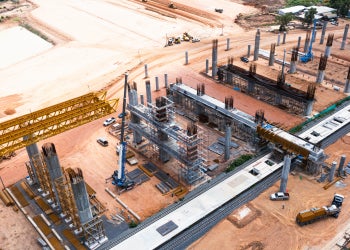
Contractors have submitted their best and final offers for an infrastructure package at Oxagon, Saudi Arabia’s industrial and logistics city at Neom.
The scope covers wet and dry infrastructure networks, civil works and limited earthworks. The wet infrastructure works include combined potable and firewater, irrigation, domestic wastewater, industrial wastewater and stormwater networks.
The dry infrastructure works include optional 33kV medium-voltage power networks running from primary substation switchgear to defined asset interface points. The package also covers 230/400V low-voltage networks serving street and pedestrian lighting, control networks, radio systems, smart city systems, Saudi Electricity Company and ICT active components, pumping stations and other public-realm loads.
The contractor will also install security systems, underground ICT pathways for transmission and distribution containment, security networks, service-provider networks and Interior Ministry fibre networks. The scope includes fibre-optic networks for Enowa power lines and wet-services instrumentation, control and automation packages.
The civil infrastructure works comprise roads and pavements, road furniture, signage, wayfinding and landscaping within the right-of-way.
Construction of the main Highway 55 and demolition of the existing highway are excluded, except for agreed under-Highway 55 crossings and defined tie-ins at approved interface points.
Bulk earthworks and rough grading will be carried out by others. The appointed contractor will undertake local trimming, trenching, backfilling, compaction and preparation to achieve issued-for-construction finish levels.
Tendering activity has intensified at Oxagon in recent months. Contractors have submitted best and final offers for a design-and-build contract to upgrade Highway 55 in the Oxagon region. The first phase includes 14 kilometres (km) of road with two lanes in each direction, one bridge and three interchanges, and is expected to take 22 months to complete.
Highway 55 connects the Red Sea coast with the mainland in northwestern Saudi Arabia and is currently the only road providing north-south connectivity between Duba and the Neom region.
Consultants also submitted bids on 31 October for a contract covering the concept design, feasibility study and route-alignment studies for a freight railway connecting the Port of Neom at Oxagon to Saudi Arabia Railways’ North-South Railway at the Al-Baseeta junction.
The proposed rail line is expected to extend for more than 400km.
https://image.digitalinsightresearch.in/uploads/NewsArticle/21712937/main.jpg -
Three contractors compete for Kuwait LNG import project
23 November 2026
Register for MEED’s 14-day trial access
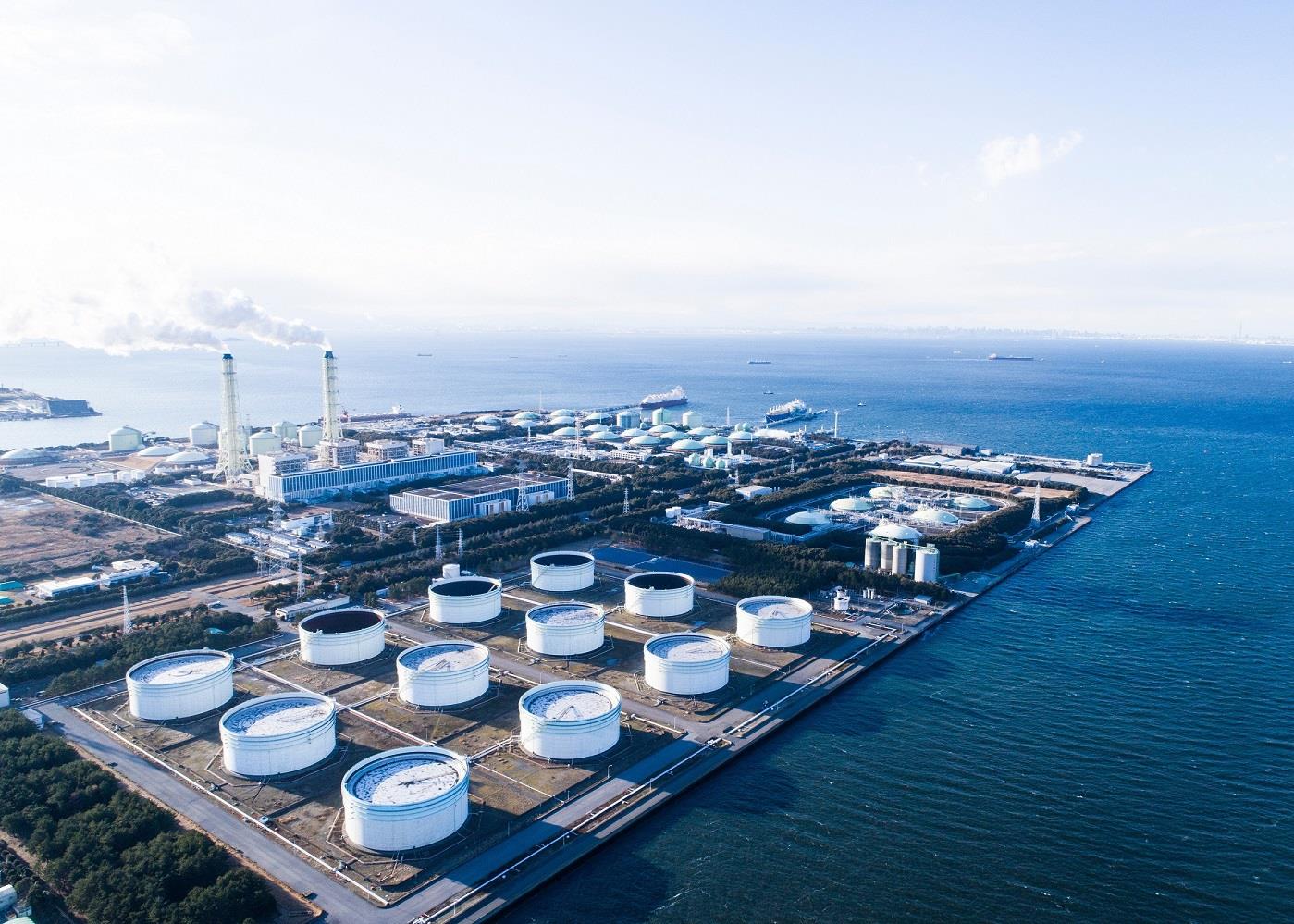
At least three companies are engaging with the tendering process for a planned project to develop a reliquefication facility for Kuwait’s Al-Zour liquified natural gas (LNG) import terminal, according to industry sources.
The project focuses on developing a boil-off gas (BOG) unit at the terminal and was tendered by state-owned Kuwait Integrated Petroleum Industries Company (Kipic).
The companies that sources say are currently engaging with the tender process are:
- Sinopec, China
- Hyundai Engineering Company (HEC), South Korea
- Tecnicas Reunidas (TR), Spain
A pre-tender meeting for the project on 18 October was attended by HEC, TR and India’s Larsen & Toubro (L&T), sources said.
However, L&T is no longer believed to be interested in participating in the tender.
Sinopec did not attend the pre-tender meeting, but is now planning to submit a bid for the project, sources said.
Originally, the project was tendered with a bid deadline of 22 December.
This deadline was extended on 10 November, when Kipic issued a statement citing a new deadline of 2 February 2027.
The project scope includes engineering, procurement and construction works, along with pre-commissioning, commissioning and performance testing services.
A BOG unit at an LNG facility captures, compresses and processes natural gas vapours that evaporate from cryogenic storage tanks, enabling the gas to be recycled back into the system rather than flared.
In April, MEED reported that contractors expected the project to be worth about $200m.
https://image.digitalinsightresearch.in/uploads/NewsArticle/21708088/main1912.jpg -
Diriyah cancels construction contract for One Hotel
20 November 2026
Register for MEED’s 14-day trial access
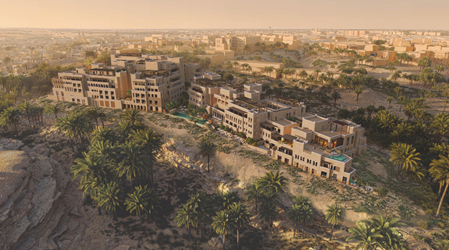
Saudi Arabia’s Diriyah Company has cancelled the main construction works contract for the One Hotel project in the Diriyah Two area of its masterplan.
The contract was awarded to a joint venture of India’s Ashoka Buildcon for Contracting and BEC Arabia Contracting Company, as MEED reported in February.
In a filing to the Bombay Stock Exchange, Ashoka Buildcon said: “Diriyah Company has now notified the joint venture that the said project has been cancelled due to internal reasons attributable to the employer.”
Ashoka Buildcon holds a 49% stake in the joint venture.
The project comprises a four-storey hospitality building with approximately 325 guest rooms, on a 31,000-square-metre plot. French engineering firm Egis was the project consultant.
The development follows several recent tender cancellations, particularly in Saudi Arabia’s water sector. Earlier this month, MEED exclusively reported that Water Transmission Company (WTCO) had cancelled tenders for Package B and the combined Packages C1 and C3 of its New Water Pipeline to Feed Riyadh City 2 scheme.
The packages, with a combined estimated value of about $556m, cover a long-distance potable-water transmission system intended to reinforce supplies to Riyadh. Bidders were notified of the decision in November.
Before that, Saudi Water Authority (SWA) also cancelled the tender for a 300-million-litres-a-day seawater reverse osmosis desalination plant in Yanbu.
India’s VA Tech Wabag announced in July 2025 that it had received the estimated $272m main contract for the project. However, on November 14, it said SWA had subsequently cancelled the tender through the Etimad government procurement platform, citing internal reasons.
MEED’s October 2026 report on Saudi Arabia includes:
> COMMENT: Saudi projects hold steady
> GOVERNMENT: Riyadh looks to reset its regional defence outlook
> ECONOMY: Conflict bolsters case for Saudi economic diversification
> BANKING: Saudi lenders readjust to lower lending and deposit climate
> UPSTREAM: Aramco upstream spending gathers pace
> DOWNSTREAM: Sabic steps up Saudi petchems investment
> POWER: Saudi Arabia’s power award activity slows
> WATER: Saudi water sector hits sharp slowdown
> CONSTRUCTION: Saudi construction defies the headwinds
> TRANSPORT: Saudi infrastructure pushes forward amid conflict
> DATABANK: Saudi data indicates project spending shiftTo see previous issues of MEED Business Review, please click herehttps://image.digitalinsightresearch.in/uploads/NewsArticle/21612890/main.png -
Bahrain keeps moving through a difficult year
20 November 2026
 Commentary
Colin Foreman
EditorWhen Formula 1 cars took to the grid at Malaysia’s Sepang International Circuit on 4 October, they were racing in the Bahrain Grand Prix. The race, originally scheduled for April, was postponed because of the regional conflict. Rather than lose its place on the calendar, Bahrain backed a one-off arrangement to stage it in Southeast Asia as the Formula 1 Gulf Air Bahrain Grand Prix in Malaysia.
The episode captures Manama’s approach to 2026. With the Strait of Hormuz closed and the country’s airspace shut for 40 days, Bahrain has sought alternative routes to keep its economy moving.
Gulf Air relocated its hub to Saudi Arabia’s Dammam airport during the airspace closure, taking passengers by road across the King Fahd Causeway, and expects to report higher revenues this year than in 2025. Aluminium Bahrain (Alba) is running at about 80% of capacity, with 300-350 trucks a day delivering alumina using ports in Oman and Saudi Arabia. The company has also agreed the $2.2bn acquisition of the Aluminium Dunkerque smelter in France.
Project activity has continued. Gulf Petrochemical Industries Company has appointed Fluor and Honeywell for its planned Sitra aromatics complex. Bids for the $1.5bn Sitra independent water and power project are under evaluation.
Construction contract awards reached $737m by the end of October, already exceeding the total for 2025.
In early November, Manama went ahead with the fourth edition of the Gateway Gulf investment forum, which produced more than 110 announcements valued at over $20bn.
The cost of the regional conflict is nonetheless steep. The Washington-based IMF expects the economy to contract by 11.3% this year. Public debt reached BD20.3bn ($54bn) at the end of August, and foreign exchange reserves have been supported by a BD2bn ($5.3bn) currency swap line from the UAE.
Lasting recovery will depend on factors that lie largely beyond Bahrain’s control. The IMF is forecasting real GDP growth of 13.9% in 2027, but this is contingent on the reopening of Gulf trade routes and a return to normal levels of energy production.
MEED’s December 2026 report on Bahrain includes:
> GOVERNMENT: Bahrain creaks under the strain of war
> BANKING: Manama’s lenders hold out for better times
> OIL & GAS: GPIC’s expansion project lifts Bahrain’s energy sector
> POWER & WATER: Bahrain’s utility pipeline shows signs of progress
> CONSTRUCTION: Bahrain construction activity remains subduedTo see previous issues of MEED Business Review, please click herehttps://image.digitalinsightresearch.in/uploads/NewsArticle/21389640/main.gif -
Gulf needs $40bn of pipelines to bypass Hormuz
20 November 2026
Register for MEED’s 14-day trial access
Gulf producers would need to spend about $40bn on new pipelines to route most of their oil exports around the Strait of Hormuz, according to the International Energy Agency (IEA).
The estimate, published in the agency's World Energy Outlook 2026, covers 6.8 million barrels a day (b/d) of export capacity that is either under construction or proposed in Saudi Arabia, the UAE and Iraq. The IEA calculates that the investment would add about $2 to the cost of each barrel exported from the Middle East.
The figure gives the clearest indication yet of the scale of the pipeline programme that could follow the 2026 crisis, which the IEA describes as the largest energy supply shock the world has faced. Oil volumes transiting the strait collapsed from 20 million b/d to an average of about 3 million b/d in March, April and May.
Project pipeline
The only scheme under construction in the IEA’s list is Abu Dhabi National Oil Company’s (Adnoc) West-East pipeline, which will add 1.8 million b/d of capacity. MEED has reported that the 520-kilometre line from Jebel Dhanna to Fujairah is being built in three sections. It is expected to double Adnoc’s crude export capacity through Fujairah when it is commissioned in 2027.
Separately, Adnoc expects to tender the main engineering, procurement and construction (EPC) contract for a new offshore line linking its Gulf processing islands to Jebel Dhanna, which will eventually connect to the West-East pipeline, by the end of the year.
The largest proposed project is a 3 million b/d expansion of Saudi Aramco’s East-West pipeline from Abqaiq to Yanbu on the Red Sea. Aramco president and CEO Amin Nasser has said engineering work began in the early days of the conflict. Saudi Energy Minister Prince Abdulaziz bin Salman said in October that the kingdom is looking to expand its crude export capacity by pipeline to as much as 10 million b/d.
In Iraq, the IEA counts two 1 million b/d lines from Haditha. One would run to Baniyas in Syria. The other would run to Fishkhabur, where it would link to the Iraq-Turkiye pipeline to Ceyhan. MEED has reported that a consortium led by Qatar’s UCC, including Chevron and TotalEnergies, is discussing terms for four interconnected pipeline packages worth about $5bn, with a contract expected to be signed before year-end. Iraq and Saudi Arabia are also considering reviving the 1,568km pipeline from Zubair to Yanbu, which was halted in 1990.
The agency says the new routes would not help all Gulf producers. Bahrain, Kuwait and Qatar would still depend on the strait for their exports.
Bypass flows
About 8 million b/d of bypass pipeline capacity is already available, according to the report. These lines carried about 2 million b/d in 2025 and ramped up to a peak of 6.8 million b/d during the crisis.
In the IEA’s Stated Policies Scenario (STEPS), only the Adnoc project is completed and bypass flows return to about 3 million b/d by 2035. If every existing, under-construction and proposed route were built and used to capacity, bypass flows could reach about 14.5 million b/d. Most Saudi and UAE exports, along with more than 60% of Iraq’s, would then avoid the strait.
The IEA’s new Low Hormuz Case adds higher output from producers outside the Gulf and demand cuts by importers. In that case, oil transit through the strait falls below 2 million b/d by 2035. Raising supply outside the strait would require about $200bn of additional upstream investment between 2025 and 2035.
Security caveats
The agency cautions that the pipelines would not remove the risk. Drone attacks temporarily shut the East-West pipeline in September, and any exports to the Red Sea must pass through the Bab Al-Mandab Strait. MEED has reported that Houthi attacks on Aramco’s Red Sea assets since July, including the Jizan refinery, have cost Riyadh that alternative route. Even in the Low Hormuz Case, the Middle East still exports nearly 15 million b/d in 2035, about 20% of global oil trade.
The IEA also notes that if the strait is at least partially open, Gulf producers would have few reasons not to use it. That could weaken the commercial case for the most expensive bypass schemes.
Execution risks are emerging in Iraq. MEED has reported that the Common Seawater Supply Project is behind schedule, largely because pipeline segments cannot easily be imported through the strait. The same problem could force contractors on new export lines to use more costly routes.
The IEA says there is no feasible bypass for liquefied natural gas (LNG). About 110 billion cubic metres of gas passed through the strait in 2025, most of it from Qatar. Adnoc is pursuing a 4 million tonne-a-year LNG export facility at Fujairah, fed by pipeline from Abu Dhabi. MEED has reported that it has selected three teams for front-end engineering and design work.
Cost pressures
The wider upstream picture is less encouraging for contractors. The IEA expects global upstream oil and gas investment to rise by about 1% to $550bn in 2026, with increases elsewhere largely offset by reductions in the Middle East. Its Upstream Capital Cost Index is forecast to rise by about 8% this year, which the agency says will raise the risk of overruns and delays.
The agency also warns that a resolution of the crisis could create a buyers’ market for oil and gas. Lower prices would test whether the security case for bypass pipelines survives once the strait reopens.
https://image.digitalinsightresearch.in/uploads/NewsArticle/21612651/main.jpg