
GCC projects market collapses in first five months of 2025
10 June 2025

Register for MEED’s 14-day trial access
The value of new awarded contracts in the GCC fell by almost 40% year-on-year in the first five months of 2025 as the market slowed on the back of the pause in Saudi gigaprojects spending and a fall in overall expenditure across the region.
In the period January-May, just $67bn of contracts were awarded across the GCC, a fall of 39% on the $110bn awarded over the same period in 2024, according to regional projects tracker MEED Projects.

Every market, bar Kuwait, experienced a year-on-year decline, with Saudi Arabia seeing the biggest total fall of $34bn. Conversely, the UAE has continued to perform well, almost matching its 2024 number, which has seen it take the lead in total project spending among the six states.
On a sector basis, the largest decreases were in the construction and oil segments, although all segments, save power and petrochemicals, witnessed a decrease in year-on-year contract values.
The sharp reduction in project awards follows two years of record spending as the region invested in large-scale oil and gas projects and the $1tn-plus gigaprojects programme.
However, with the completion of major contract awards on the former and the recalibration and rationalisation of the latter, the market appears to be running out of steam as it struggles to deliver the $600bn-plus amount of work let over the past three years.
The situation has been compounded by the recent fall in oil prices and uncertainty caused by the US’ imposition of global tariffs.

The slowdown in activity levels is most acute in the Saudi gigaprojects programme. After growing exponentially each year up to 2023 to almost $33bn, awards on the programme declined to just under $25bn in 2024 and have collapsed almost completely this year.
Just $4bn of work has been let in the first five months, which on a pro-rata basis would indicate that new gigaproject contracts could be just a quarter of the 2023 figure.
Of the main gigaproject clients, only Diriyah Company and Roshn Group have awarded any major contracts by value in 2025. The much-discussed programme has been hit by cost overruns and a lack of foreign investment, forcing the government to re-evaluate its spending priorities, particularly in light of event-driven projects such as the Riyadh 2030 World Expo and the 2034 Fifa World Cup, which must both be completed on time.

 READ THE JUNE 2025 MEED BUSINESS REVIEW – click here to view PDF
Gulf accelerates AI and data centre strategy; Baghdad keeps up project spending, but fiscal clouds gather; Banking stocks rise despite lower global oil prices
Distributed to senior decision-makers in the region and around the world, the June 2025 edition of MEED Business Review includes:
|
> AGENDA 1: Data centres churn investments
> AGENDA 2: Gulf seizes AI opportunities
> MEED TOP 100: Middle East stocks defy lower oil prices
> SAUDI ARABIA: Riyadh confirms capital expenditure cuts
> INTERVIEW: Mena crucial to Veolia’s growth plan
> GULF PROJECTS INDEX: Gulf projects index leaps 4.3%
> CONTRACT AWARDS: Region sees third month of weak awards activity
> ECONOMIC DATA: Data drives regional projects
> OPINION: Dealmaking trumps the Truman Doctrine
|

Register for MEED's guest program now to access this article.
Exclusive from Meed
-
 WEBINAR: Saudi Gigaprojects 2026 & Beyond
25 March 2026
-
 Diriyah tenders media district north offices
25 March 2026
-
 Trojena terminates Ski Village steel structure contract
25 March 2026
-
 Ashghal tenders more infrastructure contracts
25 March 2026
-
 War likely to boost oil and gas activity in North Africa
25 March 2026
All of this is only 1% of what MEED.com has to offer
Subscribe now and unlock all the 153,671 articles on MEED.com
- All the latest news, data, and market intelligence across MENA at your fingerprints
- First-hand updates and inside information on projects, clients and competitors that matter to you
- 20 years' archive of information, data, and news for you to access at your convenience
- Strategize to succeed and minimise risks with timely analysis of current and future market trends

Related Articles
-
WEBINAR: Saudi Gigaprojects 2026 & Beyond
25 March 2026
Webinar: MEED in association with HKA Webinar on Saudi Gigaprojects 2026 & Beyond
Tuesday 31 March | 1:00 GST | Register now
Agenda:
As Saudi Arabia’s gigaprojects move from vision to delivery, the kingdom’s projects market continues to evolve at an unprecedented pace. Billions of dollars’ worth of contracts are being awarded across infrastructure, real estate, tourism and critical industries, creating huge opportunities — but also new layers of complexity.
This MEED Live broadcast, in association with HKA, brings together market intelligence and practical expertise to help project stakeholders understand and navigate the risks in this dynamic landscape.
The session will open with Ed James, MEED’s head of content and research, who will deliver a comprehensive 30-minute outlook on Saudi Arabia’s gigaprojects and beyond. Drawing on MEED’s proprietary data and insights, Ed will highlight the scale of opportunity, sectoral trends and the finance shifts shaping the region’s project pipeline.
Following the outlook, Ed will host an in-depth fireside chat with Haroon Niazi, partner at HKA, focusing on the critical theme of contractual risk management. In a market defined by rapid delivery schedules, shifting finance conditions and complex stakeholder ecosystems, Haroon will share strategies for mitigating disputes, safeguarding margins, and building resilient contracts that can withstand uncertainty.
The broadcast will conclude with a live Q&A session, giving the audience the opportunity to engage directly with Ed and Haroon, and to take away actionable insights that will support their involvement in Saudi Arabia’s gigaprojects.
Hosted by: Edward James, head of content and analysis at MEED
 A well-known and respected thought leader in Mena affairs, Edward James has been with MEED for more than 19 years, working as a researcher, consultant and content director. Today he heads up all content and research produced by the MEED group. His specific areas of expertise are construction, hydrocarbons, power and water, and the petrochemicals market. He is considered one of the world’s foremost experts on the Mena projects market. He is a regular guest commentator on Middle East issues for news channels such as the BBC, CNN and ABC News and is a regular speaker at events in the region.
 Haroon Niazi, partner, construction claims and expert services lead, International·HKA
 Haroon is a dual-qualified Chartered Quantity Surveyor (FRICS) and barrister with over 18 years of experience in the construction industry. He leads HKA’s Construction Claims and Expert Services Line across Europe, the Middle East, and Africa, overseeing a team of more than 200 consultants with responsibility for strategy and delivering the growth plan. His practice focuses on the resolution of complex and high-value construction disputes. He has been appointed as a quantum expert and has delivered expert testimony in international arbitration and litigation, including in the Kingdom of Saudi Arabia. Haroon is known for his ability to analyse, quantify, and communicate the financial aspects of construction claims with clarity and independence.https://image.digitalinsightresearch.in/uploads/NewsArticle/16116602/main.gif
 -
Diriyah tenders media district north offices
25 March 2026
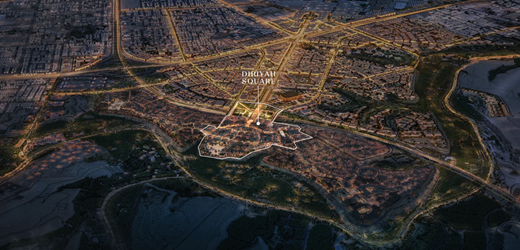
Saudi gigaproject developer Diriyah Company has tendered a contract inviting firms to bid for the construction of offices in the media district in the second phase of the Diriyah Gate development (DG2).
The tender was released in March, with a bid submission deadline of 27 April.
The scope covers the construction of five office plots comprising nine buildings, spanning over 50,000 square metres (sq m).
The tender follows the Diriyah Company’s award of an estimated SR2.5bn ($666m) contract to build the Pendry superblock package in the DG2 area.
The Pendry superblock encompasses the construction of a hotel, known as the Pendry Hotel, along with residential and commercial assets.
The project will cover an area of 75,365 sq m and is located in the northwestern district of the DG2 area.
In February, Diriyah Company awarded a SR717m ($192m) contract for the construction of the One Hotel, located in the Diriyah Two area of the masterplan.
The project has a gross floor area of over 31,000 sq m.
The Diriyah masterplan envisages the city as a cultural and lifestyle tourism destination. Located northwest of Riyadh’s city centre, it will cover 14 square kilometres and combine 300 years of history, culture and heritage with hospitality facilities.
 https://image.digitalinsightresearch.in/uploads/NewsArticle/16114767/main.png
 -
Trojena terminates Ski Village steel structure contract
25 March 2026
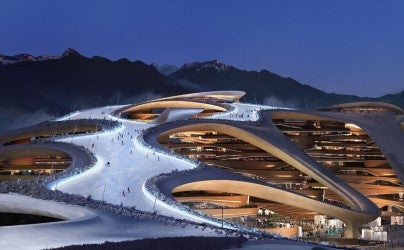
Neom has terminated its contract with Malaysian contractor Eversendai Corporation for the steel structural works on the Ski Village project in Trojena, Saudi Arabia.
In a statement published on its website, Eversendai said it had received an official notice that the termination will take effect from 26 March.
Eversendai is jointly executing the construction works on the project with Riyadh-based contractor Albawani. The contract was formally awarded in March 2024.
In July 2024, UAE-based steel producer Emirates Steel announced that it had signed a steel supply agreement for the Trojena Ski Village project.
In January this year, Saudi Arabia confirmed the postponement of the 2029 Asian Winter Games, which were scheduled to be held at Trojena.
Trojena had been chosen to host the event in October 2022.
This latest public announcement comes shortly after Neom cancelled contracts for the construction of the tunnel sections of The Line in northwest Saudi Arabia.
In a stock exchange announcement filed on 13 March, South Korean contractor Hyundai E&C said that Neom cancelled its contract on 29 December last year.
Hyundai E&C was executing the drill-and-blast section of The Line’s tunnels in a joint venture with Greece’s Archirodon and South Korean counterpart Samsung C&T.
These developments follow a wider strategic review of Neom last year, as Saudi Arabia reassesses priorities under its Vision 2030 programme. With tighter liquidity at the sovereign wealth fund level, resources are being redirected towards projects linked to the Fifa World Cup 2034, Expo 2030, and essential housing, healthcare and education initiatives.
https://image.digitalinsightresearch.in/uploads/NewsArticle/16114360/main.jpg -
Ashghal tenders more infrastructure contracts
25 March 2026
Qatar’s Public Works Authority (Ashghal) has issued two tenders covering infrastructure development in the northern section of the New Industrial Area and the Wadi Al-Banat area.
Ashghal issued the tender for consultancy services for the design of roads and infrastructure in the northern part of the New Industrial Area on 16 March. The bid submission deadline is 26 April.
The project is located in the Small and Medium Industries Area within Zone 81.
The scope includes developing road infrastructure for the northern expansion area, which spans more than 100 hectares, and improving Energy Street by upgrading three signalised intersections. It also includes new access roads and surface-water and groundwater networks.
The project also requires a masterplan study for surface-water and groundwater drainage covering an area of about 2,743 hectares.
The second tender covers the construction of roads and infrastructure in the Wadi Al-Banat area (Zone 70).
The tender was issued on 16 March, with a bid submission deadline of 12 May.
The scope includes the development of about 25 kilometres of roads.
The latest tender follows Ashghal’s announcement earlier this month of contract awards for 12 new projects, with a total value exceeding QR4.5bn ($1.2bn).
According to UK analytics firm GlobalData, Qatar’s construction industry is expected to expand by 4.3% in 2026, supported by investments in renewable energy and transportation infrastructure.
According to the Planning & Statistics Authority, Qatar’s construction value-add grew by 6.6% year-on-year in the first half of 2025.
GlobalData expects the industry to grow at an annual average growth rate of 4.6% in 2027-29, supported by investments in construction, energy and infrastructure projects.
https://image.digitalinsightresearch.in/uploads/NewsArticle/16114076/main.gif -
War likely to boost oil and gas activity in North Africa
25 March 2026
Register for MEED’s 14-day trial access
The US and Israel’s ongoing war with Iran is likely to boost oil and gas project activity in North Africa, as the high-price environment encourages the region’s national oil companies to push ahead with projects that will allow them to increase exports.
In recent weeks, international oil and gas prices have stayed consistently far higher than levels seen before the US and Israel launched their attack on Iran on 28 February, killing Iran’s Supreme Leader, Ali Khamenei.
For the past two weeks, the price of Brent crude has remained above $90 a barrel and has hit a high of more than $109.
Similarly, the Dutch TTF natural gas benchmark has stayed above €45 per megawatt hour and hit a high of more than €62, up from €31 prior to the 28 February attack.
Gulf disruption
Over the same period, the long-term outlook for oil and gas exports from the GCC and Iraq has dimmed significantly as disruption to transport through the Strait of Hormuz has continued and damage to key regional oil and gas infrastructure has increased.
Damage to infrastructure has included attacks on oil and gas fields, as well as strikes on oil refineries, storage facilities and gas processing plants.
This damage means that even if the disruption to the transport of oil and gas via the strait ends quickly, the war will have a long-term impact on oil and gas production and exports in the GCC and Iraq.
On 18 March, Saad Sherida Al-Kaabi, QatarEnergy’s CEO and minister of state for energy affairs, said Iranian strikes on Ras Laffan Industrial City – home to the world’s largest liquefied natural gas (LNG) production and export facility – had knocked out about 17% of its LNG export capacity.
He said the attacks were expected to cause an estimated $20bn in lost annual revenue and that repairs could take three to five years to complete.
In Bahrain, the Sitra oil refinery, which has a throughput capacity of 405,000 barrels a day (b/d), has been attacked and damaged, leading Bapco to declare force majeure.
Strikes also hit the Ras Tanura refinery in Saudi Arabia, as well as the Habshan gas processing complex in the UAE.
North Africa
The high-price environment and the long-term impact of the ongoing conflict represent an opportunity for North Africa’s oil-producing nations, especially the region’s biggest oil and gas exporters: Algeria and Libya.
Higher prices will dramatically increase government revenues for these countries, giving them more capacity to invest in infrastructure projects, while also providing a significant financial incentive to boost production in the short term.
Both Algeria and Libya are close to European markets that have relied on oil and gas from the GCC and Iraq, and neither country relies on the Strait of Hormuz to transport exports.
The two countries also appear to be seeking to accelerate oil and gas projects at a time of heightened demand from energy-importing nations to secure reliable supplies.
Libya push
Earlier this month, MEED revealed that talks were under way at Libya’s National Oil Corporation (NOC) to potentially launch a new licensing round to award some of the unawarded exploration blocks from the 2025 licensing round.
In the downstream sector, Libya also seems to be pushing to progress projects.
Recently, US-based KBR was awarded a contract by Zallaf Exploration, Production & Refining of Oil & Gas Company to provide project management and technical services for the South Refinery Project in Libya’s southern city of Ubari.
Algeria drive
Algeria is also advancing projects in the country’s oil and gas sector.
On 8 March, Algeria’s president signed a decree ratifying the development agreement for a $5.4bn oil and gas project in the country’s Illizi South block.
The decree approved a contract signed in Algiers on 13 October 2025 between Algeria’s national oil and gas company Sonatrach and Saudi Arabia’s Midad Energy North Africa.
The contract granted both companies the rights to explore and exploit hydrocarbons in the Illizi South area.
The total investment of about $5.4bn will be fully financed by Midad Energy, including approximately $288m allocated to the exploration phase.
Amid disruption to global LNG supplies from Qatar, Italy and Spain are currently in talks with Algeria in an effort to secure increased LNG shipments from the North African country.
Algeria’s prime minister has also received requests from Asian countries, including Vietnam, seeking to secure both gas and oil shipments.
It is unclear how much spare capacity Algeria has to supply LNG to new customers, as much of the country’s production is sold in advance under long-term supply agreements.
However, current market conditions are still expected to increase the country’s revenues significantly, as Algiers is likely to be able to command much higher prices in any new agreements.
While the ongoing war is expected to deepen the crisis for many companies operating in the GCC and Iraq oil and gas sector, the opposite could be true for companies established in Libya and Algeria.
Although in recent years these two countries have been viewed as having more challenging business environments than the UAE or Saudi Arabia, companies that have invested in building positions in North Africa’s oil- and gas-exporting states could be well placed to make windfall profits.
https://image.digitalinsightresearch.in/uploads/NewsArticle/16112991/main1320.png