
Power and water assets face strategic risk amid Iran attacks
4 March 2026

Register for MEED’s 14-day trial access
Recent attacks on energy infrastructure across the GCC have drawn renewed attention to the strategic importance of the region’s power and water sector.
On 2 March, Qatar’s Ministry of Defence announced that the country had come under two drone attacks launched from Iran.
One drone targeted a water tank owned by Mesaieed Power Plant, while another targeted a power facility in Ras Laffan Industrial City.
Elsewhere in the region, Saudi Aramco shut down its Ras Tanura refinery following a drone strike, while US cloud provider Amazon Web Services reported service outages after incidents at two data centres in the UAE.
Desalination reliance
Across the GCC, desalination now provides the majority of drinking water. In both Kuwait and the UAE, over 90% of potable water comes from desalination plants while in Saudi Arabia and Oman the figure is about 70% and 86%, respectively. While the geopolitical narrative tends to be dominated by oil, it is power and water infrastructure that is perhaps most critical to everyday life.
For instance, the Ras Al-Khair desalination plant in Saudi Arabia is among the largest operational facilities of its kind. According to MEED Projects, the plant produces about 1.1 million cubic metres a day (cm/d) of desalinated water.
Using a typical domestic water consumption benchmark of roughly 250 litres per person per day, that output is sufficient to supply potable water for around four million people.
Other large projects operate on a similar scale. The Yanbu phase 3 desalination plant produces roughly 550,000 cm/d, while the Shuaibah 3 independent water project (IWP), commissioned near Jeddah last year, has a capacity of 600,000 cm/d. Facilities of this scale can supply drinking water to populations of between two million and four million people.
The region’s reliance on large coastal desalination facilities also creates structural vulnerabilities, as most plants are located along the Gulf coastline to allow seawater intake.
Many are also integrated with thermal power plants, producing electricity and desalinated water at the same site. This configuration offers operational efficiencies, but concentrates critical infrastructure in a limited number of locations.
In February, Kuwait signed a 25-year energy conversion and water purchase agreement for the Al-Zour North independent water and power plant (IWPP) phases two and three. Once completed, the facility will add 2,700MW of power and 545,000 cm/d of desalinated water to Kuwait’s supply network
Separately, Kuwait’s Council of Ministers recently approved plans for the Kuwait Authority for Partnership Projects (Kapp) to tender the first phase of the Nuwaiseeb power and water desalination plant as an IWPP project. The first phase of the scheme will have an estimated power generation capacity of 3,600MW and a desalination capacity of 341,000 cm/d.
While several GCC states maintain strategic water storage reserves, these typically cover only a limited number of days of consumption in major cities. This makes water infrastructure one of the most sensitive categories of critical assets in the region.
Electricity infrastructure
Standalone electricity infrastructure is equally central to the functioning of GCC economies. Power generation supports residential demand, large industrial complexes, transport networks and digital infrastructure.
One example is the UAE’s Barakah nuclear power plant in Abu Dhabi, which has a total capacity of 5.6GW across four reactors. According to Emirates Nuclear Energy Corporation (Enec), the plant’s four APR1400 reactors produce 40TWh annually, which is equivalent to around 25% of the UAE’s electricity needs.
At the same time, Gulf electricity systems are becoming increasingly interconnected. The GCC Interconnection Authority grid links the national networks of member states and enables countries to exchange electricity during periods of peak demand or supply disruption.
As noted by WorldBank studies, desalination plants typically operate continuously because water storage capacity is limited relative to demand. Similarly, power grids must balance supply and demand in real time.
Amid ongoing missile and drone attacks on GCC states, Iran said on Monday that it was closing off the Strait of Hormuz, a critical maritime route. GCC countries import roughly 85% of their food, much of it transported by sea, while the strait handles about a fifth of global oil supply. Disruptions to power and water infrastructure across the region could have even more immediate consequences.
 READ THE MARCH 2026 MEED BUSINESS REVIEW – click here to view PDF
Riyadh urges private sector to take greater role; Chemical players look to spend rationally; Economic uptick lends confidence to Cairo’s reforms.
Distributed to senior decision-makers in the region and around the world, the March 2026 edition of MEED Business Review includes:
|
> RAMADAN: Data disproves the Ramadan slowdown story
> INDUSTRY REPORT: Chemicals producers look to cut spending
> INDUSTRY REPORT: Global petrochemical project capex set to rise until 2030
> MARKET FOCUS: Egypt’s crisis mode gives way to cautious revival
> LEADERSHIP: Delivering Saudi Arabia’s next phase of rail growth
> INTERVIEW: Abu Dhabi’s Enersol charts acquisitions path
|

Register for MEED's guest program now to access this article.
Exclusive from Meed
-
 Dubai tenders Al-Maktoum-Dubai South drainage scheme
19 October 2026
-
 Contractor wins $44m Morocco rail stations deal
19 October 2026
-
 Firms submit Dubai multibillion-dollar road scheme interest
19 October 2026
-
 Libya seeks offshore contractors for $8bn gas project
19 October 2026
-
 Bahrain awards Sitra 400kV grid contracts
19 October 2026
All of this is only 1% of what MEED.com has to offer
Subscribe now and unlock all the 153,671 articles on MEED.com
- All the latest news, data, and market intelligence across MENA at your fingerprints
- First-hand updates and inside information on projects, clients and competitors that matter to you
- 20 years' archive of information, data, and news for you to access at your convenience
- Strategize to succeed and minimise risks with timely analysis of current and future market trends
Related Articles
-
Dubai tenders Al-Maktoum-Dubai South drainage scheme
19 October 2026
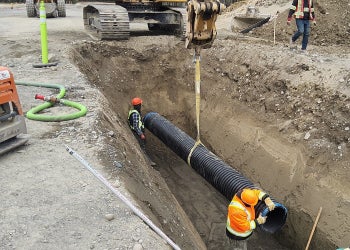
Dubai Municipality has invited contractors to submit bids by 5 November for the construction of a stormwater drainage system connecting Al-Maktoum Airport and Dubai South
The project, designated TF-06-C2, involves approximately 20 kilometres of pipelines with diameters ranging from 400mm to 3,000mm. The works will use deep trenchless construction and conventional open-cut methods.
The scheme is one of four projects, for which a project management consultancy (PMC) tender was issued earlier this month.
The tender for TF-06-S1 Supervision of Stormwater Drainage System Projects – Package 4 was issued on 6 October.
The consultancy covers the following projects:
- TF-06-C1: Construction of a stormwater pond connecting Al-Maktoum Airport and Dubai South
- TF-06-C2: Construction of a stormwater drainage system connecting Al-Maktoum Airport and Dubai South
- TF-07-C1: Construction of a stormwater drainage system on Sheikh Zayed Bin Hamdan Road connecting developers
- TF-24-C1: Connecting developers’ areas to the stormwater networks in Dubailand
The projects are part of Dubai Municipality’s wider Tasreef programme, intended to increase Dubai’s rainwater drainage capacity by 700% by 2033 and provide capacity for the emirate’s needs for the next 100 years.
Investment in the UAE water sector has been dominated by stormwater drainage and network resilience schemes this year, as Dubai Municipality advances procurement under its AED30bn ($8.1bn) Tasreef programme.
TF-07-C1
As previously reported, contractors are preparing to submit bids on 22 October for the main construction contract for TF-07-C1.
The project covers more than 100 million square metres between Sheikh Mohammed Bin Zayed Road and Emirates Road, and from Expo Road to Dubailand.
It will provide stormwater infrastructure and service connections for more than 20 private developers and Al-Yalayis 5, as well as supporting major roads in the Jebel Ali area. The construction scope includes a major gravity drainage system with pipeline diameters of up to 3,000mm.
TF-24-C1
Bids for TF-24-C1 were submitted on 1 October, with Nael Construction & Contracting, Al-Nasr Contracting Company and Al-Kharafi & Sons understood to be among the bidders.
The project will connect developers’ areas in Dubailand to the stormwater network. It includes 18km of stormwater drainage pipelines with diameters of up to 1,800mm and 3.5km of gravity sewer pipelines with diameters of up to 1,000mm.
As MEED understands, the main contract tender for TF-06-C1 has yet to be released.
https://image.digitalinsightresearch.in/uploads/NewsArticle/20746611/main.jpg -
Contractor wins $44m Morocco rail stations deal
19 October 2026
Morocco’s national railway operator, Office National des Chemins de Fer (ONCF), has awarded a MD437.6m ($44.5m) contract to local firm Jet Contractors to build five railway stations along the Benguerir-Marrakech corridor.
The project forms part of the wider Kenitra-Marrakech high-speed rail development programme.
Jet Contractors will build one high-speed rail station and four regional express rail stations.
These include two stations in Benguerir, and one each at Sidi Bou Othmane, Sidi Ghanem and Marrakech Stadium.
The scope of work includes construction and fit-out of the stations and associated infrastructure, including concrete structures, platforms, ancillary facilities, passageways, circulation areas and connection zones within the stations.
It also covers architectural finishing works; testing and commissioning of electrical networks; and all mechanical, electrical and plumbing services.
The contractor will also provide all safety, security and protection systems, including alarms, fire detection and firefighting systems, and surveillance systems.
Morocco awarded multiple civil works contracts in 2024 to international and local firms to build its Kenitra-Marrakech high-speed railway line.
The rail project is part of a $37bn strategy to connect more of Morocco’s cities, ports and airports by rail. It will stretch 375 kilometres from Kenitra on the northwest coast to Marrakech in the south.
The project is divided into seven lots, each measuring 36km to 64km. The rail link will pass through cities including Rabat, Sale and Casablanca.
The link will extend the Al-Boraq high-speed rail line between Tangier, Rabat and Casablanca. The line began operating in 2018 and was Africa’s first high-speed railway system.
https://image.digitalinsightresearch.in/uploads/NewsArticle/20745963/main.jpg -
Firms submit Dubai multibillion-dollar road scheme interest
19 October 2026
Register for MEED’s 14-day trial access
Contractors submitted expressions of interest on 10 October for a design-and-build contract for a multibillion-dollar new road that will run parallel to Sheikh Zayed Road.
Dubai’s Roads & Transport Authority (RTA) held an online meeting after the submissions to prepare for the prequalification phase of tendering, expected to start in a few weeks.
The scope covers about 30 kilometres (km) of works.
These include about 15km of viaduct along First Al-Khail Street and more than 14.5km of bridge ramps, along with other associated infrastructure works.
The RTA floated the expression of interest notice to contractors in early September.
The project is another significant initiative aimed at alleviating pressure on the existing Sheikh Zayed Road section from Hadiqa Street to Hessa Street.
Dubai has previously explored bold concepts to expand capacity on Sheikh Zayed Road, including proposals to introduce double-decker sections to add extra lanes without widening the existing corridor.
The idea was discussed in the context of rising congestion and limited right-of-way along one of the city’s busiest arterial roads, with elevated decks potentially carrying through traffic while existing at-grade lanes served local access.
The plans ultimately became standalone schemes, with subsequent efforts focusing instead on corridor-wide upgrades, interchange improvements and complementary public transport expansions to manage demand more sustainably.
The latest project aligns with Dubai’s continued investment in upgrading and expanding its road network to keep pace with rapid population growth and rising commuting demand.
Planning for growth
Dubai launched the 2040 Urban Master Plan in March 2021, referencing studies indicating that the emirate’s population will reach 5.8 million by 2040, up from 3.3 million in 2020. The daytime population is set to increase from 4.5 million in 2020 to 7.8 million in 2040.
In December 2022, Sheikh Mohammed Bin Rashid Al-Maktoum, Vice President and Prime Minister of the UAE and Ruler of Dubai, approved the 20-Minute City Policy as part of the second phase of the Dubai 2040 Urban Master Plan.
In addition to the road projects, the RTA’s Dubai Metro Blue Line extension and Dubai Metro Gold Line form part of Dubai’s plans to improve residents’ quality of life by cutting journey times, as outlined in the policy.
The policy aims for residents to have 80% of their daily requirements within a 20-minute journey, on foot or by bicycle. This goal will be achieved by developing integrated service centres with all necessary facilities and increasing population density around mass transit stations.
 READ THE OCTOBER 2026 MEED BUSINESS REVIEW – click here to view PDF
Industry and logistics drive development at Neom; Saudi Arabia’s investment priorities realign amid conflict; MEED’s 2026 power developer ranking.
Distributed to senior decision-makers in the region and around the world, the October 2026 edition of MEED Business Review includes:
> AGENDA: Oxagon takes centre stage at Neom> MARKET FOCUS: Saudi projects hold steady> INDUSTRY REPORT: MEED’s 2026 GCC power developer ranking> LEADERSHIP: The future city does not need to hang above the groundTo see previous issues of MEED Business Review, please click herehttps://image.digitalinsightresearch.in/uploads/NewsArticle/20745908/main.jpg -
Libya seeks offshore contractors for $8bn gas project
19 October 2026
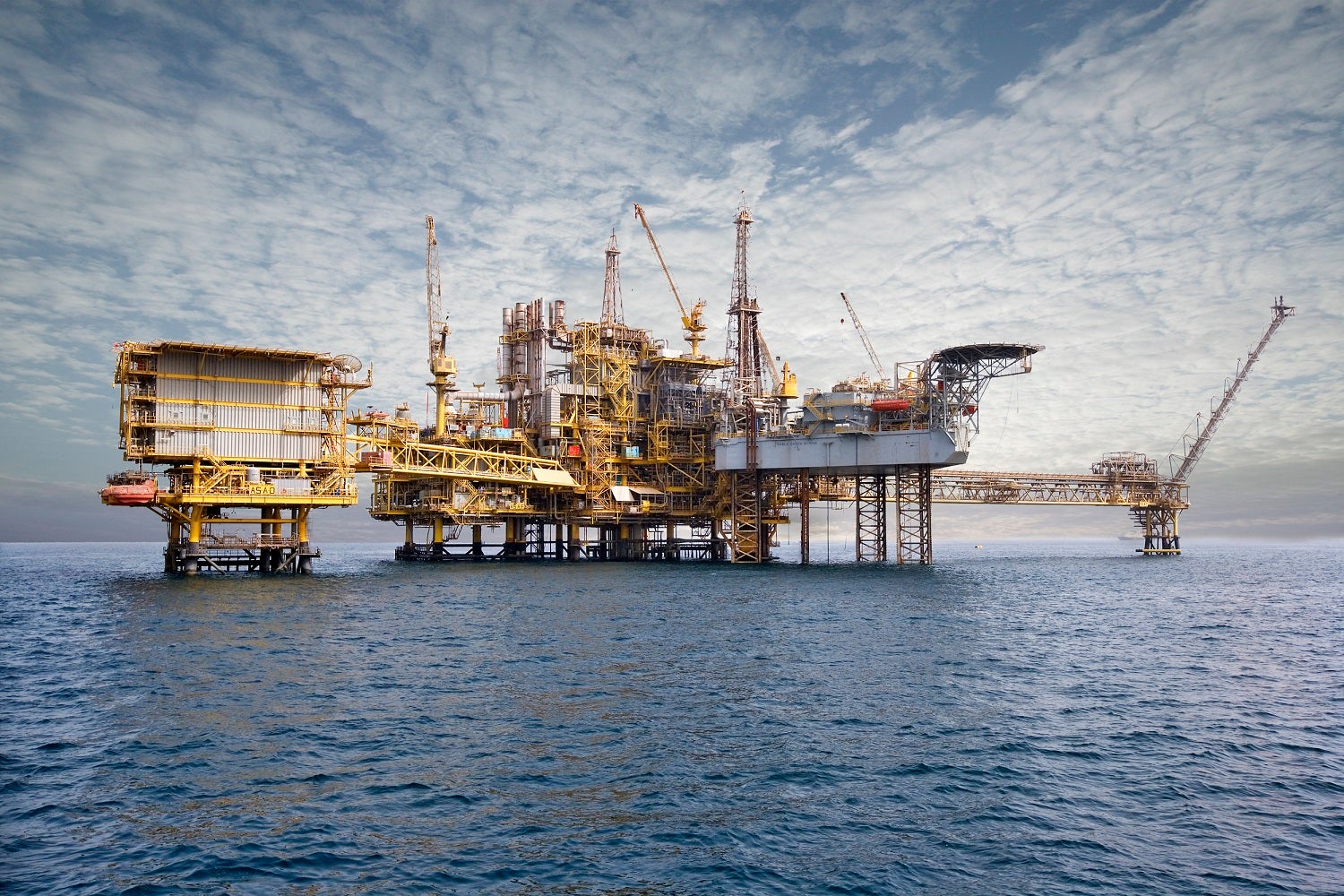
Libya’s Mellitah Oil & Gas Company (MOG) has invited companies to prequalify for a major offshore package as part of its Mellitah Complex Expansion & CO2 Management Integrated Development Project, which is estimated to be worth about $8bn.
The package is estimated at around $3bn and focuses on developing offshore pipelines and subsea systems for the “E” Offshore Installation Project and CO2 project.
The deadline to submit prequalification documents is 5 November. The contract will use the engineering, procurement, installation and commissioning (EPIC) model.
MOG is a joint venture of Libya’s National Oil Corporation and Italian oil and gas company Eni.
This is not the first time MOG has invited submissions for the offshore pipelines and subsea systems package. The company originally launched a prequalification process for the EPIC contract in 2021, but the project experienced delays and the process was eventually cancelled. The prequalification process was restarted nearly three years later, but it was also ultimately abandoned.
Complex expansion
As part of the Mellitah Complex Expansion & CO2 Management Integrated Development Project, two offshore structures – Structure A and Structure E – will be developed in Libya’s offshore block NC 41.
Structure A is in the central-western part of the area, about 80 kilometres (km) from the Libyan coast, with a water depth of 95-105 metres.
Structure E is located in the central-eastern part of the area, about 130km from the Libyan coast, in a water depth of 205-235 metres.
The scope of the wider project includes:
- A new wellhead platform installed in 96 metres of water as part of the development of Structure A
- A new production platform installed in about 220 metres of water depth as part of the development of Structure E
- Modification of the existing Sabratha platform
- Sealines and subsea systems for structures A and E
- Upgrading the existing onshore Mellitah complex
Project contract awards
In June 2024, MOG awarded an offshore engineering, procurement and construction (EPC) contract worth €1.2bn ($1.28bn), which was part of the Mellitah Complex Expansion & CO2 Management Integrated Development Project.
The contract was awarded to a consortium of three Italian companies: Rosetti Marino, Kerry Project Logistics and Gruppo Antonini.
In a statement, Rosetti Marino said its share of the project contract was worth €400m ($428m), comprising 33% of the total contract value.
Rosetti Marino said its scope of work includes EPC and load-out activities to deliver the topside of the approximately 6,000-tonne gas production wellhead platform, named WHP-A, to be installed off the coast of Libya.
Project setbacks
During 2023 and 2024, several setbacks affected the Mellitah Complex Expansion & CO2 Management Integrated Development Project.
In November 2023, MOG restarted the prequalification process for an upstream offshore package worth an estimated $700m.
The project scope involves modifications to the offshore Sabratha platform at the Bahr Essalam field.
Less than two months later, MOG restarted prequalification for a second package as part of the integrated development project.
The scope of the second package covers key sealine and subsea systems.
No reason was given for restarting the prequalification process for two of the project’s packages.
https://image.digitalinsightresearch.in/uploads/NewsArticle/20738707/main.jpg -
Bahrain awards Sitra 400kV grid contracts
19 October 2026
Bahrain’s Electricity & Water Authority (EWA) has awarded two contracts related to the establishment of new Sitra 400kV grid substations, according to sources.
The first contract covers transformer and reactor works including the supply and installation of three 400 kV, 500 MVA power transformers along with associated reactors. The package covers design, manufacturing, supply, transportation, erection, testing, and commissioning.
Switzerland-headquartered Hitachi Energy has been appointed as the main contractor for these works after submitting a bid of BD17.8m ($47.1m) in April, as reported by MEED.
Germany’s Siemens Energy previously submitted the only other offer of BD23.9m ($63.2m).
The second contract involves 400kV and 220kV feeder cable works for the same Sitra 400kV grid substations. The package covers the design, manufacture, supply, transportation, installation, testing and commissioning of 400kV and 220kV feeder cables.
Earlier this year, MEED reported that three South Korean companies had made offers for the feeder cable packages, with Iljin Electric submitting the lowest bid of BD35m ($92.7m).
It is understood that the contractor has now been appointed to carry out the main works for the project.
The works are part of the broader “Establishment of New 400 kV Grid Substations & Subsystem” initiative, aiming to bolster the power grid’s capacity and support integration with new power and water infrastructure at Sitra.
In September 2025, Siemens Energy won a contract worth BD48.1m ($127m) to build a 400kV transmission substation in Sitra to provide the transmission link for the planned Sitra independent water and power plant (IWPP), which is expected to generate at least 1,200MW of electricity.
Bahrain’s fourth IWPP is being procured by EWA under a public-private partnership framework for 20-25 years.
The combined-cycle gas turbine plant includes a seawater reverse osmosis desalination facility, which will have a production capacity of 30 million imperial gallons a day of potable water.
Last month, MEED exclusively reported on proposed first-year tariffs for the project following the opening of financial bids. Saudi Arabia’s Acwa submitted the lowest offer for both the power and water components.
This includes a first-year power tariff of BD17.1652 ($45.65) a megawatt-hour and a water tariff of BD0.4915 ($1.307) a cubic metre.
Abu Dhabi National Energy Company (Taqa) submitted a first-year power tariff of BD17.48190 ($46.49) a megawatt-hour and a water tariff of BD0.54285 ($1.444 ) a cubic metre.
The main contract for the build-own-operate project is expected to be awarded by the end of the year.
https://image.digitalinsightresearch.in/uploads/NewsArticle/20673857/main.jpg