
Finance in place for Saudi wastewater package
13 March 2023
Saudi Arabia’s main potable water and wastewater collection and treatment company, National Water Company (NWC), and a team of local companies, Miahona and Thabat Construction Company, have reached financial close on a long-term operation and maintenance (LTOM) contract.
The Mecca City LTOM project scope includes rehabilitation works and operation and maintenance services for two sewage treatment plants, Hadda and Arana, with a total wastewater treatment capacity of 500,000 cubic metres a day.
The LTOM contract is worth SR392m ($104m). The Miahona and Thabat team offered a levelised tariff of SR0.21 a cubic metre (roughly $0.057/cm) for the contract.
The brownfield concession uses a rehabilitate-operate-transfer (ROT) model covering a 10-year period.
NWC’s LTOM programme aims to “extend the remaining useful lives of the assets, ensure high-quality sewage treatment and minimise the impact on the local communities and the environment”.
A team comprising US/India’s Synergy Consulting, Germany-headquartered Fichtner and the UK’s Clifford Chance is advising NWC on the project.
The entire LTOM programme comprises nine packages, covering different areas across the kingdom, which will be tendered separately.
In August last year, NWC unveiled a five-year, SR108bn investment plan for the kingdom’s water infrastructure.
The projects are distributed across 13 administrative regions in the kingdom. They aim to expand the coverage of water and wastewater networks and increase the capacity of sewage treatment plants across the country.
The latest five-year plan allocates an estimated SR39bn to Mecca, SR16bn to the Eastern Province and SR14.2bn to Riyadh.
In 2020, NWC announced a project spending plan of SR145bn between 2020-25.
These programmes aim to boost water security and supply in the kingdom in response to increasing demand driven by population growth and expanding economic activities.


Register for MEED's guest program now to access this article.
Exclusive from Meed
-
 Consortium closes financing on 900MW Egypt wind farm
17 November 2026
-
 Progress stalls on Libya’s Al-Atshan gas project
17 November 2026
-
 Oman’s data centre push puts power to the test
17 November 2026
-
 Wison breaks ground on Abu Dhabi’s Habshan train 7
16 November 2026
-
 Meraas launches new Solaya phase in Jumeirah
16 November 2026
All of this is only 1% of what MEED.com has to offer
Subscribe now and unlock all the 153,671 articles on MEED.com
- All the latest news, data, and market intelligence across MENA at your fingerprints
- First-hand updates and inside information on projects, clients and competitors that matter to you
- 20 years' archive of information, data, and news for you to access at your convenience
- Strategize to succeed and minimise risks with timely analysis of current and future market trends
Related Articles
-
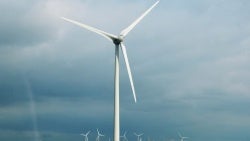
Consortium closes financing on 900MW Egypt wind farm
17 November 2026
A developer consortium led by France’s Engie has announced financial close on a 900MW wind farm near Ras Shokeir in Egypt’s Gulf of Suez.
Known as Gulf of Suez Wind Farm 3, the project is being developed on a build-own-operate basis under a 25-year power purchase agreement with Egyptian Electricity Transmission Company.
The consortium comprises Engie (35%), Egypt’s Orascom Construction (25%) and Aeolus (40%), an African renewable energy independent power project platform of Toyota Tsusho Corporation.
Construction began in June, and the project will connect to the grid in three phases. The first 300MW is forecast to enter commissioning in January 2028, while the full 900MW capacity is scheduled to be operational in summer 2028.
The project is the consortium’s third wind farm in Egypt. Its two existing operational wind farms – Red Sea Wind Energy and Ras Ghareb – have a combined capacity of 912.5MW. Once the new facility is fully operational, the consortium’s wind power capacity in the country will reach 1.8GW.
The facility will also become Engie’s largest onshore wind farm globally. Orascom Construction will execute all civil and electrical works for the balance of plant as well as supply certain local components.
Financing for the project is being provided on a non-recourse basis by a group of development finance institutions and commercial lenders. These include the Japan Bank for International Cooperation, France’s Proparco, the Netherlands-based FMO, Societe Generale, Credit Agricole Corporate & Investment Bank and Germany’s KfW Ipex-Bank.
Commercial lender financing is covered by Nippon Export & Investment Insurance (Nexi). HSBC Bank Egypt is acting as the working capital facility bank and onshore security agent. Equity bridge loans are being provided by KfW for Engie, Mizuho for Aeolus, and FMO and British International Investment for Orascom Construction.
The project supports Egypt’s long-term energy strategy, including targets of more than 42% renewable energy by 2030 and 65% by 2040.
Once operational, the wind farm is expected to generate enough electricity to supply more than 1.4 million Egyptian households and reduce carbon emissions by approximately 2 million tonnes a year.
https://image.digitalinsightresearch.in/uploads/NewsArticle/21464975/main.jpg -
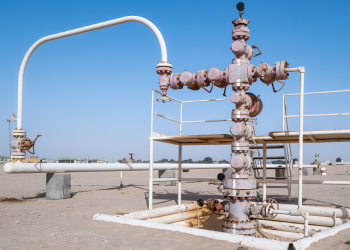
Progress stalls on Libya’s Al-Atshan gas project
17 November 2026

The project to develop Libya’s Al-Atshan gas field is stalling amid ongoing budget problems at state-owned Zallaf Oil & Gas, according to industry sources.
The project comprises several packages focused on developing infrastructure for the field, including a central processing facility (CPF), an export pipeline, a gas receiving station and a residential facility.
In 2025, companies submitted prequalification documents for the project’s geotechnical and geophysical surveys.
Also in 2025, London-based Shell signed a conditional agreement with Libya’s National Oil Corporation (NOC) to develop the Al-Atshan field and other fields that the state-owned oil company controls.
Libya’s NOC said on 7 July 2025 that it had signed a memorandum of understanding (MoU) with Shell, allowing the international oil company to evaluate hydrocarbon prospects and conduct a comprehensive technical and economic feasibility study to develop Al-Atshan.
Since then, there has been no further progress on the project as the company responsible for developing the field, Zallaf Oil & Gas, has struggled with financial problems.
Zallaf Oil & Gas is 100% owned by NOC, which is also facing ongoing financial difficulties.
In October, NOC published a statement saying that Libya’s central bank had withheld government-approved allocations, leaving it struggling to meet payment obligations and carry out development and maintenance work.
It said: “The central bank has withheld government-approved budget allocations, failing to disburse them to the NOC.
“This non-disbursement has severely constrained the execution of the NOC’s operational plans and strategic programmes, specifically impairing its ability to fulfil financial commitments across the oil sector, sustain crude production stability, and advance critical development and maintenance initiatives.”
In 2026, interest in North African oil and gas assets has increased amid continued disruption to shipping through the Strait of Hormuz, a key export route for some of the Middle East’s biggest oil and gas exporters.
Flows through the Strait have been disrupted by a regional war that was triggered by US and Israeli attacks on Iran on 28 February.
Countries negatively impacted by the disruption include Kuwait, Iraq, Saudi Arabia, the UAE and Qatar.
Amid the ongoing disruption to oil and gas exports from these countries, some North African officials have promoted their oil and gas sectors as reliable alternative suppliers.
In August, Libya’s Oil and Gas Minister Khalifa Abdel Sadig told a conference in Norway that Libya could be a “key player in providing energy security solutions” to the European Union.
https://image.digitalinsightresearch.in/uploads/NewsArticle/21458768/main.png -
Oman’s data centre push puts power to the test
17 November 2026
 Commentary
Colin Foreman
EditorOman’s push to attract data centres is gathering pace. A consortium led by Mubbadrah Investment plans an artificial intelligence (AI) data centre campus of up to 400MW, with an initial investment estimated at $3bn. US developer Crusoe has expressed interest in taking capacity. UK-based Yamna is also set to sign an agreement for a large-scale AI data centre in Salalah, with a first phase worth more than £1bn ($1.3bn). Both projects were announced during Sultan Haitham bin Tarik’s state visit to the UK.
Hydrom has also tied its fourth hydrogen auction to data centres in Dhofar. Interest in the third-round auction, which produced two awards in Duqm, was lower than in the first. Slower regulation in Europe and delays in South Korea and Japan have left developers struggling to sign offtake agreements, so Hydrom is looking for demand at home.
Power links these developments. Oman’s grid cannot yet supply hyperscalers needing 100MW or more. Hydrom’s answer is a captive blend of renewables, batteries and up to 20% hydrogen firming. The Mubbadrah consortium plans to use grid power alongside a 400MW solar plant with battery storage, to be developed by consortium member O2 Global Energy.
Solar and batteries are proven and getting cheaper. Firming with hydrogen gensets costs more, and investors will scrutinise Hydrom’s claim that its package is price-competitive. The expression of interest stage, which closes in February 2027, will be the first test.
The wider Gulf faces the same choices. States across the region are competing for AI and cloud-computing investment. Most grids still depend heavily on natural gas, while hyperscalers with net-zero targets demand cleaner supply.
Hydrom is right to look for buyers at home. The test is whether data centre developers choose hydrogen-firmed power when solar and batteries alone are on offer.
https://image.digitalinsightresearch.in/uploads/NewsArticle/21447589/main.jpg -
Wison breaks ground on Abu Dhabi’s Habshan train 7
16 November 2026
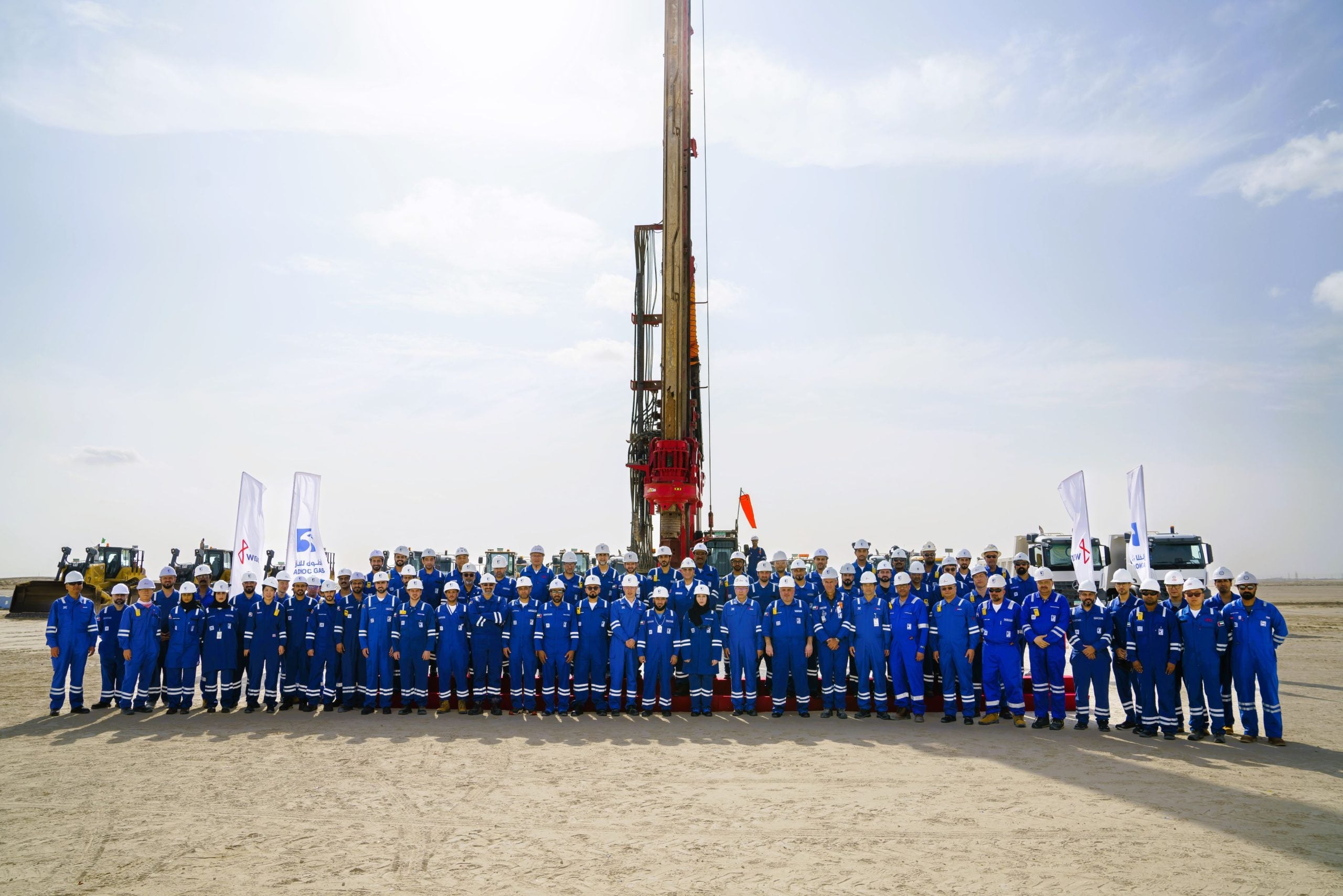
China-based Wison Engineering has held a groundbreaking ceremony for the second phase of Adnoc Gas’ Rich Gas Development (RGD) programme. The project covers the engineering, procurement and construction (EPC) of a seventh gas-processing train at the Habshan complex in Abu Dhabi.
Adnoc Gas, the natural gas processing subsidiary of Abu Dhabi National Oil Company (Adnoc Group), awarded Wison Engineering the $3.9bn EPC contract for the Habshan 7 project in August.
Wison said the RGD phase 2 contract is the largest in its history. Its scope includes gas pipelines, separation and condensate stabilisation units, acid-gas removal units and deep natural gas liquids (NGL) recovery units. The work also includes a 220kV switch station, bringing the total contract value to $4.04bn, according to the Hong Kong-listed contractor.
MEED previously reported that the groundbreaking ceremony for the Habshan 7 project had taken place on 11 November.
Adnoc Gas plans to install the Habshan 7 train adjacent to the Habshan 5 train. This arrangement will allow the new train to use spare capacity in Habshan 5’s sulphur recovery and tail-gas treatment units, helping to optimise operations.
The full scope of work on the Habshan 7 gas train project covers the EPC of the following units:
- New high-pressure pipeline from the main Habshan complex to the new gas train
- Separation and condensate stabiliser unit
- Acid gas removal unit
- Mercury removal unit
- Deep NGL recovery unit
- Sales gas and residue gas compressor
- NGL product storage and transfer pump, as well as metering skid
- Utility units (IA, N2, PW, FW, steam generation, DM)
- Flare unit, to be located in Habshan 5 on common derrick
- Flare gas recovery package
- Water treatment package
- Non-process buildings, to be located outside the Habshan 5 train
- Power generation system – associated 220kV switch station
- NGL pipeline from Habshan 5 to Ruwais, based on an existing pipeline assessment
- Sales gas pipeline from Habshan 5 to sales gas network
UK-headquartered Wood Group completed the concept study and initial engineering design for Habshan 7.
Adnoc Gas also broke ground on the third phase of the RGD programme in September. This phase will add a fifth NGL fractionation train at the Ruwais complex. Italian contractor Tecnimont secured the $4.3bn EPC contract for the NGL-5 project in August. Once commissioned, the train is expected to produce more than 8 million tonnes a year of NGLs for export.
The RGD phases, together with the Ruwais liquefied natural gas export terminal, the Maximising Ethane Recovery and Monetisation scheme and the Estidama pipeline expansion, form part of Adnoc Gas’ previously announced $28bn capital expenditure programme for 2026-30.
Financial performance
Adnoc Gas posted net income of $1.34bn for the third quarter, doubling its profit from the prior quarter. Revenue momentum and cost controls lifted quarterly ebitda by 70% sequentially to $2.03bn.
Domestic gas sales volumes grew 20% quarter-on-quarter, driving a 28% increase in domestic ebitda. International commercial activities expanded further, with export-traded liquids lifting international product ebitda by 106% sequentially, supplemented by a 249% surge in sulfur margins.
Operating cash flow reached $3.82bn for the first nine months, providing 1.35x coverage for the $2.82bn year-to-date dividend distribution. The board approved a third-quarter dividend of $940m (AED0.18 per share annualised), representing an indicated dividend yield of 5.34% and reinforcing the company’s position as the largest dividend payer on the Abu Dhabi Securities Exchange.
https://image.digitalinsightresearch.in/uploads/NewsArticle/21447026/main00163733.jpg -
Meraas launches new Solaya phase in Jumeirah
16 November 2026
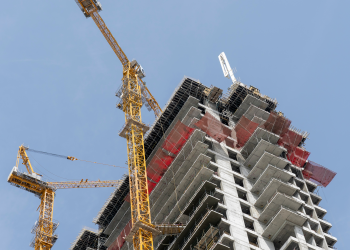
Dubai-based developer Meraas, part of Dubai Holding Real Estate, has launched a new phase of its Solaya beachfront residential scheme in Jumeirah 1. The project is being developed in partnership with BGRE, formerly Brookfield Properties.
The latest release comprises two- to five-bedroom residences, four-bedroom duplexes and a penthouse. In total, Solaya will feature 234 residences across nine buildings on a 40-acre site, offering direct beach access near J1 Beach, landscaped communal areas and private residential amenities.
UK-based Foster + Partners is the project architect, with 1508 London handling interior design. Dubai-based Brewer Smith Brewer Group (BSBG) serves as lead consultant, while US-based Aecom is the project management consultant.
Meraas and BGRE broke ground on the development in August, appointing Swissboring Overseas Piling Corporation to carry out shoring, excavation, piling and dewatering works.
The launch comes amid sustained momentum in the local market. According to GlobalData, the UAE construction industry will expand at an average annual rate of 3.9% between 2025 and 2027, driven by investments across infrastructure, energy, housing and tourism. The country’s residential construction sector is forecast to grow by an average of 2.7% annually between 2025 and 2028, supported by ongoing private development and government initiatives to meet population growth.
https://image.digitalinsightresearch.in/uploads/NewsArticle/21446815/main.png