Egypt adapts its foreign policy approach
10 February 2026

Egypt’s policy efforts over the past 12 months reflect a recalibration of the state’s survival strategy amid chronic economic headwinds, security challenges on its borders and a geopolitical landscape of shifting regional alliances and an irresolute US position.
In response, Cairo is pursuing an increasingly diversified approach to its foreign policy, geared expressly towards economic survival and only minimal geopolitical triage.
The unifying logic is resilience: preserving economic stability, state authority and external relevance in the face of an increasingly constrained environment of regional instability, negative economic multipliers and shifting global power structures.
Diplomatic overtures
At the regional level, Cairo has reinserted itself as a diplomatic actor of consequence, but this activism is best understood as a reaction rather than an expression of regional leadership.
Cairo’s mediation role in Gaza, particularly following the January 2025 ceasefire, has become the symbolic centrepiece of its foreign policy identity, but its efforts in this area ultimately stem from the conflict’s direct strategic relevance to Egypt.
By convening an extraordinary Arab summit in March 2025 and advancing its own reconstruction framework, Cairo sought to position itself as a key custodian of Gaza’s next chapter and – more cynically – a potential beneficiary of the post-war process.
Yet Egypt’s role remains structurally bounded, with Cairo operating less as an agenda-setter than as a facilitator within frameworks principally shaped by US priorities, Israeli security imperatives and Gulf financing.
In this context, Cairo’s efforts reflect a bid to maintain diplomatic relevance and remain indispensable in a situation where it ultimately lacks decisive influence.
A similar pragmatic logic shapes Egypt’s posture in the Horn of Africa.
Faced with the unresolved Grand Ethiopian Renaissance Dam (GERD) dispute, Cairo has shifted away from diplomatic and legal confrontation towards alliance-building with Somalia and Eritrea, seeking leverage through regional networks.
In Sudan, Cairo’s posture reflects a harder security logic. It supports the Sudanese Armed Forces out of a fear – arguably justified – of the outcomes that any further weakening of the central government in Khartoum could bring to Egypt’s borders.
A fragmented Sudan would threaten not only Egypt’s southern flank, but also its Red Sea trade and Nile water security, compounding its concerns related to the GERD.
Across the board, the pattern is that Egypt’s engagement is reactive and shaped more by vulnerability and risk aversion than by strategic assertiveness.
Cairo is therefore an actor that is at once diplomatically present and vocal on regional crises, yet rarely instrumental in shaping events; its diplomacy is structurally constrained by informal allegiances and external dependencies.
Strategic breadth
Aside from its broadly cautious posture, Egypt’s foreign policy and domestic economic policy also exhibit deliberate diversification and geopolitical hedging.
In recent years, Cairo’s fragile position – amid the stymying of Suez Canal revenue flows – has intensified its outreach to diverse political and financial backers, including countries with which it has previously been at odds.
Although the IMF remains a constant presence in Egypt’s fiscal landscape, the past few years have seen Cairo leverage its relationships with the UAE, Saudi Arabia, Qatar and Turkiye to attract billions of dollars in foreign direct investment and financial support.
The recourse to support from Qatar and Turkiye is particularly notable given Egypt’s diplomatic decoupling from both in 2013 following the ousting of president Mohamed Morsi, whom both countries supported.
Diplomatic ties with Turkiye were formally severed in 2013, and the relationship worsened in 2014 over Ankara’s support for a rival faction in the Libyan civil war. Cairo then cut ties with Doha in 2017 following the Gulf diplomatic crisis.
These tensions were gradually eased from 2021: the Al-Ula Declaration rehabilitated relations with Qatar, while back-channel engagement with Turkiye led to the restoration of diplomatic relations in 2023.
In this light, while the UAE’s $35bn in foreign direct investment and the $5bn in support from Saudi Arabia in 2024 align with past politics, the $7.5bn in support from Qatar in 2025 and the $350m defence deal with Turkiye in 2026 represent the new.
Cairo is also rapidly expanding its trade ties with China. By May 2025, 2,800 Chinese companies had invested $8bn in Egypt, according to Egypt’s General Authority for Investment and Free Zones. Total Chinese investments, including state-backed loans and development projects, amount to tens of billions of dollars and have consistently placed China as Egypt’s top trade partner over the past decade.
Egypt’s accession to Brics in 2024 is a natural corollary of its growing ties with China.
This contrasts with the $1.3bn in annual US military financing, which is conditional on Egypt purchasing and maintaining US-origin defence equipment and – implicitly – on remaining deferential to US and Israeli security concerns regarding Palestine.
In late 2025, Egypt also secured a €4bn package from the European Union, in addition to a planned $2.3bn disbursement from its $8bn IMF Extended Fund Facility.
Turning the corner
The widening breadth of Cairo’s fiscal and financial backers is making it less reliant on any single source of support. While the IMF’s loans and reform programme underpin overall fiscal stability, Egypt’s outreach is increasingly enabling it to tackle outstanding liabilities.
For instance, Egypt’s Ministry of Finance announced that 50% of the proceeds from a recent $3.5bn land sale to Qatar would be used to service domestic and external debt.
The financially extractive aspect of Cairo’s foreign relations also represents a clear avenue of success for President Abdul Fatah Al-Sisi’s government, in sharp contrast with its limited ability to shape the geopolitical environment.
And in the immediate term, it may be all that Cairo needs.
With growth rising and inflation dropping, Egypt appears to be in a position to claw itself back from the fiscal cliff that has loomed over it for the past two years.
That would be a significant achievement. And with domestic fortunes secured, Cairo could perhaps turn its attention outward again – towards projecting influence across the region.
Image: Doha, Qatar – September 15, 2025: Egypt’s President Abdul Fatah Al-Sisi delivering his statement at the Emergency Arab-Islamic Summit to address the Israeli attack on Qatar
MEED’s March 2026 report on Egypt also includes:
> ECONOMY & BANKING: Egypt nears return to economic stability
> POWER & WATER: Egypt utility contracts hit $5bn decade peak
> CONSTRUCTION: Coastal destinations are a boon to Egyptian construction

Register for MEED's guest program now to access this article.
Exclusive from Meed
-
 Egypt strengthens its economic position
4 March 2026
-
-
-
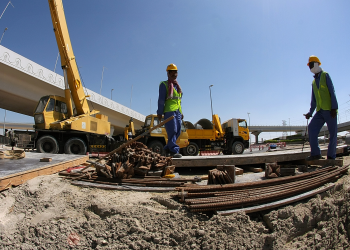 Conflict has limited impact on GCC projects
4 March 2026
-
All of this is only 1% of what MEED.com has to offer
Subscribe now and unlock all the 153,671 articles on MEED.com
- All the latest news, data, and market intelligence across MENA at your fingerprints
- First-hand updates and inside information on projects, clients and competitors that matter to you
- 20 years' archive of information, data, and news for you to access at your convenience
- Strategize to succeed and minimise risks with timely analysis of current and future market trends
Related Articles
-
Egypt strengthens its economic position
4 March 2026

MEED’s March 2026 report on Egypt includes:
> COMMENT: Egypt’s crisis mode gives way to cautious revival
> GOVERNMENT: Egypt adapts its foreign policy approach
> ECONOMY & BANKING: Egypt nears return to economic stability
> OIL & GAS: Egypt’s oil and gas sector shows bright spots
> POWER & WATER: Egypt utility contracts hit $5bn decade peak
> CONSTRUCTION: Coastal destinations are a boon to Egyptian constructionTo see previous issues of MEED Business Review, please click herehttps://image.digitalinsightresearch.in/uploads/NewsArticle/15858071/main.gif -
Power and water assets face strategic risk amid Iran attacks
4 March 2026
Recent attacks on energy infrastructure across the GCC have drawn renewed attention to the strategic importance of the region’s power and water sector.
On 2 March, Qatar’s Ministry of Defence announced that the country had come under two drone attacks launched from Iran.
One drone targeted a water tank owned by Mesaieed Power Plant, while another targeted a power facility in Ras Laffan Industrial City.
Elsewhere in the region, Saudi Aramco shut down its Ras Tanura refinery following a drone strike, while US cloud provider Amazon Web Services reported service outages after incidents at two data centres in the UAE.
Desalination reliance
Across the GCC, desalination now provides the majority of drinking water. In Kuwait, about 90% of potable water comes from desalination plants, while the figure is about 70% in Saudi Arabia. In the UAE and Oman, the figures are 42% and 86%, respectively. While the geopolitical narrative tends to be dominated by oil, it is power and water infrastructure that is perhaps most critical to everyday life.
For instance, the Ras Al-Khair desalination plant in Saudi Arabia is among the largest operational facilities of its kind. According to MEED Projects, the plant produces about 1.1 million cubic metres a day (cm/d) of desalinated water.
Using a typical domestic water consumption benchmark of roughly 250 litres per person per day, that output is sufficient to supply potable water for around four million people.
Other large projects operate on a similar scale. The Yanbu phase 3 desalination plant produces roughly 550,000 cm/d, while the Shuaibah 3 independent water project (IWP), commissioned near Jeddah last year, has a capacity of 600,000 cm/d. Facilities of this scale can supply drinking water to populations of between two million and four million people.
The region’s reliance on large coastal desalination facilities also creates structural vulnerabilities, as most plants are located along the Gulf coastline to allow seawater intake.
Many are also integrated with thermal power plants, producing electricity and desalinated water at the same site. This configuration offers operational efficiencies, but concentrates critical infrastructure in a limited number of locations.
In February, Kuwait signed a 25-year energy conversion and water purchase agreement for the Al-Zour North independent water and power plant (IWPP) phases two and three. Once completed, the facility will add 2,700MW of power and 545,000 cm/d of desalinated water to Kuwait’s supply network
Separately, Kuwait’s Council of Ministers recently approved plans for the Kuwait Authority for Partnership Projects (Kapp) to tender the first phase of the Nuwaiseeb power and water desalination plant as an IWPP project. The first phase of the scheme will have an estimated power generation capacity of 3,600MW and a desalination capacity of 341,000 cm/d.
While several GCC states maintain strategic water storage reserves, these typically cover only a limited number of days of consumption in major cities. This makes water infrastructure one of the most sensitive categories of critical assets in the region.
Electricity infrastructure
Standalone electricity infrastructure is equally central to the functioning of GCC economies. Power generation supports residential demand, large industrial complexes, transport networks and digital infrastructure.
One example is the UAE’s Barakah nuclear power plant in Abu Dhabi, which has a total capacity of 5.6GW across four reactors. According to Emirates Nuclear Energy Corporation (Enec), the plant’s four APR1400 reactors produce 40TWh annually, which is equivalent to around 25% of the UAE’s electricity needs.
At the same time, Gulf electricity systems are becoming increasingly interconnected. The GCC Interconnection Authority grid links the national networks of member states and enables countries to exchange electricity during periods of peak demand or supply disruption.
According to WorldBank studies, desalination plants typically operate continuously because water storage capacity is limited relative to demand. Similarly, power grids must balance supply and demand in real time.
Amid ongoing missile and drone attacks on GCC states, Iran said on Monday that it was closing off the Strait of Hormuz, a critical maritime route. GCC countries import roughly 85% of their food, much of it transported by sea, while the strait handles about a fifth of global oil supply. Disruptions to power and water infrastructure across the region could have even more immediate consequences.
 READ THE MARCH 2026 MEED BUSINESS REVIEW – click here to view PDF
Riyadh urges private sector to take greater role; Chemical players look to spend rationally; Economic uptick lends confidence to Cairo’s reforms.
Distributed to senior decision-makers in the region and around the world, the March 2026 edition of MEED Business Review includes:
> RAMADAN: Data disproves the Ramadan slowdown story> INDUSTRY REPORT: Chemicals producers look to cut spending> INDUSTRY REPORT: Global petrochemical project capex set to rise until 2030> MARKET FOCUS: Egypt’s crisis mode gives way to cautious revival> LEADERSHIP: Delivering Saudi Arabia’s next phase of rail growth> INTERVIEW: Abu Dhabi’s Enersol charts acquisitions pathTo see previous issues of MEED Business Review, please click herehttps://image.digitalinsightresearch.in/uploads/NewsArticle/15856956/main.jpg -
Algeria tenders multiple railway consultancy contracts
4 March 2026
Algeria’s state railway company, Agence Nationale d’Etudes et de Suivi de la Realisation des Investissements Ferroviaires (Anesrif), has tendered several consultancy tenders for various railway schemes in the country.
The first tender was issued for the study of the new Bouinane/Meftah/Khemis El-Khechna railway line.
The tender was issued on 3 March, with a bid submission deadline of 12 April.
The second tender covers the detailed study of the Sidi Arcine railway station.
The tender for the project was floated on 1 March. The bid submission deadline is 30 March.
The other tender covers the completion of the study of the Zeralda/Gouraya railway line.
The notice was floated in late February, with a bid submission deadline of the end of March.
The latest consultancy tenders follow Anesrif’s formal start of the procurement process for its multibillion-dollar Laghouat-Ghardaia-El-Meniaa railway project, as MEED reported earlier this week.
International and local firms have been given until 8 March to submit expressions of interest for the overall client’s engineer role on the 495-kilometre-long railway development.
Consultancies have also been given until 12 March for two separate contracts covering the project supervision and control of the first 265km-long element between Laghouat and Ghardaia, and the 230km-long line between Ghardaia and El-Meniaa.
This Laghouat-Ghardaia section, which is estimated to cost about $1.4bn, will comprise 21 viaducts, one tunnel, 55 pipe crossings and five stations.
The 230km-long Ghardaia to El-Meniaa second section will start at Metlili station and extend south to El-Meniaa. It will comprise six viaducts, 35 railway structures and three stations, and have an estimated total construction cost of about $1.2bn.
The speed of passenger trains on the railway will be 220 kilometres an hour (km/h) and 100km/h for freight trains.
The solicitations of interest for the construction of the two sections were originally scheduled for February, but to date have not been released.
READ THE MARCH 2026 MEED BUSINESS REVIEW – click here to view PDFRiyadh urges private sector to take greater role; Chemical players look to spend rationally; Economic uptick lends confidence to Cairo’s reforms.
Distributed to senior decision-makers in the region and around the world, the March 2026 edition of MEED Business Review includes:
> RAMADAN: Data disproves the Ramadan slowdown story> INDUSTRY REPORT: Chemicals producers look to cut spending> INDUSTRY REPORT: Global petrochemical project capex set to rise until 2030> MARKET FOCUS: Egypt’s crisis mode gives way to cautious revival> LEADERSHIP: Delivering Saudi Arabia’s next phase of rail growth> INTERVIEW: Abu Dhabi’s Enersol charts acquisitions pathTo see previous issues of MEED Business Review, please click herehttps://image.digitalinsightresearch.in/uploads/NewsArticle/15855965/main.jpg -
Conflict has limited impact on GCC projects
4 March 2026
Register for MEED’s 14-day trial access
The conflict in the Gulf has so far had a limited impact on projects in the GCC, with most sites operating normally since hostilities began on 28 February. In total, there are 6,738 projects under execution across the GCC, with a combined value of $951bn, according to regional projects tracker MEED Projects.
Contracting companies in the region say that the majority of their projects have not been affected by the conflict, and work has continued onsite without disruption. However, a few sites have temporarily halted operations, either at the request of the authorities or because they were considered at risk due to their strategic locations.
“Work has continued on our projects in Dubai. We have only one site where we were asked to stop work,” says a contractor overseeing projects across Dubai.
Another contractor operating across the UAE has also continued work but halted operations at one site following a nearby security incident. “We have one site that was close to a facility that was struck by debris, so we stopped work,” the contractor says.
Work has also continued on projects outside of the UAE. In Saudi Arabia and Qatar, contractors continue to work on projects, including strategically sensitive oil and gas projects. “We have continued work on most of our projects. There are a few sites where we have been asked to stop work, but this is the minority, and at most sites we are still working,” says an international contractor.
Supply chain concerns
While operations largely continue as normal, there are concerns that projects could be impacted later due to supply chain disruption. Ports in the region have been targets, and with international shipping passing through the Strait of Hormuz effectively stopping, there is an expectation that international shipments will be delayed. A related concern is the sharp spike in oil prices that will be inflationary.
How the disruption is handled will depend on the terms of specific contracts and on how companies choose to navigate the issue. The general consensus among contractors and lawyers is that it is not a force majeure event. Instead, it is general disruption that should be noted and documented, should there be cost or time implications later in the project.
One Dubai-based contractor said the strategy for now is to support clients as best as possible amid this uncertainty, while noting that there may be cost implications later.
The region has been considered a safe place for tourism, and also for the rich to live in a tax-free haven. The attacks on Dubai may change that perception, and that will impact the market in the future
International contractorFuture prospects
There are also concerns about the market’s future. There have been record levels of contract awards in recent years, and the worry is that the pace of contract awards may slow as uncertainty grips the market.
At the same time, some contract awards have been expedited. One Dubai-based contractor has signed two contracts since the conflict started. “We have signed deals that had been lingering for a while. I think the logic is that the client wants to lock in resources before prices or anything else changes,” says the contractor.
Longer term, it is expected that priorities for construction could shift. Contractors say that defence will become more of a priority for governments in the future, and so will strategic infrastructure projects such as power and water.
There might also be increased interest in making infrastructure more secure, which will add an additional layer of complexity for construction companies. “Facilities like data centres may be located underground in the future to protect them from attacks,” says a UAE-based contractor.
The outlook for other sectors is more challenged, particularly real estate and tourism.
“The region has been considered a safe place for tourism, and also for the rich to live in a tax-free haven,” says the international contractor. “The attacks on Dubai may change that perception, and that will impact the market in the future. Tourism is a key component of national visions across the GCC, so I think there will have to be a rethink of economic strategies for the future.”
READ THE MARCH 2026 MEED BUSINESS REVIEW – click here to view PDFRiyadh urges private sector to take greater role; Chemical players look to spend rationally; Economic uptick lends confidence to Cairo’s reforms.
Distributed to senior decision-makers in the region and around the world, the March 2026 edition of MEED Business Review includes:
> RAMADAN: Data disproves the Ramadan slowdown story> INDUSTRY REPORT: Chemicals producers look to cut spending> INDUSTRY REPORT: Global petrochemical project capex set to rise until 2030> MARKET FOCUS: Egypt’s crisis mode gives way to cautious revival> LEADERSHIP: Delivering Saudi Arabia’s next phase of rail growth> INTERVIEW: Abu Dhabi’s Enersol charts acquisitions pathTo see previous issues of MEED Business Review, please click herehttps://image.digitalinsightresearch.in/uploads/NewsArticle/15855051/main.jpg -
Contractors begin Riyadh metro Line 2 extension works
4 March 2026
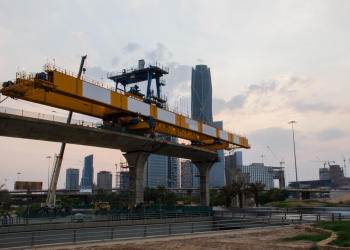
Contractors have started construction on two new metro stations within King Saud University, as part of the Riyadh Metro Line 2 extension.
In a statement published on its website, the Royal Commission for Riyadh City (RCRC) said that the first station will serve the University Medical City and health colleges, and the second station will serve the university concourse.
In July last year, MEED exclusively reported that RCRC had awarded an estimated $800m-$900m contract for the project.
The contract was awarded to the Arriyadh New Mobility Consortium, led by Italy’s Webuild.
The group also includes India’s Larsen & Toubro, Saudi Arabia’s Nesma & Partners and France’s Alstom.
The Line 2 extension is 8.4 kilometres (km) long, of which 1.3km is elevated and 7.1km is underground. It includes five stations – two elevated and three underground.
It will run from where Line 2 currently ends at King Saud University, then travel to new stations at KSU Medical City, KSU West and Diriyah East, where it interchanges with the planned Line 7, and finally to Diriyah South.
In 2013, the Arriyadh New Mobility Consortium secured Riyadh Metro’s Line 3 project for $5.21bn.
Line 3, also known as the Orange Line, stretches from east to west, from Jeddah Road to the Second Eastern Ring Road, covering a total distance of 41km.
READ THE MARCH 2026 MEED BUSINESS REVIEW – click here to view PDFRiyadh urges private sector to take greater role; Chemical players look to spend rationally; Economic uptick lends confidence to Cairo’s reforms.
Distributed to senior decision-makers in the region and around the world, the March 2026 edition of MEED Business Review includes:
> RAMADAN: Data disproves the Ramadan slowdown story> INDUSTRY REPORT: Chemicals producers look to cut spending> INDUSTRY REPORT: Global petrochemical project capex set to rise until 2030> MARKET FOCUS: Egypt’s crisis mode gives way to cautious revival> LEADERSHIP: Delivering Saudi Arabia’s next phase of rail growth> INTERVIEW: Abu Dhabi’s Enersol charts acquisitions pathTo see previous issues of MEED Business Review, please click herehttps://image.digitalinsightresearch.in/uploads/NewsArticle/15855032/main.png