
Contractors submit bids for five Aramco offshore tenders
20 March 2024

Register for MEED's guest programme
Entities in Saudi Aramco’s Long-Term Agreement (LTA) pool of contractors have submitted bids for five new offshore oil and gas field upgrade tenders issued in recent weeks.
The tenders are Contracts Release and Purchase Order (CRPO) numbers 131, 132, 139, 142 and 143, according to sources.
LTA entities submitted bids for these CRPOs in mid-March, sources told MEED.
Bidders were previously set deadlines in early March for the submission of bids for these CRPOs, as MEED previously reported.
Bidding activity for these tenders is taking place against the backdrop of Aramco having shelved more than a dozen offshore oil field upgrade tenders that were issued to its LTA pool of offshore contractors last year. The decision followed a Saudi Energy Ministry directive on 30 January for Aramco to abandon its campaign to expand oil production spare capacity from 12 million barrels a day (b/d) to 13 million b/d by 2027.
Aramco cancelled the tendering process for at least 15 CRPO jobs involving the engineering, procurement, construction and installation of key structures at major offshore oil fields, MEED previously reported.
CRPOs under bidding
The scope of work on the five CRPOs for which contractors have submitted bids, and their submission deadlines, are as follows:
- CRPO 131: 13 March
Two jackets at the Arabiyah field
One simultaneous operations-capable jacket at the Hasbah field
One gas lift production deck module (PDM)
A 16-inch subsea pipeline running 5 kilometres (km)
13.8kV subsea cables covering 5km
- CRPO 132: 13 March
Two oil injection PDMs at the Marjan field
One gas injection PDM at Marjan
- CRPO 139: 13 March
Installation of five PDMs at the Zuluf field development
Installation of eight pipelines covering 29km, in 10-inch, 12-inch and 16-inch sizes
Laying of 15kV-subsea power cables covering 35km:
– (a) 16-inch power line from Zuluf-560/569 to Zuluf-480/489
– (b) 16-inch power line from Zuluf-700/709 to ZTP-5
– (c) 10-inch power line from Zuluf-903-1510/1519 to Zuluf-1410/1419
– (d) 16-inch power line from Safaniya-4070/4079 to Zuluf-410/419
– (e) 16-inch power line from Safaniya-4210/4219 to Zuluf-330/339
Installation of four subsea valve skids
Installation of three offshore jackets
- CRPO 142: 13 March
Replacement of 17km flank pipeline at the Abu Safah field
Demolition work
- CRPO 143: 13 March
Replacement of Berri and Manifa lateral lines
Aramco’s LTA pool of offshore service providers comprises the following entities:
- Saipem (Italy)
- McDermott International (US)
- Larsen & Toubro Hydrocarbon Engineering (India) / Subsea 7 (UK)
- Dynamic Industries (US)
- National Petroleum Construction Company (UAE)
- Lamprell (UAE/Saudi Arabia)
- Sapura Energy (Malaysia)
- Technip Energies (France) / MMHE (Malaysia)
- China Offshore Oil Engineering Company (China)
- Hyundai Heavy Industries (South Korea)
ALSO READ: Aramco spending drawdown to jolt oil projects


Register for MEED's guest program now to access this article.
Exclusive from Meed
-
 Gulf conflict cuts Emirates Group profit by 66%
6 November 2026
-
 King Salman airport tenders roads and utilities package
6 November 2026
-
 Bahrain construction activity remains subdued
5 November 2026
-
 Bahrain creaks under the strain of war
5 November 2026
-
 Sharjah opens first phase of new Dubai road connection
5 November 2026
All of this is only 1% of what MEED.com has to offer
Subscribe now and unlock all the 153,671 articles on MEED.com
- All the latest news, data, and market intelligence across MENA at your fingerprints
- First-hand updates and inside information on projects, clients and competitors that matter to you
- 20 years' archive of information, data, and news for you to access at your convenience
- Strategize to succeed and minimise risks with timely analysis of current and future market trends
Related Articles
-
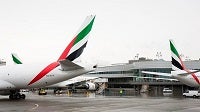
Gulf conflict cuts Emirates Group profit by 66%
6 November 2026
Dubai’s Emirates Group made a profit before tax of AED4.1bn ($1.1bn) in the first half of its 2026-27 financial year, 66% less than the AED12.2bn it made in the same period last year.
The six months to 30 September were the group’s first full half-year since military activity disrupted commercial air traffic across the Gulf on 28 February. Group revenue fell 12% to AED66.2bn ($18bn), from AED75.4bn a year earlier. Profit after tax fell 66% to AED3.6bn ($1bn).
Earnings before interest, tax, depreciation and amortisation (Ebitda) fell 41% to AED12.5bn ($3.4bn).
The results follow a record 2025-26 financial year. The group made a profit before tax of AED24.4bn in that year, on revenue of AED150.5bn.
“It has been a demanding six months, and once again our business model and our people stood up to the test,” said Sheikh Ahmed Bin Saeed Al-Maktoum, chairman and chief executive of Emirates Airline and Group. “Customer demand held firm and our cargo operations made a strong contribution, keeping revenue and cash levels healthy even as global jet fuel prices doubled against the same period last year.”
Airline performance
Emirates airline’s profit before tax fell 68% to AED3.7bn ($1bn), compared with AED11.4bn a year earlier. Its revenue fell 13% to AED56.9bn ($15.5bn). The airline carried 21.8 million passengers, 22% fewer than a year earlier. Capacity measured in available seat kilometres fell 17%, and the passenger seat factor dropped to 72% from 79.5%.
Cargo partly offset the drop in passenger numbers. Emirates SkyCargo carried 1.2 million tonnes, 1% less than a year earlier, but its revenue rose 52%. The conflict reduced the airfreight capacity available on the market, and disruption to shipping pushed shippers towards air transport.
Before hedging gains, fuel costs rose 60%, even though the airline uplifted 12% less fuel. Gains of AED7.1bn ($1.9bn) from fuel hedging cut the net increase in fuel costs to 13%. Fuel accounted for 34% of operating costs.
On 30 September, Emirates was operating 91% of its pre-disruption network, serving 150 airports in 78 countries and territories. On 31 March, it had been flying 58% of its passenger capacity to 122 destinations in 65 countries.
Fleet investment
The airline received nine Airbus A350s and five Boeing 777 freighters during the period. Its fleet grew to 289 aircraft, from 277 on 31 March. Emirates is continuing its cabin retrofit programme, a planned investment of more than $7bn. It refurbished 12 aircraft in the first half. In May, it broke ground on a $5.1bn engineering and maintenance, repair and overhaul (MRO) facility at Al-Maktoum International airport, which is expected to be completed in the mid-2030s.
The group’s cash position was AED54.1bn ($14.7bn) on 30 September, down from a record AED59.6bn on 31 March. The group said it had used its reserves to make pre-delivery payments for aircraft and to service existing debt. It also paid the remaining AED2bn of the AED3.5bn dividend declared for 2025-26 to its owner, the Investment Corporation of Dubai.
Ground services and travel company dnata made a profit before tax of AED410m ($112m), down 51%. Its revenue fell 7% to AED11bn ($3bn), and the group said dnata’s international businesses helped offset weaker traffic in the UAE.
The group’s workforce fell 2% to 128,237 people.
“We enter the second half of our 2026-27 financial year with measured optimism,” said Sheikh Ahmed.
https://image.digitalinsightresearch.in/uploads/NewsArticle/21198114/main.jpg -
King Salman airport tenders roads and utilities package
6 November 2026
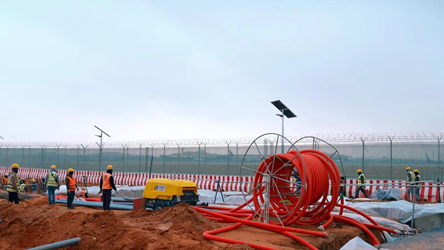
Saudi Arabia’s King Salman International Airport Development Company (KSIADC) has tendered the Zone C1+C2 roads, bridges and utility networks package for King Salman International airport (KSIA) in Riyadh.
The tender was issued on 26 October, and bids are due by 6 December.
The request for proposals covers the procurement, construction, testing and commissioning of civil infrastructure supporting Terminal 6, alongside the existing Terminals 1-5.
The scope includes upgrades to Airport Road 539, which runs west of Terminals 1-5, and to part of Mohamed Bin Faraj Road 5333, west of Junction 6.
It also includes new roads, ramps, service roads, and signalised at-grade junctions. An additional access road will connect the Terminal 6 site offices to Road 5333.
Structures will include the Junction 6 and Terminal 6 bridges, retaining walls and reinforced-soil structures.
The contractor will also construct the central ground services equipment (GSE) bridge. Before construction begins, the contractor must validate the design, complete any outstanding elements – including mechanically stabilised earth walls, approach slabs, drainage and lighting – and secure the required authority approvals.
Dry utilities will comprise high- and extra-high-voltage containment, a 13.8kV medium-voltage network with package substations, low-voltage distribution and street lighting, and security-surveillance systems.
Wet utilities will include potable water, fire water, irrigation water, treated sewage effluent, district cooling and wastewater networks. Wastewater pipes will range from 200mm u-PVC gravity lines to 1,700mm glass-reinforced plastic mains.
The stormwater network will include channels, culverts, ponds and pipes ranging from 400mm to 1,400mm in diameter. Crossings will be constructed using open-cut excavation, horizontal directional drilling or microtunneling.
Utilities serving the operational terminals will be diverted on a design-and-build basis. Enabling works will include earthworks and the relocation of the security fence and trees. The contractor will also demolish a temporary car park, existing bridges and a sewage pumping station.
Optional works comprise two design-and-build elements that will proceed only at the client’s instruction.
The first is the south GSE bridge. The second is an approximately 1,400-metre, multi-lane access road to the Terminal 6 Transportation Hub, including bridges, underpasses, ramps and tunnels, as well as provisions for future Wadi Loop utilities and structures.
https://image.digitalinsightresearch.in/uploads/NewsArticle/21176175/main.png -
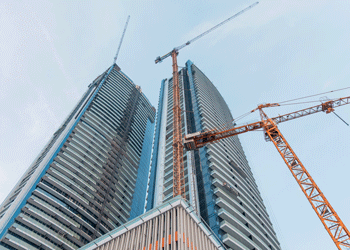
Bahrain construction activity remains subdued
5 November 2026
Bahrain’s construction and infrastructure sector remains subdued, with project awards still depressed despite a modest uptick this year.
Data from regional projects tracker MEED Projects shows that $737m-worth of construction and infrastructure contracts had been awarded in the kingdom by 29 October 2026. While this exceeds the $686m recorded across the whole of 2025, it confirms that the market remains in a prolonged downturn.
Between 2016 and 2020, Bahrain recorded more than $2bn in annual awards, peaking at nearly $3.9bn in 2016 when major packages for the Bahrain International airport expansion were signed. Awards then fell to $912m in 2021 before rebounding to almost $2bn in 2022. The recovery was short-lived, with awards declining to $1.66bn in 2023, $1.57bn in 2024 and $686m in 2025.
Major awards
Activity this year has been supported by several housing and transport packages.
The largest award was an estimated $400m contract secured by a joint venture of local developer Naseej and China Machinery Engineering Corporation for the Madinat Khalifa project. Procured under the Mega Government Land Development Programme, the scheme involves the design, financing, construction, marketing and sale of more than 2,500 housing units on two government-owned land parcels, alongside roads and electricity, water, sewage and drainage networks.
Road infrastructure also produced a major commitment. The Ministry of Works amended its award for package four of the Busaiteen Link project, appointing a joint venture of Nass Company and Nasser Hazza Al-Subaei Contracting Company under a BD65m ($172m) contract. The three-year deal replaces a BD69.7m ($185m) award made in January to a consortium of Haji Hassan Group, Saudi Arabia’s Alomaier Trading & Construction Company and Greece’s Terna.
The package includes a signature bridge connecting Muharraq with the North Manama Causeway and Bahrain Bay, as well as road works between junctions four and five.
Residential projects provided further volume. Mohammed Abdulmohsin Al-Kharafi & Sons secured a $112.4m contract to build 512 social apartment units on Madinat Salman’s Island 12. Binaa Al-Bahrain also appointed Kooheji Contractors to build Bayview in Manama, a development comprising four residential buildings and 489 apartments.
Early-stage commitments included a BD5m ($13.5m) consultancy contract awarded to US-based Populous for the planned Sports City at Sakhir. The scope covers the masterplan, internal infrastructure, phase 1A design and tender documents. Lebanon’s Dar Al-Handasah won a QR28m ($7.7m) contract to conduct feasibility studies for the proposed 40-kilometre Qatar-Bahrain Causeway, also known as the Friendship Bridge.
Transport links
Transport is the most promising near-term outlet for the market, with a pipeline valued at about $15bn, according to MEED Projects data.
Cross-border rail has re-emerged as a strategic focus. Bahrain has introduced legislation to establish a framework for constructing, operating, maintaining and regulating railway networks, including licensing, safety, cross-border services, and passenger and freight tariffs.
The move comes as Gulf states prepare to advance the GCC railway network, which is expected to begin operating by the end of 2030. Bahrain’s proposed rail link to Saudi Arabia is expected to run via the planned King Hamad Causeway, a second fixed connection between the two countries alongside the King Fahd Causeway.
Road expansion is also progressing. In September, the Bahrain Tender Board received bids from Nass Contracting, Haji Hassan Group, Almoayyed Contracting Group, Mohammed Abdulmohsen Al-Kharafi & Sons, Eastern Asphalt & Concrete Production, Cebarco Bahrain and Kingdom Asphalt for the upgrade of two kilometres of the Sheikh Jaber Al-Ahmed Al-Sabah Highway. The works involve a four-lane dual carriageway with service roads.
Industrial and maritime infrastructure is advancing, too. The Ministry of Works received five bids for engineering and quantity surveying services linked to reclamation works at Salman Industrial City and Bahrain Logistics Zone.
Dar SSH International Engineering Consultants submitted the lowest offer at BD778,580 ($2.1m), followed by Aecom at $2.2m, Ansari Engineering Services at $2.3m, Millet Engineering Bureau at $2.4m and Ayesa at $2.8m. The project involves reclaiming about 1.13 million square metres of land using 9.67 million cubic metres of fill near Khalifa Bin Salman Port.
The government is also preparing the Bahrain Northern Link Road as a public-private partnership. The 29.5km highway will connect the North Manama Causeway with Suhaila Island and the King Hamad Causeway, creating a parallel east-west route to Sheikh Isa Bin Salman Highway and improving links between Khalifa Bin Salman Port and Saudi Arabia.
Building pipeline
Outside transport, Bahrain’s construction pipeline exceeds $6bn. The most prominent project is the Bahrain International Sports City development in Sakhir. In September, 21 local and Saudi Arabian contractors were prequalified for the first-phase construction contract, which is expected to include Bahrain’s largest sports stadium and a multipurpose indoor sports arena.
The planned National Assembly Building in Manama is another significant civic project. Bids submitted earlier this year included three options from Cebarco Bahrain, ranging from $163.8m to $200.3m, alongside offers of $239.4m from Nass Contracting and $316.4m from Kooheji Contractors.
The four-storey complex will be built on a reclaimed island and will include a main hall for joint sessions, separate debating chambers, administrative offices, an auditorium, library, museum, meeting rooms, public spaces, underground parking and supporting facilities.
These projects provide a route out of Bahrain’s multi-year downturn. The market’s recovery, however, will depend on whether the government converts feasibility studies, advisory mandates and prequalification exercises into construction awards.
https://image.digitalinsightresearch.in/uploads/NewsArticle/21181473/main.gif -
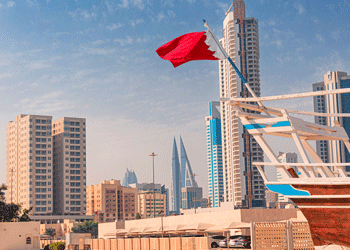
Bahrain creaks under the strain of war
5 November 2026
With a small economy and exports almost wholly reliant on passage through the Strait of Hormuz, Bahrain has been painfully exposed to the turmoil caused by the Iran war. The country’s social makeup – with a Shia majority ruled by a Sunni-dominated regime – is also showing signs of strain.
The economy is expected to contract by 11.3% this year, according to the IMF’s latest Regional Economic Outlook report. That is not quite as bad as some of its neighbours, such as Kuwait and Qatar, but it is well above the 4.8% fall expected for the GCC as a whole.
Just as importantly, Bahrain also starts from a much weaker base than its Gulf peers, with a smaller economy, limited hydrocarbon resources and high levels of government debt.
“Countries with the largest reserve declines since the start of the conflict generally entered the shock with comfortable reserve positions, with Bahrain as a notable exception,” the IMF noted in its 22 October report.
Physical disruption
Iran’s closure of the Strait of Hormuz this year has cut Bahrain off from its most important trade route for both exports and imports. In addition, major industrial and military targets have been hit by Iran on multiple occasions, including the US naval base and the Aluminium Bahrain (Alba) plant.
The latter suffered a 32% year-on-year drop in sales volumes and a 61% fall in output in the first half of the year as a result of the Iranian attacks – although higher aluminium prices and lower costs meant that the company’s revenues held steady and profits actually increased year-on-year.
Other areas of the economy have been badly affected too, with the Bapco oil refinery, a desalination plant and an Amazon data centre all hit in Iranian strikes. The IMF also noted that Bahrain has seen one of the worst declines in hotel occupancy rates during the year. Inflation has also been rising, reaching an annual rate of 3% as of July.
As a result, the government’s already weak financial position is under even more pressure. The Central Bank of Bahrain’s reserves have slumped sharply since the start of the war, falling from BD1.8bn ($4.8bn) as the war broke out, to a low of BD568m three months later. They recovered some of the ground lost in the following months, but remain well below the pre-war level. Reserves stood at BD887m by September, supported by drawing on a BD2bn ($5.4bn) currency swap line provided by the UAE in early April.
Total public debt had reached BD20.3bn at the end of August, the most recent data available, up from BD18.2bn a year earlier. That is significantly larger than the country’s GDP, which stood at BD15.7bn in 2025 and is expected to end this year at just BD13.9bn.
To make matters worse, the markets have been pushing up Bahrain’s borrowing costs to levels not seen since 2018, when the government had to turn to Kuwait, Saudi Arabia and the UAE for a bailout to avoid a potential sovereign default.
External support
With no easy way to reduce its debts or plug its budget deficit, Bahrain is likely to seek more assistance from its wealthy neighbours – although any aid will likely come with demands for spending restraint and other reforms that will be uncomfortable for the government to accept.
The appetite of some neighbouring states may also be more limited than in the past, given their own economies have been weakened by the war, but King Hamad Bin Isa Al-Khalifa’s close ties with the UAE leadership in particular are likely to ensure some help is forthcoming.
Asharq Bloomberg reported in late October that Manama has been holding talks with neighbouring states for a fresh round of support, with the UAE expected to emerge with a leading role. However, the timing and scale of any bailout remain unclear.
Without external assistance, the country’s finances are likely to deteriorate further. Ratings agency Capital Intelligence said in an October report that it expected debt levels to rise further in 2027-28, with the budget deficit averaging 9.3% of GDP in those years.
“The burden of government debt on the budget is also very high, with interest payments projected to average 30.7% of revenues in 2026-28, up from 27.1% in 2025,” it noted.
King Hamad Bin Isa Al-Khalifa’s close ties with the UAE leadership in particular are likely to ensure some help is forthcoming
Political tensions
Politically, Manama has appeared increasingly cautious towards its own citizens, with planned elections for both municipal councils and the Council of Representatives delayed until next year. Announcing the postponement of the council elections in mid-October, deputy prime minister Sheikh Khalid Bin Abdulla Al-Khalifa referred vaguely to “the current circumstances and their resulting effects” as the reason for the delay.
The postponement removes a formal channel for the public to express grievances about the country’s current situation. At the same time, the authorities have moved against perceived support for Iran during the conflict. More than 600 people have been arrested this year on charges including espionage and supporting an enemy state, according to the Bahrain Institute for Rights and Democracy (Bird), a London-based advocacy group that is critical of the government. Dozens of people have also had their citizenship revoked.
“Since the outbreak of the Iran war, repression in Bahrain has intensified sharply,” said Bird advocacy director Sayed Ahmed Alwadaei.
Some analysts warn that the crackdown could prove counterproductive. The Bahrain researcher at conflict monitoring group Acled said that tensions between the government and its Shia opposition were gradually placing the country at high risk of instability.
The economic outlook could change quickly if a resolution to the Iran-US conflict is found. The IMF predicts that the economy could rebound to a growth rate of 13.9% next year, before settling back to a more sustainable 3.1% the year after – but that depends on Gulf trade routes reopening and energy production normalising. The country’s political tensions will be harder to resolve.
https://image.digitalinsightresearch.in/uploads/NewsArticle/21173733/main.gif -
Sharjah opens first phase of new Dubai road connection
5 November 2026
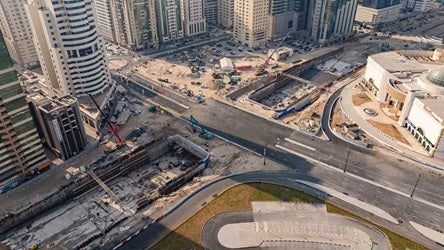
Sharjah’s Roads & Transport Authority (SRTA) has partially opened the first phase of a major road development project designed to improve connectivity between Sharjah and Dubai.
The initial opening includes the partial launch of the Al-Taawun interchange, alongside several bridges and junctions providing one-way traffic flow from Sheikh Mohammed Bin Zayed Road toward Expo Centre Sharjah.
Tunnel construction in the Al-Taawun area is also progressing under the scheme. The 500-metre-long tunnel will run beneath the Al-Taawun roundabout, providing three lanes in each direction to link Al-Taawun Street to Al-Nahda Bridge and onward to Dubai.
The project will also include a signalised intersection designed to handle approximately 4,200 vehicles an hour in each direction. In addition, the tunnel will provide access to Expo Centre Sharjah and form part of a transport corridor linking to Al-Noor Road.
The Al-Taawun tunnel project is the centrepiece of a broader AED750m ($204m) road development programme in Sharjah, which comprises a network of tunnels, bridges and intersection upgrades.
The other projects that form part of the programme include:
- Al-Noor Road: Extends from Al-Orooba Street into Dubai via Al-Nahda Bridge, serving residential and commercial communities in Sharjah and adjacent districts in Dubai.
- Industrial Streets 1 and 2 bridges: Involves constructing two 130-metre-long bridges with two lanes in each direction. These will connect to Maleha Road, Sheikh Khalifa Bin Zayed Road and Al-Waset Road, adding capacity of roughly 2,800 vehicles an hour in each direction.
- Industrial Street 3: Encompasses two new bridges linking Sharjah’s industrial zones to the Ring Road. The 2.7-kilometre scheme will add dedicated turning lanes toward Maleha Road, Sheikh Khalifa Road and Al-Dhaid Road, along with a culvert linking Industrial Street 3 to the Ring Road. It will increase capacity by about 5,200 vehicles an hour across both directions, improving links between Sheikh Mohammed Bin Zayed Road, Al-Khan Street and Al-Ittihad Road.
- Sheikh Mohammed Bin Zayed Road Interchange: Entails upgrading the existing interchange to improve connections between the highway and the Al-Taawun, Al-Khan and Al-Buhaira districts.
https://image.digitalinsightresearch.in/uploads/NewsArticle/21172614/main.jpg