
Israeli offensive leaves Beirut in limbo
5 June 2026

Lebanon is being held in economic and political limbo by Israel’s open-ended offensive in the south, which has killed more than 3,500 people since March and is characterised by strategic objectives that offer no clear end in sight.
Political leaders in Tel Aviv are justifying the operation on the grounds of eliminating Hezbollah – a far‑fetched goal against a dispersed guerrilla organisation, as with Hamas in Gaza – while ignoring overtures from Lebanon’s leadership for a ceasefire.
The recently formed Lebanese government, meanwhile, continues to look impotent: unable to secure its territory from Israeli incursions or Hezbollah activity, and unable to deliver on promises of stability, reform, IMF funding and reconstruction.
Echoes of the past
The overarching shape of Israel’s military campaign is ominously familiar, echoing the 1978, 1982, 1985 and 2006 Israeli invasions of southern Lebanon – all entailing creeping encroachment without strategic resolution.
Since fighting resumed on 2 March 2026, Israeli forces have gradually pushed north, crossing north of the Litani for the first time since the 2006 Lebanon war and seizing Beaufort Castle above Nabatieh on 31 May.
Israeli Prime Minister Benjamin Netanyahu has framed the goal as establishing a “security zone” – the same term and concept Israel used to justify the occupation of a roughly 800-square-kilometre belt of southern Lebanon from 1985 to 2000.
That occupation was a debacle for Israel’s military and ended in unilateral withdrawal.
Israeli analysts are already drawing the modern parallels as the cost of holding ground in southern Lebanon rises, driven by Hezbollah’s deployment of cheap fibre‑optic first‑person‑view (FPV) drones that inflict a steady drip of Israeli casualties and losses.
As with Russia in Ukraine, Tel Aviv is being tactically embarrassed by the advent of these fibre‑optic drones, which are immune to jamming and – of particular concern to Israeli forces – are too small to be reliably detected and intercepted by conventional counter‑drone systems.
This leap in Hezbollah’s operational threat – based on cheap technology that can be locally assembled – has sharply raised the price of maintaining a military presence in the country.
In an attempt to exact a retaliatory price, Israel’s air strikes rose by 110% between 19-22 May and 23-26 May as Hezbollah’s drone successes accumulated, according to conflict monitor Acled. But the underlying tactical dilemma remains.
Israeli politicians, irate at the situation, have demanded escalation and intensified strikes on civilian areas, including in Beirut – only to face US pushback.
Tehran as the lever
Planned strikes on Beirut, including on 3 June, have been held off in recent weeks under pressure from Washington after Tehran made Lebanon a bargaining chip in its wider negotiations with the US, repeatedly suspending talks following Israeli escalation in the Levant country.
Tehran has also gone further than walkouts, warning it could respond directly if Israel strikes Beirut – adding an explicit threat of retaliation to diplomatic pressure.
With a Gulf ceasefire and the reopening of the Strait of Hormuz both riding on the outcome, Washington is strongly motivated to keep Israel from striking Beirut.
In this way, Iran is one of the few powers wielding any leverage over Israel’s actions in Lebanon – even if that leverage is a source of discomfort for Lebanon’s leaders, for whom Tehran’s clout contrasts starkly with their own lack of influence.
That protection nevertheless remains narrowly tied to the Lebanese capital, with Washington turning a blind eye to Israel’s ongoing destruction of civilian infrastructure in Lebanon’s south.
Within the border belt that Tel Aviv has dubbed the “yellow line” – amounting to about 7% of Lebanese territory – Israeli forces have accelerated the demolition of villages since the April truce and barred residents from returning.
More than a million people, overwhelmingly Shia from the south and the Bekaa, have been displaced since March, and UN human-rights experts have pointed to the blanket evacuation orders and levelling of housing as mirroring Israel’s conduct in Gaza.
The Lebanese state remains trapped in inaction, partially of its own making. Beirut was initially close to indifferent to renewed strikes on Hezbollah, whose unilateral re-entry into the war it had condemned for endangering the state.
But as the strikes have shifted methodically towards civilian areas, Beirut’s restraint satisfies no one: the domestic audience wants protection, while Israel and the US want decisive Lebanese army action against Hezbollah.
Yet the Lebanese army – still adhering in spirit to the November 2024 ceasefire framework and loath to move seriously against Hezbollah for fear of stoking civil war – has remained aloof from the conflict.
Parliament speaker Nabih Berri, who is close to Hezbollah and maintains dialogue with the group, says it would honour a genuine ceasefire if only Washington could deliver one.
But repeated attempts to shore up the ceasefire have remained conditional on the Lebanese army stepping up to rein in Hezbollah, while failing to guarantee an end to Israel’s destruction of civilian structures in areas it is occupying.
On 3 June, a fourth round of US‑mediated trilateral talks produced a fresh ceasefire announcement, hailed in Washington as a step towards comprehensive peace.
Yet its conditions – a complete halt to Hezbollah fire, the group’s withdrawal south of the Litani and Lebanese army control of undefined “pilot zones”– merely reiterate past failed protocols. The declaration was unsigned by Hezbollah and unenforceable by Beirut.
Within hours, Hezbollah leader Naim Qassem rejected the declaration, stating that any ceasefire must cover the south and begin with Israeli withdrawal, not Hezbollah’s.
Both Israeli strikes and Hezbollah attacks have continued since the ostensible deal.
Recovery on hold
The economic cost to Lebanon, meanwhile, compounds by the day. The country entered 2026 already in crisis: cumulative GDP down close to 40% since 2019, the pound down 98%, public debt at 150% of GDP, and reserves as low as $11bn as of June 2025.
The government of President Joseph Aoun and Prime Minister Nawaf Salam staked its credibility on a long‑deadlocked IMF programme finally unlocking external support. The war has upended this, driving away investment and delaying reform.
The World Bank’s November 2024 assessment – covering only the previous round of fighting, before the March resumption – placed the economic cost at $14bn and recovery needs at $11bn, figures that the current war is now inflating by the day.
Lebanon’s Bank Audi has warned of zero growth this year if the war continues, versus a pre‑escalation projection of reconstruction‑led recovery. Tourism, historically a fifth of the economy and the engine of the 2024 rebound, has been the biggest casualty.
Looking ahead, no reconstruction can be financed while the destruction continues, and no IMF programme can advance while the state cannot ensure stability.
Iran’s leverage may be keeping the bombs off Beirut, but the south’s entrenchment as a war zone is only deepening – with hopes for recovery receding further with every village levelled.
While the costly occupation is imposing a rising political price on the Israeli government that may, in time, bring it to an end, this will be little consolation for those displaced – many of whom now have no communities to return to, and homes built over decades that are gone.

Register for MEED's guest program now to access this article.
Exclusive from Meed
-
 Kuwait awards $381m oil project
23 September 2026
-
 Kuwait refinery project on track for year-end completion
23 September 2026
-
 Contractor wins $208m Almoosa hospital MEP contract
23 September 2026
-
 UAE to develop integrated waste-to-resource pilot
23 September 2026
-
 Contractors prepare Oxagon Highway 55 bids
23 September 2026
All of this is only 1% of what MEED.com has to offer
Subscribe now and unlock all the 153,671 articles on MEED.com
- All the latest news, data, and market intelligence across MENA at your fingerprints
- First-hand updates and inside information on projects, clients and competitors that matter to you
- 20 years' archive of information, data, and news for you to access at your convenience
- Strategize to succeed and minimise risks with timely analysis of current and future market trends
Related Articles
-
Kuwait awards $381m oil project
23 September 2026
Register for MEED’s 14-day trial access
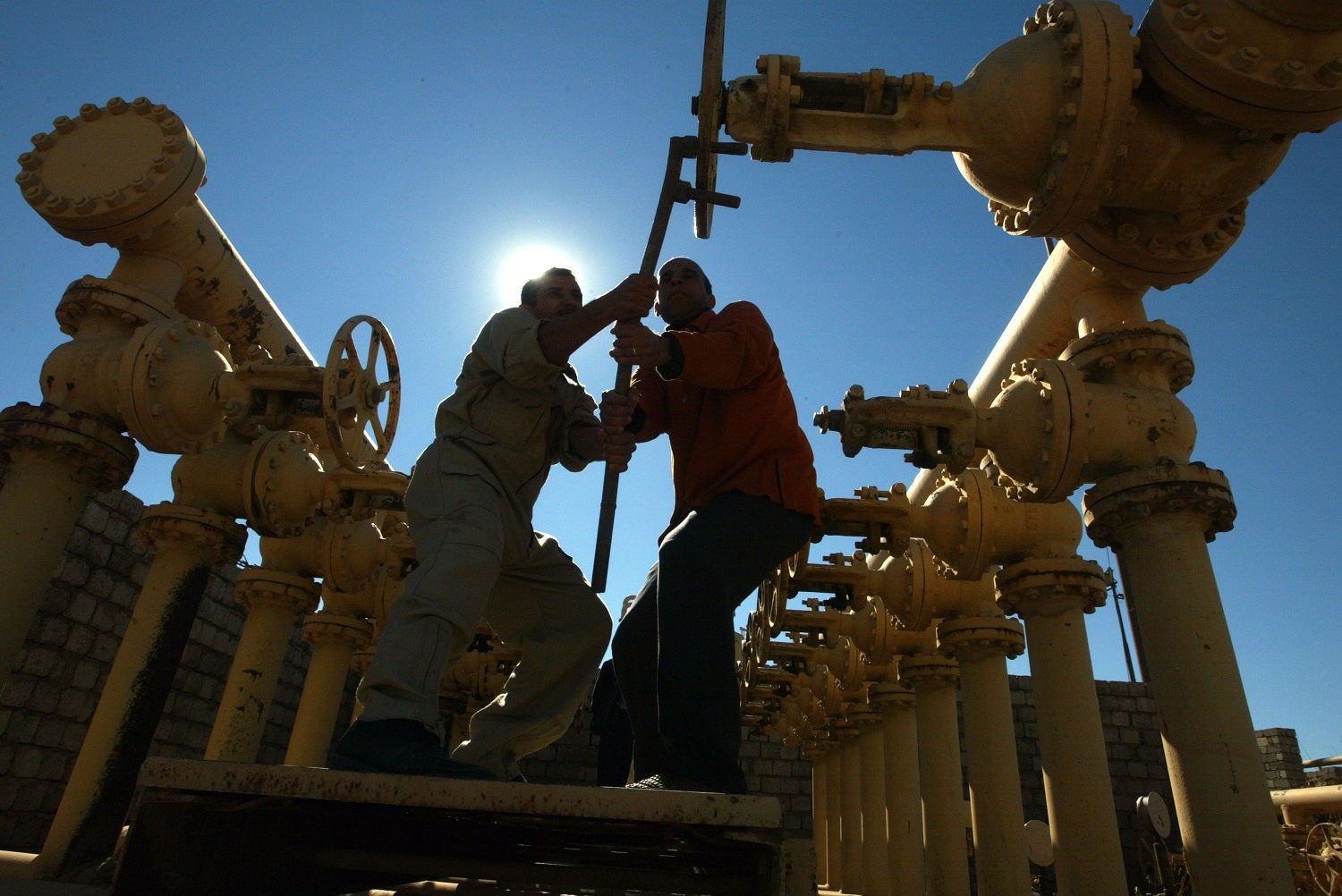
State-owned upstream operator Kuwait Oil Company (KOC) has awarded an oil project contract worth KD117m ($381m) to India’s Megha Engineering & Infrastructure (Meil).
The Supreme Purchasing Committee for Kuwait Petroleum Corporation (KPC) approved the contract last month, paving the way for the official award.
The project focuses on a water separation unit at the Al-Rawdatain facility in Kuwait.
The water separation facility will be developed at Gathering Centre 25 (GC-25), along with a pumping facility at GC-30.
The project will deliver a wide-ranging upgrade of processing and utility infrastructure, including new low-pressure separation and gas-handling equipment such as a three-phase wet separator package, a gas knock-out drum and associated low-pressure gas pipelines, as well as a high-integrity pressure protection system and a high-pressure flare.
Meil will develop the new three-phase low-pressure wet separation facility at GC-25.
The main process equipment will include two wet separator packages, each with a capacity of 150,000 barrels of liquid a day, and a low-pressure gas knock-out drum with a capacity of 53 million standard cubic feet a day, together with associated gas-handling facilities.
The facility will also incorporate an effluent water treatment and transfer system, including an effluent water balance tank equipped with microbubble flotation and induced gas flotation systems, as well as transfer pumps.
Additional GC-25 facilities will include fuel gas treatment, chemical injection, oil recovery and flare connections, along with firewater and deluge systems.
The scope also covers control and safety systems, substations, and associated civil, structural, mechanical, electrical and instrumentation works.
At GC-30, the project will focus on treated-water filtration and high-pressure injection infrastructure.
The scope includes nutshell filters and associated feed pumps with a combined capacity of approximately 500,000 barrels of water a day.
Booster and injection pumps will transfer treated effluent water to designated injection wells.
Additional facilities at GC-30 will include fuel gas treatment, sludge collection and disposal systems, oil recovery systems, control and safety systems, substations, laboratory and workshop facilities, and associated civil, structural, piping, mechanical, electrical and instrumentation works.
The project also includes transfer pipelines connecting GC-25, GC-15 and GC-30.
Meil will carry out modifications to existing tanks at GC-30, as well as process and utility tie-ins, electrical and instrumentation modifications and other infrastructure required to integrate the new facilities with KOC’s existing assets.
Meil’s responsibilities cover the project lifecycle from design and engineering through procurement, construction, testing, pre-commissioning, commissioning, start-up and performance testing.
The contract also includes operation, maintenance, repair and insurance responsibilities for the designated facilities during the applicable operations and maintenance period.
Seven companies submitted bids for the project last November.
The full list of bids was:
- Meil (India) – KD117m ($381m)
- Mechanical Engineering & Contracting Company (Kuwait) – KD130m
- Spetco (Kuwait) – KD158m
- Al-Kharafi (Kuwait) – KD164m
- China Oil HBP Science & Technology (China) – KD169m
- Alghanim International (Kuwait) – KD169m
- Jereh Oil & Gas Engineering (China) – KD191m
In October last year, KOC awarded Meil a separate contract for a project to develop a gas sweetening and recovery facility in west Kuwait.
Meil submitted the lowest bid for that tender, at KD69.2m ($225.5m), in February 2025.
https://image.digitalinsightresearch.in/uploads/NewsArticle/19911322/main.jpg -
Kuwait refinery project on track for year-end completion
23 September 2026
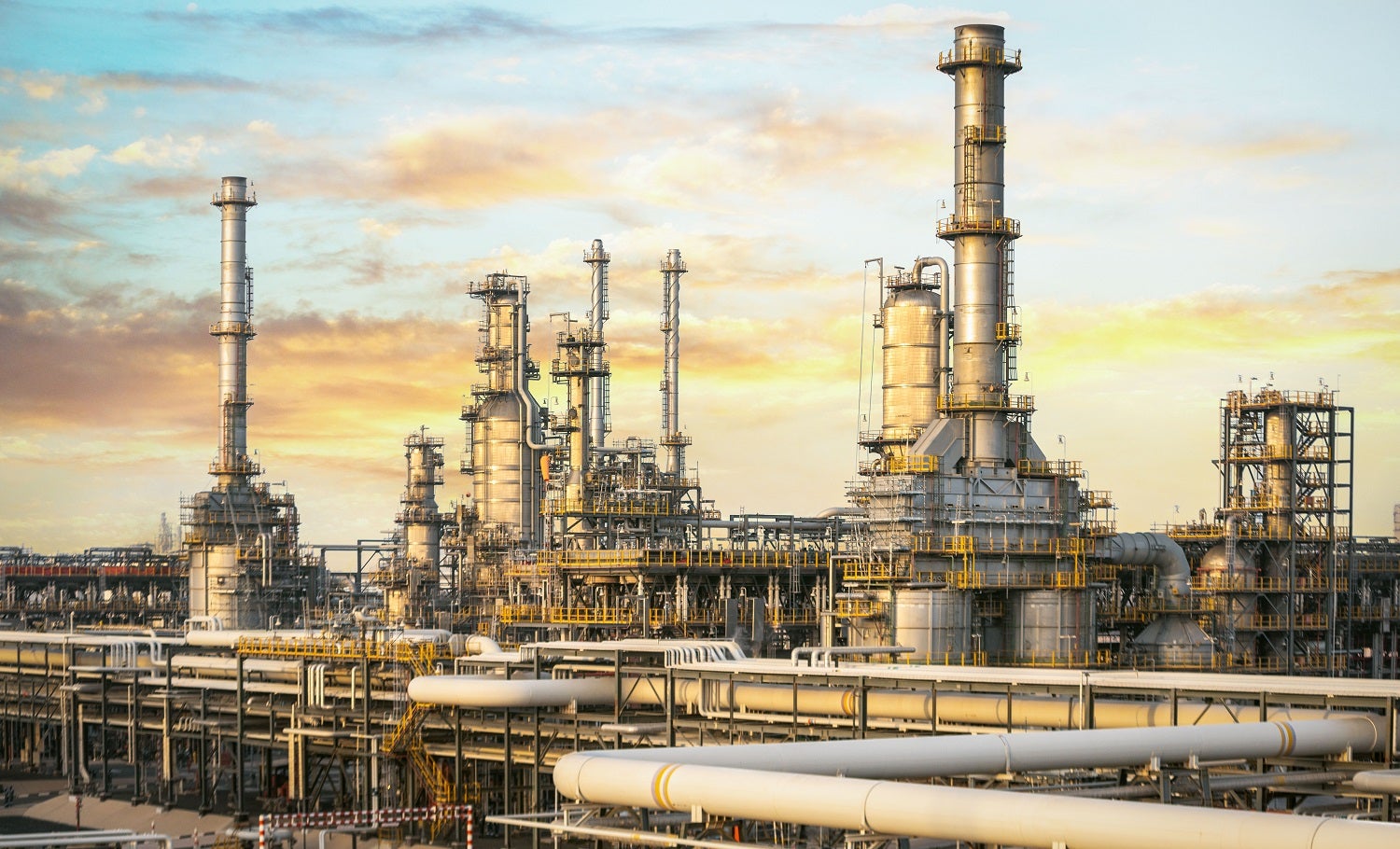
A $65m project to replace a substation at the Mina Al-Ahmadi (MAA) refinery is on schedule to be mechanically complete before the end of the year, according to industry sources.
The project is being executed by India’s Larsen & Toubro (L&T), which was awarded the contract in October 2024.
One source said: “This project is approaching completion and is currently on schedule to be completed before the end of the year, although it could still see delays related to the ongoing regional conflict.”
The client is state-owned downstream operator Kuwait National Petroleum Company (KNPC).
Kuwait’s Ministry of Electricity, Water & Renewable Energy (MEW) is also involved in the project and will provide final approvals and sign-off.
The scope of the project includes:
- Construction of a substation
- Installation of transformers
- Installation of medium-voltage switchgear
- Installation of low-voltage auxiliary systems
- Installation of network protection systems
- Installation of disconnecting switches
- Installation of surge arrestors
- Installation of feeder breakers and cubicles
- Installation of low-voltage A/C and D/C equipment
- Installation of battery banks and battery chargers
- Installation of related relay and control panel boards
- Installation of fire alarm and fire protection equipment
- Installation of a SCADA system
- Installation of cables
- Civil works
- Associated facilities
The current project to replace a substation at the MAA refinery closely resembles another project tendered by KNPC more than a decade ago, which L&T also won.
On 18 May 2015, KNPC signed a contract with L&T to build a new 240MW substation at the MAA refinery, valued at KD21.866m.
The new substation, known as M20, was designed to replace an existing substation that was considered old and obsolete.
Mohammed Al-Mutairi, who was KNPC’s chief executive at the time, said the substation building would be explosion-proof and use state-of-the-art control systems.
He said the station’s capacity would increase from 180MW to 240MW, supplying most of the refinery’s electricity needs.
Given the similarities between the two projects, L&T has been able to reuse some designs, creating efficiencies, according to industry sources.
https://image.digitalinsightresearch.in/uploads/NewsArticle/19911319/main.jpg -
Contractor wins $208m Almoosa hospital MEP contract
23 September 2026
Register for MEED’s 14-day trial access
Riyadh-based construction firm BEC Arabia has won a SR781m ($208m) contract for the mechanical, electrical and plumbing (MEP) works at Almoosa Hospital in Al-Khobar.
Saudi Arabia’s Almoosa Health Company awarded the contract.
The hospital complex consists of two towers: a 24-storey in-patient tower with 380 beds, and an 11-storey tower with 224 clinics and 113 additional treatment spaces.
It will be built on a 45,000-square-metre site.
A podium spanning the ninth and 10th floors will connect the two towers.
The hospital will also include parking for 1,700 cars.
BEC Arabia won the SR656m ($175m) main construction contract for the hospital in November last year.
In August 2025, MEED reported that Almoosa Health Company had announced it had secured a sharia-compliant credit facility worth SR650m ($173m) from Banque Saudi Fransi.
In a statement published on the Saudi stock exchange (Tadawul), the company said the seven-year facility would be used to support its expansion and growth strategy.
Lebanon’s Dar, US-based Perkins&Will and French design firm Pierre-Yves Rochon designed the project.
https://image.digitalinsightresearch.in/uploads/NewsArticle/19910889/main.jpg -
UAE to develop integrated waste-to-resource pilot
23 September 2026
Emirates Biotech and United Arab Emirates University (UAEU) have launched a pilot project in Al-Ain that could provide a model for larger waste-to-resource facilities.
The project involves developing the UAE’s first integrated organic-waste valorisation pilot plant, which will test whether food waste and compostable packaging can be processed together to recover resources and reduce waste sent to landfill.
Located near the UAEU campus, the 40kg-a-day facility will process organic waste to produce renewable biogas and nutrient-rich compost. The project is intended to generate technical and operating data that could support the development of larger-scale facilities.
Emirates Biotech and UAEU will design, build and operate the pilot plant as part of a two-year research project running from August 2026 to August 2028. Installation and commissioning are expected to be completed by August 2027.
The plant will combine anaerobic digestion and composting. Anaerobic digestion will convert the organic waste into renewable biogas, while the resulting digestate will be composted to produce nutrient-rich compost.
A laboratory-scale assessment will also examine the potential to convert the biogas into renewable hydrogen.
Food waste accounts for nearly 40% of daily municipal solid waste in the UAE, according to Emirates Biotech, and much of it is currently disposed of in landfills.
The pilot will therefore assess the technical and operational feasibility of recovering value from two waste streams through a single integrated process.
If successfully scaled, Emirates Biotech says an integrated organic-waste valorisation plant could reduce CO₂ emissions by 89% compared with landfilling.
The project is expected to provide a scalable and modular model for converting food waste and compostable packaging into renewable biogas and compost, with the findings intended to inform the development of larger waste-to-resource facilities.
https://image.digitalinsightresearch.in/uploads/NewsArticle/19908972/main.jpg -
Contractors prepare Oxagon Highway 55 bids
23 September 2026
Contractors are preparing to submit bids on 28 September for a design-and-build contract for permanent upgrade works on Highway 55 in the kingdom’s Oxagon region.
The first phase of the project includes constructing 14 kilometres of road, with two lanes in each direction. It also includes one bridge and three interchanges.
The project duration is 22 months.
Highway 55 connects the Red Sea coast with the mainland in northwestern Saudi Arabia. It is currently the only road providing north-south connectivity between Duba and the Neom region.
MEED reported exclusively in August 2025 that contractors had submitted responses to an expression of interest notice that Neom had issued earlier that month.
The project is expected to support cargo movement from Duba Port to other parts of the kingdom and the wider region.
Last year, Neom tested a pilot initiative by handling a shipment that travelled from Cairo via the Port of Safaga, across the Red Sea to the Port of Neom, and then inland to Erbil, Iraq.
In a statement, Neom said: “The shipment travelled through an intermodal corridor spanning over 900 kilometres, marking a significant milestone in the kingdom’s transformation into a regional and global logistics hub.”
The Port of Neom is located on the Red Sea near the Arar border, a key entry point into Iraq.
https://image.digitalinsightresearch.in/uploads/NewsArticle/19907876/main.jpg