
Abu Dhabi extends Al-Nouf prequalification deadline
25 March 2025

State utility and offtaker Emirates Water & Electricity Company (Ewec) has given interested firms more time to submit their statements of qualifications (SOQs) for a contract to develop a new combined-cycle gas turbine (CCGT) power generation plant in Abu Dhabi.
MEED understands that Ewec has extended the SOQ submission deadline from 20 to 28 March.
The CCGT plant will be located at the Al-Nouf complex, 30 kilometres southwest of Abu Dhabi.
The Al-Nouf 1 independent power project (IPP) will have a net generation capacity of approximately 3,300MW.
MEED understands that Ewec is in discussions with original equipment manufacturers regarding support for the prospective bidders in terms of the procurement process for the necessary gas turbines.
According to industry sources, Ewec aims to issue the request for proposals for the contract to develop the Al-Nouf 1 IPP before the end of March.
The estimated bid submission deadline is late August.
The CCGT plant is expected to reach commercial operations by June 2029.
MEED reported in September last year that Abu Dhabi plans to procure an estimated 5,000MW of gas-fired power plant capacity, mainly to support the UAE’s artificial intelligence (AI) strategy.
Ewec is understood to be working with both Abu Dhabi National Energy Company (Taqa) and Abu Dhabi Future Energy Company (Masdar) to implement the power plant projects that will support the UAE government’s AI strategy.
Taqa is conducting final negotiations for a contract to build an open-cycle gas turbine (OCGT) power generation plant in Abu Dhabi's Al-Dhafra region, MEED recently reported.
The Al-Dhafra OCGT plant project is being tendered on a fast-track basis and is expected to have an installed capacity of 1,000MW-1,100MW.
In January, Ewec and Masdar announced a project to build a solar photovoltaic (PV) and battery energy storage system (bess) project to enable the round-the-clock supply of 1GW of solar power. It will comprise a 5GW solar PV plant and 19 gigawatt-hour bess plant.
Taweelah C
Ewec received a single proposal for a contract to develop the Taweelah C IPP project in late February.
The Taweelah C IPP will have a generation capacity of up to 2,500MW and is expected to reach commercial operations in the third quarter of 2028.
Industry sources suggest that UAE-based Etihad Water & Electricity (Ethad WE) submitted the lone bid for the contract.
The Taweelah C IPP is the first gas-fired power plant project to be procured by Abu Dhabi since 2020, when Ewec awarded Japan’s Marubeni Corporation the contract to develop the Fujairah 3 IPP.

Register for MEED's guest program now to access this article.
Exclusive from Meed
-
 Adnoc Onshore selects contractors for well tie-ins project
27 October 2026
-
 Ashghal tenders Al-Udeid air base access road works
27 October 2026
-
 Saudi Arabia gauges interest for Al-Ula wastewater expansion
27 October 2026
-
 Qatari firm wins $147m Syria road deal
27 October 2026
-
 Adnoc showcases $16.3bn local manufacturing potential
27 October 2026
All of this is only 1% of what MEED.com has to offer
Subscribe now and unlock all the 153,671 articles on MEED.com
- All the latest news, data, and market intelligence across MENA at your fingerprints
- First-hand updates and inside information on projects, clients and competitors that matter to you
- 20 years' archive of information, data, and news for you to access at your convenience
- Strategize to succeed and minimise risks with timely analysis of current and future market trends
Related Articles
-
Adnoc Onshore selects contractors for well tie-ins project
27 October 2026
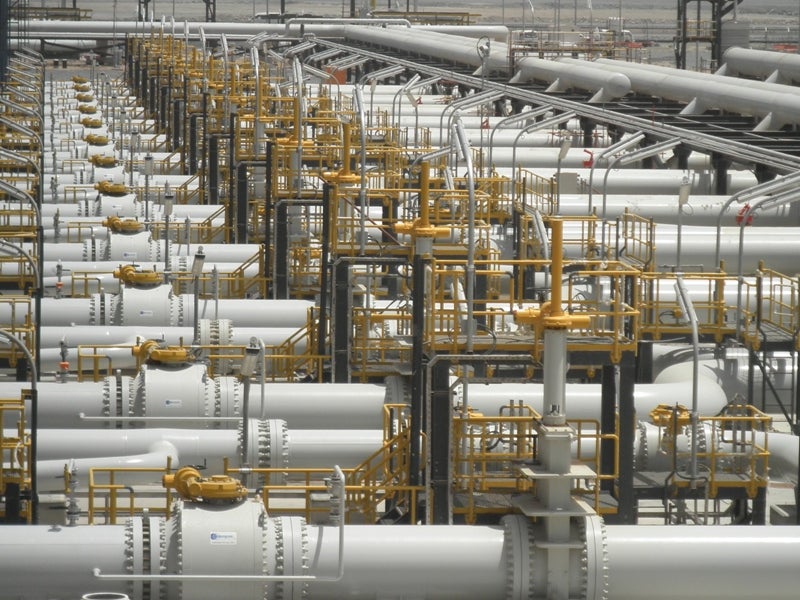
Abu Dhabi National Oil Company’s onshore operating arm (Adnoc Onshore) has selected contractors for a major project to tie in wells across the Bab and North East Bab oil field developments in Abu Dhabi.
Located 84 kilometres southwest of Abu Dhabi city, the Bab field has been in production since 1960 and is the emirate’s first oil-producing asset. The North East Bab cluster comprises the Al-Nouf, Rumaitha and Shanayel fields.
The Bab and North East Bab One Tie-In project is central to Adnoc Onshore’s contribution to Adnoc Group’s target of expanding crude oil production capacity to 5 million barrels a day (b/d) by 2027, an initiative known as the Accelerated Integrated Programme 5. The state energy company’s total production capacity currently stands at approximately 4.85 million b/d.
According to industry sources, Adnoc Onshore has selected local contractor Robt Stone Middle East and China’s Jereh Group to carry out engineering, procurement and construction (EPC) works on the project. While both firms have been notified of their selection, a formal project kick-off meeting has yet to take place.
Adnoc Onshore is understood to have started the tendering process for the Bab and North East Bab One Tie-In project last year, with contractors submitting technical and commercial bids earlier this year.
Following the evaluation of bids, Adnoc Onshore sought best commercial offers from the bidders, which contractors submitted in May, MEED previously reported.
The project budget is estimated at $1.2bn.
Bidders for the contract are understood to have included:
- Galfar Emirates (UAE branch of Oman’s Galfar Engineering & Construction)
- Jereh (China)
- Kalpataru Projects International (India)
- Matrix Construction (UAE)
- Robt Stone Middle East (UAE)
- Target Engineering Construction Company (UAE)
The project scope covers residual engineering, procurement of materials not supplied as free-issue items, site surveys, construction, installation, inspection, testing, and pre-commissioning and commissioning support. The works will deliver new wellsite facilities, including a new mini-pad, well bays and clusters across the Bab and North East Bab developments.
Adnoc Onshore is Adnoc Group’s largest production subsidiary, accounting for roughly 2 million b/d of crude and about 7 billion cubic feet a day of associated gas from four primary onshore asset clusters: Bab, Bu Hasa, North East Bab and South East.
ALSO READ:
https://image.digitalinsightresearch.in/uploads/NewsArticle/20951928/main.jpg -
Ashghal tenders Al-Udeid air base access road works
27 October 2026
Qatar’s Public Works Authority (Ashghal) has invited contractors to bid on a contract to build roads and related infrastructure around Al-Udeid Air Base.
The project is located in Zone 95 of Al-Wakra Municipality, adjacent to Al-Majd Road.
The tender was issued on 22 October, with a submission deadline of 22 November.
The scope includes the construction of a dual-lane carriageway to improve access to the air base, together with three roundabouts. The alignment will connect to Al-Majd Road to the east and tie into Street 203 in Zone 95 to the west. The contractor will also resurface and maintain connections to the existing road network.
Associated works include street lighting, intelligent transport systems, directional signage and a surface-water drainage collection system.
The contractor will provide crossing ducts, protect and relocate conflicting existing utilities, and complete detailed utility designs as required by relevant stakeholders through the Qatar Design Review System.
The project also includes the design and construction of two electrical substations. The contractor must secure the necessary stakeholder and authority approvals before starting these works.
The scheme will be delivered on a remeasurable, build-only basis using designs approved by others. It will also include designated contractor-designed elements and design-and-build packages for the substations.
Bidders must submit two commercial pricing options: a base offer subject to material price-fluctuation provisions, and an alternative authority option without such provisions.
The contract has a 550-day completion period from the commencement date, including mobilisation, followed by a 400-day maintenance period after the completion certificate is issued.
Participation is restricted to local and international contractors registered under the Ministry of Finance classification system in Grade A or Grade B for road specialisation.
Unclassified foreign firms may submit equivalent certified documentation from their country of origin, attested by Qatari diplomatic missions. They must obtain Ministry of Finance registration before contract award.
For joint-venture bids, the lead partner must hold the required classification grade.
https://image.digitalinsightresearch.in/uploads/NewsArticle/20950810/main.jpg -
Saudi Arabia gauges interest for Al-Ula wastewater expansion
27 October 2026
Saudi Arabia’s Royal Commission for Al-Ula (RCU) is conducting market sounding for the first phase of the Mughayra wastewater treatment plant (WWTP) expansion before formally starting its tendering process, according to industry sources.
The project is valued at SR400m ($107m) and is intended to increase the Mughayra plant’s wastewater treatment capacity to 62,000 cubic metres a day.
RCU is gauging interest from potential contractors and has not yet issued a prequalification questionnaire, a source said.
The scheme forms part of Saudi Arabia’s broader investment drive to develop its cultural and tourism offering across Al-Ula.
The commission launched its Journey Through Time Masterplan in April 2021, with implementation scheduled in three phases through 2035. The masterplan covers infrastructure development, water management and irrigation, alongside the regeneration of a 9-kilometre cultural oasis.
French engineering firm Artelia previously noted in its 2025 annual corporate report that it is involved in the design phase of the Mughayra WWTP.
RCU is also developing strategic potable-water storage infrastructure in Al-Ula, including a design-and-build project covering a 50,000-cubic-metre reservoir at Hub 06 and a 15,000-cubic-metre reservoir at Hub 08.
Local contractor Bin Omairah previously confirmed that it is serving as the engineering, procurement and construction contractor for the storage facilities.
https://image.digitalinsightresearch.in/uploads/NewsArticle/20950333/main.jpg -
Qatari firm wins $147m Syria road deal
27 October 2026
Qatari contractor Al-Mohannadi for Roads, Trading & Contracting has signed a $147m contract with Syria’s General Directorate of Roads to rehabilitate and expand a 215-kilometre (km) highway corridor connecting to the Iraqi border.
The project covers the rehabilitation and dualisation of a 170km section linking the Al-Busairi junction to the Al-Tanf border crossing, alongside the construction of a 45km link between the Al-Sabaa Biyar junction and Al-Busairi. Work is scheduled for completion within 900 days.
The agreement was signed in Damascus by Moaz Najjar, director-general of the General Directorate of Roads, and Abdullah Adnan Al-Zattam, chief executive of Al-Mohannadi, in the presence of Syrian Transport Minister Yarob Badr and Finance Minister Mohammad Yusr Barnieh.
The upgrade is intended to restore and expand one of Syria’s primary overland arteries to Iraq, which has suffered significant deterioration and capacity bottlenecks following years of conflict. The Al-Tanf corridor represents the most direct overland link between Damascus, central Syrian industrial centres and Baghdad.
The project is designed to accommodate heavier commercial freight vehicles and reduce transit times between the two countries.
The investment also forms part of broader efforts to re-establish Syria’s role as a regional transit corridor connecting Mediterranean ports with landlocked trade routes into Iraq and the wider region.
https://image.digitalinsightresearch.in/uploads/NewsArticle/20950332/main.gif -
Adnoc showcases $16.3bn local manufacturing potential
27 October 2026
Abu Dhabi National Oil Company (Adnoc Group) has identified more than AED60bn ($16.3bn) in local manufacturing opportunities through 2030.
The Abu Dhabi energy company also announced changes to its procurement, supplier registration and In-Country Value (ICV) localisation frameworks.
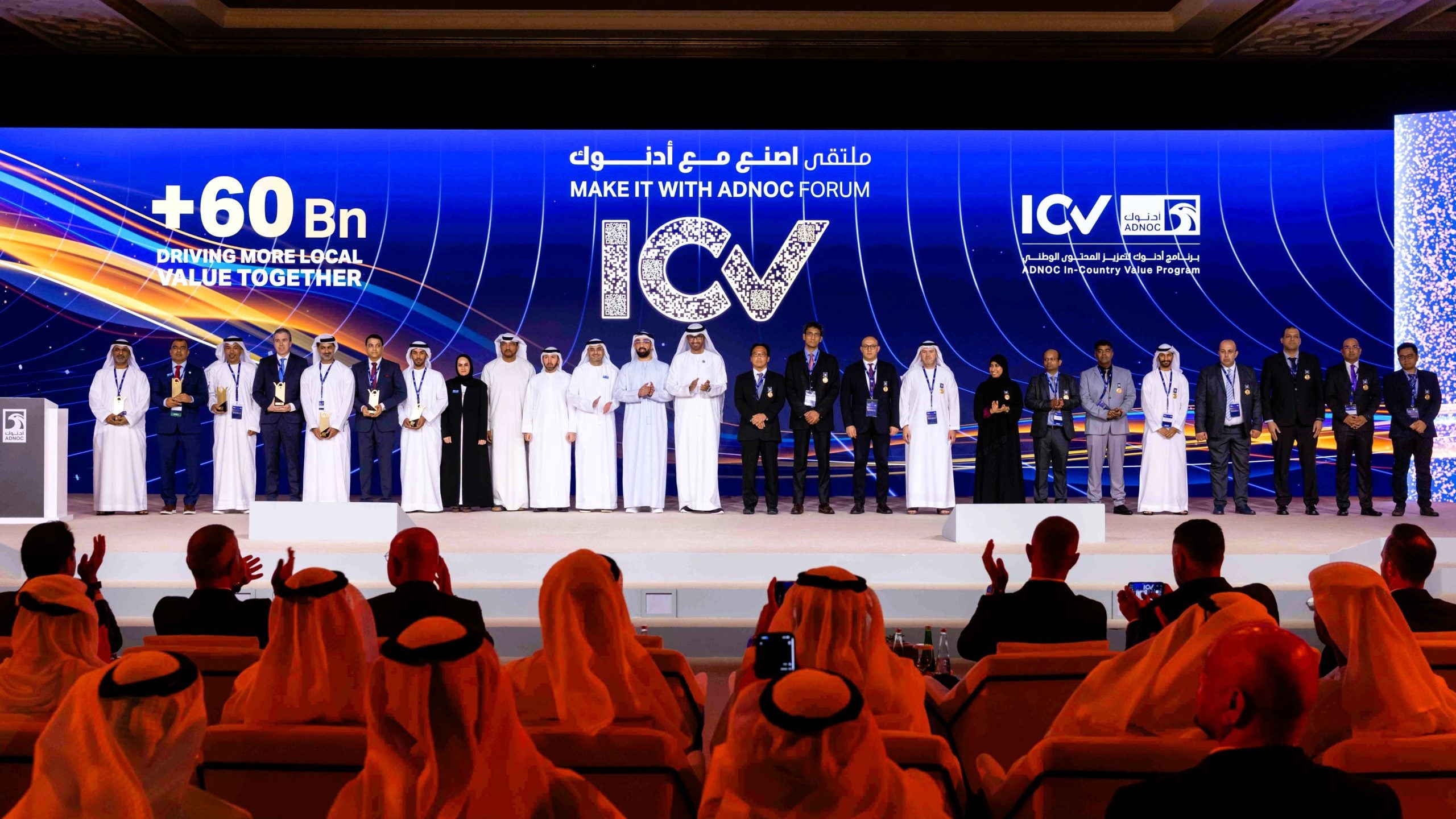
The measures were announced at the second Make it with Adnoc Forum, held in Abu Dhabi on October 25. They are intended to give manufacturers, suppliers and investors greater visibility of future demand and a faster, clearer route to compete for Adnoc contracts, the company said.
The more than 200 manufacturing opportunities cover products required for Adnoc’s projects and operations, including:
- Rotating equipment and power
- Electrical, control and automation systems
- Drilling and completion equipment
- Chemicals and catalysts
- Piping, fabrication and heavy equipment
- Spare parts and advanced manufacturing
Many of the identified products are currently imported, Adnoc said. “Manufacturing them in the UAE shortens lead times, reduces exposure to global supply disruptions and strengthens the resilience of Adnoc’s operations,” it said in its statement.
Adnoc, the UAE Ministry of Industry & Advanced Technology and the Abu Dhabi Investment Office (Adio) will work together to connect manufacturers with these opportunities. The collaboration will combine visibility of Adnoc’s demand, access to the national industrial database and financing through the National Industrial Resilience Fund, the company said.
Adnoc also signed two memorandums of understanding on the sidelines of the forum with Adio and Kezad Group.
ICV scheme expansion
Adnoc announced the expansion of its Local+ programme, part of its ICV framework, to more than 100 UAE manufacturers, compared with 70 at its launch in May. The programme gives UAE-made products priority in Adnoc projects by requiring engineering, procurement and construction (EPC) contractors bidding for new tenders to source relevant products from manufacturers approved under the programme.
Separately, Adnoc announced a redesign of its supplier registration and prequalification process. The company is targeting a reduction of up to 80% in the time required for suppliers to complete the process and become eligible to compete for Adnoc opportunities.
The new model halves the number of required documents and removes prequalification requirements for 60% of service categories.
A single window brings together registration, qualification and compliance, with requirements tailored to the nature of the work and its level of risk. Artificial intelligence will support document verification and the reuse of existing data, reducing repetitive submissions and administrative processing.
ALSO READ:
Adnoc steps up crude oil capacity expansion
Adnoc funnels billions into boosting gas processing
“Adnoc’s enhanced ICV model will more closely connect procurement decisions with commercial value and suppliers’ contribution to the UAE economy. Under the new model, commercial and ICV offers will be integrated into a single evaluation model,” the company said.
“The previous bid-matching approach will be retired, encouraging suppliers to submit their most competitive commercial and ICV offers from the outset. Requirements will be proportionate to contract size and scope.
“The model also enhances the administration of ICV-related retention payments. Where retention applies, automated calculation and release processes through the Adnoc Supplier Hub will improve transparency, reduce manual follow-up and support suppliers’ cash flow as obligations are met.”
Alongside the ICV and registration enhancements, Adnoc outlined a new commercial approach built around four strategic shifts: agile, competitive, strategic and forward-looking.
“The approach will advance simpler procurement and faster decision-making, contracting models aligned with project and market dynamics, targeted commercial negotiations and earlier visibility of Adnoc’s future demand.”
Since its launch in 2018, Adnoc’s ICV programme has directed more than AED307bn ($83.6bn) into the UAE economy, the company said. By the end of 2025, it had also supported the localisation of more than 130 products, the development of 95 UAE factories, and employment opportunities for more than 27,500 Emiratis at participating private sector companies.
https://image.digitalinsightresearch.in/uploads/NewsArticle/20948385/main5518.jpg