
UAE real estate construction returns to record highs
4 August 2023
The annual total value of construction contract awards for real estate projects in the UAE is on course to breach the $30bn level for the first time since the 2008 global financial crisis.
According to data from regional projects tracker MEED Projects, the total value of contract awards in 2023 has already surpassed the full-year total achieved in 2022.
There have been $17.5bn of construction contract awards so far this year across real estate asset classes, including residential, commercial, hospitality and retail. For the whole of 2022, there were $13bn of contract awards.
The highest annual total since 2008 was recorded in 2017, when there were $29bn of contract awards, and the average total for the past decade is $19bn. The worst performing years were in 2020 and 2021, when less than $10bn of contracts were awarded. The only other time the value dipped below $10bn was in 2011.
The collapse in activity in 2020 and 2021 was primarily due to the economic disruption caused by the Covid-19 pandemic. However, it should be noted that the annual total value of contracts awarded had fallen sharply in 2019 – the year before the pandemic.
The prospects for the rest of this year are promising. Nearly $8bn of contracts are already at the bid evaluation stage, and another $2bn is at the main contract bid and prequalification stage.
Sustained growth
Longer term, there will be inevitable questions about how long the strong performance can be sustained. The record highs achieved in 2007 and 2008 ultimately came to an abrupt halt in 2009, and fears of a similar collapse have haunted the market ever since.
The latest reports from property consultants say that the market continues to perform strongly, adding that some segments have shown signs of moderation during the first half of this year.
According to CBRE, these include Dubai’s secondary residential market and the industrial and logistics sectors.
For Dubai’s secondary residential market, a slight drop-off of 0.5 per cent in sales was observed over the past year.
Overall there was an increase of 18.8 per cent in total residential transactions registered in June 2023, coupled with a surge of 44.9 per cent in off-plan market sales, bolstering the health of the residential market as a whole.

Register for MEED's guest program now to access this article.
Exclusive from Meed
-
 Engie completes refinancing of Oman power plants
5 November 2026
-
 Aramco seeks to expand East-West crude pipeline
5 November 2026
-
 SAR tenders railway track design framework
5 November 2026
-
 Aramco commissions Zuluf field oil increment project
5 November 2026
-
 BP and PetroChina cut budgets for Iraq oil projects
5 November 2026
All of this is only 1% of what MEED.com has to offer
Subscribe now and unlock all the 153,671 articles on MEED.com
- All the latest news, data, and market intelligence across MENA at your fingerprints
- First-hand updates and inside information on projects, clients and competitors that matter to you
- 20 years' archive of information, data, and news for you to access at your convenience
- Strategize to succeed and minimise risks with timely analysis of current and future market trends
Related Articles
-
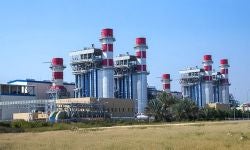
Engie completes refinancing of Oman power plants
5 November 2026
French developer Engie has announced that it has reached financial close on the refinancing of the Sohar 2 and Barka 3 independent power projects (IPPs) in Oman.
The transaction follows 15-year extensions to the plants’ power purchase agreements (PPAs) in March, securing their long-term operations through to 2043.
As previously reported by MEED, the new agreements for the 750MW Sohar 2 and 750MW Barka 3 IPPs will take effect on 1 April 2028.
The refinancing aligns the projects’ debt profiles with the extended PPA terms and establishes a long-term financing framework to support future capital expenditure. This includes refurbishment works aimed at improving the reliability and long-term performance of both assets.
Al-Batinah Power Company and Al-Suwadi Power Company operate the Sohar 2 and Barka 3 power plants, respectively.
According to regional projects tracker MEED Projects, Nama PWP signed the original PPA for the Barka 3 project in 2010 with a consortium led by Gaz de France (GDF) Suez under a special purpose vehicle called Al-Suwadi Power Company.
The shareholders comprised GDF Suez (46%), Bahwan Engineering Company (22%), Shikoku Electric Power Corporation (11%), Sojitz Corporation (11%) and the Public Authority for Social Insurance (10%).
In 2015, GDF Suez was rebranded as Engie following a strategic shift towards low-carbon energy and utilities.
https://image.digitalinsightresearch.in/uploads/NewsArticle/21170932/main.jpg -
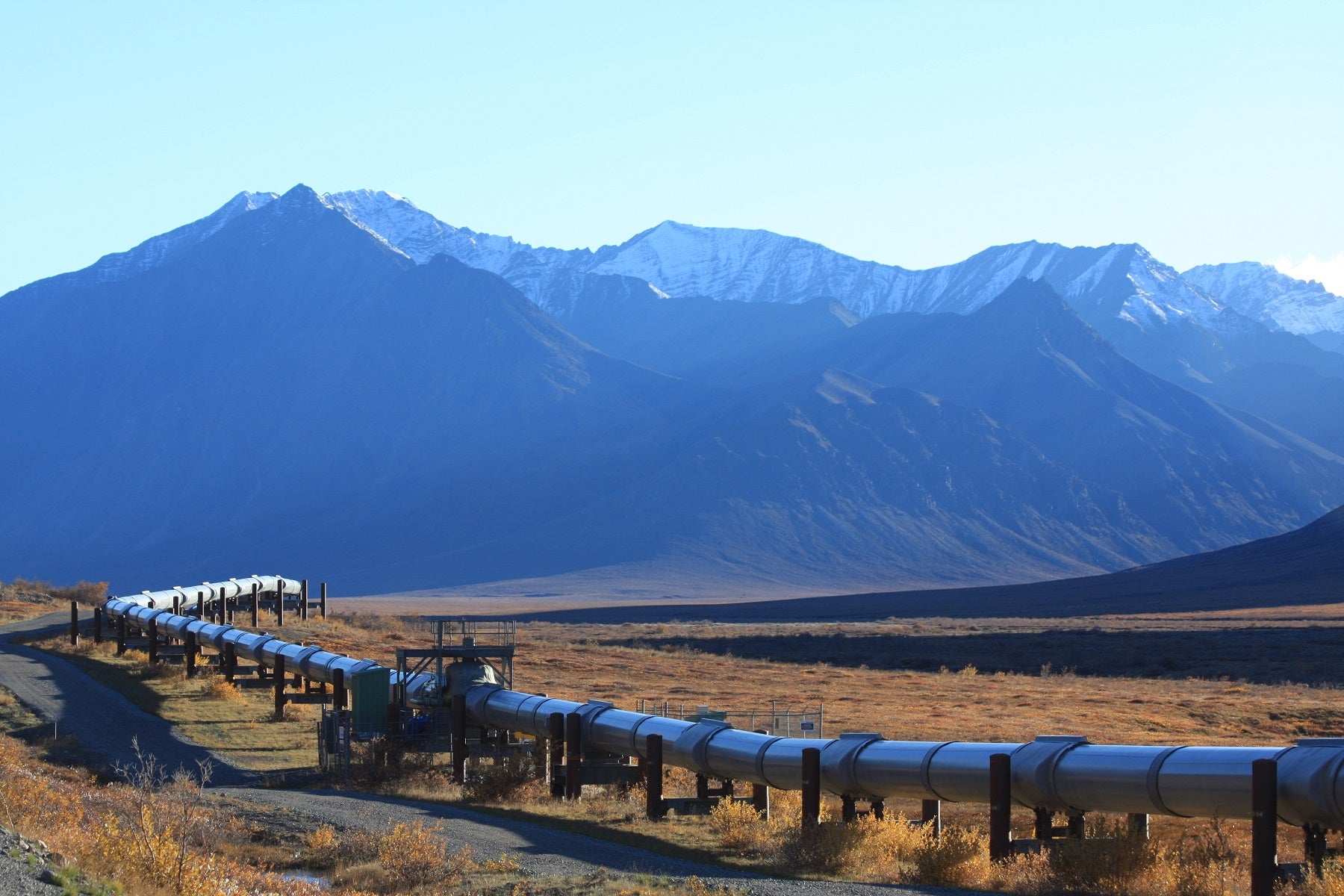
Aramco seeks to expand East-West crude pipeline
5 November 2026
Saudi Aramco is planning to expand its East-West oil pipeline network, aiming to strengthen the kingdom’s ability to transport crude oil while bypassing the Strait of Hormuz.
Aramco operates the 1,200-kilometre East-West pipeline from Abqaiq in the Eastern Province to Yanbu on the Red Sea coast. The pipeline currently has an oil transportation capacity of 7 million barrels a day (b/d).
The pipeline was targeted by Houthi missiles in September and by Iran in April. Aramco resumed crude oil exports through the pipeline at the start of October.
“With regard to the expansion to our East-West pipeline and the additional networks that we are building, this work has already started,” Amin Nasser, Aramco’s president and CEO, told analysts on a call following the company’s announcement of its Q3 2026 financial results on 3 November.
Nasser had previously said in an interview with Al Arabiya Business that Aramco had begun engineering work on the East-West pipeline expansion project during the early stages of the US-Iran conflict.
In October, Saudi Energy Minister Prince Abdulaziz Bin Salman said that the kingdom was looking to expand its crude oil export capacity by pipeline to as much as 10 million b/d. The plans would involve repurposing a domestic gas pipeline and investing in the existing East-West pipeline network.
Aramco uses three main routes to export crude oil: the Gulf, via the Strait of Hormuz; the Red Sea, via the Bab El-Mandeb strait; and the Mediterranean, via Sidi Kerir in Egypt. The company also uses overseas oil-storage facilities in South Korea, Japan, the Netherlands and Sidi Kerir, and is working with partners to expand storage capacity, particularly in Asia.
Aramco is also undertaking engineering work on additional export routes, Nasser said.
He added that the company would not disclose details of the proposed routes until it made final investment decisions.
https://image.digitalinsightresearch.in/uploads/NewsArticle/21156806/main0615.jpg -
SAR tenders railway track design framework
5 November 2026

Register for MEED’s 14-day trial access
Saudi Arabia Railways (SAR) has invited consultants to bid by 14 December for a framework agreement covering railway track design services.
The state-owned operator is seeking to accelerate the delivery of smaller projects across its network.
SAR has scheduled a pre-tender meeting for 12 November.
Under the framework, SAR will appoint a panel of specialist consultants to carry out design work through work orders or task orders issued as required. This will remove the need for SAR to launch a separate tender for each project.
SAR said a long-term contract with several specialist service providers would benefit all parties, particularly for smaller projects.
SAR will detail the required works and communicate them to the selected consultants through each work order or task order.
The scope covers engineering studies, as well as concept, preliminary and detailed design for railway infrastructure. Services will include surveys, alignment design, geotechnical assessments, cost estimation and construction support.
Consultants will be expected to produce drawings, reports, risk registers, bills of quantities and other design documentation. All deliverables must comply with SAR standards for UIC 60 track systems and associated infrastructure.
SAR said it is seeking partnerships with competent consultants to supply track and track infrastructure design services under the terms of the tender document.
https://image.digitalinsightresearch.in/uploads/NewsArticle/21168500/main.jpg -
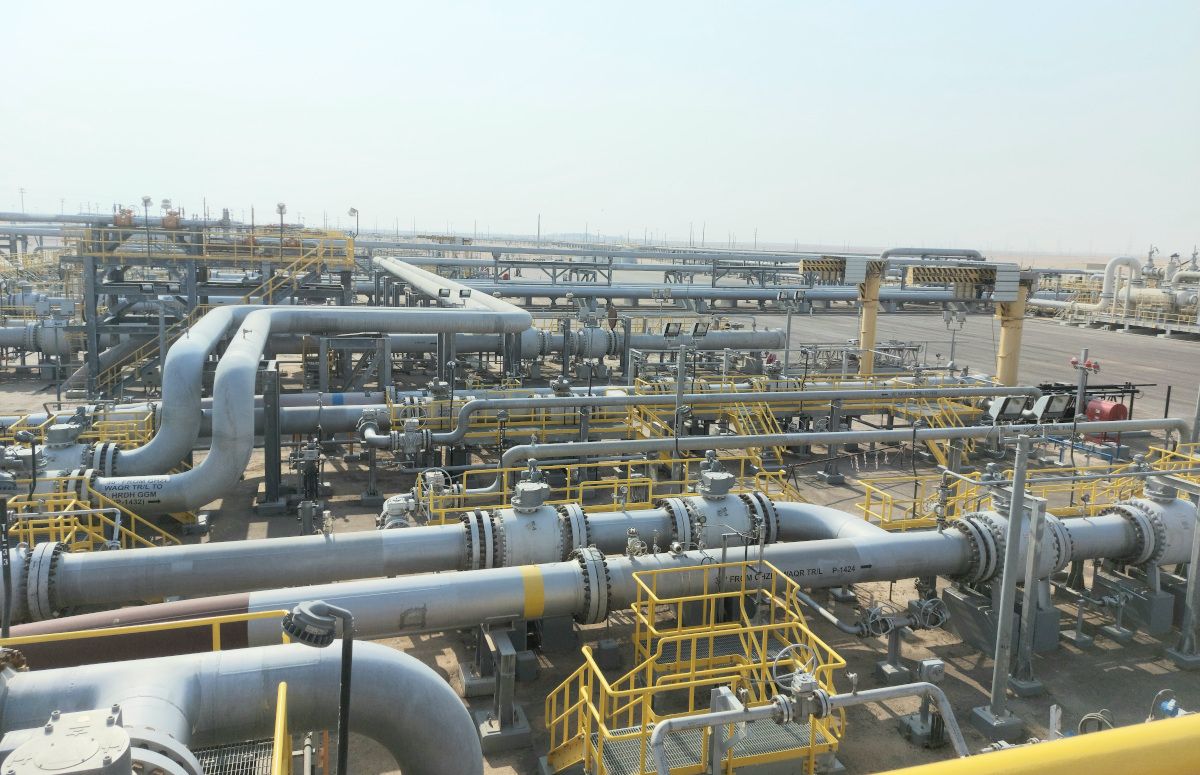
Aramco commissions Zuluf field oil increment project
5 November 2026
Saudi Aramco has announced the start of oil production at the Zuluf oil increment project in Saudi Arabia, on which it is estimated to have spent about $7bn in 2022.
The Saudi energy company made the announcement as part of its third-quarter 2026 financial results, in which it reported adjusted net income of $31.2bn, up 9% year on year.
The Zuluf oil increment project involved substantial onshore and offshore work at the field, located in the Gulf about 40 kilometres off Saudi Arabia’s northeastern coast.
The engineering, procurement and construction (EPC) scope was divided into two onshore packages and five offshore packages.
Aramco selected Japan’s JGC Holdings Corporation in May 2022 for the two main onshore packages of the Zuluf field development. Together, the packages were estimated to be worth up to $3.5bn.
Package 1 was estimated to be the larger of the two onshore packages, with a contract value of about $2bn-$2.5bn. It covered EPC work to build hydrocarbon-processing facilities for the Zuluf development, principally an onshore gas-oil separation plant.
Package 2 covered utilities and water-injection facilities and was estimated to be worth about $1bn.
Before awarding the onshore contracts, Aramco had awarded more than $4bn of contracts across five main offshore engineering, procurement, construction and installation packages. The awards went to US-headquartered McDermott International; a consortium of India’s Larsen & Toubro Hydrocarbon Engineering and UK-headquartered Subsea7; and Abu Dhabi’s NMDC Energy, then known as National Petroleum Construction Company.
Since the 2022 EPC awards, Aramco has invested further in maintaining and upgrading infrastructure at the Zuluf field. The work supports the company’s objective of maintaining its maximum sustained crude oil production capacity at 12 million barrels a day (b/d).
Other upstream projects
In its Q3 2026 results statement, Aramco also announced EPC progress on other key upstream oil and gas projects, including:
Jafurah phase two – Aramco awarded 16 contracts, worth a combined total of about $12.4bn, on 30 June 2024 for the second expansion phase of the Jafurah unconventional gas development programme in the Eastern Province.
The second phase aims to raise the field’s processing potential to up to 2 billion cubic feet a day (cf/d) of raw gas. The EPC scope of work includes constructing gas compression facilities and associated pipelines, and expanding the Jafurah gas plant, including the construction of gas processing trains, utilities, sulphur and export facilities, Aramco said in a statement.
Fadhili gas plant expansion – Through the estimated $7.7bn project, Aramco aims to increase the Fadhili gas plant’s processing capacity from 2.5 billion cf/d to up to 4 billion cf/d. The expansion includes three new processing trains, each with a capacity of 500 million cf/d.
Aramco awarded contracts for four main EPC packages of the Fadhili gas plant expansion project in April 2024 to South Korean contractors Samsung E&A and GS Engineering & Construction and Saudi contractor Nesma & Partners.
Dammam development project – The project represents the second development phase of the Dammam field. Its objective is to install infrastructure, including pipelines, trunklines and pumps, to increase the field’s crude oil production capacity by 25,000 b/d and 50,000 b/d in separate phases.
Al-Khobar-based Denys Arabia won the main EPC contract for the Dammam second field development phase in July 2024. The contract was estimated to be worth more than $500m.
https://image.digitalinsightresearch.in/uploads/NewsArticle/21156386/main4222.jpeg -
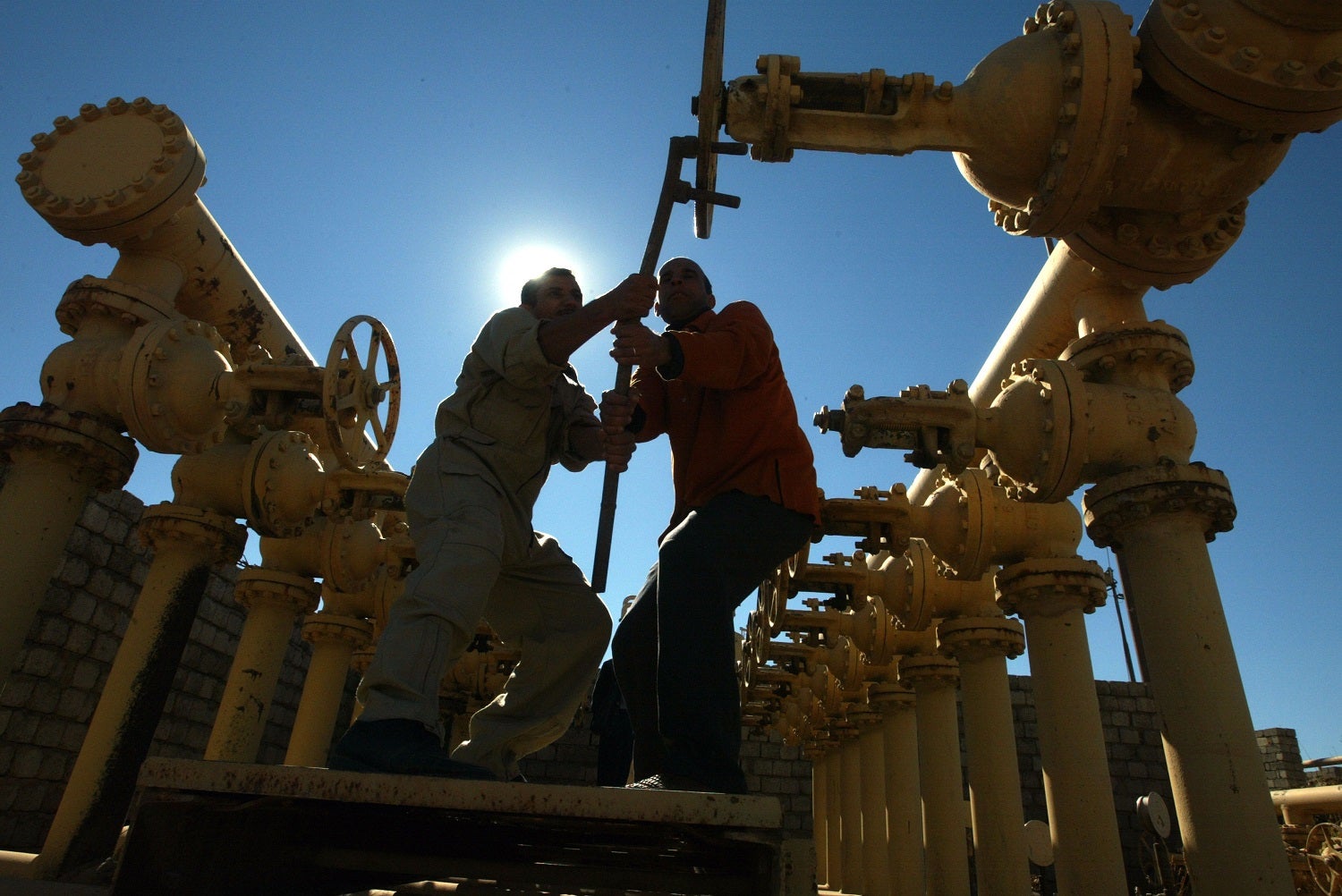
BP and PetroChina cut budgets for Iraq oil projects
5 November 2026
London-headquartered BP and PetroChina have agreed with Turkish contractor Tekfen to reduce the monthly allocated budgets for two upstream oil projects at the Rumaila field, according to industry sources.
Rumaila Operating Organisation (ROO) operates the Rumaila field.
ROO is a joint venture formed by state-owned Basra Oil Company; Iraq’s State Oil Marketing Organisation (Somo); and Basra Energy Company, a joint venture owned by UK-based oil company BP and PetroChina.
PetroChina is the listed arm of state-owned China National Petroleum Corporation.
As part of the agreement between ROO and Tekfen, progress on the projects will continue at a slower pace.
The two projects are both also suffering from delays due to problems importing equipment through the Strait of Hormuz, sources said.
One source said: “These projects are really barely alive. They are progressing very slowly after the monthly budgets were cut by the client. The project is still continuing, but at a slow pace. The budgets are very limited.”
Sources said that although the monthly budget payments were reduced, they were still being made on time.
Most of the problems that the projects at the oil field are facing are connected to the regional war, which started on 28 February when the US and Israel attacked Iran.
One source said: “The budget issues and financial problems are significant. There are also security concerns connected to reported US plans for a potential strategic nuclear strike on Iran and how that might impact operations at the Rumaila field, which is only around 60 kilometres from the Iranian border.”
The two projects have a combined value of less than $100m, and the project scopes include developing new facilities as well as upgrading and repairing existing upstream infrastructure.
https://image.digitalinsightresearch.in/uploads/NewsArticle/21153848/main.jpg