
Read the December 2024 MEED Business Review
4 December 2024
| Download / Subscribe / 14-day trial access |
Regional integration is crucial to the GCC’s ongoing economic success story.
After signing the Al-Ula Accords in January 2021, there has been a renewed sense of togetherness across the GCC that has manifested itself in several important ways.
The December 2024 issue of MEED Business Review examines how close collaboration between the GCC states is driving regional growth and attracting investment.
 In 2024, the six GCC states have enjoyed warm relations, and tensions with Iran have cooled following a series of diplomatic rapprochements involving Tehran, Riyadh and Abu Dhabi.
These diplomatic efforts have resulted in a more stable business environment that has produced robust economic growth, record levels of inward investment and record spending on projects.
At the same time, transport projects, including the GCC railway, causeways and road links, are being driven forwards to connect the GCC states. Once built, these schemes should provide a catalyst for further economic activity. Read more about the transport links that are stitching the GCC together here.
The December issue also includes our annual engineering, procurement and construction (EPC) contractor ranking.
The past four quarters have seen the award of an unprecedented value of oil, gas and chemicals projects in the Middle East and North Africa. Between Q4 2023 and Q3 2024, the combined value of regional schemes reached $94bn, soaring above the already elevated $67bn of awards in the previous four quarters.
The surge in contract awards over the past two years is a boon for the EPC sector, with Italian firms emerging as the top EPC contract winners.
This month’s exclusive 15-page market report focuses on Bahrain, where the projects sector is dragging on the economy. MEED’s analysis finds that Manama must course correct after seven straight years of project sector value contraction.
Meanwhile, in this month’s issue, the team assesses the potential impact of the joint resolution issued by Arab and Islamic leaders from across the Middle East and North Africa region when they gathered in Riyadh on 11 November, calling for a ceasefire to end the expanding regional conflict centred on Israeli actions in Gaza and Lebanon.
We also examine Kuwait’s hopes that newly appointed Oil Minister Tariq Suleiman Al-Roumi can push forward key hydrocarbons projects after years of stalled progress, look at how the award of high-profile construction contracts and financial support from the Saudi government have helped Jeddah-based Saudi Binladin Group (SBG) to make a comeback in 2024, and learn why international arbitration is becoming the mechanism of choice for resolving legal disputes arising in the energy sector amid escalating geopolitical tensions.
The December issue is also packed with exclusive interviews. Gregory Jasmin, Khazna Data Centres’ senior director of business development strategy, tells MEED about the firm’s plans to build more 100MW-scale data centres; Mohammad Abdelqader El-Ramahi, chief green hydrogen officer at Abu Dhabi Future Energy Company (Masdar), discusses Abu Dhabi's low-carbon hydrogen agenda; and Sener’s Middle East managing director, Mario Neves, details the Spanish engineering company’s plans for the Middle East region.
We hope our valued subscribers enjoy the December 2024 issue of MEED Business Review.

Must-read sections in the December 2024 issue of MEED Business Review include:
 > AGENDA:
> Cooperation strengthens Gulf markets
> Transport links stitch GCC together
> CURRENT AFFAIRS:
> Arab-Islamic summit demands Gaza ceasefire
> Kuwait hopes new oil minister can push projects forward
|
INDUSTRY REPORT: |
> CONSTRUCTION: Saudi Binladin Group makes a comeback
> DATA CENTRES: Khazna expects to build more 100MW-scale data centres
> GREEN HYDROGEN: Abu Dhabi bullish on green hydrogen
> INTERVIEW: Sener eyes role in evolving Middle East infrastructure
> LEGAL: Navigating energy disputes through international arbitration
> BAHRAIN MARKET REPORT:
> COMMENT: Bahrain’s projects sector drags on economy
> GOVERNMENT & ECONOMY: Bahrain’s economic growth momentum falters
> BANKING: Bahrain banking works to scale up
> OIL & GAS: Bapco Energies sets sights on clean energy goals
> POWER & WATER: Manama jumpstarts utility sector
> CONSTRUCTION: Bahrain construction struggles to keep pace
> INDUSTRY: Alba positions for the future
> MEED COMMENTS:
> Riyadh may turn to different CEOs to run its projects
> Warming Riyadh-Tehran ties herald regional shift
> Decarbonising steel is hard to resist
> Saudi Arabia power sector unlikely to disappoint
> GULF PROJECTS INDEX: Gulf projects market returns to strong growth
> OCTOBER 2024 CONTRACTS: Region sets stage to break records this year
> ECONOMIC DATA: Data drives regional projects
> OPINION: Middle East faces a reckoning
> BUSINESS OUTLOOK: Finance, oil and gas, construction, power and water contracts

Register for MEED's guest program now to access this article.
Exclusive from Meed
-
 What IFAD’s wind-down means for Gulf commodity markets
24 September 2026
-
 US DFC approves $1.8bn financing for Jordan National Water Carrier
24 September 2026
-
 Tecnimont breaks ground on Ruwais NGL train 5 project
24 September 2026
-
 Hitachi wins Al-Mashaer Al-Muqadasah metro revamp
24 September 2026
-
 Contractor wins 6GW data centre campus infrastructure
24 September 2026
All of this is only 1% of what MEED.com has to offer
Subscribe now and unlock all the 153,671 articles on MEED.com
- All the latest news, data, and market intelligence across MENA at your fingerprints
- First-hand updates and inside information on projects, clients and competitors that matter to you
- 20 years' archive of information, data, and news for you to access at your convenience
- Strategize to succeed and minimise risks with timely analysis of current and future market trends

Related Articles
-
What IFAD’s wind-down means for Gulf commodity markets
24 September 2026
The wind-down of ICE Futures Abu Dhabi (IFAD) – the Abu Dhabi-based futures exchange operated by US-based global exchange and clearing house operator Intercontinental Exchange (ICE) – on 31 July 2026 was the end of an era. It was also the opening move in a transformation whose legal consequences will keep the Abu Dhabi Global Market (ADGM) Courts, Dubai International Financial Centre (DIFC) Courts and London arbitral tribunals occupied for years.
One strategy
On 31 July, Abu Dhabi National Oil Company (Adnoc) announced that all four of its crude grades would move from IFAD pricing to a Platts Dubai prompt-month mechanism in November. ICE published its wind-down circular the same day.
The Iran war was the catalyst: the official selling price of Murban, Adnoc’s flagship crude grade, surged from $63 a barrel in February to $110.75 in May, and Asian refiners – managing their margins against a crude price set two months ahead of loading – demanded a more straightforward mechanism.
But the IFAD wind-down must be read alongside three other key decisions. On 1 May, the UAE withdrew from oil producers’ group Opec, freeing Adnoc from quota constraints that had capped production at 3.4 million barrels a day against a capacity of 4.85 million. On 6 July, Adnoc launched a global liquefied natural gas marketing and trading platform in the ADGM, targeting 47 million tonnes a year by 2035. Then, on 22 July, DP World signed a 50-year concession with the Fujairah Ports Authority to develop the Al-Rugaylat and Dibba terminals on the Gulf of Oman coast.
Together, these decisions constitute a coherent strategic architecture: a Hormuz-independent, Fujairah-centred, Indian Ocean-facing trade infrastructure designed to serve the markets where commodity demand will be most durable over the next 30 years.
Force majeure battleground
The legal consequences of the Iran war are immediate and novel. The most contested issue is force majeure.
IFAD was established within ADGM, which applies English common law, and was regulated by the ADGM Financial Services Regulatory Authority (FSRA). Under English law, there is no freestanding right to invoke force majeure, and the threshold is demanding. General disruption or increased costs do not suffice. The question is whether performance has become legally or physically impossible.
When Iranian strikes damaged the Fujairah Oil Industry Zone, the sole IFAD delivery point, and vessel traffic through Hormuz fell from over 100 ships a day to fewer than 14, the impossibility argument strengthened materially. But a critical distinction separates parties whose non-delivery was attributable to the physical closure of Hormuz from those whose non-delivery reflected elevated war risk premiums and unavailable insurance: the latter falls short of legal impossibility under English law.
The governing law of each contract is therefore significant. Under UAE civil law, statutory provisions address both impossibility and the court’s discretion to reduce obligations. A party whose contract is governed by English law faces a harder test, even on identical facts.
This asymmetry is generating an uptick in advisory work as trading houses assess their positions across portfolios of contracts with different governing law provisions.
The sanctions picture adds further complexity: the successive reimposition of US sanctions following ceasefire collapses has affected the legality of positions that were fully compliant when established, raising questions for which English law provides no settled answer.
The legal consequences of the Iran war are immediate and novel
Legal infrastructure
The FSRA’s regulatory framework has demonstrated resilience during the crisis. Its Recognised Investment Exchange licensing regime, under which IFAD operated, and its Environmental Instrument classification, making ADGM the first jurisdiction in the world to regulate voluntary carbon credits as financial instruments, remain available to new market entrants.
ADGM Courts, applying English common law, has developed a strong body of legal precedent over 11 years. And London-based ICE Clear Europe’s relationship with IFAD provides a model for how future exchange infrastructure in ADGM might access London clearing capability while remaining regulated in Abu Dhabi.
With the 31st UN Climate Change Conference Cop31 opening in Antalya on 9 November 2026 and Cop32 scheduled for Addis Ababa in 2027, the Article 6 Paris Agreement carbon market framework is developing rapidly. The FSRA’s Environmental Instrument classification positions ADGM as a natural regulatory home for the Gulf-Africa carbon market infrastructure that neither London nor Singapore is positioned to provide. The DP World concession, with its East African port network providing the physical verification layer that carbon credit integrity requires, reinforces that positioning.
Legal practitioners who develop expertise in this intersection of English common law, FSRA regulation, DIFC financial services law and international commodity trading before the IFAD delivery disputes are resolved and before the replacement infrastructure is announced, will be well placed in a jurisdiction growing at 57% annually by assets under management. The story of what follows IFAD has barely begun.
 https://image.digitalinsightresearch.in/uploads/NewsArticle/19954346/main.gif
 -
US DFC approves $1.8bn financing for Jordan National Water Carrier
24 September 2026
The US International Development Finance Corporation (DFC) has approved a loan of up to $1bn and political-risk insurance of up to $800m for Jordan’s National Water Carrier Project.
The $1bn loan will be provided to National Carrier Project Company (NCPC) to finance the design, development, construction, operation and maintenance of the project’s seawater desalination plant, water conveyance system and dedicated solar generation plant.
The $800m of political-risk insurance will be provided to Paris-based investment and utility firms Meridiam and Suez, which are developing the project.
The National Water Carrier, also known as the Aqaba-Amman Water Desalination and Conveyance Project, is being developed under a public-private partnership between Jordan’s Ministry of Water & Irrigation and NCPC, a special-purpose vehicle owned by Meridiam (90%) and Suez (10%).
The project involves the design, development, construction, operation and maintenance of a seawater desalination plant, a water transmission system and dedicated renewable power generation facilities under a build-operate-transfer model.
Jordan signed the project’s final technical and legal agreement with Meridiam in April, following months of negotiations.
The project’s capital cost was put at about $4.3bn, with total costs including financing estimated at $5.8bn.
Financial close has not yet been completed. The project’s technical director said in July that the final agreements required for financial close were still being prepared, with construction expected to start in the fourth quarter of 2026. Water pumping is scheduled to begin in the fourth quarter of 2030.
Jordan’s cabinet approved a $97m financing agreement with the French Development Agency in July as the government continued to complete the project’s financing arrangements.
The cabinet also approved a package of facilities and exemptions for the National Water Carrier Project on 17 September to help finalise start-up procedures for the project in the Aqaba Special Economic Zone.
Jordan’s water needs
The Aqaba-Amman water desalination and conveyance project will desalinate 300 million cubic metres of seawater annually. It will also include a 450-kilometre pipeline and pumping systems reaching elevations of up to 1,100 metres.
The project is intended to help address Jordan’s severe water scarcity. As one of the world’s most water-stressed countries, Jordan consumes nearly 1 billion cubic metres of water a year.
The domestic sector consumes approximately 50% of this, with only 61 cubic metres of water available per person a year, far below the global absolute water scarcity level of 500 cubic metres of water per capita.
According to the government, the scheme will increase overall water supply by 40%, with per capita availability expected to rise to 110 cubic metres annually.
Annual output from the Water Carrier Project will be nearly equivalent to the total storage capacity of all dams in the kingdom and almost three times the output of the Disi Water Project.
The project is expected to supply about 40% of Jordan’s drinking water needs, with operations scheduled to begin in 2030. It will also include a 280MW solar photovoltaic plant in Al-Quweira covering roughly 30% of the project’s energy needs.
Financing
The government previously said the project had secured about $663m in grants from international partners, including the US, the European Union, Germany, the Netherlands, the UK, France, Italy, Japan and the Green Climate Fund.
The Jordanian government is contributing $722m.
Meridiam is arranging about $2.9bn in private sector financing from international financial institutions. The financing package includes support from institutions including the World Bank Group, European Investment Bank, European Bank for Reconstruction & Development, Islamic Development Bank, Proparco, Japan International Cooperation Agency and the Opec Fund for International Development.
A consortium of Jordanian banks led by Housing Bank is providing up to $1.1bn in local financing, with the Social Security Investment Fund also taking an equity stake alongside Meridiam.
Local manufacturing
The project is also beginning to generate associated industrial investment.
On 30 August, Jordan’s cabinet approved the establishment of a steel pipe manufacturing and coating plant in Aqaba with investment of up to JD120m ($169m). The plant is expected to allocate 50% of its production to the National Water Carrier and create about 420 jobs. Its output will also be available for future water, gas transmission and pumping projects.
The Aqaba Special Economic Zone Authority and the Ministry of Water & Irrigation also launched a dedicated single-window platform in August to streamline licensing and permitting for the National Water Carrier project.
Once operational, the project is expected to remain under the PPP structure for 26 years before ownership transfers to the Jordanian government.
https://image.digitalinsightresearch.in/uploads/NewsArticle/19943001/main.jpg -
Tecnimont breaks ground on Ruwais NGL train 5 project
24 September 2026
Register for MEED’s 14-day trial access
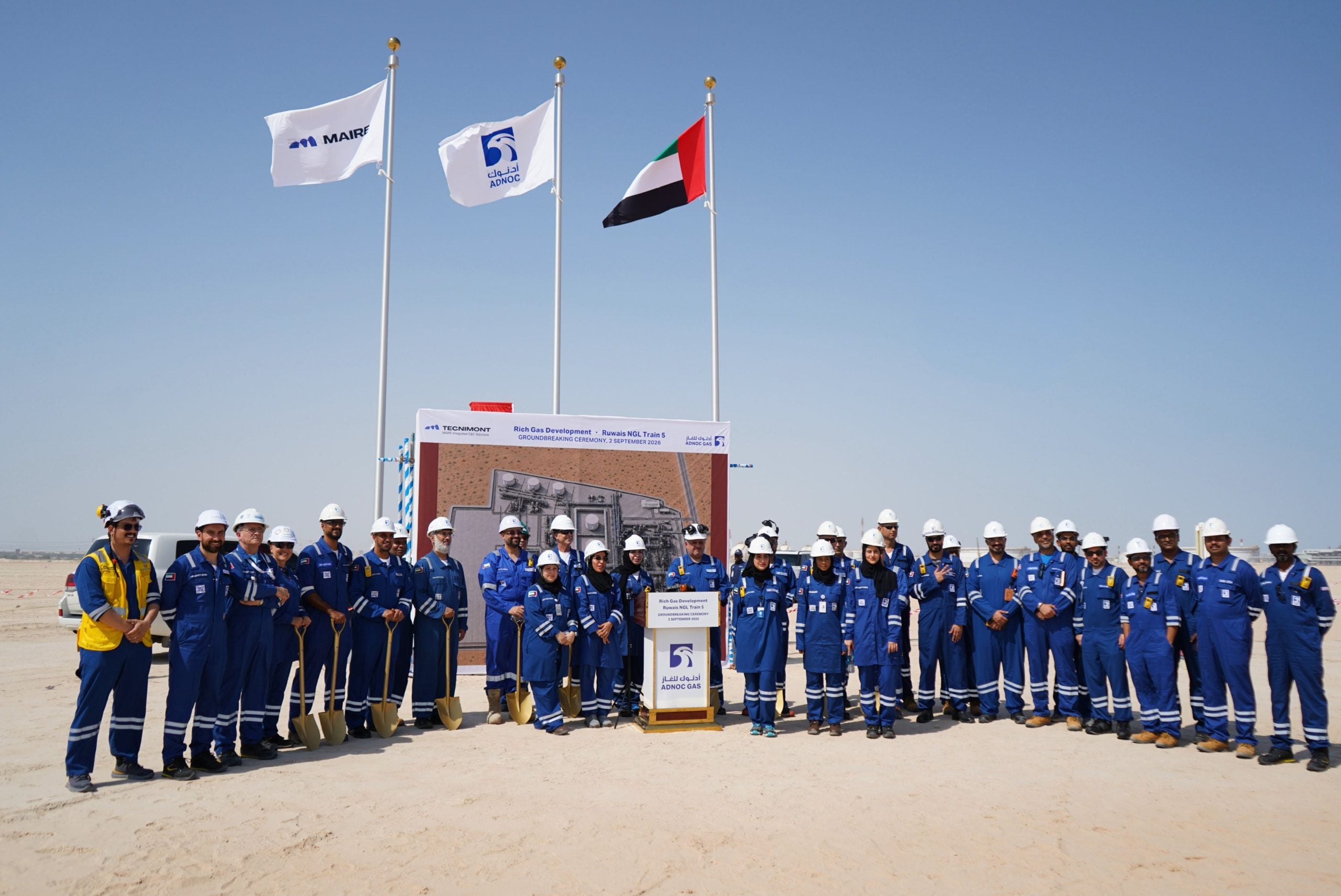
Italian contractor Tecnimont has broken ground on the third phase of Adnoc Gas’ Rich Gas Development (RGD) programme, which involves building a fifth natural gas liquids (NGL) fractionation train at the Ruwais gas processing facility in Abu Dhabi.
Adnoc Gas, the gas processing subsidiary of Abu Dhabi National Oil Company (Adnoc Group), awarded Tecnimont a contract valued at $4.3bn in August to carry out engineering, procurement and construction (EPC) works on the Ruwais NGL-5 project.
Tecnimont’s parent company, Maire, previously said its scope of work under RGD phase 3 includes EPC activities for the fifth NGL fractionation unit – which will separate various hydrocarbon components – together with treatment and sweetening systems designed to remove impurities and ensure product quality.
The scope also includes a regeneration gas treatment unit, a propane refrigeration system, ancillary systems and storage facilities. Once completed in 2030, the plant will have an output capacity of 23,000 tonnes a day (t/d), or about 8 million tonnes a year, Milan-headquartered Maire said.
The detailed scope of work on the Ruwais NGL Train 5 project covers the EPC of the following units:
- An NGL fractionation plant with a capacity of 22,000 t/d, including NGL fractionation facilities, downstream treatment units, sulphur recovery units, product storage and loading facilities, and associated utilities, flares and interconnection pipelines with existing facilities
- Two propane liquefied petroleum gas storage tanks and one paraffinic naphtha storage tank
- Buildings, including a central control building, outstations, substations and plant amenities
- Electrical power connections. Power is to be sourced from the nearby Transco substation via a direct underground cable to the plot location
Adnoc Gas requires the project’s feed to be updated based on the design of Ruwais NGL Train 4, which has an output capacity of 27,000 t/d and was commissioned in 2014.
Alongside taking the final investment decision (FID) on RGD phase 3 in August, Adnoc Gas also announced it had reached FID on the second phase of the programme, with the two projects requiring a total investment of $8.2bn.
The second phase of the RGD programme involves constructing a new gas processing train at the Habshan complex in Abu Dhabi. Adnoc Gas awarded the EPC contract for the project, valued at $3.9bn, to China-based Wison Engineering.
Wison Engineering said the EPC contract for RGD phase 2 is the largest in its history. The total contract value is $4.04bn, the Hong Kong-listed company said, adding that the scope includes gas pipelines; separation and condensate stabilisation units; acid gas removal units; deep NGL recovery units; and a 220kV switch station.
Phase 2 will add a new natural gas processing train at the Habshan facility, “expanding Adnoc Gas’ natural gas processing capacity, enhancing operational flexibility, and supporting the UAE’s expanding downstream and petrochemical sectors”, Adnoc Gas said.
https://image.digitalinsightresearch.in/uploads/NewsArticle/19942556/main3743.jpg -
Hitachi wins Al-Mashaer Al-Muqadasah metro revamp
24 September 2026
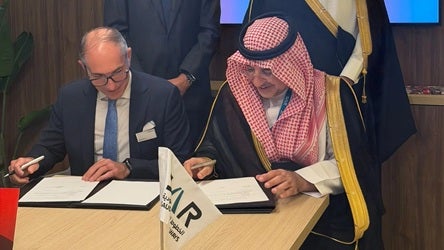
Saudi Arabia Railways (SAR) has signed a contract with Japan’s Hitachi Rail to revamp the Al-Mashaer Al-Muqadasah metro project in Mecca.
The 18-kilometre line includes nine stations and has a design capacity of about 72,000 passengers an hour in each direction.
The scope includes upgrades to improve reliability, operational performance and long-term maintainability.
SAR chief executive Bashar Al-Malik and Hitachi Rail’s Middle East and Africa signalling and rail solutions vice-president, Carlo Piacenza, signed the contract.
The rail line operates during the Hajj period and transports pilgrims between Mina, Muzdalifah and Arafat.
It was developed to reduce reliance on buses, ease congestion on pilgrimage routes, and improve safety and crowd management during Hajj.
The Saudi authorities procured the project on a fast-track basis to meet a fixed operational deadline for Hajj. It entered initial operation in 2010, with China Railway Construction Corporation acting as the main contractor for civil works and overall delivery.
Hitachi Rail supplied key rail systems, including signalling and telecommunications. SAR subsequently assumed responsibility for the asset and has led later improvement and upgrade programmes.
https://image.digitalinsightresearch.in/uploads/NewsArticle/19941437/main.jpg -
Contractor wins 6GW data centre campus infrastructure
24 September 2026
Register for MEED’s 14-day trial access
Dammam-based construction firm Al-Yamama Company for Trading & Contracting has won a contract to develop infrastructure for a planned 6GW hyperscale artificial intelligence (AI) data centre campus in Riyadh.
The project will be delivered on an early contractor involvement (ECI) basis. Under the ECI process, selected contractors are required to submit methodologies and design proposals, after which one team will be selected to deliver the construction works.
Saudi Arabia’s AI company Humain, owned by the Public Investment Fund (PIF), tendered the contract in May, as MEED reported.
The scope of infrastructure work covers:
- Construction of 380kV/132kV/33kV electrical distribution network, two substations with a capacity of 500MVA and 200MVA, bulk supply point (2,000MVA)
- Water network and fire protection systems
- Sewage treatment plant and wastewater network
- Stormwater systems
- Roads
- Underground cable and fibre optic networks
- Landscaping works
The client is being supported by Canadian engineering firm Hatch, France’s Egis and US-based firm JLL.
The development will be built on a 24-square-kilometre site in the Al-Saad area in east Riyadh. It will be delivered in two phases across six plots, each with a capacity of 1GW.
Humain was launched in May last year to operate and invest across the AI value chain.
Humain is building full-stack AI capabilities across four core areas: next-generation data centres, hyper-performance infrastructure and cloud platforms, and advanced AI models, including Allam.
Also in May 2025, Humain signed preliminary deals with US chipmakers AMD and Nvidia to build multibillion-dollar advanced digital infrastructure in the kingdom.
AMD said it will invest up to $10bn to deploy 500MW of AI compute capacity in Saudi Arabia over the next five years.
In October 2025, PIF and Saudi Aramco signed a non-binding term sheet setting out key terms under which Aramco would acquire a minority stake in Humain, with PIF retaining majority ownership.
https://image.digitalinsightresearch.in/uploads/NewsArticle/19940798/main.jpg