
What the desalination pipeline signals for 2026
8 January 2026

Contract activity in the GCC desalination market indicates a year of consolidation rather than major expansion in 2026, following a surge in Saudi-based awards last year.
Total desalination contracts awarded across the GCC in 2025 reached about $3.8bn, according to regional projects tracker MEED Projects.
Saudi Arabia accounted for the vast majority of this value, reinforcing its role as the region’s dominant desalination market.
The largest desalination award of the year was the contract for the $700m Shoaiba 6 seawater reverse osmosis (SWRO) desalination plant, which will have a capacity of 500,000 cubic metres a day.
The engineering, procurement and construction (EPC) contract was awarded to the local Rawafid Holding by the Saudi Water Authority.
The Shoaiba 6 award was followed closely by the $693m Ras Mohaisen to Al-Baha independent water plant and water transmission project, which involves the construction of a reverse osmosis desalination plant with a capacity of 300,000 cubic metres a day.
A consortium of local firms Acwa Power, Hajj Abdullah Ali Reza & Partners and Al-Kifah Holding Company won the developer contract in February, while a joint venture of Larsen & Toubro (L&T) and Lantania has since started construction on the project.
Saudi Arabia’s dominance will not be challenged in the near term. Of the $2.5bn-worth of desalination projects currently active across the GCC, the kingdom accounts for the largest share by both value and volume.
The strength of the Saudi market lies not only in its scale but also in procurement consistency. Standardised independent water plant (IWP) structures, repeat developers and predictable tendering timelines continue to support delivery, even as award volumes fluctuate year to year.
This consistency contrasts with smaller GCC markets, where desalination activity tends to be more sporadic and driven by individual supply constraints rather than long-term rolling programmes.
Saudi Arabia also awarded two identical large-scale projects in October last year: Jubail 4 and Jubail 6, two IWPs, each valued at $485m, under the Saudi Water Partnership Company’s IWP programme. Earlier in the year, the $521m Shuaibah water desalination plant phase 2 moved into construction, further adding to the kingdom’s project tally.
Outside Saudi Arabia, the only major award in 2025 was Abu Dhabi’s $400m Saadiyat seawater reverse osmosis IWP, procured by Emirates Water & Electricity Company. While significant, the award underlines a broader trend in the UAE, where desalination contract values have declined steadily since the peak years of 2022 and 2023. The coming year is on course for a similar level of awards as 2025.
The immediate pipeline
Bid evaluations point to a steady but unspectacular start to 2026. The immediate pipeline suggests that 2026 will be defined more by continuity than by major expansion. Projects currently under bid evaluation across the GCC total just under $1.2bn, significantly below 2025 award levels.
The largest of these is Kuwait’s $432m Doha SWRO desalination plant phase 2, which stands out as the single biggest near-term opportunity in the region. If awarded in 2026, it is likely to provide Kuwait’s only major desalination activity of the year.
Bahrain accounts for two projects under evaluation: the $170m rehabilitation of the Ras Abu Jarjur brackish water reverse osmosis plant and the $145m Hawar SWRO desalination plant. Together, these reflect a pragmatic approach focused on asset life extension alongside limited new capacity.
Oman’s $100m Duqm SWRO plant also remains under evaluation. While modest in size, it is strategically linked to the Duqm industrial zone and highlights the continued integration of desalination infrastructure into broader economic developments.
Saudi Arabia’s only project currently at this stage is the $169m fast-track SWRO plant at Neom. Its importance lies less in value than in timing, reinforcing desalination’s role in supporting early-phase gigaproject infrastructure rather than signalling a new wave of mega-awards.
UAE activity continues to taper
Unlike Saudi Arabia, the UAE enters 2026 with limited visible desalination momentum. The Saadiyat IWP award in 2025 followed several stronger years earlier in the decade, and there is little evidence so far of a return to those levels.
This reflects a greater immediate focus on other areas of water infrastructure, with large-scale investment planned for sewage treatment and transmission infrastructure in 2026.
To date, Etihad Water & Electricity’s (EtihadWE) $400m SWRO Independent Water Project (IWP) in Fujairah is the only large desalination plant expected to be tendered this year.
Several trends are becoming clearer as the market looks ahead. SWRO technology continues to dominate new projects, reflecting both efficiency gains and alignment with renewable-powered water production.
There is also a noticeable shift towards smaller, more targeted schemes outside Saudi Arabia, particularly rehabilitation projects and industrial-linked plants rather than large standalone capacity additions.
Finally, procurement activity appears increasingly clustered, with awarding authorities preferring to batch projects within defined windows rather than maintaining a constant flow.
Overall, while the GCC desalination market remains active, the data points to a more measured year ahead. Saudi Arabia will continue to lead regional activity, but 2026 is shaping up as a year of consolidation rather than acceleration, with fewer headline awards and a sharper focus on delivery.

Register for MEED's guest program now to access this article.
Exclusive from Meed
-
 Bahrain opens bids for first solar IPP project
13 March 2026
-
-
 Frontrunner emerges for Saudi sewage treatment project
13 March 2026
-
 Medina tenders Sikkah Al-Hadid PPP project
13 March 2026
-
 Fuel storage facility attacked in Bahrain
13 March 2026
All of this is only 1% of what MEED.com has to offer
Subscribe now and unlock all the 153,671 articles on MEED.com
- All the latest news, data, and market intelligence across MENA at your fingerprints
- First-hand updates and inside information on projects, clients and competitors that matter to you
- 20 years' archive of information, data, and news for you to access at your convenience
- Strategize to succeed and minimise risks with timely analysis of current and future market trends

Related Articles
-
Bahrain opens bids for first solar IPP project
13 March 2026
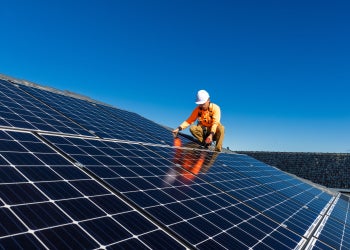
Two companies have made offers for a contract to develop Bahrain’s first solar photovoltaic (PV) independent power project (IPP).
Bahrain’s Electricity & Water Authority (EWA) opened bids for the Bilaj Al-Jazayer solar IPP project on 12 March.
The bidders include Saudi Arabia’s Acwa, formerly Acwa Power, and UAE-headquartered Yellow Door Energy.
The 150 MWac Bilaj Al-Jazayer solar IPP project will be Bahrain’s first grid-connected solar PV power plant developed under a public-private partnership (PPP) framework on a build-own-operate basis. It will be delivered as a long-term concession and is intended to come online by 2027.
The proposed site covers more than 1 square kilometre, with the private sector responsible for end-to-end development, including financing, design, construction and operation.
Last August, EWA held a market consultation event during which it outlined plans for the country’s first solar PV IPP. The main contract was then tendered in October.
EWA said Yellow Door Energy’s proposal was “accepted with conditions”, but did not disclose further details.
The local KPMG Fakhro is the financial consultant, the US’ WSP Parsons Brinckerhoff is the technical consultant, and the UK’s Trowers & Hamlins is the legal consultant.
Bahrain’s clean energy targets, as set by its national plans, include 20% renewables by 2035, and net-zero emissions by 2060.
 https://image.digitalinsightresearch.in/uploads/NewsArticle/15968088/main.jpg
 -
DP World sees Red Sea port volumes rising as Hormuz shuts
13 March 2026
Register for MEED’s 14-day trial access
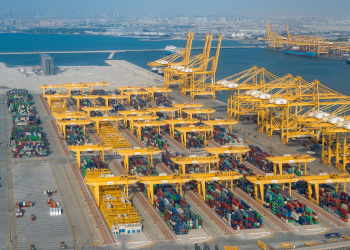
Dubai-based ports operator DP World is preparing for higher throughput at its Red Sea terminals as the Iran conflict approaches its second week, CEO Yuvraj Narayan said on Thursday.
With the Strait of Hormuz effectively closed and tanker attacks escalating, shipping movements into Gulf ports have fallen.
The disruption began after US and Israeli strikes on Iran, rattling energy and freight markets and cutting access through what is widely seen as the world’s most critical oil corridor.
Since most major Gulf ports rely on the narrow Strait of Hormuz, the shutdown is weighing on regional trade flows.
Narayan said Jebel Ali, DP World’s main hub in Dubai, has not suffered any infrastructure damage and is operating normally, but inbound vessel arrivals are down. Some cargo is still moving through terminals on the eastern side of the strait, he added.
Ports in the UAE that sit outside Hormuz have limited headroom to absorb the shortfall. Khorfakkan can handle about 5 million 20-foot equivalent units (TEUs) and Fujairah under 1 million TEUs, which Narayan indicated would not be enough to offset lost volume from Jebel Ali or Abu Dhabi’s Khalifa Port.
Jebel Ali alone processed 15.6 million TEUs last year, out of DP World’s 56.1 million TEUs globally.
DP World is rolling out rerouting options and other operational measures to keep supply chains moving. Narayan said the company’s Red Sea assets, such as Jeddah in Saudi Arabia and Sokhna in Egypt, are likely to see increased traffic, though he did not quantify the additional volumes or specify cargo types.
He cautioned that logistical and security risks remain elevated.
Earlier this week, DP World announced record financial results for 2025, with revenue up 22% to $24.4bn and adjusted earnings before interest, taxes, depreciation and amortisation (Ebitda) up 18% to $6.4bn, delivering a 26.3% margin, as MEED reported.
DP World said that this performance was driven by strong momentum across its ports and terminals and logistics business.
The group’s gross throughput rose 5.8% to 93.4 million TEUs.
Profit for the year increased 32.2% to $1.96bn, and operating cash flow grew 14% to $6.3bn.
Return on capital employed increased to 9.9% in 2025, up from 8.9% in 2024, reflecting stronger earnings despite ongoing geopolitical and trade uncertainty.
https://image.digitalinsightresearch.in/uploads/NewsArticle/15968045/main.jpg -
Frontrunner emerges for Saudi sewage treatment project
13 March 2026
A consortium led by China’s Jiangsu United Water Technology has emerged as the frontrunner for a contract to build and upgrade two sewage treatment plants in Saudi Arabia, according to sources.
The contract covers the North Western A Cluster Sewage Treatment Plants Package 11 (LTOM11), part of the next phase of National Water Company’s (NWC) long-term operations and maintenance (LTOM) sewage treatment programme.
The consortium comprising United Water, Prosus Energy (UAE) and Armada Holding (Saudi Arabia) offered “the lowest tariff” for the project, sources told MEED.
It is understood that Turkey’s Kuzu has made the next-lowest bid.
The development, estimated to cost about $211m, will have a combined capacity of about 440,000 cubic metres a day (cm/d).
In February, MEED exclusively reported that six bidders were competing for the contract.
The other companies that have submitted proposals include:
- Alkhorayef Water & Power Technologies (Saudi Arabia)
- Civil Works Company (Saudi Arabia)
- VA Tech Wabag (India)
- Aguas de Valencia (Spain)
LTOM11, also known as the North Western A Cluster, forms part of the second phase of NWC’s rehabilitation of sewage treatment plants programme.
The scheme is being procured on an engineering, procurement and construction (EPC) basis with a long-term operations component.
The main contract was tendered last year, with an award initially expected by the end of 2025.
It is now understood that NWC is preparing to offer the main contract in the second quarter.
As previously reported, Saudi Arabia’s NWC is also evaluating five bids for package 12 of its long-term operations and maintenance (LTOM12) sewage treatment programme.
Known as the North Western B Cluster, LTOM12 forms part of the second phase of NWC’s rehabilitation of sewage treatment plants programme.
In January, the same United Water-led consortium won the main contract for the Northern Cluster Sewage Treatment Plants Package 10 (LTOM10).
That project includes the rehabilitation and operation of nine sewage treatment plants located across the Hail, Qassim, Al-Jouf and Northern Borders provinces
NWC is also preparing to tender a contract for the construction of 10 sewage treatment plants as part of package 14 of the programme.
The final details of the Eastern A Cluster (LTOM14) package are being finalised, with a tender likely to be issued in March or April, sources told MEED.
 READ THE MARCH 2026 MEED BUSINESS REVIEW – click here to view PDF
Riyadh urges private sector to take greater role; Chemical players look to spend rationally; Economic uptick lends confidence to Cairo’s reforms.
Distributed to senior decision-makers in the region and around the world, the March 2026 edition of MEED Business Review includes:
> RAMADAN: Data disproves the Ramadan slowdown story> INDUSTRY REPORT: Chemicals producers look to cut spending> INDUSTRY REPORT: Global petrochemical project capex set to rise until 2030> MARKET FOCUS: Egypt’s crisis mode gives way to cautious revival> LEADERSHIP: Delivering Saudi Arabia’s next phase of rail growth> INTERVIEW: Abu Dhabi’s Enersol charts acquisitions pathTo see previous issues of MEED Business Review, please click herehttps://image.digitalinsightresearch.in/uploads/NewsArticle/15968035/main.jpg -
Medina tenders Sikkah Al-Hadid PPP project
13 March 2026
Saudi entities including Al-Madinah Regional Municipality, in collaboration with the Ministry of Municipalities & Housing and the National Centre for Privatisation & PPP (NCP), have floated a request for proposal (RFP) notice for the development of the Sikkah Al-Hadid project.
The project will be procured through build-own-operate-transfer contracts with a 50-year duration, using a public-private partnership (PPP) model.
The deadline for bid submission is 23 June.
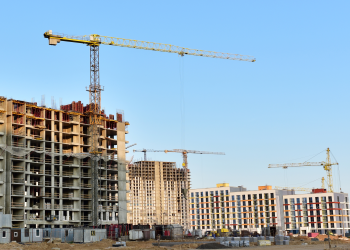
The project will be located to the west of Medina on an 84,657-square-metre (sq m) site.
It includes a four-storey medical centre with a capacity of up to 200 beds and a shopping mall offering retail, food and beverage, and other entertainment facilities.
In January last year, NCP asked firms to express their interest and prequalify for a contract to develop two mixed-use developments in Medina, which included the Sikkah Al-Hadid project and the Dhul Hulaifah project.
The Dhul Hulaifah project will be built on a 30,112 sq m site located six kilometres from the Prophet’s Mosque.
The development will consist of a four-star hotel integrated with retail and healthcare facilities.
MEED previously reported that Saudi Arabia had announced a P&PPP pipeline comprising 200 projects across 16 sectors.
This pipeline aims to attract local and international investors and ensure their readiness to participate in the schemes tendered to the market.
The initiative comes as the kingdom strives to increase the attractiveness of its economy and raise the private sector’s contribution to GDP.
https://image.digitalinsightresearch.in/uploads/NewsArticle/15968021/main.jpg -
Fuel storage facility attacked in Bahrain
13 March 2026
Register for MEED’s 14-day trial access
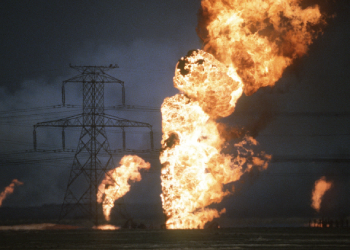
Fuel storage tanks at a facility on Bahrain’s Muharraq Island were targeted in an attack attributed to Iran, according to a statement from Bahrain’s Interior Ministry.
The ministry put out an alert for people in surrounding neighbourhoods “to remain in their homes, close windows and ventilation openings, as a precautionary measure against possible exposure to smoke”.
Videos of the incident, which took place on 12 March, showed a large fire emitting black smoke. The fire was later extinguished by teams of firefighters.
Bahrain’s international airport is also located on Muharraq Island.
Iran has been firing missiles at a range of targets in nearby countries since it was attacked by the US and Israel on 28 February.
On 11 March, a similar attack on fuel storage tanks in Oman led to the closure of some terminals at the port of Salalah.
Footage recorded by vessel crews at the port, which is the largest in the country, showed explosions and a large fire.
https://image.digitalinsightresearch.in/uploads/NewsArticle/15963333/main.png