
UAE steps up project spending as war bites
14 October 2026
Register for MEED’s 14-day trial access
UAE government capital expenditure rose more than ninefold year-on-year in the first quarter. Fitch Ratings expects spending on infrastructure and government-related entity (GRE) projects to rise significantly in 2026 and 2027 as the authorities seek to offset the economic impact of the US-Iran war.
Consolidated capital spending reached AED18.6bn ($5.1bn) in Q1 2026, up from AED2bn a year earlier, according to a report recently released by the Central Bank of the UAE (CBUAE). It said the increase reflected higher allocations to infrastructure and other development-related initiatives.
Total public expenditure rose by 22.8% to AED132.2bn, equivalent to 24.2% of GDP. Social benefits increased by 27.1% to AED22.1bn, while compensation of employees rose by 1.7% to AED31.5bn.
Revenue grew by only 0.8% to AED121.8bn. Tax revenue rose by 3% to AED77.5bn, while other revenue fell by 5% to AED39.2bn.
As a result, the consolidated fiscal position moved from a surplus of AED13.1bn (2.5% of GDP) in Q1 2025 to a deficit of AED10.4bn (1.9% of GDP). The CBUAE said the shift primarily reflected a deliberate increase in spending on capital projects and social benefits.
Construction was the second-largest contributor to non-oil growth in the quarter. The sector grew by 8.1% year-on-year and added 1 percentage point to non-oil GDP growth of 4.8%. Its share of non-oil GDP rose to 13.2% from 12.8% a year earlier.
Accelerated tendering
In a report published on 9 October, Fitch said the UAE has accelerated tendering on several projects. It expects additional investment in those projects to improve the resilience of infrastructure and high-profile projects and to support foreign investor confidence.
The agency said the rise in capital spending was partly intended to increase resilience to future conflicts and partly to stimulate the economy and restore confidence.
Fitch expects measures to revive tourism and logistics once regional stability is more durable. It also expects support for growth sectors such as artificial intelligence, financial services and decarbonisation, and work to relieve infrastructure bottlenecks such as local transport congestion. It sees scope for the effective subsidisation of activities that support the economy, such as cheap flights.
Fiscal space
Fitch's baseline assumes a 19% increase in Abu Dhabi government spending this year, equivalent to 3.7% of GDP. It projects Abu Dhabi fiscal surpluses of more than 8% of GDP each year to 2028. The agency said the emirate's sovereign wealth fund assets and low fiscal breakeven oil price allowed it to deploy large fiscal stimulus without depleting its buffers.
Fitch said Abu Dhabi, Dubai and Ras Al-Khaimah all had fiscal space to fund a post-war recovery programme without raising taxes. It forecasts higher spending in all three in 2026 and 2027 than in 2025, but expects only Ras Al-Khaimah to record a budget deficit.
Ras Al-Khaimah faces greater rating pressure. Fitch moved the emirate to a negative outlook in October, citing the risk the war poses to a key resort project. That project formed part of the rationale for the emirate's 2024 upgrade.
The CBUAE said the UAE entered 2026 with strong fiscal buffers, supported by low public debt and substantial sovereign assets. It cited infrastructure-related public expenditure, Dubai's AED2.5bn support initiative and its own Financial Institution Resilience Package among the measures expected to support activity.
Growth outlook
Fitch expects the non-oil economy to contract by 3.7% in real terms in 2026 before growing by 6.1% in 2027 and 4.3% in 2028. Its baseline assumes a durable deal to reopen the Strait of Hormuz around Q1 2027. The agency said official support and improved security underpin its projections for 2027 and 2028.
The CBUAE is more positive on 2026, forecasting non-oil growth of 1.3% this year and 4.9% in 2027.
Other hubs pose a threat to the UAE's growth model. It expects new and expanded road, rail, pipeline and port infrastructure in Oman and Saudi Arabia as GCC states seek trade routes that bypass the strait.
Increased port capacity on the UAE's Gulf of Oman coast and links to Omani ports are unlikely to fully remove concerns over a renewed closure of the strait, the agency said. It expects lower new investment in trade and manufacturing rather than a significant relocation of existing operations.
Fitch said data centres, which have faced drone attacks, would give greater weight to physical security when choosing future locations. GRE balance sheets could be affected by lower revenues and the cost of supporting the non-oil economy. It described these contingent liabilities as manageable, given Abu Dhabi's fiscal buffers and the generally profitable nature of the GREs. Contingent liabilities of Dubai GREs are estimated at 70% of GDP.
The agency also flagged risks to real estate, which accounted for 8% of non-oil GDP in 2025. A persistent fall in population would put pressure on the sector, particularly given the higher level of supply approaching the market.

Register for MEED's guest program now to access this article.
Exclusive from Meed
-
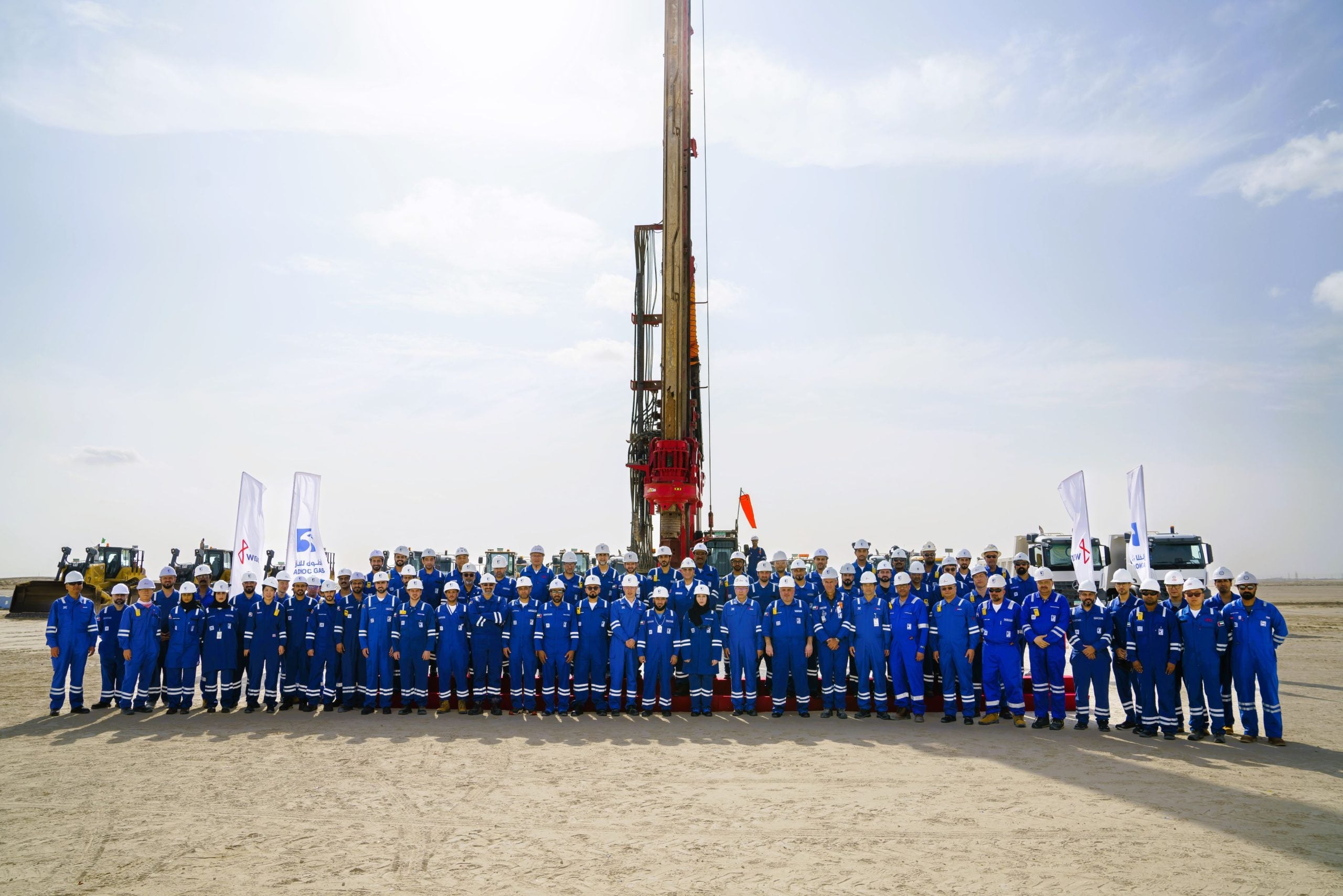 Wison breaks ground on Abu Dhabi’s Habshan train 7
16 November 2026
-
 Meraas launches new Solaya phase in Jumeirah
16 November 2026
-
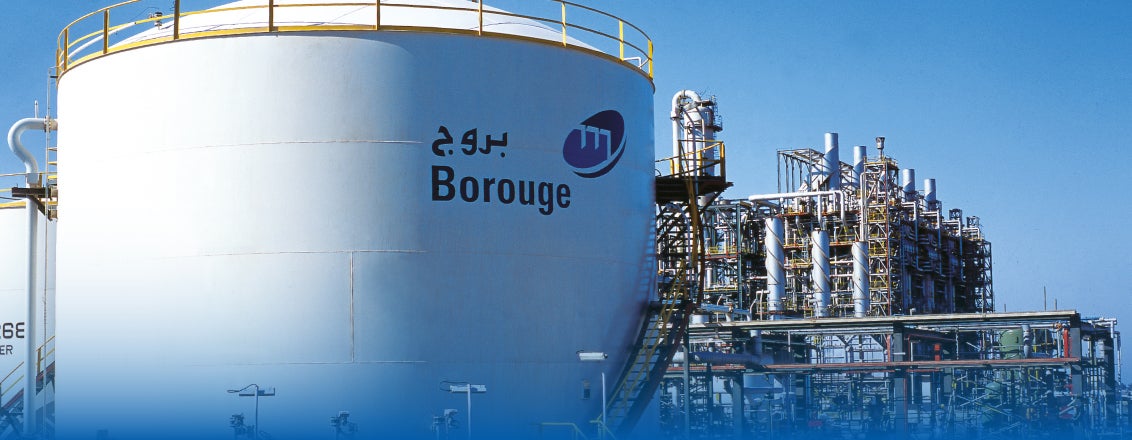 Borouge puts butene-1 expansion project on hold
16 November 2026
-
 Contractor wins Saudi Energy substation deal
16 November 2026
-
 WEBINAR: End-of-Year Mena Market Review
13 November 2026
All of this is only 1% of what MEED.com has to offer
Subscribe now and unlock all the 153,671 articles on MEED.com
- All the latest news, data, and market intelligence across MENA at your fingerprints
- First-hand updates and inside information on projects, clients and competitors that matter to you
- 20 years' archive of information, data, and news for you to access at your convenience
- Strategize to succeed and minimise risks with timely analysis of current and future market trends
Related Articles
-
Wison breaks ground on Abu Dhabi’s Habshan train 7
16 November 2026
China-based Wison Engineering has held a groundbreaking ceremony for the second phase of Adnoc Gas’ Rich Gas Development (RGD) programme. The project covers the engineering, procurement and construction (EPC) of a seventh gas-processing train at the Habshan complex in Abu Dhabi.
Adnoc Gas, the natural gas processing subsidiary of Abu Dhabi National Oil Company (Adnoc Group), awarded Wison Engineering the $3.9bn EPC contract for the Habshan 7 project in August.
Wison said the RGD phase 2 contract is the largest in its history. Its scope includes gas pipelines, separation and condensate stabilisation units, acid-gas removal units and deep natural gas liquids (NGL) recovery units. The work also includes a 220kV switch station, bringing the total contract value to $4.04bn, according to the Hong Kong-listed contractor.
MEED previously reported that the groundbreaking ceremony for the Habshan 7 project would take place on 11 November.
Adnoc Gas plans to install the Habshan 7 train adjacent to the Habshan 5 train. This arrangement will allow the new train to use spare capacity in Habshan 5’s sulphur recovery and tail-gas treatment units, helping to optimise operations.
The full scope of work on the Habshan 7 gas train project covers the EPC of the following units:
- New high-pressure pipeline from the main Habshan complex to the new gas train
- Separation and condensate stabiliser unit
- Acid gas removal unit
- Mercury removal unit
- Deep NGL recovery unit
- Sales gas and residue gas compressor
- NGL product storage and transfer pump, as well as metering skid
- Utility units (IA, N2, PW, FW, steam generation, DM)
- Flare unit, to be located in Habshan 5 on common derrick
- Flare gas recovery package
- Water treatment package
- Non-process buildings, to be located outside the Habshan 5 train
- Power generation system – associated 220kV switch station
- NGL pipeline from Habshan 5 to Ruwais, based on an existing pipeline assessment
- Sales gas pipeline from Habshan 5 to sales gas network
UK-headquartered Wood Group completed the concept study and initial engineering design for Habshan 7.
Adnoc Gas also broke ground on the third phase of the RGD programme in September. This phase will add a fifth NGL fractionation train at the Ruwais complex. Italian contractor Tecnimont secured the $4.3bn EPC contract for the NGL-5 project in August. Once commissioned, the train is expected to produce more than 8 million tonnes a year of NGLs for export.
The RGD phases, together with the Ruwais liquefied natural gas export terminal, the Maximising Ethane Recovery and Monetisation scheme and the Estidama pipeline expansion, form part of Adnoc Gas’ previously announced $28bn capital expenditure programme for 2026-30.
Financial performance
Adnoc Gas posted net income of $1.34bn for the third quarter, doubling its profit from the prior quarter. Revenue momentum and cost controls lifted quarterly ebitda by 70% sequentially to $2.03bn.
Domestic gas sales volumes grew 20% quarter-on-quarter, driving a 28% increase in domestic ebitda. International commercial activities expanded further, with export-traded liquids lifting international product ebitda by 106% sequentially, supplemented by a 249% surge in sulfur margins.
Operating cash flow reached $3.82bn for the first nine months, providing 1.35x coverage for the $2.82bn year-to-date dividend distribution. The board approved a third-quarter dividend of $940m (AED0.18 per share annualised), representing an indicated dividend yield of 5.34% and reinforcing the company’s position as the largest dividend payer on the Abu Dhabi Securities Exchange.
https://image.digitalinsightresearch.in/uploads/NewsArticle/21447026/main00163733.jpg -
Meraas launches new Solaya phase in Jumeirah
16 November 2026
Dubai-based developer Meraas, part of Dubai Holding Real Estate, has launched a new phase of its Solaya beachfront residential scheme in Jumeirah 1. The project is being developed in partnership with BGRE, formerly Brookfield Properties.
The latest release comprises two- to five-bedroom residences, four-bedroom duplexes and a penthouse. In total, Solaya will feature 234 residences across nine buildings on a 40-acre site, offering direct beach access near J1 Beach, landscaped communal areas and private residential amenities.
UK-based Foster + Partners is the project architect, with 1508 London handling interior design. Dubai-based Brewer Smith Brewer Group (BSBG) serves as lead consultant, while US-based Aecom is the project management consultant.
Meraas and BGRE broke ground on the development in August, appointing Swissboring Overseas Piling Corporation to carry out shoring, excavation, piling and dewatering works.
The launch comes amid sustained momentum in the local market. According to GlobalData, the UAE construction industry will expand at an average annual rate of 3.9% between 2025 and 2027, driven by investments across infrastructure, energy, housing and tourism. The country’s residential construction sector is forecast to grow by an average of 2.7% annually between 2025 and 2028, supported by ongoing private development and government initiatives to meet population growth.
https://image.digitalinsightresearch.in/uploads/NewsArticle/21446815/main.png -
Borouge puts butene-1 expansion project on hold
16 November 2026

Abu Dhabi petrochemicals producer Borouge, now part of Austria-headquartered Borouge International, is said to have put on hold a project to increase butene-1 production from the olefins conversion unit (OCU) at its Borouge 2 facility in Ruwais Industrial City.
Under the proposed project, Borouge planned to produce 60,000 tonnes a year (t/y) of butene-1 from the existing fractionator column while limiting propylene production from the OCU to 500,000 t/y.
The company intended to achieve this by adding co-monomer production technology and selective hydrogenation units, while retaining the capability to run the unit at its original design capacity of 752,000 t/y of propylene and 39,000 t/y of butene-1. The scope also entailed expanding butene-1 storage capacity by converting existing N1 mixed-butane spheres into dedicated butene-1 units.
According to sources, Borouge informed contractors in the weeks after receiving bids that it had decided to shelve the tender.
Contractors submitted technical bids for the engineering, procurement and construction (EPC) package by 1 September 2025, following several extensions to the original 23 June deadline. Borouge had initially released an advanced tender notice in May last year, followed by the main EPC tender on 4 June, and hosted a site visit for bidders on 25 June.
Contractors understood to have submitted bids include:
- Galfar Emirates (UAE subsidiary of Oman’s Galfar Engineering & Construction)
- Target Engineering Construction (UAE)
US-based Lummus Technology was previously awarded the contract to provide the process design package for the new co-monomer production unit as the OCU licensor. Lummus sub-contracted the extended process design package and basic engineering works to South Korea’s Samsung E&A. Borouge had targeted an EPC contract award in the first quarter of 2026.
Butene-1 is a colourless gas primarily used as a co-monomer in the production of high-grade polyethylenes and poly(1-butene), serving end markets such as specialty films, bags and food packaging.
ALSO READ: Borouge prepares to tender construction works for ethane cracker expansion
Borouge International was formed through the combination of Adnoc Group and OMV’s shareholdings in Borouge and Austria-based Borealis, alongside the acquisition of Canada-based Nova Chemicals. In July, Adnoc announced it would transfer its holding in Borouge International to its global investment arm, XRG.
Borouge began operations in 2001 with 450,000 t/y of polyethylene capacity. The Borouge 2 and Borouge 3 expansions raised overall capacity to 2 million t/y in 2010 and 4.5 million t/y in 2014, respectively. Once the Borouge 4 expansion is commissioned, total production capacity will increase from 5 million t/y to 6.4 million t/y, creating the world’s largest single-site polyolefins facility.
Borouge 4 will add two polyethylene units with a combined capacity of 1.4 million t/y (700,000 t/y each) based on Borealis’s third-generation Borstar technology, supplied by a 1.5 million t/y ethane cracker and associated derivative units.
ALSO READ: Borouge restores Ruwais complex after Iranian attacks
https://image.digitalinsightresearch.in/uploads/NewsArticle/21443754/main.jpg -
Contractor wins Saudi Energy substation deal
16 November 2026
Local firm Alfanar Projects has signed a contract with Saudi Energy, formerly Saudi Electricity Company, to build a 115/13.8kV substation in Al-Aqiq, Al-Bahah province, a source confirmed to MEED.
The station will receive electricity at 115kV and step it down to 13.8kV for local distribution. The scope of work includes site preparation, civil works, substation buildings and foundations, and the supply and installation of power transformers and associated electrical equipment.
Seventeen firms submitted bids for the project in May. The bidders included:
- Al-Babtain Contracting
- Al-Gihaz Holding
- Al-Haider Company
- Alfanar Projects
- Cepco
- Energy & Infrastructure Company (Eico)
- Expertise Contracting
- Haif Company
- JAL International
- Maetel Saudi Arabia Construction Company
- Mohammed Al-Ojaimi Group
- Nesma Infrastructure & Technology
- Nour Energy Company
- PA Cost International
- Sama Energy
- Saudi Projects & Supplies Company
- Tareg Al-Jaafari Contracting Establishment
According to regional project tracker MEED Projects, AlFanar Projects had won up to eight awards for substation projects this year, prior to the Al-Aqiq award.
The largest is a contract worth more than SR122m ($32.5m) to construct a 132/13.8kV substation for the Expo 2030 Riyadh site.
The firm was one of four contractors selected by Saudi Energy to deliver electricity infrastructure for the site, MEED reported in August.
Recent contracts include the 380kV Tumair PV substation (#9127), the Busita-C 132/33kV substation, the 132/13.8kV substation north of Al-Kharj (#8721) and the Al-Sahafa 132/13.8kV new substation (#8316).
Saudi Energy has tendered several other 380kV substations and associated transmission lines this year, including projects serving planned solar and wind developments in the kingdom’s central, western and southern regions.
Earlier, in November, MEED exclusively reported that China’s TBEA Shandong Luneng Taishan Cable Company (TBEA) and Egypt’s Elsewedy had submitted the lowest bids for two substation projects in Riyadh Province, estimated to cost a combined $100m.
The tenders for the Thadeq PV and Qiddiya 2 bulk supply points were issued earlier this year, with bids submitted in August and November, respectively.
https://image.digitalinsightresearch.in/uploads/NewsArticle/21443095/main.jpg -
WEBINAR: End-of-Year Mena Market Review
13 November 2026
Webinar: The big questions shaping the Gulf market. You decide what gets debated.
Tuesday 24 November 2026 | 11:00 AM GST | Register now
What makes this session particularly interesting is that the audience gets to decide the agenda. Registrants can vote for the topics they’d like Ed and Colin to debate, with the most popular questions forming the final shortlist for the live session.
Topics in the ballot:
- Is the Gulf trying to build too much, too quickly?
- Saudi Arabia or the UAE: where would you place your next big bet?
- Are gigaprojects the best use of public money?
- Who is really responsible when projects go wrong?
- Should the lowest-price tender become a thing of the past?
- Can private capital take over from the government in financing infrastructure and diversification?
- Is the Gulf’s AI and data centre boom a smart bet or the next overbuilding risk?
- Should the Gulf double down on hydrocarbons to fund diversification?
- Is localisation strengthening the economy or making delivery harder?
- Are Gulf countries building complementary economies or competing for the same customers?
The session will also feature live audience polling and Q&A, giving attendees an opportunity to share their views.
Hosted by:
Edward James, head of content and analysis at MEED
 A well-known and respected thought leader in Mena affairs, Edward James has been with MEED for more than 19 years, working as a researcher, consultant and content director. Today, he heads up all content and research produced by the MEED group. His specific areas of expertise are construction, hydrocarbons, power and water, and the petrochemicals market. He is considered one of the world’s foremost experts on the Mena projects market. He is a regular guest commentator on Middle East issues for news channels such as the BBC, CNN and ABC News and is a regular speaker at events in the region.
Colin Foreman, editor of MEED
 Colin Foreman is editor and a specialist construction journalist for news and analysis on MEED.com and the MEED Business Review magazine. He has been reporting on the region since 2003, specialising in the construction sector and its impact on the broader economy. He has reported exclusively on a wide range of projects across the region including Dubai Metro, the Burj Khalifa, Jeddah Airport, Doha Metro, Hamad International airport and Yas Island. Before joining MEED, Colin reported on the construction sector in Hong Kong.https://image.digitalinsightresearch.in/uploads/NewsArticle/21380319/main.gif