
Trump insider key in brokering Libya budget deal
14 April 2026
 Commentary
Wil Crisp
Oil & gas reporter
Massad Boulos, the father-in-law of Donald Trump’s youngest daughter and an adviser to the US president, is being credited by many Libyans as being instrumental in brokering the country’s recent budget agreement.
The Central Bank of Libya confirmed on 11 April that the country’s rival legislative bodies had approved a unified state budget for the first time in more than 13 years.
The budget is valued at LD190bn ($29.95bn), with LD12bn ($1.9bn) allocated to the country’s National Oil Corporation (NOC), and LD40bn ($6.3bn) allocated for “development projects”.
After the Central Bank’s announcement, Boulos posted on social media, stating that he had called the Prime Minister of Libya’s Government of National Unity, Abdul Hamid Dbeibah, to congratulate him on the deal.
In his social media post, the Lebanese-American businessman said that during the call, they discussed “the vital role of the National Oil Corporation in maintaining and expanding oil and gas production”.
Boulos was appointed as the US president’s senior adviser for Arab and African affairs in January last year and first travelled to Libya in July the same year, when he met with leaders from both of the country’s rival legislatures.
Since his first trip, he has ramped up US diplomatic activity in the country and held meetings in Tripoli and Benghazi during January of this year.
In February, speaking at a UN Security Council session on Libya, he said that the US was ‘‘working on concrete steps for economic and military integration by bringing together senior officials from eastern and western Libya”.
During the same session, which took place less than two months ago, the head of the United Nations Support Mission in Libya (UNSMIL), Hanna Tetteh, said: ‘‘Regrettably, there has been no meaningful progress between the House of Representatives (HoR) and the High Council of State (HCS) in completing the first two steps of the roadmap, despite UNSMIL’s efforts’’.
Many Libyans credit Boulos’ ability to secure compromises from both of Libya’s legislatures to his decision to deviate from the UN roadmap, which focuses on moving towards a new round of elections to create a unified government.
One source said: “The priority of the US in Libya isn’t holding elections; it’s doing commercial deals that the US can benefit from – especially in the oil sector.
“The timing of this latest budget deal isn’t accidental. Right now, the US is desperate to bring new oil and gas production online in order to help lower global oil prices.
“Forging a deal between the HoR and the HCS is a great way of bringing large volumes of crude onto the market in a relatively short timeframe.”
Donald Trump is coming under increasing pressure domestically due to high oil prices after partnering with Israel in his war against Iran, which started on 28 February.
As a result of the conflict, global markets are losing 11 million barrels a day (b/d) of oil supply due to the effective closure of the Strait of Hormuz.
On top of this, 20% of the world’s LNG production cannot be shipped.
The energy crunch has caused prices to spike and sent countries that are dependent on imported oil and gas scrambling to secure new supplies.
Libya has Africa’s largest oil reserves and has the potential to produce much more than its current 1.43 million barrels a day.
One of the central reasons NOC has struggled to bring new production online over recent years has been the ongoing political gridlock over the country’s budget.
Now, many Libyans are expecting hundreds of projects across all sectors to start moving forward in the country.
The budget approval has sparked a surge of optimism about potential development and economic growth, but the country’s political and security situation remains fragile.
It remains to be seen whether the pragmatic dealmaking of Boulos will lead to long-term stability.


Register for MEED's guest program now to access this article.
Exclusive from Meed
-
 Dubai inflation slows to 5.3% in July
24 August 2026
-
 Libya oil project on track for 2027 completion
24 August 2026
-
 Tunisia extends bid deadline for gas pipeline project
24 August 2026
-
 Saudi Arabia signs $1.16bn bess agreements
21 August 2026
-
 Contractors confirm $683m Oman power plant contract
21 August 2026
All of this is only 1% of what MEED.com has to offer
Subscribe now and unlock all the 153,671 articles on MEED.com
- All the latest news, data, and market intelligence across MENA at your fingerprints
- First-hand updates and inside information on projects, clients and competitors that matter to you
- 20 years' archive of information, data, and news for you to access at your convenience
- Strategize to succeed and minimise risks with timely analysis of current and future market trends

Related Articles
-
Dubai inflation slows to 5.3% in July
24 August 2026
Dubai’s annual inflation rate slowed to 5.3% in July, down from 5.7% in June, as a decline in transport costs eased pressure on consumer prices, according to Emirates NBD.
The bank said the slowdown supported its view that price growth peaked at mid-year, and it expects inflation to continue easing through the rest of 2026. Monthly price growth slowed to 0.1% in July, from 0.4% in June, the weakest pace since February.
Transport was the clearest sign of the moderation. Annual price growth in the category slowed to 11.9% in July, from 18.1% in June, as transport costs fell 3.7% over the month. Fuel and lubricant inflation eased to 24.1% year on year, from 48.3%, tracking a decline in local petrol prices.
Petrol remains the main swing factor in the emirate’s inflation. Transport contributed 1.1 percentage points to headline inflation in July, down from 1.7 percentage points in June. Emirates NBD said the relief may prove temporary, with Super 98 petrol prices climbing 5.9% in August to leave them 33.8% higher than a year earlier. The bank expects headline inflation to edge higher in the August figures before easing again later in the year.
The UAE deregulated petrol and diesel prices in 2015 and reviews them monthly against global prices, meaning changes in global fuel costs pass through to consumers quickly. Transport, which includes fuel, accounts for 9% of Dubai’s consumer price index basket.
Housing remained the largest contributor to inflation even as its impulse faded. Housing and utilities, which account for about two-fifths of the basket, added 2.8 percentage points to headline inflation. Annual price growth in the category slowed to 7.0%, from 7.4% in January.
Food inflation edged up to 7.8% year on year, from 7.6% in June, which the bank attributed to lingering supply-chain disruption from the regional conflict. Inflation in restaurants and hotels accelerated to 4.5% year on year, from 1.7% in June.
Emirates NBD forecasts inflation of 2.9% by year-end but said risks to that projection were tilted to the upside, given lingering pressures in food and housing.
https://image.digitalinsightresearch.in/uploads/NewsArticle/18961735/main1839.jpg -
Libya oil project on track for 2027 completion
24 August 2026
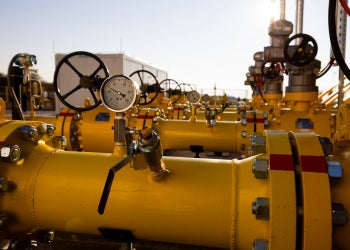
The project to develop a workers’ camp at Libya’s Erawin oil field is on track for completion next year, according to industry sources.
The project, estimated to be worth about $50m, is being executed by the Libyan oil services company Al-Saraya Al-Hamara, headquartered in the city of Sebha.
The Libyan company was awarded the contract in February 2025.
The scope of the project includes:
- Construction of an accommodation camp
- Construction of the camp maintenance warehouse
- Construction of the camp office
- Construction of a fire brigade shelter
- Construction of a kitchen and mess hall
- Construction of a mosque
- Construction of a laundry room
- Construction of a clinic
- Construction of parking facilities
- Installation of a fire and gas system
- Installation of a power generator
- Construction of associated facilities
The client on the project is Zallaf Libya Oil & Gas Exploration & Production Company.
Zallaf Libya Oil & Gas Exploration & Production Company was established in Libya in 2013 and is wholly owned by Libya’s state-owned National Oil Corporation.
The Erawin field development project is located about 800 kilometres south of Tripoli and 100km southwest of the El-Sharara field.
Libya shipped its first cargo of crude from the Erawin oil field in November 2023.
The shipment departed from Libya’s Zawiyah port and consisted of 600,000 barrels of crude.
Australia-based Worley Parsons was appointed as the front-end engineering and design (feed) contractor for the early production facility project in 2019.
https://image.digitalinsightresearch.in/uploads/NewsArticle/18953632/main.jpg -
Tunisia extends bid deadline for gas pipeline project
24 August 2026
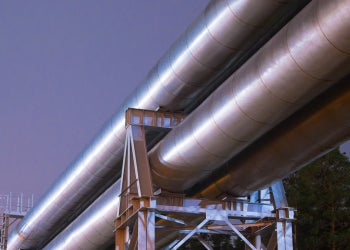
State-owned Tunisian Company of Electricity & Gas (Steg) has extended the bid deadline for a project to develop gas pipelines in the North African country.
Earlier this year, the project was tendered with a bid deadline of 15 July. The new deadline is 30 September 2026.
The scope of the project includes conducting studies, procuring equipment and materials, and performing construction work.
Steg has received financing from the Islamic Development Bank to fund the project.
The tender has been split into two packages.
The first pipeline runs from the Tunisian town of Mourouj, in the suburbs of Tunis, to the town of Zriba.
Along this route, the pipeline will be split into two sections.
The first extends from Mourouj to the town of Fouchana, which lies to the south of the capital.
Under existing plans, the pipeline will have a diameter of 20 inches and extend for 3.8 kilometres.
The second section will extend for 43km to Zriba and have a diameter of 24 inches.
The contract for package one has a 450-day completion period.
The project’s second package focuses on a gas pipeline extending from Zriba to the town of M’saken.
This pipeline will extend for 78km and have a diameter of 24 inches.
The contract for this package also specifies a 450-day completion period.
The procedure for the tender of both packages is an international call for tenders under the Islamic Development Bank guidelines for design, supply and installation.
The Middle East and North Africa (Mena) region is currently seeing a surge in oil and gas pipeline projects as countries attempt to diversify routes through which hydrocarbons can be transported.
The increased concerns about overreliance on a small number of transportation routes are a result of the regional conflict that started when the US and Israel attacked Iran on 28 February.
The conflict severely disrupted oil and gas flows through the Strait of Hormuz, highlighting the importance of having a diverse range of import and export routes.
https://image.digitalinsightresearch.in/uploads/NewsArticle/18953537/main.jpg -
Saudi Arabia signs $1.16bn bess agreements
21 August 2026
Register for MEED’s 14-day trial access
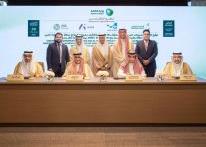
Saudi Arabia’s principal buyer, Saudi Power Procurement Company (SPPC), has signed four storage service agreements for battery energy storage system (bess) projects with a combined capacity of 2,000MW.
The projects will provide four hours of storage, equivalent to 8,000 megawatt-hours (MWh), and involve total investment of more than SR4.35bn ($1.16bn).
The agreements cover the first group of independent storage provider (ISP) bess projects being procured by SPPC under a build, own and operate model. The projects are supervised by the Energy Ministry.
Three projects have been awarded to a consortium comprising Saudi Energy, Acwa and Al-Sharif Contracting & Commercial Development Company.
These comprise the Al-Muwyah and Haden bess ISPs in the Mecca region, and the Al-Kahafa bess ISP in the Hail region. Each has a capacity of 500MW for four hours.
The fourth project, the Al-Khushaybi bess ISP in the Qassim region, has been awarded to a consortium of France's Engie and local firm Haji Abdullah Alireza & Co. This also has a capacity of 500MW for four hours.
In July, MEED exclusively reported that Acwa and Engie were frontrunners for the Group 1 bess contracts. SPPC launched the qualification process for the scheme in November 2024, with bids submitted last year.
The projects form part of Saudi Arabia’s efforts to achieve an electricity generation mix comprising approximately 50% renewable energy by 2030.
Bess 2
As exclusively reported by MEED, SPPC issued the request for proposals for the second phase of its independent bess projects in July.
The Group 2 programme comprises six ISP projects with a total capacity of 3GW, equivalent to 12,000MWh based on a four-hour storage duration.
The six bess projects are:
- Samha bess ISP: 500MW (Qassim)
- Al-Leeth bess ISP: 500MW (Mecca)
- Al-Henakiyah bess ISP: 500MW (Medina)
- Khulis bess ISP: 500MW (Mecca)
- Sadawi bess ISP: 500MW (Eastern Province)
- Ashyrah bess ISP: 500MW (Mecca)
According to a source, developers have since submitted a first round of clarification requests to SPPC as they prepare their bids in advance of an October deadline.
On 1 July, MEED reported that up to 27 firms had prequalified to participate in the second phase. SPPC previously received statements of qualification on 13 May.
It is understood that Abu Dhabi National Energy Company (Masdar, UAE), Acwa (Saudi Arabia), EDF (France), Korea Electric Power Corporation (Kepco, South Korea), International Power (Engie, France) and Marubeni Corporation (Japan) are among the companies likely to make offers for the contracts.
Winning bidders will hold 100% equity in a special purpose vehicle (SPV), with each SPV entering into a storage services agreement with SPPC as part of the ISP structure.
US/India-based Synergy Consulting is advising SPPC on the energy storage Group 1 and Group 2 programmes.
 READ THE AUGUST 2026 MEED BUSINESS REVIEW – click here to view PDF
Saudi Arabia builds for the global stage; Rising uncertainty creates fresh set of challenges in the Maghreb; Gulf banks remain robust in the face of geopolitical tensions.
Distributed to senior decision-makers in the region and around the world, the August 2026 edition of MEED Business Review includes:
> WORLD CUP: What the 2026 World Cup means for Saudi Arabia 2034> MARKET FOCUS: Maghreb fortunes diverge> INDUSTRY REPORT: GCC banks prove resilient amid turmoil> LEADERSHIP: Private capital and the GCC infrastructure inflection> INTERVIEW: Developers look beyond standalone solarTo see previous issues of MEED Business Review, please click herehttps://image.digitalinsightresearch.in/uploads/NewsArticle/18911926/main2457.jpg -
Contractors confirm $683m Oman power plant contract
21 August 2026
Register for MEED’s 14-day trial access
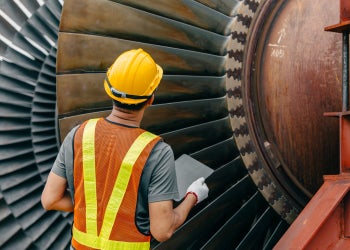
China-headquartered Shandong Electric Power Construction No. 3 Company (Sepco 3) and South Korea’s Doosan Enerbility have confirmed their involvement as contractors on the 1,700MW Misfah combined-cycle gas turbine (CCGT) project in Oman.
In a statement, Sepco 3 said it signed the contract on 20 August. On 21 August, Doosan disclosed a KRW930bn ($683m) contract with Jabel Power, the project company for the Misfah plant. The contract runs from 20 August 2026 to 1 April 2029.
The same consortium signed the engineering, procurement and construction (EPC) contract for the 890MW Duqm CCGT power plant in June. At the time, Doosan disclosed a contract worth about $350m.
In May, MEED exclusively reported that the group had been appointed as the main contractor for the two power plants, subject to the official signing.
State offtaker Nama Power & Water Procurement (Nama PWP) had previously signed power-purchase agreements (PPAs) for the development and operation of the plants.
The developer’s contract was awarded to a consortium comprising Korea Western Power (Kowepo), Qatar’s Nebras Power, the UAE’s Etihad Water & Electricity (EtihadWE) and Oman’s Bhawan Infrastructure Services.
As MEED understands, construction works have already commenced on the power plant projects. A China-based procurement listing in June shows that civil works procurement was under way for the Misfah independent power producer (IPP).
The civil package F tender covered piling, reinforcement cages, concrete works and pile testing, with work scheduled to start in July and finish by November
As reported in July, Germany’s Siemens Energy will supply power generation technology and long-term service agreements for the Misfah and Duqm IPP projects.
This includes the supply of six F-class gas turbines, six generators and 20-year long-term service agreements for the equipment.
The Misfah IPP will be led by Nebras Power and located in Wilayat Bousher in Muscat Governorate. The Duqm IPP will be led by Kowepo and located in Wilayat Duqm in Al-Wusta Governorate.
According to Nama PWP, the total investment for the two projects is estimated at approximately RO1bn ($2.6bn).
Synergy Consulting is the financial adviser and lead adviser to Nama PWP for these projects.
In November, Oman’s OQ Gas Networks received final investment approval to proceed with gas supply connections for the facilities.
The Misfah IPP will receive 8.5 million cubic metres a day (cm/d) of natural gas. The Duqm IPP will be supplied with 4.5 million cm/d of natural gas.
In March 2025, the same Sepco 3 and Doosan Enerbility consortium signed an EPC contract with Saudi Electricity Company to expand Riyadh Power Plant 12 (PP12). Located about 150 kilometres northwest of Riyadh, the 1,863MW power plant is expected to be completed in 2028.
READ THE AUGUST 2026 MEED BUSINESS REVIEW – click here to view PDFSaudi Arabia builds for the global stage; Rising uncertainty creates fresh set of challenges in the Maghreb; Gulf banks remain robust in the face of geopolitical tensions.
Distributed to senior decision-makers in the region and around the world, the August 2026 edition of MEED Business Review includes:
> WORLD CUP: What the 2026 World Cup means for Saudi Arabia 2034> MARKET FOCUS: Maghreb fortunes diverge> INDUSTRY REPORT: GCC banks prove resilient amid turmoil> LEADERSHIP: Private capital and the GCC infrastructure inflection> INTERVIEW: Developers look beyond standalone solarTo see previous issues of MEED Business Review, please click herehttps://image.digitalinsightresearch.in/uploads/NewsArticle/18911106/main.jpg