
The death of political risk
25 July 2024
 Commentary
Edmund O'Sullivan
Former editor of MEED
On 13 July, an assassin’s bullet missed Donald Trump’s head by an inch.
Three days later, speakers at the Republican National Congress, which nominated him as its candidate in this year’s US presidential election, heard calls for unwavering support for the assault on Gaza, despite the threat that it might spark a regional conflagration.
The previous week, Nato leaders shrugged off warnings from Russia’s President Vladimir Putin that the war in Ukraine could trigger a nuclear confrontation, and reaffirmed their support for the ejection of Russia from Ukrainian territory.
An oil tanker in the Red Sea being hit by a missile fired from Yemen on 15 July looked like a minor development in comparison. But it was another sign of the times.
What previously was unimaginable has become the new normal, and not just for those watching from the sidelines.
The markets – now the supreme judges of what is good or bad – think none of this matters much either. The Dow Jones Industrial Index opened higher following the failed assassination of Trump. The consensus was that his survival – not the attempt to end his life – was the real story.
What previously was unimaginable has become the new normal
Oil, in contrast, went down despite yet another assault on one of the world’s vital energy supply routes.
The Washington-based IMF is also sanguine. Its economic outlook report released on 16 July forecasts that world growth will quicken marginally next year to 3.3%.
Only precious metals markets suggest there may be doubts. Gold is up more than 20% since the start of the year, but this is probably more about inflation than perceptions of political risk.
Those who argue that prices of securities and commodities capture all relevant information about the course of world affairs have concluded that they signal there is nothing to worry about. The world will barrel ahead next year much as it did in 2024, regardless of further carnage in Gaza and Ukraine and twists in US politics.
But perhaps sensitivity to events has been dulled by the way they are now reported, particularly on social media.
Like tight-rope walkers, investors have become accustomed to risks that would be conventionally considered unacceptable. And there is always more money to be made in markets that rise.
In the spring of 2007, Lehman Brothers chief executive Dick Fuld said in Dubai that he had rarely seen so many positive forecasts for the world economy, though he admitted there were worries about trends in derivatives markets.
At least he acknowledged the contradiction. What he did not foresee was that it would be the bank he was then leading that would trigger the global financial collapse that came less than 18 months later.
Connect with Edmund O’Sullivan on X
More from Edmund O’Sullivan:
> Italy at centre of new reduced Europe
> US foreign policy approach remains adrift
> Rainmaking in the world economy
> New shock treatment for Egypt’s economy
> Syria’s long march in from the cold
> Lebanon’s pain captured in a call from Beirut
> Troubled end to 2023 bodes ill for stability
> The Holy Land and delusions it inspires
> Region to mark golden jubilee of 1973 war
> Gulf funds help reshape football


Register for MEED's guest program now to access this article.
Exclusive from Meed
-
 Building resilience into infrastructure delivery
21 October 2026
-
 Riyadh tenders Expo 2030 Adaptation and Innovation Pavilion
21 October 2026
-
 Mubadala Bio lands Lilly logistics deal
21 October 2026
-
 Chinese/local joint venture wins Qiddiya stadium facade
21 October 2026
-
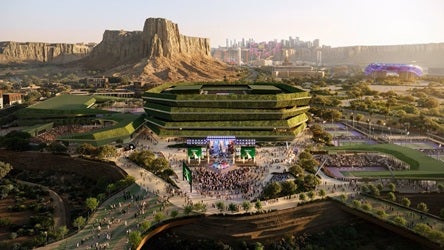 Zamil Steel wins $82m Qiddiya tennis centre contract
21 October 2026
All of this is only 1% of what MEED.com has to offer
Subscribe now and unlock all the 153,671 articles on MEED.com
- All the latest news, data, and market intelligence across MENA at your fingerprints
- First-hand updates and inside information on projects, clients and competitors that matter to you
- 20 years' archive of information, data, and news for you to access at your convenience
- Strategize to succeed and minimise risks with timely analysis of current and future market trends

Related Articles
-
Building resilience into infrastructure delivery
21 October 2026
The regional disruptions earlier this year tested Gulf supply chains, challenging the movement of goods and construction materials and raising questions about the ability of infrastructure programmes to maintain momentum.
For the UAE Ministry of Energy & Infrastructure, the experience reinforced the importance of the systems that support project delivery, from transport networks and customs procedures to domestic manufacturers and international suppliers.
“The disruption reinforced an important principle: infrastructure resilience is ultimately about the ability of the national system to continue operating under pressure,” says Mohammed Al-Mansoori, undersecretary for infrastructure and transport affairs.
Supply resilience
The ministry worked with ports, customs authorities, transport and rail operators, contractors, suppliers and the private sector to maintain the flow of essential goods and construction materials. It monitored critical materials and project schedules, identified alternative sources and adjusted procurement and delivery arrangements.
The response included movement exemptions and facilitation measures for more than 6,600 lorries, while rail freight operations increased from approximately one journey a week to as many as seven journeys a day. Priority and green corridors were activated, customs procedures facilitated and critical shipments prioritised at ports.
According to Al-Mansoori, these measures contributed to an estimated 25% reduction in transport costs, a 40% improvement in customs clearance times and an increase of approximately 15% in port capacity during the response period.
For infrastructure projects, the ministry worked with local manufacturers and suppliers to identify alternative sources of road and construction materials meeting the required technical specifications and quality standards. This helped reduce reliance on disrupted international supply routes and support ongoing projects.
The experience also highlighted the value of existing coordination mechanisms and partnerships.
“It also reinforced a fundamental principle: resilience means ensuring that critical infrastructure delivery does not depend on a single supplier, a single route or a single mode of transport,” Al-Mansoori says.
The ministry is planning to build on this experience by diversifying suppliers, strengthening domestic manufacturing and improving supply-chain monitoring.
Resilience is increasingly being incorporated into procurement planning. For critical materials and services, the ministry aims to identify risks early, broaden the pool of qualified suppliers and ensure viable alternatives are available.
The approach supports the UAE’s wider industrial objectives, including the national in-country value programme, which seeks to direct a greater share of procurement expenditure into the national economy.
“Our objective is not simply to purchase more locally. It is to help create competitive national supply chains,” Al-Mansoori says.
Domestic suppliers must be able to meet the technical requirements, quality standards and volumes demanded by major infrastructure programmes. Localisation is therefore about developing competitive industrial capabilities while shortening supply chains, improving responsiveness and encouraging investment.
“Localisation is not simply a procurement choice; it is an investment in national capability and long-term resilience,” Al-Mansoori says.
The ministry is also working with contractors to manage pressures from fluctuating material, insurance and transport costs. Its approach combines commercial discipline with early engagement to prevent external pressures from affecting project delivery.
“Our approach is based on early engagement, transparency and disciplined commercial management,” Al-Mansoori says. “Long-term infrastructure delivery depends on strong contractors as much as it depends on strong contracts.”
Contractors remain responsible for normal market and contractual risks, but the ministry seeks to assess exceptional pressures objectively, supported by evidence of their impact on costs and schedules. Realistic planning, early procurement and proactive risk management also help maintain momentum.
“The objective is to strike the right balance between protecting the government’s commercial interests and securing best value for money, while maintaining an efficient, sustainable contracting market capable of continuing to deliver strategic infrastructure projects,” Al-Mansoori says.
Resilience means ensuring that critical infrastructure delivery does not depend on a single supplier, a single route or a single mode of transport
Project delivery
The ministry’s focus on measurable outcomes is reflected in the Emirates Road enhancement project, which involves widening approximately 25 kilometres of Emirates Road from three to five lanes in each direction, alongside major improvements to Interchange No. 7.
The works are expected to increase road capacity by up to 65% and reduce journey times by up to 45%.
The project illustrates the ministry’s emphasis on assessing infrastructure by the benefits it delivers, rather than simply the scale of construction.
“Infrastructure success should be measured by the value it creates – not just by the kilometres we build,” Al-Mansoori says.
That principle is increasingly important as the UAE balances new construction with the long-term costs of operating and maintaining its assets. Decisions made during planning and construction can influence maintenance requirements, operating costs and performance for decades.
For Al-Mansoori, resilience, domestic capability and effective delivery are closely connected. Stronger local supply chains can reduce exposure to external shocks, while closer engagement with contractors can help projects withstand cost pressures.
Don’t miss MEED’s MENA Construction Summit 2026, taking place under the patronage of the UAE Ministry of Energy & Infrastructure
Secure your place as an attendee or request the sponsorship deck by clicking here or emailing us at meedevents@meed.com
https://image.digitalinsightresearch.in/uploads/NewsArticle/20810056/main.gif -
Riyadh tenders Expo 2030 Adaptation and Innovation Pavilion
21 October 2026
Register for MEED’s 14-day trial access
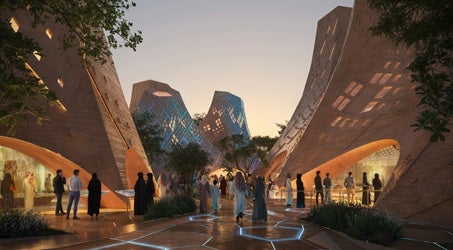
Expo 2030 Riyadh has tendered the design-and-build main contract for the Adaptation and Innovation Pavilion in the exhibition’s Technology District.
The pavilion will be built on a plot of at least 12,710 square metres and will feature a two-level basement, ground-level public areas, an elevated skywalk, visitor experience areas, food and beverage outlets, retail space, VIP facilities, offices, back-of-house areas, exhibition spaces, an amphitheatre and a resonance hall.
The facility is being designed to accommodate a minimum of 20,000 visitors a day at peak periods, with an anticipated average of about 15,000 visitors a day. The project targets LEED Gold certification.
The tender was issued on 1 October, with bids due on 6 January 2027.
The design-and-build contractor will be responsible for completing, reviewing, verifying, coordinating and technically integrating the design, including specialist contractor design portions and coordination with the novated lead design consultant.
The scope includes completing early works and substructure activities, including grading, bulk earthworks, excavation, cut and fill, soil improvement, raft foundations, reinforced-concrete basement walls, basement columns through to the ground-floor slab, waterproofing, mechanical, electrical and plumbing (MEP) provisions, and backfilling.
The contractor will also deliver the superstructure and building envelope, including structural works, facade engineering and installation, roofs, waterproofing, external finishes, and permanent facade access and maintenance systems. The internal works will cover front-of-house and back-of-house areas, public and core spaces, internal finishes, fixtures, fixed fittings, joinery, circulation areas, lobbies, stairs, toilets, storage, waste areas and associated builder’s works.
The building services package includes MEP systems, information and communications technology, extra-low-voltage systems, building management systems, security, fire and life safety systems, specialist lighting and vertical transportation.
The contract also covers the visitor experience package, including procurement, installation, integration, testing, commissioning and handover of visitor-facing environments, media, immersive and audiovisual technologies, interactive elements, experiential lighting, digital content, interpretive and wayfinding systems, controls and supporting infrastructure.
Within-plot infrastructure and utilities, landscaping, public realm works, paving, planting, irrigation, signage, street furniture, drainage, stormwater systems, external lighting, security, and fire and life safety systems are also included.
The contractor will be responsible for procurement, off-site fabrication, construction, testing and commissioning, performance verification, training, operations and maintenance documentation, operational readiness, handover, defects rectification and close-out.
The main works tender is based on a 60% RIBA Stage 3 design, with the Stage 3 design to be completed to 100% through an addendum.
Early works and substructure works, as well as the lead design consultant, will be novated to the contractor. Visitor experience works are included as a provisional sum.
https://image.digitalinsightresearch.in/uploads/NewsArticle/20801465/main.jpeg -
Mubadala Bio lands Lilly logistics deal
21 October 2026
Mubadala Bio, the life sciences subsidiary of Abu Dhabi state investor Mubadala Investment Company, has signed an agreement with US drugmaker Eli Lilly to localise the packaging and logistics of Lilly’s glucagon-like peptide-1 (GLP-1) medicines in Abu Dhabi.
The work will take place at a 125,000-square-metre site in Khalifa Economic Zones Abu Dhabi (Kezad), which includes packaging and warehousing facilities. Mubadala Bio said the facilities would strengthen its pharmaceutical contract manufacturing, packaging and logistics capabilities and its ability to serve international clients from the UAE.
The packaging and logistics activities will be introduced in phases and will be subject to technical, quality and regulatory requirements. The companies did not disclose the value of the agreement or a timeline for the first phase.
The Emirates Drug Establishment approved Lilly’s oral GLP-1 drug Foundayo (orforglipron) for chronic weight management in April. The companies said this made the UAE the second country in the world to register the medicine.
In Abu Dhabi, the treatment is available to eligible patients under a weight management programme launched by the Abu Dhabi Department of Health and the Abu Dhabi Public Health Centre in June 2025. The UAE was also an early launch market for Lilly’s injectable treatment Mounjaro (tirzepatide) in August 2022.
Mubadala launched Mubadala Bio in 2025 to expand domestic drug manufacturing and distribution, with a focus on national drug security. It is one of Mubadala’s designated national champions, set up to support strategic sectors. At launch, its combined facilities covered 110,000 square metres, with an annual capacity of more than 2.5 billion tablets and capsules and 120 million intravenous and injectable units.
https://image.digitalinsightresearch.in/uploads/NewsArticle/20801279/main.jpg -
Chinese/local joint venture wins Qiddiya stadium facade
21 October 2026
Register for MEED’s 14-day trial access
A joint venture of China’s Fangda Group and Saudi Arabia’s IKK Group has secured a SR1.15bn ($306m) contract to deliver curtain wall facade works for the Prince Mohammed Bin Salman Stadium in Qiddiya City, Riyadh.
The contract was awarded by the joint venture of Spain’s FCC Construccion and local contractor Nesma & Partners, which is building the stadium under an estimated SR15bn ($4bn) main contract awarded by Qiddiya Investment Company (QIC) in October 2024.
The IKK-Fangda joint venture will design, supply and install curtain wall façade systems for the main stadium (Lot 1), as well as for the museum and ancillary buildings (Lot 3).
The contract has an execution period of 863 days.
The stadium will seat about 47,000 spectators and will be the home ground for Saudi Pro League clubs Al-Nassr and Al-Hilal.
The facade award follows the appointment of Elegancia Arabia, a subsidiary of Qatar-based Elegancia MEP and Estithmar Holding, to deliver the stadium’s mechanical, electrical and plumbing works.
The SR829m ($221m) contract is Elegancia Arabia’s largest award in Saudi Arabia to date.
The project is being designed by US-based consultant Populous.
It is among the venues planned for the 2034 Fifa World Cup and will also host the Saudi King Cup, the AFC Asian Cup and the 2034 Asian Games.
https://image.digitalinsightresearch.in/uploads/NewsArticle/20799367/main.jpg -
Zamil Steel wins $82m Qiddiya tennis centre contract
21 October 2026
Advanced Building Industries Company (Senaat) has announced that its subsidiary, Zamil Structural Steel Company (Zamil Steel), has secured a SR308m ($82m) contract for the National Tennis Centre in Qiddiya City, Riyadh.
The 19-month contract was awarded by the joint venture of France’s Bouygues Batiment International and local contractor Almabani General Contractors Company.
Zamil Steel’s scope includes the fabrication, supply and installation of structural steel and external facades for the scheme.
MEED reported in June that the Bouygues Batiment International-Almabani joint venture had started construction of the National Tennis Centre.
The development will include 30 tennis courts, comprising 28 hard courts and two clay courts. The main Centre Court will seat 15,000 spectators and feature a retractable roof.
The facility is being designed to meet standards set by the Association of Tennis Professionals, the Women’s Tennis Association and the International Tennis Federation.
The development will also include an 8,000-seat multipurpose arena with a retractable roof, known as Court 3. Other facilities include a 5,000-seat Court 1, a 2,000-seat Court 2, six competition courts, six indoor courts and 14 practice courts. Each outdoor match court will provide 450 seats.
Total seating capacity across the complex will be 33,000. US-based architect Populous designed the project.
Qiddiya Investment Company officially announced the project on 15 June. The developer has said the centre will be the region’s largest tennis complex and will host international tennis events.
https://image.digitalinsightresearch.in/uploads/NewsArticle/20799055/main.jpg