
Tecnicas Reunidas announces pair of Middle East contracts
18 June 2026
Spanish contractor Tecnicas Reunidas has announced winning two contracts related to engineering, procurement and construction (EPC) of upstream facilities to manage production from an oil field in the Middle East.
Madrid-based Tecnicas Reunidas has yet to provide further details about its contract awards, saying only that its client is a national oil company.
The company, in a disclosure to the Madrid Stock Exchange on 15 June, added that the two contracts support its 2026 order backlog expectations, in line with the forecast presented in its first-quarter results, which indicated a minimum level of potential near-term contract awards in the Middle East of approximately €3.4bn ($3.94bn).
MEED understands that the two contracts won by Tecnicas Reunidas are for two of the three EPC packages that form part of a project by Abu Dhabi National Oil Company (Adnoc Group) that involves the next expansion phase of the Upper Zakum offshore field development.
The project’s objective is to increase the oil production capacity of the Upper Zakum field in Abu Dhabi to 1.5 million barrels a day (b/d). The scheme is estimated to be worth more than $10bn, according to sources.
MEED recently reported that project operator Adnoc Offshore, a subsidiary of Adnoc Group, had selected the following contractors for the three main EPC packages of the UZ 1.5MMBD project:
- Package 1: Tecnicas Reunidas (Spain)
- Package 2: NMDC Energy (UAE)
- Package 3: Tecnicas Reunidas
Abu Dhabi-based NMDC Energy has yet to announce its contract award for package two of the project.
Adnoc Offshore is understood to have issued the main tender for EPC works for the UZ 1.5MMBD project in the third quarter of last year.
Contractors submitted technical bids for package one by 21 November, while proposals for packages two and three were submitted by 14 November, MEED previously reported.
Contractors submitted commercial bids for package one by the deadline of 23 February this year, and for packages two and three by the 27 February deadline, according to sources. The previous deadline for the submission of commercial bids was 15 January.
In November 2024, MEED reported that Adnoc Offshore had awarded a contract for front-end engineering and design (feed) and pre-feed services on the project to France-headquartered contractor Technip Energies.
A kick-off meeting between Adnoc Offshore and Technip Energies took place on 21 November 2024.
UZ1.5MMBD scope
Located 84 kilometres offshore in Abu Dhabi, Upper Zakum is the world’s second-largest offshore oil field and fourth-largest oil field.
The UZ 1.5MMBD project is the latest crude output expansion scheme to be undertaken by Adnoc Offshore at the Upper Zakum field development.
The scope of work on the first EPC package involves surface facilities required on the field’s existing artificial islands, including integrated gas-lift compressors, produced water reinjection units, water treatment plants, pre-assembled manifolds and related facilities.
The second package includes offshore facilities and comprises several segments of subsea pipelines and subsea cables.
The third package covers work on Adnoc’s existing Zirku Island and will require several additional oil tanks, a water treatment unit, an export gas compressor, a condensate treatment unit and associated facilities for power and utilities.
Upper Zakum expansion
The first phase of the programme to raise the Upper Zakum offshore field development’s oil production capacity to 1.2 million b/d was launched in 2019. The initial goal was to increase the field’s output potential to 1 million b/d by 2024, which was later increased to 1.2 million b/d, with the project execution timeline eventually extended.
In April last year, MEED reported that Adnoc Offshore had awarded the main EPC contract for the UZ 1.2MMBD EPC-1 project to UAE-based Target Engineering Construction Company. The value of the contract was estimated to be $825m.
The project’s main scope involved the EPC of several surface facilities and plants at the Upper Zakum offshore development’s four main artificial islands: Al-Ghallan, Umm Al-Anbar, Ettouk and Asseifiya – also known as Central Island, West Island, North Island and South Island, respectively.
Tecnicas Reunidas won the contract for the feed works on the UZ 1.2MMBD EPC-1 project in 2019. UK-headquartered Wood Group was appointed as the project management consultant for the EPC phase.
In November 2024, MEED reported that Adnoc Offshore had also selected Target for the second phase of the Upper Zakum 1.2 million b/d project (UZ 1.2MMBD EPC-2). The value of the contract was estimated to be about $500m, according to sources.
Target began work on the project in December last year, MEED previously reported.
The scope of work on the UZ 1.2MMBD EPC-2 project covers the EPC of several structures on Assefiya Island.
Adnoc Offshore performed the feed work on the UZ 1.2MMBD EPC-2 project in-house.
Upper Zakum oil production
Adnoc Offshore holds the majority 60% stake in the Upper Zakum hydrocarbons concession, with the other stakeholders being US-based ExxonMobil – which holds a 28% interest – and Japan’s Inpex Corporation, holding a 12% interest through its subsidiary Japan Oil Development Company (Jodco).
Adnoc Offshore and its partners in the Upper Zakum concession have committed a total capital expenditure budget of approximately $30bn to maintain and ramp up the asset’s oil production capacity.
The strategic objective is to first raise the asset’s oil output from 640,000 b/d to 750,000 b/d through the UZ 750 project, then to 1.2 million b/d through the two phases of the ongoing UZ 1.2MMBD project, and eventually to 1.5 million b/d.
Zakum Development Company (Zadco), which later merged into Adnoc Offshore, awarded EPC contracts for the UZ 750 project in 2012 and early 2013.
The $817m first package was awarded to a consortium of Abu Dhabi’s NMDC Energy (then known as National Petroleum Construction Company) and Technip Energies. Package two, the project’s largest EPC package, worth $3.7bn, was awarded to a consortium of UK-headquartered Petrofac and South Korea’s Daewoo Shipbuilding & Engineering.
EPC work on UZ 750 began in 2014 and was completed in 2022.
In October 2022, Adnoc Group subsidiary Adnoc Drilling set a world record for drilling the longest oil and gas well at the Upper Zakum concession, stretching 50,000 feet.
The extended-reach wells will tap into an undeveloped part of the Upper Zakum reservoir, potentially increasing the field’s production capacity by 15,000 b/d without expanding or building any new infrastructure, Adnoc said.
 READ THE JUNE 2026 MEED BUSINESS REVIEW – click here to view PDF
GCC looks beyond the Strait; Iraq’s reform window narrows as fiscal assumptions shatter; MEED Top 100 companies.
Distributed to senior decision-makers in the region and around the world, the June 2026 edition of MEED Business Review includes:
|
> AGENDA: Gulf races to reroute trade
> EXPORT ROUTES: Regional war boosts oil and gas pipeline project activity
> CURRENT AFFAIRS: UAE’s Opec departure fulfils multiple ends
> MEED TOP 100: Middle East stocks recover unevenly
> LEADERSHIP: Building the infrastructure that makes net zero possible
> TRADE DEAL: UK-GCC trade deal talks conclude
|

Register for MEED's guest program now to access this article.
Exclusive from Meed
-
 Kuwait on track to hit oil production target
7 October 2026
-
 Al-Yamamah signs Saudi 380kV transmission deals
6 October 2026
-
 Eagle Hills plans new Syria projects
6 October 2026
-
-
 Dubai issues PMC tender for four stormwater projects
6 October 2026
All of this is only 1% of what MEED.com has to offer
Subscribe now and unlock all the 153,671 articles on MEED.com
- All the latest news, data, and market intelligence across MENA at your fingerprints
- First-hand updates and inside information on projects, clients and competitors that matter to you
- 20 years' archive of information, data, and news for you to access at your convenience
- Strategize to succeed and minimise risks with timely analysis of current and future market trends
Related Articles
-
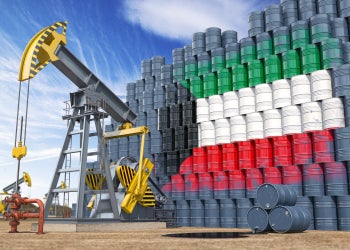
Kuwait on track to hit oil production target
7 October 2026
Kuwait is on track to meet its target of having 4 million barrels a day (b/d) of oil production capacity by 2035, according to Kuwait Petroleum Corporation (KPC) chief executive Shaikh Nawaf Al-Sabah.
Al-Sabah also said Kuwait is on course to increase non-associated gas production to 2 billion cubic feet a day by 2040.
His comments come amid an ongoing crisis in Kuwait’s oil and gas sector linked to the regional conflict that began when the US and Israel attacked Iran on 28 February.
The subsequent war has significantly disrupted shipping through the Strait of Hormuz, which is a crucial export route for Kuwaiti crude oil.
Kuwait is currently producing around 2 million b/d of oil, down from 2.6 million b/d before the US and Israel attack.
Speaking at a conference in London, Al-Sabah said: “We have the capacity to go back up to our current maximum sustainable capacity of 3 million b/d, if we have the export routes available, and this comes down to the ability to move oil through the Strait.”
KPC is investing $9bn-$10bn a year in capital expenditure to meet its oil and gas production goals, according to Al-Sabah.
He said: “We are doing this because we recognise that it is our hydrocarbons that will be most in demand a decade from now, and two decades from now – in fact, for the rest of our lifetimes.”
Project Seef
KPC is pushing ahead with the Al-Seef project, which focuses on developing three large offshore oil discoveries, Al-Sabah said.
The offshore fields are known as Nokhatha, Julaia and Jazza. The development was first announced in February this year, about two weeks before the US and Israel attack on Iran.
Al-Sabah said KPC is continuing with the project and believes the three fields collectively hold more than 3 billion barrels of recoverable oil.
He said: “We are asking international oil companies to partner with us to develop those resources under an operating services contract.
“So, we’re moving ahead according to the exact same schedule that we had put together even before the war began.”
Al-Sabah did not say which international oil companies KPC has approached to help develop the three offshore fields.
 READ THE OCTOBER 2026 MEED BUSINESS REVIEW – click here to view PDF
Industry and logistics drive development at Neom; Saudi Arabia’s investment priorities realign amid conflict; MEED’s 2026 power developer ranking.
Distributed to senior decision-makers in the region and around the world, the October 2026 edition of MEED Business Review includes:
> AGENDA: Oxagon takes centre stage at Neom> MARKET FOCUS: Saudi projects hold steady> INDUSTRY REPORT: MEED’s 2026 GCC power developer ranking> LEADERSHIP: The future city does not need to hang above the groundTo see previous issues of MEED Business Review, please click herehttps://image.digitalinsightresearch.in/uploads/NewsArticle/20315147/main.jpg -
Al-Yamamah signs Saudi 380kV transmission deals
6 October 2026
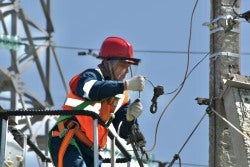
Riyadh-headquartered Al-Yamamah Steel Industries has signed two supply contracts with Algihaz Contracting Company for the construction of 380kV ultra-high-voltage transmission lines in Saudi Arabia’s Western Region.
The contracts cover the supply of steel towers and are worth a combined SR254.28m ($67.8m).
In a disclosure to the Saudi Exchange (Tadawul), the firm said the first contract is valued at SR135.65m ($36.2m), while the second is worth SR118.63m ($31.6m).
Both contracts have a one-year duration, with supply scheduled to begin in March 2027. The financial impact of the contracts is expected to start appearing in Al-Yamamah Steel’s results in the first quarter of 2027.
Algihaz is currently carrying out construction works for several transmission projects, including Saudi Energy’s $206m Bisha 380/132kV BSP connection project, for which it was appointed the main contractor in 2025.
The project involves a double-circuit 380kV overhead transmission line connecting the Bisha PV bulk supply point to the existing bulk supply points in Aseer Province.
The deals also add to a series of steel tower contracts secured by Al-Yamamah Steel for 380kV transmission projects in the Western Region.
In September, the company signed a SR103.14m ($27.5m) contract with the Saudi branch of National Power Construction Corporation to supply steel towers for a 380kV ultra-high-voltage line. Supply under that contract is due to begin in February 2027.
Al-Yamamah Steel also signed a SR176.48m ($47.1m) contract in November 2025 with Arabian Electrical Transmission Line Construction Company to supply steel towers for another 380kV ultra-high-voltage line in the Western Region.
The company has expanded its tower production capacity in recent years to meet expected demand for steel towers used in electricity transmission lines. Its 2024 annual report said it had added production lines and a galvanising plant in Jeddah Industrial City for this purpose.
READ THE OCTOBER 2026 MEED BUSINESS REVIEW – click here to view PDFIndustry and logistics drive development at Neom; Saudi Arabia’s investment priorities realign amid conflict; MEED’s 2026 power developer ranking.
Distributed to senior decision-makers in the region and around the world, the October 2026 edition of MEED Business Review includes:
> AGENDA: Oxagon takes centre stage at Neom> MARKET FOCUS: Saudi projects hold steady> INDUSTRY REPORT: MEED’s 2026 GCC power developer ranking> LEADERSHIP: The future city does not need to hang above the groundTo see previous issues of MEED Business Review, please click herehttps://image.digitalinsightresearch.in/uploads/NewsArticle/20308551/main.jpg -
Eagle Hills plans new Syria projects
6 October 2026
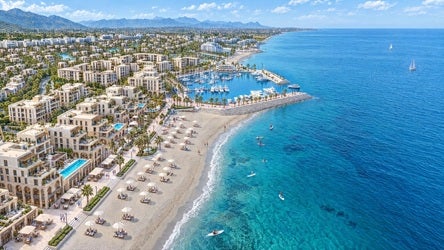
Abu Dhabi-based real estate developer Eagle Hills has signed a framework agreement with Syria’s Ministry of Public Works & Housing to develop a series of residential and tourism community projects across several Syrian governorates.
The first phase will include Damascus Heights in the capital and Latakia Yachts & Marina on the Mediterranean coast.
Damascus Heights is planned as a mixed-use community comprising homes, retail, hospitality and business facilities, supported by schools, healthcare services, green areas and resident amenities.
Latakia Yachts & Marina is planned as a waterfront destination anchored by a marina, with homes, hotels, branded residences and leisure offerings.
During development and operation, the projects are expected to support economic activity and tourism, create jobs across construction, hospitality and services, and add new housing, community facilities and tourism infrastructure.
Syrian professionals and businesses are expected to play a central role in both delivery and operations, creating opportunities for contractors, suppliers and service providers, strengthening local supply chains and SMEs, and supporting skills development and knowledge transfer.
Eagle Hills is also inviting applications for investment participation from Syrians in Syria and abroad, with priority for qualified Syrian individuals, businesses and institutions.
Following the signing, both projects will proceed to implementation, with enabling and construction works expected to begin shortly in Damascus and Latakia.
READ THE OCTOBER 2026 MEED BUSINESS REVIEW – click here to view PDFIndustry and logistics drive development at Neom; Saudi Arabia’s investment priorities realign amid conflict; MEED’s 2026 power developer ranking.
Distributed to senior decision-makers in the region and around the world, the October 2026 edition of MEED Business Review includes:
> AGENDA: Oxagon takes centre stage at Neom> MARKET FOCUS: Saudi projects hold steady> INDUSTRY REPORT: MEED’s 2026 GCC power developer ranking> LEADERSHIP: The future city does not need to hang above the groundTo see previous issues of MEED Business Review, please click herehttps://image.digitalinsightresearch.in/uploads/NewsArticle/20308460/main.jpg -
Contractors submit revised bids for Dukhan field facilities upgrade
6 October 2026

Contractors have submitted revised proposals to QatarEnergy for a key tender to upgrade facilities at the Dukhan oil field in Qatar, about 80 kilometres west of Doha.
Following the submission of the initial round of bids for the project on 9 August, QatarEnergy requested revised proposals from contractors, which they submitted by 27 September, sources told MEED.
The following local contractors, among others, are understood to be bidding for the DPFU Phase 1B (Part 2) tender, according to information obtained by MEED Projects:
- Doha Petroleum Construction Company (Dopet)
- Galfar Al-Misnad Engineering & Contracting
- Qatar Engineering & Construction Company (Q-con)
QatarEnergy originally stipulated a bond validity of 150 days (until 23 December) and a bid validity of 120 days (until 23 November) for the project.
The engineering, procurement, installation and commissioning scope covers upgrades to 56 oil manifolds, 108 gas-lift manifold slots, chemical injection systems and key pumping facilities, along with associated piping, instrumentation, control, electrical and civil works.
The scope includes the demolition of obsolete equipment, degassing station enhancements, and full testing and handover. It also encompasses additional capacity enhancement works under Part 3, mainly the installation of new oil export and produced-water transfer pumps, along with supporting facility modifications.
The project involves complex interfaces and shutdown-critical activities, requiring expertise in live-plant integration.
QatarEnergy issued the tender for the DPFU Phase 1B (Part 2) project on 8 June and initially set a bid submission deadline of 26 July, later extending it to 9 August.
Dukhan, Qatar’s first and only onshore oil field, was discovered in 1938, with oil production starting in 1939-40. The country currently produces about 1.8 million barrels a day (b/d) of crude, with the Dukhan field accounting for about 350,000 b/d.
The Dukhan oil field covers about 80km by 8km and consists of four reservoirs: Khatiyah, Fahahil, Jaleha and Diyab. The first three are oil reservoirs. The more recently developed Diyab reservoir contains non-associated gas and is estimated to hold around 2 billion barrels of crude oil reserves. Diyab lies on Dukhan’s southern flank.
ALSO READ: QatarEnergy selects contractors for offshore oil field expansion
https://image.digitalinsightresearch.in/uploads/NewsArticle/20306273/main5440.jpg -
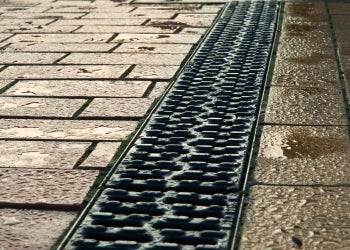
Dubai issues PMC tender for four stormwater projects
6 October 2026
Dubai Municipality has invited consultants to bid for a contract to provide construction supervision services for four stormwater projects.
The bid submission deadline is 29 October.
All four projects are part of the municipality’s Tasreef programme, intended to increase Dubai’s rainwater drainage capacity by 700% by 2033 and provide capacity for the emirate’s needs for the next 100 years.
The tender for TF-06-S1 Supervision of Stormwater Drainage System Projects – Package 4 was issued on 6 October.
The consultancy covers the following projects:
- TF-06-C1: Construction of a stormwater pond connecting Al-Maktoum Airport and Dubai South
- TF-06-C2: Construction of a stormwater drainage system connecting Al-Maktoum Airport and Dubai South
- TF-07-C1: Construction of a stormwater drainage system on Sheikh Zayed Bin Hamdan Road connecting developers
- TF-24-C1: Connecting developers’ areas to the stormwater networks in Dubailand
In documents seen by MEED, the municipality said it will require a dedicated supervision team for each project.
The consultancy will cover construction supervision, including the deployment of resident engineers, civil engineers, inspectors, quantity surveyors, land surveyors and planning engineers. Mechanical engineers will also be required, along with health and safety personnel and NOC engineers, depending on the project.
TF-07-C1 is the same strategic stormwater drainage project that Dubai Municipality recently tendered for construction, with contractors preparing to submit bids on 22 October.
The project covers more than 100 million square metres between Sheikh Mohammed Bin Zayed Road and Emirates Road, and from Expo Road to Dubailand.
It will provide stormwater infrastructure and service connections for more than 20 private developers and Al-Yalayis 5, as well as supporting major roads in the Jebel Ali area. The construction scope includes a major gravity drainage system with pipeline diameters of up to 3,000mm.
TF-24-C1 is one of three water infrastructure tenders issued by the municipality in August, as reported by MEED. The project will connect developers’ areas in Dubailand to the stormwater network. It includes 18 kilometres (km) of stormwater drainage pipelines with diameters of up to 1,800mm and 3.5km of gravity sewer pipelines with diameters of up to 1,000mm.
Bidding for the engineering, procurement and construction contract was recently extended to 1 October, with Nael Construction & Contracting and Al-Nasr Contracting Company among those expected to make an offer for the project.
READ THE OCTOBER 2026 MEED BUSINESS REVIEW – click here to view PDFIndustry and logistics drive development at Neom; Saudi Arabia’s investment priorities realign amid conflict; MEED’s 2026 power developer ranking.
Distributed to senior decision-makers in the region and around the world, the October 2026 edition of MEED Business Review includes:
> AGENDA: Oxagon takes centre stage at Neom> MARKET FOCUS: Saudi projects hold steady> INDUSTRY REPORT: MEED’s 2026 GCC power developer ranking> LEADERSHIP: The future city does not need to hang above the groundTo see previous issues of MEED Business Review, please click herehttps://image.digitalinsightresearch.in/uploads/NewsArticle/20305174/main.jpg