
Taziz awards $1.99bn contract for chemical plants complex
5 November 2025
Register for MEED’s 14-day trial access
Abu Dhabi’s Taziz has awarded the main engineering, procurement and construction (EPC) contract to build a complex of specialty chemical plants in the Taziz Industrial Chemicals Zone at Ruwais Industrial City.
China National Chemical Engineering & Construction Corporation Seven (CC7) has won the EPC contract, valued at $1.99bn, to build the chemicals cluster known as Project Salt.
In late September, MEED reported that CC7 was the frontrunner to win the EPC contract for Project Salt.
The facility will produce 1.9 million tonnes a year of marketable polyvinyl chloride (PVC), ethylene dichloride (EDC), vinyl chloride monomer (VCM) and caustic soda.
EPC works on the project are expected to be completed by Q4 2028.
The contract award was announced at the Abu Dhabi International Petroleum Exhibition and Conference (Adipec), taking place from 3 to 6 November in Abu Dhabi.
Project Salt’s contract award “marks a major step forward in delivering Taziz’s strategic mandate to drive industrial growth, localise supply chains, and enable new value chains in the UAE”, Taziz said in a statement.
“These chemicals are critical to serving growing demand in sectors such as construction, infrastructure, packaging and healthcare, both in the UAE and internationally,” it added.
Project Salt tendering phase
South Korean contractor Samsung E&A was understood to be the only other bidder for Project Salt.
MEED previously reported that contractors had submitted technical bids for EPC works on Project Salt by the deadline of 15 July.
Adnoc received commercial bids from contractors for Project Salt by the deadline of 15 August, according to sources.
Adnoc had initially set deadlines of 15 June and 23 July for contractors to submit technical and commercial bids for the project, respectively.
Taziz first announced the EDC, chlor alkali and PVC plants in December 2021. India’s Reliance Industries was named as the main investor in the chemicals plants at the time.
Reliance is understood to have pulled out of Project Salt and has been replaced by France-based Kem One, MEED previously reported.
MEED reported in June last year on the award of front-end engineering and design (feed) contracts for the three chemicals production plants.
Germany-headquartered Thyssenkrupp Uhde won feed contracts for the EDC and chlor alkali plants, while France-based Technip Energies won the deal for the PVC facility.
The planned EDC plant will utilise chlorine from the associated chlor alkali plant as its main feedstock and will have a production capacity of up to 1.2 million tonnes a year (t/y).
Part of the EDC output will, in turn, be used as feedstock by the PVC plant, which is planned to have a production capacity of 350,000 t/y.
Surplus quantities of EDC and caustic soda from the chlor alkali plant are intended to be exported.
Taziz chemicals zone
Since 2021, Taziz has attracted investments from several foreign investors for its planned chemicals projects in the under-construction Taziz Industrial Chemicals Zone in Ruwais.
Taziz has planned seven chemicals derivatives projects as part of the first phase of its zone.
UK-headquartered Wood Group has performed the feed works on the seven projects, which are:
|
Anchor product |
End use |
|---|---|
|
Chlor alkali |
Water treatment, metallurgy and textiles |
|
Ethylene dichloride |
Housing, infrastructure and consumer goods |
|
Maleic anhydride |
Piping, construction and heavy transport |
|
Methanol |
Energy, consumer goods and pharmaceuticals |
|
Blue ammonia |
Agriculture, apparel and energy |
|
Isopropyl alcohol |
Healthcare and cosmetics |
|
Elastomers |
Automobiles, adhesives, food production and storage |
Chemicals production is a priority sector for Operation 300bn, the UAE’s industrial growth strategy.
The strategy is being overseen by the Industry & Advanced Technology Ministry, which aims to raise the UAE industrial sector’s contribution to the national GDP to AED300bn ($81.7bn) by 2031.
In December 2021, Taziz secured agreements from eight UAE-based entities for investments in its planned chemicals projects in Ruwais. The agreements marked the first domestic public-private partnership in Abu Dhabi’s downstream oil, gas and petrochemicals sector.
ALSO READ: Local firms invest in Taziz industrial complex
In addition to the three chemicals plants planned under Project Salt, a joint venture of UAE-based Fertiglobe, South Korea’s GS Energy Corporation and Japanese investment firm Mitsui & Company has invested in a “world-scale” blue ammonia production facility in the Ruwais petrochemicals derivatives complex.
The Fertiglobe/GS Energy/Mitsui joint venture awarded Italian contractor Tecnimont the EPC contract for the project in May 2024. Construction on the facility started in June last year.
Separately, in February, Taziz awarded Samsung E&A the main EPC contract to build the UAE’s first methanol plant in the Taziz Industrial Chemicals Zone. The value of the EPC contract is $1.7bn and the duration of works is 44 months.
The nameplate production capacity of the planned methanol complex is 5,000 metric tonnes a day, or 1.8 million metric t/y. Switzerland-based energy and chemicals company Proman is a joint investor in the project.
Supporting infrastructure
Regarding infrastructure to support the various projects, Taziz awarded three EPC contracts totalling $2bn in November.
Abu Dhabi government-owned NMDC Group was awarded the EPC contract to build a chemicals port. Once complete, the port will facilitate the export of chemicals and fuels.
Singapore-based Rotary Engineering won the EPC contract for a chemicals terminal known as Project Landing. The contract includes developing storage facilities, tank-to-jetty pipelines, jetty-to-tank pipelines, inter-site pipelines and liquid product storage. Taziz is building the chemicals-handling terminal in partnership with Netherlands-based midstream energy company Advario.
Abu Dhabi-based Al-Geemi Contracting was awarded the EPC contract to develop essential infrastructure for the 17-square-kilometre Taziz chemicals production site, including internal roads, security fencing and buildings.
Contracts have also been awarded for the development of a centralised utilities facility for the Taziz Industrial Chemicals Zone, which will include power transmission, steam, cooling water and water units.
Adnoc signed an agreement with Abu Dhabi National Energy Company (Taqa) in June 2021 to develop a cogeneration power facility in Ruwais. In December, the partners awarded a $1bn contract to Kuwait-based Alghanim International for the project, and the contractor started construction of the facility in February this year.
Alghanim International, in turn, awarded a $67m sub-contract to Riyadh-based water utility developer Water & Environment Technologies Company (Wetico) for the comprehensive water facilities package of the cogeneration power facility, which includes the construction of a seawater desalination plant, demineralisation plant, condensate polishing unit and effluent treatment plant.
ALSO READ: Fertiglobe delays final investment decision on Project Rabdan

Register for MEED's guest program now to access this article.
Exclusive from Meed
-
-
 Kuwait contractor wins Shagaya power grid deal
24 March 2026
-
 Prequalification begins for Cairo Metro Line 2 upgrade
24 March 2026
-
-
 Local firm wins Al-Ras Dubai Walk masterplan deal
24 March 2026
All of this is only 1% of what MEED.com has to offer
Subscribe now and unlock all the 153,671 articles on MEED.com
- All the latest news, data, and market intelligence across MENA at your fingerprints
- First-hand updates and inside information on projects, clients and competitors that matter to you
- 20 years' archive of information, data, and news for you to access at your convenience
- Strategize to succeed and minimise risks with timely analysis of current and future market trends

Related Articles
-
French contractor begins work on Morocco’s Noor Atlas project
24 March 2026

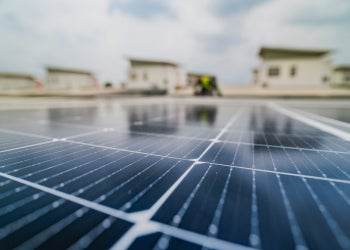
France-headquartered Eiffage is carrying out construction works on phase one of Morocco’s 305MW Noor Atlas solar photovoltaic (PV) programme, according to sources close to the project.
Morocco’s National Office of Electricity & Drinking Water (Onee) and the Moroccan Agency for Sustainable Energy (Masen) recently signed power purchase agreements (PPAs) for the programme covering the development, financing, construction, and operation of six solar PV power plants.
The plants were tendered in two lots in 2022, covering the eastern and southern parts of the country.
The first lot comprises the following four projects:
- Ain Beni Mathar: 121MW
- Enjil: 42MW
- Boudnib: 33MW
- Buonane: 29MW
The second lot comprises two solar PV projects in Tan-Tan and Tata, with each having a planned capacity of 40MW.
Eiffage, through its subsidiary Clemessy Maroc, previously carried out electrical works on Morocco’s Noor Tafilalt solar programme.
However, it is understood that the contract for lot one is the company’s first role as full engineering, procurement and construction contractor for a solar project in the region.
Local media reports previously said plants under the programme will be developed by consortiums comprising Moroccan and European companies.
Contractor details for phase two of the project have not been disclosed. However, it is understood that construction work has begun, with the project scheduled to begin delivering electricity by July 2027.
In 2025, Masen established a dedicated subsidiary (Noor Atlas Energy Company) to oversee the project’s implementation.
Germany’s development bank KfW and the European Investment Bank (EIB) are providing concessional financing, while Bank of Africa is providing commercial financing (local) for the project.
US/India-based Synergy Consulting is acting as consultant on the project.
In May 2025, Onee obtained EIB financing of €170m and KfW financing of €130m to expand the national grid by 731 kilometres and increase its evacuation capacity by 1,850 MVA.
EIB previously announced in 2018 that it is providing concessional financing of €129m under the ELM guarantee for Noor Atlas, against a total project cost of €272m.
https://image.digitalinsightresearch.in/uploads/NewsArticle/16100781/main.jpg -
Kuwait contractor wins Shagaya power grid deal
24 March 2026
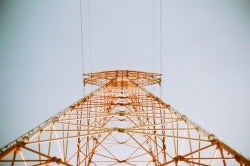
Kuwait-based contractor Power Grid Company has won a KD48.6m ($158.7m) contract to build a 400kV overhead transmission line linking the Shagaya solar energy generation station with Wafra in southern Kuwait.
The contract was awarded by Kuwait’s Ministry of Electricity, Water & Renewable Energy (MEWRE).
Power Grid was one of three firms that submitted bids last year, according to regional projects tracker MEED Projects.
The other bidders included India’s Larsen & Toubro, with an offer of $135m, and Kuwait’s National Contracting Company, with a bid of $140m.
The transmission line will connect Shagaya to the Wafra (Z) transformer station. The project forms part of the wider Shagaya masterplan, which is being developed as a key component of Kuwait’s renewable energy strategy, including the Shagaya renewable energy complex.
The Kuwait Authority for Partnership Projects (Kapp) is currently procuring a 500MW solar photovoltaic (PV) independent power project (IPP) in partnership with MEWRE.
As MEED exclusively reported, the deadline to bid for a contract to develop the plant was recently pushed back to the end of April.
The plant is being developed under zone two of the third phase of the Al-Dibdibah power and Al-Shagaya renewable energy project.
In January, three consortiums submitted bids for a contract to develop Kuwait’s first utility-scale solar PV plant.
The Al-Dibdibah power and Al-Shagaya renewable energy phase three, zone one IPP will have a total power generating capacity of 1,100MW.
https://image.digitalinsightresearch.in/uploads/NewsArticle/16097432/main.jpg -
Prequalification begins for Cairo Metro Line 2 upgrade
24 March 2026
Egypt’s National Authority for Tunnels (NAT) has issued a request for prequalification (RFQ) notice inviting firms to prequalify for a contract to rehabilitate and upgrade the Cairo Metro’s Line 2 network.
The notice was issued in mid-March. The prequalification submission deadline is 30 April.
According to the official notice, the scope of the works includes the design, execution, supply, installation, testing and commissioning of major system upgrades across the Cairo Metro Line 2 infrastructure and stations, along with integration into existing operational systems.
The project aims to refurbish and modernise the metro line systems and enhance onboard communications across the current rolling stock fleet, to extend the metro system’s operational lifespan by at least 25 years.
The contract duration is five years.
The project is receiving a financing grant of €250m ($263m) from the European Bank for Reconstruction and Development (EBRD), €240m ($252m) from the European Investment Bank (EIB) and €60m ($63m) from the Egyptian government.
Cairo Metro Line 2 has been operational since 1996. The line runs from Shubra El-Kheima to El-Mounib, spanning about 21.5 kilometres (km) with 20 stations.
The route includes 12 underground stations, six at-grade stations and two elevated stations.
The track infrastructure is built around two primary track configurations.
The line carries about 1.8 million passengers a day.
The project is part of NAT’s key planned railway projects in the country. According to NAT’s official website, eight key projects, including metro lines, high-speed rail and light rail transit, are currently in the pipeline.
According to GlobalData, the Egyptian construction industry is expected to grow by 6.4% in 2026, supported by rising foreign direct investment in the country, coupled with the government’s investment in energy and industrial construction projects.
The industry’s expansion in the forecasted period will be supported by investments outlined in Egypt’s financial year 2025-26 budget, approved in June 2025. The budget includes a total government spending of E£4.6tn ($91.3bn).
The infrastructure construction sector is expected to expand by 6.9% from 2026 to 2029, supported by investments in road, rail and port infrastructure projects.
According to MEED Projects, Egypt has been the most active market for the rail sector in the Mena region, with contracts worth over $34bn awarded in the past decade.
MEED’s March 2026 report on Egypt includes:
> COMMENT: Egypt’s crisis mode gives way to cautious revival
> GOVERNMENT: Egypt adapts its foreign policy approach
> ECONOMY & BANKING: Egypt nears return to economic stability
> OIL & GAS: Egypt’s oil and gas sector shows bright spots
> POWER & WATER: Egypt utility contracts hit $5bn decade peak
> CONSTRUCTION: Coastal destinations are a boon to Egyptian constructionTo see previous issues of MEED Business Review, please click herehttps://image.digitalinsightresearch.in/uploads/NewsArticle/16097414/main.jpg -
Contractors submit bids for Safaniya onshore facilities project
24 March 2026
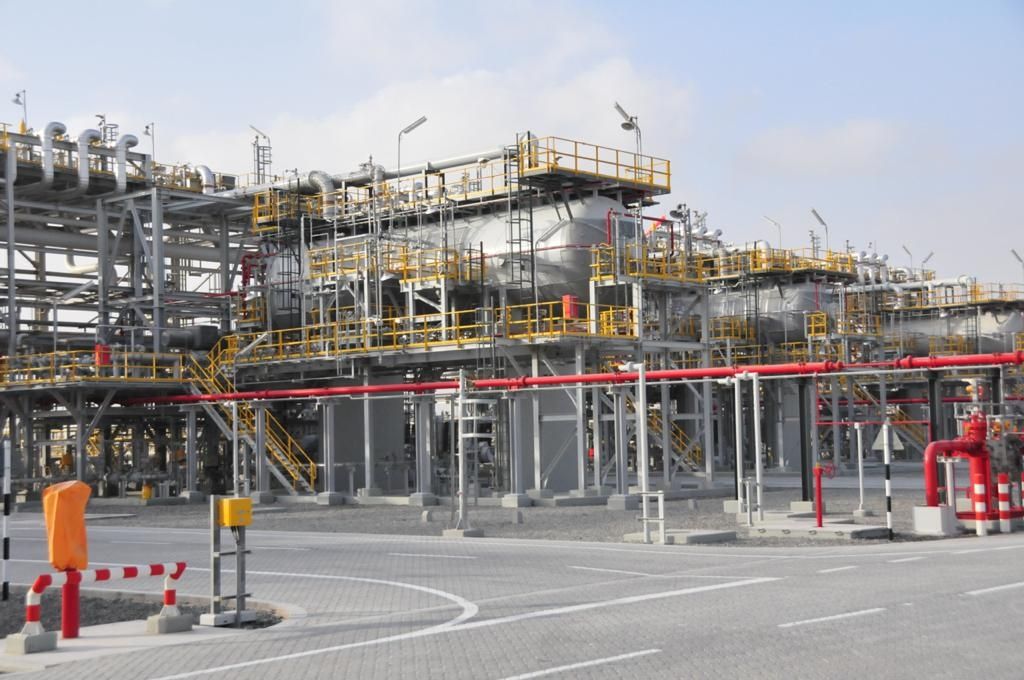
Contractors have submitted bids to Saudi Aramco for a project to build onshore surface facilities to boost productivity at the Safaniya offshore oil field development in Saudi Arabia.
The Safaniya field is the world’s largest offshore oil field, with a production capacity of nearly 1.2 million barrels a day (b/d). Discovered in 1951, the field is located in the Gulf waters, approximately 265 kilometres north of Aramco’s headquarters in Dhahran.
Contractors submitted bids for the Safaniya onshore surface facilities project by the deadline of 17 March, according to sources.
Aramco issued the main tender for engineering, procurement and construction (EPC) works on the Safaniya onshore surface facilities project on 9 July last year.
Contractors were initially given deadlines of 24 October and 7 November to submit technical and commercial bids for the project, MEED previously reported. Aramco later merged the technical and commercial bid submission requirements and extended the techno-commercial proposal submission deadline until 31 January.
Prior to that, Aramco is understood to have issued the solicitation of interest document for the Safaniya field onshore surface facilities project in May, with contractors submitting responses by 28 May.
The EPC scope of work has been divided into two packages:
- Package 1 – Water treatment and injection plant:
- Building new water injection units
- Expansion of gas-oil separation plant one
- Building storage tanks, transfer pumps and substation
- A central processing facility at the Zuluf field development, including water transfer pumps, chemical injection skids and other components
- Package 2 – Produced water utilities:
- Fire water system
- Potable water units
- Utilities
- Nitrogen generation system
- Site buildings
- Electrical infrastructure
- Security systems
- Telecommunications networks
In addition to pursuing the onshore facilities project to boost Safaniya’s productivity, MEED also previously reported that Aramco had issued three key offshore tenders last year for the field’s next expansion phase.
Contractors in Aramco’s Long-Term Agreement pool of offshore service providers submitted bids for the three tenders – Contracts Release and Purchase Order (CRPO) numbers 154, 155 and 156 – by 31 August.
Aramco awarded Italian contractor Saipem the EPCI contract for CRPO 156, valued at an estimated $500m, in February. The scope of work on the contract covers the EPCI of a 48-inch trunkline, comprising approximately 65 kilometres offshore and 12km onshore, as well as associated subsea facilities at the Safaniya oil field.
The Saudi energy giant is evaluating bids for the other two tenders for the Safaniya offshore field expansion project and is expected to award contracts within the first quarter.
https://image.digitalinsightresearch.in/uploads/NewsArticle/16097410/main1828.jpg - Package 1 – Water treatment and injection plant:
-
Local firm wins Al-Ras Dubai Walk masterplan deal
24 March 2026
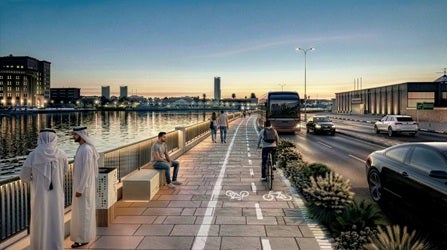
Abu Dhabi-based firm Western Bainona Group has won a contract from Dubai’s Roads & Transport Authority (RTA) to develop the first phase of the Dubai Walk masterplan in the Al-Ras area.
The project’s first phase focuses on developing the historic Al-Ras walkway, including 12 kilometres (km) of pedestrian paths and 5km of cycling tracks, along with the rehabilitation of 10 artistic spaces.
The Al-Ras walkway project will link pedestrian routes with 11 metro stations, bus stops and marine transport points to improve first- and last-mile access.
The RTA said that the works include upgrades to internal pedestrian paths and the waterfront promenade, using straightforward urban design interventions that will maintain the area’s historic identity.
Planned improvements include wider sidewalks, added shade elements, more seating, increased greenery and heritage-sensitive wayfinding signage.
The overall masterplan includes extending a connected pedestrian network across 160 locations, with plans to build and upgrade around 6,000km of walkways throughout the emirate by 2040.
It also includes developing 110 pedestrian bridges and underpasses to improve links between districts, supporting a shift in walking and other low-impact mobility from 16% of trips in 2025 to 25% by 2040.
Proposed highlights include a bridge on Al-Ittihad Street between Al-Nahda and Al-Mamzar; another on Tripoli Street linking Al-Warqa with Mirdif; a crossing on Al-Khawaneej Street connecting Mushrif and Al-Khawaneej; and a bridge on Dubai-Al-Ain Road tying Dubai Silicon Oasis to Dubailand.
https://image.digitalinsightresearch.in/uploads/NewsArticle/16097076/main.jpeg