
Stalled mall highlights Saudi market weakness
2 May 2023
 Commentary
Colin Foreman
Editor
In an interview with MEED in 2011, the head of a Dubai government-related property developer reflected on the 2008 global financial crisis and the company’s attitude to risk in the future. “We do not like to take risks with our own money,” he said.
The comment was a stark departure from the development model Dubai had deployed for much of the previous decade, when government-related property developers invested heavily in infrastructure for ambitious real estate projects.
The comment was also a sign of things to come. While Dubai announced and delivered major new projects over the decade that followed, the level of investment required was scaled back. As much as possible, projects were self-funded with off-plan sales and equity investors.
Saudi Arabia in 2023 shares many similarities with Dubai in the 2003-08 era. Most of the Saudi projects are, so far, not selling property off plan. If anything, development is more centralised, with the majority of the entities developing projects being subsidiaries of the Public Investment Fund (PIF).
There is also little foreign direct investment (FDI). One of the exceptions that proved the rule was the $1.6bn Mall of Saudi project in Riyadh planned by Dubai-based developer Majid al-Futtaim (MAF). The decision to put those plans on hold once again highlights Saudi Arabia’s struggles to attract FDI. In 2022, the kingdom attracted $7.9bn of FDI, well below the $19.3bn registered in 2021.
Saudi’s FDI targets are ambitious. Vision 2030 calls for FDI to reach 5.7 per cent of GDP by 2030. The kingdom’s GDP exceeded $1tn for the first time in 2022.
While MAF has not officially stated the exact rationale for putting its plans for the Mall of Saudi on hold, competing projects are a concern for developers coming into the Saudi market.
While the PIF initiatives are critical for Saudi Arabia to achieve the economic diversification goals outlined in Vision 2030, the danger is that these projects could crowd out other potential investors. A delicate balance will need to be struck.
MEED's latest special report on Saudi Arabia includes:
> GIGAPROJECTS: Saudi Arabia under project pressure
> ECONOMY: Riyadh steps up the Vision 2030 tempo
> CONSTRUCTION: Saudi construction project ramp-up accelerates
> UPSTREAM: Aramco slated to escalate upstream spending
> DOWNSTREAM: Petchems ambitions define Saudi downstream
> POWER: Saudi Arabia reinvigorates power sector
> WATER: Saudi water begins next growth phase
> BANKING: Saudi banks bid to keep ahead of the pack
> DATABANK: Riyadh holds its buoyant economic heading

Register for MEED's guest program now to access this article.
Exclusive from Meed
-
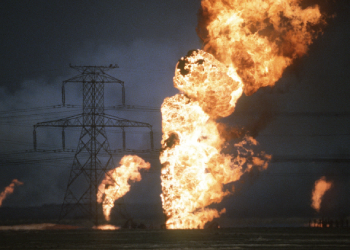 Fuel storage facility attacked in Bahrain
13 March 2026
-

-
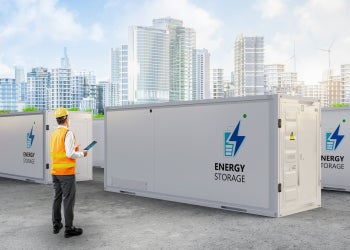 Italian consultant wins Egypt battery storage contract
13 March 2026
-
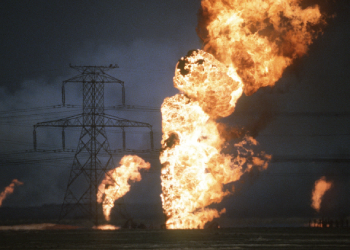 Oil tankers attacked in Iraqi waters
12 March 2026
-
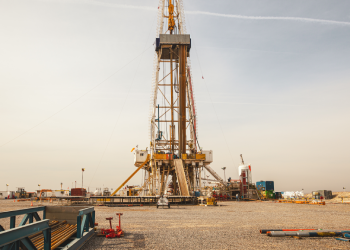 Chevron yet to agree terms for Iraq oil field takeover
12 March 2026
All of this is only 1% of what MEED.com has to offer
Subscribe now and unlock all the 153,671 articles on MEED.com
- All the latest news, data, and market intelligence across MENA at your fingerprints
- First-hand updates and inside information on projects, clients and competitors that matter to you
- 20 years' archive of information, data, and news for you to access at your convenience
- Strategize to succeed and minimise risks with timely analysis of current and future market trends

Related Articles
-
Fuel storage facility attacked in Bahrain
13 March 2026
Register for MEED’s 14-day trial access
Fuel storage tanks at a facility on Bahrain’s Muharraq Island were targeted in an attack attributed to Iran, according to a statement from Bahrain’s Interior Ministry.
The ministry put out an alert for people in surrounding neighbourhoods “to remain in their homes, close windows and ventilation openings, as a precautionary measure against possible exposure to smoke”.
Videos of the incident, which took place on 12 March, showed a large fire emitting black smoke. The fire was later extinguished by teams of firefighters.
Bahrain’s international airport is also located on Muharraq Island.
Iran has been firing missiles at a range of targets in nearby countries since it was attacked by the US and Israel on 28 February.
On 11 March, a similar attack on fuel storage tanks in Oman led to the closure of some terminals at the port of Salalah.
Footage recorded by vessel crews at the port, which is the largest in the country, showed explosions and a large fire.
https://image.digitalinsightresearch.in/uploads/NewsArticle/15963333/main.png -
Bahrain contacts engineering companies over Sitra refinery damage
13 March 2026
Register for MEED’s 14-day trial access
Bahrain’s national oil and gas company Bapco Energies is in touch with international engineering companies about damage done to the Sitra refinery by Iranian strikes, according to industry sources.
In a statement on 9 March, Bapco Energies said its decision to issue the force majeure notice followed “the recent attack on its refinery complex”, without providing details.
Bapco Energies is yet to share full details about the extent of the damage caused to the refinery, sources said.
One source said: “Bapco has been corresponding with several companies with regard to the damage. It is being careful not to share confidential information, but it has reached out.”
Prior to Bapco’s 9 March statement, the Sitra refinery was hit by a strike earlier in the day.
That strike on the Sitra refinery was the second strike on the complex in days.
Iranian missiles hit the facility on 5 March, resulting in parts of the refinery being engulfed in flames.
Iran has been firing missiles at a range of targets in nearby countries since it was attacked by the US and Israel on 28 February.
In November last year, MEED reported that Bapco Energies was in the final stages of ramping up volumes processed by new units that were installed as part of the Bapco Modernisation Programme (BMP).
The project at the Sitra refinery in Bahrain is estimated to have been worth $7bn and was inaugurated by Bahrain’s King Hamad Bin Isa Al-Khalifa in December 2024.
At the time, the companies involved in the engineering, procurement and construction (EPC) contract for the project were still working on the site to assist with efforts to increase volumes.
Bapco Energies awarded the main $4.2bn contract to perform EPC works on the BMP to a consortium led by France’s Technip Energies in February 2018.
The consortium also included Spain’s Tecnicas Reunidas and South Korea’s Samsung E&A.
Technip Energies also performed the project’s front-end engineering and design work. US oil and gas producer Chevron acted as a consultant on the BMP, while Australia-based Worley was the project management consultant.
In March 2024, after a series of setbacks and delays, France’s Total Energies was brought in to support Bapco in “optimising” the project.
The BMP is central to Bahrain’s Vision 2030 economic development strategy, and Bapco has said that it is crucial to boosting the country’s long-term downstream potential.
The BMP was originally expected to reach mechanical completion in 2023, with operations set to begin in 2024.
The core objective of the BMP was to upgrade the Sitra refinery – Bahrain’s only oil refining asset, which is 90 years old.
One of the key units to be built as part of the BMP was a residual hydrocracking unit (RHCU) powered by technology licensed from US-based Chevron Lummus Global. The BMP team has built a two-train RHCU with a capacity of 65,000 barrels a day.
The Sitra refinery includes seven crude distillation units (CDUs) and vacuum distillation units (VDUs) as part of the BMP.
The new 225,000 b/d integrated crude and vacuum unit replaced CDUs 1, 2 and 3 and VDUs 1 and 3, which had served Bapco Energies for over 80 years.
https://image.digitalinsightresearch.in/uploads/NewsArticle/15963329/main.jpg -
Italian consultant wins Egypt battery storage contract
13 March 2026
Italy-headquartered consultancy Rina has announced its appointment as owner’s engineer for the 1 gigawatt-hour Nefertiti battery energy storage system (bess) project in Egypt.
The project is being developed by Dubai-based firm Amea Power and is located in the Benban Photovoltaic Industrial Park in Aswan.
The scheme will deploy a 500MW/1,000 megawatt-hour (MWh) utility-scale bess, making it the largest independent energy storage project in Africa.
In March, a group comprising China Energy Engineering International Group, Zhejiang Thermal Power Construction and Southwest Electric Power Design & Research Institute was appointed as the main engineering, procurement and construction contractor.
The $250m project also includes the construction of a 220kV substation, upgrades to an adjacent substation and development of grid network connection infrastructure.
Under the owner’s engineer scope, Rina will deliver engineering design review, construction monitoring and commissioning support. The company will also undertake performance verification.
Egypt’s utilities sector had its strongest year in over a decade in 2025, hitting $5bn in contract awards for the first time since 2015.
Last July, Amea Power commissioned Egypt’s first-ever utility-scale bess.
The 300MWh project had previously reached financial close in June.
The bess project is an extension of Amea Power’s operational 500MW solar photovoltaic plant in Aswan Governorate, which was commissioned in December 2024.
https://image.digitalinsightresearch.in/uploads/NewsArticle/15954234/main.jpg -
Oil tankers attacked in Iraqi waters
12 March 2026
Register for MEED’s 14-day trial access
Two tankers carrying Iraqi oil products were set on fire after being attacked in Iraq’s territorial waters near the country’s southern export terminals, increasing concerns about global energy supplies.
After the attack, the country’s Oil Ministry said that it saw the attacks as “a worrying indicator of escalating tensions in a vital area of the global economy and energy supply”.
It added that “the safety and safety of navigation in international sea corridors and energy supply routes should be kept away from regional conflicts”.
The Oil Ministry said the attacks had a direct impact on the stability of the global economy and energy markets, as well as putting the lives of civilians and workers in the maritime transport sector at risk.
Farhan Al-Fartousi, from Iraq’s General Company for Ports, told state television that one crew member had been killed in the attack and that 38 crew members had been rescued.
Iraq’s state-owned oil marketing company Somo said that the Maltese-flagged oil tanker Zefyros was attacked as it was preparing to enter the port of Khor Al-Zoubair, where it would have taken on board an additional 30,000 tonnes of liquid naphtha.
The second targeted vessel, Safesea Vishnu, was sailing under the Marshall Islands flag and was chartered by an Iraqi company, according to Somo.
Iraq’s oil production has fallen steeply since the conflict began, from 3.3 million barrels a day (b/d) to less than 1 million b/d.
https://image.digitalinsightresearch.in/uploads/NewsArticle/15951323/main.png -
Chevron yet to agree terms for Iraq oil field takeover
12 March 2026

US-based oil company Chevron is yet to agree terms with Iraqi state-owned Basra Oil Company (BOC) for its potential takeover of Iraq’s West Qurna-2 oil field, according to industry sources.
Last month, Chevron signed a preliminary agreement with BOC to explore taking control of the West Qurna-2 oil field.
Until recently, West Qurna-2 was operated by Russia’s Lukoil, which faces a 28 February deadline to divest its assets in Iraq under sanctions.
One industry source said: “Chevron is yet to agree terms, and it has made it clear that it wants different terms to the contract that Lukoil had.”
In January, Iraq’s cabinet approved temporarily nationalising petroleum operations at the West Qurna-2 oil field until a new operator was found.
Lukoil declared force majeure at the West Qurna-2 oil field in November, after sanctions by the UK, EU and US were announced in October.
The Russian company had a 75% stake in the asset.
Prior to Russia’s Lukoil declaring force majeure, Iraq’s state oil authorities froze all cash and crude payments to Lukoil in compliance with the sanctions.
In a statement released on 1 December 2025, Iraq’s Oil Ministry said that it had extended “direct and exclusive invitations to a number of major American oil companies”.
Awarded to Lukoil in 2009, West Qurna-2 lies about 65 kilometres northwest of Basra in southern Iraq and produces about 480,000 barrels a day (b/d) of oil, accounting for roughly 10% of the country’s total oil output.
At the same meeting on 23 February, Chevron also signed a deal relating to the development of the Nasiriyah field, four exploration sites in the province of Dhi Qar and a field in the province of Salahaddin.
Chevron signed an agreement in principle with Iraq in August 2025 to develop the Nasiriyah oil project in the province of Dhi Qar.
At the time, Iraq said it expected the Nasiriyah project to reach a production capacity of 600,000 b/d within seven years.
 READ THE MARCH 2026 MEED BUSINESS REVIEW – click here to view PDF
Riyadh urges private sector to take greater role; Chemical players look to spend rationally; Economic uptick lends confidence to Cairo’s reforms.
Distributed to senior decision-makers in the region and around the world, the March 2026 edition of MEED Business Review includes:
> RAMADAN: Data disproves the Ramadan slowdown story> INDUSTRY REPORT: Chemicals producers look to cut spending> INDUSTRY REPORT: Global petrochemical project capex set to rise until 2030> MARKET FOCUS: Egypt’s crisis mode gives way to cautious revival> LEADERSHIP: Delivering Saudi Arabia’s next phase of rail growth> INTERVIEW: Abu Dhabi’s Enersol charts acquisitions pathTo see previous issues of MEED Business Review, please click herehttps://image.digitalinsightresearch.in/uploads/NewsArticle/15944830/main.png