
Saudi Arabia’s Alujain to accelerate chemicals project work
11 April 2023
Saudi Arabia-based industrial group Alujain Corporation intends to accelerate work on its planned project to develop a new petrochemicals facility.
In a stock exchange filing published on 10 April, it said it would improve its business through “accelerating work on the development of engineering works and then the construction and operation of the company’s new factory to produce propylene, polypropylene and other specialised products”.
Under current plans, the facility will produce petrochemical products “in an integrated manner” with an existing factory run by National Petrochemical Industrial Company (Natpet) to maximise the value of investment in the two companies.
Alujain has a majority stake in Natpet, owning more than 19.9 million shares, and it is planning to increase its ownership of the company, according to its latest statement.
In 2020, Maire Tecnimont completed a project to upgrade Natpet’s existing polypropylene facility in Saudi Arabia’s Yanbu Industrial City.
Alujain is also looking to improve its business by “completing the negotiation work to enter into a strategic partnership with a leading global partner in the propylene and polypropylene industry”, according to its latest statement.
The planned partnership is designed to “transfer the required technologies and advanced knowledge capabilities for the new project”, the company said.
This transfer will include the technologies and knowledge to develop “specialised products with high returns”, according to the statement.
In November 2022, Alujain Corporation announced that it had received approval from Saudi Arabia’s Ministry of Energy for feedstock allocation to establish a new petrochemicals project in Yanbu Industrial City at a total cost of SR7.5bn ($2bn).

Register for MEED's guest program now to access this article.
Exclusive from Meed
-
 Frontrunners emerge for Saudi Arabia’s seventh solar IPP round
17 November 2026
-
 Al-Ula launches $6.8bn PPP project opportunities
17 November 2026
-
 Consortium closes financing on 900MW Egypt wind farm
17 November 2026
-
 Emaar and Abu Dhabi firm plan $2bn projects
17 November 2026
-
 Libya considers tendering $1bn oil field development
17 November 2026
All of this is only 1% of what MEED.com has to offer
Subscribe now and unlock all the 153,671 articles on MEED.com
- All the latest news, data, and market intelligence across MENA at your fingerprints
- First-hand updates and inside information on projects, clients and competitors that matter to you
- 20 years' archive of information, data, and news for you to access at your convenience
- Strategize to succeed and minimise risks with timely analysis of current and future market trends
Related Articles
-
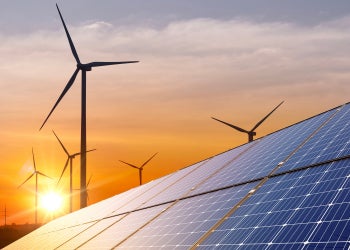
Frontrunners emerge for Saudi Arabia’s seventh solar IPP round
17 November 2026

Register for MEED’s 14-day trial access
Four bidders are understood to be leading the race for contracts to develop four solar photovoltaic (PV) independent power projects (IPPs) under the seventh round of Saudi Arabia’s National Renewable Energy Programme (NREP).
Round seven comprises the 1,400MW Tabjal 2, 600MW Mawqqaq, 600MW Tathleeth and 500MW South Al-Ula solar IPPs.
Saudi Power Procurement Company (SPPC) is procuring the renewables programme, with the Energy Ministry supervising it.
Developers submitted bids in September, as MEED reported exclusively.
According to industry sources, the following bidders and bidding groups have emerged as frontrunners to win one project each:
- Aljomaih (Saudi Arabia) / TotalEnergies (France)
- EDF (France) / Saudi Energy
- Etihad Water & Electricity (UAE) / Korea Electric Power Corporation (South Korea)
- Wahajpeak (Saudi Arabia)
An award for Wahajpeak would mark the company’s first major infrastructure award in the region since US-based infrastructure investment firm Stonepeak established it in 2025.
At least some solar contracts are expected to be finalised by year-end.
In addition to the four solar plants, round seven comprises two wind IPPs with a total combined capacity of 5,300MW.
In October, MEED exclusively reported that consortiums had submitted bids for the two wind projects: the 1,300MW Bilgah and 900MW Shagra schemes.
These include:
- Abu Dhabi Future Energy (Masdar) / EDF (France) / Saudi Energy
- EtihadWE (UAE) / Nesma Renewable Energy (Saudi Arabia) / Korea Electric Power Corporation (Kepco, South Korea)
The request for proposals (RFPs) for both wind and solar were issued in January.
As MEED reported, 16 developers qualified to bid as both managing and technical members of consortiums for the four solar PV projects. A further six companies qualified to bid as managing members only.
For the wind IPPs, SPPC qualified 13 developers in the managing and technical members category and a further six companies in the managing members category only.
Round eight
SPPC will release the RFP notices in December for the eighth round of its renewable energy procurement programme, as exclusively reported by MEED.
The round comprises three solar and wind projects with a combined capacity of 3.2GW.
SPPC issued the request for qualifications (RFQ) notice on 11 November. Developers have until 22 November to submit qualification documents, as MEED reported last week.
Round eight includes the following projects:
- 900MW Tamir solar PV project in Riyadh
- 1GW Sharq Al-Amwaj solar PV project in Asir
- 1.3GW Al-Muzairah wind project in Mecca
The NREP is designed to increase renewable generation capacity and reduce liquid-fuel use in power generation.
Saudi Arabia aims for renewable energy and energy storage systems to account for about 50% of the kingdom’s electricity generation mix by 2030.
Earlier rounds under the NREP have already deployed large capacities. In October 2025, SPPC awarded contracts to develop and operate five renewable energy projects under round six of the NREP. These were four solar PV IPPs and one wind IPP, with a total combined capacity of 4,500MW.
The Aljomaih / TotalEnergies joint venture won the contract to develop the 400MW Al-Sufun solar IPP. Two of the three remaining solar IPPs in round six were awarded to Masdar, while the joint venture of EDF and Saudi Energy was selected to develop the 600MW Samtah solar IPP.
A consortium of the UAE’s Etihad Water & Electricity, Saudi Arabia’s Nesma Renewable Energy and Korea Electric Power Corporation (South Korea) won the contract to develop the 1,500MW Dawadmi wind IPP, the only wind project in the round.
https://image.digitalinsightresearch.in/uploads/NewsArticle/21466519/main.jpg -
Al-Ula launches $6.8bn PPP project opportunities
17 November 2026
Register for MEED’s 14-day trial access
Saudi Arabia’s Royal Commission for AlUla (RCU) has announced six public-private partnership (PPP) investment opportunities with a combined estimated value of SR25.4bn ($6.8bn).
The schemes cover road infrastructure, water storage, wastewater treatment, solid waste management and the expansion of Al-Ula International airport.
They are progressing under the National Centre for Privatisation’s approved privatisation plan, with requests for proposals (RFP) expected from the second quarter of 2027 through early 2028.
The opportunities are:
Secondary roads expansion: RCU plans to develop 18 secondary roads and utility corridors totalling about 1,400 kilometres (km). The SR17bn ($4.5bn) project includes new roads and networks for water supply, electricity, telecommunications, street lighting and stormwater drainage.
The project covers 22 million square metres (sq m) and will be delivered using a design-build-finance-operate-maintain (DBFOM) model.
The concession will run for about 20 years and will use availability-based payments. The private partner will operate and maintain the roads, while the utility infrastructure will be handed over to the relevant entities.
The RFP process for the project packages is planned to start in early 2028, with phased completion targeted by 2033. Expressions of interest are due by 30 September 2027.
Highways and primary roads expansion: The SR4bn ($1bn) opportunity covers the development and upgrade of five primary roads and associated utility networks, totalling 204km.
The scope includes new roads, rehabilitation works, cycling paths and traffic-calming measures. It also includes water, electricity, telecommunications and stormwater-drainage infrastructure. The investment area is 3 million sq m.
The scheme will be procured as a DBFOM project with availability-based payments and a 15-year concession. The concessionaire will operate and maintain the roads, while utilities will be handed over to the relevant entities.
RCU expects to begin the RFP process in early 2028 and has set phased completion by 2032. Expressions of interest are due by 30 September 2027.
Al-Ula International airport expansion: The SR2bn ($532m) airport project will include a 30,000 sq m passenger terminal with a capacity for up to 3 million passengers a year, a 5,000 sq m cargo terminal with equestrian facilities and a 10,000 sq m private aviation terminal.
The scope also includes general aviation and helicopter facilities, a runway extension to 3,000 metres, roads, parking, maintenance facilities, utilities and fuel facilities.
The project has a gross floor area of 45,000 sq m and covers a 7 million sq m site.
About 1 million sq m of land will be available for associated commercial development, including logistics, retail, hospitality and aviation services.
The project will use a build-transfer-operate model with a concession period of up to 35 years.
RCU expects to launch the RFP in the third quarter of 2027 and is targeting completion by 2032. The interest submission deadline is 30 June 2027.
Integrated solid waste management system: The SR1bn ($266m) project involves developing and operating an integrated solid waste management system over a 1.4 million sq m area.
The scope includes a resource management park; a waste transfer station with a capacity of 76,000 tonnes a year; recycling facilities with a capacity of 45,000 tonnes a year; organic waste treatment facilities; and construction and demolition waste-processing facilities with a capacity of 220,000 tonnes a year.
It also includes engineered landfill cells with a combined capacity of 5 million cubic metres and associated infrastructure.
The project will be delivered through a DBFOM concession lasting 30 years, including three years of construction and 27 years of operations.
Payments will comprise performance-based payments, waste gate fees and transfer fees.
RCU expects to issue the RFP in the second quarter of 2027. The deadline for interest is 31 May 2027.
Strategic water storage tanks: RCU plans to develop and operate five strategic potable-water storage tanks with a combined capacity of 295,000 cubic metres. The SR900m ($239m) scheme is intended to provide between three and four days of potable-water reserves.
The project includes pumping stations, water connection networks and supporting infrastructure to serve urban districts, heritage sites, Al-Ula International airport and new development areas.
The investment area covers 75,000 sq m.
The project will be structured as a DBFOM concession lasting about 15 years, including two to three years of construction and 12 to 13 years of operations and maintenance.
The availability-based payment mechanism will be linked to performance and water quality.
RCU expects to issue the RFP in the fourth quarter of 2027, with phased completion targeted by 2031. Interested companies have until 30 November 2027 to submit their interest.
Wastewater treatment plant enhancement and operation: The SR454m ($120m) wastewater scheme will rehabilitate Al-Ula’s existing wastewater treatment plant and expand its capacity using moving-bed biofilm reactor technology.
The existing plant has a capacity of 8,000 cubic metres a day (cm/d). The first phase will add 18,000 cm/d, followed by a 36,000 cm/d second phase, increasing overall capacity to 62,000 cm/d.
The 501,000 sq m project includes treated wastewater storage and pumping facilities, control systems and supporting infrastructure.
The project will be delivered using a build-own-operate-transfer model with a 26-year concession. This comprises three years for construction and rehabilitation and 23 years of operations. The payment structure will include capacity, output and supplemental payments.
RCU expects to launch the RFP in the second quarter of 2027. The deadline for interest is 31 May 2027.
RCU was established in 2017 to develop and protect Al-Ula as a cultural, heritage, tourism and economic destination.
The commission launched its masterplan in 2021, setting out a long-term development programme centred on the Hegra Historic City, Nabataean Horizon, Jabal Ikmah, Dadan and Al-Ula Old Town districts.
The wider Al-Ula programme includes heritage conservation, hotels and resorts, cultural venues, residential projects, agricultural development, transport systems and enabling infrastructure.
The latest opportunities form part of the infrastructure programme required to support the region’s planned tourism, residential and commercial development.
https://image.digitalinsightresearch.in/uploads/NewsArticle/21465369/main.png -
Consortium closes financing on 900MW Egypt wind farm
17 November 2026
A developer consortium led by France’s Engie has announced financial close on a 900MW wind farm near Ras Shokeir in Egypt’s Gulf of Suez.
Known as Gulf of Suez Wind Farm 3, the project is being developed on a build-own-operate basis under a 25-year power purchase agreement with Egyptian Electricity Transmission Company.
The consortium comprises Engie (35%), Egypt’s Orascom Construction (25%) and Aeolus (40%), an African renewable energy independent power project platform of Toyota Tsusho Corporation.
Construction began in June, and the project will connect to the grid in three phases. The first 300MW is forecast to enter commissioning in January 2028, while the full 900MW capacity is scheduled to be operational in summer 2028.
The project is the consortium’s third wind farm in Egypt. Its two existing operational wind farms – Red Sea Wind Energy and Ras Ghareb – have a combined capacity of 912.5MW. Once the new facility is fully operational, the consortium’s wind power capacity in the country will reach 1.8GW.
The facility will also become Engie’s largest onshore wind farm globally. Orascom Construction will execute all civil and electrical works for the balance of plant as well as supply certain local components.
Financing for the project is being provided on a non-recourse basis by a group of development finance institutions and commercial lenders. These include the Japan Bank for International Cooperation, France’s Proparco, the Netherlands-based FMO, Societe Generale, Credit Agricole Corporate & Investment Bank and Germany’s KfW Ipex-Bank.
Commercial lender financing is covered by Nippon Export & Investment Insurance (Nexi). HSBC Bank Egypt is acting as the working capital facility bank and onshore security agent. Equity bridge loans are being provided by KfW for Engie, Mizuho for Aeolus, and FMO and British International Investment for Orascom Construction.
The project supports Egypt’s long-term energy strategy, including targets of more than 42% renewable energy by 2030 and 65% by 2040.
Once operational, the wind farm is expected to generate enough electricity to supply more than 1.4 million Egyptian households and reduce carbon emissions by approximately 2 million tonnes a year.
https://image.digitalinsightresearch.in/uploads/NewsArticle/21464975/main.jpg -
Emaar and Abu Dhabi firm plan $2bn projects
17 November 2026
Register for MEED’s 14-day trial access
UAE-based firms Al-Ain Asset Management and Emaar Hospitality Group have announced plans to develop five branded residential projects in Abu Dhabi with a combined investment value of AED8bn ($2.2bn).
The developments will cover about 4.7 million square feet across prime waterfront locations in the emirate.
The schemes will be operated under Emaar Hospitality Group’s Address, Palace and Vida brands, incorporating serviced residential units with hotel-style amenities.
Specific plots, construction schedules and procurement packages for the five projects have not yet been disclosed.
The initiative marks an expansion of the existing partnership between the two entities, which began in 2016 with the development of the Address Beach Resort in Dubai.
The collaboration previously expanded into Abu Dhabi with the launch of Vida Residences Saadiyat Island.
The recent announcement comes amid sustained momentum in the local market.
According to GlobalData, the UAE construction industry will expand at an average annual rate of 3.9% between 2025 and 2027, driven by investments across infrastructure, energy, housing and tourism.
The country’s residential construction sector is forecast to grow by an average of 2.7% annually between 2025 and 2028, supported by ongoing private development and government initiatives to meet population growth.
https://image.digitalinsightresearch.in/uploads/NewsArticle/21461696/main.gif -
Libya considers tendering $1bn oil field development
17 November 2026
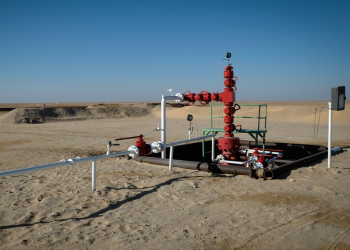
Libyan officials have discussed tendering a project to rehabilitate and develop Libya’s Dahra oil field, according to a statement from the country’s Audit Bureau.
The head of the Audit Bureau, Khaled Shakshak, met with the head of Libya’s National Oil Corporation (NOC), Masoud Suleiman, on 15 November.
During the meeting, they discussed options for tendering the Dahra oil field development project, which has previously been estimated at $1bn and is expected to significantly increase oil production from the field.
The oil field in central Libya has suffered from years of poor maintenance and was sabotaged by Islamic State militants in 2015.
Waha Oil Company announced in August 2022 that it had restarted test operations at the Al-Dhara oil field after a seven-year hiatus.
Waha Oil Company is a joint venture of Libya’s NOC, US-based ConocoPhillips and France’s TotalEnergies.
In August last year, MEED revealed that the field was producing 24,000 barrels a day (b/d) of oil and the US oilfield services provider Halliburton was working on the front-end engineering and design (feed) for the rehabilitation and development project.
At the time, the project was expected to boost total production from the Al-Dhara field and neighbouring PL6 field to 130,000 b/d.
The engineering, procurement and construction (EPC) scope of work on the project is understood to include:
- Drilling of wells
- Construction of platforms
- Laying of pipelines
- Construction of a condensate refinery
- Installation of storage tanks
- Installation of early production facilities
- Installation of gas treatment units
- Construction of a degassing station
- Construction of other associated facilities
Over 2026, there has been an uptick in interest in North African oil and gas assets amid continued disruption to shipping through the Strait of Hormuz, a key export route for some of the Middle East’s biggest oil and gas exporters.
Flows through the Strait have been disrupted by a regional war that was triggered by US and Israeli attacks on Iran on 28 February.
Countries negatively impacted by the disruption include Kuwait, Iraq, Saudi Arabia, the UAE and Qatar.
Amid the ongoing disruption to oil and gas exports from these countries, some North African officials have promoted their oil and gas sectors as reliable alternative suppliers.
In August, Libya’s Oil and Gas Minister Khalifa Abdel Sadig told a conference in Norway that Libya could be a “key player in providing energy security solutions” to the European Union.
https://image.digitalinsightresearch.in/uploads/NewsArticle/21459109/main.png