Saudi water sector hits sharp slowdown
8 September 2026

Saudi Arabia’s water sector has recorded a sharp slowdown in contract awards this year, with $3.94bn of new contracts awarded as of early September.
According to regional project tracker MEED Projects, this is well below the $10.7bn recorded in 2025, $13bn in 2024 and a record $15.3bn in 2023.
The slowdown comes as several major projects remain in the procurement process, with some yet to reach financial close or contract award, while tender deadlines for other schemes have been pushed back.
Among the largest is the estimated $2bn Riyadh-Qassim independent water transmission pipeline. The 859-kilometre project will have a transmission capacity of 685,000 cubic metres a day (cm/d). Vision Invest was selected as the preferred bidder last December; however, more than eight months later, an official developer’s agreement has not yet been signed.
Similarly, the Arana and Hadda independent sewage treatment plant (ISTP) projects have yet to reach the financial close originally targeted for the second quarter. The two schemes will provide a combined treatment capacity of 350,000 cm/d.
Delays extend further down the procurement pipeline. The latest developer bid deadline for the estimated $150m Riyadh East ISTP is 29 September, almost a year after the request for proposals (RFP) was issued in October 2025.
Procurement for the main contracts for the Jubail-Buraidah and Ras Mohaisen-Baha-Mecca independent water transmission system projects could also slip into 2027, amid delivery-model changes by Water Transmission Company.
New awards
The market received a boost in September when Saudi Arabia’s National Water Company (NWC) announced it had signed a SR1.3bn ($347m) deal with a Saudi-Chinese consortium for package 10 of its long-term operations and maintenance programme.
The consortium – comprising China’s Jiangsu United Water Technology and Saudi-based Armada Holding – will rehabilitate, operate and maintain nine sewage treatment plants (STPs) with a combined design capacity of more than 337,000 cm/d. Based on the latest procurement timeline, it is unclear whether the selected consortium for package 11 will be formally announced this year. Packages 12 and 14 remain under tender while package 16 is next in line, with its RFP not expected to be issued before November.
NWC is the second-largest awarding entity by value in 2026, accounting for $1.09bn, or about 28% of the total. Saudi Aramco is the largest, with $2.15bn, meaning the two organisations account for more than 82% of awards so far this year.
Aramco’s activity has been led by two major oil field developments. In June, it awarded the $1.5bn Safaniya onshore surface facilities project: package 1 to a joint venture of Tecnimont and Consolidated Contractors Company. The package includes a water treatment and injection plant supporting upstream production.
It also awarded the second phase of its Zuluf water treatment project to a joint venture of Almar Water Solutions and AlJomaih Energy & Water. The project will add a 308,000-cm/d treatment facility at Tanajib in the Eastern Province, supplying water for injection at the offshore Zuluf oil field.
The concentration of awards in industrial projects this year has been notable. Against the slowdown in municipal water infrastructure procurement, much of the value awarded so far has been linked to the water requirements of oil and gas and mining developments.
The third-largest award is the $350m Taif Ar Rjum water pipeline project, being developed by Saudi Arabian Mining Company (Maaden) in Mecca. The project will support the Ar Rjum gold mining and processing facility and is being developed under a build-own-operate-transfer model.
By project type, treatment projects make up the largest share of awards, at $2.85bn or about 72% of the total. Transmission projects account for $980m and cooling projects for a further $110m, while no major desalination or water storage contracts have been awarded so far this year.
Project pipeline
The slowdown in awards appears to reflect the timing of projects moving through procurement rather than a fundamental weakening in demand for water infrastructure.
Saudi Arabia continues to face rising demand for desalination, wastewater treatment and water transmission as population growth and industrial expansion drive demand for water.
Sharakat, formerly Saudi Water Partnership Company, set out the next phase of the kingdom’s water investment programme in its latest seven-year statement, published in March.
The plan points to a significant expansion in desalination capacity. Capacity from Sharakat-procured projects is expected to increase from about 3.88 million cm/d in 2025 to roughly 7.18 million cm/d by 2031.
The increase will be supported by seven new independent water plants (IWPs) with a combined capacity of about 2.8 million cm/d, in addition to projects already operating, under construction or in procurement.
However, several of the planned projects have yet to move into active procurement, while others have seen their expected timelines pushed back.
Among the schemes affected are the Ras Al-Khair, Tabuk, Shuqaiq and Jizan IWPs, which have all progressed through prequalification, but have seen changes to their expected procurement schedules.
The largest is phase two of the Ras Al-Khair IWP, a 600,000-cm/d reverse osmosis desalination plant that has been in development for more than a decade.
The revised schedule indicates that the $400m Al-Shuqaiq 4 IWP is expected to be the first of the seven new plants to reach commercial operation. Its main contract had been expected to be tendered later this year, but it is now understood that the first RFP will not be issued until early 2027.

Register for MEED's guest program now to access this article.
Exclusive from Meed
-
 WEBINAR: End-of-Year Mena Market Review
13 November 2026
-
 Syntys breaks ground on 20MW Qatar data centre
13 November 2026
-
 Jereh wins $392m Bu Hasa oil field facilities project
13 November 2026
-
 PDO awards contract for Al-Ghubar oil field project
12 November 2026
-
 Laing O’Rourke joins the international exit list
12 November 2026
All of this is only 1% of what MEED.com has to offer
Subscribe now and unlock all the 153,671 articles on MEED.com
- All the latest news, data, and market intelligence across MENA at your fingerprints
- First-hand updates and inside information on projects, clients and competitors that matter to you
- 20 years' archive of information, data, and news for you to access at your convenience
- Strategize to succeed and minimise risks with timely analysis of current and future market trends
Related Articles
-
WEBINAR: End-of-Year Mena Market Review
13 November 2026
Webinar: The big questions shaping the Gulf market. You decide what gets debated.
Tuesday 24 November 2026 | 11:00 AM GST | Register now
What makes this session particularly interesting is that the audience gets to decide the agenda. Registrants can vote for the topics they’d like Ed and Colin to debate, with the most popular questions forming the final shortlist for the live session.
Topics in the ballot:
- Is the Gulf trying to build too much, too quickly?
- Saudi Arabia or the UAE: where would you place your next big bet?
- Are gigaprojects the best use of public money?
- Who is really responsible when projects go wrong?
- Should the lowest-price tender become a thing of the past?
- Can private capital take over from the government in financing infrastructure and diversification?
- Is the Gulf’s AI and data centre boom a smart bet or the next overbuilding risk?
- Should the Gulf double down on hydrocarbons to fund diversification?
- Is localisation strengthening the economy or making delivery harder?
- Are Gulf countries building complementary economies or competing for the same customers?
The session will also feature live audience polling and Q&A, giving attendees an opportunity to share their views.
Hosted by:
Edward James, head of content and analysis at MEED
 A well-known and respected thought leader in Mena affairs, Edward James has been with MEED for more than 19 years, working as a researcher, consultant and content director. Today, he heads up all content and research produced by the MEED group. His specific areas of expertise are construction, hydrocarbons, power and water, and the petrochemicals market. He is considered one of the world’s foremost experts on the Mena projects market. He is a regular guest commentator on Middle East issues for news channels such as the BBC, CNN and ABC News and is a regular speaker at events in the region.
Colin Foreman, editor of MEED
 Colin Foreman is editor and a specialist construction journalist for news and analysis on MEED.com and the MEED Business Review magazine. He has been reporting on the region since 2003, specialising in the construction sector and its impact on the broader economy. He has reported exclusively on a wide range of projects across the region including Dubai Metro, the Burj Khalifa, Jeddah Airport, Doha Metro, Hamad International airport and Yas Island. Before joining MEED, Colin reported on the construction sector in Hong Kong.https://image.digitalinsightresearch.in/uploads/NewsArticle/21380319/main.gif
-
Syntys breaks ground on 20MW Qatar data centre
13 November 2026
Register for MEED’s 14-day trial access
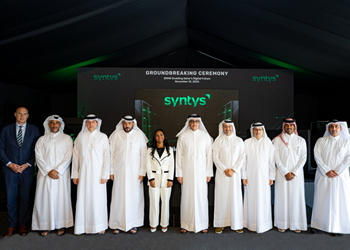
Qatari data centre developer Syntys has broken ground on a 20MW facility to support hyperscale, cloud, artificial intelligence (AI) and advanced computing deployments.
The groundbreaking ceremony took place on 12 November. It was attended by Qatar’s Communications & Information Technology Minister, Mohammed bin Ali bin Mohammed Al-Mannai, along with representatives from Ooredoo Group, Microsoft, Google, Kahramaa, the National Cyber Security Agency, Qatar Free Zones Authority and local banks.
Syntys said the facility is being developed on an existing company campus, where power, fibre connectivity and an operational team are already in place. The company has yet to disclose the project value or planned completion date.
The facility is designed to meet Tier 3 requirements and accommodate a range of rack densities, including higher-density configurations for graphics processing unit (GPU)-based AI and high-performance computing workloads.
It will operate as a carrier-neutral facility, allowing customers to select connectivity providers and establish network resilience in line with their own technical and operational requirements.
The project forms part of Syntys’ strategy to expand its Qatar platform through acquisitions and new development. Earlier this year, the company acquired QData QFZ, adding two operational, Tier 3-compliant, carrier-neutral facilities to its portfolio.
Syntys now owns and operates four campuses in Qatar, allowing customers to establish primary and disaster-recovery environments at separate in-country locations.
The company also designs and operates the facilities supporting Ooredoo’s sovereign AI cloud, which uses Nvidia Hopper GPUs.
The development comes as Qatar implements its Digital Agenda 2030, which identifies digital infrastructure as one of six strategic pillars and targets about QR40bn ($11bn) in economic impact by 2030.
The data centre is expected to support the growth of in-country digital services and enable sensitive workloads to remain within Qatar’s national borders.
https://image.digitalinsightresearch.in/uploads/NewsArticle/21378257/main1028.png -
Jereh wins $392m Bu Hasa oil field facilities project
13 November 2026
Register for MEED’s 14-day trial access
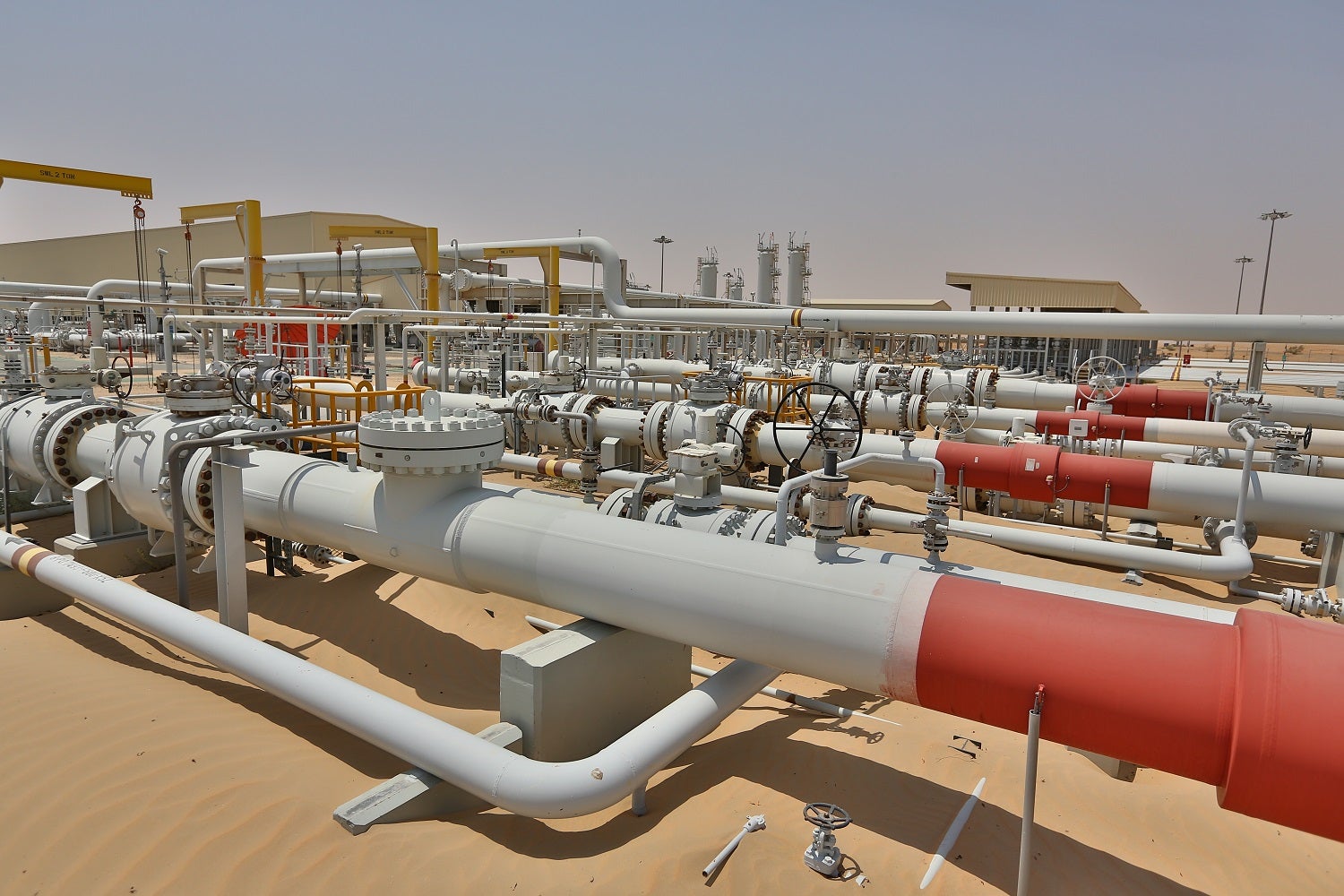
The onshore oil and gas business of Abu Dhabi National Oil Company (Adnoc Onshore) has awarded China’s Jereh Group a contract valued at AED1.44bn ($392.1m) for the engineering, procurement and construction (EPC) of wellhead surface facilities and flowlines at the Bu Hasa cluster of oil fields in Abu Dhabi.
The cluster includes the Bu Hasa, Bida Al-Qemzan and Huwaila fields. The objective of the project is to build wellhead surface facilities and lay gathering flowlines that will connect new wells to the existing production network.
The scope of work on the project also covers the design, fabrication and installation of:
- production well module skids
- gas lift skids, which inject gas into wells to help lift the oil
- skid-mounted wellhead control panels
- solar power units
The framework agreement awarded by Adnoc Onshore on a call-off basis has a duration of 36 months, with an extendable option of 24 months, Jereh said in a filing with China’s Shenzhen Stock Exchange, where it is listed.
Adnoc Onshore is Adnoc Group’s largest production subsidiary, accounting for about 2 million barrels a day (b/d) of crude and about 7 billion cubic feet a day of associated gas from four primary onshore asset clusters: Bab, Bu Hasa, North East Bab and South East.
Maintaining and enhancing oil output levels at the Bu Hasa asset is critical to Adnoc Onshore’s contribution to parent company Adnoc Group’s target of expanding crude oil production capacity to 5 million b/d by 2027, an initiative known as Accelerated Integrated Programme 5. The state energy company’s total production capacity currently stands at approximately 4.85 million b/d.
Prior to this contract, Adnoc Onshore selected Jereh Oil & Gas Engineering Company in 2024 for a project to digitally connect 2,443 wells at the Bab, Bu Hasa and South East cluster of onshore oil fields in Abu Dhabi for remote operations. The contract, formally awarded in 2025, was valued at $920m.
Abu Dhabi contracts
The contract for the Bu Hasa wellhead facilities and flowlines is among a trio of projects totalling approximately $2.7bn that has been awarded by Adnoc Group in recent weeks, Jereh announced in its stock market filing.
The largest of the three contracts, valued at $1.7bn, is for the Ruwais Diyab unconventional gas development in Abu Dhabi. Awarded to Jereh on a design, build and operate model, the contract has a duration of 29 months for construction works and 60 months of operations, with up to two five-year extensions available.
Adnoc achieved final investment decision on the Ruwais Diyab unconventional gas development project on 2 November, during the Abu Dhabi International Petroleum Exhibition and Conference 2026.
The project will deliver 345 million standard cubic feet a day (scf/d) of raw gas from 2029 over a 25-year period, with the potential to reach up to 1 billion scf/d in the future.
The scope of work on the Ruwais Diyab project covers:
- wellsite facilities
- a central processing facility
- gas gathering pipelines and product export pipelines
- utilities
The plant will treat the raw gas and recover the liquids produced with it. It will also treat produced water, which is the water that comes up from the wells with the gas, and recover sulphur. Finished products will be delivered to designated receiving facilities.
When the operation period ends, Jereh will either hand the facilities over to Adnoc or decommission them and restore the site, as the contract and the owner require.
The third contract covers Adnoc Onshore’s Bab and North East Bab 1 tie-in project, where the main scope of work involves tying in new oil producer wells and removing and modifying surface facilities at existing producer wells.
The project’s scope also covers supporting works for water supply wells, water injection wells, disposal wells and water-alternating-gas injection wells. Several existing wells will also be upgraded with digital systems.
Jereh said the value of its contract is $599m, with a duration of 60 months. Similar to the Bu Hasa project, this contract also uses a framework model wherein Adnoc Onshore will issue work orders in batches according to its execution plans.
MEED previously reported that Adnoc Onshore had divided the scope of work on the Bab and North East Bab 1 tie-in project into 18 EPC packages. Along with Jereh, Adnoc Onshore has picked Abu Dhabi-based Robt Stone Middle East for a portion of work on the project.
https://image.digitalinsightresearch.in/uploads/NewsArticle/21355151/main3320.jpg -
PDO awards contract for Al-Ghubar oil field project
12 November 2026
Register for MEED’s 14-day trial access
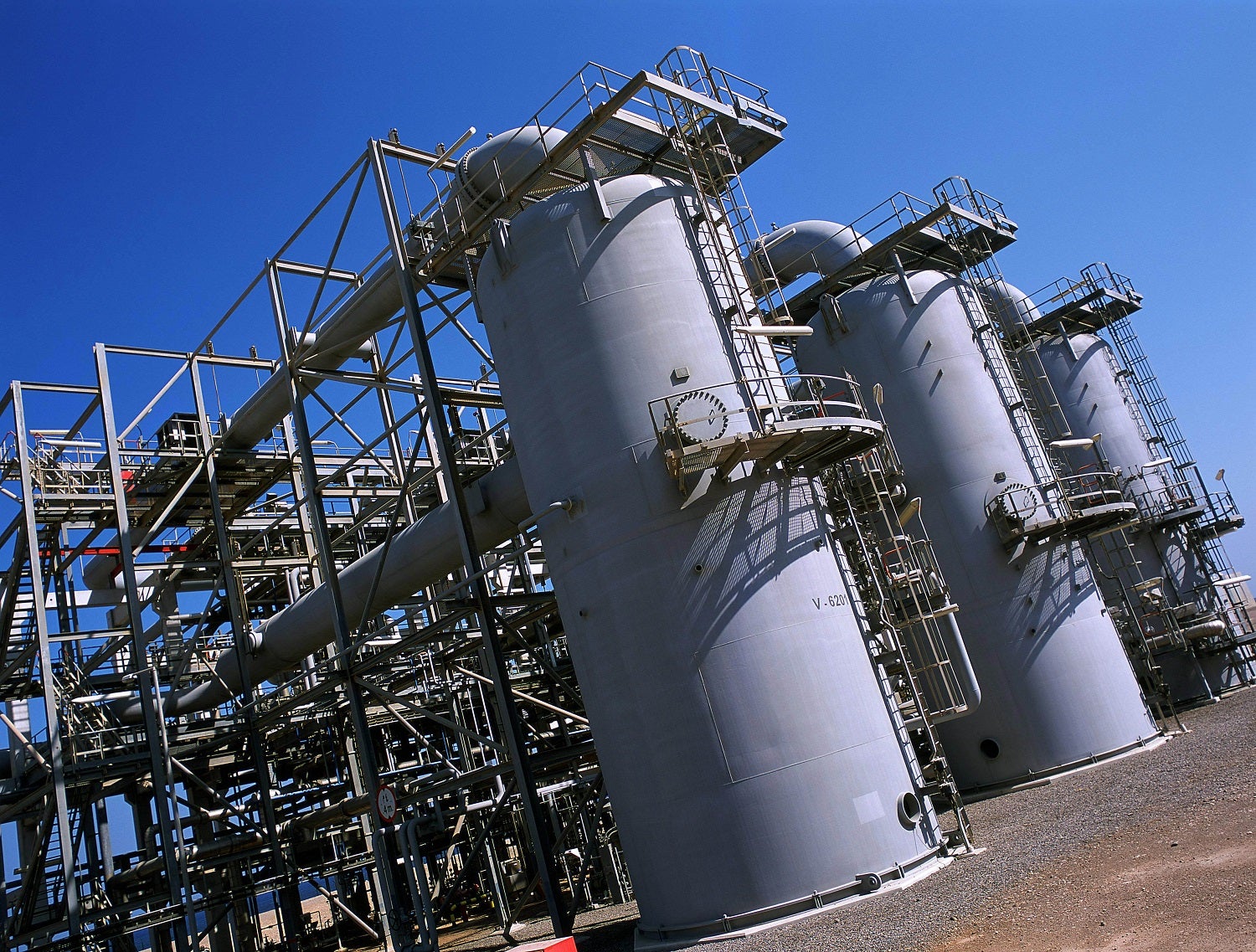
Petroleum Development Oman (PDO) has awarded the main contract for a project to build a facility to handle additional oil production from the Al-Ghubar field in the sultanate.
The Al-Ghubar field is located in the Ghaba Salt Basin at Qarn Alam, within majority state-owned PDO’s Block 6 concession area.
The Al-Ghubar gas-oil gravity drainage (GOGD) facility will be designed as a sour (hydrogen sulphide) facility and is expected to handle a maximum oil production rate of 1,800 standard cubic metres a day (cm/d), a total water flow rate of up to 10,421 standard cm/d and gas lift of up to 256,934 standard cm/d. Production from the planned Al-Ghubar GOGD facility will be exported to PDO’s main oil line.
China-based Jereh Group has won the contract for the Al-Ghubar GOGD facility project, sources told MEED.
A project kick-off meeting between PDO and Jereh has also recently taken place, the sources said.
MEED previously reported that Jereh had emerged as the lowest bidder for the project.
The following contractors, among others, are understood to have been bidding for the Al-Ghubar GOGD facility project:
- Engineering for the Petroleum & Process Industries (Egypt) / Petrojet (Egypt)
- GS Engineering & Construction (South Korea)
- Jereh (China)
- Larsen & Toubro Energy Hydrocarbon (India)
PDO floated the tender for the Al-Ghubar GOGD facility project in March, setting an initial bid submission deadline of 4 May, MEED previously reported.
PDO later extended the deadlines for the submission of technical and commercial bids to 26 July and 7 August, respectively. Contractors submitted technical proposals by the revised deadline, according to sources.
After receiving the technical bids for the project in July, PDO granted contractors until 16 August to submit commercial bids. It eventually extended the deadline to 1 September, with contractors submitting commercial proposals by that date, as MEED reported.
The scope of work on the Al-Ghubar GOGD project covers the engineering, procurement and construction (EPC) of the following:
- On-plot scope, consisting of:
- Production separator
- Test separator
- Concentric wash tank
- Wet oil pump
- Water bath heater
- Surge tank
- Gas injection/gas lift compressor (centrifugal)
- Utilities (instrument air compressors, chemical injection skids, drain system, vent system)
- Suction scrubber
- Air coolers
- Discharge scrubbers
- Condensate flash drum
- Atmospheric pressure knock-out drum
- Flare system
- Gas heater
- Water disposal pump
- Oil shipping pump
- 132kV substation and plant substation (housing 6.6kV and 415-Volt switchboard)
- Control room
- Off-plot scope consisting of:
- Off-plot pipeline network (bulk header, test header, gathering infrastructure/ gathering line header, instrument air header, water disposal header)
- Two remote manifold stations
- Tie-in connection to main oil line
- Tie-in to gas network pipeline
PDO previously intended to tender the Al-Ghubar GOGD project under its framework structure with selected EPC contractors, but ultimately tendered it separately.
PDO is the operator of Oman’s Block 6 hydrocarbons concession, the sultanate’s largest and most prolific concession. Situated onshore and covering an area of 75,119 square kilometres, Block 6 contains 202 oil fields and 43 gas fields. PDO produces approximately 680,000 barrels a day of oil and condensates from the fields.
The Omani government holds a 60% stake in PDO through Energy Development Oman. The other shareholders are UK-based Shell (34%), France’s TotalEnergies (4%) and Thailand’s state-owned PTTEP (2%).
https://image.digitalinsightresearch.in/uploads/NewsArticle/21345337/main2647.jpg -
Laing O’Rourke joins the international exit list
12 November 2026
Commentary
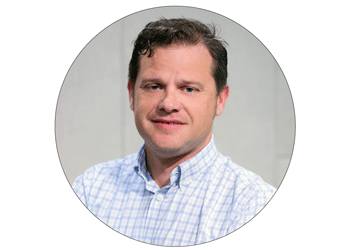
Colin Foreman
EditorRegister for MEED’s 14-day trial access
Laing O’Rourke’s decision to seek a buyer for its Middle East business marks the end of an era for UAE construction.
In the early 2000s, the contractor was among the leading names in the market. Its work at Dubai International airport, the Atlantis hotel on the Palm Jumeirah and the ski slope at Mall of the Emirates made it arguably the UAE’s most prominent contractor during the pre-global financial crisis construction boom.
Its activities were not limited to Dubai. A partnering agreement with Aldar for Al-Raha Beach then made it the most active contractor in Abu Dhabi almost overnight.
The global financial crisis changed its fortunes. The Aldar Laing O’Rourke joint venture ended. Unsettled by payment problems and wider stress in the industry, the company took a more cautious approach to clients and projects in the region. One executive at the time told MEED: “You might see lots of tower cranes, but none of them are doing work that we would want to do.”
The contractor’s appetite partially returned in the late 2010s, when it won Al-Wasl Plaza at the Expo 2020 site in Dubai. It also became a leading player in the growing data centre market, delivering facilities for repeat clients, including Khazna and Equinix.
Data centres have since been its focus. These are significant projects, but they lack the public profile of the airport, Atlantis and Al-Wasl Plaza. As its profile faded, the company sold its UAE joinery arm to Dubai-based Arco Turnkey Solutions in 2025.
Laing O’Rourke now looks set to follow other international contractors that have, for various reasons, left the region, including Murray & Roberts, Balfour Beatty, Multiplex, Carillion and Bam. With a record £17.2bn order book anchored by UK and Australian infrastructure, the group’s priorities clearly lie elsewhere.
Whoever buys the business will inherit strong data centre credentials. For much of the market, however, Laing O’Rourke will be remembered for the landmark projects that defined the UAE’s boom years.
https://image.digitalinsightresearch.in/uploads/NewsArticle/21344577/main.jpg