
Saudi Arabia reveals Fifa World Cup 2034 venue plans
1 August 2024
Register for MEED's 14-day trial access
Saudi Arabia has revealed that it plans to construct 11 new stadiums as part of its bid to host the Fifa World Cup 2034.
Eight out of the 15 stadiums are located in the capital, Riyadh, four in Jeddah and one each in Al-Khobar, Abha and Neom.
The proposal outlines an additional 10 cities that will host training bases. These include Al-Baha, Jazan, Taif, Medina, Alula, Umluj, Tabuk, Hail, Al-Ahsa and Buraidah.
The bid proposes 134 training sites across the kingdom, including 61 existing facilities and 73 new training venues.
The stadiums include:

Earlier this week, Saudi Arabia officially submitted its bid book to host the World Cup 2034 event at a ceremony hosted by Fifa in Paris, France.
According to the official bid book document, eight of these stadiums are in the planning stage. Four stadiums will be refurbished and expanded to meet the hosting criteria, while three are already under construction.
The showpiece venue for the tournament will be the newly announced King Salman Stadium, which will be located in north Riyadh, next to King Abdulaziz Park.
The stadium will cover an area of about 660,000 square metres (sq m) and have a seating capacity of over 92,000 spectators.
The 46,000-seat stadium in Neom is “designed to stand out among the world’s most iconic landmarks”, according to the bid book. It is planned to be built 350 metres above ground level within The Line project at Neom.
Building infrastructure
Building stadiums is the most prominent part of the bid to host the coveted Fifa World Cup.
The kingdom has recently ramped up its announcements regarding building new stadiums across the country, the biggest of which is the King Salman Stadium.
The plan to build the King Salman Stadium was followed by Roshn’s announcement that it would build another stadium in the southwest of Riyadh.
The planned facility will have the capacity to accommodate 46,000 spectators and will span an area of over 450,000 sq m.
The announcement followed the unveiling of designs for the New Murabba Stadium by the Public Investment Fund (PIF)-backed New Murabba Development Company.
The project, which will have the capacity to accommodate 45,000 spectators, will be built in Riyadh’s New Murabba downtown development.
Construction works are also expected to begin this year on the Prince Mohammed Bin Salman Stadium in Qiddiya City.
The stadium will have a capacity of 45,000 spectators and will feature a fully combined retractable pitch, roof and LED wall.
Earlier this year, Saudi Arabia’s Sports Ministry floated tenders for the expansion of Prince Faisal Bin Fahd Stadium and King Fahd International Stadium in Riyadh.
According to the regional projects tracker MEED Projects, the stadiums already under construction in the kingdom include the Jeddah Central stadium and Aramco’s Dammam stadium.
Saudi Arabia will likely invest hundreds of billions of dollars in developing the required infrastructure to host the Fifa World Cup 2034. Experience from previous World Cups, including the most recent one in Qatar, has shown that hosting the tournament can transform a country’s economy.
The tournament brings in fans from around the world to enjoy a month-long festival of football. After the 2022 tournament, Qatar issued a statement saying that more than 1.4 million fans had visited the country during the event.
Football investments
Becoming the sole bidder for the Fifa World Cup 2034 is the latest milestone in Saudi Arabia’s strategy to become a leading force in the growing business of global football. Speaking at the Future Investment Forum in Riyadh in October last year, Fifa president Gianni Infantino described the sport as a $200bn-a-year economy.
The first clear sign of Riyadh’s football-focused strategy came in October 2021, when a consortium led by PIF completed the full acquisition of UK football club Newcastle United from St James Holdings.
The investment group, which also includes PCP Capital Partners and RB Sports & Media, finalised the long-awaited deal after having secured approval from the English Premier League. The deal was estimated to be worth $415m.
In November 2022, Crown Prince Mohammed Bin Salman Bin Abdulaziz Al-Saud attended the World Cup opening ceremony in Qatar. During the event, he sat with and embraced Qatari Emir Sheikh Tamim Bin Hamad Al-Thani, a move that emphasised the strengthening of ties between the two nations.
A few days later, the Saudi national team stunned the world when it beat event tournament winner Argentina 2-1 during a group stage match.
Portuguese footballer Cristiano Ronaldo joined the Saudi Arabian club Al-Nassr in December 2022. The club reportedly paid over $200m to sign the player. Within days, Al-Nassr’s Instagram account had grown from 800,000 followers to over 6 million.
In June 2023, PIF moved to boost the popularity of the kingdom’s domestic league by investing in four Saudi football clubs – Al-Ittihad, Al-Ahli, Al-Nassr and Al-Hilal. These clubs were converted into companies, predominantly owned by PIF and complemented by non-profit foundations.
The move was followed by a summer of intense football transfer activity, which included Brazilian star Neymar signing for Al-Hilal.
Bid process
Saudi Arabia formally kicked off the World Cup participation process in October last year after it announced that it planned to bid to host the event. At the time, it was announced that the Saudi Arabian Football Federation (SAFF) would lead the 2034 World Cup bid.
Later the same month, Saudi Arabia was effectively confirmed as the 2034 Fifa World Cup host after Australia, the only other bidder for the tournament, withdrew from the race.
This was followed by Saudi Arabia’s official bid campaign reveal and the submission of its bid to Fifa to host the World Cup 2034 event.
The official selection of Saudi Arabia as the 2034 host is expected to be confirmed on 11 December.
.jpg)

Register for MEED's guest program now to access this article.
Exclusive from Meed
-
 Dubai seeks consultants to develop drainage strategy
18 March 2026
-
 Oman awards power purchase agreements
18 March 2026
-
 DP World awards Jafza warehouse construction deal
18 March 2026
-
-
 Jabal Omar plans next phase of its Mecca development
18 March 2026
All of this is only 1% of what MEED.com has to offer
Subscribe now and unlock all the 153,671 articles on MEED.com
- All the latest news, data, and market intelligence across MENA at your fingerprints
- First-hand updates and inside information on projects, clients and competitors that matter to you
- 20 years' archive of information, data, and news for you to access at your convenience
- Strategize to succeed and minimise risks with timely analysis of current and future market trends
Related Articles
-
Dubai seeks consultants to develop drainage strategy
18 March 2026
Dubai Municipality has issued a request for qualifications (RFQ) for a study to develop a sustainable urban drainage systems (Suds) strategy across the emirate.
The bid submission deadline is 9 April.
The tender, issued through the Sewerage and Recycled Water Projects Department, covers the development of a strategy and conceptual implementation plan for Suds in Dubai.
It follows a separate RFQ issued by the municipality in March for consultancy services to study the emirate’s sewage treatment strategy.
The Suds project, designated TF-23-D1, aims to support the emirate’s flood protection and drainage infrastructure by promoting a more sustainable approach to stormwater management.
The scope of work includes a review of international best practices in Suds and their applicability to Dubai. It also involves undertaking a Suds opportunity study and carrying out catchment-scale modelling and financial evaluation for a pilot study area.
Consultants will be required to develop Suds design guidelines, specifications and standard drawings. The project also includes establishing a strategy, policy, legal and regulatory framework to support a Suds implementation roadmap.
Dubai Municipality said the initiative represents “a significant step towards a more resilient, sustainable and forward-looking stormwater management approach for Dubai.”
The study forms part of a broader review of Dubai’s water and wastewater infrastructure. Earlier this month, the municipality issued a separate consultancy tender (P115-D1) to assess the emirate’s sewage treatment and recycled water distribution strategy.
The study will focus on infrastructure requirements to support future population growth.
This includes identifying locations for potential future facilities such as treatment plants and pumping stations.
The bid submission deadline is 23 March.
https://image.digitalinsightresearch.in/uploads/NewsArticle/16027434/main.jpg -
Oman awards power purchase agreements
18 March 2026
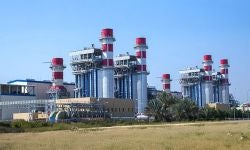
Oman’s Nama Power & Water Procurement Company (PWP) has issued letters of award (LoA) for new power purchase agreements (PPAs) to three independent power producers (IPPs), according to regulatory filings.
The new PPAs will extend the operating life of existing gas-fired power plants beyond the expiry of their current contracts.
The projects have a combined capacity of about 3,500MW.
The agreements have been awarded to Phoenix Power Company, Al-Batinah Power Company and Al-Suwadi Power Company.
Phoenix Power Company operates the 2,000MW Sur IPP. It is owned by a consortium of international and regional investors, including Japan’s Marubeni Corporation and Chubu Electric Power, Qatar’s Nebras Power, Qatar Electricity & Water Company and Multitech of Oman’s Bahwan Engineering Company.
Al-Batinah Power Company and Al-Suwadi Power Company operate the 750MW Sohar 2 IPP and the 750MW Barka 3 IPP, respectively.
According to regional projects tracker MEED Projects, Nama PWP signed the original PPA for the Barka 3 project in 2010 with a consortium led by Gaz de France (GDF) Suez under a special purpose vehicle (SPC) called Al-Suwadi Power Company.
The shareholders comprised GDF Suez (46%), Bahwan Engineering Company (22%), Shikoku Electric Power Corporation (11%), Sojitz Corporation (11%) and the Public Authority for Social Insurance (10%).
In 2015, GDF Suez was rebranded as Engie following a strategic shift towards low-carbon energy and utilities.
All three companies said the new PPAs will run for 15 years under agreed commercial terms. Acceptance of the LOAs has been requested by 18 March 2026.
The new agreements for Sohar 2 and Barka 3 will take effect on 1 April 2028 and run until 31 March 2043. The agreement for the Sur IPP will commence on 1 April 2029 and run until 31 March 2044.
The awards form part of Nama PWP’s 2028-29 procurement programme. The programme aims to secure firm generation capacity from existing assets whose current PPAs are due to expire during that period.
In Oman, IPP projects are developed under a build-own-operate model. This allows plant operators to continue running assets beyond the initial PPA term, either through contract extensions or by selling power into a future electricity market.
https://image.digitalinsightresearch.in/uploads/NewsArticle/16027001/main.jpg -
DP World awards Jafza warehouse construction deal
18 March 2026
Dubai-based ports operator DP World has awarded a contract to build a multi-tenant warehouse development at Jebel Ali Freezone in Dubai, UAE.
The contract was awarded to local firm Group Amana.
The development spans 141,916 square metres (sq m) and comprises 187 units across seven blocks.
These comprise warehouses, light industrial units, a retail shop, a mosque and other associated infrastructure.
The new contract builds on their existing partnership to deliver the logistics park at Jeddah Islamic Port in Saudi Arabia.
In February last year, MEED exclusively reported that Dubai’s DP World and the Saudi Ports Authority (Mawani) had awarded a SR347m ($92m) design-and-build contract to Group Amana for the project.
The scope of the contract covers construction work on the buildings under package two of the project’s first phase.
Earlier this week, MEED reported that DP World has kept its 2026 capital expenditure budget at nearly $3bn, focusing on two domestic assets and four overseas projects.
The company said in a statement that the priority developments include Jebel Ali and Drydocks World in Dubai.
Earlier this month, the group announced record financial results for 2025, with revenue up 22% to $24.4bn and adjusted earnings before interest, taxes, depreciation and amortisation (Ebitda) up 18% to $6.4bn, delivering a 26.3% margin.
DP World said this performance was driven by strong momentum across its ports and terminals and logistics business.
The group’s gross throughput rose 5.8% to 93.4 million 20-foot equivalent units.
Profit for the year increased 32.2% to $1.96bn, and operating cash flow grew 14% to $6.3bn.
Return on capital employed increased to 9.9% in 2025, up from 8.9% in 2024, reflecting stronger earnings despite ongoing geopolitical and trade uncertainty.
https://image.digitalinsightresearch.in/uploads/NewsArticle/16026660/main.png -
Egyptian firm starts building Sal’s Riyadh logistics centre
18 March 2026
Egyptian contractor Rowad Modern Engineering, a subsidiary of the Elsewedy Electric Group, has begun construction on the expansion of Saudi Logistics Services Company (Sal) facilities at King Khalid International airport in Riyadh.
The scope of work includes the rehabilitation and upgrade of existing infrastructure, as well as the construction of new supporting facilities and services.
Sal started the tendering process for its SR4.2bn ($1bn) logistics zone in the north of Riyadh in September last year, as MEED reported.
UAE-based Global Engineering Consultants is the project consultant.
The logistics hub aims to meet the demand for customised warehouses located near King Khalid International airport and the Riyadh Metro.
The project is in line with Vision 2030 and the National Transport & Logistics Strategy, which aims to support the kingdom’s logistics sector and enhance Saudi Arabia’s position as a global logistics hub.
Sal and Sela signed an agreement to develop the project in March last year.
This was followed by another lease agreement for the project, which will span about 1.57 million square metres.
According to an official statement: “The lease will extend for 30 years, which is further extendable to an additional 15 years upon agreement of both parties.”
GlobalData expects the kingdom’s construction industry to record an annual average growth rate of 5.2% in 2025-28, supported by investments in transport, electricity, housing and tourism infrastructure projects, as well as the $850bn-plus gigaprojects programme.
Growth will also be supported by government investments in rail, dams, industrial and road infrastructure projects.
The industrial sector is estimated to grow by 3.3% in 2025-28, supported by investments in the development of manufacturing, logistics, chemicals and pharmaceuticals plants.
https://image.digitalinsightresearch.in/uploads/NewsArticle/16026154/main.gif -
Jabal Omar plans next phase of its Mecca development
18 March 2026
Saudi Arabian developer Jabal Omar Development Company is carrying out planning for phase seven of its Jabal Omar master development in Mecca, according to a fourth-quarter 2025 financial presentation.
The company said phase seven will be a mixed-use scheme comprising hotels, retail and residential components, but did not disclose a breakdown of the project elements.
Jabal Omar plans to use a development partnership model for the phase to minimise capital expenditure.
Separately, the developer said it is targeting the delivery of 1,346 hotel keys and more than 20,000 square metres of gross leasing area in phase four by 2027.
Rotana Jabal Omar Makkah, comprising 655 keys, is due to be fully operational in the first quarter of 2026, after 450 keys began operating in the final week of December 2025.
The 1,141-key Sofitel is scheduled to become operational in the fourth quarter of 2026, while the 20,000 square metres of gross leasable area is expected to be ready in 2027.
Jabal Omar estimates its 2026 capital expenditure at SR1.1bn ($293m), with spending expected to fall once the phase four hotels are completed.
https://image.digitalinsightresearch.in/uploads/NewsArticle/16026145/main.png