
Salalah2 hydrogen team reviews advisory bids
14 March 2024
An international consortium developing an integrated green hydrogen project in Oman is reviewing proposals it has received for the financial, legal and technical advisory roles for the project.
Known as SalalaH2, the consortium comprises state-backed OQ Alternative Energy, Japan's Marubeni Corporation, UAE-based Dutco Overseas and South Korea's Samsung C&T.
Hydrogen Oman (Hydrom), a subsidiary of Energy Development Oman, awarded a green hydrogen block to the SalalaH2 consortium in December.
The team signed the term sheets for the project in March 2023, over a year since the initial project was announced.
"Asian and European offtakers are onboard and have expressed their commitment to support the project," said a source familiar with the scheme, without specifying the companies that intend to procure the plant's output long-term.
However, it is understood that official agreements between the producing consortium and the potential offtaker or offtakers have not yet been signed.
The project is set to produce over 4GW of renewable energy for the production of green hydrogen, which will be processed further into green ammonia for local use, as well as for exports to international green ammonia markets.
The integrated facility aims to produce over 1 million t/y of green ammonia, with an expected production of over 175,000 tonnes of green hydrogen.
Oman aims to produce up to 1 million tonnes a year of green hydrogen by 2030.
In October 2021, MEED reported that the consortium was conducting studies that would provide the basis for an investment decision.
At the time, various offtake streams were being explored and coordinated with the OQ ammonia plant’s current offtaker.
These included the “co-firing needs of coal-fired power plants in Asia, the renewable feedstock needs of fertiliser plants in Europe, and the decarbonisation needs of the global shipping industry”.
Related reads:
Global trend
There were significant developments for the global hydrogen market in the fourth quarter of 2023, with Germany leading in new low-carbon hydrogen plant announcements, according to GlobalData.
The global total of active and pipeline capacity of low-carbon hydrogen projects has now reached 201 million metric tonnes per annum (mtpa). By 2030, the capacity is expected to reach 130 mtpa in a high-case scenario and 81 mtpa in a low-case scenario.
Canada continues to lead in terms of capacity, with over 90 mtpa across 70 different hydrogen hubs. However, the hydrogen deal count and value in the fourth quarter of 2023 were lower than in previous quarters, reflecting a challenging macroeconomic environment. Despite these challenges, the hydrogen market continues to grow, with increasing attention on this technology as a key player in the energy transition.

Register for MEED's guest program now to access this article.
Exclusive from Meed
-
 Dubai seeks consultants for drainage projects
6 February 2026
-
 Modon tenders Ras El-Hekma construction contracts
6 February 2026
-
 Egypt contractor secures €58m loan for Hungary power plant
6 February 2026
-
 AD Ports signs Jordan Aqaba port PPP deal
6 February 2026
-
 Chinese firm wins Ceer automotive supplier park deal
6 February 2026
All of this is only 1% of what MEED.com has to offer
Subscribe now and unlock all the 153,671 articles on MEED.com
- All the latest news, data, and market intelligence across MENA at your fingerprints
- First-hand updates and inside information on projects, clients and competitors that matter to you
- 20 years' archive of information, data, and news for you to access at your convenience
- Strategize to succeed and minimise risks with timely analysis of current and future market trends

Related Articles
-
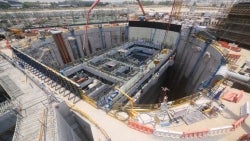
Dubai seeks consultants for drainage projects
6 February 2026
Dubai Municipality has invited consultants to qualify for a contract to supervise three stormwater drainage projects under the $8bn Tasreef programme.
The contract, titled TF-15-S1 Supervision of Stormwater Drainage System projects – Package 2, will be awarded as a single package with dedicated teams assigned to each project.
The request for qualifications (RFQs) was issued by the municipality’s Sewerage and Recycled Water Projects Department (SRPD).
The bid submission deadline is 26 February.
The first scheme under the package is TF-16-C1, which involves upgrading and rehabilitating the stormwater system east of the Dubai Canal.
The second, TF-15-C2, will deliver stormwater links along Umm Suqeim Road to serve the Al-Barsha and Al-Quoz communities.
The third project, TF-13-C1, focuses on developing a drainage system for the Al-Marmum area.
Several engineering, procurement and construction (EPC) contracts have been awarded under the Tasreef initiative, which aims to expand Dubai’s rainwater drainage capacity by 700% by 2033
In January, local firm DeTech Contracting won the main contract to construct a stormwater drainage system in Jebel Ali.
The project, listed under TF-05-C1, covers approximately 27 kilometres of stormwater network and will serve major transport routes, including Sheikh Zayed Road and Al-Jamayel Road.
Separately, Dubai Municipality has opened bidding for EPC contracts to expand and rehabilitate the emirate’s sewerage networks.
The four projects cover more than 95km of recycled water and sewerage pipelines.
 READ THE FEBRUARY 2026 MEED BUSINESS REVIEW – click here to view PDF
Spending on oil and gas production surges; Doha’s efforts support extraordinary growth in 2026; Water sector regains momentum in 2025.
Distributed to senior decision-makers in the region and around the world, the February 2026 edition of MEED Business Review includes:
> AGENDA: Mena upstream spending set to soar> INDUSTRY REPORT: MEED's GCC water developer ranking> INDUSTRY REPORT: Pipeline boom lifts Mena water awards> MARKET FOCUS: Qatar’s strategy falls into place> CURRENT AFFAIRS: Iran protests elevate regional uncertainty> CONTRACT AWARDS: Contract awards decline in 2025> LEADERSHIP: Tomorrow’s communities must heal us, not just house us> INTERVIEW: AtkinsRealis on building faster> LEADERSHIP: Energy security starts with rethinking wasteTo see previous issues of MEED Business Review, please click herehttps://image.digitalinsightresearch.in/uploads/NewsArticle/15593832/main.jpg -
Modon tenders Ras El-Hekma construction contracts
6 February 2026

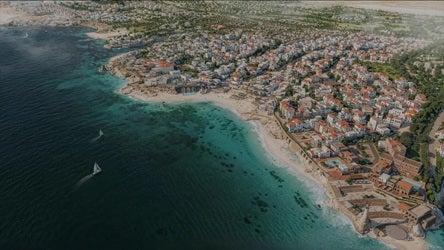
Abu Dhabi-based developer Modon Holding has tendered several contracts as part of the first phase of development at Ras El-Hekma, a planned new city on Egypt’s Mediterranean coast.
MEED understands that the tenders were issued in January.
These include:
DP3 assets: covering 146 residential villas, 590 three-bedroom townhouses, 356 four-bedroom townhouses, a mall and other associated works.
Bids due on 23 February.
DP4 assets: DP4 includes 54 villas, a clubhouse and other associated infrastructure.
Bids due on 2 March.
DP5 assets: The scope covers the construction of two hotels, branded residences, a retail facility and other associated works.
Bids due on 10 March.
DP6 assets: This package covers a 200-key Montage hotel, 96-unit Montage-branded residences and related infrastructure.
Bids due on 17 March.
DP7 assets: 120 five-bedroom villas, 230 seven-bedroom villas, 284 branded residential units and other infrastructural works.
Bids due on 3 March.
MEED understands that the contract duration for all these packages is 21 months from the start of construction.
Modon has accelerated development works at Ras El-Hekma this year. In January, MEED reported that Modon Holding had awarded a E£15bn ($316m) contract for the construction of a project at Ras El-Hekma.
The contract was awarded to the local firm Orascom Construction.
The scope of the contract covers the construction of residential units, commercial facilities and a 70-key hotel.
In September, MEED reported that Modon Holding had tendered contracts for the infrastructure works for the first phase of the Ras El-Hekma project.
As part of the first phase, Modon plans to develop more than 50 million square metres (sq m), including hotels and a marina.
Ras El-Hekma is on a spur of land on Egypt’s northern Mediterranean coastline, about 240 kilometres west of Alexandria.
Last year, Abu Dhabi-based holding company ADQ appointed Modon Holding as the master developer for the Ras El-Hekma project.
According to an official statement, Modon will act as the master developer for the entire development, which will cover more than 170 million sq m.
Modon Holding will develop the first phase of the project, which will cover 50 million sq m.
The remaining 120 million sq m will be developed in partnership with private developers under the supervision of the recently established ADQ subsidiary Ras El-Hekma Urban Development Project Company and Modon Holding.
In September 2024, Modon signed several memorandums of understanding (MoUs) with local and international firms to join the development. It signed a framework agreement with Orascom Construction to serve as the primary contractor for the project’s first phase.
Ras El-Hekma is planned as a combined business and leisure destination, with hotels, leisure facilities, a free zone, a financial district and residential components.
The master development has been billed as capable of attracting over $150bn in investment.
READ THE FEBRUARY 2026 MEED BUSINESS REVIEW – click here to view PDFSpending on oil and gas production surges; Doha’s efforts support extraordinary growth in 2026; Water sector regains momentum in 2025.
Distributed to senior decision-makers in the region and around the world, the February 2026 edition of MEED Business Review includes:
> AGENDA: Mena upstream spending set to soar> INDUSTRY REPORT: MEED's GCC water developer ranking> INDUSTRY REPORT: Pipeline boom lifts Mena water awards> MARKET FOCUS: Qatar’s strategy falls into place> CURRENT AFFAIRS: Iran protests elevate regional uncertainty> CONTRACT AWARDS: Contract awards decline in 2025> LEADERSHIP: Tomorrow’s communities must heal us, not just house us> INTERVIEW: AtkinsRealis on building faster> LEADERSHIP: Energy security starts with rethinking wasteTo see previous issues of MEED Business Review, please click herehttps://image.digitalinsightresearch.in/uploads/NewsArticle/15593388/main.jpg -
Egypt contractor secures €58m loan for Hungary power plant
6 February 2026
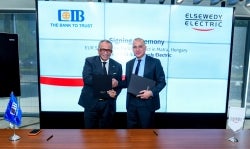
Commercial International Bank Egypt (CIB) has provided €58m in credit facilities to local firm Elsewedy Electric for the construction of a combined-cycle gas turbine (CCGT) power plant in Hungary.
Located in Visonta, the plant will be the largest combined-cycle facility built in Hungary in decades and the country’s first power plant capable of using hydrogen.
Once complete, hydrogen will be able to supply up to 30% of the plant’s fuel needs.
The project is being developed through a consortium comprising Energy Projects, a subsidiary of Elsewedy Electric, and local firms Status KPRIA and West Hungaria Bau (WHB).
It was awarded by MVM Matra Energia, a subsidiary of Hungary’s state-owned power holding company Magya Villamos Muvek (MVM).
As MEED understands, the plant is expected to have a power generation capacity of between 500MW and 650MW.
Total investment in the scheme is estimated at about €700m, with CIB acting as the sole financier for Elsewedy Electric’s portion of the project.
Construction officially began last September, with commercial operations scheduled for 2028.
The scheme also represents Elsewedy Electric’s first major investment in Europe, adding to other foreign investment interests.
Last May, it was reported that Elsewedy Electric intends to build a $100m electrical cable manufacturing plant in Iraq. This project has yet to advance beyond the initial stages.
In 2024, the contractor connected three additional hydro turbine generators to Tanzania’s national power grid in partnership with The Arab Contractors.
This brought the total power supply from the Julius Nyerere hydroelectric power project to 705MW.
READ THE FEBRUARY 2026 MEED BUSINESS REVIEW – click here to view PDFSpending on oil and gas production surges; Doha’s efforts support extraordinary growth in 2026; Water sector regains momentum in 2025.
Distributed to senior decision-makers in the region and around the world, the February 2026 edition of MEED Business Review includes:
> AGENDA: Mena upstream spending set to soar> INDUSTRY REPORT: MEED's GCC water developer ranking> INDUSTRY REPORT: Pipeline boom lifts Mena water awards> MARKET FOCUS: Qatar’s strategy falls into place> CURRENT AFFAIRS: Iran protests elevate regional uncertainty> CONTRACT AWARDS: Contract awards decline in 2025> LEADERSHIP: Tomorrow’s communities must heal us, not just house us> INTERVIEW: AtkinsRealis on building faster> LEADERSHIP: Energy security starts with rethinking wasteTo see previous issues of MEED Business Review, please click herehttps://image.digitalinsightresearch.in/uploads/NewsArticle/15593289/main.jpg -
AD Ports signs Jordan Aqaba port PPP deal
6 February 2026
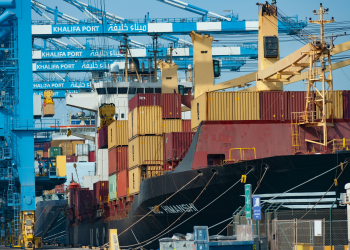
Abu Dhabi’s AD Ports Group has signed an agreement with Jordan’s Aqaba Development Corporation (ADC) to manage and operate the Aqaba multipurpose port.
AD Ports will manage and operate the port under a 30-year concession agreement.
Under the agreement, AD Ports and ADC will establish a joint venture to oversee port operations.
AD Ports will hold a 70% stake in the joint venture, with the remaining 30% held by ADC.
AD Ports Group will also invest AED141m ($38.4m) in the joint venture.
The signing ceremony was held at the Aqaba Special Economic Zone Authority headquarters in Aqaba on 5 February.
The agreement was signed by Hussein Safadi, CEO of ADC, and Ahmed Al-Mutawa, regional CEO of AD Ports Group.
Aqaba port handles about 80% of Jordan’s exports and 65% of its imports.
It serves as a key transit point for Jordan’s neighbouring countries, including Saudi Arabia and Iraq. The port has an annual handling capacity of 11 million tonnes, supported by nine berths, a quay length of 2 kilometres and a draft of 13.5 metres.
In 2025, the terminal handled over 5.3 million tonnes of cargo and nearly 85,000 car equivalent units of Ro-Ro imports.
Abu Dhabi has been deeply involved in making investments in Jordan’s infrastructure sector. In February last year, AD Ports Group signed an agreement to manage and operate the Al-Madouneh customs centre in Amman, as MEED reported.
The Al-Madouneh customs centre covers about 1.3 million square metres (sq m) and was inaugurated in June last year.
The announcement followed AD Ports Group’s signing of a shareholders’ agreement in January 2024 between its digital arm, Maqta Gateway, and Jordan’s Aqaba Development Corporation regarding their existing joint-venture company, Maqta Ayla.
The joint venture company will upgrade operations at the Aqaba port complex in Jordan by implementing a port community system “that leverages Maqta Gateway’s expertise, also marking the first-ever export of Abu Dhabi’s key port digitalisation solution”, AD Ports said in a statement.
AD Ports Group operates the Aqaba cruise terminal, and selected Dubai-based real estate developer Mag Group to lead the first phase of the Marsa Zayed mixed-use project.
READ THE FEBRUARY 2026 MEED BUSINESS REVIEW – click here to view PDFSpending on oil and gas production surges; Doha’s efforts support extraordinary growth in 2026; Water sector regains momentum in 2025.
Distributed to senior decision-makers in the region and around the world, the February 2026 edition of MEED Business Review includes:
> AGENDA: Mena upstream spending set to soar> INDUSTRY REPORT: MEED's GCC water developer ranking> INDUSTRY REPORT: Pipeline boom lifts Mena water awards> MARKET FOCUS: Qatar’s strategy falls into place> CURRENT AFFAIRS: Iran protests elevate regional uncertainty> CONTRACT AWARDS: Contract awards decline in 2025> LEADERSHIP: Tomorrow’s communities must heal us, not just house us> INTERVIEW: AtkinsRealis on building faster> LEADERSHIP: Energy security starts with rethinking wasteTo see previous issues of MEED Business Review, please click herehttps://image.digitalinsightresearch.in/uploads/NewsArticle/15592973/main.jpg -
Chinese firm wins Ceer automotive supplier park deal
6 February 2026
Beijing-headquartered Metallurgical Construction Corporation (MCC) has won a contract to undertake the steel structure works on the Ceer automotive supplier park in King Abdullah Economic City (KAEC).
The supplier park is located next to Ceer’s electric vehicle (EV) production facility in KAEC.
The automotive supplier park will include production and ancillary facilities for various suppliers and provide the material supply infrastructure for Ceer’s EV plant.
The facilities include:
- Cold stamping, body-in-white assembly and stamping facility – Shin Young (South Korea)
- Hot stamping, sub-frames and axles subsystem supply facility – Benteler Group (Austria)
- Façade and exterior-trim supply facility – JVIS (US)
- Instrument panel, trims and console supply facility – Forvia (France)
- Seat supplier – Lear Corporation (US)
Earlier this week, MEED exclusively reported that Ceer had awarded a contract to build the automotive supplier park to Jeddah-based construction firm Modern Building Leaders (MBL).
Netherlands-based engineering firm Arcadis is the project consultant, and Pac Project Advisors is the project management consultant.
Ceer retendered the project in September last year.
The latest contract award is another significant contract win for MCC in Saudi Arabia. In January, MEED reported that MCC had won a contract to undertake the steel structure works on Mohammed Bin Salman Stadium at the Qiddiya City project on the outskirts of Riyadh.
The 45,000-seat stadium will feature a fully combined retractable pitch, roof and LED wall.
The stadium’s main construction works are being undertaken by a joint venture of Spanish firm FCC Construction and local firm Nesma & Partners.
In January, MCC won another contract to undertake steel structure works for the expansion of Medina airport in Saudi Arabia.
The scope covers work on boarding bridges, Terminal Two and the renovation of Terminal One.
READ THE FEBRUARY 2026 MEED BUSINESS REVIEW – click here to view PDFSpending on oil and gas production surges; Doha’s efforts support extraordinary growth in 2026; Water sector regains momentum in 2025.
Distributed to senior decision-makers in the region and around the world, the February 2026 edition of MEED Business Review includes:
> AGENDA: Mena upstream spending set to soar> INDUSTRY REPORT: MEED's GCC water developer ranking> INDUSTRY REPORT: Pipeline boom lifts Mena water awards> MARKET FOCUS: Qatar’s strategy falls into place> CURRENT AFFAIRS: Iran protests elevate regional uncertainty> CONTRACT AWARDS: Contract awards decline in 2025> LEADERSHIP: Tomorrow’s communities must heal us, not just house us> INTERVIEW: AtkinsRealis on building faster> LEADERSHIP: Energy security starts with rethinking wasteTo see previous issues of MEED Business Review, please click herehttps://image.digitalinsightresearch.in/uploads/NewsArticle/15592955/main.gif