
Riyadh plans multibillion northern roads network overhaul
4 November 2026
Register for MEED’s 14-day trial access
Saudi Arabia’s Royal Commission for Riyadh City (RCRC) is preparing to implement a 189-kilometre (km) programme of road upgrades and extensions in the north of the capital as part of a comprehensive restructuring of the capital’s northern transport infrastructure.
The programme comprises 19 road projects and 33 interchanges serving the airport and 16 surrounding developments, including the Expo 2030 site, Roshn’s Sedra and Plot 1 communities and King Salman Stadium.
Once complete, the upgraded network will have the capacity for 4.2 million daily trips.
Fifteen of the links, totalling 162km, will be funded from the Riyadh City Strategy budget and procured across three waves and five packages.
The remaining four links, covering 27km of roads within and around the airport campus, will be developed by King Salman International Airport (KSIA).
Wave one
Wave one is the most immediate phase, covering seven links totalling 49km around the airport terminals, Expo 2030 and Roshn’s developments.
Fast-tracked for design completion in August 2026, Wave 1 comprises critical primary conduits split across two packages:
Package 1: Covers 11km, comprising an initial 8km stretch of Sheikh Jaber Al-Ahmad Al-Sabah Road and the first extension phase of King Salman Road.
RCRC has already begun implementing the Sheikh Jaber Al-Ahmad Al-Sabah Road scheme, awarding multimillion-dollar contracts for the project this year.
The centrepiece of this wave is the extension of King Salman Road, which will be realigned south along the boundary between KSIA and Roshn.
The new road will have six main lanes and three service-road lanes in each direction, with three full interchanges where Airport Road, a Roshn Sedra link and Sheikh Jaber Road cross it on bridges.
The interchanges will also give separate access to the airport support facilities and terminals, and are each forecast to handle 300,000-400,000 vehicles a day by 2040.
Sheikh Jaber Al-Ahmad Al-Sabah Road will be upgraded along an 8km section and extended by a further 5km. Three grade-separated T-intersections will provide access to Roshn Sedra.
The existing 6km section of King Salman Road will be widened to six main lanes in each direction, with tunnels beneath it at the Prince Saud Bin Jalawi interchange and between Expo 2030 and Roshn Plot 1.
Package 2: Covers 28km of core alignment updates across King Salman Road, the Expo South link, Airport Road, Prince Badr Bin Abdulmohsen Road and Anas Bin Malik Road.
A new 6km road south of the Expo site will extend Prince Saud Bin Jalawi Road through three grade-separated junctions, relieving King Salman Road of Expo and Roshn traffic.
The 8km Airport Road upgrade will add five main lanes and four service-road lanes in each direction, an underpass interchange at Expo Road, a bridge linking Expo with Roshn Sedra and new elevated ramps serving Princess Nourah Bint Abdulrahman University.
Prince Badr Bin Abdulmohsen Bin Abdulaziz Road will be widened from three to four lanes in each direction for 5km, with an underpass to King Salman Stadium.
A tunnel-and-bridge junction will carry it beneath the upgraded 3km Anas Bin Malik Road.
Wave one also includes a main bridge over Riyadh Metro Line 4.
Wave two
Wave two comprises two further packages totalling 72km that extend the network west and south of the airport.
Package 3: Covers 38km and includes the 33km upgrade of Al-Janadriyah Road, the longest single link in the programme, together with the 5km western section of Mohammed Bin Faraj Road. Its design submission is due in November 2026.
Package 4: Covers 34km and comprises the extension of King Salman Road to Al-Janadriyah Road, the 10km upgrade of the Airport Extension Road serving the airport support functions and the 16km upgrade of Prince Saud Bin Abdullah Bin Jalawi Road.
Design is scheduled for submission in March 2027.
Wave three
Wave three is a single 52km package covering the outer northern and eastern corridors. It comprises the 11km upgrade of Al-Thumamah Road, the 17km upgrade of Khuzam Road and the 19km extension of Jabal Azid Road, with design due for submission in August 2027.
Alongside the RCRC-led schemes, KSIA will deliver four links totalling 27km on its own campus. These are the 10km upgrade of the Airport Extension Road adjacent to the terminals, a 6km upgrade of Mohammed Bin Faraj Road, a 5km road to the cargo and aviation services area and a 6km road to the Iconic Terminal.
All three waves are scheduled to reach tender by 2028.
Programme rationale
Designed by Lebanon-headquartered engineering firm Dar Al-Handasah, Taiwan’s Wiecon Consulting Engineers and Germany’s Bodeker, the programme responds to the concentration of Riyadh’s flagship schemes on the city’s northern edge.
Riyadh is planning major developments in the north, with most due for completion by 2030. Daily trips in the area are forecast to rise from about 775,000 today to 1.7 million by 2030 and 3.7 million by 2050.
Roshn’s projects account for 37% of that demand, with Roshn Sedra alone generating more than 520,000 daily trips by 2030.
The sequencing is driven by Riyadh’s event timetable. Wave one targets the links that unlock KSIA’s new terminals, the Expo 2030 site and King Salman Stadium, a venue for the 2034 Fifa World Cup.
The later waves then build capacity for the housing, logistics and mixed-use districts expected to drive traffic growth after 2030, sustaining a pipeline of road contracts in the capital well into the next decade.

Register for MEED's guest program now to access this article.
Exclusive from Meed
-
 Dubai evaluates Tasreef drainage bids
24 November 2026
-
 Muscat financial centre opens for business
24 November 2026
-
 Mecca university tenders water infrastructure projects
24 November 2026
-
 Oman’s OQT formalises Pakistan fuel supply agreement
24 November 2026
-
 Contractors bid for Aramco-backed logistics hub
24 November 2026
All of this is only 1% of what MEED.com has to offer
Subscribe now and unlock all the 153,671 articles on MEED.com
- All the latest news, data, and market intelligence across MENA at your fingerprints
- First-hand updates and inside information on projects, clients and competitors that matter to you
- 20 years' archive of information, data, and news for you to access at your convenience
- Strategize to succeed and minimise risks with timely analysis of current and future market trends
Related Articles
-
Dubai evaluates Tasreef drainage bids
24 November 2026

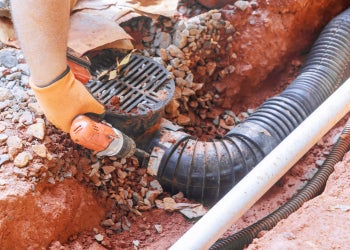
Up to eight stormwater and drainage projects under the next phase of Dubai Municipality’s AED30bn ($8.2bn) Tasreef programme have moved into the bid evaluation stage in recent weeks as procurement activity continues to drive the wider water infrastructure sector.
The projects cover major stormwater drainage networks, pumping stations, storage tanks and sewerage infrastructure. They include schemes serving Dubai South, Abu Hail, the area surrounding Dubai International airport, Dubailand and Al-Awir.
According to regional project tracker MEED Projects, the eight tenders have an estimated combined value of at least $800m. The tenders cover the following projects:
- DS-316-C1: Drainage networks serving Hind 4
- TF-24-C1: Connections to the stormwater network in Dubailand
- TF-25-C1: Stormwater trunk line serving Hind 3, Hind 4 and Umm Al-Daman
- TF-07-C1: Strategic stormwater drainage network between Sheikh Mohammed bin Zayed Road and Emirates Road
- TF-21-C1: Stormwater system upgrade and rehabilitation in Abu Hail
- TF-30-C1: Stormwater storage tanks serving the Dubai International airport area
- TF-06-C2: Stormwater drainage system connecting Al-Maktoum International airport and Dubai South
- DS317-C1: Sewerage and stormwater infrastructure in New Al-Awir 1st
According to sources, local firms Nael Construction & Contracting, Al-Nasr Contracting and Arifco Building Contracting are among those that submitted bids for the Dubailand stormwater network project (TF-24-C1) in October. The bidders for this tender do not include the local DeTech Contracting, which won the estimated $350m engineering, procurement and construction contract for a package on Al-Wasl Road (TF-15-C1), earlier this year.
On 29 October, DeTech, Mohammed Abdulmohsin Al-Kharafi & Sons and Green Oasis General Contracting Company were among those that submitted bids for TF-07-C1, sources told MEED.
It is undersood that both DeTech and Kharafi also submitted offers on 12 November for a contract to upgrade and rehabilitate the stormwater system in Abu Hail (TF-21-C1). The Abu Hail project comprises a stormwater pumping station with a total discharge capacity of 26 cubic metres a second. The wider project involves a major stormwater gravity drainage network, including large-diameter pipelines, and is estimated to cost up to $163m.
Meanwhile, the the municipality is preparing to receive bids for a further scheme (TF-06-C1) on 26 November, involving the construction of a stormwater pond connecting Al-Maktoum airport and Dubai South. Al-Nasr Contracting and Green Oasis are among those preparing to bid, sources said.
In October, the municipality confirmed it had awarded four contracts worth AED3bn ($817m) to expand the emirate’s stormwater drainage network by about 100 square kilometres under phase three of the Tasreef programme.
The projects will cover Jumeirah, Umm Suqeim, Al-Quoz, Al-Barsha, Al-Wasl and Al-Marmoom. The works include constructing and extending main stormwater drainage lines with diameters of up to 3 metres.
The Tasreef programme aims to increase the emirate’s stormwater drainage capacity by 700% and reduce costs associated with pumping stations, network operations and maintenance by 20%.
https://image.digitalinsightresearch.in/uploads/NewsArticle/21756439/main.jpg -
Muscat financial centre opens for business
24 November 2026
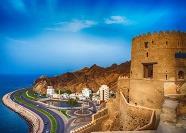
The International Financial Centre of Oman (IFC Oman) has opened its headquarters at Al-Mouj Business Park in Muscat and registered its first 13 companies.
Sayyid Theyazin bin Haitham Al-Said, Oman's Deputy Prime Minister for Economic Affairs and chairman of IFC Oman, opened the headquarters on 23 November. The ceremony also marked the official start of company registration, which allows local and international businesses to set up within the centre's jurisdiction.
The first 13 companies received their certificates of incorporation at the event. The centre was set up by Royal Decree No. 8/2026 in January, so the move from setting up a legal framework to taking in businesses has taken 10 months.
Registration follows royal decrees that put in place IFC Oman's operating law, regulatory law and courts law. Five core regulations sit alongside them and cover operations, companies, partnerships, foundations and interpretation. Together they set the rules for setting up and running a business in the centre, including corporate governance, regulatory obligations and dispute resolution.
Businesses can apply through a new digital registry platform. A separate regulatory framework for financial services is still being drafted, and licensing for those activities is expected to start in early 2027.
Finance Minister Sultan bin Salim Al-Habsi, who is vice-chairman of IFC Oman, said the decision by 13 companies to join from the start "reflects the strength of the business and investment environment the centre offers".
"We will maintain this momentum as we complete the regulatory framework ahead of the start of financial services licensing early next year," he said.
Sayyid Theyazin said the framework "lays the foundation for a stable and competitive business environment" and will strengthen Oman's appeal to international investors and financial institutions.
He also chaired a board meeting. It reviewed progress on finishing the centre's legal, regulatory and operational infrastructure and set priorities for attracting companies and investment.
IFC Oman aims to connect the national economy more closely to international capital and to support growth in financial and professional services, in line with the Oman Vision 2040 economic diversification programme.
The centre goes up against established regional financial hubs, including Dubai International Financial Centre, Abu Dhabi Global Market and Qatar Financial Centre.
https://image.digitalinsightresearch.in/uploads/NewsArticle/21756636/main5305.gif -
Mecca university tenders water infrastructure projects
24 November 2026
Mecca-based Umm Al-Qura University has issued two tenders for wastewater and water storage infrastructure at its student campus in the Al-Abidiyah district.
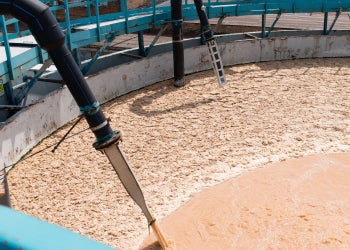
The first tender covers the second phase of the university’s main water storage scheme. The project involves building seven tanks with a combined capacity of 14,700 cubic metres.
The scope includes three ground-level tanks with a total capacity of 7,500 cubic metres and four elevated tanks with a combined capacity of 7,200 cubic metres.
It also includes a 2.1-kilometre backup water supply pipeline with a diameter of 400 millimetres, as well as pumping stations, inlet and outlet pipework, valves and water control systems.
The second tender covers the construction of a wastewater treatment plant with a capacity of 4,000 cubic metres a day at the university’s student campus. The contract duration is listed as two years.
The projects will expand the campus’s water infrastructure, adding storage capacity and wastewater treatment facilities to support its operational requirements.
Both tenders were issued in November. Bids for the water storage tanks and wastewater plant are due by 14 December and 13 December, respectively.
https://image.digitalinsightresearch.in/uploads/NewsArticle/21752745/main.jpg -
Oman’s OQT formalises Pakistan fuel supply agreement
24 November 2026
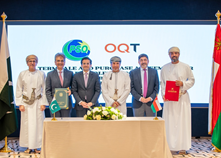
Oman's state-owned commodity trader OQT has signed a petroleum products supply agreement with Pakistan State Oil (PSO), the South Asian country's national oil marketing company.
The deal was signed on 8 October and formally marked at a ceremony in Muscat on 22 November. It was made under the Oman-Pakistan intergovernmental framework and gives OQT a structured arrangement for supplying petroleum products to PSO.
The two companies have yet to disclose the agreement's value, volumes or duration.
The agreement builds on an existing trading relationship. OQT says it has supplied more than 1 million tonnes of gasoline to PSO in 2026.
OQT also supplies Pakistan's liquefied petroleum gas (LPG) market, selling to both state-owned and private buyers. The company expects its LPG deliveries to Pakistan to pass 120,000 tonnes by the end of the year.
"This agreement gives us a stronger framework to build on that relationship, combining OQT's international trading capabilities with PSO's position in the Pakistani market," said OQT chief executive Wail Al-Jamali.
PSO chief executive Jawwad Ahmed Cheema said the partnership is now "formal, government-backed and built for the long term under the Oman-Pakistan Intergovernmental Agreement".
"For PSO, this is about more than supply. It is about ensuring that Pakistan has the fuel it needs, when it needs it, on terms that protect our national interest," he said.
Oman's Energy & Minerals Minister Salim Al-Aufi and Pakistan's Petroleum Minister Ali Pervaiz Malik attended the ceremony, along with Mulham Al-Jarf, deputy president of investment at the Oman Investment Authority, which owns OQT.
The companies said the agreement will support reliable supply at a time of continued volatility in regional energy markets. They will now focus on implementation and deliveries, and will continue talks on wider petroleum and energy cooperation.
OQT trades crude oil, refined products, petrochemicals, LPG, liquefied natural gas, fertilisers and carbon-related products, and is expanding into metals. It has offices in Muscat, Dubai, London, Rotterdam, Singapore, Houston and Shanghai.
https://image.digitalinsightresearch.in/uploads/NewsArticle/21750539/main1214.jpeg -
Contractors bid for Aramco-backed logistics hub
24 November 2026
Asmo, the logistics joint venture of Saudi Aramco and DHL Supply Chain, received proposals from contractors on 15 November for a contract to expand the logistics complex at King Salman Energy Park (Spark) in Saudi Arabia’s Eastern Province.
The logistics hub will add over 124,000 square metres (sq m) at Spark.
Al-Khobar-based engineering firm House of Consulting Office is the project consultant.
The tender for the expansion works comes after Asmo awarded an estimated SR820m ($218m) contract to build the logistics complex’s first phase in May this year.
The overall project will feature a 43,000 sq m, temperature-controlled Grade A warehouse; more than 3,000 sq m of offices and staff amenities; 5,300 sq m dedicated to chemicals storage; and an open yard covering about 1.2 million sq m.
Asmo signed an agreement with Bahrain‑headquartered Arcapita Group Holdings in February to deliver the project at Spark.
Planned for large-scale industrial use, the site is expected to incorporate advanced warehouse and building management systems, end-to-end digital connectivity, automation and robotics.
It will also be developed in line with internationally recognised sustainability standards, featuring solar photovoltaic readiness, electric-vehicle charging infrastructure and a target of Leed Gold certification.
The development aims to support the next stage of Saudi Arabia’s logistics and supply chain expansion.
Under the deal structure, Arcapita will provide funding and retain ownership of the asset, while Asmo will develop the facility and then lease and operate it under a 22-year occupational lease.
According to a statement, “the scheme will be executed via a forward-funding model, underscoring a long-term commitment to national infrastructure”.
Asmo added that this will be its first purpose-built logistics centre and one of four strategic locations planned to anchor its nationwide logistics network, aligned with the National Transport and Logistics Strategy under Saudi Vision 2030.
https://image.digitalinsightresearch.in/uploads/NewsArticle/21747071/main.gif