
Riyadh awaits US response to nuclear project
19 July 2023

Saudi Arabia is understood to be expecting Washington's response in terms of US firms' participation in the kingdom's civilian nuclear power plant project, a source close to the project tells MEED.
This aligns with a statement made in June by Saudi Foreign Affairs Minister Prince Faisal bin Farhan that the kingdom prefers to have the US as one of the bidders for the programme, as reported by local media.
“There are others that are bidding and, obviously, we would like to build our programme with the best technology in the world, and that will require a certain agreement to be in place,” Prince Faisal said in June during a joint press conference with US Secretary of State Antony Blinken.
Bid extension
Saudi Arabia's King Abdullah City for Atomic and Renewable Energy (KA-Care) has granted a four-month extension for companies to submit their proposals for the kingdom's first large-scale nuclear power plant project, as MEED reported.
According to a source close to the project, the client now expects responses to its request for proposals (RFP) for the Duwaiheen nuclear plant project by 31 October, four months later than the previous 30 June deadline.
The project is in the so-called bid invitation specification stage, and there are no direct negotiations taking place between the client and the potential bidders at this stage, the source tells MEED.
Market confusion
This clarifies the market confusion on the status of the project's procurement process.
The Finance Ministry said in its 2023 annual budget statement that the kingdom received bids on 31 December 2022 for the deal to build Saudi Arabia’s first nuclear power plant.
However, another industry source close to the project told MEED last month that the bid deadline for the contract was extended to the end of June this year.
MEED earlier reported that the most likely bidders for the main contract are China National Nuclear Corporation, Korea Electric Power Corporation (Kepco) and Russia’s Rosatom.
It now appears that the French company EDF has also been invited to submit a bid.
Neither KA-Care nor the apparent bidders have confirmed the bid list.
Nuclear offtake
State offtaker Saudi Power Procurement Company (SPPC) recently received bids for the financial, legal and technical consultancy contracts to prepare and review project agreements related to the procurement of electricity from the Duwaiheen plant.
The scope extends to signing a power purchase agreement (PPA) with the project company for the planned nuclear power plant, provisionally called Duwaiheen Nuclear Energy Company.
Consultants
Work on advisory contracts for the kingdom’s planned multibillion-dollar nuclear power programme is progressing, as MEED reported in November last year.
KA-Care awarded three separate contracts for the legal, technical and financial advisory works in May 2022.
It awarded a team led by UK-headquartered EY the financial advisory contract in May 2022. Legal and technical consultancy contracts for the project were signed earlier.
In 2018, Australia’s Worley was appointed by KA-Care for the project management office consultancy role for the nuclear energy programme. Worley is understood to have previously completed the Large Nuclear Power Plant (LNPP) site selection study for KA-Care.
Three-pronged strategy
Riyadh plans to develop nuclear power through a three-pronged strategy. The majority of the nuclear power capacity will be developed through conventional, large-scale nuclear facilities, such as the one being tendered.
The kingdom also plans to develop atomic energy through a series of smaller, system-integrated modular advanced reactor technology (Smart) nuclear power plants in partnership with South Korea.
The third pillar of Saudi Arabia’s nuclear energy programme will involve mining uranium resources to fuel the plants, as highlighted earlier this year by the energy minister.
MEED understands that the Biden administration supports Saudi Arabia’s clean energy transition, including its efforts to develop a peaceful nuclear energy programme, but it has stopped short of signalling US approval for the kingdom's uranium enrichment plans.
Photo: Flickr

Register for MEED's guest program now to access this article.
Exclusive from Meed
-
 Egypt’s Obelisk equity move merits attention
27 February 2026
-
 Petrokemya awards contract for ethylene oxide project
27 February 2026
-
 Regulatory environment shifting for Kuwait oil and gas tenders
27 February 2026
-
 Local firms win $378m Qatar project contracts
27 February 2026
-
 Kuwait awards oil pier contract
27 February 2026
All of this is only 1% of what MEED.com has to offer
Subscribe now and unlock all the 153,671 articles on MEED.com
- All the latest news, data, and market intelligence across MENA at your fingerprints
- First-hand updates and inside information on projects, clients and competitors that matter to you
- 20 years' archive of information, data, and news for you to access at your convenience
- Strategize to succeed and minimise risks with timely analysis of current and future market trends

Related Articles
-
Egypt’s Obelisk equity move merits attention
27 February 2026
 Commentary
Mark Dowdall
Power & water editorThe first phase of Africa’s planned largest hybrid solar and battery installation project reached commercial operations this week. While the 1.1GW Obelisk facility in Egypt is significant in capacity terms, the more interesting detail may lie in its ownership structure.
Scatec secured the 25-year US dollar-denominated power purchase agreement in 2024 and moved the project into construction as majority shareholder with Norwegian Investment Fund for Developing Countries (Norfund).
In November, France’s EDF acquired a 20% equity stake to join the project as a shareholder, while discussions with additional equity partners are at an “advanced” stage.
With the development risk largely already absorbed and revenues secured under a long-term, dollar-denominated contract, the question arises: how are developers approaching capital allocation in the renewables market?
Especially in emerging markets, sponsors must consider currency convertibility, sovereign exposure and overall balance sheet concentration. Bringing in partners after key milestones reduces that exposure without abandoning the asset.
However, risk mitigation is not the only driver behind these decisions.
This week, Masdar agreed to sell a 60% stake in a portfolio of wind assets in Portugal, a more mature European market with stable regulation and limited currency risk.
Given the developer’s 100GW global target, this would seem a prudent way to recycle capital as part of an aggressive growth strategy.
Meeting global climate targets will require sustained and rapid expansion of renewable capacity. Estimates suggest the world must add more than 1,100GW of renewables annually through 2030 to remain on track.
Increasingly, as pipelines expand and capacity targets rise, developers are likely to weigh carefully when to hold assets and when to release capital.
https://image.digitalinsightresearch.in/uploads/NewsArticle/15798541/main.jpg -
Petrokemya awards contract for ethylene oxide project
27 February 2026
Register for MEED’s 14-day trial access
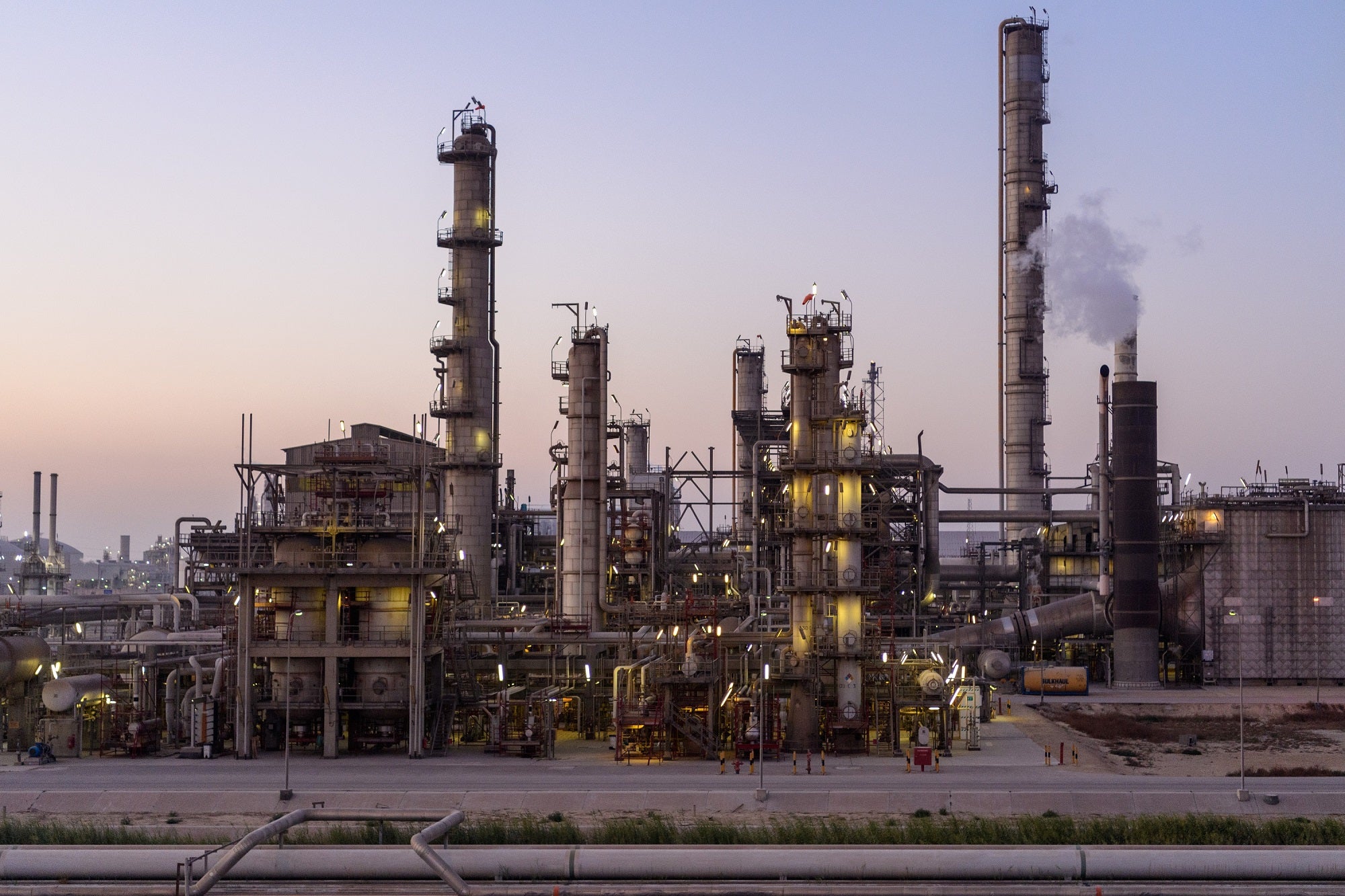
Petrokemya, an affiliate of Saudi Basic Industries Corporation (Sabic), has awarded China National Chemical Engineering Group Corporation (CNCEC) the main contract for an ethylene oxide catalyst project.
The project covers engineering, procurement and construction (EPC) of a new 4,000-tonne-a-year (t/y) ethylene oxide catalyst production unit, encompassing multiple units for catalyst carrier washing and drying, as well as supporting utilities.
Ethylene oxide catalysts are the core technology of the ethylene oxide industry chain, directly determining production efficiency, product quality and energy consumption of the process unit.
Petrokemya is a wholly owned affiliate of Sabic, with its main petrochemical production complex located in Jubail Industrial City, in Saudi Arabia’s Eastern Province.
The ethylene oxide catalyst project is the ninth contract awarded by Petrokemya to CNCEC since 2015. Previous jobs cover EPC works on seven specialty chemical projects and a project to upgrade and expand output capacity at Petrokemya’s main methyl tert-butyl ether (MTBE) production unit.
Petrokemya awarded CNCEC the contract for the MTBE plant expansion project in November 2022, with the contractor starting work the following month.
Through the project, the output potential of Petrokemya’s MTBE unit will increase from 700,000 t/y to 1 million t/y, purportedly making it the world’s largest single-unit MTBE plant.
CNCEC achieved mechanical completion of the MTBE plant expansion project in August last year, and the project is now understood to have been commissioned.
 https://image.digitalinsightresearch.in/uploads/NewsArticle/15797372/main4837.jpg
 -
Regulatory environment shifting for Kuwait oil and gas tenders
27 February 2026
Changes to the way key contracts are tendered in Kuwait have increased expectations that the country is shifting to a new regulatory environment for oil and gas projects.
Contractors interested in bidding for Kuwait’s planned tender for a $3.3bn gas processing facility have been briefed that the country’s Central Agency for Public Tenders (Capt) will not be involved in the tender process.
The exclusion of Capt from participating in the tender process has come at a time of increasing concerns surrounding the role of the agency, and has sparked speculation that it could be excluded from an increasing number of strategic tenders in future.
Capt is responsible for reviewing technical and commercial evaluations of bids and verifying that bidding is competitive.
Prior to its suspension in May 2024, Kuwait’s parliament was often blamed for blocking projects and halting the initiatives of Kuwait Petroleum Corporation (KPC).
However, the suspension of parliament has not triggered an uptick in project activity at KPC, indicating that other problems are holding back decision-making.
As time has passed, many stakeholders have started to view Capt as a key sticking point in the tendering process.
One source said: “There is a lot of frustration within some parts of the country’s oil and gas sector about the time it takes for Capt to review everything and approve a tender.”
Although this is not completely unheard of for small contracts tendered by Kuwait Gulf Oil Company (KGOC) to bypass Capt, it is unusual to see very large contracts bypass the agency.
“A lot of people were very surprised when they heard that Capt would not be involved in this process,” said one source.
“While the agency is resented by many in the sector that see it as a big reason for a lot of delays, it’s also highly respected for stopping corruption and bad practices.
“If you look historically at which large contracts avoided a review by Capt or its predecessor, it was only the most critical and urgent projects.
“The fact that this project is being permitted to side-step the agency’s process seems to mark a shift – and we could well see more big contracts following the same route in the future.”
Past exceptions
An example of a time period when key contracts were allowed to bypass Kuwait’s Central Tenders Committee (CTC), the predecessor to Capt, was in 1991.
During this time, in the wake of the Gulf War, urgent contracts needed to be tendered by Kuwait Oil Company (KOC), including some related to extinguishing fires at oil wells, which were lit by retreating Iraqi troops.
One source said: “I think the early nineties was the last time that large contracts were tendered by KOC without going through the relevant agency.
“It is easier to bypass Capt when it is a KGOC contract, but it’s still very surprising to see it with a contract of this size.”
If more contracts in the future are “fast-tracked” in the same way, it is likely that many stakeholders will welcome the effort to speed up tendering.
However, some are worried that if the streamlined tendering model is replicated too widely, it could undermine checks and balances that stop corruption.
“Kuwait is lucky as it has a system that makes corrupt practices very difficult to participate in,” said one source.
“The country needs to be careful and make sure that it doesn’t undermine the rigour of the system by prioritising convenience.”
Direct awards
Another factor that has impacted expectations about the future of project tendering in Kuwait’s oil and gas sector is that the methods used for several large contracts have been recently tendered in other sectors.
Key tenders that are impacting the discussions surrounding Kuwait’s oil and gas sector are the award of the $4bn Grand Mubarak Port contract to China Harbour Engineering Company in December and the award of a $3.3bn wastewater treatment plant contract to China State Construction Engineering Corporation in January.
Both of those direct contract awards were government-to-government agreements that did not have an open tender process in Kuwait and were not approved by Capt.
One source said: “These huge contract awards to Chinese companies without open tenders in Kuwait were extremely surprising.
“If you had asked me at the start of last year whether this kind of thing would be signed off, I would have told you it’s highly unlikely.
“I think there is no reason why we couldn’t see similar contract awards coming in the future in Kuwait’s oil and gas sector.”
Another source said: “Just like the gas processing contract, these contracts awarded to Chinese firms seem to have side-stepped Capt in a way that is very surprising.”
The planned $3.3bn gas processing facility is not the first time that KPC has tried to reduce its reliance on Capt for processing tenders.
In April 2024, KPC launched its own tendering portal in an effort to streamline the tendering process for projects in the oil and gas sector.
The portal was named the “KPC and Subsidiaries K-Tendering Portal” and is referred to as “K-Tender” by contractors.
The portal gave KPC a way of tendering and communicating with contractors without relying on the Capt website.
“The K-Tender portal was a step towards reducing reliance on Capt and gave KPC the flexibility to tender projects without Capt, even though, at the time, KPC made it clear that it intended to list all tenders both on the Capt website and its own portal.”
The recent direct contract awards to Chinese contractors and the tendering process for the $3.3bn gas processing facility have sent a signal to contractors in the Kuwaiti market that more unusual tenders could be in the pipeline.
https://image.digitalinsightresearch.in/uploads/NewsArticle/15791028/main.gif -
Kuwait awards oil pier contract
27 February 2026
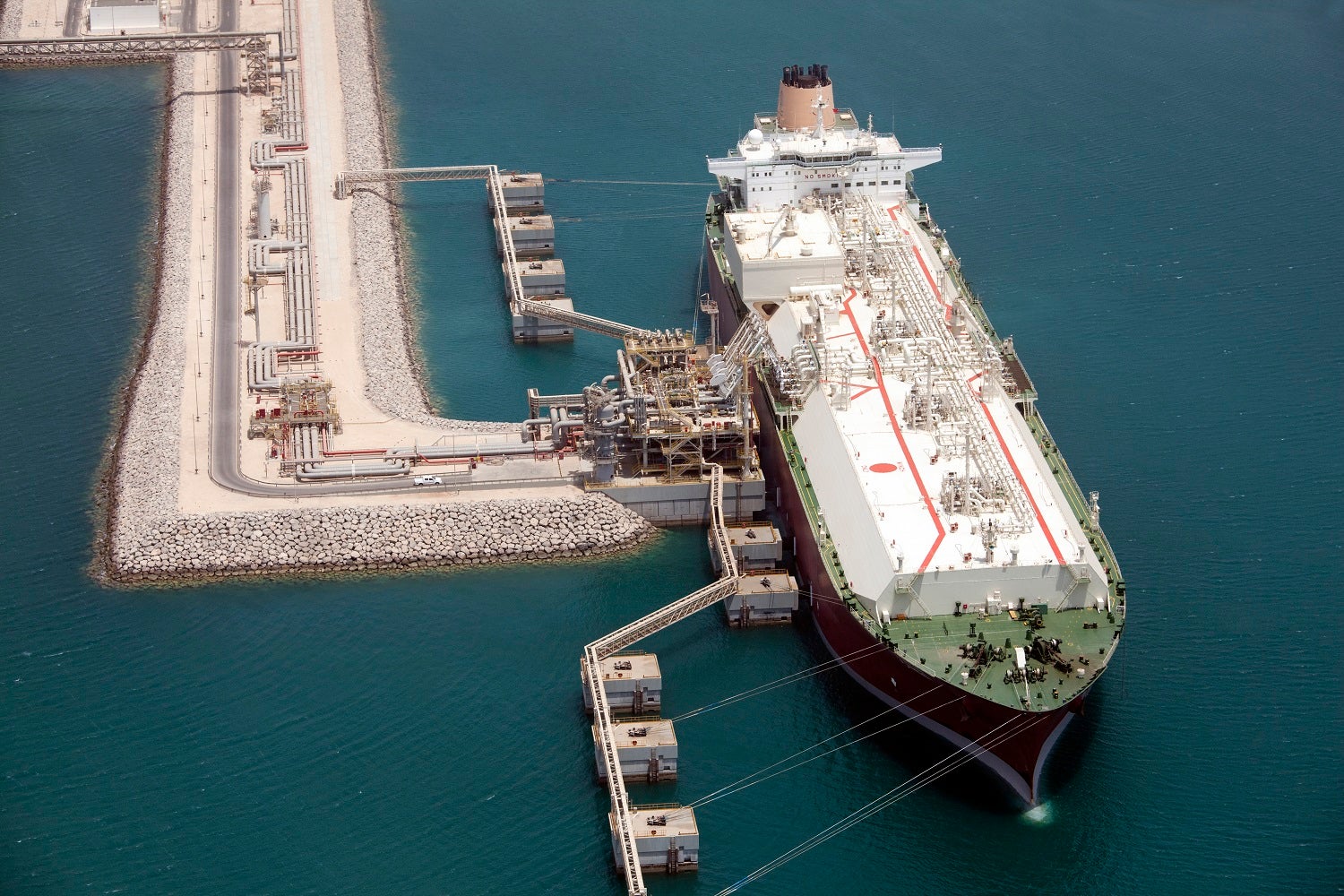
Kuwait National Petroleum Company (KNPC) has awarded local firm Gulf Dredging & General Contracting Company a $172m contract to help develop a new south arm facility at the Shuaiba oil pier.
The scope of the contract covers civil, marine, mechanical and electrical work, according to a statement.
Gulf Dredging & General Contracting Company is a subsidiary of Kuwait-headquartered Heisco.
The main contractor on the Shuaiba oil pier project is the Greek construction firm Archirodon. In October last year, KNPC awarded Archirodon a KD160m ($528m) contract to develop the new south arm facility.
The Shuaiba oil pier comprises several structures, including the approach trestle, the north arm facility and the south arm facility. A number of planned projects are to be developed at the Shuaiba port facilities.
The north arm facility consists of two berths, 31 and 32. When operational, it loads refined products for both KNPC and state-owned Petrochemicals Industries Company.
The north arm facility is currently not operational and will be upgraded as part of a separate project.
KNPC is a subsidiary of Kuwait Petroleum Corporation (KPC).
Last year, KPC chief executive Sheikh Nawaf Al-Sabah reiterated that the company plans to increase its oil production capacity to 4 million barrels a day by 2035.
About 90% of Kuwait’s oil production comes from Kuwait Oil Company, which also plans to achieve a daily gas production capacity of 1.5 trillion cubic feet by 2040.
Kuwait is estimated to have 100 billion barrels of oil reserves.
Under KPC’s 2040 strategy, it plans to invest $410bn, sourced from cash flow, debt and joint ventures with other businesses.
Of the $410bn, KPC and its subsidiaries intend to invest $110bn to accomplish the group’s energy transition targets.
https://image.digitalinsightresearch.in/uploads/NewsArticle/15791026/main.jpg -
Local firms win $378m Qatar project contracts
27 February 2026
Qatar’s Public Works Authority (Ashghal) has awarded construction contracts for two major projects in Doha to a pair of local contractors.
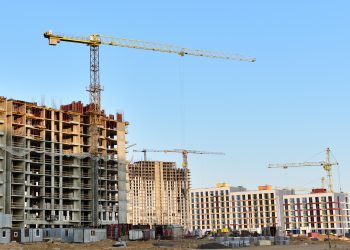
According to the results of the tender published on Ashghal’s website, a joint venture of Imar Trading & Contracting and Al-Sraiya Trading & Contracting won a QR1.1bn ($323m) contract for the redevelopment of Hamad General Hospital.
Qatar Building Engineering won the other QR198.5m ($55m) contract for the design and build of the new Q-Post headquarters building and sorting facility.
The two projects are part of 12 newly signed contracts announced by Ashghal earlier in February.
The other projects awarded include the renovation of the Qatar Racing & Equestrian Club and the Qatar Equestrian Federation, as well as the implementation of phase four of the Al-Uqda Equestrian complex development.
In the roads and infrastructure sector, four projects have been awarded, led by packages one and two of the road and infrastructure development works in Izghawa and Al-Thumaid.
The awards also include a project covering landscaping and an air-conditioned walkway at Qatar University, as part of broader public facilities improvement initiatives.
Mohammed Bin Abdulaziz Al-Meer, president of Ashghal, said that the projects have been awarded to Qatari firms, reflecting Ashghal’s commitment to strengthening the role of local companies.
According to UK analytics firm GlobalData, Qatar’s construction industry is expected to expand by 4.3% in 2026, supported by investments in renewable energy and transportation infrastructure.
According to the Planning & Statistics Authority, Qatar’s construction value-add grew by 6.6% year-on-year in the first half of 2025.
GlobalData expects the industry to grow at an annual average growth rate of 4.6% in 2027-29, supported by investments in construction, energy and infrastructure projects.
https://image.digitalinsightresearch.in/uploads/NewsArticle/15795459/main.jpg