Riyadh awaits US response to nuclear project
19 July 2023

Saudi Arabia is understood to be expecting Washington's response in terms of US firms' participation in the kingdom's civilian nuclear power plant project, a source close to the project tells MEED.
This aligns with a statement made in June by Saudi Foreign Affairs Minister Prince Faisal bin Farhan that the kingdom prefers to have the US as one of the bidders for the programme, as reported by local media.
“There are others that are bidding and, obviously, we would like to build our programme with the best technology in the world, and that will require a certain agreement to be in place,” Prince Faisal said in June during a joint press conference with US Secretary of State Antony Blinken.
Bid extension
Saudi Arabia's King Abdullah City for Atomic and Renewable Energy (KA-Care) has granted a four-month extension for companies to submit their proposals for the kingdom's first large-scale nuclear power plant project, as MEED reported.
According to a source close to the project, the client now expects responses to its request for proposals (RFP) for the Duwaiheen nuclear plant project by 31 October, four months later than the previous 30 June deadline.
The project is in the so-called bid invitation specification stage, and there are no direct negotiations taking place between the client and the potential bidders at this stage, the source tells MEED.
Market confusion
This clarifies the market confusion on the status of the project's procurement process.
The Finance Ministry said in its 2023 annual budget statement that the kingdom received bids on 31 December 2022 for the deal to build Saudi Arabia’s first nuclear power plant.
However, another industry source close to the project told MEED last month that the bid deadline for the contract was extended to the end of June this year.
MEED earlier reported that the most likely bidders for the main contract are China National Nuclear Corporation, Korea Electric Power Corporation (Kepco) and Russia’s Rosatom.
It now appears that the French company EDF has also been invited to submit a bid.
Neither KA-Care nor the apparent bidders have confirmed the bid list.
Nuclear offtake
State offtaker Saudi Power Procurement Company (SPPC) recently received bids for the financial, legal and technical consultancy contracts to prepare and review project agreements related to the procurement of electricity from the Duwaiheen plant.
The scope extends to signing a power purchase agreement (PPA) with the project company for the planned nuclear power plant, provisionally called Duwaiheen Nuclear Energy Company.
Consultants
Work on advisory contracts for the kingdom’s planned multibillion-dollar nuclear power programme is progressing, as MEED reported in November last year.
KA-Care awarded three separate contracts for the legal, technical and financial advisory works in May 2022.
It awarded a team led by UK-headquartered EY the financial advisory contract in May 2022. Legal and technical consultancy contracts for the project were signed earlier.
In 2018, Australia’s Worley was appointed by KA-Care for the project management office consultancy role for the nuclear energy programme. Worley is understood to have previously completed the Large Nuclear Power Plant (LNPP) site selection study for KA-Care.
Three-pronged strategy
Riyadh plans to develop nuclear power through a three-pronged strategy. The majority of the nuclear power capacity will be developed through conventional, large-scale nuclear facilities, such as the one being tendered.
The kingdom also plans to develop atomic energy through a series of smaller, system-integrated modular advanced reactor technology (Smart) nuclear power plants in partnership with South Korea.
The third pillar of Saudi Arabia’s nuclear energy programme will involve mining uranium resources to fuel the plants, as highlighted earlier this year by the energy minister.
MEED understands that the Biden administration supports Saudi Arabia’s clean energy transition, including its efforts to develop a peaceful nuclear energy programme, but it has stopped short of signalling US approval for the kingdom's uranium enrichment plans.
Photo: Flickr

Register for MEED's guest program now to access this article.
Exclusive from Meed
-
 Riyadh tenders King Salman Stadium works
26 October 2026
-
 Aramco selects contractors for five offshore tenders
23 October 2026
-
-
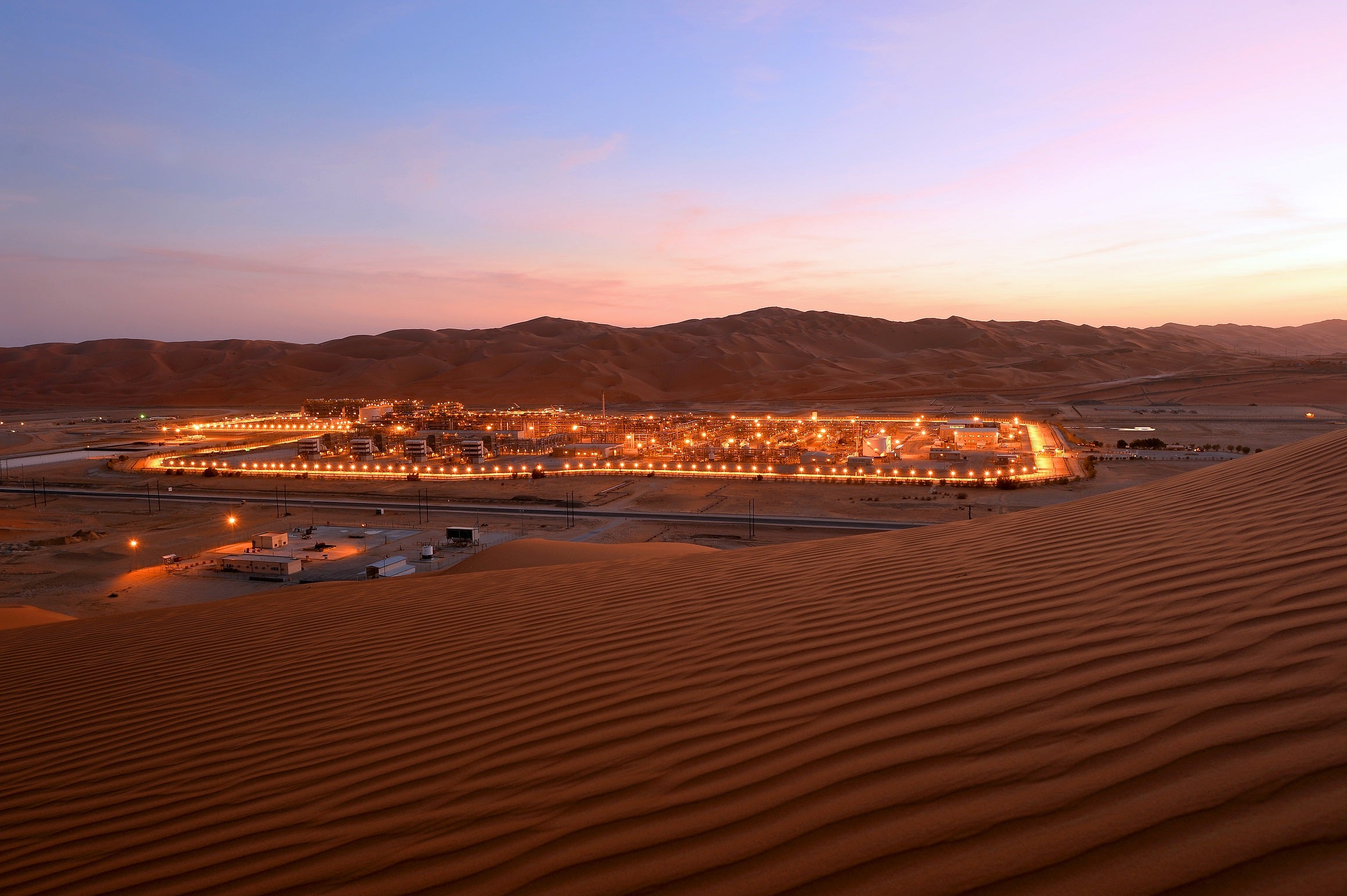 Brent hits $112 a barrel following Saudi oil field attack
22 October 2026
-
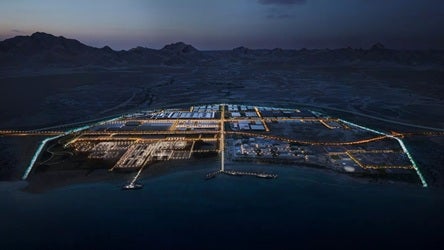 Nebius agrees Neom AI data centre capacity deal
22 October 2026
All of this is only 1% of what MEED.com has to offer
Subscribe now and unlock all the 153,671 articles on MEED.com
- All the latest news, data, and market intelligence across MENA at your fingerprints
- First-hand updates and inside information on projects, clients and competitors that matter to you
- 20 years' archive of information, data, and news for you to access at your convenience
- Strategize to succeed and minimise risks with timely analysis of current and future market trends
Related Articles
-
Riyadh tenders King Salman Stadium works
26 October 2026
Register for MEED’s 14-day trial access
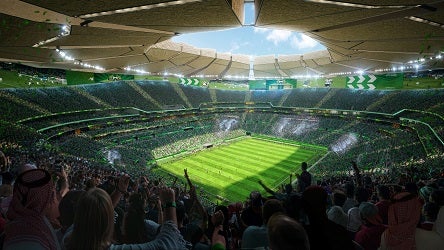
Saudi Arabia’s Sports Ministry has tendered a contract covering early works at King Salman International Stadium in Riyadh.
The scope includes enabling works, site preparation and initial construction activities.
The tender was issued on 11 October, with a submission deadline of 19 November.
The stadium will cover about 660,000 square metres (sq m) and seat 92,000. Facilities will include a 150-seat royal suite, 120 hospitality suites, 300 VIP seats and 2,200 dignitary seats.
The wider development will include sports facilities covering more than 360,000 sq m, including two training fields and fan zones; a closed sports hall; an Olympic-sized swimming pool; an athletics track; and outdoor courts for volleyball, basketball and padel.
The stadium is set to host the final of the 2034 Fifa World Cup and will serve as the Saudi national football team’s main base.
US-based architectural firm Populous is the lead architect for the stadium.
Construction of the stadium is expected to be completed by 2029.
The stadium will be located next to King Abdulaziz Park.
Firms submitted prequalification statements for the main design-and-build contract in February.
Saudi stadium plans
In August 2024, MEED reported that Saudi Arabia planned to build 11 new stadiums and refurbish four facilities for the 2034 Fifa World Cup.
Eight stadiums will be located in Riyadh, four in Jeddah and one each in Al-Khobar, Abha and Neom.
A further 10 cities will host training bases: Al-Baha, Jazan, Taif, Medina, Alula, Umluj, Tabuk, Hail, Al-Ahsa and Buraidah.
There are expected to be 134 training sites in the kingdom, including 61 existing facilities and 73 new venues.
Saudi Arabia was officially selected to host the 2034 Fifa World Cup during an online convention of Fifa member associations at the Fifa Congress on 11 December 2024.
 READ THE OCTOBER 2026 MEED BUSINESS REVIEW – click here to view PDF
Industry and logistics drive development at Neom; Saudi Arabia’s investment priorities realign amid conflict; MEED’s 2026 power developer ranking.
Distributed to senior decision-makers in the region and around the world, the October 2026 edition of MEED Business Review includes:
> AGENDA: Oxagon takes centre stage at Neom> MARKET FOCUS: Saudi projects hold steady> INDUSTRY REPORT: MEED’s 2026 GCC power developer ranking> LEADERSHIP: The future city does not need to hang above the groundTo see previous issues of MEED Business Review, please click herehttps://image.digitalinsightresearch.in/uploads/NewsArticle/20919233/main.jpg -
Aramco selects contractors for five offshore tenders
23 October 2026
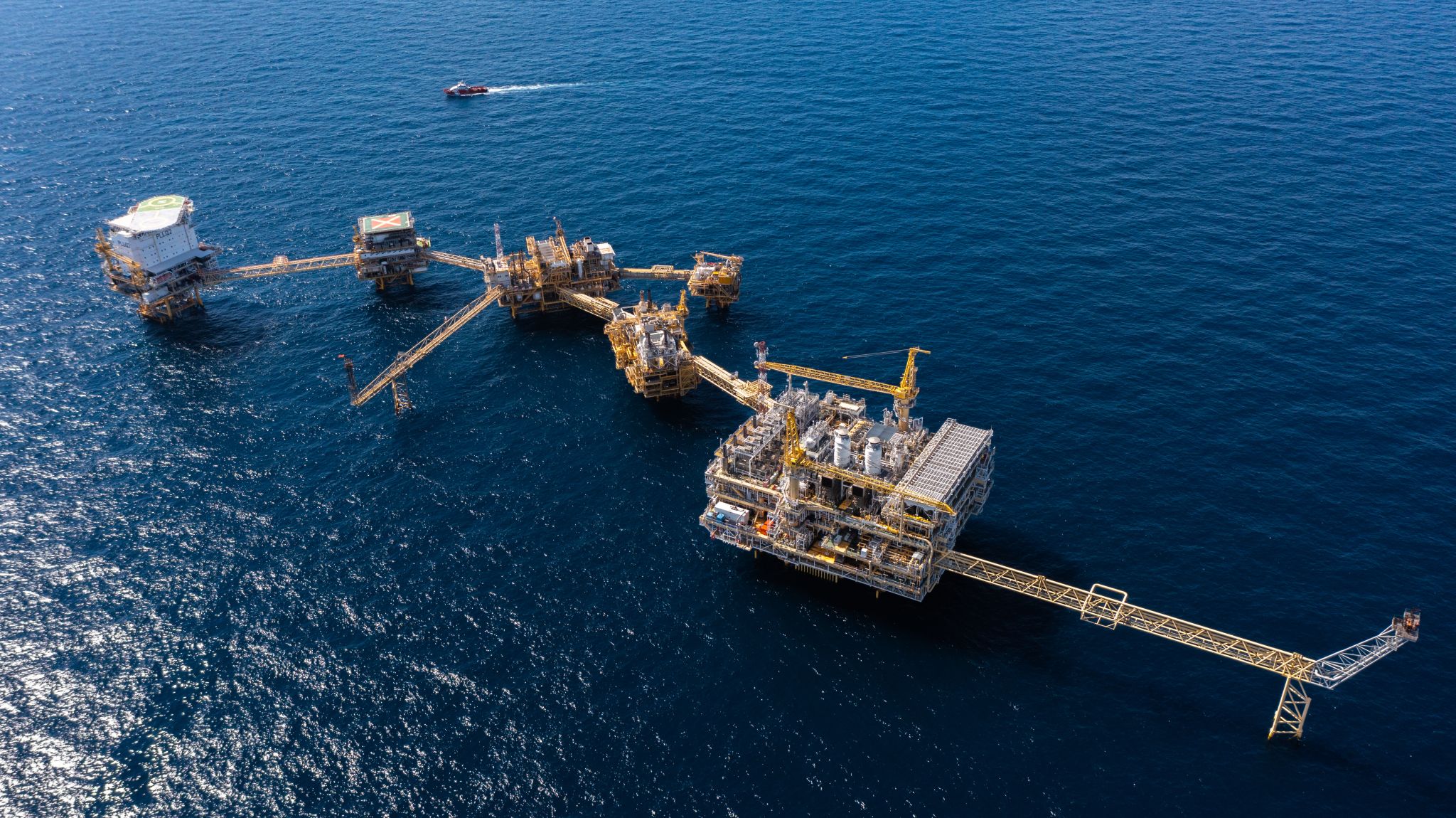
Saudi Aramco has selected contractors for five offshore tenders covering the engineering, procurement, construction and installation (EPCI) of structures at the Abu Safah, Berri, Manifa, Marjan, Safaniya and Zuluf offshore oil and gas fields in Saudi Arabia.
The tenders are numbers 167, 168, 169, 170 and 171 on Aramco’s Contract Release and Purchase Order (CRPO) system, and are estimated to be worth up to $2bn combined.
Abu Dhabi government-owned NMDC Energy has won CRPOs 167, 169 and 171, while Italian contractor Saipem has secured CRPOs 168 and 170, according to sources.
NMDC Energy confirmed its contract awards from Aramco in a disclosure to the Abu Dhabi Securities Exchange on 23 October, saying the three contracts are valued at AED2.8bn ($763.3m).
Work on the contracts is expected to be completed in 18-23 months, NMDC Energy said in its filing, without providing further details.
Saipem has yet to confirm its contract awards from Aramco.
The basic scope of EPCI work on the tenders is as follows:
- CRPO 167 – eight jackets at the Marjan field development
- CRPO 168 – four production deck modules (PDMs) at the Abu Safah, Berri, Manifa and Safaniya fields
- CRPO 169 – three PDMs at the Marjan field development
- CRPO 170 – three PDMs at the Marjan field development
- CRPO 171 – three PDMs at the Zuluf field development
Aramco issued the five CRPOs to contractors in its Long-Term Agreement (LTA) pool of offshore service providers in December last year, setting an initial bid submission deadline of 3 February.
The Saudi energy giant has since extended the bid submission deadline several times – to 31 March, 1 June, 1 July and then 30 July – to allow LTA contractors sufficient time to prepare proposals.
At the request of some bidders, Aramco granted a final two-day extension, with LTA contractors submitting their proposals for the five CRPOs on 1 August, MEED previously reported.
Aramco had previously indicated its intention to award contracts for CRPOs 167-171 by October, and the contract awards affirm it has adhered to this schedule.
Aramco’s LTA pool of offshore service providers comprises the following entities:
- Saipem (Italy)
- McDermott International (US)
- Larsen & Toubro Energy Hydrocarbon (LTEH, India) / Subsea7 (UK)
- NMDC Energy (UAE)
- Lamprell (UAE/Saudi Arabia)
- China Offshore Oil Engineering Company (China)
- Dynamic Industries (US)
- Sapura Energy (Malaysia)
- TechnipFMC (France) / MMHE (Malaysia)
- Hyundai Heavy Industries (South Korea)
In April 2025, Aramco renewed its LTAs with the following contractors, whose contracts had either lapsed or were close to expiry:
- Saipem
- McDermott International
- Larsen & Toubro Energy Hydrocarbon / Subsea7
- NMDC Energy
- Lamprell
- China Offshore Oil Engineering Company
ALSO READ: Aramco upstream spending gathers pace
READ THE OCTOBER 2026 MEED BUSINESS REVIEW – click here to view PDFIndustry and logistics drive development at Neom; Saudi Arabia’s investment priorities realign amid conflict; MEED’s 2026 power developer ranking.
Distributed to senior decision-makers in the region and around the world, the October 2026 edition of MEED Business Review includes:
> AGENDA: Oxagon takes centre stage at Neom> MARKET FOCUS: Saudi projects hold steady> INDUSTRY REPORT: MEED’s 2026 GCC power developer ranking> LEADERSHIP: The future city does not need to hang above the groundTo see previous issues of MEED Business Review, please click herehttps://image.digitalinsightresearch.in/uploads/NewsArticle/20869888/main3523.jpeg -
Aramco seeks to build sulphur-handling facilities at Ras Al-Khair
22 October 2026
Saudi Aramco is engaging developers for a planned project to build sulphur-handling facilities at Ras Al-Khair port on Saudi Arabia’s eastern coast.
Under the build-own-operate-transfer (BOOT) contract, the selected developer would be required to build facilities at Ras Al-Khair port capable of receiving, handling, forming and exporting up to 9,500 metric tonnes a day (t/d) of molten sulphur.
Additionally, the appointed contractor would be responsible for engineering, procurement and construction, as well as operations and maintenance.
According to sources, the Saudi energy giant floated the tender for the Ras Al-Khair sulphur-handling facilities project last year. Companies bidding for the BOOT contract have until 30 December to submit proposals, with the previous bid-submission deadline being on 19 September.
The following developers, among others, are understood to be bidding for the Ras Al-Khair sulphur-handling facilities project:
- Jereh Group (China)
- Lamar Holding (Saudi Arabia)
- Vision Invest (Bahrain/Saudi Arabia)
Separately, Aramco has appointed Germany-headquartered Fichtner as the consultant on the project.
The broad scope of work on the project includes development, design, financing, construction, commissioning, testing, ownership, insurance, operations and maintenance of:
- an onshore sulphur handling and processing station, comprising rail and truck sulphur unloading, molten sulphur storage and sulphur forming facilities;
- a sulphur exporting station / berth facilities located at berth number 19 at Ras Al-Khair port, comprising formed sulphur storage and a ship loader, with a rail spur system to connect to the Saudi Arabia Railway line to deliver the molten sulphur to the onshore facility, and a sulphur conveyor system to transfer the formed sulphur from the onshore facility to the berth facility;
- starting from the commercial operation date, the sale of the dependable capacity to Aramco and, to the extent dispatched by Aramco, the formed sulphur output of the plant; and
- the transfer of the shares in the project company, or alternatively the dismantling and removal of, or transfer of, the plant to Aramco.
The allocated area for the plant is 1.605 million square metres (sq m), which includes 1.5 million sq m allocated to the onshore facility and 105,000 sq m allocated to the berth facility. The project operator is required to accommodate adequate space for any potential capacity expansion.
The land for the onshore sulphur station facility is under the jurisdiction of the Royal Commission for Jubail & Yanbu, while the berth plot is under the administration and management control of the Saudi Port Authority (Mawani).
ALSO READ: Lamprell signs Ras al-Khair fabrication deal for Saudi offshore job
READ THE OCTOBER 2026 MEED BUSINESS REVIEW – click here to view PDFIndustry and logistics drive development at Neom; Saudi Arabia’s investment priorities realign amid conflict; MEED’s 2026 power developer ranking.
Distributed to senior decision-makers in the region and around the world, the October 2026 edition of MEED Business Review includes:
> AGENDA: Oxagon takes centre stage at Neom> MARKET FOCUS: Saudi projects hold steady> INDUSTRY REPORT: MEED’s 2026 GCC power developer ranking> LEADERSHIP: The future city does not need to hang above the groundTo see previous issues of MEED Business Review, please click herehttps://image.digitalinsightresearch.in/uploads/NewsArticle/20842631/main3523.jpg -
Brent hits $112 a barrel following Saudi oil field attack
22 October 2026
Register for MEED’s 14-day trial access
Oil prices climbed more than 3% on 22 October after a drone targeting Saudi Aramco’s Shaybah oil field development killed two people and injured two others a day earlier, adding to concerns over energy supplies as attacks on Saudi energy infrastructure intensified.
Global benchmark Brent crude hit $112.30 in early trading on 22 October, but later pared gains and was trading at $111.52 a barrel as of 11am GST.
Three residents and a Saudi citizen were killed in two separate incidents in Saudi Arabia’s Eastern Province on 21 October, authorities said, as attacks on the kingdom accelerated following an escalation of hostilities with the Iran-backed Houthi group in neighbouring Yemen.
Overnight, the Saudi-led coalition fighting the Houthis in Yemen announced that it had intercepted and destroyed four drones in the Eastern Province.
Saudi air defences intercepted a drone attempting to target a processing facility at Saudi Aramco’s Shaybah oil field development on the morning of 21 October, the Saudi Ministry of Energy said.
The official Saudi Press Agency (SPA) carried a statement quoting an energy ministry official as saying the attempted attack resulted in the deaths of two residents – a Filipino and a Nepali – and injuries to two others – an Indian and a Pakistani – after debris fell due to the interception.
Following the interception, a fire broke out in a vehicle belonging to a contractor at the Shaybah oil field, outside the facility’s perimeter, with no impact on operations.
Dammam airport attack
Separately, a Houthi attack on King Fahd International airport in Dammam on the evening of 21 October killed an Indian resident and a Saudi citizen.
Eight people were also injured in the attack, including a Saudi national, a Nepali, and two nationals each from India, Yemen and Bangladesh. Injuries ranged from minor to critical, the Saudi General Authority of Civil Aviation (Gaca) said the next day.
“The attack also caused property damage, the extent of which is currently being assessed. Further updates will be provided,” Gaca said, adding that operations had since resumed at Dammam airport.
Saudi Arabia has come under sustained attack from the Iran-aligned Houthi rebel group in October, including strikes on Riyadh’s international airport in what authorities described as the kingdom’s deadliest incidents in years, as the war with the group escalates.
The Houthi militias also struck an administrative building at Aramco’s headquarters in Dhahran, in the Eastern Province, on 13 October, resulting in a limited fire.
The Houthi rebels opened a new front in the regional war between Iran and the US in mid-July, when they breached a four-year truce with Saudi Arabia in Yemen’s civil war, which began in 2014, and started attacking Saudi vessels and Aramco energy assets along the Red Sea, including repeated strikes on the Jizan refinery.
The 1,200-kilometre East-West pipeline operated by Aramco was also hit by Houthi missiles in September, and once directly by Iran in April.
The East-West pipeline transports crude from Saudi Arabia’s Eastern Province oil fields to the Red Sea port city of Yanbu on the kingdom’s west coast. It has a pumping capacity of 7 million barrels a day.
Saudi Arabia relies heavily on the East-West pipeline to bypass the volatile Strait of Hormuz maritime chokepoint and ship crude from its Red Sea coast. Riyadh has increasingly used the line to route exports away from Hormuz since the US-Iran conflict began on 28 February – a tactical advantage most of its Gulf neighbours lack.
Aramco resumed crude exports via the pipeline at the start of October.
https://image.digitalinsightresearch.in/uploads/NewsArticle/20841984/main.jpg -
Nebius agrees Neom AI data centre capacity deal
22 October 2026
Register for MEED’s 14-day trial access
Saudi artificial intelligence (AI) company Humain and data centre developer DataVolt have signed a preliminary framework agreement with Netherlands-based AI cloud company Nebius for up to 50MW of data centre capacity at Oxagon, Neom’s industrial city on the kingdom's Red Sea coast.
Under the proposed agreement, Nebius will become an anchor customer at the planned AI data centre campus.
The contemplated capacity represents half of the initial 100MW currently under construction, which forms part of a planned 360MW first phase.
The capacity is expected to be commissioned in stages from the fourth quarter of 2027.
Humain, which is owned by Saudi sovereign wealth vehicle the Public Investment Fund, and DataVolt began construction on the initial 100MW facility at Oxagon in September. The wider campus is planned to reach 1.5GW of capacity.
The agreement was signed during Nvidia’s GTC event in Berlin, held on 20-22 October. The US graphics processing unit (GPU) designer hosts the GPU Technology Conference (GTC) to showcase advances in AI and accelerated computing.
Nebius is expected to deploy Nvidia-powered computing infrastructure at the Oxagon campus to support its AI cloud business and international customer base.
The project combines Humain’s AI capabilities with DataVolt’s experience in developing, financing and operating digital infrastructure. It is intended to support large-scale AI and cloud workloads for Saudi and international customers.
Oxagon is seeking to position itself as a location for energy-intensive digital infrastructure, supported by pre-zoned industrial land, power resources and subsea cable connectivity to Europe and Africa. The development is also expected to incorporate renewable energy and advanced cooling systems.
The Oxagon campus builds on an agreement signed in February 2025 by Neom and DataVolt to develop data centre infrastructure at the site. That deal involved an investment of about $5bn and envisaged a 1.5GW development.
In September 2025, DataVolt signed a memorandum of understanding with South Korea’s LG Electronics covering cooling systems for the Oxagon data centre project.
DataVolt was founded in 2023 and is a wholly owned subsidiary of Saudi infrastructure developer Vision Invest. Humain was launched in May 2025 to develop capabilities across the AI value chain, including data centres, high-performance computing infrastructure, cloud platforms and AI models.
https://image.digitalinsightresearch.in/uploads/NewsArticle/20837696/main.jpg