
Regional war deepens Kuwait oil sector’s tender crisis
28 April 2026
 Commentary
Wil Crisp
Oil & gas reporter
Register for MEED’s 14-day trial access
Contractors in Kuwait expect the regional conflict and disruption to shipping to worsen the country’s existing oil and gas tendering problems, causing long-term disruption in the sector.
In the months prior to the US and Israel attacking Iran on 28 February, contract tenders worth an estimated $9.1bn were cancelled after bids came in above the projects’ allocated budgets.
Contractors largely blamed the cancellations on long delays to tender processes after budgets had been set.
The delays, which often extended for several years, meant inflation drove up the cost of materials and labour, making it almost impossible for contractors to submit bids within the original budgets.
One industry source said: “The reason all of these contracts were cancelled was because the tender processes for large projects had started moving again after stalling for a long time.
“Bids came in and unfortunately they were over budget. It was then expected that tender processes would restart and these projects would ultimately be awarded – but now the war means that Kuwait is facing a whole new wave of project delays and nobody knows when it is going to end.”
War impact
Many industry insiders believe delays caused by the war and the closure of the Strait of Hormuz will once again seriously disrupt projects, just as many stakeholders believed the country was about to see an uptick in project progress.
One source said: “Bid bonds are going to have to be renewed and some bidders might just use that as an opportunity to drop out of the bidding process.
“It’s also possible that work that has already been done, like feasibility studies, will no longer be relevant and will have to be repeated.”
2025 rebound
Last year, Kuwait recorded its highest total annual value for oil, gas and chemicals contract awards since 2017, according to data from regional project tracker MEED Projects.
A total of 19 contract awards with a combined value of $1.9bn were awarded.
This was more than four times the value of contract awards across the same sectors in 2024, when awards were worth just $436m.
It was also above the $1.7bn peak recorded in 2021, but it remained far lower than the values seen in 2014-17, when several large-scale, multibillion-dollar projects were awarded in the country.
The surge in the value of contract awards came after Kuwait’s emir indefinitely dissolved parliament and suspended some of the country’s constitutional articles in May 2024.
Prior to the suspension of parliament, Kuwait suffered from very low levels of project awards for several years amid political gridlock and infighting between the cabinet and parliament.
This meant important decisions about projects could not be made – a major obstacle to the progression of strategic oil projects.
Forward outlook
With several major oil and gas projects under development in late 2025 and early 2026, some expected 2026 to record a far higher volume of oil and gas contract awards than 2025.
Projects expected to be tendered – and potentially awarded – this year included a $3.3bn onshore production facility due to be developed next to the Al-Zour refinery.
This project has already been delayed and put on hold as a result of fallout from the US and Israel’s conflict with Iran.
Had it been awarded, it would have been the biggest single oil and gas contract award in Kuwait in more than 10 years.
Now, as a result of the conflict, many of the large tenders expected to take place this year are likely to be significantly delayed.
One source said: “Right now, everyone in the oil and gas sector is waiting for some sort of sign of improving stability before they make a decision and there’s a lot of uncertainty.
“The state-owned oil companies aren’t communicating with contractors like they normally do and the price of a lot of materials has increased dramatically.”
Even if the standoff between the US and Iran over reopening the Strait of Hormuz is resolved in the near future, it is likely to take months or years before Kuwait’s oil and gas project market regains the momentum it had at the beginning of 2026.
Given the lack of flexibility within Kuwait’s existing tendering system, delays can easily lead to tenders being cancelled, and the conflict’s inflationary impact will make it even harder for contractors to meet budgets set before the latest disruption.

Register for MEED's guest program now to access this article.
Exclusive from Meed
-
 Qiddiya plans $7bn theme park hub near Paris
25 August 2026
-
 Masdar shelves Abu Dhabi green hydrogen project
25 August 2026
-
 Oman invites bids for Musandam renewables study
25 August 2026
-
 US launches sanctions campaign against Iran
25 August 2026
-
 Kuwait tenders $3.3bn gas processing facility
25 August 2026
All of this is only 1% of what MEED.com has to offer
Subscribe now and unlock all the 153,671 articles on MEED.com
- All the latest news, data, and market intelligence across MENA at your fingerprints
- First-hand updates and inside information on projects, clients and competitors that matter to you
- 20 years' archive of information, data, and news for you to access at your convenience
- Strategize to succeed and minimise risks with timely analysis of current and future market trends

Related Articles
-
Qiddiya plans $7bn theme park hub near Paris
25 August 2026
Saudi Arabia’s Qiddiya Investment Company plans to develop a mixed-use leisure destination worth about €6bn ($7bn) at Cergy-Pontoise in the Ile-de-France region, in one of the largest Saudi investments in French tourism infrastructure to date.
The plan was set out in a joint statement issued on 24 August at the close of a state visit to France by Crown Prince and Prime Minister Mohammed Bin Salman Bin Abdulaziz Al-Saud. France and Saudi Arabia signed a memorandum of understanding (MoU) covering the project during the two-day visit.
The destination will bring together entertainment, leisure, hospitality, culture and sport, according to the joint statement. Current plans envisage up to three major entertainment anchors, hotels and complementary leisure experiences, with the €6bn figure covering the full development lifecycle.
One of the three parks is expected to be manga-themed, according to the French presidency. The themes of the other two have not been disclosed. The parks will be built and opened in stages, with construction expected to take several years. No opening date has been given.
The parks are expected to create about 22,000 direct jobs, according to the French presidency, compared with about 20,000 at Disneyland Paris. Cergy-Pontoise lies about 30 kilometres northwest of Paris.
Qiddiya is a subsidiary of the Public Investment Fund, Saudi Arabia’s sovereign wealth fund. Its flagship project is a giga-scale entertainment, sports and cultural city on the outskirts of Riyadh, one of several gigaprojects under Vision 2030.
The theme park plan was among a wider set of agreements reached during the visit. Both sides welcomed the announcement of 21 agreements and MoUs at a French-Saudi investment roundtable, spanning energy, industry, financial services, transport and logistics, health, culture, tourism and artificial intelligence. Bilateral trade reached about $11.8bn in 2025.
It is not the first time Saudi capital has backed a French theme park. Kingdom Holding Company was a longstanding investor in the operator of Disneyland Paris, first taking a stake in 1994 and participating in successive recapitalisations before Walt Disney Company moved to near-full ownership in 2017.
https://image.digitalinsightresearch.in/uploads/NewsArticle/18987274/main.png -
Masdar shelves Abu Dhabi green hydrogen project
25 August 2026

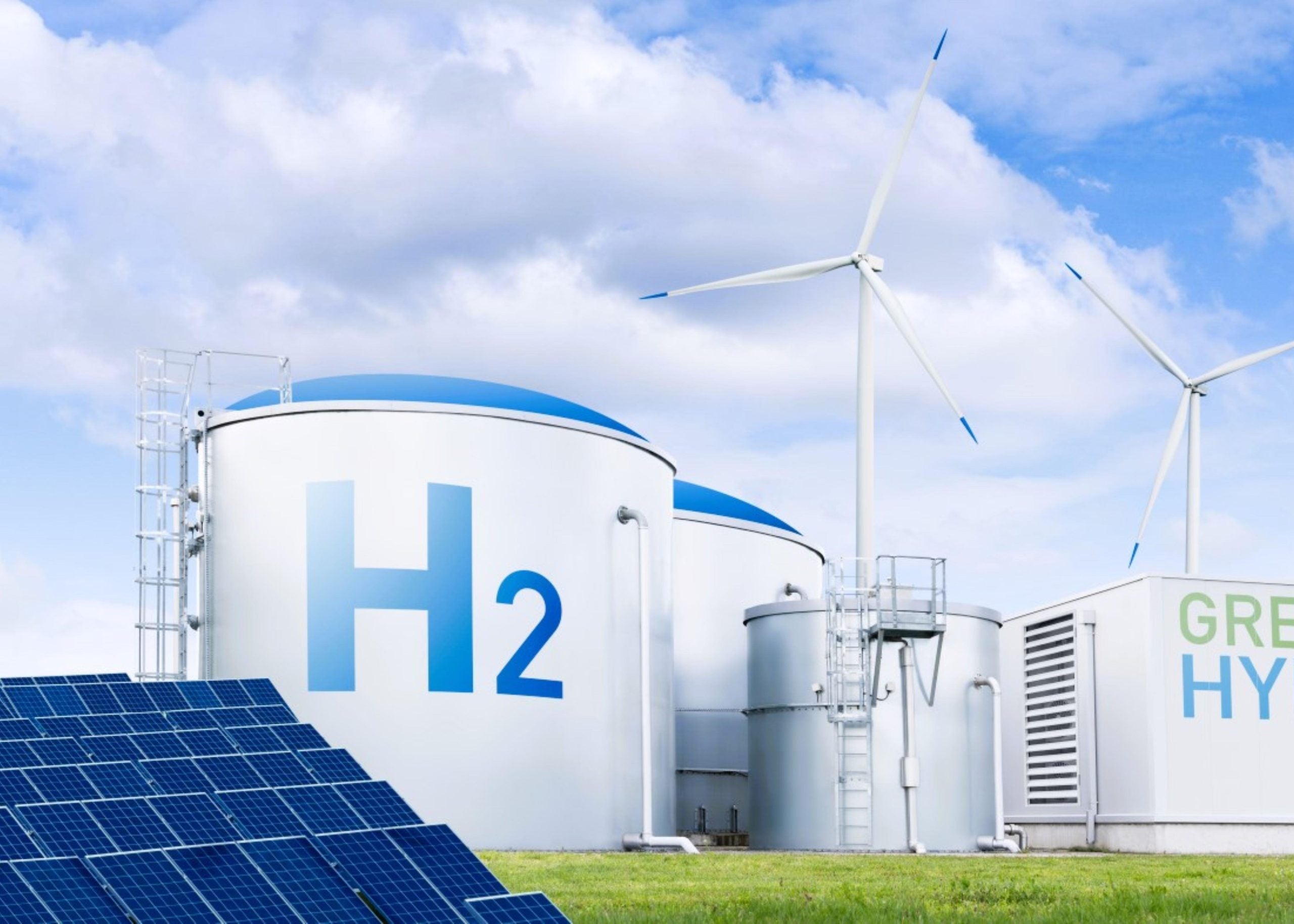
Abu Dhabi Future Energy Company (Masdar) has decided to cancel a planned project to build a green hydrogen plant in Abu Dhabi that would have supplied up to 100MW of renewable hydrogen to local steelmaker Emsteel for green steel production.
After contractors submitted bids for the project last year, Masdar asked bidders in the first quarter of this year to extend the validity of their proposals until the end of August to allow “more time to study and evaluate bids”, according to one source.
However, Masdar issued a notification to all bidders on 1 August stating that it had decided to cancel the project, sources told MEED.
Contractors that submitted bids for the Masdar green hydrogen project included:
- Envision (China)
- Larsen & Toubro (India)
- PowerChina (China)
- Samsung E&A (South Korea)
- Sinopec (China)
Masdar did not respond to MEED’s request for comment on the information.
In its current steelmaking process, Emsteel uses hydrogen produced by steam reforming of natural gas as a reducing agent to extract iron from iron ore. The core objective of Masdar’s planned project was to install a 100MW electrolyser at Emsteel’s main manufacturing hub in Musaffah, Abu Dhabi, to supply green hydrogen for future clean steel production.
Masdar initiated work on the project in 2024 by awarding a front-end engineering and design (feed) contract to locally based NT Energies, a joint venture of Abu Dhabi’s NMDC Energy and France-based Technip Energies.
Masdar then sought proposals last year for engineering, procurement, construction, demolition (if needed for brownfield activities), pre-commissioning, commissioning, start-up, and two years of operations and maintenance (extendable up to 20 years) at the planned facility.
Contractors submitted bids by the end of the year, according to sources.
The project involved green hydrogen production using alkaline water electrolysis, with a total installed electrolyser capacity of 100MW.
The scope of work involved building electrolyser stacks and modules, hydrogen separation and compression units, associated utilities and storage systems, and electrical, instrumentation and control systems.
It also included tie-ins to pre-defined interface points, including (but not limited to):
- a grid power supply connection to the MOSF substation in Musaffah that exists within the Emsteel complex and is operated by Taqa Transmission
- a water supply connection to a nearby Taqa Distribution network
Supporting infrastructure included a substation, a motor control centre, and ancillary plant buildings and facilities.
Masdar’s planned 100MW electrolyser project at the Emsteel facility would have represented a step up from a previous pilot project by the two Abu Dhabi-owned companies.
The partners inaugurated a pilot green hydrogen plant at Emsteel’s manufacturing complex in Musaffah in October 2024. It incorporates a 2.1MW electrolyser and is designed to support the production of up to 5,000 tonnes of green steel a year.
This made Emsteel the only steelmaker in the Middle East to use green hydrogen to produce green steel on a pilot basis.
“Sustainability is central to Emsteel’s innovation, competitiveness and long-term growth. Today, approximately 89% of our steel business electricity consumption comes from clean sources, and our steel carbon emissions intensity is around 40% lower than the World Steel Association global average,” Michael Rion, chief commercial officer of Emirates Steel, part of Emsteel Group, told MEED in a recent interview.
 READ THE AUGUST 2026 MEED BUSINESS REVIEW – click here to view PDF
Saudi Arabia builds for the global stage; Rising uncertainty creates fresh set of challenges in the Maghreb; Gulf banks remain robust in the face of geopolitical tensions.
Distributed to senior decision-makers in the region and around the world, the August 2026 edition of MEED Business Review includes:
> WORLD CUP: What the 2026 World Cup means for Saudi Arabia 2034> MARKET FOCUS: Maghreb fortunes diverge> INDUSTRY REPORT: GCC banks prove resilient amid turmoil> LEADERSHIP: Private capital and the GCC infrastructure inflection> INTERVIEW: Developers look beyond standalone solarTo see previous issues of MEED Business Review, please click herehttps://image.digitalinsightresearch.in/uploads/NewsArticle/18911651/main0611.jpg -
Oman invites bids for Musandam renewables study
25 August 2026
Oman’s Nama Power & Water Procurement Company (PWP) has issued a request for proposals (RFP) for techno-economic consultancy services to assess the feasibility of renewable energy options in Musandam Governorate.
The study will examine solar photovoltaic (PV), wind and hybrid renewable energy configurations. It will also assess battery energy storage systems (bess) and other renewable energy and energy storage technologies.
The consultant will be required to determine which technologies are technically and economically justified for the governorate.
The bid submission deadline is 24 September.
The Musandam power system is served primarily by the 123MW Musandam independent power plant (IPP), which began operating in 2017. The governorate has historically relied on small diesel-fired units, but has been seeking to move away from diesel-fired power generation for several years.
Nama PWP has previously said it was exploring renewable energy options in Musandam to meet future additional capacity requirements.
Its latest seven-year statement, released in March, forecasts peak electricity demand in Musandam to rise from 91MW in 2024 to 130MW in 2031, an average annual increase of 5%. Average demand is forecast to rise from 52MW to 73MW over the same period.
The plan says demand growth is being driven by distribution-level load and projects aimed at boosting tourism, economic and commercial activity.
Separately, the utility recently invited bids for financial and commercial consultancy services covering three 1GW solar IPPs targeted for commercial operation by the second quarter of 2030.
The bid submissions deadline is 10 September.
The three projects covered by the financial and commercial consultancy tender are understood to also be part of the 4GW programme, for which a technical advisory tender was issued on 15 July.
Bidding for this tender closes on 26 August.
READ THE AUGUST 2026 MEED BUSINESS REVIEW – click here to view PDFSaudi Arabia builds for the global stage; Rising uncertainty creates fresh set of challenges in the Maghreb; Gulf banks remain robust in the face of geopolitical tensions.
Distributed to senior decision-makers in the region and around the world, the August 2026 edition of MEED Business Review includes:
> WORLD CUP: What the 2026 World Cup means for Saudi Arabia 2034> MARKET FOCUS: Maghreb fortunes diverge> INDUSTRY REPORT: GCC banks prove resilient amid turmoil> LEADERSHIP: Private capital and the GCC infrastructure inflection> INTERVIEW: Developers look beyond standalone solarTo see previous issues of MEED Business Review, please click herehttps://image.digitalinsightresearch.in/uploads/NewsArticle/18983679/main.jpg -
US launches sanctions campaign against Iran
25 August 2026
The US has launched a sweeping sanctions campaign against Iran and the entities that trade with it, imposing measures on almost 60 individuals, companies and vessels while expanding the reach of secondary sanctions across five sectors of the Iranian economy.
The campaign, named Operation Economic Outcast, was announced on 24 August by US treasury secretary Scott Bessent, who described it as an economic D-Day for Iran. He said Washington’s objective was to sever every economic lifeline sustaining the Iranian regime.
The treasury’s Office of Foreign Assets Control (Ofac) issued five sectoral sanctions determinations under Executive Order 13902, covering digital assets, technology, gold, aviation and shipping. The determinations allow Ofac to sanction any person operating in those sectors, regardless of location. Washington said Iran uses cryptocurrency for sanctions evasion, seeks advanced technology for its weapons programmes, uses gold to stabilise the rial, and relies on commercial aviation and shipping networks to move fighters, weapons and oil revenue.
The measures build on earlier determinations targeting Iran’s financial, petroleum and petrochemical sectors.
Ofac also sanctioned close to 60 entities, individuals and vessels across multiple jurisdictions, including UAE-based entities, over alleged involvement in nuclear and missile procurement, cyber operations and oil revenue networks. The designations named a network of brokers, companies and shadow fleet vessels operating across the UAE, Hong Kong, China, Singapore, Switzerland and other regions to transport Iranian oil and channel revenue to the Islamic Revolutionary Guard Corps.
Among those designated were shipping brokers and bunkering firms based in the UAE that Washington said facilitated Iranian oil shipments and provided services to sanctioned vessels. The treasury also identified several shadow fleet tankers as blocked property, saying they had moved millions of barrels of Iranian crude and petroleum products, mainly to China.
Separately, the treasury targeted a procurement network spanning the Middle East and East Asia that it said supported Iran’s acquisition of proliferation-sensitive equipment, along with a cyber group directed by Iran’s Ministry of Intelligence & Security.
Bessent said Washington was pressing governments to shut down Iran-related activity within defined timelines, warning that entities facilitating money laundering or sanctions evasion for Iran risked being cut off from the US financial system. He declined to name specific countries.
The campaign follows the UAE’s own move against Tehran. On 19 August, the UAE suspended all trade, commercial exchanges and financial transactions with Iran with immediate effect, citing regional escalation. The UAE has historically been one of Iran’s most significant trading partners, with much of the relationship built on re-export trade routed through Dubai.
https://image.digitalinsightresearch.in/uploads/NewsArticle/18983152/main.jpg -
Kuwait tenders $3.3bn gas processing facility
25 August 2026
State-owned Kuwait Gulf Oil Company (KGOC) has issued the tender for the development of an onshore gas plant next to the Al-Zour refinery, according to industry sources.
The project budget is estimated at $3.3bn, and the bid deadline is 29 December, with a meeting for contractors scheduled for 14 September.
The tender was issued on 23 August.
The proposed plant will have the capacity to process up to 632 million cubic feet a day of gas and 60,000 b/d a day of condensates from the Dorra offshore field, located in Gulf waters in the Saudi-Kuwait Neutral Zone.
In February, MEED reported that at least seven companies had shown interest in participating in the tender.
Contractors that sent representatives to previous meetings to discuss the project include:
- Samsung E&A (South Korea)
- Larsen & Toubro (India)
- Tecnicas Reunidas (Spain)
- Saipem (Italy)
- Hyundai Engineering & Construction (South Korea)
- Hyundai Engineering Company (South Korea)
- JGC (Japan)
The tender process is using a fast-track model, which means that Kuwait’s Central Agency for Public Tenders (Capt) will not be involved in the tender process.
Capt typically reviews the technical and commercial evaluations of bids and verifies that the bidding process is competitive.
It is understood that not requiring Capt to approve this tender is expected to speed up the tender process.
Iran disputes ownership of the field, referring to it as Arash.
Iran claims the field partially extends into Iranian territory and asserts that Tehran should be a stakeholder in its development.
The Dorra field’s close proximity to Iran could make development difficult due to current security concerns.
The offshore elements of the wider Dorra field development project are expected to be especially difficult to protect from attacks from Iran.
Earlier this month, MEED revealed that Al-Khafji Joint Operations (KJO) had selected contractors for two major offshore packages under the Dorra field facilities development project.
KJO, which is jointly owned by Aramco subsidiary Aramco Gulf Operations Company and Kuwait Petroleum Corporation subsidiary KGOC, has divided the engineering, procurement and construction (EPC) scope for the Dorra gas production project into four packages: three offshore and one onshore.
US-based McDermott International has secured offshore package 2A, valued at about $1.5bn, according to sources.
A consortium of India’s Larsen & Toubro Energy Hydrocarbon (LTEH) and Italian contractor Saipem has secured package 2B, sources told MEED.
Estimated at about $3.7bn, package 2B is the largest of the three offshore EPC packages under the Dorra field facilities project.
MEED reported in March that the LTEH/Saipem consortium had emerged as the lowest bidder for offshore package 2B.
Contractors submitted bids for offshore packages 2A and 2B by the 9 March deadline, MEED previously reported. Bid validity was understood to expire on 15 August, prompting KJO to issue letters of intent to the selected contractors earlier this month, sources said.
https://image.digitalinsightresearch.in/uploads/NewsArticle/18964461/main.png