
Region puts its priorities first
30 April 2024
 Commentary
Colin Foreman
Editor
Read the May 2024 issue of MEED Business Review
Contractors enjoyed a record year in 2023. In the GCC, there were $205bn of deals signed. The best total on record was achieved largely due to high levels of activity across all major markets.
At the start of this year, hopes were high that new records would be set again in 2024. Those aspirations look like they may be realised. According to regional projects tracker MEED Projects, by the end of the first quarter of this year there had been $47bn of awards in the GCC, some $10bn more than the $37bn of awards during the same period of 2023.
The strong start to the year comes despite some tempering of project ambitions, most notably in the region’s largest market, Saudi Arabia. In January, the kingdom’s Energy Ministry instructed Saudi Aramco to halt plans to increase its production capacity to 13 million barrels of crude oil a day.
The negative impact of that decision on the projects market, will be offset by gas projects. Gas is considered a vital transition fuel, and strong global demand growth is allowing Gulf producers to develop new projects worth billions of dollars each and consolidate their position as the world’s leading gas exporter. The best example is the $7.7bn of engineering, procurement and construction contracts awarded by Saudi Aramco in early April to expand the Fadhili gas plant.
For the construction sector, there has been a prioritisation of construction work for Saudi Arabia’s gigaprojects. As construction work in the kingdom ramps up, developers are focusing efforts on delivering the components of their projects that they consider to be a strategic priority, and are scaling back work on other elements.
Developers are also more proactively seeking external investment to help ease the spending burden of their vast projects.
As we move deeper into 2024, the key question will be whether these priority projects will be sufficient to achieve another record year. Unlike 2023, not everything is moving ahead, but very large projects are still proceeding.
Must-read sections in the May 2024 issue of MEED Business Review include:
 > AGENDA: Region boosts LNG spending; Gulf players secure future of LNG projects
> CURRENT AFFAIRS: Algerian downstream sector faces setback; Progress on Kuwait oil mergers is overdue; Iranian attack on Israel rattles globe
|
INDUSTRY REPORT: |
> SOUTH KOREA: South Korean appetite for Saudi projects grows
> IRAQ: Iraq remains tough to sell
> INTERVIEWS: Saudi Arabia's Hail capitalises on heritage; Northern emirates’ energy transition gathers pace
> GAS SPENDING: Aramco in hot pursuit of 2030 gas production goal
> UAE MARKET REPORT:
 > COMMENT: Non-oil activity underpins UAE economy
> GVT & ECONOMY: Non-oil activity underpins UAE economy
> BANKING: UAE banks seize the moment
> UPSTREAM: Adnoc oil and gas project spending sees steep uptick
> DOWNSTREAM: UAE builds its downstream and chemical sectors
> POWER: UAE marks successful power project deliveries
> WATER: Dubai tunnels project dominates UAE pipeline
> DUBAI CONSTRUCTION: Dubai real estate boosts construction sector
> ABU DHABI CONSTRUCTION: Abu Dhabi makes major construction investments
> MEED COMMENTS:
> Gulf of Aqaba moves beyond Instagram
> Net zero steps need recalibration
> Flooding spotlights Dubai construction
> Funding impacts Saudi projects
> GULF PROJECTS INDEX: Saudi market returns to growth
> MARCH 2024 CONTRACTS: Iran gas contract boosts value of deals signed
> MARKET SNAPSHOT: Mena data centre projects
> OPINION: Rainmaking in the world economy
> BUSINESS OUTLOOK: Finance, oil and gas, construction, power and water contracts

Register for MEED's guest program now to access this article.
Exclusive from Meed
-
 Saudi Arabia gauges interest for Al-Ula wastewater expansion
27 October 2026
-
 Qatari firm wins $147m Syria road deal
27 October 2026
-
 Riyadh selects contractor for $534m road works
27 October 2026
-
 Saudi Arabia raises electricity tariffs
26 October 2026
-
 Dubai Municipality confirms AED3bn Tasreef drainage awards
26 October 2026
All of this is only 1% of what MEED.com has to offer
Subscribe now and unlock all the 153,671 articles on MEED.com
- All the latest news, data, and market intelligence across MENA at your fingerprints
- First-hand updates and inside information on projects, clients and competitors that matter to you
- 20 years' archive of information, data, and news for you to access at your convenience
- Strategize to succeed and minimise risks with timely analysis of current and future market trends

Related Articles
-
Saudi Arabia gauges interest for Al-Ula wastewater expansion
27 October 2026

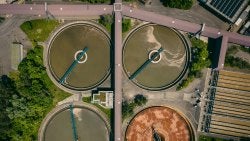
Saudi Arabia’s Royal Commission for Al-Ula (RCU) is conducting market sounding for the first phase of the Mughayra wastewater treatment plant (WWTP) expansion before formally starting its tendering process, according to industry sources.
The project is valued at SR400m ($107m) and is intended to increase the Mughayra plant’s wastewater treatment capacity to 62,000 cubic metres a day.
RCU is gauging interest from potential contractors and has not yet issued a prequalification questionnaire, a source said.
The scheme forms part of Saudi Arabia’s broader investment drive to develop its cultural and tourism offering across Al-Ula.
The commission launched its Journey Through Time Masterplan in April 2021, with implementation scheduled in three phases through 2035. The masterplan covers infrastructure development, water management and irrigation, alongside the regeneration of a 9-kilometre cultural oasis.
French engineering firm Artelia previously noted in its 2025 annual corporate report that it is involved in the design phase of the Mughayra WWTP.
RCU is also developing strategic potable-water storage infrastructure in Al-Ula, including a design-and-build project covering a 50,000-cubic-metre reservoir at Hub 06 and a 15,000-cubic-metre reservoir at Hub 08.
Local contractor Bin Omairah previously confirmed that it is serving as the engineering, procurement and construction contractor for the storage facilities.
https://image.digitalinsightresearch.in/uploads/NewsArticle/20950333/main.jpg -
Qatari firm wins $147m Syria road deal
27 October 2026
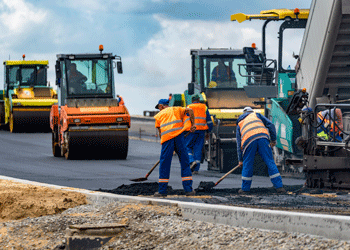
Qatari contractor Al-Mohannadi for Roads, Trading & Contracting has signed a $147m contract with Syria’s General Directorate of Roads to rehabilitate and expand a 215-kilometre (km) highway corridor connecting to the Iraqi border.
The project covers the rehabilitation and dualisation of a 170km section linking the Al-Busairi junction to the Al-Tanf border crossing, alongside the construction of a 45km link between the Al-Sabaa Biyar junction and Al-Busairi. Work is scheduled for completion within 900 days.
The agreement was signed in Damascus by Moaz Najjar, director-general of the General Directorate of Roads, and Abdullah Adnan Al-Zattam, chief executive of Al-Mohannadi, in the presence of Syrian Transport Minister Yarob Badr and Finance Minister Mohammad Yusr Barnieh.
The upgrade is intended to restore and expand one of Syria’s primary overland arteries to Iraq, which has suffered significant deterioration and capacity bottlenecks following years of conflict. The Al-Tanf corridor represents the most direct overland link between Damascus, central Syrian industrial centres and Baghdad.
The project is designed to accommodate heavier commercial freight vehicles and reduce transit times between the two countries.
The investment also forms part of broader efforts to re-establish Syria’s role as a regional transit corridor connecting Mediterranean ports with landlocked trade routes into Iraq and the wider region.
https://image.digitalinsightresearch.in/uploads/NewsArticle/20950332/main.gif -
Riyadh selects contractor for $534m road works
27 October 2026
Register for MEED’s 14-day trial access
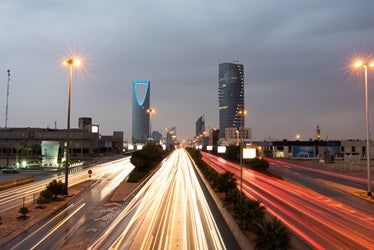
The Royal Commission for Riyadh City (RCRC) has selected Riyadh-based contractor Saudi Pan Kingdom (Sapac) for an estimated SR2bn ($534m) contract to carry out road construction works in the capital.
The scope of work covers the construction of 6 kilometres (km) of new road infrastructure, including interchanges 9, 10 and 11 on King Salman Road.
The contract includes road and bridge works; earthworks; stormwater drainage systems; road lighting; intelligent transportation systems; irrigation pumping stations; landscaping; utility diversions; and associated civil, structural, electrical and infrastructure works.
The award follows RCRC’s selection of local firm Alomaier Trading & Contracting Company for an estimated SR1.13bn ($301m) contract to upgrade a section of Sheikh Jaber Al-Ahmad Al-Sabah Road in eastern Riyadh.
That project involves constructing an urban road corridor about 3km long with a right-of-way width of about 120 metres. The package includes three interchanges featuring post-tensioned, voided-slab concrete bridges; a cut-and-cover tunnel; and three box culverts designated IC02, IC03 and IC04.
It also encompasses stormwater drainage, pumping and lifting stations, irrigation networks, mechanically stabilised earth retaining walls, roadway lighting and power distribution systems.
RCRC’s roads development programme is upgrading Riyadh’s arterial network through new road corridors, interchanges, bridges, tunnels and supporting utility infrastructure.
The programme is intended to address congestion, improve connections between key areas and expand the capital’s transport capacity ahead of Expo 2030 and the 2034 Fifa World Cup. Recent awards to Sapac and Alomaier form part of this wider investment.
 READ THE OCTOBER 2026 MEED BUSINESS REVIEW – click here to view PDF
Industry and logistics drive development at Neom; Saudi Arabia’s investment priorities realign amid conflict; MEED’s 2026 power developer ranking.
Distributed to senior decision-makers in the region and around the world, the October 2026 edition of MEED Business Review includes:
> AGENDA: Oxagon takes centre stage at Neom> MARKET FOCUS: Saudi projects hold steady> INDUSTRY REPORT: MEED’s 2026 GCC power developer ranking> LEADERSHIP: The future city does not need to hang above the groundTo see previous issues of MEED Business Review, please click herehttps://image.digitalinsightresearch.in/uploads/NewsArticle/20942374/main.jpg -
Saudi Arabia raises electricity tariffs
26 October 2026
Register for MEED’s 14-day trial access
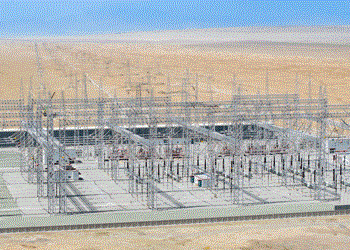
Saudi Energy, formerly Saudi Electricity Company, has announced revised electricity tariffs, which will take effect on 1 January 2027.
The revised tariff schedule, published on the company’s official website, covers residential, commercial, industrial, agricultural, charitable and government customers.
The largest percentage increase in consumption rates is 16.7%, for residential customers using up to 6,000 kilowatt-hours (kWh) a month. Residential customers will pay 21 halalas/kWh for monthly consumption of up to 6,000kWh, up from 18 halalas. For consumption above 6,000kWh, the rate will rise from 30 to 33 halalas/kWh, a 10% increase.
The industrial tariff will increase by 15%, from 20 to 23 halalas/kWh. Commercial customers, private healthcare facilities and private educational facilities will pay 25 halalas/kWh, up from 22 halalas, for consumption up to 6,000kWh a month, and 35 halalas/kWh above that level, up from 32 halalas.
Tariffs for charities and government customers will also increase. In addition to consumption-based charges, customers will pay a fixed monthly fee based on the capacity of their electricity meter. This replaces the previous separate charge for meter reading, maintenance and billing, with VAT applied to the revised tariffs.
Electricity investment
The new tariffs coincide with changes to water consumption tariffs announced by the National Water Company, also effective from 1 January 2027.
King Salman Bin Abdulaziz Al-Saud directed support measures following a proposal presented by Crown Prince and Prime Minister Mohammed Bin Salman Bin Abdulaziz Al-Saud.
This includes raising the minimum wage required for Saudi nationals to count as full employees towards private sector localisation quotas under the Nitaqat programme.
The tariff changes come as Saudi Arabia plans substantial investment in its electricity infrastructure. In September 2025, Saudi Energy announced plans to invest SR220bn ($58.7bn) in power infrastructure projects between 2025 and 2030.
A June 2025 report by Fitch Ratings forecast negative free cash flow of about SR16bn a year over the period and rising leverage, reflecting the financial demands of the programme.
https://image.digitalinsightresearch.in/uploads/NewsArticle/20924301/main5024.gif -
Dubai Municipality confirms AED3bn Tasreef drainage awards
26 October 2026
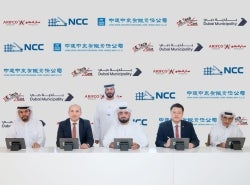
Dubai Municipality has confirmed it has awarded four contracts worth AED3bn ($817m) to expand the emirate’s stormwater drainage network by about 100 square kilometres under phase three of the Tasreef programme.
The projects will cover Jumeirah, Umm Suqeim, Al-Quoz, Al-Barsha, Al-Wasl and Al-Marmoom. The works include constructing and extending main stormwater drainage lines with diameters of up to three metres.
The four packages are part of Dubai’s AED30bn Tasreef programme, which aims to increase the emirate’s stormwater drainage capacity by 700% and reduce costs associated with pumping stations, network operations and maintenance by 20%.
The contracts have been awarded to China State Construction Engineering Corporation (CSCEC) and three local firms: Arifco Group, Nael Construction & Contracting (NCC) and Detech Contracting. Dubai Municipality did not state which projects the awards relate to.
According to sources, the contract awards include packages TF-15-C1, TF-15-C2 and TF-13-C1.
The first package, TF-15-C1, involves the construction of 21 kilometres of main and secondary drainage lines along Al-Wasl Road and in surrounding areas. It will cover Za’abeel 2, Al-Wasl, Jumeirah 1 and 2, Al-Bada’a, Al-Satwa and Dubai World Trade Centre. The estimated $100m contract was awarded to Detech in July, as exclusively reported by MEED.
The second package, TF-15-C2, covers the corridor between Sheikh Zayed Road and Al-Khail Road. It includes about 14km of main drainage lines serving Al-Quoz Industrial Areas 1, 3 and 4, and Al-Barsha 1. In July, MEED reported that CSCEC had won the engineering, procurement and construction contract for this project.
The third package, TF-13-C1, covers Al-Marmoom, where 23km of drainage infrastructure will be developed. According to a source, Arifco has been awarded this contract.
The final package covers Jumeirah and Umm Suqeim, where about 42km of main drainage lines will serve Umm Suqeim 1, 2 and 3; Umm Al-Sheif; Jumeirah 3; Al-Safa 1 and 2; and Al-Manara.
In May, MEED reported that NCC had been awarded a contract to build a sewage and stormwater drainage system, DS-204. However, it is unconfirmed whether this relates to the same project.
Earlier, in February, the municipality confirmed it had awarded contracts for five new projects under phase two of the programme to expand and strengthen Dubai’s stormwater drainage network.
These included two contracts awarded to Detech and one to CSCEC for stormwater drainage infrastructure. In addition, two consultancy contracts were awarded for the study and design of drainage systems in selected areas across the emirate.
Cumulatively valued at AED2.5bn, the new projects will serve 30 vital areas, spanning approximately 430 million square metres and supporting an estimated population of three million residents by 2040.
Previously, in April 2025, an earlier package of awards was announced under phase one of the Tasreef programme. The overall masterplan aims to expand Dubai’s rainwater drainage capacity by 700% by 2033.
https://image.digitalinsightresearch.in/uploads/NewsArticle/20923924/main4827.jpg