
Record investment drives Jordan’s utilities market
9 June 2026

In April, Jordan signed the final technical and legal agreement for its landmark National Water Carrier Project, paving the way for the financial close of the kingdom’s largest planned water infrastructure project to date.
The agreement represents a significant step forward for the scheme, which is now projected to reach $5.6bn in total costs, including financing, up from earlier estimates of $3.5bn.
Paris-based investment and utility firms Meridiam and Suez were awarded the contract last year to develop the project in partnership with Jordan’s Water & Irrigation Ministry.
Since then, multiple large-scale financing agreements have been put in place for the project, which is expected to supply about 40% of Jordan’s drinking water needs.
While new contract awards have been limited in 2026, the successful execution of the Aqaba-Amman Water Desalination and Conveyance scheme will help reassure the market that large-scale infrastructure projects of this nature can move forward.
The project is set to reduce the benchmark water cost from about $3 a cubic metre in 2024 to approximately $2.7 and is crucial to addressing Jordan’s severe water scarcity.
Prime Minister Jafar Hassan recently said that the scheme, along with the Aqaba Port railway project, represented “the largest level of foreign investment in the kingdom’s history”.
For its part, the government has said it will contribute $722m to the Aqaba-Amman project, representing the largest single capital expenditure in the state budget.
Upcoming projects
Looking forward, there is a healthier pipeline of new water projects, led by a two-phased wastewater treatment project at Wadi Zarqa.
The first phase will have an initial capacity to treat 150,000 cubic metres a day (cm/d) of wastewater by 2030.
The $150m second phase covers an independent sewage treatment plant with a capacity of 200,000 cm/d. Both tenders are expected to be released in the coming months.
Two larger projects, valued at $300m each, are currently in the planning stages. Both are managed by Yarmouk Water Company and involve major transmission pipeline works in Ajloun and Irbid as part of the Jordan Water Sector Efficiency Project.
The Jordan Water Sector Efficiency Project is a World Bank-backed programme aimed at reducing water losses, improving utility performance and enhancing the efficiency of water services across the kingdom.
Power contracts
Jordan’s power sector is set for a record-breaking year following the announcement that a $900m combined-cycle gas turbine (CCGT) plant will be developed in partnership with Etihad Development Company, a subsidiary of the UAE’s Etihad Water & Electricity (EtihadWE).
The project will be developed under a build-own-operate model with Jordan’s National Electric Power Company (Nepco) purchasing electricity under a 25-year power-purchase agreement.
For context, Jordan’s power sector saw just $33m in total contract awards in 2025, according to MEED Projects.
The full-year total last exceeded $100m in 2022, when there were $111m of contract awards. The plant is expected to meet about 10% of Jordan’s electricity demand once operational.
The kingdom has also been looking at other forms of power generation, such as Jordan’s first 450MW pumped hydroelectric energy storage project near Al-Mujib Dam.
Earlier this year, US-headquartered K&M Advisors and France’s Artelia were appointed as transaction advisers to carry out the final feasibility study for the project, which is expected to be tendered in the third quarter of 2026.
The Ministry of Energy & Mineral Resources (MEMR) is also planning to undertake the construction of a 1,000MW wind power plant and battery energy storage system near the Port of Aqaba in Jordan.
The renewable energy scheme could potentially support the kingdom’s emerging green hydrogen industry, including a separate planned $1bn green ammonia and hydrogen project in Aqaba.
In May, the project became the first publicly announced green ammonia project in Jordan to receive development approval from the Council of Ministers.
The project would be developed by Jordan Green Ammonia, a special-purpose vehicle funded by the UAE-based 7Fidelity Group and Poland’s Hynfra.
The project in Aqaba is expected to produce 100,000 tonnes a year of green ammonia from 2030
Of approximately $6bn-worth of power projects in the pre-execution phase, it is worth noting that about $4.4bn are still in the early study or feed stages.
Near-term awards are likely to come from several smaller substation and power generation schemes.
Jordan-Syria power link
Among the wider pipeline of regional opportunities, Jordan’s power sector could also benefit from efforts to restore electricity connectivity with neighbouring Syria.
Syria’s Public Establishment for Transmission & Distribution of Electricity recently tendered a contract to repair the 400kV high-voltage interconnector transmission lines between the two countries.
The works form part of Syria’s $146m Electricity Emergency Project, which is being financed through a World Bank grant and aims to restore critical electricity infrastructure across the country.
The rehabilitation of the Syria-Jordan interconnector is expected to enable the import of up to 600MW of electricity and represents one of several initiatives under way to rebuild Syria’s power network following years of conflict and underinvestment.
More broadly, Syria is emerging as an active power market in its own right. In April, Germany’s Siemens Energy signed manufacturing agreements for major power plant projects being developed by a consortium led by Qatar’s UCC Holding.
The contracts cover combined-cycle power packages for the Zayzoun and Deir Azzour power plant projects, announced last year as part of a $7bn memorandum of understanding between the consortium and Syria’s Ministry of Energy.
The May 2025 agreements include four combined-cycle gas turbine power plants in Traifawi, Homs and Zayzoun, Deir-Azzour and Mehardeh in Hama with an installed capacity of 4GW.
Additionally, a 1GW solar power plant will be developed in Wedian Al-Rabee in Syria’s southern region.
Most of these projects, awarded under concession agreements following a strategic memorandum of understanding framework, are due to come online in 2029.
After years of inactivity, this is considerable progress. The next step is attracting sufficient interest in new and upcoming tenders. This will signal whether international contractors are ready to re-engage with the country’s power sector.

Register for MEED's guest program now to access this article.
Exclusive from Meed
-
 Oman tenders Thumrait Industrial City infrastructure
22 September 2026
-
 Kuwait halves drilling contractor pool
22 September 2026
-
 Abu Dhabi expects 45% emissions cut as electricity demand rises
21 September 2026
-
 Seven bid for Bahrain highway upgrade
21 September 2026
-
 Teams prepare bids for Oman PPP wastewater project
21 September 2026
All of this is only 1% of what MEED.com has to offer
Subscribe now and unlock all the 153,671 articles on MEED.com
- All the latest news, data, and market intelligence across MENA at your fingerprints
- First-hand updates and inside information on projects, clients and competitors that matter to you
- 20 years' archive of information, data, and news for you to access at your convenience
- Strategize to succeed and minimise risks with timely analysis of current and future market trends

Related Articles
-
Oman tenders Thumrait Industrial City infrastructure
22 September 2026
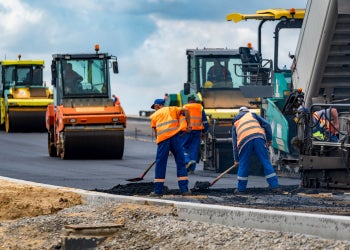
Oman’s Public Establishment for Industrial Estates (Madayn) has tendered an estimated RO15m ($39m) contract to develop infrastructure for Thumrait Industrial City.
The tender was issued on 14 September, with bids due by 12 November.
The scope covers site-wide utilities and services, including an internal road network, stormwater channels and culverts. It also includes installing sewerage and water networks, along with landscaping works.
In addition, Madayn intends to build plug-and-play industrial units and a facilities building.
The first phase of the development will cover about 120,000 square metres (sq m).
Thumrait Industrial City is located in Oman’s Dhofar Governorate and spans an area of more than four million sq m.
The project location is close to concession blocks, quarry sites and the Najd agricultural areas. It is positioned to attract industrial investments in sectors such as mining and minerals processing (including gypsum and cement), food production, and a range of light and general manufacturing activities.
In March, Madayn said it is preparing to invest more than RO245m ($637m) to upgrade and expand infrastructure across its industrial cities between 2026 and 2030, as part of efforts to attract new investment and advance economic diversification.
According to media reports, Madayn chief executive Dawood Bin Salim Al-Hadabi said the programme is part of an expanded, phased plan aligned with Oman Vision 2040 and the authority’s long-term Madayn 2040 strategy.
The objective is to deepen Oman’s industrial base and spread growth across the sultanate’s governorates.
Madayn said the pipeline comprises about 90 strategic projects to improve industrial-city infrastructure, extend serviced land and increase the overall ease of doing business for investors.
https://image.digitalinsightresearch.in/uploads/NewsArticle/19866218/main.jpg -
Kuwait halves drilling contractor pool
22 September 2026
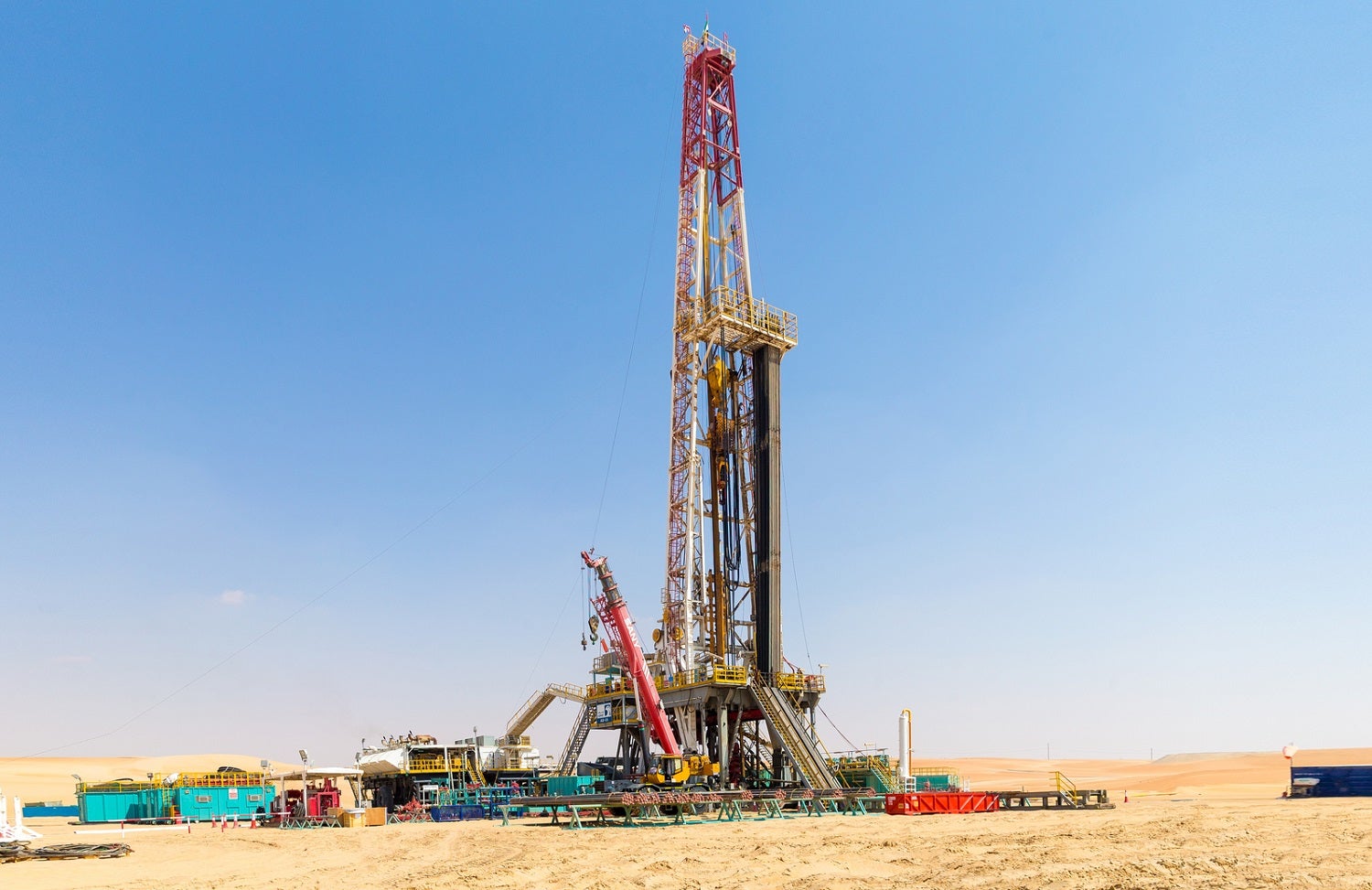
State-owned upstream operator Kuwait Oil Company (KOC) has reduced the number of approved contractors for onshore drilling and shallow-well maintenance from 51 to 24.
Firms that are no longer qualified include major contractors such as Italy’s Saipem, Oklahoma-based Helmerich & Payne and Houston-based Patterson-UTI Energy.
The latest list still includes a wide range of Kuwaiti, regional and international companies, according to the latest update on its electronic system, published on 21 September 2026.
The full list of contractors that are now qualified to participate in tenders is:
- Burgan Company for Well Drilling, Trading & Maintenance (Kuwait)
- Kuwait Drilling Company (Kuwait)
- Sun Drilling Kuwait (Kuwait)
- TDL Kuwait for Oil Rigs & Natural Gas Extraction Activities, Services and Facilities (Kuwait)
- United Precision Drilling (Kuwait)
- Abraj Energy Services (Oman)
- Adnoc Drilling Company (UAE)
- Arabian Drilling Company (Saudi Arabia)
- Anton Oilfield Services (China)
- China Oilfield Services (China)
- Egyptian Drilling Company (Egypt)
- CNPC Bohai Drilling Engineering Company (China)
- Great Wall Drilling Company (China)
- John Energy (India)
- Kerui Oilfield Service (China)
- KCA Deutag Drilling (Germany)
- Mohammed Al-Barwani Petroleum Services (Oman)
- Nabors Drilling International (US)
- National Drilling & Services Company (Oman)
- Sea & Land Drilling Contractors (Oman)
- Sinopec International Petroleum Service Corporation (China)
- Karamay Jianye Energy (China)
- Modern Drilling Company (Egypt)
- Grey Wolf Drilling International (US)
An earlier list, which was published on 11 February, included 51 qualified companies.
The reduction in qualified drilling contractors follows KOC’s notice on 27 April this year, informing existing qualified contractors that they would need to reapply.
https://image.digitalinsightresearch.in/uploads/NewsArticle/19863744/main3435.jpg -
Abu Dhabi expects 45% emissions cut as electricity demand rises
21 September 2026
Register for MEED’s 14-day trial access
Abu Dhabi-based Emirates Water & Electricity Company (Ewec) expects carbon emissions from power and water production to fall by more than 45% by 2035 as the UAE expands renewable energy and reverse osmosis (RO) desalination.
The state offtaker's latest long-term system planning forecasts emissions will decline from about 42 million tonnes in 2019 to approximately 23 million tonnes in 2035.
The reduction is expected despite annual electricity demand that is forecast to rise by about 70% in 2026-33.
Ewec said the expansion of renewable energy and the shift towards RO desalination will be the principal drivers of the reduction.
The company plans to increase Abu Dhabi's solar capacity to 14GW by 2030 and more than 35GW by 2035. This will be supported by up to 15GW of battery storage capacity.
According to regional project tracker MEED Projects, Ewec has over $16bn-worth of power and water projects in the execution stage as part of its long-term procurement programme to increase renewable energy and low-carbon water production capacity.
This includes a 5.2GW Abu Dhabi solar and battery energy storage system (bess) round-the-clock renewable energy project, as well as three 1.5GW solar photovoltaic independent power projects (IPP): Al-Ajban, Al-Khazna and Al-Zarraf.
It also comprises the 1GW Al-Dhafra open-cycle gas turbine power plant, the 2.5GW Taweelah C combined-cycle gas turbine (CCGT) plant and a separate 400MW bess IPP.
As previously reported, it is expected that the developer's agreement for the 3.3GW Al-Nouf 1 CCGT IPP will be signed by the end of the year, while contractors are preparing to submit bids for a separate 2.6GW power plant project in Ajman.
The expansion of solar and battery storage is expected to reduce the system's reliance on gas-fired generation. However, gas-fired generation will continue to provide flexibility to support the system and balance intermittent renewable power output, according to Ewec.
The offtaker also expects RO desalination to account for more than 95% of total water production by 2035, with the procurement programme supporting the Abu Dhabi Department of Energy's Clean Energy Strategic Target 2035 for electricity production and the UAE Net Zero by 2050 Strategy.
 READ THE SEPTEMBER 2026 MEED BUSINESS REVIEW – click here to view PDF
Nuclear power ambitions gather pace; Kuwait keeps dealmaking alive despite war; Region invests in raising gas processing capacity.
Distributed to senior decision-makers in the region and around the world, the September 2026 edition of MEED Business Review includes:
> AGENDA: Gulf nuclear revival takes shape> MARKET FOCUS: Kuwait keeps dealmaking alive under fire> INDUSTRY REPORT: Gas processing takes centre stage in Mena regionTo see previous issues of MEED Business Review, please click herehttps://image.digitalinsightresearch.in/uploads/NewsArticle/19849749/main.jpg -
Seven bid for Bahrain highway upgrade
21 September 2026
Register for MEED’s 14-day trial access
Seven contractors have submitted bids for the next phase of the Sheikh Jaber Al-Ahmed Al-Sabah Highway upgrade project.
According to results published by the Bahrain Tender Board, the firms that have submitted bids include:
- Nass Contracting Company
- Haji Hassan Group
- Almoayyed Contracting Group
- Mohammed Abdulmohsen Al-Kharafi & Sons
- Eastern Asphalt & Concrete Production
- Cebarco Bahrain
- Kingdom Asphalt
The contract scope includes expansion works on 2 kilometres of the highway. It consists of a four-lane dual carriageway with service roads on both sides.
The scope of works also includes excavation and backfill work, construction of stormwater drainage networks, a pumping station, installation of ducts for future utilities, upgraded street lighting, traffic signs and directional signage.
The project aims to improve traffic capacity, reduce congestion and enhance safety along the transport corridor linking Manama with industrial zones.
In April, MEED reported that Bahrain had approved a financing agreement framework to fund the construction of the next phase of the Sheikh Jaber Al-Ahmed Al-Sabah Highway upgrade.
In March last year, the Kuwait Fund for Arab Economic Development and the Bahraini government signed a KD10m ($32.4m) loan agreement to fund the second phase of the project, which is expected to cost about $404m.
This was followed in September 2025 by the appointment of US-based Parsons Corporation on a $1.5m contract to provide pre-contract engineering consultancy services for the project.
According to data from regional project tracker MEED Projects, construction of the first phase was completed in 2020.
A joint venture of local firm Nass Contracting and Kuwait’s KCC Engineering & Contracting undertook the main construction works.
READ THE SEPTEMBER 2026 MEED BUSINESS REVIEW – click here to view PDFNuclear power ambitions gather pace; Kuwait keeps dealmaking alive despite war; Region invests in raising gas processing capacity.
Distributed to senior decision-makers in the region and around the world, the September 2026 edition of MEED Business Review includes:
> AGENDA: Gulf nuclear revival takes shape> MARKET FOCUS: Kuwait keeps dealmaking alive under fire> INDUSTRY REPORT: Gas processing takes centre stage in Mena regionTo see previous issues of MEED Business Review, please click herehttps://image.digitalinsightresearch.in/uploads/NewsArticle/19847073/main.png -
Teams prepare bids for Oman PPP wastewater project
21 September 2026
At least three consortiums are preparing bids for a contract to develop and operate two major sewage treatment plants (STPs) in Oman.
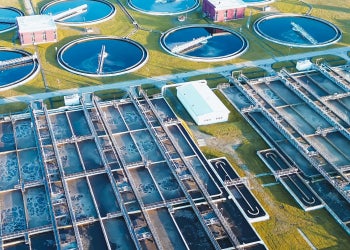
The public-private partnership (PPP) project covers expanding two Muscat-based plants: the Al-Ansab STP (phase three) and the Al-Amerat STP (phase two). It will be delivered under a build-own-operate-transfer model.
At Al-Ansab, capacity will increase from 125,000 cubic metres a day (cm/d) to 207,000 cm/d. At Al-Amerat, capacity will rise from 18,000 cm/d to 54,000 cm/d.
According to sources, the bidders for the project include:
- Etihad Water & Electricity (UAE) / Metito (UAE)
- Lamar Holding (Bahrain) / Tawzea (Saudi Arabia)
- Civil Works Company (CWC, Saudi Arabia) / Suez (France)
The bid submission deadline is 5 January 2027.
State-owned Nama Water Services (NWS) issued a request for proposals for the project in July, as exclusively reported by MEED.
It is understood that Veolia (France), Miahona (Saudi Arabia) and Samsung E&A (South Korea) are also among the firms that prequalified for the project after the request for qualifications was issued last November.
The project scope includes the design, financing, construction, operation and maintenance of the new facilities, alongside the long-term operation of the existing facilities.
It has been over a decade since the Al-Ansab STP first entered full operation at a capacity of about 54,000 cm/d. In 2015, South Korea’s Doosan Ennerbility, formerly Doosan Heavy Industries, was awarded the main engineering, procurement, and construction contract for the phase two expansion, which increased the facility’s maximum flow capacity to 125,000 cm/d. This phase was completed in 2017.
Phase one of the Al-Amerat STP was awarded to a joint venture of France’s Degremont (Suez) and local contractor Al-Ansari Trading Enterprise under a design, build and short-term operation contract valued at about €50m ($58.1m). The plant was developed for Haya Water and commissioned in 2019 as part of the Muscat wastewater scheme.
Haya Water, the former wastewater utility, was later incorporated into NWS following a government restructuring programme.
https://image.digitalinsightresearch.in/uploads/NewsArticle/19794912/main.jpg