Ras Al-Khaimah plans sewage treatment plant PPP
27 August 2024

Register for MEED's 14-day trial access
Ras Al-Khaimah's Public Services Department (PSD) and Investment and Development Office (IDO) have invited prequalified companies to bid for a contract to develop and operate a sewage treatment plant (STP) in the UAE's northern emirate.
The proposed plant can treat 60,000 cubic metres a day (cm/d) of sewage, expandable to 150,000 cm/d.
According to a source close to the project, the scope of the build, own, operate and transfer (BOOT) project will include extensive sewerage and distribution works.
It is understood that PSD and IDO expect to receive bids from prequalified developers by the end of November.
It is the first STP public-private partnership (PPP) that is being developed in Ras Al-Khaimah.
Etihad Water & Electricity (Etihad WE) met with developers in July to discuss another potential utility PPP project for the northern emirate.
The project involves extending an existing seawater reverse osmosis (SWRO) plant in Ghalilah, which became operational in 2015.
If successfully procured, it will be the first independent water project in Ras Al-Khaimah.
Exclusive from Meed
-
-
-
-
-
Larsen & Toubro announces EPC agreement with PDO31 July 2026
All of this is only 1% of what MEED.com has to offer
Subscribe now and unlock all the 153,671 articles on MEED.com
- All the latest news, data, and market intelligence across MENA at your fingerprints
- First-hand updates and inside information on projects, clients and competitors that matter to you
- 20 years' archive of information, data, and news for you to access at your convenience
- Strategize to succeed and minimise risks with timely analysis of current and future market trends

Related Articles
-
The Gulf’s next construction boom is happening underground31 July 2026

Throughout the Gulf, some of the largest infrastructure contracts now being procured are for work that will never be seen from street level.
In the UAE, Saudi Arabia and Qatar, metro lines, sewer networks and highway links are increasingly being built underground, making tunnelling the default approach to urban expansion rather than an occasional engineering solution.
For two decades, the story of Gulf construction was told upwards, through record-breaking towers and ambitious skylines. Increasingly, it is now being told underground.
Three things are happening at once. Cities across the region have run out of spare surface land on which to build new roads and rail lines. National transport plans require capacity that surface routes cannot provide without demolishing what has already been built. And governments have recognised that land no longer needed for transport infrastructure is far more valuable when used for development or public space.
Dubai’s AED34bn ($9.2bn) Gold Line, its AED80bn ($22bn) Strategic Sewerage Tunnels project and Riyadh’s Metro Line 7 demonstrate that this calculation is now driving how the region’s biggest projects are delivered.
Metro and rail tunnels
The Gold Line illustrates this point clearly. Rather than extend the metro on elevated viaducts, as the original Red and Green lines did, Dubai’s Roads & Transport Authority (RTA) is building the new line entirely underground.
When completed in September 2032, the line will add 35% to the length of the Dubai Metro network, extending it by more than 42 kilometres through 18 stations. It will connect more than 55 real estate projects that are still under construction and serve about 1.5 million residents. Surface land along the route was judged too valuable to sacrifice for a viaduct.
Riyadh is following a similar path. Metro Line 7 will run 65km between Qiddiya Entertainment City, King Abdullah International Gardens, King Salman Park, Misk City and Diriyah Gate, with 47km of the route underground. Fourteen of its 19 stations will also be below ground, preserving valuable surface corridors that connect some of the kingdom’s most valuable gigaproject developments.
Dubai Metro’s Blue Line extension is already demonstrating the scale of the engineering involved. Its tunnel boring machine (TBM), named Al-Wugeisha by the RTA, began operating in May. The machine is 163 metres long, weighs more than 2,000 tonnes and advances at around 13 to 17 metres a day along 15.5km of the line’s 30km route.
The same constraints are shaping Etihad Rail’s planned high-speed line between Abu Dhabi and Dubai. Designed for trains travelling at up to 350km an hour, the railway will require underground sections through its urban core. The line’s stations at Al-Zahiyah and Abu Dhabi International airport, together with its Dubai station at Al-Jaddaf, will all be built below ground, as there is no practical way to route a high-speed railway through built-up city centres without demolishing existing development.
Dubai’s experiment with The Boring Company’s Loop system reflects the same shift towards underground infrastructure. The 6.4km first phase, valued at AED565m ($154m) and linking Dubai International Financial Centre to Dubai Mall, allows the emirate to test a lower-cost tunnelling model in a market still dominated by heavy civil engineering contractors. A second phase is already planned to extend the network to 22km and 19 stations within three years.
Rather than extend the metro on elevated viaducts, as the original Red and Green lines did, Dubai’s RTA is building the Gold Line entirely underground
Sewerage and stormwater tunnels
A second, less visible tunnelling boom is under way beneath the region’s streets in stormwater and sewerage infrastructure. Dubai Municipality is finalising the first packages of the Strategic Sewerage Tunnels project, an AED80bn public-private partnership divided into three packages terminating at pump stations in Warsan and Jebel Ali.
The scheme will convert Dubai’s sewerage system from a pumped network into a gravity-based one using deep tunnels and more than 200km of sewer links.
Qatar is implementing a smaller version of the same concept. Ashghal has recently awarded a $104m contract for a trunk sewer running from Sheehaniya to the Doha North sewage treatment works. The tunnel will extend for about 39km, with diameters ranging from 600mm to 1,800mm, serving a catchment area covering 27,320 hectares of villages, farms, military facilities and a new residential development.
These projects may lack the glamour of a metro line, but they demonstrate the same underlying principle. Once a city reaches a certain level of density, even routine utility infrastructure defaults to tunnelling rather than trenching.
Roads and enabling works
The third strand of the tunnelling boom covers the roads and enabling works that gigaprojects and dense cities increasingly require. Abu Dhabi’s Mid Island Parkway project combines bridges, a causeway and tunnels, including a cut-and-cover section on Bilrimaid Island, linking the emirate’s eastern islands.
Another scheme currently under tender will connect Hudayriat Island to the mainland through two underwater tunnels feeding a 4.8km highway.
In Al-Ain, Al-Fahjan Construction is boring a 120-metre tunnel through the Naqfa Mountains as part of a AED291m ($80m) dual carriageway, demonstrating that tunnelling is becoming viable outside the three largest urban centres wherever terrain, rather than density, presents the principal obstacle.
Sharjah and Riyadh illustrate how the same approach is being adopted across different scales of urban development. Sharjah’s Al-Taawun Tunnel, the centrepiece of a AED750m ($204m) road programme linking Al-Nahda Bridge towards Dubai, and Riyadh’s Thumamah Road package, where Turkish contractor Yuksel Holding’s local subsidiary is constructing three tunnels and three bridges designed to carry 200,000 vehicles a day by 2028, reflect the same need to maximise surface capacity while avoiding disruption above ground.
Dubai continues applying the same solution to smaller transport bottlenecks. The RTA’s contract to upgrade Umm Suqeim Street, Al-Wasl Road and Al-Safa Street includes bridges and tunnels totalling about 11km in what would once have been a straightforward at-grade junction improvement. The twin tunnels due to open on the Sheikh Rashid Corridor this August serve the same purpose: maintaining traffic flow between Oud Metha and Al-Wasl Club Street without adding a single lane of surface road.
The contractors that have absorbed the lessons from Riyadh Metro’s earlier phases and Dubai’s Blue Line, rather than simply bidding aggressively to secure a share of a buoyant market, are likely to emerge strongest
Contractors and technology
The contractors delivering these projects increasingly move between them. The same firms bid for metro tunnels, sewerage tunnels and road tunnels, while the TBM fleets, grouting crews and tunnelling expertise developed on one project are redeployed on the next, sometimes in a different country.
Turkish, Chinese, Korean and European civil engineering contractors that built Riyadh Metro’s earlier lines are now bidding for Metro Line 7 and for packages on Dubai’s Strategic Sewerage Tunnels project. Local firms such as Al-Marwan Contracting in Sharjah and Al-Fahjan Construction in Al-Ain also demonstrate that tunnelling is no longer the preserve of a handful of European and Japanese specialists, but a capability that regional contractors can increasingly offer.
Clients have noticed. Procurement is likely to favour contractors and joint ventures that can demonstrate tunnelling experience across multiple countries, because ground conditions, TBM logistics and underground station construction involve too much risk to entrust to first-time operators.
What happens next
The main constraint on the region’s tunnelling boom is unlikely to be client appetite or financing. Instead, it will be the availability of TBMs and specialist subcontractors. Herrenknecht and its competitors cannot manufacture bespoke machines overnight, and every metro, sewerage and highway tunnel competing for the same large-diameter TBMs will continue to push lead times and day rates higher throughout the remainder of the decade.
The pressure extends well beyond the machines themselves. Waterproofing, grouting, segment casting and ground-freezing specialists remain a relatively small global pool, and a region delivering metro, sewerage and highway tunnels simultaneously across three countries will inevitably compete for the same expertise.
Day rates for tunnelling specialists are therefore likely to strengthen before this cycle reaches its peak. Clients are also expected to secure framework agreements with preferred contractors rather than repeatedly tendering individual projects, simply to secure access to equipment and specialist crews.
Ground conditions remain the other major risk. The UAE’s gypsum-bearing and karstic geology, Riyadh’s mixed rock formations and Qatar’s high water table have already generated cost and programme surprises on previous tunnelling contracts. Delivering this volume of work within overlapping construction schedules makes it likely that some projects will experience delays or cost overruns.
The contractors that have absorbed the lessons from Riyadh Metro’s earlier phases and Dubai’s Blue Line, rather than simply bidding aggressively to secure a share of a buoyant market, are likely to emerge strongest.
The GCC’s tunnel boom is not a passing trend. The real question over the next decade is not whether governments will continue commissioning underground infrastructure, but which contractors have built the capability to deliver it without the delays and cost overruns that have affected comparable tunnelling booms elsewhere.
https://image.digitalinsightresearch.in/uploads/NewsArticle/17850670/main.gif -
Regional war to have lasting impact on Kuwaiti oil sector31 July 2026

The ongoing regional war is likely to have a lasting impact on Kuwait’s oil sector, which is one of the world’s most reliant on tanker shipments through the Strait of Hormuz.
Shipping through this key chokepoint has been severely disrupted since the US and Israel attacked Iran on 28 February.
Unlike Saudi Arabia and the UAE, Kuwait does not have a coastline outside the Gulf that would provide an alternative route for crude exports by oil tanker.
It also lacks a major oil export pipeline, such as Iraq’s Kirkuk-Ceyhan export route, which has a nameplate capacity of 1.6 million barrels a day (b/d).
Kuwait’s absence of alternative export routes meant that, in April, the country recorded zero crude oil exports for an entire month for the first time since the end of the Gulf War in 1991, according to shipping monitor TankerTrackers.com.
During the following two months, exports rose slightly due to the temporary peace deal, but shipments remained a fraction of the levels seen before the US and Israel attacked Iran in February.
In June, Kuwait exported an average of about 500,000 b/d, down from more than 1.7 million b/d in December last year.
Since then, Kuwaiti crude exports are thought to have fallen to near zero again after the collapse of the peace deal signed by Iran and the US in Versailles on 17 June.
Under attack
In addition to the crisis caused by disruption to exports through the Strait of Hormuz, Kuwait’s oil and gas sector is also suffering from direct attacks on its infrastructure.
Facilities in Kuwait have been hit by Iranian missiles and drone attacks multiple times since the regional conflict began.
State-controlled media has limited the publication of details about which sites have been hit in recent weeks.
Even so, it is clear that some of the most frequently hit facilities include the Mina Al-Ahmadi and Mina Abdullah refineries, operated by Kuwait National Petroleum Company (KNPC).
On the morning of 20 March 2026, following a drone attack, fires broke out across multiple units at the Mina Al-Ahmadi refinery.
In April, the same refinery came under attack three times within a two-week period. These attacks also started fires in a number of operational units, forcing them to shut down.
In early April, Iranian attacks also hit offices of Kuwait Petroleum Corporation (KPC), as well as facilities operated by its subsidiary, Petrochemical Industries Company (PIC).
In a statement released on 5 April, KPC said: “On 5 April, 2026, the oil sector complex located in Shuwaikh, which houses the KPC building and the Ministry of Oil, was attacked by drones, resulting in a fire at the building and significant material damage.
“Several operational facilities belonging to the corporation, both at KNPC [sites] and PIC [sites], were also subjected to similar drone attacks, leading to fires at a number of these facilities, and causing significant material damage.”
Attacks continued in July as the peace deal between the US and Iran frayed.
On 18 July, KPC said that “one of its vital oil facilities” was hit in repeated Iranian attacks, causing “significant material damage and some injuries”.
“The injured were provided with medical assistance and the site was evacuated, while the response to the attack is being handled in coordination with the relevant state authorities,” the corporation said in a statement.
A couple of days earlier, an attack on an offshore oil platform in Kuwait caused “material damage” and injured one worker, according to a statement released by the official spokesperson for Kuwait’s Ministry of Defence, Major General Saud Abdulaziz Al-Otaibi.
The offshore platform was associated with the state-owned upstream operator Kuwait Oil Company (KOC), and the worker required medical care.
While Kuwait has continued awarding contracts and announcing deals, the security situation is casting a long shadow over the country’s oil and gas sector
Announcing deals
While crude exports have stalled and progress across projects has slowed, Kuwait has continued to announce deals and push ahead with some tender processes.
Recently, India’s Larsen & Toubro (L&T) won a contract from KOC for the engineering, procurement and construction (EPC) of Jurassic Light Oil storage and export facilities, as well as upgrades to KOC’s existing export network.
The scope of work under the contract, which was formally issued to L&T earlier in July, includes the EPC of six new crude oil storage tanks – each with an operating capacity of 618,000 barrels – along with associated facilities, on a lump-sum turnkey basis, the Mumbai-headquartered company said on 29 July.
While the contract award indicates that the oil sector is functioning at an administrative level, there is significant uncertainty about when L&T will be able to begin execution given the current security environment.
Additionally, KOC recently signed a $16bn infrastructure agreement with a consortium comprising Blackstone, Brookfield and KKR to establish a joint venture covering the country’s domestic and export crude oil pipeline network.
Structured as a 20.5-year lease-and-leaseback transaction, the deal covers all 13 of KOC’s crude oil pipelines, spanning about 320 kilometres.
Known as Project Peregrine, the transaction is set to become Kuwait’s largest energy infrastructure partnership and the largest foreign direct investment in the country’s history.
Under the agreement, KOC will retain a 51% ownership stake in the newly formed joint venture, while Blackstone, Brookfield and KKR will collectively own the remaining 49%, with each investor holding an equal share. KOC will maintain full ownership, operation and maintenance of the pipeline system.
The joint venture will lease the pipeline usage rights from KOC and grant the company exclusive rights to operate the network in exchange for a volume-based tariff. The agreement does not affect Kuwait’s authority over crude production or refinery throughput.
The transaction is expected to generate $7.85bn in upfront proceeds for KOC.
These funds could prove useful in the current climate of dramatically reduced oil revenues.
Outlook dims
While Kuwait has continued awarding contracts and announcing deals, the security situation is casting a long shadow over the country’s oil and gas sector.
Prior to the start of the regional war, Kuwait was planning a major expansion in oil exploration and production, but these plans look increasingly unrealistic amid the deteriorating security situation and unanswered questions about the future viability of the Strait of Hormuz as an export route.
Kuwait and Saudi Arabia’s plans to develop the offshore Dorra gas field are also increasingly uncertain.
The field lies offshore in the Saudi-Kuwait Neutral Zone, and its ownership is disputed by Iran, which refers to the field as Arash.
Iran claims the field partially extends into Iranian territory and asserts that Tehran should be a stakeholder in its development.
The planned multibillion-dollar project to develop the field includes building new offshore facilities as well as gas processing plants located both in Saudi Arabia and in Kuwait.
The $3.3bn gas processing plant due to be developed in Kuwait would have been the country’s biggest oil and gas sector project in more than a decade. However, it is already facing significant delays due to the war, and it is difficult to see how the necessary offshore facilities will be constructed amid the current security situation.
Persistent concerns
Even if a new peace deal is reached soon and shipping returns to normal in the Strait of Hormuz, the consequences of the recent shutdowns in Kuwait are likely to linger.
Ramping production back up to pre-war levels at Kuwaiti oil fields is likely to be a slow and difficult process that will take several months at a minimum.
In addition, concerns are likely to persist about the sector’s vulnerability to regional conflict and the consequences of possible future closures of the Strait of Hormuz.
International contractors are likely to prioritise markets perceived as less risky, and investors may favour opportunities where export routes are less constrained.
https://image.digitalinsightresearch.in/uploads/NewsArticle/17840730/main.png -
Adnoc Onshore allows more bidding time for field facilities project31 July 2026

Abu Dhabi National Oil Company’s onshore business (Adnoc Onshore) has given contractors more time to prepare bids for a project to build on-plot and off-plot facilities at the Rumaitha and Shanayel fields, part of the Northeast Bab cluster of oil fields in Abu Dhabi.
The project aims to enhance and sustain oil production at the Rumaitha and Shanayel fields at a rate of 45,000 barrels a day (b/d). It forms part of Adnoc Onshore’s contribution to parent company Adnoc Group’s broader objective of increasing oil production capacity to 5 million b/d by 2027 through its Accelerated Integrated Programme 5 (AiP5). Adnoc Group currently has a production capacity of 4.85 million b/d.
Adnoc Onshore issued the main tender for the engineering, procurement and construction (EPC) works package for the Rumaitha and Shanayel on-plot and off-plot facilities project on 19 June, MEED previously reported.
The company has now extended the deadline for contractors to submit technical bids from 30 July to 2 August, according to sources.
Adnoc Onshore issued the expression of interest for the Rumaitha and Shanayel on-plot and off-plot facilities project in early December, with contractors submitting their responses later that month, MEED previously reported.
The prequalification and ongoing tendering process is understood to result from Adnoc Onshore revising its strategy for executing EPC works on an earlier, larger project covering the Northeast Bab cluster, which comprises the Al-Nouf, Rumaitha and Shanayel fields.
MEED reported in December that Adnoc Onshore had cancelled the engineering, procurement and construction management (EPCm) phase it launched in 2024 for the Northeast Bab on-plot and off-plot facilities project in favour of executing the scheme under a conventional EPC model.
The operator awarded a contract to state-owned China Petroleum Engineering & Construction Corporation (CPECC) to carry out EPCm services for the Northeast Bab off-plot facilities package in October 2024. However, the contract was subsequently cancelled last year.
Separately, Adnoc Onshore received bids during the second quarter of 2025 for the EPCm tender covering the Northeast Bab on-plot facilities package, but that procurement process was also later cancelled.
Project scope of work
The detailed scope of work on the Rumaitha and Shanayel on-plot and off-plot facilities project is as follows:
On-plot facilities:
- Oil train: One new oil train with slug catcher, two-stage separation, desalting, exchangers for crude heating and stabilisation, and all associated interconnections, utilities and civil/structural works, etc.
- Produced water treatment (PWT): New produced water treatment package to enable 100% produced water reinjection (PWRI), including chemical dosing, tanks, pumps, all associated controls and blending with aquifer water, etc.
- Water injection system: New water injection system, including surface water injection pumps, necessary connections and controls from produced water systems, headers, chemical dosing, power and controls, etc.
- Gas handling and export:
- Low-pressure gas compression system
- Medium-pressure gas compression system
- Gas dehydration and regeneration system
- Export gas compression system
- Utilities and offsites: Plant air and instrument air systems, nitrogen generation system, potable water system, vapour recovery system (liquid ejector package), fuel gas import and distribution, closed and open drain systems, hot oil heater, snuffing nitrogen package, enclosed ground flare systems (high-pressure and tank flares) etc.
- Modifications in existing systems, including, but not limited to, installation of a slug catcher at phase-I, connectivity of gas systems, water systems, existing high-pressure compressors modifications, etc
- Electrical, instrumentation and control, and safety: Electrical systems, instrumentation and control system (ICSS, F&G system, field instrumentation, HIPPS, etc.), substation and ITR room building, fire water system, etc.
- Overhead line (220 kV): Installation and extension of overhead lines and 220 KV GIS compound or equivalent power distribution solutions to the central processing plant and other designated areas, as necessary.
Off-plot facilities:
- New gas lifted oil producers and water injectors installation with necessary piping, controls, etc. and their connections to the new or existing clusters and pipeline networks
- New clusters with facilities such as control panels, ITR, production and test manifolds, headers, chemical injection skids, multiphase flow meters, closed drain systems, HIPPS valves, WHCPs, pig traps, ICSS/telecom extensions, etc.
- Modifications in existing clusters, including the addition or extension of manifolds, headers, additional pipelines with pig traps, ICSS/telecom extensions, chemical injection kids, etc.
- Gathering and injection networks: Construction of new and modified oil gathering and water injection trunklines/laterals, pigging facilities (launchers/receivers), valve stations, block valves, corrosion protection and monitoring, and all associated equipment, etc.
- Export gas pipelines and Adnoc Gas interface: Provision for export gas pipeline and facilities from Rumaitha central processing plant to new manifold station and from NMS to Adnoc Gas, including isolation/blowdown, etc.
- Overhead line: Installation and extension of 33 kV overhead lines to clusters, etc., as required.
The tendering exercise for the Rumaitha and Shanayel on-plot and off-plot facilities project is taking place as Adnoc Onshore continues to make progress with EPC works on another, similar project to build off-plot facilities at the Southeast cluster of oil fields in Abu Dhabi, which is also integral to Adnoc Group’s AiP5 campaign.
The Southeast cluster comprises the Asab, Mender, Qusahwira, Sahil and Shah fields and accounts for approximately a third of Adnoc Onshore’s oil production capacity.
MEED previously reported that Adnoc Onshore had awarded EPC works on the Southeast off-plot facilities project to state-owned China Petroleum Engineering & Construction Corporation (CPECC), with the value of the contract estimated to be around $1.2bn.
The overall scope of work on the Southeast off-plot facilities project covers the tie-in of more than 150 wells across the fields in the area, the upgrading of remote degassing stations and central degassing stations, the laying of over 270 kilometres of flowlines, as well as the digitalisation of wells for remote monitoring and the implementation of artificial intelligence-driven telemetry technologies.
MEED also recently reported that CPECC awarded subcontracts on the Southeast off-plot facilities project, in its capacity as the main EPC contractor.
The off-plot facilities project is a component of the overall $2bn-$3bn South East AIP5 development, with the on-plot facilities project forming the other part of the programme.
CPECC is also performing EPC works on the Southeast on-plot facilities project in a consortium with Greece-headquartered Archirodon. Adnoc Onshore awarded an estimated $1.5bn contract for that project to the consortium in December 2024, with EPC works scheduled for completion in 2027.
https://image.digitalinsightresearch.in/uploads/NewsArticle/17874976/main5332.jpg -
Dubai extends bid deadline for sewerage tunnels Phase 2 Links31 July 2026

Dubai Municipality has extended the bid submission deadline for the Phase 2 Links package under the Dubai Strategic Sewerage Tunnels (DSST) public-private partnership (PPP) project.
The Phase 2 Links package is the third package being tendered under the flagship DSST scheme. It was tendered in January and has a new bid submission deadline of 30 September. It had previously been extended to 31 August.
In June, MEED reported that Dubai Municipality had selected groups for the first two packages, J and W, ahead of announcing formal contract awards.
The J, W and Links packages cover the construction of two sets of deep tunnels terminating at pump stations at Warsan and the Jebel Ali sewage treatment plants (STPs). The project also includes over 200 kilometres of sewer links.
According to a source, a hold-up on the “legal” side of things has prevented the municipality from making a formal contract awards announcement despite having selected the winning bidders and concluded discussions on the technical side.
As previously reported, Package W will be awarded to a consortium led by Etihad Water & Electricity (UAE) alongside Tamasuk Holding (Saudi Arabia) and Alkhorayef Water & Power (Saudi Arabia). This package has an estimated capital expenditure cost of less than $2bn.
Package J will be awarded to a consortium led by Vision Invest (Saudi Arabia) alongside Suez Water Company (France). This package has an estimated capital expenditure cost of $3bn.
It is understood that the municipality will first formally announce these awards before moving on to procurement for the next phase.
Bid preparations
MEED also previously reported that at least two groups are preparing to bid for the Links package.
According to a source, the first group comprises an EtihadWE-led consortium, alongside China Civil Engineering Construction Corporation (CCECC), National Marine Dredging Company (NMDC) and China Railway Construction Corporation 11th Bureau Group (CRCC 11) as EPC contractors. France’s Veolia would act as operator.
MEED understands that Plenary Group will lead a second bidding consortium, while DeTech Contracting and Kalyon Construction (Turkey) are also preparing to bid for EPC works on the project, sources said.
The three packages are being procured under 30-year design, build, finance, operate and maintain concession models.
The DSST project aims to convert Dubai’s sewerage system from a pumped network to a gravity-based system, enabling the emirate to replace existing sewage pumping stations and meet long-term capacity needs.
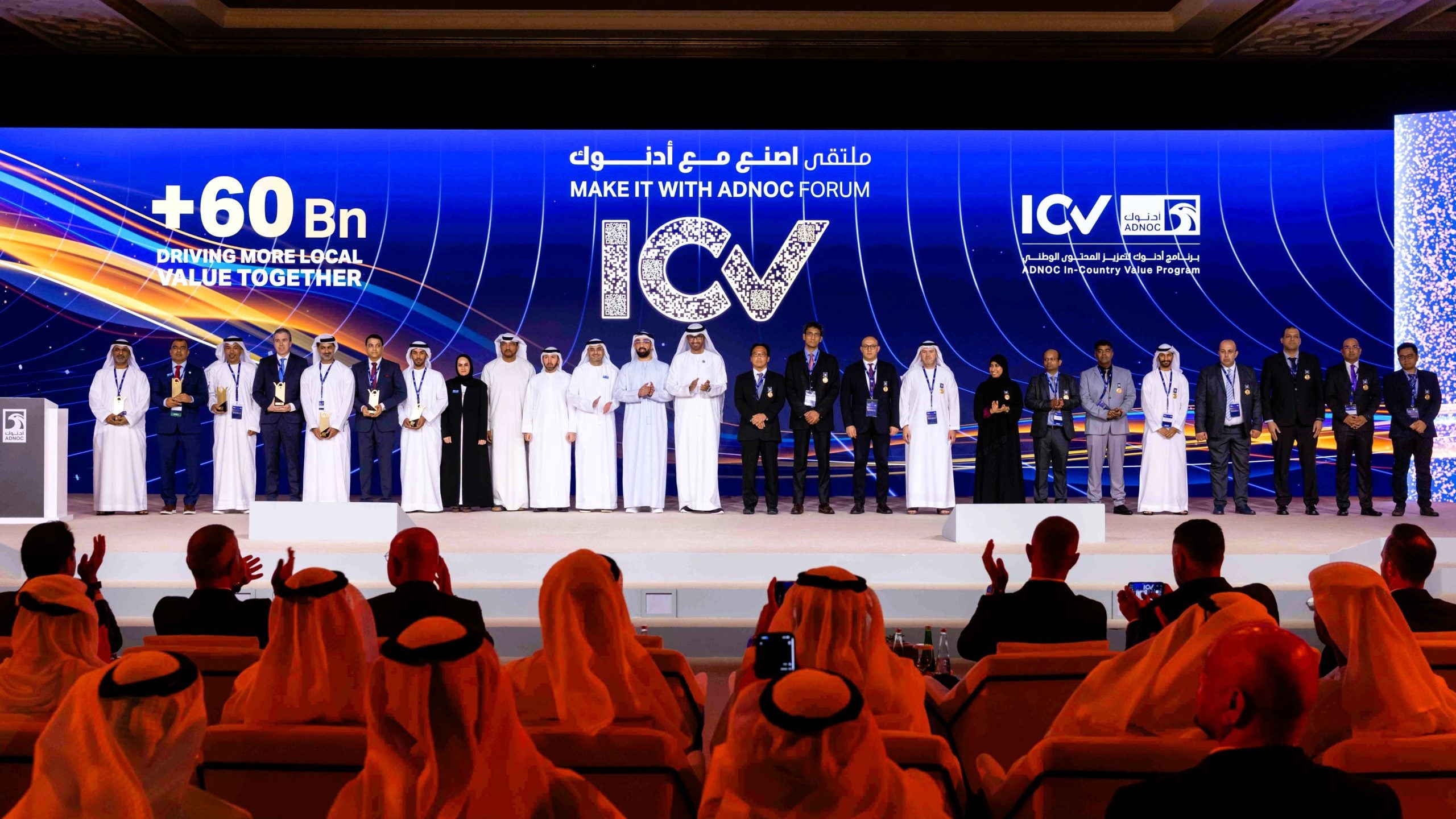
The programme also marks the first time the municipality will implement In-Country Value (ICV), a local content programme that promotes economic benefits.
READ THE AUGUST 2026 MEED BUSINESS REVIEW – click here to view PDFSaudi Arabia builds for the global stage; Rising uncertainty creates fresh set of challenges in the Maghreb; Gulf banks remain robust in the face of geopolitical tensions.
Distributed to senior decision-makers in the region and around the world, the August 2026 edition of MEED Business Review includes:
> WORLD CUP: What the 2026 World Cup means for Saudi Arabia 2034> MARKET FOCUS: Maghreb fortunes diverge> INDUSTRY REPORT: GCC banks prove resilient amid turmoil> LEADERSHIP: Private capital and the GCC infrastructure inflection> INTERVIEW: Developers look beyond standalone solarTo see previous issues of MEED Business Review, please click herehttps://image.digitalinsightresearch.in/uploads/NewsArticle/17873343/main.jpg -
Larsen & Toubro announces EPC agreement with PDO31 July 2026
Register for MEED’s 14-day trial access
Indian contractor Larsen & Toubro (L&T) has announced that it has signed a six-year engineering, procurement and construction (EPC) framework agreement with Petroleum Development Oman (PDO).
Under the agreement, L&T said its subsidiary, L&T Energy Hydrocarbon Onshore, has been selected as one of four EPC contractors to participate in PDO’s upcoming front-end engineering and design (feed) and EPC projects over the agreement period.
MEED recently reported that Mumbai-headquartered L&T had become the fourth contractor to join the pool of EPC service providers created by PDO to facilitate the tendering and award of future greenfield and brownfield projects within its Block 6 concession in the sultanate.
Prior to picking L&T, majority state-owned PDO selected the following contractors:
- Engineering for the Petroleum & Process Industries (Enppi) (Egypt) / Petrojet (Egypt)
- GS Engineering & Construction (South Korea)
- Jereh (China)
L&T was previously expected to join these contractors in the initial round of framework agreement signings that took place on 19 July, but it later engaged in a final round of discussions with PDO over terms and conditions, sources previously told MEED.
“L&T remains committed to supporting In-Country Value (ICV) development in Oman through opportunities for local suppliers, subcontractors and service providers, and the continued development of local capabilities,” the Bombay Stock Exchange-listed company said on 31 July.
Separately, the Egyptian consortium of Enppi and Petrojet confirmed its EPC framework agreement with PDO, adding that its duration is six years.
Contractors holding EPC framework agreements will be invited by PDO to participate in tenders for up to eight projects under the arrangement, which are estimated to have a combined value of up to $6bn.
The framework pool of contractors will be structured similarly to the Long-Term Agreement pool of EPC service providers operated by Saudi Aramco for its offshore and onshore projects.
MEED previously reported that contractors submitted proposals for the EPC framework structure by 27 April.
Before that, PDO issued the tender for the proposed EPC framework agreement on 22 February, setting a deadline of 9 March for technical clarifications and a cut-off date of 11 March to confirm or decline participation, according to sources.
MEED reported last year that PDO had issued a prequalification document on 17 April 2025, outlining its requirements, criteria, planned projects and other aspects of the EPC framework agreement. At that time, PDO aimed to appoint two tiers of contractors for two categories of projects, known as Wave 1 and Wave 2.
PDO’s Wave 1 and Wave 2 projects are as follows:
Raba hub development – Oil
The Raba hub project forms part of the Qarn Alam growth development in the northern area of the PDO concession. The strategy covers nearby fields, including Raba Infill and Raba East.
Production from Raba Infill will be routed to the existing Raba gathering station (RGS), while output from Raba East will be directed to the proposed Raba hub station (RHS).
Modifications to the RGS are planned to accommodate additional volumes from Raba Infill. An interconnection between the RGS and RHS is also proposed to enhance operational flexibility. The project is expected to unlock an estimated 176 million barrels of unconventional reserves and increase production by about 50,400 barrels a day (b/d) by 2029.
Wadi Umairi development – Oil and gas
Scope includes oil and gas processing facilities such as separators, storage tanks, water injection pumps, a gas sweetening unit, off-plot infrastructure and utilities.
Rabab Harweel Integrated Project (RHIP) tranche 2 – Oil and gas
The RHIP involves miscible gas injection at several fields and is divided into two tranches. Tranche 2, scheduled to come on stream from 2028, aims to expand oil production capacity and enhance gas injection.
The scope also includes sustaining gas supply from the reservoir through the installation of a depletion compression facility and expansion of the off-plot gas network.
Bout full-field development – Oil and gas
Scope includes remote manifold stations (RMSs), a gathering station, multiport selector valves, water injection manifolds, separators, a hydrocyclone package, water injection pumps and utilities.
Dulaima carbon dioxide-based enhanced oil recovery – Carbon capture, utilisation and storage
Scope includes a processing facility to handle incremental hydrocarbons and carbon dioxide (CO2) volumes, including CO2 recycle injection.
Makarem development – Sour oil and gas
Scope includes a gathering station, RMSs, water injection systems, manifolds, pumps, separators and utilities. It also involves a greenfield sour gas facility with gas sweetening and sulphur recovery units.
Amal South-East Development South – Gas
Hawqa Hasirah Development South – Gas
PDO previously intended to tender a project to build a new facility to handle additional oil production at the Al-Ghubar field reservoir in the Ghaba salt basin of Qarn Alam under its framework structure with selected EPC contractors, but eventually tendered it separately.
PDO is the operator of the Block 6 hydrocarbons concession in Oman, which is the sultanate’s largest and most prolific concession. Situated onshore and covering an area of 75,119 square kilometres, Block 6 contains 202 oil fields and 43 gas fields, with PDO producing a total of approximately 680,000 b/d of oil and condensates from those fields.
The Omani government holds a 60% stake in PDO. The other shareholders are UK-based Shell (34%), France’s TotalEnergies (4%) and Thai state-owned PTTEP (2%).
https://image.digitalinsightresearch.in/uploads/NewsArticle/17873448/main2634.jpg