
QatarEnergy LNG awards $4bn gas project package
22 December 2025
A consortium comprising the Italian contractor Saipem and state-owned China Offshore Oil Engineering Company (COOEC) has secured the EPCI contract for the COMP5 package. The contract value is $4bn, with Saipem declaring its share to be worth $3.1bn.
Milan-headquartered Saipem said the contract will run for about five years. The scope of work comprises engineering, procurement, fabrication and installation of two compression complexes, each including a compression platform, a living quarters platform, a flare platform supporting the gas combustion system, and the related interconnecting bridges. Each complex will have a total weight of about 68,000 tonnes.
Offshore installation operations will be carried out by Saipem’s De He construction vessel in 2029 and 2030.
MEED previously reported that the following contractors submitted bids for the NFPS phase two COMP5 package:
- Larsen & Toubro Energy Hydrocarbon (India)
- McDermott (US)
- Saipem/China Offshore Oil Engineering Company (Italy/China)
QatarEnergy LNG, formerly Qatargas, is said to have issued the tender for the NFPS phase two COMP5 package in the first quarter of the year.
Contractors submitted technical bids for the COMP5 package in late June, while commercial bids were submitted by 8 October, as per sources.
Based upon initial evaluation of bids by QatarEnergy LNG, L&TEH has emerged as the lowest bidder for the COMP5 package, followed by McDermott, with the consortium of Saipem and COOEC in third place, MEED reported in late October.
In the weeks following that, the project operator is said to have engaged all bidders for a final round of negotiations, during which the consortium of Saipem and COOEC is believed to have “clinched the deal”, according to sources.
The detailed scope of work on the COMP5 package covers the EPCI work on the following:
- Two gas compression platforms, each weighing 30,000-35,000 tonnes, plus jacket
- Two living quarters platforms, plus jacket
- Two gas flare platforms, plus jacket
- Brownfield modification work at two complexes
NFPS scheme
QatarEnergy’s North Field liquefied natural gas (LNG) expansion programme requires the state enterprise to pump large volumes of gas from the North Field offshore reserve to feed the three phases of the estimated $40bn-plus programme.
QatarEnergy has already invested billions of dollars in engineering, procurement and construction works on the two phases of the NFPS project, which aims to maintain steady gas feedstock for the North Field LNG expansion phases.
The second NFPS phase will mainly involve building gas compression facilities to sustain and gradually increase gas production from Qatar’s offshore North Field gas reserve over the long term.
Saipem has been the most successful contractor on the second NFPS phase, securing work worth a total of $8.5bn.
QatarEnergy LNG awarded Saipem a $4.5bn order in October 2022 to build and install gas compression facilities. The main scope of work on the package, which is known as EPCI 2, covers two large gas compression complexes that will comprise decks, jackets, topsides, interconnecting bridges, flare platforms, living quarters and interface modules.
The gas compression complexes – CP65 and CP75 – will weigh 62,000 tonnes and 63,000 tonnes, respectively, and will be the largest fixed steel jacket compression platforms ever built.
Following that, Saipem won combined packages COMP3A and COMP3B of the NFPS project’s second phase in September last year.
The scope of work on the combined packages encompasses the EPCI of a total of six platforms, approximately 100 kilometres (km) of corrosion resistance alloy rigid subsea pipelines of 28-inches and 24-inches diameter, 100km of subsea composite cables, 150km of fibre optic cables and several other subsea units.
Separately, QatarEnergy LNG awarded McDermott the contract for the NFPS second phase package known as EPCI 1, or COMP1, in July 2023. The scope of work on the estimated $1bn-plus contract is to install a subsea gas pipeline network at the North Field gas development.
In March this year, India’s Larsen & Toubro Energy Hydrocarbon (LTEH) won the main contract for the combined 4A and 4B package, which is the fourth package of the second phase of the NFPS project and is estimated to be valued at $4bn-$5bn.
The main scope of work on the package is the EPCI of two large gas compression systems that will be known as CP8S and CP4N, each weighing 25,000-35,000 tonnes. The contract scope also includes compression platforms, flare gas platforms and other associated structures.
LTHE sub-contracted detailed engineering and design works on the combined 4A and 4B package to French contractor Technip Energies.
NFPS first phase
Saipem is also executing the EPCI works on the entire first phase of the NFPS project, which consists of two main packages.
Through the first phase of the NFPS scheme, QatarEnergy LNG aims to increase the early gas field production capacity of the North Field offshore development to 110 million tonnes a year.
QatarEnergy LNG awarded Saipem the contract for the EPCI package in February 2021. The package is the larger of the two NFPS phase one packages and has a value of $1.7bn.
Saipem’s scope of work on the EPCI package encompasses building several offshore facilities for extracting and transporting natural gas, including platforms, supporting and connecting structures, subsea cables and anti-corrosion internally clad pipelines.
The scope of work also includes decommissioning a pipeline and other significant modifications to existing offshore facilities.
In addition, in April 2021, QatarEnergy LNG awarded Saipem two options for additional work within the EPCI package, worth about $350m.
QatarEnergy LNG awarded Saipem the second package of the NFPS phase one project, estimated to be worth $1bn, in March 2021.
Saipem’s scope of work on the package, which is known as EPCL, mainly covers installing three offshore export trunklines running almost 300km from their respective offshore platforms to the QatarEnergy LNG north and south plants located in Ras Laffan Industrial City.
Saipem performed the front-end engineering and design work on the main production package of the first phase of the NFPS as part of a $20m contract that it was awarded in January 2019. This provided a competitive advantage to the Italian contractor in its bid to win the package.

Register for MEED's guest program now to access this article.
Exclusive from Meed
-
-
 Kuwait contractor wins Shagaya power grid deal
24 March 2026
-
 Prequalification begins for Cairo Metro Line 2 upgrade
24 March 2026
-
-
 Local firm wins Al-Ras Dubai Walk masterplan deal
24 March 2026
All of this is only 1% of what MEED.com has to offer
Subscribe now and unlock all the 153,671 articles on MEED.com
- All the latest news, data, and market intelligence across MENA at your fingerprints
- First-hand updates and inside information on projects, clients and competitors that matter to you
- 20 years' archive of information, data, and news for you to access at your convenience
- Strategize to succeed and minimise risks with timely analysis of current and future market trends

Related Articles
-
French contractor begins work on Morocco’s Noor Atlas project
24 March 2026

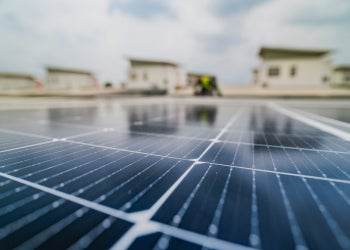
France-headquartered Eiffage is carrying out construction works on phase one of Morocco’s 305MW Noor Atlas solar photovoltaic (PV) programme, according to sources close to the project.
Morocco’s National Office of Electricity & Drinking Water (Onee) and the Moroccan Agency for Sustainable Energy (Masen) recently signed power purchase agreements (PPAs) for the programme covering the development, financing, construction, and operation of six solar PV power plants.
The plants were tendered in two lots in 2022, covering the eastern and southern parts of the country.
The first lot comprises the following four projects:
- Ain Beni Mathar: 121MW
- Enjil: 42MW
- Boudnib: 33MW
- Buonane: 29MW
The second lot comprises two solar PV projects in Tan-Tan and Tata, with each having a planned capacity of 40MW.
Eiffage, through its subsidiary Clemessy Maroc, previously carried out electrical works on Morocco’s Noor Tafilalt solar programme.
However, it is understood that the contract for lot one is the company’s first role as full engineering, procurement and construction contractor for a solar project in the region.
Local media reports previously said plants under the programme will be developed by consortiums comprising Moroccan and European companies.
Contractor details for phase two of the project have not been disclosed. However, it is understood that construction work has begun, with the project scheduled to begin delivering electricity by July 2027.
In 2025, Masen established a dedicated subsidiary (Noor Atlas Energy Company) to oversee the project’s implementation.
Germany’s development bank KfW and the European Investment Bank (EIB) are providing concessional financing, while Bank of Africa is providing commercial financing (local) for the project.
US/India-based Synergy Consulting is acting as consultant on the project.
In May 2025, Onee obtained EIB financing of €170m and KfW financing of €130m to expand the national grid by 731 kilometres and increase its evacuation capacity by 1,850 MVA.
EIB previously announced in 2018 that it is providing concessional financing of €129m under the ELM guarantee for Noor Atlas, against a total project cost of €272m.
https://image.digitalinsightresearch.in/uploads/NewsArticle/16100781/main.jpg -
Kuwait contractor wins Shagaya power grid deal
24 March 2026
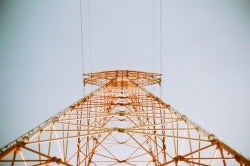
Kuwait-based contractor Power Grid Company has won a KD48.6m ($158.7m) contract to build a 400kV overhead transmission line linking the Shagaya solar energy generation station with Wafra in southern Kuwait.
The contract was awarded by Kuwait’s Ministry of Electricity, Water & Renewable Energy (MEWRE).
Power Grid was one of three firms that submitted bids last year, according to regional projects tracker MEED Projects.
The other bidders included India’s Larsen & Toubro, with an offer of $135m, and Kuwait’s National Contracting Company, with a bid of $140m.
The transmission line will connect Shagaya to the Wafra (Z) transformer station. The project forms part of the wider Shagaya masterplan, which is being developed as a key component of Kuwait’s renewable energy strategy, including the Shagaya renewable energy complex.
The Kuwait Authority for Partnership Projects (Kapp) is currently procuring a 500MW solar photovoltaic (PV) independent power project (IPP) in partnership with MEWRE.
As MEED exclusively reported, the deadline to bid for a contract to develop the plant was recently pushed back to the end of April.
The plant is being developed under zone two of the third phase of the Al-Dibdibah power and Al-Shagaya renewable energy project.
In January, three consortiums submitted bids for a contract to develop Kuwait’s first utility-scale solar PV plant.
The Al-Dibdibah power and Al-Shagaya renewable energy phase three, zone one IPP will have a total power generating capacity of 1,100MW.
https://image.digitalinsightresearch.in/uploads/NewsArticle/16097432/main.jpg -
Prequalification begins for Cairo Metro Line 2 upgrade
24 March 2026
Egypt’s National Authority for Tunnels (NAT) has issued a request for prequalification (RFQ) notice inviting firms to prequalify for a contract to rehabilitate and upgrade the Cairo Metro’s Line 2 network.
The notice was issued in mid-March. The prequalification submission deadline is 30 April.
According to the official notice, the scope of the works includes the design, execution, supply, installation, testing and commissioning of major system upgrades across the Cairo Metro Line 2 infrastructure and stations, along with integration into existing operational systems.
The project aims to refurbish and modernise the metro line systems and enhance onboard communications across the current rolling stock fleet, to extend the metro system’s operational lifespan by at least 25 years.
The contract duration is five years.
The project is receiving a financing grant of €250m ($263m) from the European Bank for Reconstruction and Development (EBRD), €240m ($252m) from the European Investment Bank (EIB) and €60m ($63m) from the Egyptian government.
Cairo Metro Line 2 has been operational since 1996. The line runs from Shubra El-Kheima to El-Mounib, spanning about 21.5 kilometres (km) with 20 stations.
The route includes 12 underground stations, six at-grade stations and two elevated stations.
The track infrastructure is built around two primary track configurations.
The line carries about 1.8 million passengers a day.
The project is part of NAT’s key planned railway projects in the country. According to NAT’s official website, eight key projects, including metro lines, high-speed rail and light rail transit, are currently in the pipeline.
According to GlobalData, the Egyptian construction industry is expected to grow by 6.4% in 2026, supported by rising foreign direct investment in the country, coupled with the government’s investment in energy and industrial construction projects.
The industry’s expansion in the forecasted period will be supported by investments outlined in Egypt’s financial year 2025-26 budget, approved in June 2025. The budget includes a total government spending of E£4.6tn ($91.3bn).
The infrastructure construction sector is expected to expand by 6.9% from 2026 to 2029, supported by investments in road, rail and port infrastructure projects.
According to MEED Projects, Egypt has been the most active market for the rail sector in the Mena region, with contracts worth over $34bn awarded in the past decade.
MEED’s March 2026 report on Egypt includes:
> COMMENT: Egypt’s crisis mode gives way to cautious revival
> GOVERNMENT: Egypt adapts its foreign policy approach
> ECONOMY & BANKING: Egypt nears return to economic stability
> OIL & GAS: Egypt’s oil and gas sector shows bright spots
> POWER & WATER: Egypt utility contracts hit $5bn decade peak
> CONSTRUCTION: Coastal destinations are a boon to Egyptian constructionTo see previous issues of MEED Business Review, please click herehttps://image.digitalinsightresearch.in/uploads/NewsArticle/16097414/main.jpg -
Contractors submit bids for Safaniya onshore facilities project
24 March 2026
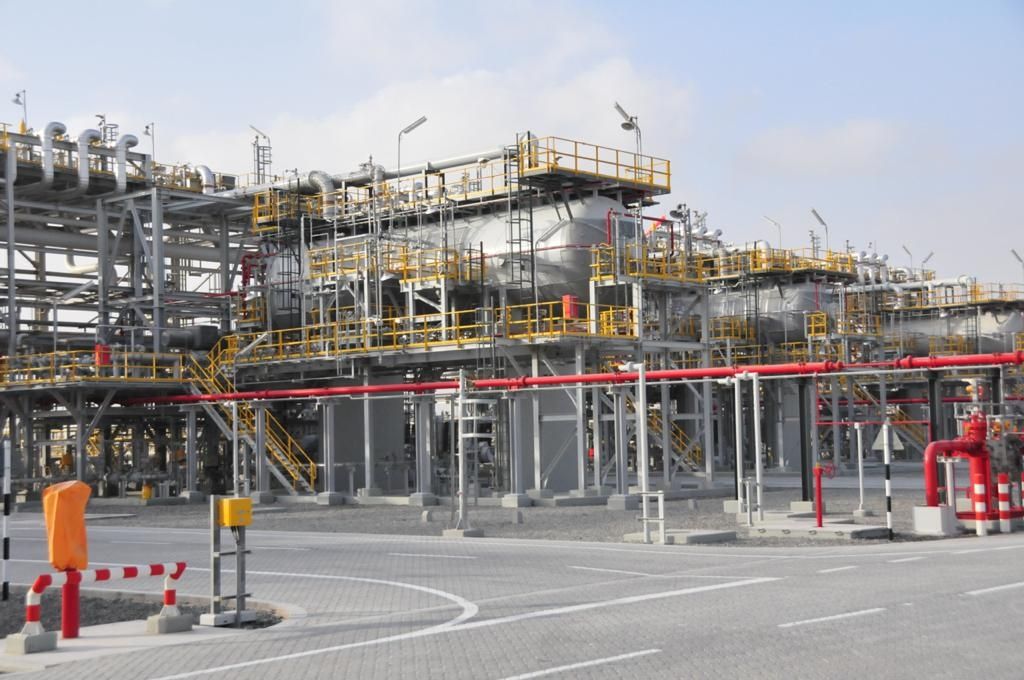
Contractors have submitted bids to Saudi Aramco for a project to build onshore surface facilities to boost productivity at the Safaniya offshore oil field development in Saudi Arabia.
The Safaniya field is the world’s largest offshore oil field, with a production capacity of nearly 1.2 million barrels a day (b/d). Discovered in 1951, the field is located in the Gulf waters, approximately 265 kilometres north of Aramco’s headquarters in Dhahran.
Contractors submitted bids for the Safaniya onshore surface facilities project by the deadline of 17 March, according to sources.
Aramco issued the main tender for engineering, procurement and construction (EPC) works on the Safaniya onshore surface facilities project on 9 July last year.
Contractors were initially given deadlines of 24 October and 7 November to submit technical and commercial bids for the project, MEED previously reported. Aramco later merged the technical and commercial bid submission requirements and extended the techno-commercial proposal submission deadline until 31 January.
Prior to that, Aramco is understood to have issued the solicitation of interest document for the Safaniya field onshore surface facilities project in May, with contractors submitting responses by 28 May.
The EPC scope of work has been divided into two packages:
- Package 1 – Water treatment and injection plant:
- Building new water injection units
- Expansion of gas-oil separation plant one
- Building storage tanks, transfer pumps and substation
- A central processing facility at the Zuluf field development, including water transfer pumps, chemical injection skids and other components
- Package 2 – Produced water utilities:
- Fire water system
- Potable water units
- Utilities
- Nitrogen generation system
- Site buildings
- Electrical infrastructure
- Security systems
- Telecommunications networks
In addition to pursuing the onshore facilities project to boost Safaniya’s productivity, MEED also previously reported that Aramco had issued three key offshore tenders last year for the field’s next expansion phase.
Contractors in Aramco’s Long-Term Agreement pool of offshore service providers submitted bids for the three tenders – Contracts Release and Purchase Order (CRPO) numbers 154, 155 and 156 – by 31 August.
Aramco awarded Italian contractor Saipem the EPCI contract for CRPO 156, valued at an estimated $500m, in February. The scope of work on the contract covers the EPCI of a 48-inch trunkline, comprising approximately 65 kilometres offshore and 12km onshore, as well as associated subsea facilities at the Safaniya oil field.
The Saudi energy giant is evaluating bids for the other two tenders for the Safaniya offshore field expansion project and is expected to award contracts within the first quarter.
https://image.digitalinsightresearch.in/uploads/NewsArticle/16097410/main1828.jpg - Package 1 – Water treatment and injection plant:
-
Local firm wins Al-Ras Dubai Walk masterplan deal
24 March 2026
Abu Dhabi-based firm Western Bainona Group has won a contract from Dubai’s Roads & Transport Authority (RTA) to develop the first phase of the Dubai Walk masterplan in the Al-Ras area.
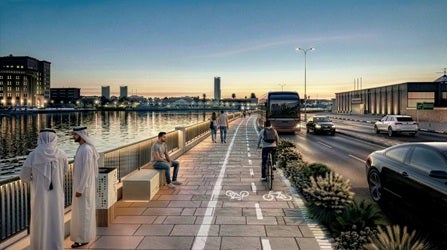
The project’s first phase focuses on developing the historic Al-Ras walkway, including 12 kilometres (km) of pedestrian paths and 5km of cycling tracks, along with the rehabilitation of 10 artistic spaces.
The Al-Ras walkway project will link pedestrian routes with 11 metro stations, bus stops and marine transport points to improve first- and last-mile access.
The RTA said that the works include upgrades to internal pedestrian paths and the waterfront promenade, using straightforward urban design interventions that will maintain the area’s historic identity.
Planned improvements include wider sidewalks, added shade elements, more seating, increased greenery and heritage-sensitive wayfinding signage.
The overall masterplan includes extending a connected pedestrian network across 160 locations, with plans to build and upgrade around 6,000km of walkways throughout the emirate by 2040.
It also includes developing 110 pedestrian bridges and underpasses to improve links between districts, supporting a shift in walking and other low-impact mobility from 16% of trips in 2025 to 25% by 2040.
Proposed highlights include a bridge on Al-Ittihad Street between Al-Nahda and Al-Mamzar; another on Tripoli Street linking Al-Warqa with Mirdif; a crossing on Al-Khawaneej Street connecting Mushrif and Al-Khawaneej; and a bridge on Dubai-Al-Ain Road tying Dubai Silicon Oasis to Dubailand.
https://image.digitalinsightresearch.in/uploads/NewsArticle/16097076/main.jpeg