
Power market reshapes contractor landscape
16 October 2025
 Commentary
Mark Dowdall
Power & water editor
Register for MEED’s 14-day trial access
The number of UAE-based power projects awarded under the traditional engineering, procurement and construction (EPC) model has fallen to its lowest level in the past decade.
Admittedly, this does not include the Covid year of 2020, but the point stands. Across the GCC, capital is still flowing into the sector at record levels. What has changed is how that capital is being deployed.
In a recent analysis, I revealed 2025 to be a record-breaking year, with the UAE’s power market recording its highest annual total for contract awards on record. Yet instead of a broad spread of smaller contracts, governments and utilities are concentrating investment in fewer larger and more complex schemes that are reshaping how the region’s energy systems are built and financed.
In 2025, a single solar and battery storage independent power project (IPP) in Abu Dhabi accounts for 67% of the country’s total power contract value. EPC contracts, once the mainstay of the market, have been eclipsed by developer-led models as the preferred route for large-scale power generation.
Saudi Arabia is moving in the same direction, albeit at a different pace. While EPC work remains central to grid expansion, the kingdom’s largest investments are now in utility-scale IPPs backed by the Public Investment Fund.
In my recent annual ranking of private power developers across the GCC, the surge in power generation capacity owned by Saudi Arabia’s Acwa Power was telling. Not only did the firm’s net equity grow by 70% in a single year, but it now eclipses the combined equity of the other leading developers in the region, a direct result of its dominant role in PIF-backed schemes. These projects, including multi-gigawatt solar and wind developments, are redefining the scale and structure of procurement.
Behind this shift is a combination of market maturity, financing strategy and energy transition goals. Developer-led projects concentrate capital and risk in fewer hands, streamline procurement timelines and align closely with long-term policy objectives.
For governments, they deliver capacity without requiring large upfront capital commitments. For developers, they offer stable, long-term returns through secure offtake agreements.
But this concentration also narrows the field of opportunity. Where dozens of smaller EPC packages once supported a broad ecosystem of contractors and suppliers, today’s market is increasingly revolving around a handful of mega deals.
Competition is intensifying for fewer projects, and entry barriers, ranging from balance sheet strength to technical capabilities, are rising.
Smaller EPC contractors, once central to power delivery across the GCC, risk being pushed to the margins. Some will adapt by partnering with larger developers, but others may find fewer opportunities to participate.
Which takes me back to the UAE. In the water sector, 2026 is already shaping up to be a landmark year, with nearly $31bn-worth of projects in tender. A single project, Dubai’s $22bn Strategic Sewerage Tunnel scheme, accounts for over 70% of this total.
It will follow a public-private partnership (PPP) delivery model that consolidates the entire scope under one consortium, streamlining delivery. However, this approach significantly reduces the number of prime contracting opportunities, with smaller EPC firms more likely to find themselves competing for limited subcontracting roles rather than leading bids.
It is important to note that while large-scale projects tend to dominate during major build-out phases, attention inevitably turns to smaller, more distributed schemes.
However, this alone does not necessarily mean a return to the EPC-heavy landscape of the past. For now, as these large projects set the pace, the region’s energy transition may accelerate, but it will also decide who gets to reshape and build it.

Register for MEED's guest program now to access this article.
Exclusive from Meed
-
 Dubai real estate buys time
17 March 2026
-
 Saudi Energy pushes back deadlines for power projects
17 March 2026
-
 Fujairah oil hub targeted in fresh drone strike
17 March 2026
-
 Oman signs $2bn real estate deals at Mipim 2026
17 March 2026
-
 Ashghal tenders northern Smaisma infrastructure
17 March 2026
All of this is only 1% of what MEED.com has to offer
Subscribe now and unlock all the 153,671 articles on MEED.com
- All the latest news, data, and market intelligence across MENA at your fingerprints
- First-hand updates and inside information on projects, clients and competitors that matter to you
- 20 years' archive of information, data, and news for you to access at your convenience
- Strategize to succeed and minimise risks with timely analysis of current and future market trends
Related Articles
-
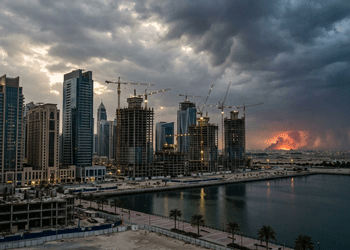
Dubai real estate buys time
17 March 2026
Register for MEED’s 14-day trial access
The outbreak of the Iran-US-Israel war has injected a powerful dose of uncertainty into Dubai’s residential real estate market, a sector already bracing for a cyclical cooldown.
A new report from S&P Global Ratings, published on 16 March, outlines the parameters of the risk.
The core argument is that while Dubai is not facing an immediate 2008-style collapse, the market’s resilience is now a function of time. If the conflict intensifies beyond a one-month horizon, the strains on prices, investor confidence and developer balance sheets could become severe.
Momentum stalls as caution takes hold
The most immediate impact of the conflict has been psychological. According to S&P, official sources are already reporting lower transaction volumes since the war began. The prolonged war could mark the end of the post-pandemic boom, shifting the market into a phase of guarded caution.
The luxury segment, which has driven much of the recent growth, is seen as the most vulnerable. High-net-worth individuals who relocated to Dubai for its perceived safety and tax advantages may now reconsider their positions, given that the city’s ‘safe haven’ status is being tested.
S&P’s baseline forecast assumes the most intense phase of fighting will last up to four weeks. Under this scenario, the market will likely experience a slowdown in both volumes and prices, with the declines being more pronounced the longer the uncertainty drags on.
The report notes a flight to liquidity, predicting that secondary market transactions will become more prevalent as investors seek to offload properties, further suppressing values.
Apartments are expected to suffer steeper price drops than villas due to a robust supply pipeline.
Regulatory shields and the threat of a prolonged conflict
One of the central tenets of the report is that Dubai’s post-2008 regulatory framework provides a crucial buffer. Escrow accounts and stringent payment plans mean that for projects already under way, developers should be able to complete construction, barring a wave of mass investor defaults.
The rules offer significant protection: developers can retain up to 40% of the property value if construction is on schedule, refund the remainder, and repossess the unit for resale.
However, this protection has limits. S&P warns that a prolonged war scenario would test these regulations. If the Strait of Hormuz remains closed, supply chains for construction materials could bottleneck, driving up input costs. More critically, the rules that protect developers would only be effective up to a point.
In a deep and lasting downturn, project cancellations would become likely, particularly for newly launched developments that have not secured substantial presales.
The analysis suggests that while top-tier developers weathered past downturns with delinquency rates of just 3-10%, the figure for newer, less experienced players could be much higher.
Rated developers have headroom, but it is not infinite
The four major developers rated by S&P with exposure to Dubai are Emaar Properties, Damac Properties, PNC Investments and Omniyat Holdings. All of these players enter the period of uncertainty from a position of relative strength.
The report highlights that years of strong sales have created significant revenue backlogs covering several years.
Emaar leads with the revenue backlog of about $37bn, equivalent to 2.7 years, while Damac holds about $22bn of backlog, representing 2.3 years.
Their leverage is low, and cash positions are meaningful. As of 31 December 2025, Emaar held $7.5bn in cash and liquid investments, with $11.7bn as escrow cash balance.
Damac holds $1.7bn in total cash, including $6bn in escrow, while PNCI and Omniyat hold more modest balances of $600m and $600m, respectively.
S&P has built “substantial headroom” into their credit ratings to absorb sudden shocks.
The liquidity assessments for all four companies are adequate, with manageable debt maturities in 2026.
The critical question is duration. If the conflict grinds on, the buffers will narrow.
S&P states that in a prolonged scenario, its reassessment will focus on construction progress, cash collection and working capital.
The financial policies of management teams, specifically their willingness to maintain low leverage and cut dividends, will be key to preserving creditworthiness.
Capex and dividends under review
The war will also force a recalibration of corporate strategy. The report notes that investment decisions are likely to be postponed or cancelled. While commitments for projects nearing completion will proceed, companies will prioritise liquidity over new land purchases.
This is most pronounced for Emaar, which has sizeable capital expenditure plans of AED10bn-AED11bn ($2.7bn-$3bn) annually in 2026-27 for projects such as Dubai Creek Tower, Dubai Creek Mall and the expansion of Dubai Mall. S&P believes a significant portion of this spending is flexible and can be delayed if needed.
Dividend policies will also be tested. The report expects dividend distributions to remain substantial but potentially adjustable.
S&P’s analysis paints a picture of a market that is braced for impact but not yet broken. The fundamentals are stronger than they were in 2008, thanks to tighter regulations and well-capitalised developers with $10bn in combined cash reserves.
However, the market’s fate is now externally determined. If the conflict remains contained and short-lived, Dubai’s real estate sector should absorb the shock with manageable declines.
But if the war becomes a protracted regional crisis, the meaningful correction that S&P flags as a possibility will move from the realm of the theoretical to the probable, testing the resilience of both the developers and the regulatory framework designed to protect them.
https://image.digitalinsightresearch.in/uploads/NewsArticle/16012971/main.gif -
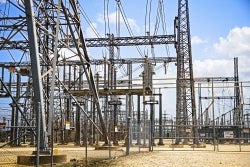
Saudi Energy pushes back deadlines for power projects
17 March 2026
Saudi Energy, formerly Saudi Electricity Company (SEC), has extended bid submission deadlines for three substation projects in Riyadh Province.
The utility has pushed back the deadline for the estimated $50m King Khalid International airport 132/13.8kV substation project to 9 April.
The contract was originally tendered in December, and the deadline had previously been extended to 9 March.
Local firms Al-Babtain Contracting and Al-Haider are understood to have prequalified to bid for the scheme.
The company has also extended the deadline for a $40m engineering, procurement and construction (EPC) contract for a 132kV underground cable project in Al-Kharj, Riyadh Province.
The new bid submission date is 26 March.
The project covers the installation of underground cable circuits linking a proposed substation (S/S #8721) north of Al-Kharj to BSP #9028. The scope also includes associated civil works and infrastructure.
Prequalified bidders include Saudi Services for Electro Mechanic Works, Al-Babtain Contracting and Al-Haider, according to regional project tracker MEED Projects.
In addition, the utility has extended the deadline for a $50m contract to replace the existing 132/13.8kV substation (S/S #8044) with the new Al-Sharafiyah-2 substation (S/S #8407) in Riyadh.
The revised submission date is 9 April.
The scope includes construction of the new substation, installation of switchgear and conductors, and associated infrastructure works.
Saudi Services for Electro Mechanic Works, Al-Babtain Contracting and Al-Haider are expected to submit bids for the project.
Riyadh Expo substations
Separately, Saudi Energy is understood to be moving forward with procurement for a project to develop three 132/13.8kV substations in Riyadh to support Expo 2030.
The utility is said to have invited bids for the engineering, procurement and construction (EPC) contract to deliver the three substations along with associated works to connect the facilities to the national grid.
The project forms part of wider infrastructure preparations for Expo 2030 Riyadh, scheduled to take place from October 2030 to March 2031
No bid submission deadline has been publicly disclosed.
Last September, Saudi Energy outlined plans to invest $58.7bn in power projects between 2025 and 2030.
This includes $36bn and $22.7bn for transmission and distribution, respectively, and is part of long-term plans to meet growing electricity demand while improving grid efficiency and reliability.
https://image.digitalinsightresearch.in/uploads/NewsArticle/16012147/main.jpg -
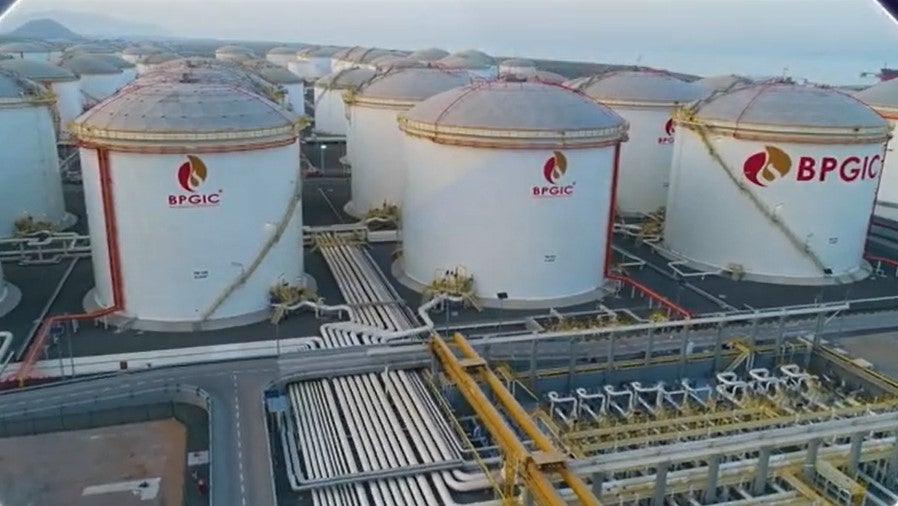
Fujairah oil hub targeted in fresh drone strike
17 March 2026
Register for MEED’s 14-day trial access
The Fujairah Oil Industry Zone (FOIZ) was hit by another drone attack early on 17 March, causing a fire, authorities in Fujairah said.
No injuries have been reported in the attack, and the emirate’s civil defence teams are dealing with the situation and trying to control the fire, the official Emirates News Agency (Wam) reported, citing the media office of the Government of Fujairah.
This is understood to be the fifth attack since the start of March that FOIZ has suffered from drone or debris resulting from interceptions by the UAE’s air defence systems, as Iran continues to hit energy and industrial facilities in the UAE.
Fujairah benefits from its strategic geopolitical location outside the Strait of Hormuz, which Iran has blockaded in its ongoing conflict with Israel and the US, choking about a fifth of the world’s oil and gas supplies.
Consequently, oil prices have soared since the start of the conflict on 28 February. Global benchmark Brent broke the $100 mark on 9 March, for the first time since Russia’s invasion of Ukraine in February 2022, rising to a high of $119 a barrel on that day. Prices have dropped since, but it is still trading well above the $100 mark, with Brent recorded at $103.87 a barrel as of 12pm GST on 17 March.
Major midstream oil and gas companies operate key storage and export hubs for oil and refined products in Fujairah, including Abu Dhabi National Oil Company (Adnoc Group), Saudi Aramco – through its subsidiary Aramco Trading – Vopak Horizon, VTTI, Shell, Fujairah Oil Terminal, Brooge Petroleum & Gas Investment Company (BPGIC), Emirates National Oil Company (Enoc), Ecomar, Mount Row and GPS Chemoil.
ALSO READ: Iran sees economic pressure as key to ending war
Fujairah is crucial to the operations of Adnoc Group subsidiary Adnoc Onshore, which operates a main oil terminal (MOT) there. Located approximately 300 kilometres north of Abu Dhabi, the terminal facilitates the import and export of various crude oil grades, particularly Murban, from the company’s onshore and offshore fields.
Meanwhile, the Abu Dhabi Crude Oil Pipeline (Adcop) connects milestone pole (MP) 21 at the Habshan oil facility in Abu Dhabi, where stabilised crude produced from Adnoc Onshore fields is gathered for dispatch, to the Fujairah MOT.
BPGIC is an oil storage and services firm that was established in 2013 in Fujairah and started operations with a capacity of 400,000 cubic metres spanning 14 tanks. In March 2022, it announced its intention to increase the storage capacity of four of those storage tanks in the first phase complex.
Separately, in September 2021, BPGIC began operations at the second phase of its Fujairah oil storage complex, adding 600,000 cubic metres of storage capacity across eight tanks. As a result of that expansion, BPGIC’s storage capacity more than doubled to 1 million cubic metres, or 6.3 million barrels, from 400,000 cubic metres.
BPGIC then undertook a third expansion phase of its oil storage facility, which is understood to have been commissioned in 2023.
The third phase increased BPGIC’s oil storage capacity by 3.5 times, raising it to 3.5 million cubic metres, or 22 million barrels, and making the firm the largest oil storage services provider in the UAE emirate of Fujairah.
The third-phase expansion project consists of an oil storage facility with a capacity of 2.5 million cubic metres, a modular 25,000-barrel-a-day (b/d) refinery, and a larger 180,000-b/d conventional refinery.
BPGIC also co-owns a topping refinery in Fujairah with Nigeria-based Sahara Energy Resources, which produces low-sulphur bunker fuel for ships and vessels. It is understood that the new naphtha upgradation unit could be integrated with the existing topping refinery unit.
https://image.digitalinsightresearch.in/uploads/NewsArticle/16011988/main.jpg -
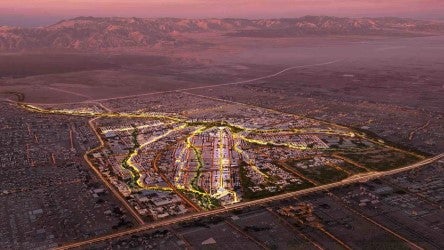
Oman signs $2bn real estate deals at Mipim 2026
17 March 2026
Oman has signed 17 international investment and development agreements worth over RO762m ($1.98bn) at the Mipim 2026 event held in Cannes, France.
The deals were concluded through the Ministry of Housing & Urban Planning (MHUP) and partners at the Oman pavilion, and span mixed-use real estate, healthcare, agri-investment and digital planning tools.
A key agreement was a memorandum of understanding with Turkiye’s Artas Holding for the Al-Khuwair Downtown project, with planned investments exceeding RO150m ($390m).
In Sultan Haitham City, an agreement was signed with Saudi Arabia’s Retal Development to develop neighbourhoods 3, 15 and 17, covering more than 1.39 million square metres, with a combined investment of over RO320m ($832m).
Other agreements include Vogue Homes Portugal investing more than RO25m ($65m) in the Al-Thuraya City project, and another residential scheme led by international firms including Avant Garde Properties, F&M International, Metrogramma and The One Atelier, with an investment of about RO50m ($130m).
MoHUP also signed agreements covering smart planning and project delivery, including advanced 3D digital modelling, with investment exceeding RO408,000 ($1m).
Healthcare-related agreements include a partnership between local Al-Daham Real Estate and Kubba to develop hospital and stem-cell treatment facilities, valued at RO11.5m ($30m), and a deal between local firm Al-Abrar Real Estate Group and Vienna Hospital & University to operate Ibn Al-Haitham Hospital in Sultan Haitham City, with an investment of more than RO40m ($104m).
In Dhofar, investments will be made in planting one million olive trees under a usufruct arrangement, valued at RO15m ($39m), as part of agriculture sustainability plans.
The programme also includes architectural and branding collaborations involving international firms such as Chapman Taylor Architects, 3DTouch Studio, Hawk & Impact Communication and Atelier Entropic, alongside luxury brands including Pagani, Armani and Elie Saab for branded residential concepts.
https://image.digitalinsightresearch.in/uploads/NewsArticle/16011061/main.jpg -
Ashghal tenders northern Smaisma infrastructure
17 March 2026

Qatar’s Public Works Authority (Ashghal) has issued a tender covering infrastructure development in the northern Smaisma area.
The tender was floated on 14 March, with a bid submission closing date of 12 May.
The scope includes the airstrip road, coastal road and connections to the existing Al-Khor Expressway, spanning an area of about 18.5 kilometres.
The contract duration is four years from the start of construction works.
The latest tender follows Ashghal’s announcement of contract awards for 12 new projects, with a total value exceeding QR4.5bn ($1.2bn).
According to a notice published on its website, these include six building projects, most notably the redevelopment of Hamad General Hospital, with a contract value of about QR1.1bn ($301m).
The other projects awarded include the construction of a post office building in Al-Thumama, the renovation of the Qatar Racing & Equestrian Club and the Qatar Equestrian Federation, as well as the implementation of phase four of the Al-Uqda Equestrian Complex development.
In the roads and infrastructure sector, four projects have been awarded, led by packages one and two of the road and infrastructure development works in Izghawa and Al-Thumaid.
The awards also include a project covering landscaping and an air-conditioned walkway at Qatar University, as part of broader public facilities improvement initiatives.
According to UK analytics firm GlobalData, Qatar’s construction industry is expected to expand by 4.3% in 2026, supported by investments in renewable energy and transportation infrastructure.
According to the Planning & Statistics Authority, Qatar’s construction value-add grew by 6.6% year-on-year in the first half of 2025.
GlobalData expects the industry to grow at an annual average growth rate of 4.6% in 2027-29, supported by investments in construction, energy and infrastructure projects.
 READ THE MARCH 2026 MEED BUSINESS REVIEW – click here to view PDF
Riyadh urges private sector to take greater role; Chemical players look to spend rationally; Economic uptick lends confidence to Cairo’s reforms.
Distributed to senior decision-makers in the region and around the world, the March 2026 edition of MEED Business Review includes:
> RAMADAN: Data disproves the Ramadan slowdown story> INDUSTRY REPORT: Chemicals producers look to cut spending> INDUSTRY REPORT: Global petrochemical project capex set to rise until 2030> MARKET FOCUS: Egypt’s crisis mode gives way to cautious revival> LEADERSHIP: Delivering Saudi Arabia’s next phase of rail growth> INTERVIEW: Abu Dhabi’s Enersol charts acquisitions pathTo see previous issues of MEED Business Review, please click herehttps://image.digitalinsightresearch.in/uploads/NewsArticle/16010960/main.gif