
PIF signs renewables joint ventures
17 July 2024
Register for MEED's 14-day trial access
Saudi Arabia's sovereign wealth vehicle, the Public Investment Fund (PIF), has announced the signing of three new agreements to localise the manufacturing and assembly of equipment and components needed for solar and wind power projects.
Renewable Energy Localisation Company (RELC) – a fully owned PIF company – entered into the three agreements, in line with the Saudi Energy Ministry’s drive to localise the production of renewable energy components, the PIF said in a statement on 16 July.
RELC focuses on "creating partnerships between leading global manufacturers and the Saudi private sector to meet growing local and export demand for renewable energy, and secure and strengthen local supply chains".
The first joint venture (JV) comprises China-headquartered wind power technology company Envision Energy and Saudi firm Vision Industries. The new company plans to manufacture and assemble wind turbine components including blades with an estimated annual generation capacity of 4GW. Under this agreement, RELC will hold 40% of the JV, with Envision holding 50% and Vision Industries holding 10%.
The second JV features China-based solar photovoltaic (PV) supplier Jinko Solar and Vision Industries. The JV entails localising the manufacture of PV cells and modules for high-efficiency solar generation. Under the agreement, which projects annual production of 10GW in generation capacity, RELC will hold 40% of the JV, with Jinko Solar holding 40% and Vision Industries holding 20%.
The final JV was formed by Lumetech, a subsidiary of China's TCL Zhonghuan Renewable Energy, and Vision Industries. This deal will localise the production of solar PV ingots and wafers with annual production sufficient to generate 20GW of power. Under this agreement, RELC will hold 40% of the JV, with Lumetech holding 40% and Vision Industries having 20%.
The PIF said: "These agreements will enable the localisation of advanced power generation and manufacturing technologies for renewable energy production in Saudi Arabia, as well as maximising local content to help meet growing domestic, regional and international demand."
It expects the agreements to "enhance the ability of local manufacturing to benefit from the global energy transition and will support the PIF’s efforts to consolidate Saudi Arabia’s position as a global centre for exporting products and services for the renewables sector".
Yazeed Al-Humied, deputy governor and head of Middle East and North Africa investments at the PIF, said the new agreements will contribute to localising the production of 75% of the components in Saudi Arabia’s renewable projects by 2030, in line with the Energy Ministry’s National Renewable Energy Programme.
He added that these projects will also enable Saudi Arabia to become a global hub for the export of renewable technologies.
Overall, the PIF, through Riyadh-headquartered utility developer Acwa Power and Badeel, is developing a total of eight renewable energy projects with a total capacity of 13.6GW, involving more than $9bn in investments from the PIF and its partners. These joint projects include Sudair, Shuaibah 2, Ar Rass 2, Al-Kahfah, Saad 2, Haden, Muwayh and Al-Khushaybi.
Related read: Developers regroup for Saudi renewables plans

Register for MEED's guest program now to access this article.
Exclusive from Meed
-
-
 Morocco approves Khalladi wind farm expansion
23 June 2026
-
 Libya plans to distribute oil budget in July
23 June 2026
-
-
 Egypt approves plans for 869MW wind power plant
22 June 2026
All of this is only 1% of what MEED.com has to offer
Subscribe now and unlock all the 153,671 articles on MEED.com
- All the latest news, data, and market intelligence across MENA at your fingerprints
- First-hand updates and inside information on projects, clients and competitors that matter to you
- 20 years' archive of information, data, and news for you to access at your convenience
- Strategize to succeed and minimise risks with timely analysis of current and future market trends
Related Articles
-
Contractors win deals for Saudi Energy transmission projects
23 June 2026

Saudi Arabia-based Haif Company has won contracts for two separate substation projects in Saudi Arabia, according to sources.
The first involves the construction of a 132/33/13.8kV substation for Saudi Energy, formerly Saudi Electricity Company, which will replace the existing Tabuk substation 2 in Tabuk, northwestern Saudi Arabia.
The works include the construction of a new substation, along with GIS, transformers, switchgear, capacitor banks, MV/LV cable systems and protection infrastructure.
Ten firms submitted bids for the project last December. The bidders included:
- Al-Babtain Contracting (Saudi Arabia)
- Alfanar Projects (Saudi Arabia)
- Al-Gihaz Holding (Saudi Arabia)
- Al-Osais International Holding (Saudi Arabia)
- Danway Electrical & Mechanical Engineering (UAE)
- Haif Company (Saudi Arabia)
- Mohammed Al-Ojaimi Group (Saudi Arabia)
- Nesma Infrastructure & Technology (Saudi Arabia)
- Saudi Services for Electro Mechanic Works (Saudi Arabia)
- Tareg Al-Jaafari Contracting Est (Saudi Arabia)
In addition to Tabuk, Saudi Energy is planning several power transmission projects in Al-Jouf, Medina and the Eastern Province as part of the kingdom’s push to upgrade its electricity transmission and distribution infrastructure
The second Haif contract involves a 132/33kV substation project at Hail to support the integration of solar generation from the Al-Kahfah photovoltaic facility into the network. Together, the projects are valued at about $90m.
Elsewhere, the local Trading & Development Partnership has been appointed to build a 132/33kV substation at Al-Jouf, in Al-Jouf Province.
The facility will deliver a transmission capacity of about 168 MVA to the Al-Busitaa agricultural site, supporting the Liquid Fuel Displacement Programme, which aims to reduce reliance on diesel generators and fuel oil for power generation.
Nine bids were submitted for the project last year.
According to MEED Projects, Saudi Energy has almost $2.3bn-worth of projects currently under bid evaluation, including the 500kV overhead transmission line, approximately 466km long, for the Eastern Operating Area and the Central Operating Area in the Eastern Province. The main contract is expected to be awarded later in 2026.
https://image.digitalinsightresearch.in/uploads/NewsArticle/17397346/main.jpg -
Morocco approves Khalladi wind farm expansion
23 June 2026
Acwa Maroc, a subsidiary of Saudi developer Acwa, has secured approval to expand the Khalladi wind independent power project (IPP) in northern Morocco by 40MW.
The extension will increase the project’s total installed capacity from 120MW to 160MW. The Khalladi wind farm is located at Djebel Sendouq, about 50 kilometres from Tangier. The existing facility comprises 40 wind turbines rated at 3MW each.
The project operates under Morocco’s Law 13.09 renewable energy framework, which allows private renewable energy firms to develop generation assets and supply electricity directly to industrial consumers.
According to Acwa’s website, the facility entered commercial operation in 2018 and supplies electricity to Morocco’s state-owned utility Onee and large industrial customers under a 20-year power-purchase agreement.
Acwa holds a 51% stake in the project alongside Participation Khalladi SA (24%) and ARIF North Africa Investment SARL, an infrastructure investment fund managed by France’s Amundi (25%).
The engineering, procurement and construction contract was executed by Denmark’s Vestas, France’s Cegelec and Morocco’s Stam and AGTT.
Morocco is targeting renewables to account for 52% of its installed power generation capacity by 2030.
The operational wind farm generates about 397GWh of electricity a year. It is understood that the expansion project has already entered the development phase.
https://image.digitalinsightresearch.in/uploads/NewsArticle/17394999/main5046.jpg -
Libya plans to distribute oil budget in July
23 June 2026
Libya’s National Oil Corporation (NOC) has communicated to contractors in the country that it is expecting funds from the country’s budget to be distributed to state-owned oil companies in July, according to industry sources.
Earlier this year, the country’s rival legislative bodies approved a unified state budget for the first time in more than 13 years.
The Central Bank of Libya confirmed on 11 April that both chambers had endorsed the budget, calling it a key step towards restoring financial stability after prolonged division.
The total budget was valued at LD190bn ($29.95bn), and LD12bn ($1.9bn) was allocated to the country’s NOC.
An additional LD40bn ($6.3bn) was allocated for “development projects”.
At the time, Libya stated that a joint committee had been formed to help prioritise development projects, and the projects had been listed in the budget.
Over the past decade, the country has had two rival governments; the last time the country operated under a single national budget was in 2013.
The country’s two legislatures are the eastern-based House of Representatives and the Tripoli-based High Council of State.
As a result of the US and Israel’s war with Israel, there has been significant disruption to shipping through the Strait of Hormuz, which normally transports around 20% of the world’s oil and gas exports.
This has driven global energy prices higher, with Brent hitting more than $114 a barrel in May this year.
The price of Brent remains 10% higher than prior to the US and Israel attacking Iran on 28 February.
Libya is well-positioned to capitalise on the ongoing uncertainty around exports via the Strait of Hormuz, as energy-importing nations seek reliable oil and gas supplies.
The North African country is located near Europe, with several large oil and gas export ports and a pipeline that transports gas to Italy.
Libya has the largest oil reserves in Africa, but has struggled to implement projects to develop them over recent years due to political infighting and security problems.
 READ THE JUNE 2026 MEED BUSINESS REVIEW – click here to view PDF
GCC looks beyond the Strait; Iraq’s reform window narrows as fiscal assumptions shatter; MEED Top 100 companies.
Distributed to senior decision-makers in the region and around the world, the June 2026 edition of MEED Business Review includes:
> AGENDA: Gulf races to reroute trade> EXPORT ROUTES: Regional war boosts oil and gas pipeline project activity> CURRENT AFFAIRS: UAE’s Opec departure fulfils multiple ends> MEED TOP 100: Middle East stocks recover unevenly> LEADERSHIP: Building the infrastructure that makes net zero possible> TRADE DEAL: UK-GCC trade deal talks concludeTo see previous issues of MEED Business Review, please click herehttps://image.digitalinsightresearch.in/uploads/NewsArticle/17389246/main2010.jpg -
Contractors prepare bids for Jafurah fifth expansion phase
23 June 2026
Contractors are preparing to submit bids to Saudi Aramco for a major project representing the fifth expansion phase of the Jafurah unconventional gas development programme in Saudi Arabia.
The main scope of work on the Jafurah fifth expansion phase project involves the engineering, procurement and construction (EPC) of three gas compression plants at the giant gas basin in the kingdom’s Eastern Province. Each plant will be capable of processing up to 200 million cubic feet a day (cf/d).
Aramco is said to have issued the main EPC tender for the project during the first quarter of the year. The current deadline for contractors to submit bids is 12 July, according to sources.
Aramco issued a solicitation of interest (SoI) for the Jafurah fifth expansion phase project in mid-November, with contractors submitting responses by 30 November, MEED previously reported.
UK-headquartered Wood Group has carried out the front-end engineering and design (feed) for the Jafurah fifth expansion phase project.
The Jafurah basin is the largest liquid-rich shale gas play in the Middle East, spanning around 17,000 square kilometres. The reserve is estimated to contain 229 trillion cubic feet of gas and 75 billion stock-tank barrels of condensate.
Aramco recently brought the greenfield Jafurah gas processing plant online, with a production capacity of 450 million cf/d, marking the commissioning of the first phase of its $100bn capital expenditure programme to produce gas from the unconventional resource base.
The Saudi energy giant had earlier stated it expected to start gas production at Jafurah in 2025, with the intention of progressively ramping up to 2 billion cf/d of sales gas, 420 million cf/d of ethane and 630,000 barrels a day (b/d) of high-value liquids by 2030.
Aramco has said that its unconventional gas programme, at peak production, is expected to generate electricity equivalent to displacing 500,000 b/d of oil.
Jafurah gas development phases
Along with overseeing the main tending exercise for EPC works on the fifth expansion phase project at Jafurah, Aramco also recently kicked off EPC works on the fourth expansion phase.
MEED reported in April that Aramco had selected Indian contractor Larsen & Toubro Energy Hydrocarbon (L&TEH) as the main contractor for the Jafurah fourth expansion phase, which sources estimate could be valued at around $1.5bn.
The main scope of work on the Jafurah fourth expansion phase project involves the EPC of two gas compression trains at the giant gas basin in the kingdom’s Eastern Province. Each plant will be able to process up to 200 million cubic feet a day (cf/d).
Aramco has, however, only issued a draft letter of award for the project to L&TEH, based on which the contractor has started EPC works. The official contract award and final investment decision (FID) are pending, according to sources.
Progress on the fourth and fifth expansion phases of the Jafurah unconventional gas development programme continues, as EPC work on the third phase advances.
In July 2024, Aramco issued a non-binding letter of intent to a consortium of Tecnicas Reunidas and Sinopec Group for the EPC contract for the Jafurah third expansion phase. The value of the contract is estimated to be $2.24bn.
The objective of the third expansion phase of Jafurah is similar to that of the fourth phase of development. The main scope of work involves the EPC of three gas compression plants, each with a capacity of 200 million cf/d.
The third phase’s scope of work also includes building a 230kV substation to power the new gas compression plants and installing other utilities units, piping systems and safety equipment.
The selection of contractors for the third expansion phase of the Jafurah development came within weeks of Aramco officially awarding EPC contracts for the second expansion phase, which aims to raise its processing potential to up to 2 billion cf/d of raw gas produced from the Jafurah field.
Aramco awarded 16 contracts, worth a combined total of about $12.4bn, for the second expansion phase on 30 June 2024.
The EPC scope of work on the project involves the construction of gas compression facilities and associated pipelines and the expansion of the Jafurah gas plant, including the construction of gas processing trains, utilities, sulphur and export facilities, Aramco said in a statement.
The main EPC packages of the Jafurah second expansion phase project, their estimated values and the selected contractors are:
- Package 1 – gas processing plant and main process units – $2.9bn: Larsen & Toubro Energy Hydrocarbon (India)
- Package 2 – utilities and offsites – $2.4bn: Hyundai Engineering (South Korea)
- Package 3 – gas compression units – $1bn: Larsen & Toubro Energy Hydrocarbon
- Riyas natural gas liquids (NGL) package 1 – NGL fractionation trains – $1bn: Tecnicas Reunidas / Refining & Chemical Engineering Group (part of China’s Sinopec Group)
- Riyas NGL package 2 – utilities, storage and export facilities – $2.2bn: Tecnicas Reunidas/Refining & Chemical Engineering Group
- Riyas NGL package 6 – site preparation works – $107m: Mofarreh Alharbi & Partners (Saudi Arabia)
- Riyas NGL package 9 – temporary construction facilities – $80m: Mofarreh Alharbi & Partners
Aramco kickstarted EPC works on the first phase of the programme in November 2021 by awarding $10bn-worth of subsurface and EPC contracts.
In February 2020, Aramco received a capital expenditure grant of $110bn from the Saudi government for the long-term phased development of the Jafurah unconventional gas resource base.
The Jafurah unconventional gas development programme is central to Aramco’s goal of increasing gas production capacity. The target has recently been raised to 80%, with 2021 as the baseline, up from 60%, to meet rising domestic and global demand. The company expects life-cycle investment in Jafurah to exceed $100bn.
Prior to the commissioning of the Jafurah gas plant in the last quarter of this year, Aramco completed an $11bn lease-and-leaseback deal in late October for gas processing facilities at the Jafurah unconventional gas reserve with a consortium led by funds managed by Global Infrastructure Partners (GIP), part of US asset manager BlackRock.
Under the transaction, which Aramco started in August, a newly formed subsidiary – Jafurah Midstream Gas Company (JMGC) – will lease development and usage rights to the Jafurah field gas processing plant and the Riyas natural gas liquids (NGL) fractionation facility.
After 20 years, JMGC will lease the assets back to Aramco. JMGC will collect a tariff payable by Aramco in exchange for granting Aramco the exclusive right to receive, process and treat raw gas from the Jafurah resource base.
Aramco will hold a 51% majority stake in JMGC, while the GIP-led consortium will hold the remaining 49%. Investors participating in the GIP-led consortium include Hassana Investment Company, The Arab Energy Fund (TAEF) and Aberdeen Investcorp Infrastructure Partners, as well as other institutional investors from North and Southeast Asia and the Middle East.
https://image.digitalinsightresearch.in/uploads/NewsArticle/17385386/main5205.jpg -
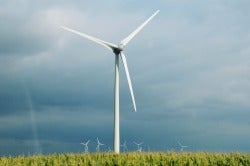
Egypt approves plans for 869MW wind power plant
22 June 2026
Egypt’s Cabinet has approved plans for French renewable energy developer Voltalia to develop an 869MW wind power project.
The scheme will be built on land allocated by the New & Renewable Energy Authority (NREA), according to a statement posted by the Cabinet following its most recent weekly meeting.
Voltalia will make an initial investment of $53m and has committed to achieving commercial operations by December 2028.
Voltalia already operates the 32MW Ra solar plant at the Benban solar complex in Aswan and is expanding its renewable energy portfolio in Egypt.
Previously, in 2024, it signed a framework agreement with Egypt’s Taqa Arabia to develop a green hydrogen and renewable power cluster near the Ain Sokhna port in the Suez Canal Economic Zone.
The green hydrogen development is planned in two phases, each centred on a 500MW electrolyser powered by more than 1.3GW of renewable generation capacity. The project, still in its early stages, is expected to produce up to 350,000 tonnes of green ammonia a year.
Voltalia’s partnership with Taqa Arabia also includes plans for a 3.2GW hybrid wind and solar project to repower the existing 545MW Zafarana wind farm in Suez Governorate. The Cabinet statement did not indicate whether the newly approved 869MW wind project forms part of that proposal.
Meanwhile, the developer won another contract, earlier this year, to develop a 132MW solar power project in Tunisia’s Gabes region.
The project, known as Wadi, marked Voltalia’s third major solar award in the country after the Sagdoud and Menzel Habib projects awarded in 2024.
https://image.digitalinsightresearch.in/uploads/NewsArticle/17376730/main.jpg