
Oxagon takes centre stage at Neom
29 September 2026

For all the talk of cancellations, Neom completed its biggest project yet in August, commissioning the $8.5bn Neom Green Hydrogen project.
The project reflects Neom’s reprioritisation, which has seen the $500bn gigaproject shift from a speculative vision towards a delivery-focused industrial development.
This shift was clearly signalled in April, when Public Investment Fund (PIF) governor Yasir Al-Rumayyan publicly backed Oxagon, Neom’s planned industrial and manufacturing hub on the Red Sea coast. Since then, there have been increasing signs that the development is taking precedence over the rest of the giga-portfolio.
Announced strategy
 Al-Rumayyan’s remarks, delivered as PIF unveiled its 2026-30 strategy, were the clearest public articulation yet of where the fund’s priorities lie. Asked whether The Line needed to be delivered, he was blunt: it would be good to have, but it was not essential.
Oxagon, on the other hand, was described as “the fundamental part of Neom”.
The comment reframed two years of speculation about scaled-back ambitions at Neom into something closer to a strategic decision, with capital following the assets capable of generating revenue, and the industrial city sitting at the top of that list.
The shift in language also matters, since PIF has been at pains to stress that no Neom projects have been formally cancelled, even as billions of dollars of contracts have been terminated or re-scoped over the past two years.
Under the new strategy, Neom has effectively been reclassified as its own reporting line within PIF’s portfolio, separated from the fund’s other domestic holdings. That separation gives Oxagon room to be judged on its own commercial merits, while distancing it from the reputational weight still carried by more conceptual elements of the wider development.
There have been increasing signs that Oxagon is taking precedence over the rest of the giga-portfolio
Conflict acceleration
The reprioritisation was already under way before the region’s latest conflict began. PIF has spent the past two years pushing Neom to identify which elements of the gigaproject were fundamental and which were aspirational, a process that has as much to do with capital discipline as geopolitics.
With the fund committing to direct roughly 80% of its $925bn portfolio towards domestic investment, while simultaneously funding Expo 2030 and the 2034 World Cup, Riyadh needed its flagship projects to start showing commercial returns rather than absorbing capital indefinitely.
Oxagon, with a port, an export-ready hydrogen plant and land that could be leased to industrial tenants, was always the part of Neom best placed to answer that requirement, and the regional conflict that began in late February only accelerated the shift. The closure of the Strait of Hormuz to a fraction of its normal commercial throughput has hit Saudi Arabia’s oil export capacity hard and pushed the kingdom into a sizeable quarterly fiscal deficit.
Riyadh has also had to contend with direct disruption to its own energy infrastructure, including the temporary closure of the East-West oil pipeline following drone strikes. Against that backdrop, an industrial city with its own deep-water port on the Red Sea, outside the Strait of Hormuz chokepoint, has taken on added strategic weight.
Oxagon offers the kingdom a second maritime gateway, one that is not exposed to the same geopolitical risks as the Gulf coast terminals that have historically carried Saudi trade. For a government having to defend every riyal of committed capital spending, a project that can plausibly generate port fees, hydrogen export revenue and data-centre hosting income within the current decade is a far easier sell than a 170-kilometre linear city that is still taking shape.
Construction ramps up
The clearest evidence of that pivot is what has actually broken ground at Oxagon recently. At a time when Neom’s recent news flow has been about contract terminations, Oxagon’s has been about starts.
The most visible of these is the artificial intelligence (AI) data-centre campus being developed by Humain, the PIF-owned AI company, in partnership with digital infrastructure developer DataVolt.
Construction on the first 100MW of a planned 360MW first phase began this year, as part of a wider 1.5GW campus that builds on the companies’ original 2025 agreement, backed by roughly $5bn of investment. The facility is designed to draw on Oxagon’s pre-zoned industrial land, renewable power and subsea cable links to Europe and Africa, with the first 100MW targeted for service in 2028.
For Neom, the project answers a question that has dogged the gigaproject for years: namely, what, beyond real estate and tourism, Oxagon actually sells.
Connectivity is following the same pattern. Neom issued an expression of interest in September for consultancy services to plan a freight rail line of more than 400km linking the Port of Neom at Oxagon to Saudi Arabia Railways’ North-South Railway at the Al-Baseeta junction.
The North-South network currently serves the kingdom’s phosphate and bauxite mining sector, running from Al-Jalamid and Baitha to the Gulf coast industrial cluster around Ras Al-Khair, Jubail and Dammam, with branches to Riyadh and the Jordanian border.
A connection to Oxagon would give that network a second maritime outlet on the Red Sea and would finally give the Port of Neom a direct rail link into the kingdom’s interior, something it has lacked since operations began in 2022.
Cargo currently depends on road transport or an additional sea leg, a constraint that has limited the port’s usefulness beyond a regional hub.
Utilities work is quietly keeping pace with the more visible projects. Neom has tendered an industrial wastewater treatment plant at Oxagon, with proposals due in early October. The scheme has an initial capacity of 35,000 cubic metres a day, (cm/d) expandable to a maximum of 45,000 cm/d as demand grows.
The plant is expected to cater to the wider industrial developments planned at Oxagon and points towards it developing into a full-fledged industrial cluster rather than a single-phase development.
Road infrastructure has moved in parallel. A design-and-build tender is currently out for the permanent upgrade of Oxagon’s Highway 55, which connects the Red Sea coast with the mainland in northwestern Saudi Arabia.
It currently serves as the only road providing north-south connectivity between Duba and the Neom region. The project is expected to support the anticipated increase in construction activity at Oxagon and facilitate the movement of cargo vehicles from Duba Port to other parts of the country and the wider region.
These construction packages represent the unglamorous groundwork needed before an industrial city can function at scale, and that foundational build-out is already being mirrored in Neom’s external connectivity. In April, a new multimodal logistics corridor linking Europe, Egypt, Neom and the GCC was enabled, offering a faster and more flexible route for European cargo entering the region.
The most advanced element of the build-out remains the port itself. Dutch marine contractor Boskalis has completed the deepening and widening of the main access channel, and Belgian contractor Besix has finished more than 4.6km of quay wall across seven berths, some with draughts of up to 18.5 metres.
The Terminal 1 development, a 900-metre, fully automated container facility designed to be one of the first ports in the kingdom to use automated ship-to-shore cranes, is being phased in through 2026. This will take capacity from the port’s current 250,000 twenty-foot equivalent units (TEUs) towards a 2030 target of 1.5 million TEUs, and an eventual ambition of 12 million TEUs once fully built out. The facility has been described as an accelerator for the kind of integrated, end-to-end supply chain the wider Oxagon concept was built around.
A development this capital-intensive will require continued private and foreign investment
Project rationale
Set against the rest of Neom’s portfolio, Oxagon’s advantage stands out. It has the potential to produce things that can be sold, shipped or leased within a timeframe investors and government auditors can underwrite.
Green hydrogen converted into green ammonia for export; port capacity sold by the container; data-centre capacity sold by the megawatt; industrial land leased by the hectare. These are conventional infrastructure economics, not the largely unprecedented urban-planning bet represented by The Line or other components of the wider Neom masterplan.
There is also a coherence to Oxagon’s individual pieces that is harder to find elsewhere in the Neom story. A port needs rail and road connections to move cargo inland. An AI data-centre campus needs power, land and subsea connectivity – things an industrial port city is well placed to provide. A green hydrogen plant needs an export terminal close by. Each project reinforces the case for the others, in a way that an industrial city announced in 2021 as one vision among several has arguably never quite managed to replicate.
Oxagon is not without risk. Schedules have already slipped once, and a development this capital-intensive will require continued private and foreign investment if its backers are serious about reducing direct funding exposure.
The direction of travel this year has been positive. With the green hydrogen plant entering commissioning, a hyperscale AI campus breaking ground, a new rail corridor being planned and a port moving towards its next phase, Oxagon is reinforcing its position as one of the kingdom’s flagship projects for the future.

Register for MEED's guest program now to access this article.
Exclusive from Meed
-
 Riyadh shifts bid deadline for King Salman Stadium works
11 November 2026
-
 Hormuz crisis sparks regional pipeline project boom
11 November 2026
-
 Saudi Arabia approves revival of Iraq oil pipeline
11 November 2026
-
 Dubai approves metro extension to Al-Maktoum airport
10 November 2026
-
 Bahrain tenders 100MW Bilaj Al-Jazayer solar project
10 November 2026
All of this is only 1% of what MEED.com has to offer
Subscribe now and unlock all the 153,671 articles on MEED.com
- All the latest news, data, and market intelligence across MENA at your fingerprints
- First-hand updates and inside information on projects, clients and competitors that matter to you
- 20 years' archive of information, data, and news for you to access at your convenience
- Strategize to succeed and minimise risks with timely analysis of current and future market trends
Related Articles
-
Riyadh shifts bid deadline for King Salman Stadium works
11 November 2026
Saudi Arabia’s Sports Ministry has set a deadline of 1 December for a contract covering early works at the King Salman International Stadium in Riyadh.
The tender scope encompasses enabling works, site preparation and initial construction activities. The tender was issued on 11 October, carrying an initial submission deadline of 19 November. Contractors previously submitted prequalification statements for the main design-and-build contract in February.
Designed by US-based architectural firm Populous, the stadium will cover approximately 660,000 square metres (sq m), seat 92,000 spectators and stand adjacent to King Abdulaziz Park. Facilities will feature a 150-seat royal suite, 120 hospitality suites, 300 VIP seats and 2,200 dignitary seats.
The broader masterplan encompasses more than 360,000 sq m of ancillary facilities, featuring two training fields, fan zones, a closed sports hall, an Olympic-sized swimming pool, an athletics track, and outdoor courts for volleyball, basketball and padel.
Scheduled for completion by 2029, the venue will serve as the home base for the Saudi national football team and host the opening match and final of the 2034 Fifa World Cup.
Saudi stadium plans
In August 2024, MEED reported that Saudi Arabia plans to build 11 new stadiums and refurbish four existing venues for the 2034 tournament. Eight venues will be located in Riyadh, four in Jeddah, and one each in Al-Khobar, Abha and Neom.
An additional 10 cities will host team base camps: Al-Baha, Jazan, Taif, Medina, AlUla, Umluj, Tabuk, Hail, Al-Ahsa and Buraidah. Across the kingdom, organisers plan to deploy 134 training sites, comprising 61 existing facilities and 73 new builds.
Saudi Arabia was officially selected to host the 2034 Fifa World Cup during an online convention of member associations at the Fifa Congress on 11 December 2024.
https://image.digitalinsightresearch.in/uploads/NewsArticle/21325461/main.jpg -
Hormuz crisis sparks regional pipeline project boom
11 November 2026
 Analysis
Wil Crisp
Oil & gas reporterRegister for MEED’s 14-day trial access
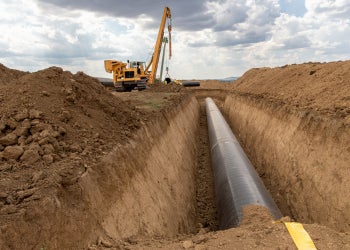
The ongoing disruption to shipping through the Strait of Hormuz and the Bab Al-Mandab Strait has sparked a regional pipeline project boom, as countries seek to diversify export routes for oil and gas.
Since the US and Israel attacked Iran on 28 February, several major pipeline projects have been announced, while others are being revived or accelerated.
Countries that are participating in this regional pipeline boom include Iraq, Syria and Egypt.
While the regional conflict has changed the dynamics within the oil and gas sectors of each of these countries in different ways, all of them see major pipeline projects as a key part of their strategic response to the conflict.
Iraqi expansion
Iraq is one of the region’s oil exporters that has been hit the hardest by the disruption to shipping through the Strait of Hormuz.
Prior to the start of the regional conflict, the country was routing 94% of its total exports through the strait, with about 3.4 million barrels a day (b/d) being exported through its southern ports at the start of the year.
At the same time, about 200,000 b/d was being exported via the Iraq-Turkiye Pipeline (ITP) in the north of the country.
In the wake of the disruption to shipping through the Strait of Hormuz, Iraq has increased the volumes being exported via the ITP and has boosted its crude exports by truck through Syria.
Earlier this month, domestic news outlets reported that Iraq’s State Oil Marketing Organisation is exporting 500,000 b/d through the ITP.
The daily exports consist of 125,000 barrels of Kirkuk crude, 175,000-200,000 barrels of Kurdistan Region crude and about 200,000 barrels of Basra crude, according to the reports.
The Basra oil reaches collection stations at Sarallu and Khurmala by truck and from there is pumped north to Ceyhan in Turkiye.
The volume of crude exported from Iraq by truck to the Syrian port of Baniyas has risen significantly in recent months.
In October, Youssef Qablawi, the chief executive of the state-owned Syrian Petroleum Company, said that about 1,000 trucks were transporting fuel oil to Syria each day, with each truck carrying about 220 barrels.
This represents exports of 220,000 b/d, which is a significant volume for Iraq, but transporting crude by truck is much more expensive than using a pipeline.
Because of this, Iraq sees pipeline projects as a long-term solution to its reliance on the Strait of Hormuz and is rapidly pushing ahead with projects that are designed to replace exports currently transported by road, as well as increasing the volumes that can be exported via both Syria and Turkiye.
Earlier this month, MEED reported that the governments of Iraq and Syria, state-owned oil companies and a consortium led by Qatar’s UCC are currently discussing the terms of a deal for four interconnected pipeline packages that are expected to have a total value of about $5bn.
Stakeholders expect a contract to be signed before the end of the year that will make the UCC-led coalition the selected developer responsible for tendering engineering, procurement and construction (EPC) contracts for the project.
The consortium includes US-based Chevron, investment company TI Capital and France’s TotalEnergies.
The four pipeline routes that are being discussed are:
- Basra to Najaf
- Najaf to Haditha
- Haditha to Fish Khapour
- Haditha to Banias Port in Syria
The proposed plan will use a fast-track framework to bring the pipelines online as quickly as possible.
Red Sea route
Iraq and Saudi Arabia are also considering reviving an old pipeline route between the Zubair oil field in Basra and the Red Sea port of Yanbu.
Operations of this 1,568-kilometre (km) pipeline were halted in August 1990 following Iraq's invasion of Kuwait and the onset of the Gulf War.
At the end of October, Saudi Arabia granted preliminary approval to revive the joint oil export pipeline project, according to a report published by Saudi Arabia’s Shafaq News, which cited anonymous sources.
If the pipeline is reinstated, it could allow Iraq to export oil via the Red Sea, reducing its reliance on the Strait of Hormuz.
The pipeline was originally built at a cost of more than $2.6bn and featured a large network of storage tanks and offshore loading terminals.
Syrian strategy
In addition to its involvement in Iraq’s strategic export pipeline project, Qatar’s UCC is developing a pipeline project in Syria that will increase the country’s ability to deal with future supply disruptions.
On 30 September, UCC announced that it has , which will extend 186km between Homs and Aleppo.
The 36-inch pipeline will have a transmission capacity of up to 11 million cubic metres a day (cm/d) of gas and will connect gas networks in Jordan to those in Turkiye via Syria.
In its announcement, UCC said that the project is scheduled for completion within 22 months and will contribute to strengthening Syria’s gas infrastructure; enhancing the capacity of its gas transmission network; and supporting regional connectivity with Jordan, Turkiye and Lebanon.
Hisham Al-Saleh, Syrian Petroleum Company’s deputy chief executive for the gas sector, has said that the project includes the installation of three compressors in Furqlus, which will allow gas to be transported in both directions between Turkiye and Jordan.
Speaking to the state-owned Syrian Arab News Agency, he said that the project will add an estimated 8 million cubic metres of storage capacity to the Syrian gas network, providing greater flexibility in managing gas production and use.
Egyptian ambitions
Egypt is also ramping up pipeline project activity in order to increase the number of oil and gas links that it has with neighbouring countries.
The North African nation has long had ambitions to try and become a major regional energy hub.
These plans have been given a boost by the ongoing disruption to shipping through the Strait of Hormuz and the Bab Al-Mandab Strait, which has reduced exports from nations like Qatar, Kuwait, Iraq, the UAE and Saudi Arabia.
Concerns about the reliability of exports from Iraq and the GCC have led to increased investment in oil and gas infrastructure in countries that are not reliant on these waterways to transport hydrocarbons.
In recent months, significant progress has been made on an integrated project that was launched in order to export offshore gas reserves in Cyprus via Egyptian energy infrastructure.
In October, Italian oil and gas company Eni signed the main EPC and drilling contracts for the project, which will develop the Cronos field.
The project includes contracts with several companies that will develop infrastructure in both Egypt and Cyprus.
The awards include a $170m contract that has been won by Egypt’s Petrojet for a new onshore gas pipeline in Egypt that will help to transport gas to Egypt’s Damietta liquefied natural gas (LNG) facility.
Separately, US-based Baker Hughes signed a contract for the design, procurement and construction of subsea production systems, including associated equipment and control systems.
In September, it was announced that US-headquartered McDermott will carry out offshore work for the project, including the transportation, installation and connection of subsea pipelines and equipment.
The Cronos development project will significantly increase the volume of gas being imported into Egypt, where it can be exported as LNG as well as helping to meet domestic demand.
On top of the major pipeline project allowing the importation of gas from Cyprus, Cairo is also looking at other regional pipeline projects, including gas links to Libya.
In a statement released earlier this month, Egyptian Foreign Minister Badr Abdelatty said that a Libyan team will visit Cairo soon to continue technical talks about the gas pipelines, as well as other energy projects, with Egypt’s petroleum and electricity ministers.
Pipeline problems
While the planned oil pipeline projects in Iraq are seen as a possible solution to the disruption to shipping through the Strait of Hormuz, they are also likely to face problems relating to the importation of necessary equipment that would normally be shipped through the waterway.
The Common Seawater Supply Project, designed to bring water from the sea to inject into oil fields, is currently behind schedule, largely because of problems importing the pipeline segments through the strait.
This issue could plague other planned pipeline projects in Iraq if the disruption to shipping continues, forcing contractors to use other, more costly, import routes.
Challenging conditions
Even when Iraq’s major export pipeline projects are completed, they may fail to resolve the country’s oil export problems to the extent many are expecting.
While the export pipelines will go some way towards diversifying away from reliance on exports through waterways where oil and gas tankers are vulnerable to militant attacks, many industry insiders say Iraq could just be replacing one vulnerable export route with another.
Oil pipelines in the Middle East and North Africa region have a long history of suffering attacks and often stretch long distances through remote regions where they are difficult to defend.
Ultimately, it is likely that finding a diplomatic solution to the regional conflict will be the only way that Iraq can reliably increase its oil exports in the long term.
https://image.digitalinsightresearch.in/uploads/NewsArticle/21305172/main.jpg -
Saudi Arabia approves revival of Iraq oil pipeline
11 November 2026
Register for MEED’s 14-day trial access
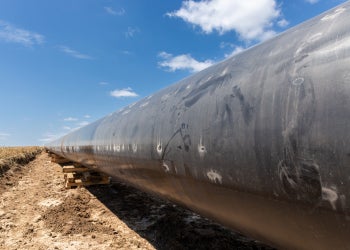
Iraq and Saudi Arabia are considering reviving an old pipeline route between the Zubair oil field in Basra and Saudi Arabia’s Red Sea port of Yanbu.
Operations of this 1,568-kilometre (km) pipeline were halted in August 1990 following Iraq’s invasion of Kuwait and the onset of the Gulf War.
At the end of last month, Saudi Arabia granted preliminary approval to revive the joint oil export pipeline, according to a report published by Saudi Arabia’s Shafaq News that cited anonymous sources.
If the pipeline is reinstated, it could allow Iraq to export oil via the Red Sea, reducing its reliance on the Strait of Hormuz.
The pipeline was originally built at a cost of more than $2.6bn and featured a large network of storage tanks and offshore loading terminals.
Under current discussions, Iraq will be required to fund the restoration of its own section of the pipeline.
The Middle East and North Africa region is currently experiencing a boom in pipeline project activity due to disruption to shipping as a result of the war that started when the US and Israel attacked Iran on 28 February 2026.
As a result of the conflict, the shipping of gas, chemicals, oil and refined products has been disrupted in both the Strait of Hormuz and the Bab Al-Mandab Strait.
Many countries, including Saudi Arabia and Iraq, see pipelines as a key way of diversifying export routes so that they are less reliant on shipping through these two waterways.
MEED’s October 2026 report on Saudi Arabia includes:
> COMMENT: Saudi projects hold steady
> GOVERNMENT: Riyadh looks to reset its regional defence outlook
> ECONOMY: Conflict bolsters case for Saudi economic diversification
> BANKING: Saudi lenders readjust to lower lending and deposit climate
> UPSTREAM: Aramco upstream spending gathers pace
> DOWNSTREAM: Sabic steps up Saudi petchems investment
> POWER: Saudi Arabia’s power award activity slows
> WATER: Saudi water sector hits sharp slowdown
> CONSTRUCTION: Saudi construction defies the headwinds
> TRANSPORT: Saudi infrastructure pushes forward amid conflict
> DATABANK: Saudi data indicates project spending shiftTo see previous issues of MEED Business Review, please click herehttps://image.digitalinsightresearch.in/uploads/NewsArticle/21304885/main.jpg -
Dubai approves metro extension to Al-Maktoum airport
10 November 2026
Register for MEED’s 14-day trial access
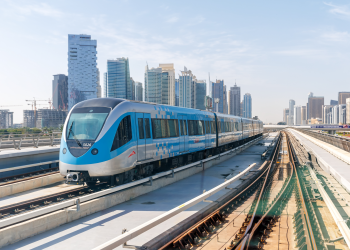
Dubai’s Executive Council has approved a project to extend the Dubai Metro’s Route 2020 to Al-Maktoum International Airport City, with passenger services scheduled to begin operations in 2031.
Sheikh Hamdan bin Mohammed bin Rashid Al-Maktoum, Crown Prince of Dubai, announced the decision following a council meeting held during the UAE Government Annual Meetings 2026.
The rail project forms part of a package of strategic schemes worth over AED11bn ($3bn) approved by the council.
The wider approvals include a comprehensive framework to upgrade community facilities and public services by 2040, with priority given to residential communities for UAE citizens.
حمدان بن محمد يترأس اجتماع المجلس التنفيذي لإمارة دبي ضمن الاجتماعات السنوية لحكومة دولة الإمارات، ويعتمد خلاله موازنة بقيمة أكثر من 11 مليار درهم لمشاريع استراتيجية جديدة في دبي، وخطة شاملة لتطوير الخدمات والمرافق المجتمعية، ومشروع امتداد مترو دبي إلى مطار آل مكتوم الدولي، كما أعتمد سموه خلال الاجتماع نتائج دراسة مستقبل السوق العقاري في دبي.
— Dubai Media Office (@DXBMediaOffice) November 10, 2026
The project approval follows the procurement of detailed design work for the rail link. MEED exclusively reported in September that Dubai’s Roads & Transport Authority (RTA) had awarded US-based engineering consultancy Aecom the design contract for the Route 2020 extension.
The planned extension will run for about 3 kilometres from the existing Expo 2020 terminus station to connect directly with the West Terminal of Al-Maktoum International airport. The scheme will add two new stations to the network.
The existing Route 2020 corridor is a 15km spur that branches off the Dubai Metro Red Line at Jebel Ali station. It comprises 11.8km of elevated viaduct and 3.2km of underground track, serving five elevated and two underground stations.
https://image.digitalinsightresearch.in/uploads/NewsArticle/21301168/main.png -
Bahrain tenders 100MW Bilaj Al-Jazayer solar project
10 November 2026
Register for MEED’s 14-day trial access
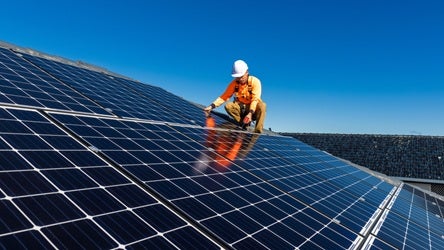
Bahrain’s Electricity and Water Authority (EWA) has issued a tender for the Bilaj Al-Jazayer independent power project (BAJ solar IPP), a utility-scale solar scheme with a planned capacity of at least 100MW.
The project will be procured on a public-private partnership basis using a build-own-operate (BOO) model.
The selected developer will develop, finance, design, construct, operate, maintain, decommission and restore the project site over a 25-year contract period.
EWA has set a target commercial operation date of 31 December 2028.
The scope includes photovoltaic generation facilities, utility-scale inverters, access roads and internal roads. The plant will use proven photovoltaic modules and inverters designed for Bahrain’s local operating conditions.
The tender was published on 8 November. Companies have until 20 December to submit bids, with bid opening scheduled for 21 December.
The tender requires an initial bond of BD300,000 ($796,000).
The project will be awarded through a single-stage request-for-proposals process.
Bidders will first be assessed against minimum eligibility requirements covering financial strength, project-financing capability and experience in large-scale solar developments before their technical and financial proposals are evaluated.
A single bidder must demonstrate tangible net worth of at least $50m.
In a consortium, each member must demonstrate net worth equivalent to its proposed shareholding in the $50m threshold, while the managing member must have a tangible net worth of at least $20m.
The managing member must also have secured at least $150m of limited-recourse financing across three or more infrastructure projects during the past 10 years. It must hold at least a 15% equity stake in each reference project.
Bidders or their engineering, procurement and construction contractors must demonstrate experience delivering either three grid-connected ground-mounted solar projects of at least 100MWac each globally, or two projects of at least 70MWac each in the GCC. The reference projects must be connected to the grid at 66kV or above.
The BAJ solar IPP supports Bahrain’s target of sourcing 20% of its energy from renewable sources by 2035.
https://image.digitalinsightresearch.in/uploads/NewsArticle/21291585/main.jpg