
Oman signs PPA for 125MW Dhofar 2 wind project
12 November 2025
Singapore's Sembcorp Utilities and local firm OQ Alternative Energy (OQAE) have won a contract to develop the 125MW Dhofar 2 wind independent power project in Oman.
The contract was awarded by state offtaker Nama Power & Water Procurement Company (Nama PWP) under a 20-year power purchase agreement (PPA).
Under the PPA, Sembcorp and OQAE will form a joint venture to build, own and operate the wind farm, which will supply power to Nama PWP once operational.
The equity split will give Sembcorp 75% and OQAE 25%, a source close to the project told MEED.
Nama PWP said that it will allocate a portion of contracted works for the Dhofar 2 project to Omani small and medium-sized enterprises under its in-country value programme.
The project is expected to begin commercial operations in the third quarter of 2027.
The facility, valued at about OR43m ($112m), will be located on a 12-square-kilometre site in Dhofar Governorate.
The project comprises 20 Windey WD200 turbines, each with a 6.25MW capacity. Each turbine stands 215 metres tall and will be connected to the national grid via a 400kV substation.
The development will provide clean electricity to more than 18,000 homes and will cut carbon dioxide emissions by about 158,000 tonnes a year.
It is also expected to generate about 396,754 megawatt-hours and free up around 76 million cubic metres of natural gas annually.
Sembcorp has over 1.1GW of energy assets in Oman. In September, the firm signed a new 10-year power and water purchase agreement with Nama PWP for its Salalah independent water and power plant.
According to Nama PWP, the offtaker has contracted 26 water and desalination plants, exceeding $11bn in investment, over the past 15 years.
Chief energy transition officer at Nama PWP, Abdullah Bin Rashid Al-Sawafi, said the company "plans to attract a further $5bn over the next five years, mainly in renewable energy and storage technologies".
This includes an extra 9GW of renewable energy capacity by 2030, representing 60% of total contracted capacity.
Oman aims to have 30% of its electricity generation from renewable sources by the same year.
 READ THE NOVEMBER 2025 MEED BUSINESS REVIEW – click here to view PDF
Mena players up the ante in global LNG production race; Investment takes UAE non-oil economy from strength to strength; Project finance activity draws international lenders back to market
Distributed to senior decision-makers in the region and around the world, the November 2025 edition of MEED Business Review includes:
|
> AGENDA 1: Gulf LNG sector enters a new prolific phase
> INDUSTRY REPORT 1: Region sees evolving project finance demand
> INDUSTRY REPORT 2: Iraq leads non-GCC project finance activity
> GREEN STEEL: Abu Dhabi takes the lead in green steel transition
> DIGITISATION: Riyadh-based organisation drives digital growth
> UAE MARKET FOCUS: Investment shapes UAE growth story
|

Register for MEED's guest program now to access this article.
Exclusive from Meed
-
 Contractor wins $197m Doha infrastructure works
6 November 2026
-
 Stakeholders aim to sign Iraq pipeline deal by year end
6 November 2026
-
 Taqa shortlists 17 contractors for Mirfa-Liwa scheme
6 November 2026
-
 Gulf conflict cuts Emirates Group profit by 66%
6 November 2026
-
 King Salman airport tenders roads and utilities package
6 November 2026
All of this is only 1% of what MEED.com has to offer
Subscribe now and unlock all the 153,671 articles on MEED.com
- All the latest news, data, and market intelligence across MENA at your fingerprints
- First-hand updates and inside information on projects, clients and competitors that matter to you
- 20 years' archive of information, data, and news for you to access at your convenience
- Strategize to succeed and minimise risks with timely analysis of current and future market trends
Related Articles
-
Contractor wins $197m Doha infrastructure works
6 November 2026

Register for MEED’s 14-day trial access
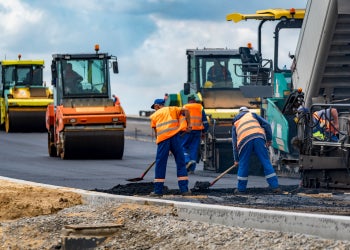
Qatar’s Public Works Authority (Ashghal) has awarded an estimated QR722m ($197m) contract to develop roads and infrastructure north of Al-Rifaa Street in Doha.
The contract was awarded to local firm Tadmur Contracting Company.
Six other contractors submitted bids:
- Qatar Trading & Contracting Group ($244m)
- Iris Construction Tourism Industry & Trade ($259m)
- Lotus Trading & Contracting ($260m)
- Generic Engineering Technologies & Contracting ($261m)
- Alghanim International / National Industrial Contracting ($268m)
- Hamad Bin Khalid Contracting Company ($281m)
The scope of work covers the construction of more than 34 kilometres of roads, dedicated plot developments, site clearance, backfill and earthworks.
The package also requires the installation of surface and groundwater drainage systems, a foul-water drainage network and treated sewage effluent lines.
In addition, the contractor will deliver a dedicated pumping station, an emergency flood area pond, 3,735 car parking spaces, road cross-sectional elements and verge parking bays.
Secondary infrastructure works include electrical distribution, water mains, utility lines, manholes, gully pots and house connections, along with kerbing, road pavement works, landscaping, street lighting, road markings and directional signage.
https://image.digitalinsightresearch.in/uploads/NewsArticle/21204827/main.jpg -
Stakeholders aim to sign Iraq pipeline deal by year end
6 November 2026
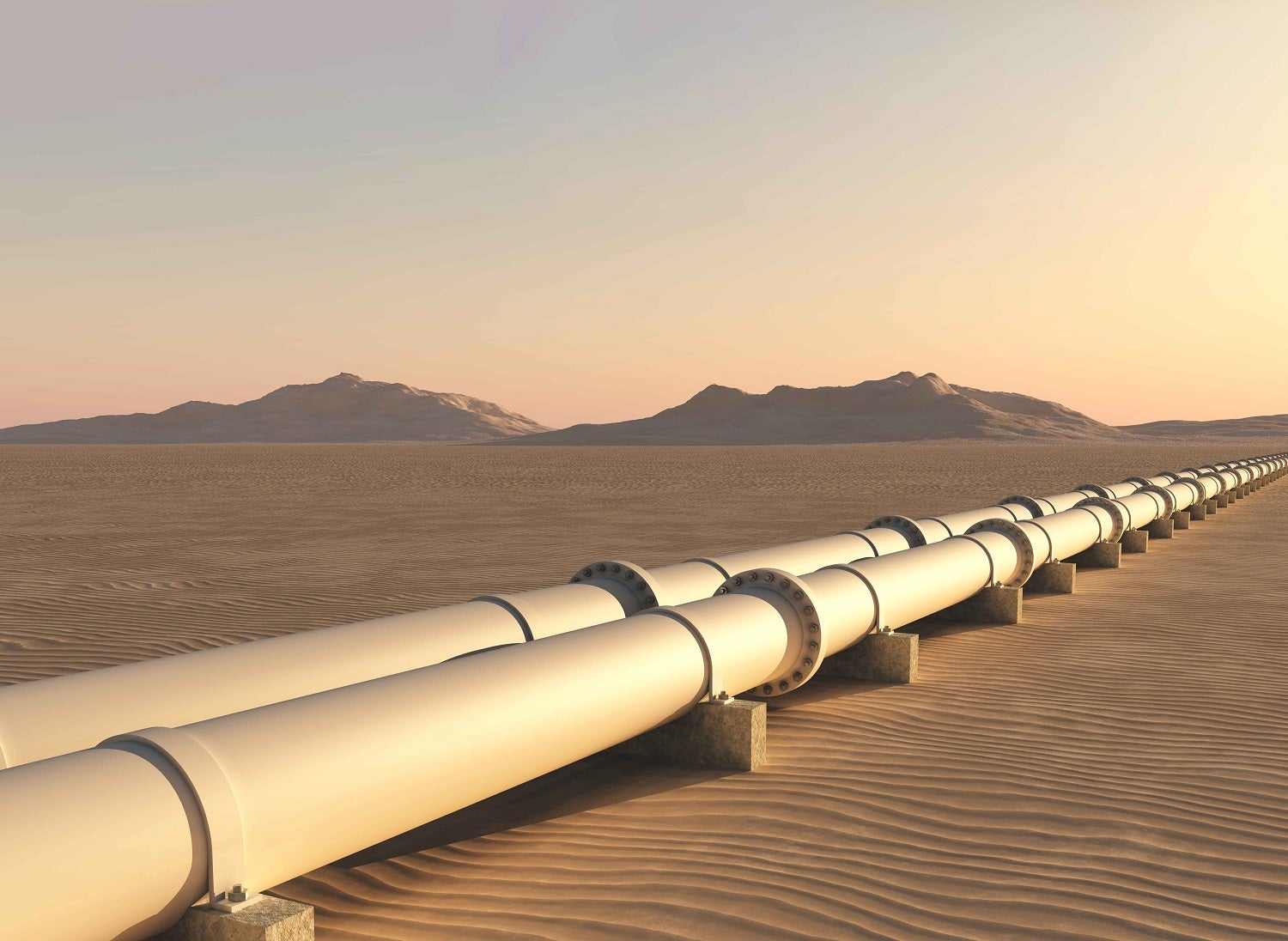
Stakeholders expect a key contract to be signed before the end of the year for the development of a major oil export pipeline network in Iraq, according to industry sources.
Iraq and Syria’s governments, state-owned oil companies and a consortium led by Qatar’s UCC are currently discussing the terms.
If all parties agree to the proposed deal, the UCC-led coalition will become the selected developer responsible for tendering engineering, procurement and construction (EPC) contracts for the project.
The consortium includes US-based Chevron, the investment company TI Capital and France’s TotalEnergies.
The proposed plan will use a fast-track framework to bring the pipelines online as quickly as possible.
One source said: “The plan that is being discussed is highly unusual, because it is such a large-scale pipeline project and it would be brought online in a relatively short timeframe.”
A team from UCC is currently in Iraq for meetings with government officials to discuss the project, one source said.
The project will be focused on four pipeline packages:
- Basra to Najaf
- Najaf to Haditha
- Haditha to Fish Khapour
- Haditha to Banias Port in Syria
In July, Iraq’s cabinet approved state-owned Basra Oil Company signing a heads of agreement and a non-disclosure agreement with the UCC-led consortium to explore possible future oil pipeline projects.
Under the terms of the agreement, the consortium is preparing technical and financial feasibility studies for strategic export pipeline projects.
Also in July, US-based KBR was awarded a consultancy contract for the section of pipeline due to extend from Basra to Haditha.
In April, Iraq announced the allocation of $1.5bn for the Basra-Haditha route, while the larger scheme is estimated at around $5bn.
https://image.digitalinsightresearch.in/uploads/NewsArticle/21181262/main.jpg -
Taqa shortlists 17 contractors for Mirfa-Liwa scheme
6 November 2026
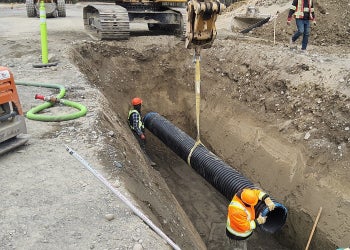
Up to 17 contractors have been invited to submit bids for a major water transmission and distribution scheme serving Mirfa, Madinat Zayed and Liwa in Abu Dhabi, a source close to the project has confirmed to MEED.
The project, originally estimated to cost $775m, comprises a water transmission system from Mirfa, alongside distribution networks serving farms and settlements in Abu Dhabi’s western region.
In October, MEED exclusively reported that a request for proposals had been issued, with bids due on 5 January 2027, following an extension from the initial deadline of 11 November 2026.
The Mirfa-Liwa scheme has been in procurement for several years and was previously tendered in December 2024 as an engineering, procurement and construction scheme, divided between transmission and distribution works.
As MEED understands, it was recently re-tendered under a design, build and operate model, extending the contractor’s responsibilities to operating the infrastructure after construction.
According to sources, the full list of contractors invited to bid for the tender includes:
- Afcons Infrastructure (India)
- Alkhorayef Water & Power Technologies (Saudi Arabia)
- China Machinery Engineering Corporation (China)
- China National Chemical Engineering (China)
- China Tiesiju Civil Engineering Group (China)
- Danway Electrical & Mechanical Engineering (UAE)
- Emarat Aloula Contracting (UAE)
- FCC Aqualia (Spain)
- Gulf Contractors Company (UAE)
- Hydropower Energy & General Construction (UAE)
- Jereh Oil & Gas Engineering Corporation (China)
- Mapa (Turkiye)
- Nesma & Partners Contracting Company (Saudi Arabia)
- Orascom Construction (Egypt)
- Power Construction Corporation of China (China)
- Tecton Engineering & Construction (UAE)
- Tristar Engineering & Construction (UAE)
According to details seen by MEED, the scope includes a pumping station at Mirfa with a capacity of 128 million imperial gallons a day, approximately 125 kilometres of transmission pipelines to Muzairah, with branches to Madinat Zayed and Liwa Summit, and storage tanks at the three locations.
The distribution network is divided into four geographic clusters covering Liwa East, Liwa West, Madinat Zayed and Seih Al-Kheir. The works include associated pipelines, pumping stations and storage facilities.
https://image.digitalinsightresearch.in/uploads/NewsArticle/21181223/main.jpg -
Gulf conflict cuts Emirates Group profit by 66%
6 November 2026
Register for MEED’s 14-day trial access
Dubai’s Emirates Group made a profit before tax of AED4.1bn ($1.1bn) in the first half of its 2026-27 financial year, 66% less than the AED12.2bn it made in the same period last year.
The six months to 30 September were the group’s first full half-year since military activity disrupted commercial air traffic across the Gulf on 28 February. Group revenue fell 12% to AED66.2bn ($18bn), from AED75.4bn a year earlier. Profit after tax fell 66% to AED3.6bn ($1bn).
Earnings before interest, tax, depreciation and amortisation (Ebitda) fell 41% to AED12.5bn ($3.4bn).
The results follow a record 2025-26 financial year. The group made a profit before tax of AED24.4bn in that year, on revenue of AED150.5bn.
“It has been a demanding six months, and once again our business model and our people stood up to the test,” said Sheikh Ahmed Bin Saeed Al-Maktoum, chairman and chief executive of Emirates Airline and Group. “Customer demand held firm and our cargo operations made a strong contribution, keeping revenue and cash levels healthy even as global jet fuel prices doubled against the same period last year.”
Airline performance
Emirates airline’s profit before tax fell 68% to AED3.7bn ($1bn), compared with AED11.4bn a year earlier. Its revenue fell 13% to AED56.9bn ($15.5bn). The airline carried 21.8 million passengers, 22% fewer than a year earlier. Capacity measured in available seat kilometres fell 17%, and the passenger seat factor dropped to 72% from 79.5%.
Cargo partly offset the drop in passenger numbers. Emirates SkyCargo carried 1.2 million tonnes, 1% less than a year earlier, but its revenue rose 52%. The conflict reduced the airfreight capacity available on the market, and disruption to shipping pushed shippers towards air transport.
Before hedging gains, fuel costs rose 60%, even though the airline uplifted 12% less fuel. Gains of AED7.1bn ($1.9bn) from fuel hedging cut the net increase in fuel costs to 13%. Fuel accounted for 34% of operating costs.
On 30 September, Emirates was operating 91% of its pre-disruption network, serving 150 airports in 78 countries and territories. On 31 March, it had been flying 58% of its passenger capacity to 122 destinations in 65 countries.
Fleet investment
The airline received nine Airbus A350s and five Boeing 777 freighters during the period. Its fleet grew to 289 aircraft, from 277 on 31 March. Emirates is continuing its cabin retrofit programme, a planned investment of more than $7bn. It refurbished 12 aircraft in the first half. In May, it broke ground on a $5.1bn engineering and maintenance, repair and overhaul (MRO) facility at Al-Maktoum International airport, which is expected to be completed in the mid-2030s.
The group’s cash position was AED54.1bn ($14.7bn) on 30 September, down from a record AED59.6bn on 31 March. The group said it had used its reserves to make pre-delivery payments for aircraft and to service existing debt. It also paid the remaining AED2bn of the AED3.5bn dividend declared for 2025-26 to its owner, the Investment Corporation of Dubai.
Ground services and travel company dnata made a profit before tax of AED410m ($112m), down 51%. Its revenue fell 7% to AED11bn ($3bn), and the group said dnata’s international businesses helped offset weaker traffic in the UAE.
The group’s workforce fell 2% to 128,237 people.
“We enter the second half of our 2026-27 financial year with measured optimism,” said Sheikh Ahmed.
https://image.digitalinsightresearch.in/uploads/NewsArticle/21198114/main.jpg -
King Salman airport tenders roads and utilities package
6 November 2026
Register for MEED’s 14-day trial access
Saudi Arabia’s King Salman International Airport Development Company (KSIADC) has tendered the Zone C1+C2 roads, bridges and utility networks package for King Salman International airport (KSIA) in Riyadh.
The tender was issued on 26 October, and bids are due by 6 December.
The request for proposals covers the procurement, construction, testing and commissioning of civil infrastructure supporting Terminal 6, alongside the existing Terminals 1-5.
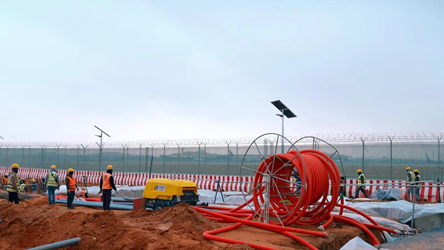
The scope includes upgrades to Airport Road 539, which runs west of Terminals 1-5, and to part of Mohamed Bin Faraj Road 5333, west of Junction 6.
It also includes new roads, ramps, service roads, and signalised at-grade junctions. An additional access road will connect the Terminal 6 site offices to Road 5333.
Structures will include the Junction 6 and Terminal 6 bridges, retaining walls and reinforced-soil structures.
The contractor will also construct the central ground services equipment (GSE) bridge. Before construction begins, the contractor must validate the design, complete any outstanding elements – including mechanically stabilised earth walls, approach slabs, drainage and lighting – and secure the required authority approvals.
Dry utilities will comprise high- and extra-high-voltage containment, a 13.8kV medium-voltage network with package substations, low-voltage distribution and street lighting, and security-surveillance systems.
Wet utilities will include potable water, fire water, irrigation water, treated sewage effluent, district cooling and wastewater networks. Wastewater pipes will range from 200mm u-PVC gravity lines to 1,700mm glass-reinforced plastic mains.
The stormwater network will include channels, culverts, ponds and pipes ranging from 400mm to 1,400mm in diameter. Crossings will be constructed using open-cut excavation, horizontal directional drilling or microtunneling.
Utilities serving the operational terminals will be diverted on a design-and-build basis. Enabling works will include earthworks and the relocation of the security fence and trees. The contractor will also demolish a temporary car park, existing bridges and a sewage pumping station.
Optional works comprise two design-and-build elements that will proceed only at the client’s instruction.
The first is the south GSE bridge. The second is an approximately 1,400-metre, multi-lane access road to the Terminal 6 Transportation Hub, including bridges, underpasses, ramps and tunnels, as well as provisions for future Wadi Loop utilities and structures.
https://image.digitalinsightresearch.in/uploads/NewsArticle/21176175/main.png