
Oman pursues diversification amid regional concerns
31 December 2025

In late November, a batch of 36 wind turbines arrived at Oman’s Duqm Port, destined for the Riyah 1 and 2 projects being developed by OQ Alternative Energy. Each turbine can generate some 6.5MW – enough to supply 2,400 Omani homes – and yet, rather than being fed into the national grid, their output will be used by Petroleum Development Oman (PDO) to ramp up the use of renewable energy in its own operations. This will both reduce its carbon emissions and free up more gas for other purposes.
This combination of continued hydrocarbon exploitation and clean energy development is a familiar pattern around the Gulf. For Oman, it is also a sign of its efforts to diversify while making existing energy resources go further.
With the recovery of oil prices, Oman’s nominal GDP has surged by 41% from 2020 to 2024, according to the Washington-based IMF
Plans within plans
In 2026, the country will begin the 11th phase of its five-year cycle of its Vision 2040 development plan, in which both diversification and improved performance feature strongly. Ministry of Economy undersecretary Nasser Rashid Al-Maawali set out the objectives of the 2026-30 plan in a 24 November presentation to the State Council. Among the points he highlighted were a focus on building a diversified and sustainable economy, greater economic decentralisation and raising institutional performance.
The authorities can look back with some satisfaction on the10th plan, which began as Sultan Haitham Bin Tariq Al-Said was taking office in January 2020. Since then, the government’s finances have been turned around, with debt levels brought down and spending kept under control even as the economy as a whole has continued to grow. With the recovery of oil prices, Oman’s nominal GDP has surged by 41% from 2020 to 2024, according to the IMF, reaching $107bn at the end of that period.
Diversification remains a work in progress, but there has been positive movement. According to Capital Intelligence Ratings, non-hydrocarbon activity accounted for 72.4% of GDP in the first quarter of 2025, compared to 69.9% in 2020.
In a review of the economy issued in late November, the IMF had encouraging words for Muscat. The organisation’s mission chief for Oman, Abdullah Al-Hassan, said the economic outlook for the country was “favourable” and the coming five-year plan “presents an important opportunity to accelerate economic diversification, boost productivity and create more private sector jobs for Omanis”.
However, there are still vulnerabilities. Data from the Ministry of Finance for the third quarter of the year showed revenues falling and expenditure rising, amid subdued international oil prices and restrictions on output under the Opec+ arrangements.
Public revenue over the first nine months of this year totalled RO8.5bn ($22bn), an 8% decrease from the same period of 2024, with oil income down 13% and gas revenues down 4%.
Public spending meanwhile was up 2% over the period to RO8.9bn, leaving a small but noteworthy deficit. The shortfall was mainly due to capital expenditure, with ministries spending RO1.1bn on development projects, or 23% more than the RO900m that had been anticipated. Economists expect further budget deficits in the coming years, unless oil prices rebound.

Non-oil potential
Developing the non-oil economy remains a critical aspect of future growth, with key target sectors including tourism. Oman Air is considering ordering more planes in the new year, with chief executive Con Korfiatis saying at the recent Dubai Airshow “we will definitely need more” narrow-bodied jets. It is unclear if it will order new planes from Airbus or Boeing or look for second-hand jets on the lease market.
Green hydrogen is another significant area of activity for the future, although it remains to be seen if global demand will develop quickly enough to meet all the supply being planned, in Oman and elsewhere. According to the authorities, Oman is aiming to attract $140bn of investments in its green hydrogen sector by 2050.
In the shorter-term, a more prosaic list of sectors is generating growth. According to the IMF, the strong economic performance in the first half of 2025 was boosted by activity in the manufacturing, wholesale and retail, logistics, construction, and agriculture and fishing sectors. “Growth is projected to strengthen over 2025-26 as oil production cuts unwind and non-hydrocarbon activity continues to expand,” said Al-Hassan.
He urged further modernisation of the tax system, including the personal income tax on high earners, which is due to be introduced in early 2028. The IMF has also called for more cuts to spending, including phasing out untargeted energy subsidies.
Geopolitical risk
However, for all the progress made in expanding the economy and putting government finances on a surer footing in recent years, Oman cannot escape its neighbourhood. The IMF noted in its report that “renewed geopolitical tensions could weigh on growth and fiscal and external positions.”
This is something Omani officials are acutely aware of and it has informed the country’s long-standing role as a regional mediator.
Events in June threw that into sharp relief, when a planned sixth round of indirect talks between the US and Iran in Muscat were abruptly cancelled, after Israel launched a bombing campaign on Iran.
It was an event Oman’s Foreign Minister Sayyid Badr Bin Hamad Al-Busaidi focused on during his speech at the Manama Dialogue conference in Bahrain in early November. “We have long known that Israel, not Iran, is the prime source of insecurity in the region,” he said.
With Saudi Arabia now reportedly playing a more central role in mediating between the US and Iran, Oman’s position as a regional intermediary may now be reduced – at least in regard to that bilateral stand-off. But Muscat could still play an important role in helping to resolve the situation in Yemen, particularly as the Houthi’s main negotiator Mohammed Abdulsalam resides in Muscat.
“Failing to engage constructively and in good faith with Iran, with the Houthis and others, will not resolve issues like proxy wars, human suffering or nuclear proliferation,” Al-Busaidi told the audience in Manama. “On the contrary, exclusion fuels conflict, extremism and instability, worsening exactly these challenges. Only an inclusive regional security framework can effectively address shared challenges.”
A calmer geopolitical backdrop would also provide a more conducive environment for Omani economic development and diversification.
MEED’s January 2026 report on Oman also includes:
> BANKING: Oman banks feel impact of stronger economy
> OIL & GAS: LNG goals galvanise Oman’s oil and gas sector
> POWER & WATER: Oman prepares for a wave of IPP awards
> CONSTRUCTION: Momentum builds in construction sector

Register for MEED's guest program now to access this article.
Exclusive from Meed
-
 Read the March 2026 MEED Business Review
3 March 2026
-
 Firms prepare Port of Duqm consultancy bids
3 March 2026
-
 Diriyah awards Pendry superblock package
3 March 2026
-
 Local firm to develop $598m Muscat tourism project
3 March 2026
-
 Firms to build Jeddah Islamic port logistics zone
3 March 2026
All of this is only 1% of what MEED.com has to offer
Subscribe now and unlock all the 153,671 articles on MEED.com
- All the latest news, data, and market intelligence across MENA at your fingerprints
- First-hand updates and inside information on projects, clients and competitors that matter to you
- 20 years' archive of information, data, and news for you to access at your convenience
- Strategize to succeed and minimise risks with timely analysis of current and future market trends

Related Articles
-
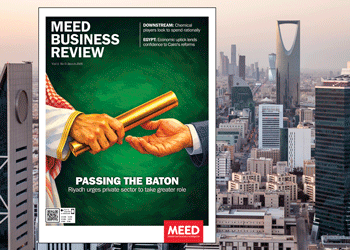
Read the March 2026 MEED Business Review
3 March 2026
Download / Subscribe / 14-day trial access Saudi Arabia’s priorities have shifted over the past decade, with officials at February’s Private Sector Forum confirming a reprioritisation since 2016 that includes postponing the 2029 Asian Winter Games in Trojena and scaling back projects such as The Line in response to global economic uncertainty.
 In 2026, the Public Investment Fund’s role as the main driver of development is shifting towards greater private sector involvement, a transition examined by MEED editor Colin Foreman in the latest issue of MEED Business Review.
March’s market focus is on Egypt, where the country’s crisis mode is giving way to a cautious revival.
This edition also reports that the region’s downstream sector may face subdued project spending in 2026 due to flattening demand and weak margins.
In the latest issue, we disprove the Ramadan slowdown story, present exclusive leadership insight from Jacobs on delivering Saudi Arabia’s next phase of rail growth and outline some important lessons learnt from a power plant decommissioning. We also talk to senior executives at Enersol, Lamar Holding and Metito.
We hope our valued subscribers enjoy the March 2026 issue of MEED Business Review.
Must-read sections in the March 2026 issue of MEED Business Review include:
 > AGENDA: Saudi Arabia’s private sector picks up the baton
> RAMADAN: Data disproves the Ramadan slowdown story
INDUSTRY REPORT:
Downstream
> Chemicals producers look to cut spending
> Global petrochemical project capex set to rise until 2030> LEADERSHIP: Delivering Saudi Arabia’s next phase of rail growth
> POWER: Lessons learnt from a power plant decommissioning
> INTERVIEW: Abu Dhabi’s Enersol charts acquisitions path
> INTERVIEW: Lina Noureddin, CEO of Lamar Holding, on the evolving PPP landscape
> INTERVIEW: Contract award marks Metito’s return to municipal projects
> MARKET FOCUS EGYPT:
> COMMENT: Egypt’s crisis mode gives way to cautious revival
> GOVERNMENT: Egypt adapts its foreign policy approach
> ECONOMY & BANKING: Egypt nears return to economic stability
> OIL & GAS: Egypt’s oil and gas sector shows bright spots
> POWER & WATER: Egypt utility contracts hit $5bn decade peak
> CONSTRUCTION: Coastal destinations are a boon to Egyptian construction> MEED COMMENTS:
> Winter Games delay raises uncertainty for Saudi construction
> Duqm petrochemicals revival provides fillip to Gulf projects market
> Solar deals signal Saudi Arabia’s energy ambitions
> Hydrogen bridge awaits bankable contracts> GULF PROJECTS INDEX: Gulf index leaps upward in 2026
> JANUARY 2025 CONTRACTS: Middle East contract awards
> ECONOMIC DATA: Data drives regional projects
> OPINION: The war that (almost) no one wants
> BUSINESS OUTLOOK: Finance, oil and gas, construction, power and water contracts
To see previous issues of MEED Business Review, please click herehttps://image.digitalinsightresearch.in/uploads/NewsArticle/15839736/main.gif -
Firms prepare Port of Duqm consultancy bids
3 March 2026
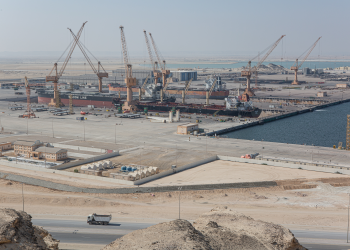
Oman’s Port of Duqm has issued tender notices inviting consultants to bid for two packages by mid-March.
The scope of the first tender covers the consultancy services for inspection, scope preparation and supervision of the sewage treatment plant.
The bid submission deadline is 18 March.
The scope of the other tender includes the consultancy services for port marine traffic assessment/simulation and impact study.
The bid submission deadline for this package is on 17 March.
Both tenders were floated late last month.
The Port of Duqm is a deepwater, multipurpose port on Oman’s Arabian Sea coast, developed within the Special Economic Zone at Duqm (Sezad).
Its location outside the Strait of Hormuz is a key advantage, positioning Duqm as a strategic alternative gateway for cargo moving between the Gulf, the Indian subcontinent and East Africa, and supporting Oman’s push to grow non-oil trade and port-led industry.
Designed to handle a mix of cargoes, including containers, dry bulk, breakbulk and liquid bulk, the port forms part of a wider Duqm complex that also includes a major dry dock and large industrial land allocations for energy, manufacturing and logistics projects.
As the port and SEZ expand in phases, consultancy tenders typically reflect the next steps in delivery and operations, covering engineering and technical studies, commercial assessments, and readiness planning tied to new terminals and industrial tie-ins.
 https://image.digitalinsightresearch.in/uploads/NewsArticle/15840397/main.jpg
 -
Diriyah awards Pendry superblock package
3 March 2026
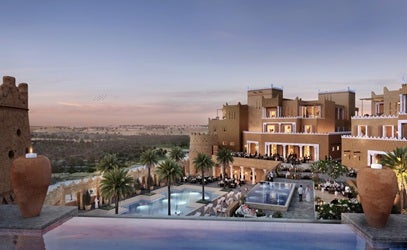
Saudi Arabian gigaproject developer Diriyah Company has awarded an estimated SR2.5bn ($666m) contract to build the Pendry superblock package in the second phase of the Diriyah Gate development (DG2).
The contract was awarded to the local firm Saudi Constructioneers.
The Pendry superblock encompasses the construction of a hotel, known as the Pendry Hotel, along with residential and commercial assets.
The project will cover an area of 75,365 square metres (sq m) and is located in the northwestern district of the DG2 area.
Contractors had submitted final proposals for a contract in September last year, as MEED reported.
The tender was issued in June last year.
The latest contract follows the Diriyah Company’s award of a SR717m ($192m) contract for the construction of the One Hotel, located in the Diriyah Two area of the masterplan.
The contract was awarded to the joint venture of local firm BEC Arabia and Indian contractor Ashoka Buildcon.
The project has a gross floor area of over 31,000 sq m.
The Diriyah masterplan envisages the city as a cultural and lifestyle tourism destination. Located northwest of Riyadh’s city centre, it will cover 14 square kilometres and combine 300 years of history, culture and heritage with hospitality facilities.
https://image.digitalinsightresearch.in/uploads/NewsArticle/15778187/main.jpg -
Local firm to develop $598m Muscat tourism project
3 March 2026
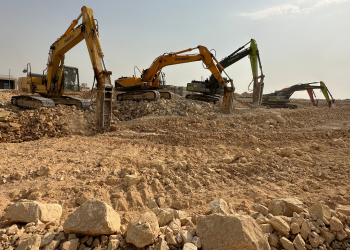
Oman’s Ministry of Heritage & Tourism has signed an agreement with local firm Sorouh Al-Qurm Real Estate Company to build an integrated tourism complex in the Al-Qurm area of Muscat.
The project will be developed with a total investment estimated at RO230m ($598m).
Planned across more than 165,000 square metres (sq m), the development will include two four-star hotels offering over 400 rooms, alongside leisure components such as an indoor games hall and trampoline attractions.
The site will also incorporate commercial spaces and freehold residential units, among other amenities.
The agreement was signed by Sayyid Ibrahim Bin Said Al-Busaidi, minister of heritage and tourism, and Khaled Khudair Mashaan, chairman of Al-Argan International Real Estate Company, who signed as the authorised representative for Sorouh Al-Qurm Real Estate Company.
GlobalData forecasts that the Omani construction industry will expand at an average annual growth rate of 4.2% from 2025 to 2028.
Growth in the country will be supported by rising government investments in renewable energy and transport infrastructure, as well as in the housing sector, as part of the Oman Vision 2040 plan.
https://image.digitalinsightresearch.in/uploads/NewsArticle/15839476/main.jpg -
Firms to build Jeddah Islamic port logistics zone
3 March 2026
The Saudi Ports Authority (Mawani) has signed an agreement with Dammam-headquartered Sultan Logistics to develop a new logistics zone at Jeddah Islamic Port’s Al-Khumra site.
According to a statement posted by Mawani on X, the project will cover about 200,000 square metres and represents an investment of SR250m ($66m).
#موانئ توقّع عقد تأجير مع شركة "سلطان لوجستيك" لإنشاء منطقة لوجستية بقيمة استثمارية 250 مليون ريال؛ في #ميناء_جدة_الإسلامي بمنطقة الخُمرة، بما يسهم في رفع كفاءة الحركة التجارية، وتعزيز الميزة التنافسية للميناء كمحور رئيسي للتجارة على البحر الأحمر. pic.twitter.com/sswITiFIHb
— مـوانـئ | MAWANI (@MawaniKSA) March 2, 2026
Planned facilities include warehouses, designated areas for storing and servicing dry and refrigerated containers, and a re-export section.
Mawani said the development is intended to strengthen the port’s position on the Red Sea by upgrading service quality, supporting private sector participation and contributing to Saudi Arabia’s broader economic diversification goals.
Jeddah Islamic Port currently operates 62 multipurpose berths and can handle up to 130 million tonnes a year.
The latest agreement follows Mawani’s April 2025 signing of more than SR500m ($133m) in agreements with local firms to develop two logistics parks at King Abdulaziz Port in Dammam, as reported by MEED.
In a statement, Mawani said that in 2024, it launched and inaugurated eight logistics parks with an estimated investment of about SR3bn ($800m).
The firm said: “These investments are part of the broader development of over 20 logistics centres under Mawani’s supervision across Saudi ports, with total investments over SR10bn ($2.6bn).”
GlobalData expects the Saudi construction industry to record an annual average growth rate of 5.2% in 2025-28, supported by investments in transport, electricity, housing and tourism infrastructure projects, as well as the $850bn-plus gigaprojects programme.
The infrastructure construction sector is expected to grow at an average rate of 6% in 2025-28, supported by government investments in rail, dams and road infrastructure projects.
https://image.digitalinsightresearch.in/uploads/NewsArticle/15838212/main.gif