
Hill wins project management for Al-Fursan in Riyadh
28 March 2023
Saudi Arabia’s National Housing Company (NHC) has selected US-based Hill International to provide project management consultation (PMC) services for the new city of Dahiyat al-Fursan, in northeast Riyadh.
Under the agreement, Hill will manage all of Al-Fursan's first and second sub-developments and infrastructure packages.
This includes programme management, cost estimating, schedule management, risk management, contract management, change management and all related PMC services.
Al-Fursan deals
NHC and Saudi Arabia’s Housing Ministry signed investment agreements in February totalling more than SR24bn ($6.4bn) to launch Al-Fursan.
A total of 18 real estate development agreements with companies including Retal Urban Development Company and Sumou Real Estate Company were signed for the district’s first phase.
NHC also signed four consultancy contracts to manage projects and supervise the implementation of the district’s phase one and the deployment of comprehensive infrastructure works.
Other deals signed in February involve the development of facilities, including commercial, recreational, hospitals, health and sports centres, mosques and schools.
It is understood that an agreement was signed with Saudi Electricity Company (SEC) to implement the detailed plans for electrical works in the district.
Al-Fursan scheme
Dahiyat al-Fursan is the most extensive scheme in terms of the area and number of housing units that NHC is implementing.
It covers an area of 35 million square metres (sq m) with more than 50,000 residential units for more than 250,000 people. It features over 190 facilities and commercial centres with green spaces exceeding 6 million sq m.
The project aims to meet the needs of today’s Saudi families, in line with the goals of the Vision 2030 Housing Programme to increase the proportion of Saudi households that own a house to 70 per cent by 2030.
By 2025, Riyadh plans to oversee the development of more than 1 million homes to meet growing demand in the kingdom.
Amid rising urbanisation, major Saudi cities, including the capital, have been under-supplied and real estate prices are rising, making access to property impossible for many.
By 2030, the Saudi capital aims to more than double its population, from 7-8 million to 15-20 million, and become one of the 10 wealthiest cities in the world.
MEED's April 2023 special report on Saudi Arabia includes:
> ECONOMY: Riyadh steps up the Vision 2030 tempo
> CONSTRUCTION: Saudi construction project ramp-up accelerates
> UPSTREAM: Aramco slated to escalate upstream spending
> DOWNSTREAM: Petchems ambitions define Saudi downstream
> POWER: Saudi Arabia reinvigorates power sector
> WATER: Saudi water begins next growth phase
> BANKING: Saudi banks bid to keep ahead of the pack


Register for MEED's guest program now to access this article.
Exclusive from Meed
-
 Morocco plans second high-speed rail phase to Agadir
26 October 2026
-
 Riyadh tenders King Salman Stadium works
26 October 2026
-
 Aramco selects contractors for five offshore tenders
23 October 2026
-
 Contractors complete Riyadh airport Terminal 6 work
23 October 2026
-
All of this is only 1% of what MEED.com has to offer
Subscribe now and unlock all the 153,671 articles on MEED.com
- All the latest news, data, and market intelligence across MENA at your fingerprints
- First-hand updates and inside information on projects, clients and competitors that matter to you
- 20 years' archive of information, data, and news for you to access at your convenience
- Strategize to succeed and minimise risks with timely analysis of current and future market trends

Related Articles
-
Morocco plans second high-speed rail phase to Agadir
26 October 2026
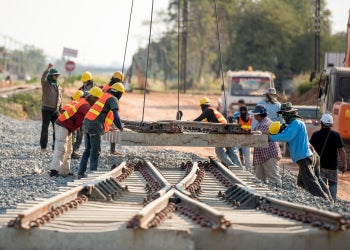
Morocco has outlined a second rail investment cycle for 2030-35, which includes beginning construction of a high-speed rail extension from Marrakech to Agadir and connecting Essaouira to the national rail network.
The pipeline forms part of the government’s 2026-31 programme, presented to parliament last week.
The Marrakech-Agadir link is estimated to cost close to MD55bn ($5.5bn) and will cover a 240-kilometre (km) route through the High Atlas Mountains via Chichaoua. Civil engineering structures, including tunnels and viaducts, are expected to account for nearly 70% of the alignment.
In September, the government issued a decree declaring the Marrakech-Agadir and Chichaoua-Essaouira rail corridors to be of public utility, paving the way for land acquisition and expropriation procedures.
Under the long-term masterplan Plan Rail Maroc 2040, Essaouira is expected to connect to the network via a separate line branching off at Chichaoua, designed for operating speeds of up to 200km an hour. The mainline to Agadir is designed for speeds of up to 320km/h.
The 2030-35 cycle also includes rehabilitating the Casablanca-Khouribga-Oued Zem line; constructing a new line between Oued Zem and Beni Mellal via Bejaad, with a branch to Fquih Ben Salah; doubling and upgrading the 140km Benguerir-Safi line; expanding capacity on the Fez-Oujda corridor; and building new-generation passenger stations.
The plans follow Morocco’s ongoing MD134bn ($13.4bn) 2024-30 rail investment programme, which focuses on completing the Kenitra-Marrakech high-speed line ahead of the 2030 Fifa World Cup.
The programme also includes developing regional express network services across five regions, electrifying the Fez-Oujda line and completing a freight rail link to the Nador West Med port.
Work on the Kenitra-Marrakech line had reached about 30% by May 2026, with commercial services targeted to begin in September 2029.
https://image.digitalinsightresearch.in/uploads/NewsArticle/20920349/main.jpg -
Riyadh tenders King Salman Stadium works
26 October 2026

Register for MEED’s 14-day trial access
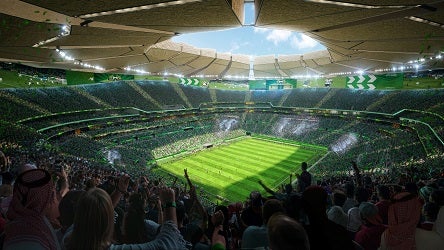
Saudi Arabia’s Sports Ministry has tendered a contract covering early works at King Salman International Stadium in Riyadh.
The scope includes enabling works, site preparation and initial construction activities.
The tender was issued on 11 October, with a submission deadline of 19 November.
The stadium will cover about 660,000 square metres (sq m) and seat 92,000. Facilities will include a 150-seat royal suite, 120 hospitality suites, 300 VIP seats and 2,200 dignitary seats.
The wider development will include sports facilities covering more than 360,000 sq m, including two training fields and fan zones; a closed sports hall; an Olympic-sized swimming pool; an athletics track; and outdoor courts for volleyball, basketball and padel.
The stadium is set to host the final of the 2034 Fifa World Cup and will serve as the Saudi national football team’s main base.
US-based architectural firm Populous is the lead architect for the stadium.
Construction of the stadium is expected to be completed by 2029.
The stadium will be located next to King Abdulaziz Park.
Firms submitted prequalification statements for the main design-and-build contract in February.
Saudi stadium plans
In August 2024, MEED reported that Saudi Arabia planned to build 11 new stadiums and refurbish four facilities for the 2034 Fifa World Cup.
Eight stadiums will be located in Riyadh, four in Jeddah and one each in Al-Khobar, Abha and Neom.
A further 10 cities will host training bases: Al-Baha, Jazan, Taif, Medina, Alula, Umluj, Tabuk, Hail, Al-Ahsa and Buraidah.
There are expected to be 134 training sites in the kingdom, including 61 existing facilities and 73 new venues.
Saudi Arabia was officially selected to host the 2034 Fifa World Cup during an online convention of Fifa member associations at the Fifa Congress on 11 December 2024.
 READ THE OCTOBER 2026 MEED BUSINESS REVIEW – click here to view PDF
Industry and logistics drive development at Neom; Saudi Arabia’s investment priorities realign amid conflict; MEED’s 2026 power developer ranking.
Distributed to senior decision-makers in the region and around the world, the October 2026 edition of MEED Business Review includes:
> AGENDA: Oxagon takes centre stage at Neom> MARKET FOCUS: Saudi projects hold steady> INDUSTRY REPORT: MEED’s 2026 GCC power developer ranking> LEADERSHIP: The future city does not need to hang above the groundTo see previous issues of MEED Business Review, please click herehttps://image.digitalinsightresearch.in/uploads/NewsArticle/20919233/main.jpg -
Aramco selects contractors for five offshore tenders
23 October 2026
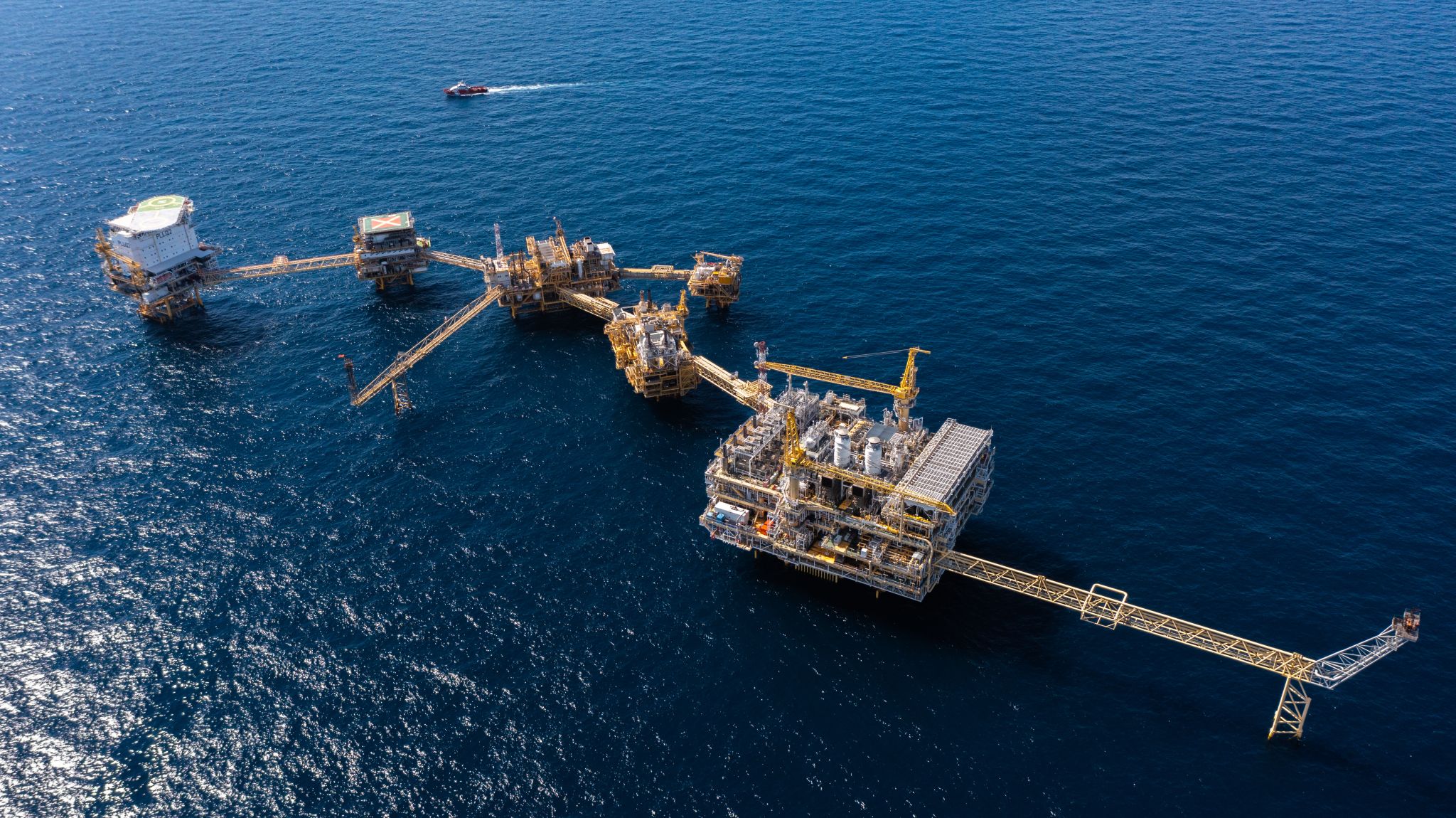
Saudi Aramco has selected contractors for five offshore tenders covering the engineering, procurement, construction and installation (EPCI) of structures at the Abu Safah, Berri, Manifa, Marjan, Safaniya and Zuluf offshore oil and gas fields in Saudi Arabia.
The tenders are numbers 167, 168, 169, 170 and 171 on Aramco’s Contract Release and Purchase Order (CRPO) system, and are estimated to be worth up to $2bn combined.
Abu Dhabi government-owned NMDC Energy has won CRPOs 167, 169 and 171, while Italian contractor Saipem has secured CRPOs 168 and 170, according to sources.
NMDC Energy confirmed its contract awards from Aramco in a disclosure to the Abu Dhabi Securities Exchange on 23 October, saying the three contracts are valued at AED2.8bn ($763.3m).
Work on the contracts is expected to be completed in 18-23 months, NMDC Energy said in its filing, without providing further details.
Saipem has yet to confirm its contract awards from Aramco.
The basic scope of EPCI work on the tenders is as follows:
- CRPO 167 – eight jackets at the Marjan field development
- CRPO 168 – four production deck modules (PDMs) at the Abu Safah, Berri, Manifa and Safaniya fields
- CRPO 169 – three PDMs at the Marjan field development
- CRPO 170 – three PDMs at the Marjan field development
- CRPO 171 – three PDMs at the Zuluf field development
Aramco issued the five CRPOs to contractors in its Long-Term Agreement (LTA) pool of offshore service providers in December last year, setting an initial bid submission deadline of 3 February.
The Saudi energy giant has since extended the bid submission deadline several times – to 31 March, 1 June, 1 July and then 30 July – to allow LTA contractors sufficient time to prepare proposals.
At the request of some bidders, Aramco granted a final two-day extension, with LTA contractors submitting their proposals for the five CRPOs on 1 August, MEED previously reported.
Aramco had previously indicated its intention to award contracts for CRPOs 167-171 by October, and the contract awards affirm it has adhered to this schedule.
Aramco’s LTA pool of offshore service providers comprises the following entities:
- Saipem (Italy)
- McDermott International (US)
- Larsen & Toubro Energy Hydrocarbon (LTEH, India) / Subsea7 (UK)
- NMDC Energy (UAE)
- Lamprell (UAE/Saudi Arabia)
- China Offshore Oil Engineering Company (China)
- Dynamic Industries (US)
- Sapura Energy (Malaysia)
- TechnipFMC (France) / MMHE (Malaysia)
- Hyundai Heavy Industries (South Korea)
In April 2025, Aramco renewed its LTAs with the following contractors, whose contracts had either lapsed or were close to expiry:
- Saipem
- McDermott International
- Larsen & Toubro Energy Hydrocarbon / Subsea7
- NMDC Energy
- Lamprell
- China Offshore Oil Engineering Company
ALSO READ: Aramco upstream spending gathers pace
READ THE OCTOBER 2026 MEED BUSINESS REVIEW – click here to view PDFIndustry and logistics drive development at Neom; Saudi Arabia’s investment priorities realign amid conflict; MEED’s 2026 power developer ranking.
Distributed to senior decision-makers in the region and around the world, the October 2026 edition of MEED Business Review includes:
> AGENDA: Oxagon takes centre stage at Neom> MARKET FOCUS: Saudi projects hold steady> INDUSTRY REPORT: MEED’s 2026 GCC power developer ranking> LEADERSHIP: The future city does not need to hang above the groundTo see previous issues of MEED Business Review, please click herehttps://image.digitalinsightresearch.in/uploads/NewsArticle/20869888/main3523.jpeg -
Contractors complete Riyadh airport Terminal 6 work
23 October 2026
Three contractor teams have completed the early contractor involvement (ECI) phase for Terminal 6 at King Salman International airport (KSIA) in Riyadh, moving the scheme towards a main construction tender and contract award.
The participating consortiums are:
- UCC Holding / Consolidated Contractors Company (Qatar/Greece)
- Modern Building Leaders / Powerchina / Metallurgical Corporation of China (loca/China/China)
- Al-Gihaz Holding / TAV Construction / Webuild (local/Turkiye/Italy)
King Salman International Airport Development Company (KSIADC), a subsidiary of Saudi sovereign wealth vehicle the Public Investment Fund, is delivering the terminal package on an ECI basis.
Under the completed phase, the shortlisted teams submitted detailed construction methodologies and technical design proposals.
Terminal 6 is planned to boost the airport’s annual capacity by 40 million passengers. KSIADC aims to complete the terminal ahead of Expo 2030 Riyadh.
In May last year, MEED reported that US-based Bechtel had been appointed as delivery partner for the passenger terminals at KSIA.
KSIADC's acting CEO Marco Mejia previously confirmed that the airport’s masterplan has been completed. UK-based Foster + Partners designed the masterplan, including the terminals, six parallel runways and a multi-asset real estate district.
US-based engineering firm Jacobs is providing specialist consultancy services for the masterplan and runway design, while UK-headquartered Mace is acting as delivery partner for the broader development. Local firm Nera secured the airspace design consultancy contract.
The KSIA project covers about 57 square kilometres (sq km) and incorporates the existing terminals at King Khalid International airport. The scheme will feature 12 sq km of airport support facilities, residential and recreational zones, retail assets and logistics parks.
The development is targeted to handle up to 120 million passengers a year by 2030 and 185 million passengers by 2050, in addition to an annual cargo throughput of 3.5 million tonnes by 2050.
READ THE OCTOBER 2026 MEED BUSINESS REVIEW – click here to view PDFIndustry and logistics drive development at Neom; Saudi Arabia’s investment priorities realign amid conflict; MEED’s 2026 power developer ranking.
Distributed to senior decision-makers in the region and around the world, the October 2026 edition of MEED Business Review includes:
> AGENDA: Oxagon takes centre stage at Neom> MARKET FOCUS: Saudi projects hold steady> INDUSTRY REPORT: MEED’s 2026 GCC power developer ranking> LEADERSHIP: The future city does not need to hang above the groundTo see previous issues of MEED Business Review, please click herehttps://image.digitalinsightresearch.in/uploads/NewsArticle/20860938/main.jpg -
Aramco seeks to build sulphur-handling facilities at Ras Al-Khair
22 October 2026
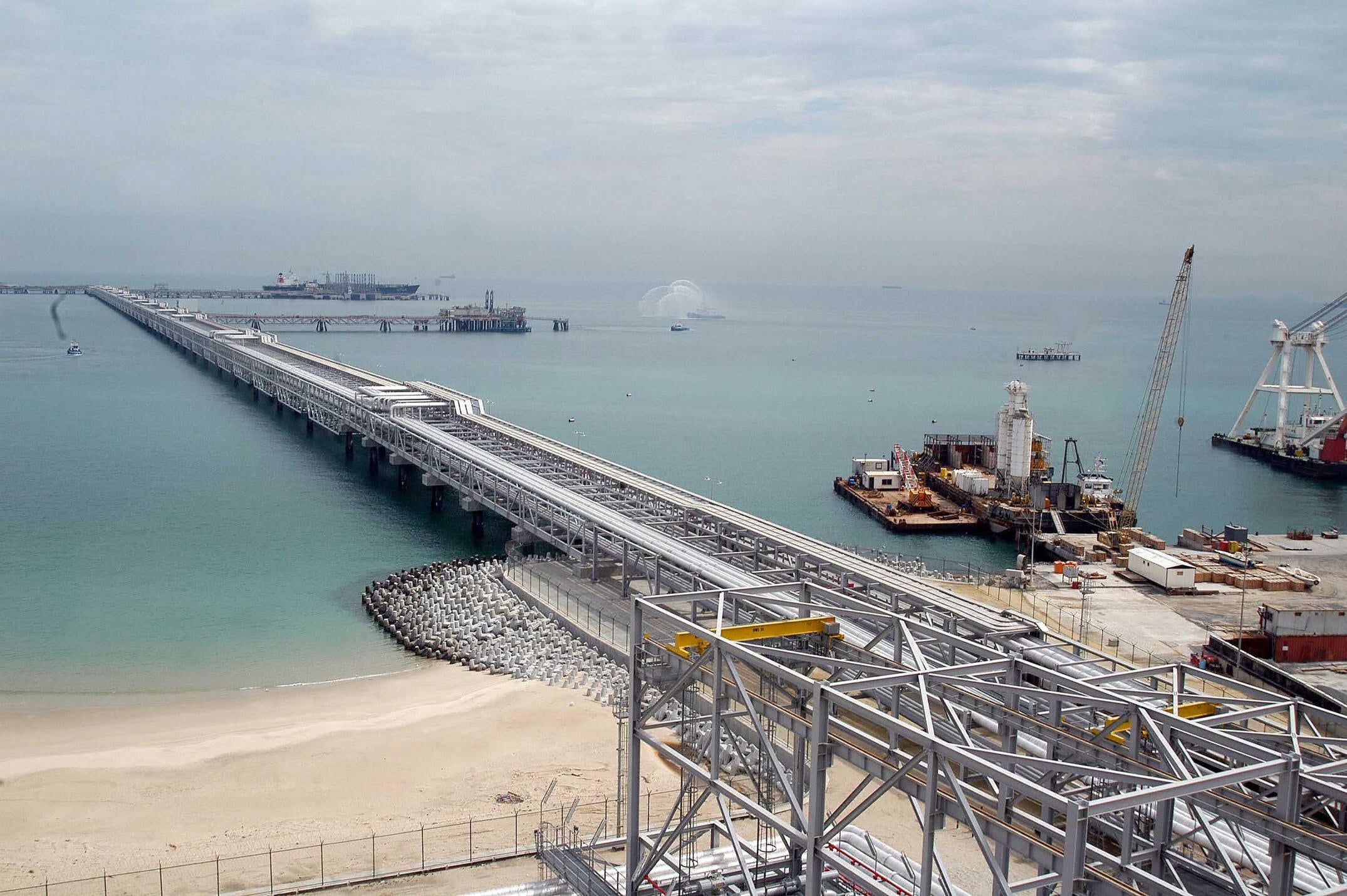
Saudi Aramco is engaging developers for a planned project to build sulphur-handling facilities at Ras Al-Khair port on Saudi Arabia’s eastern coast.
Under the build-own-operate-transfer (BOOT) contract, the selected developer would be required to build facilities at Ras Al-Khair port capable of receiving, handling, forming and exporting up to 9,500 metric tonnes a day (t/d) of molten sulphur.
Additionally, the appointed contractor would be responsible for engineering, procurement and construction, as well as operations and maintenance.
According to sources, the Saudi energy giant floated the tender for the Ras Al-Khair sulphur-handling facilities project last year. Companies bidding for the BOOT contract have until 30 December to submit proposals, with the previous bid-submission deadline being on 19 September.
The following developers, among others, are understood to be bidding for the Ras Al-Khair sulphur-handling facilities project:
- Jereh Group (China)
- Lamar Holding (Saudi Arabia)
- Vision Invest (Bahrain/Saudi Arabia)
Separately, Aramco has appointed Germany-headquartered Fichtner as the consultant on the project.
The broad scope of work on the project includes development, design, financing, construction, commissioning, testing, ownership, insurance, operations and maintenance of:
- an onshore sulphur handling and processing station, comprising rail and truck sulphur unloading, molten sulphur storage and sulphur forming facilities;
- a sulphur exporting station / berth facilities located at berth number 19 at Ras Al-Khair port, comprising formed sulphur storage and a ship loader, with a rail spur system to connect to the Saudi Arabia Railway line to deliver the molten sulphur to the onshore facility, and a sulphur conveyor system to transfer the formed sulphur from the onshore facility to the berth facility;
- starting from the commercial operation date, the sale of the dependable capacity to Aramco and, to the extent dispatched by Aramco, the formed sulphur output of the plant; and
- the transfer of the shares in the project company, or alternatively the dismantling and removal of, or transfer of, the plant to Aramco.
The allocated area for the plant is 1.605 million square metres (sq m), which includes 1.5 million sq m allocated to the onshore facility and 105,000 sq m allocated to the berth facility. The project operator is required to accommodate adequate space for any potential capacity expansion.
The land for the onshore sulphur station facility is under the jurisdiction of the Royal Commission for Jubail & Yanbu, while the berth plot is under the administration and management control of the Saudi Port Authority (Mawani).
ALSO READ: Lamprell signs Ras al-Khair fabrication deal for Saudi offshore job
READ THE OCTOBER 2026 MEED BUSINESS REVIEW – click here to view PDFIndustry and logistics drive development at Neom; Saudi Arabia’s investment priorities realign amid conflict; MEED’s 2026 power developer ranking.
Distributed to senior decision-makers in the region and around the world, the October 2026 edition of MEED Business Review includes:
> AGENDA: Oxagon takes centre stage at Neom> MARKET FOCUS: Saudi projects hold steady> INDUSTRY REPORT: MEED’s 2026 GCC power developer ranking> LEADERSHIP: The future city does not need to hang above the groundTo see previous issues of MEED Business Review, please click herehttps://image.digitalinsightresearch.in/uploads/NewsArticle/20842631/main3523.jpg