
Monitoring Saudi Arabia’s gigaprojects
9 April 2025
 Saudi Arabia’s $850bn-plus series of giga- projects represent the world’s largest civil infrastructure engineering programme, covering the development of residential, industrial and tourism projects in the kingdom.
It includes Neom, which at $500bn is the world’s largest single project, as well as the Red Sea tourism project, residential and mixed-use developments Jeddah Central and Roshn, and entertainment schemes such as Qiddiya and The Rig.
The programme is the centrepiece of Vision 2030, aimed at transforming the kingdom into a tourism and entertainment hub while creating hundreds of thousands of new jobs.
Spending levels
There were $25bn of contract awards across the gigaprojects programme in 2024, a decline of about 24% when compared to the $33bn of awards recorded during 2023. The decline also meant that the 2024 total was about the same as the total value of awards achieved in 2022.
Despite the slowdown, there are still gigaprojects that have not yet been announced. This means the true total of the gigaprojects programme may be well in excess of a staggering $1tn.
While the pace of activity last year fell short of the strong growth that was expected as the gigaprojects move into the delivery phase, the growth in awards on these schemes in 2024 was still positive.
There were $25bn of contract awards across Saudi Arabia’s gigaprojects programme in 2024
The highlights for 2024 were a $4.7bn contract to build dams at the Trojena mountain resort that was won by Italy’s WeBuild, a $2bn contract won by a joint venture (JV) of local firm Albawani and Qatar’s Urbacon Trading & Contracting for the construction of assets in the Wadi Safar development of the Diriyah project in Riyadh, and a $1bn contract secured by a JV of Spanish firm FCC Construction and local firm Nesma & Partners to build the Prince Mohammed Bin Salman Stadium at the Qiddiya City project on the outskirts of Riyadh.
These awards appear to confirm the consensus in Saudi Arabia that the focus for development is on projects underpinned by events. These are Trojena, which will host the Asian Winter Games in 2029; stadiums for the Asian Cup in 2027 and the Fifa World Cup in 2034; along with Expo 2030 Riyadh and the Asian Games in 2034.
For more information and sample pages from MEED’s Saudi Gigaprojects – Q1 2025 updated premium intelligence report, please click here

Register for MEED's guest program now to access this article.
Exclusive from Meed
-
 Chinese firms win $290m Algeria data centre deal
18 November 2026
-
 Projects market holds firm
18 November 2026
-
 EBRD takes stake in Egypt desalination platform
18 November 2026
-
 Bahrain appoints Northern Link Road transaction adviser
18 November 2026
-
 OMV to drill Libya oil and gas exploration well
18 November 2026
All of this is only 1% of what MEED.com has to offer
Subscribe now and unlock all the 153,671 articles on MEED.com
- All the latest news, data, and market intelligence across MENA at your fingerprints
- First-hand updates and inside information on projects, clients and competitors that matter to you
- 20 years' archive of information, data, and news for you to access at your convenience
- Strategize to succeed and minimise risks with timely analysis of current and future market trends
Related Articles
-
Chinese firms win $290m Algeria data centre deal
18 November 2026

Algeria’s High Commission for Digitalisation has awarded a AD39.8bn ($290m) contract for the study, construction, supply of equipment and commissioning of a national disaster recovery data centre.
The contract was awarded to a joint venture of Chinese firms including China Railway Construction Corporation (CRCC) and Huawei Group.
The contract is split into two lots:
- Lot 1 – Civil engineering and infrastructure: The CRCC-Huawei Group submitted a bid of $67m, including VAT, for a nine-month delivery period
- Lot 2 – Disaster recovery site: The group submitted a bid of $223m, including VAT, with a six-month completion period
The CRCC-Huawei Group comprises CRCC International, CRCC Algeria and Huawei Telecommunication Algeria.
The High Commission for Digitalisation said the group scored 100 out of 100 on both lots, meeting the tender requirements.
The project will provide a national disaster recovery site intended to maintain the availability and recovery of digital systems and data if a disruption affects a primary data centre or IT system.
The scope includes the physical data centre infrastructure under the first lot and the disaster recovery site equipment and systems under the second lot.
The planned facility forms part of Algeria’s wider digitalisation programme, which includes expanding public sector digital services and the supporting infrastructure required to host, secure and protect government data and applications.
 READ THE NOVEMBER 2026 MEED BUSINESS REVIEW – click here to view PDF
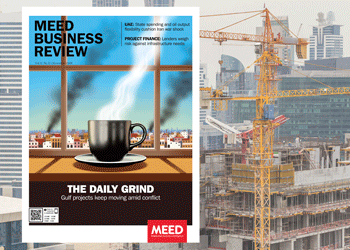
Gulf projects keep moving amid conflict; UAE's state spending and oil output flexibility cushion Iran war shock; Project finance lenders weigh risk against infrastructure needs.
Distributed to senior decision-makers in the region and around the world, the November 2026 edition of MEED Business Review includes:
> AGENDA: GCC projects market holds its nerve> MARKET FOCUS: UAE economy shows resilience> INDUSTRY REPORT: Project financiers hold the line> STADIUMS: Stadium spending set to jump 39% in 2027> CONFLICT: Hormuz closure wipes out growth in 2026> INTERVIEW: WSP regional president Dean McGrail> INTERVIEW: Ministry of Energy & InfrastructureTo see previous issues of MEED Business Review, please click herehttps://image.digitalinsightresearch.in/uploads/NewsArticle/21515726/main.gif -
Projects market holds firm
18 November 2026
 Commentary
Colin Foreman
EditorAfter eight months of conflict in the Gulf, the region’s economies are sustaining heavy damage. The IMF’s October World Economic Outlook forecasts contraction in every GCC state except Oman in 2026. Kuwait’s economy is projected to shrink by 16.7% and Qatar’s by 15.6% as disruption in the Strait of Hormuz cuts energy exports.
 The projects market has held up far better. Data from MEED Projects shows the UAE leading the region for a second consecutive year, with contract awards 6.1% higher than in the same period of 2025. Abu Dhabi has been the standout, with awards up 35% on the back of a sharp rise in public capital spending. Saudi Arabia has awarded $68.8bn of contracts so far this year, 13% less than in 2025.
Two key drivers are shaping the market in 2026. First, private developers, faced with declining off-plan sales, are focusing on project completion to unlock cash from investors who have already purchased property. Second, government and state-related entities have accelerated activity, pushing ahead with large-scale public infrastructure schemes alongside more commercially oriented developments.
Abu Dhabi has been the standout, with awards up 35% on last year
Warning signs remain beneath the headline totals. Tendering has slowed since hostilities resumed after the April ceasefire, and Dubai’s residential market has weakened, marked by a steep year-on-year drop in Q3 transactions. The effect on contract awards is likely to become clearer in the coming months.
The conflict is also generating new demand. Saudi Arabia and the UAE are prioritising ports, pipelines and transport links that bypass Hormuz, and reconstruction and repair work will follow once the fighting ends.
The central question for the final quarter is whether the Q3 slowdown marks a temporary pause or the start of a sustained decline.
Much will depend on when the strait reopens.
READ THE NOVEMBER 2026 MEED BUSINESS REVIEW – click here to view PDFGulf projects keep moving amid conflict; UAE's state spending and oil output flexibility cushion Iran war shock; Project finance lenders weigh risk against infrastructure needs.
Distributed to senior decision-makers in the region and around the world, the November 2026 edition of MEED Business Review includes:
> AGENDA: GCC projects market holds its nerve> MARKET FOCUS: UAE economy shows resilience> INDUSTRY REPORT: Project financiers hold the line> STADIUMS: Stadium spending set to jump 39% in 2027> CONFLICT: Hormuz closure wipes out growth in 2026> INTERVIEW: WSP regional president Dean McGrail> INTERVIEW: Ministry of Energy & InfrastructureTo see previous issues of MEED Business Review, please click herehttps://image.digitalinsightresearch.in/uploads/NewsArticle/21514495/main.gif -
EBRD takes stake in Egypt desalination platform
18 November 2026
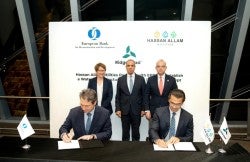
The European Bank for Reconstruction & Development (EBRD) has finalised an agreement to invest up to $31m in Egypt’s RWD Investments BV, a water development and investment arm of Hassan Allam Utilities (HAU).
Under the agreement, EBRD will acquire a 30% equity stake in RWD. HAU is contributing up to $61m towards the platform’s overall $92m equity funding.
The proceeds will support RWD’s near- and medium-term expansion plans, including the development of future large-scale desalination and wastewater projects through public-private partnerships (PPPs). The agreement follows EBRD board approval of the proposed investment in July.
RWD plans to add up to 15,000 cubic metres a day (cm/d) of new desalination capacity annually through 2030. The additional capacity will increase water supplies to businesses in coastal areas that are not connected to municipal networks.
The company will also rehabilitate existing desalination facilities to reduce energy consumption and improve operating efficiency.
Demand for alternative water sources is increasing in Egypt’s coastal areas, where tourism, industrial and other private developments often cannot rely on municipal water networks. The government has also restricted further extensions of Nile-sourced water infrastructure to coastal tourism developments.
Established in 2019, RWD operates in Egypt through Ridgewood for Water Desalination, Sinai for Environmental Services and Ridgewood Egypt for Infrastructure Projects.
The group owns and operates 79 desalination facilities across Egypt’s coastal cities, with a combined design capacity of about 96,340 cm/d as of December 2025.
In October, the Higher Committee for Public-Private Partnership approved the tendering of four industrial wastewater treatment plants in Alexandria, Giza, Beheira and Port Said. The facilities will serve the Amreya, Abu Rawash, Wadi El-Natrun and El-Raswa industrial zones, with capacities of 15,000-35,000 cm/d.
Two further desalination projects were approved for tendering, including a 900,000 cm/d plant in Port Said and a 1 million cm/d plant in Suez.
READ THE NOVEMBER 2026 MEED BUSINESS REVIEW – click here to view PDFGulf projects keep moving amid conflict; UAE's state spending and oil output flexibility cushion Iran war shock; Project finance lenders weigh risk against infrastructure needs.
Distributed to senior decision-makers in the region and around the world, the November 2026 edition of MEED Business Review includes:
> AGENDA: GCC projects market holds its nerve> MARKET FOCUS: UAE economy shows resilience> INDUSTRY REPORT: Project financiers hold the line> STADIUMS: Stadium spending set to jump 39% in 2027> CONFLICT: Hormuz closure wipes out growth in 2026> INTERVIEW: WSP regional president Dean McGrail> INTERVIEW: Ministry of Energy & InfrastructureTo see previous issues of MEED Business Review, please click herehttps://image.digitalinsightresearch.in/uploads/NewsArticle/21513812/main.jpg -
Bahrain appoints Northern Link Road transaction adviser
18 November 2026
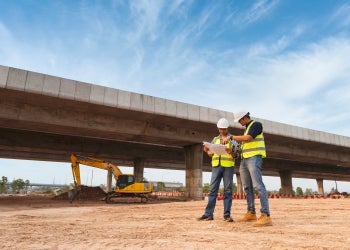
Bahrain's Ministry of Works has awarded Ernst & Young a BD2.26m ($6m) contract to provide transaction advisory services on the Bahrain Northern Link Road (BNLR), a highway the government intends to deliver on a public-private partnership (PPP) basis.
The Bahrain Tender Board opened the financial proposals on 6 August. Local units of KPMG, PriceWaterhouseCoopers (PwC) and Ernst & Young (EY) submitted bids, all of which were accepted.
EY will provide financial, technical and legal advisory services, including feasibility studies, project structuring and bid documentation, along with support through tendering, evaluation and negotiation, and assistance up to financial close.
The 29.5-kilometre highway will run from North Manama Causeway Bridge to Suhaila Island and onwards to King Hamad Causeway. The project is intended to serve as a parallel east-west corridor to Sheikh Isa Bin Salman Highway and to support traffic flow between Khalifa Bin Salman Port and Saudi Arabia.
Causeway connection
The BNLR will connect to the planned King Hamad Causeway. Earlier project plans, drawn up in 2016, included an arterial road with six or eight lanes that could run alongside a light rail or rapid bus transit system.
In October 2019, King Fahd Causeway Authority appointed a consortium to provide transaction advisory services for King Hamad Causeway. The $8.9m consultancy agreement was signed with a consortium of Netherlands-headquartered KPMG, US-based Aecom and UK-based CMS. The plan was to fund the project through tolls, as with the existing King Fahd Causeway.
The King Fahd Causeway opened in 1986 and extends for 25km. The bridge cost an estimated $1.2bn to construct and serves about 45,000 vehicles a day on average, rising to about 60,000 at weekends. It has been undergoing an expansion to ease severe congestion during peak periods.
READ THE NOVEMBER 2026 MEED BUSINESS REVIEW – click here to view PDFGulf projects keep moving amid conflict; UAE’s state spending and oil output flexibility cushion Iran war shock; Project finance lenders weigh risk against infrastructure needs.
Distributed to senior decision-makers in the region and around the world, the November 2026 edition of MEED Business Review includes:
> AGENDA: GCC projects market holds its nerve> MARKET FOCUS: UAE economy shows resilience> INDUSTRY REPORT: Project financiers hold the line> STADIUMS: Stadium spending set to jump 39% in 2027> CONFLICT: Hormuz closure wipes out growth in 2026> INTERVIEW: WSP regional president Dean McGrail> INTERVIEW: Ministry of Energy & InfrastructureTo see previous issues of MEED Business Review, please click herehttps://image.digitalinsightresearch.in/uploads/NewsArticle/21511012/main.jpg -
OMV to drill Libya oil and gas exploration well
18 November 2026
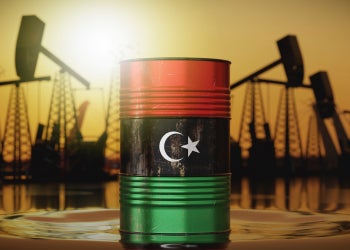
Austrian oil and gas company OMV is planning to start drilling an exploration well in Libya’s Marwa concession before the end of this month, according to a statement from the North African country’s National Oil Corporation (NOC).
In its statement, NOC said that it held an “extensive technical meeting” with officials from OMV to discuss the company’s plans and contractual obligations.
The meeting reviewed activities carried out throughout 2026 alongside programmes scheduled for 2027.
NOC said: “Officials also addressed ways to overcome challenges hindering the completion of remaining work, including seismic surveys and exploration well drilling.”
During the meeting, OMV confirmed that preparations are under way to drill its first exploration well at the Marwa concession in Contract Area 103/3 (NC74B) by the end of November, targeting a depth of approximately 6,500 feet.
NOC’s Exploration Department said that intensifying oil and gas exploration is a key strategic priority for the organisation.
In June, NOC announced a capacity target of 2 million barrels of oil a day by 2030.
Earlier this month, Libya’s Audit Bureau said it had held a meeting with NOC to discuss tendering a project to rehabilitate and develop Libya’s Dahra oil field.
The head of the Audit Bureau, Khaled Shakshak, met with NOC head Masoud Suleiman on 15 November.
During the meeting, they discussed options for tendering the Dahra oil field development project, previously estimated at $1bn and expected to significantly increase the field’s oil production.
The oil field in central Libya has suffered from years of poor maintenance and was sabotaged by Islamic State militants in 2015.
https://image.digitalinsightresearch.in/uploads/NewsArticle/21479617/main.jpg