
Sobha embraces modular construction model
27 May 2025

In the UAE’s competitive market, developers are under pressure to deliver faster, better and more sustainably. Sobha Modular, the off-site construction arm of Sobha Realty, relies on modular construction solutions to address these demands.
“Dubai’s real estate market remains dynamic and agile, evolving rapidly to meet shifting investor and end-user priorities,” says Francis Alfred, managing director of Sobha Realty.
“There’s a surge in demand for high-quality developments that offer faster delivery timelines and greater sustainability. Buyers are not just looking for prime locations or aesthetics anymore. They want energy efficiency, operational savings and reduced environmental impact – and modular construction plays a pivotal role in meeting those expectations.”
Strategic fit
Modular construction is a cornerstone of Sobha’s "backward integration model", which gives the developer control over the entire value chain, from design and engineering to manufacturing and installation, says Alfred.
“By enabling precision engineering and off-site production, modular construction allows us to accelerate delivery without compromising quality,” he explains.
“In Dubai and the broader UAE, where speed and quality are paramount, modular construction enhances project efficiency while minimising disruption at urban sites.”
Sustainability is another advantage. Modular techniques allow for resource usage to be centralised, making it easier to integrate eco-efficient systems from the design phase.
Modular solutions also reduce material waste and lower carbon impact, which enables Sobha Modular to “maintain consistency in execution across large-scale developments”, Alfred notes.
Engineering luxury
While some associate modular construction with utilitarian design, Alfred says it is also suited to high-end projects.
“In the luxury segment, consistency, precision and attention to detail are critical. Our in-house modular capabilities allow us to uphold these standards at every stage.”
The executive lists four core benefits that make modular construction particularly valuable when it comes to Sobha’s premium offerings: quality, accelerated timelines, sustainability and customer satisfaction.
“Every component produced in our Ras Al-Khaimah factory undergoes stringent quality checks. We meet or exceed UAE and international benchmarks,” he says.
“Off-site fabrication runs in parallel to on-site work. This means shorter build times and early handovers.
“Less on-site waste, smarter material use and a smaller carbon footprint – that’s what modular brings to the table,” he continues. “Fewer defects, better finishes and higher consistency translate into happier homeowners.”
Modular lifecycle
Sobha’s modular systems include units such as bathroom pods and facades, which are manufactured at the company’s factory in the northern UAE emirate of Ras Al-Khaimah. The process blends innovation, training and quality control, according to Alfred.
He outlines the lifecycle of a modular pod, which starts with design and specification processes developed collaboratively by Sobha’s in-house teams. Once the blueprint is approved, a reference pod is created.
“We use virtual reality testing to simulate real-world use and validate the design,” he says.
A series of inspections follows. “We don’t proceed until the pod meets our functional, operational and aesthetic standards,” Alfred explains.
Once approved, mass production begins under the oversight of trained technicians and project coordinators using digital tracking tools. This is followed by installation.
“We manage scheduling with dedicated coordination teams to ensure pods arrive ready for site execution. By the time our construction teams are on the ground, everything is set for seamless integration.”
Tangible gains
The modular model delivers a measurable impact on the ground, says Alfred. “It has been transformative in enhancing both speed and quality across our projects.”
By running production and site work concurrently, Sobha has been able to shorten timelines and deliver homes ahead of schedule.
“Client satisfaction has risen,” he says, adding: "Our internal snagging phases now see significantly fewer defects.”
He also points to benefits such as improved coordination, optimised manpower deployment and reduced emissions from construction activity.
“Our data shows we’re seeing overall project efficiency improvements, and we anticipate that future developments using modular [construction techniques] will achieve more than 40% gains in key performance metrics.”
Future plans
Sobha plans to extend its modular construction offering into new markets. “We are expanding beyond Dubai and Umm Al-Quwain, with Abu Dhabi identified as a strategic growth market,” Alfred says. “We’re also looking internationally.”
Markets such as the US and Australia are next, he says, as there is rising demand for sustainable, high-quality, factory-built developments in these countries.
“The modular model we've successfully implemented in the UAE and India allows us to scale rapidly while maintaining control and craftsmanship.”
In this global push, Sobha aims to control the entire value chain in order to maintain consistency across all of its markets. “Our backward integration strategy … is a scalable, exportable model that guarantees the Sobha standard no matter where we build,” Alfred says.
As Sobha Modular strives to meet the evolving needs of both investors and end-users, the company believes that modular construction is not just a trend, but is the future of premium real estate.
“Our goal is to redefine what’s possible in construction,” Alfred concludes.

Register for MEED's guest program now to access this article.
Exclusive from Meed
-
-
 Chinese firms win $506m Saudi housing project deals
18 June 2026
-
 Diriyah awards $727m Waldorf Astoria superblock deal
17 June 2026
-
 AHS Properties acquires Shangri-La hotel for $300m
17 June 2026
-
 UAE moves to clear the path for recovery
17 June 2026
All of this is only 1% of what MEED.com has to offer
Subscribe now and unlock all the 153,671 articles on MEED.com
- All the latest news, data, and market intelligence across MENA at your fingerprints
- First-hand updates and inside information on projects, clients and competitors that matter to you
- 20 years' archive of information, data, and news for you to access at your convenience
- Strategize to succeed and minimise risks with timely analysis of current and future market trends

Related Articles
-
Jordan starts international stadium construction works
18 June 2026
Register for MEED’s 14-day trial access
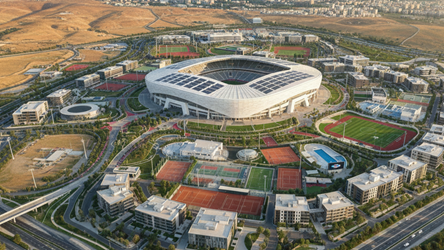
Jordan has started preliminary excavation and site preparation work at its Al-Hussein Bin Abdullah II International Stadium, located east of the capital city of Amman.
The project is part of the first phase of the Amra City development master plan.
The development is being implemented by Jordan Cities & Facilities Development Company, a Jordan Investment Fund-owned company.
The main works are expected to begin early next year, with the stadium slated for completion in 2029.
The project will cover an area of about 1 million square metres and the stadium will have a capacity of 50,000 spectators.
The stadium is being built within the Amra City development, which is located about 40 kilometres (km) from downtown Amman and 35km from Zarqa City and Queen Alia International airport.
The project forms part of Jordan's Economic Modernisation Vision (EMV) 2023-25.
The EMV – Amman’s flagship reform programme – aims to increase real income per capita by an average of 3% annually, create 1 million jobs, and more than double the country’s GDP over the next decade.
The strategy envisages a leading role for the private sector, which is expected to account for 73% of the estimated $58.8bn investment required.
To achieve these targets, a substantial pipeline of public-private partnership (PPP) projects is planned in sectors including water desalination, school construction, clean energy, green hydrogen, transport and road infrastructure.
Last year, the PPP unit at the Investment Ministry said it was targeting seven key PPP projects in 2025.
 READ THE JUNE 2026 MEED BUSINESS REVIEW – click here to view PDF
GCC looks beyond the Strait; Iraq’s reform window narrows as fiscal assumptions shatter; MEED Top 100 companies.
Distributed to senior decision-makers in the region and around the world, the June 2026 edition of MEED Business Review includes:
> AGENDA: Gulf races to reroute trade> EXPORT ROUTES: Regional war boosts oil and gas pipeline project activity> CURRENT AFFAIRS: UAE’s Opec departure fulfils multiple ends> MEED TOP 100: Middle East stocks recover unevenly> LEADERSHIP: Building the infrastructure that makes net zero possible> TRADE DEAL: UK-GCC trade deal talks concludeTo see previous issues of MEED Business Review, please click herehttps://image.digitalinsightresearch.in/uploads/NewsArticle/17325757/main.png -
Chinese firms win $506m Saudi housing project deals
18 June 2026
Register for MEED’s 14-day trial access
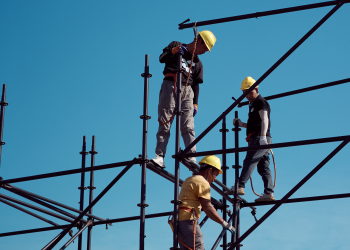
Saudi Arabia’s Municipalities & Housing Ministry has awarded contracts worth over SR1.9bn ($506m) to Chinese contractors for two residential developments in the kingdom.
The first contract has been awarded to China Architectural Construction Corporation for the construction of 2,010 housing units at the Al-Ruba residential project in Riyadh. The contract value is SR875m ($233m).
The other contract has been awarded to China State Construction Engineering Corporation for the Al-Rasha Al-Faisaliah residential project in Dammam. The project comprises 2,426 housing units, and the contract value is over SR1bn ($266m).
The contracts were announced during the official visit of Majed Al-Hogail, Saudi Municipalities & Housing Minister, to China, where he also signed six memorandums of understanding (MoUs) between Saudi and Chinese firms. The MoUs aim to accelerate housing development, localise advanced construction technologies and enhance public-private sector collaboration.
MEED reported in 2020 that Riyadh planned to oversee the development of more than 1 million homes by 2025 to meet growing demand in the kingdom.
By 2030, the Saudi capital aims to more than double its population, from 7-8 million to 15-20 million, and to become one of the 10 wealthiest cities in the world.
READ THE JUNE 2026 MEED BUSINESS REVIEW – click here to view PDFGCC looks beyond the Strait; Iraq’s reform window narrows as fiscal assumptions shatter; MEED Top 100 companies.
Distributed to senior decision-makers in the region and around the world, the June 2026 edition of MEED Business Review includes:
> AGENDA: Gulf races to reroute trade> EXPORT ROUTES: Regional war boosts oil and gas pipeline project activity> CURRENT AFFAIRS: UAE’s Opec departure fulfils multiple ends> MEED TOP 100: Middle East stocks recover unevenly> LEADERSHIP: Building the infrastructure that makes net zero possible> TRADE DEAL: UK-GCC trade deal talks concludeTo see previous issues of MEED Business Review, please click herehttps://image.digitalinsightresearch.in/uploads/NewsArticle/17322994/main.png -
Diriyah awards $727m Waldorf Astoria superblock deal
17 June 2026
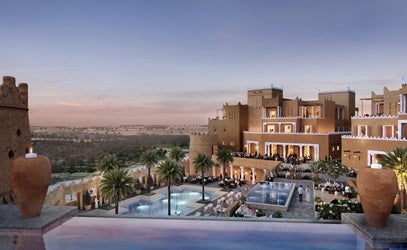
Saudi gigaproject developer Diriyah Company has awarded a SR2.7bn ($727m) contract for the main construction works on the development’s Waldorf Astoria superblock.
The contract was awarded to the joint venture of Hassan Allam Construction Saudi and UCC Saudi, the local branch of Qatar’s Urbacon Holding.
The Waldorf Astoria superblock is a mixed-use development comprising a Waldorf Astoria hotel, Waldorf Astoria-branded residences, commercial and residential facilities, and office space.
The Waldorf Astoria hotel will feature 200 keys, while the residential component will comprise 47 branded residences.
The project is located on the Grand Boulevard South and Northern Arterial Road in the Boulevard Northwestern district at Diriyah Gate 2.
Diriyah Company tendered the contract in November last year, with submissions due in January, as MEED reported.
Diriyah Company Group CEO Jerry Inzerillo said: “We are delighted to announce this latest major construction contract for the Waldorf Astoria superblock as we continue to progress at pace across the Diriyah development area. The Waldorf Astoria will be a world-class addition to our growing portfolio of globally renowned hospitality brands, further strengthening Diriyah’s appeal as a globally significant destination that offers world-class hospitality and lifestyle experiences.
“Together with our partners, we look forward to delivering another landmark development that supports the kingdom’s Vision 2030 ambitions and contributes to the continued growth and success of Diriyah.”
Hassan Allam, chairman and CEO of Hassan Allam Holding, said: “We are proud to support the development of one of the kingdom’s most ambitious and transformative destinations and to continue our partnership with Diriyah Company in bringing its vision to life.
“Drawing on more than 90 years of experience across the Mena region, we remain committed to delivering the highest standards of quality and excellence on landmark projects that are helping shape the kingdom’s future.”
Ramez Al-Khayyat, UCC Holding president and group CEO, said: “Being awarded this contract by Diriyah Company marks another important milestone in our growing partnership and reinforces our shared commitment to delivering world-class developments across the kingdom. This project builds on our ongoing collaboration in Diriyah, including the delivery of four luxury hotels and the Royal Diriyah Equestrian and Polo Club in Wadi Safar.
“We value the opportunity to contribute once again to one of Saudi Arabia’s most ambitious and prestigious urban development destinations, supporting the vision of creating a world-class cultural, hospitality and lifestyle hub.”
The latest award follows Diriyah Company’s award of an estimated SR730m ($195m) construction contract for civic quarter buildings within the Diriyah development to local contractor Al-Rashid Trading & Contracting Company (RTCC).
In April, Diriyah announced a SR1.84bn ($490m) construction contract to build the Saudi Arabia Museum of Contemporary Art (SAMoCA) within the Diriyah development. The contract was awarded to a consortium of Egyptian contractor Hassan Allam Construction Saudi and Saudi Arabia’s Albawani.
In March, Diriyah Company awarded an estimated SR2.5bn ($666m) contract to build the Pendry superblock in the DG2 area.
The Pendry superblock includes the construction of the Pendry Hotel alongside residential and commercial assets. The package will cover 75,365 square metres and is located in the northwestern district of the DG2 area.
The previous month, Diriyah Company also awarded a SR717m ($192m) contract for the construction of the One Hotel, located in the Diriyah Two area of the masterplan, with a gross floor area of more than 31,000 sq m.
The Diriyah masterplan envisages the city as a cultural and lifestyle tourism destination. Located northwest of Riyadh’s city centre, it will cover 14 square kilometres and combine 300 years of history, culture and heritage with hospitality facilities.
https://image.digitalinsightresearch.in/uploads/NewsArticle/17287718/main.jpg -
AHS Properties acquires Shangri-La hotel for $300m
17 June 2026
Dubai-based real estate developer AHS Properties has announced the acquisition of the Shangri-La hotel for AED1.1bn ($300m), marking one of the largest single-asset real estate transactions in recent years.
AHS Properties acquired the hotel from local firm Mismak Asset Management.
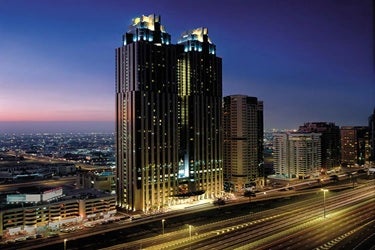
The Shangri-La Hotel is a 43-storey, 200-metre tower located on Sheikh Zayed Road. Completed in 2003, it was among the first five-star hotels to open along the corridor.
The acquisition expands AHS Properties’ portfolio, which includes AHS Tower, a Grade A commercial development on Sheikh Zayed Road, and AHS City, the company’s master-planned mixed-use community on the same corridor.
In a statement, AHS Properties said that AHS Tower, AHS City and the Shangri-La hotel form a strategic “vertical corridor” platform, representing a significant portion of the company’s AED50bn development pipeline through the end of 2026.
“The transaction reflects AHS Properties’ strategy of deploying capital into high-quality, supply-constrained assets,” the statement added.
According to the Dubai Land Department, Dubai’s real estate sector recorded AED252bn in transactions in Q1 2026.
https://image.digitalinsightresearch.in/uploads/NewsArticle/17310101/main.jpg -
UAE moves to clear the path for recovery
17 June 2026
 Commentary
Colin Foreman
EditorMore than three months after the conflict began to disrupt business across the Gulf, the UAE is moving to resolve the technical challenges that the economy faces as it shifts towards recovery.
The insurance gap has been a key obstacle to the recovery of aviation and tourism. Several countries continue to maintain advisories against travel to the Gulf, making it difficult or impossible for visitors to obtain conventional cover for trips to or through the region. The concern is twofold: one, becoming stranded should hostilities resume, and two, not being able to secure medical insurance. Both Emirates and Etihad have now moved to address that directly, offering insurance to passengers flying to or through their respective home hubs. The Etihad scheme, backed by DCT Abu Dhabi and underwritten by Daman, will run from July to December and covers eligible visitors for up to 15 days.
The second area of concern is real estate. Anecdotally, buyers in sectors economically exposed to the conflict have found it increasingly difficult to obtain mortgage financing, a problem that has become especially acute at the point of handover. The recently signed partnership between Dubai Holding Real Estate and Commercial Bank of Dubai is designed to ease that pressure. The programme opens financing from the 30% construction stage once buyers have met a 50% payment threshold, giving purchasers earlier visibility of their borrowing capacity and reducing uncertainty during the off-plan purchase process.
Taken together, the two initiatives show that the UAE is proactively addressing the technical hurdles as and when they arise. As the recovery gathers momentum, more challenges will surface. The capacity and willingness to address them as they emerge will be crucial to a meaningful recovery.
https://image.digitalinsightresearch.in/uploads/NewsArticle/17306586/main.jpg