
Sobha embraces modular construction model
27 May 2025

In the UAE’s competitive market, developers are under pressure to deliver faster, better and more sustainably. Sobha Modular, the off-site construction arm of Sobha Realty, relies on modular construction solutions to address these demands.
“Dubai’s real estate market remains dynamic and agile, evolving rapidly to meet shifting investor and end-user priorities,” says Francis Alfred, managing director of Sobha Realty.
“There’s a surge in demand for high-quality developments that offer faster delivery timelines and greater sustainability. Buyers are not just looking for prime locations or aesthetics anymore. They want energy efficiency, operational savings and reduced environmental impact – and modular construction plays a pivotal role in meeting those expectations.”
Strategic fit
Modular construction is a cornerstone of Sobha’s "backward integration model", which gives the developer control over the entire value chain, from design and engineering to manufacturing and installation, says Alfred.
“By enabling precision engineering and off-site production, modular construction allows us to accelerate delivery without compromising quality,” he explains.
“In Dubai and the broader UAE, where speed and quality are paramount, modular construction enhances project efficiency while minimising disruption at urban sites.”
Sustainability is another advantage. Modular techniques allow for resource usage to be centralised, making it easier to integrate eco-efficient systems from the design phase.
Modular solutions also reduce material waste and lower carbon impact, which enables Sobha Modular to “maintain consistency in execution across large-scale developments”, Alfred notes.
Engineering luxury
While some associate modular construction with utilitarian design, Alfred says it is also suited to high-end projects.
“In the luxury segment, consistency, precision and attention to detail are critical. Our in-house modular capabilities allow us to uphold these standards at every stage.”
The executive lists four core benefits that make modular construction particularly valuable when it comes to Sobha’s premium offerings: quality, accelerated timelines, sustainability and customer satisfaction.
“Every component produced in our Ras Al-Khaimah factory undergoes stringent quality checks. We meet or exceed UAE and international benchmarks,” he says.
“Off-site fabrication runs in parallel to on-site work. This means shorter build times and early handovers.
“Less on-site waste, smarter material use and a smaller carbon footprint – that’s what modular brings to the table,” he continues. “Fewer defects, better finishes and higher consistency translate into happier homeowners.”
Modular lifecycle
Sobha’s modular systems include units such as bathroom pods and facades, which are manufactured at the company’s factory in the northern UAE emirate of Ras Al-Khaimah. The process blends innovation, training and quality control, according to Alfred.
He outlines the lifecycle of a modular pod, which starts with design and specification processes developed collaboratively by Sobha’s in-house teams. Once the blueprint is approved, a reference pod is created.
“We use virtual reality testing to simulate real-world use and validate the design,” he says.
A series of inspections follows. “We don’t proceed until the pod meets our functional, operational and aesthetic standards,” Alfred explains.
Once approved, mass production begins under the oversight of trained technicians and project coordinators using digital tracking tools. This is followed by installation.
“We manage scheduling with dedicated coordination teams to ensure pods arrive ready for site execution. By the time our construction teams are on the ground, everything is set for seamless integration.”
Tangible gains
The modular model delivers a measurable impact on the ground, says Alfred. “It has been transformative in enhancing both speed and quality across our projects.”
By running production and site work concurrently, Sobha has been able to shorten timelines and deliver homes ahead of schedule.
“Client satisfaction has risen,” he says, adding: "Our internal snagging phases now see significantly fewer defects.”
He also points to benefits such as improved coordination, optimised manpower deployment and reduced emissions from construction activity.
“Our data shows we’re seeing overall project efficiency improvements, and we anticipate that future developments using modular [construction techniques] will achieve more than 40% gains in key performance metrics.”
Future plans
Sobha plans to extend its modular construction offering into new markets. “We are expanding beyond Dubai and Umm Al-Quwain, with Abu Dhabi identified as a strategic growth market,” Alfred says. “We’re also looking internationally.”
Markets such as the US and Australia are next, he says, as there is rising demand for sustainable, high-quality, factory-built developments in these countries.
“The modular model we've successfully implemented in the UAE and India allows us to scale rapidly while maintaining control and craftsmanship.”
In this global push, Sobha aims to control the entire value chain in order to maintain consistency across all of its markets. “Our backward integration strategy … is a scalable, exportable model that guarantees the Sobha standard no matter where we build,” Alfred says.
As Sobha Modular strives to meet the evolving needs of both investors and end-users, the company believes that modular construction is not just a trend, but is the future of premium real estate.
“Our goal is to redefine what’s possible in construction,” Alfred concludes.

Register for MEED's guest program now to access this article.
Exclusive from Meed
-

-
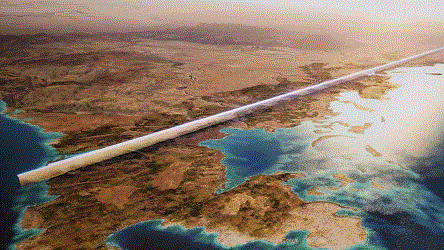 Neom cancels The Line tunnels contracts
16 March 2026
-
-
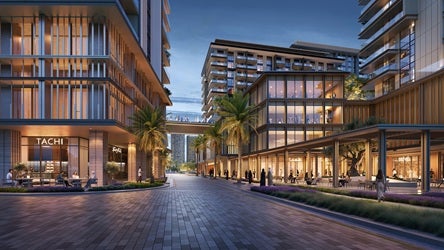 Modon launches Tara Park on Abu Dhabi’s Reem Island
16 March 2026
-
 Jordan begins prequalification for Amman water project
16 March 2026
All of this is only 1% of what MEED.com has to offer
Subscribe now and unlock all the 153,671 articles on MEED.com
- All the latest news, data, and market intelligence across MENA at your fingerprints
- First-hand updates and inside information on projects, clients and competitors that matter to you
- 20 years' archive of information, data, and news for you to access at your convenience
- Strategize to succeed and minimise risks with timely analysis of current and future market trends

Related Articles
-
Contractors submit prices for Upper Zakum expansion project
16 March 2026
Contractors have submitted commercial proposals for the next expansion phase of the Upper Zakum offshore field development in Abu Dhabi, aimed at increasing the asset’s oil production potential to 1.5 million barrels a day (b/d).
The offshore oil and gas production business of Abu Dhabi National Oil Company (Adnoc Offshore) has divided the UZ 1.5MMBD project’s engineering, procurement and construction (EPC) scope of work into three packages, MEED previously reported.
Contractors submitted commercial bids for package 1 by the 23 February deadline and for packages 2 and 3 by the 27 February deadline, according to sources. The previous deadline for submission of commercial bids was 15 January.
Adnoc Offshore is understood to have issued the main tender for EPC works for the UZ 1.5MMBD project in the third quarter of last year.
Contractors submitted technical bids for package 1 by 21 November, while proposals for packages 2 and 3 were submitted by 14 November, MEED previously reported.
In November 2024, MEED reported that Adnoc Offshore had awarded a contract for front-end engineering and design (feed) and pre-feed services on the project to France-headquartered contractor Technip Energies.
A kick-off meeting between Adnoc Offshore and Technip Energies took place on 21 November 2024.
Located 84 kilometres offshore in Abu Dhabi, Upper Zakum is the world’s second-largest offshore oil field and fourth-largest oil field.
The UZ 1.5MMBD project is the latest crude output expansion undertaken by Adnoc Offshore at the Upper Zakum field development.
Upper Zakum expansion
The first phase of the programme to raise the Upper Zakum offshore field development’s oil production capacity to 1.2 million b/d was launched in 2019. The initial goal was to increase the field’s output potential to 1 million b/d by 2024, which was later increased to 1.2 million b/d, with the project execution timeline eventually extended.
In April last year, MEED reported that Adnoc Offshore had awarded the main EPC contract for the UZ 1.2MMBD EPC-1 project to UAE-based Target Engineering Construction Company. The value of the contract was estimated to be $825m.
The project’s main scope involved the EPC of several surface facilities and plants at the Upper Zakum offshore development’s four main artificial islands: Al-Ghallan, Umm Al-Anbar, Ettouk and Asseifiya – also known as Central Island, West Island, North Island and South Island, respectively.
Spanish contractor Tecnicas Reunidas won the contract for the feed works on the UZ 1.2MMBD EPC-1 project in 2019. UK-headquartered Wood Group was appointed as the project management consultant for the EPC phase.
In November 2024, MEED reported that Adnoc Offshore had also selected Target for the second phase of the Upper Zakum 1.2 million b/d project (UZ 1.2MMBD EPC-2). The value of the contract was estimated to be about $500m, according to sources.
Target began work on the project in December last year, MEED previously reported.
The scope of work on the UZ 1.2MMBD EPC-2 project covers the EPC of several structures on Assefiya Island.
Adnoc Offshore performed the feed work on the UZ 1.2MMBD EPC-2 project in-house.
Upper Zakum oil production
Adnoc Offshore has committed to a total capital expenditure budget of approximately $30bn, along with its operating partners in the Upper Zakum hydrocarbons concession, Japan Oil Development Company (Jodco) and US-based ExxonMobil.
The strategic objective is to first raise the asset’s oil output from 640,000 b/d to 750,000 b/d through the UZ 750 project, then to 1.2 million b/d through the two phases of the ongoing UZ 1.2MMBD project, and eventually to 1.5 million b/d.
Zakum Development Company (Zadco), which later merged into Adnoc Offshore, awarded EPC contracts for the UZ 750 project in 2012 and early 2013.
The $817m first package was awarded to a consortium of Abu Dhabi’s NMDC Energy (then known as National Petroleum Construction Company) and Technip Energies. Package two, the project’s largest EPC package, worth $3.7bn, was awarded to a consortium of UK-headquartered Petrofac and South Korea’s Daewoo Shipbuilding & Engineering.
EPC work on UZ 750 began in 2014 and was completed in 2022.
In October 2022, Adnoc Group subsidiary Adnoc Drilling set a world record for drilling the longest oil and gas well at the Upper Zakum concession, stretching 50,000 feet.
The extended-reach wells will tap into an undeveloped part of the Upper Zakum reservoir, potentially increasing the field’s production capacity by 15,000 b/d without expanding or building any new infrastructure, Adnoc said.
https://image.digitalinsightresearch.in/uploads/NewsArticle/15996020/main.jpg -
Neom cancels The Line tunnels contracts
16 March 2026
Register for MEED’s 14-day trial access
Neom has cancelled the contracts related to the construction of the tunnel sections of The Line in northwest Saudi Arabia.
In a stock exchange announcement filed on 13 March, South Korean contractor Hyundai E&C said that Neom cancelled its contract on 29 December last year.
Hyundai E&C was executing the drill-and-blast section of The Line’s tunnels in a joint venture with Greece’s Archirodon and South Korean counterpart Samsung C&T.
The firm said its share of the joint venture was about 35%, amounting to $483m.
Neom awarded contracts for constructing the mountain tunnel sections of The Line in June 2022.
The drill-and-blast works were split into four packages, with two contracting teams winning two packages each.
The other joint-venture team comprised Spain’s FCC, the local Shibh Al-Jazira Contracting Company (Sajco) and Beijing-based China State Construction Engineering Corporation.
The tunnels formed part of the infrastructure backbone of Neom’s 170-kilometre The Line development, launched in January 2021.
What began as Crown Prince Mohammed Bin Salman’s defining symbol of a post-oil Saudi Arabia unravelled with quiet finality over roughly two years. By April 2024, planners were reportedly being forced to cut the initial phase to just 2.4km by 2030.
By July last year, with the sovereign wealth fund facing tightening liquidity, the kingdom was reported to have conducted a “strategic review” to determine whether The Line was feasible – a process described as a “recalibration” of Vision 2030.
Resources are now being directed to projects essential for the Fifa World Cup 2034, Expo 2030, and critical housing, healthcare and education targets.
According to media reports, the government has pivoted towards repositioning what remains of Neom as an industrial and data centre hub, leveraging the Red Sea coastline’s access to seawater cooling for artificial intelligence (AI) infrastructure.
 READ THE MARCH 2026 MEED BUSINESS REVIEW – click here to view PDF
Riyadh urges private sector to take greater role; Chemical players look to spend rationally; Economic uptick lends confidence to Cairo’s reforms.
Distributed to senior decision-makers in the region and around the world, the March 2026 edition of MEED Business Review includes:
> RAMADAN: Data disproves the Ramadan slowdown story> INDUSTRY REPORT: Chemicals producers look to cut spending> INDUSTRY REPORT: Global petrochemical project capex set to rise until 2030> MARKET FOCUS: Egypt’s crisis mode gives way to cautious revival> LEADERSHIP: Delivering Saudi Arabia’s next phase of rail growth> INTERVIEW: Abu Dhabi’s Enersol charts acquisitions pathTo see previous issues of MEED Business Review, please click herehttps://image.digitalinsightresearch.in/uploads/NewsArticle/15995688/main.gif -
Bidders get more time for Riyadh East sewage treatment plant
16 March 2026
State water offtaker Sharakat, formerly Saudi Water Partnership Company (SWPC), has extended the bid submission deadline for the Riyadh East independent sewage treatment plant (ISTP).
The new deadline is 30 June. The original deadline was 2 April.
The project will be developed under a build‑own‑operate‑transfer (BOOT) model with a 25‑year concession term.
The plant will have a treatment capacity of 200,000 cubic metres a day (cm/d) in its first phase, expanding to 500,000 cm/d in the second phase.
It includes the development of a treated sewage effluent transmission pipeline, forming part of the kingdom’s wider programme to expand wastewater treatment capacity through public-private partnerships.
The request for proposals (RFP) was issued last October.
In 2024, Sharakat prequalified 53 companies that could bid for the Riyadh East ISTP, part of seven planned ISTP projects it said it would procure between 2024 and 2026
WSP is the technical adviser and KPMG Middle East is the lead and financial adviser on the project.
The targeted commercial operation date for the facility is 2029.
ISTP plans
Sharakat’s current ISTP portfolio includes 10 large plants that are operational, under construction or under tendering, with a combined initial treatment capacity of 1.79 million cm/d.
These projects include North Taif, Jeddah Airport, West Dammam, Madinah 3, Buraydah 2, Tabuk 2, Al-Haer, Arana, Hadda and Riyadh East.
In December, two consortiums were selected for contracts to develop and operate the Hadda and Arana ISTP projects in Mecca province.
That same month, Sharakat prequalified 63 developers for upcoming ISTP projects under a revised prequalification process.
According to Sharakat’s newly released seven-year statement, it has identified six additional large ISTPs in the development pipeline.
These include:
- Kharj (75,000 cm/d)
- Abu Arish (50,000)
- Hafar Al-Batin (100,000)
- Riyadh North (TBD)
- Najran South (50,000)
- Khamis Mushait (50,000)
The company is also pursuing a nationwide small sewage treatment plant programme covering about 139 smaller ISTPs grouped into seven clusters.
These are designed to add roughly 521,450 cm/d of additional treatment capacity across the kingdom.
READ THE MARCH 2026 MEED BUSINESS REVIEW – click here to view PDFRiyadh urges private sector to take greater role; Chemical players look to spend rationally; Economic uptick lends confidence to Cairo’s reforms.
Distributed to senior decision-makers in the region and around the world, the March 2026 edition of MEED Business Review includes:
> RAMADAN: Data disproves the Ramadan slowdown story> INDUSTRY REPORT: Chemicals producers look to cut spending> INDUSTRY REPORT: Global petrochemical project capex set to rise until 2030> MARKET FOCUS: Egypt’s crisis mode gives way to cautious revival> LEADERSHIP: Delivering Saudi Arabia’s next phase of rail growth> INTERVIEW: Abu Dhabi’s Enersol charts acquisitions pathTo see previous issues of MEED Business Review, please click herehttps://image.digitalinsightresearch.in/uploads/NewsArticle/15993509/main.jpg -
Modon launches Tara Park on Abu Dhabi’s Reem Island
16 March 2026
Abu Dhabi-based Modon Holding has launched the Tara Park residential project in the Reem Island area.
The project comprises two residential towers with a total of 340 residential units.
The development includes a 527-metre jogging track.
The latest project launch follows Modon Holding’s launch of the Bashayer residential waterfront community on Hudayriyat Island.
The project will comprise 157 four- and five-bedroom villas centred around a clubhouse with a rooftop infinity pool, and 330 one- to four-bedroom apartments across two low-rise buildings.
The development comprises a 3.5-kilometre waterfront promenade and a park.
In October last year, Modon Holding launched the Maysan residential development on Abu Dhabi’s Reem Island.
This development covers an area of about 600,000 square metres.
Maysan is being developed in several phases. The project’s first phase involves developing two districts: Mayar and Thoraya.
The first district, Mayar, consists of 132 mansions. The four-storey mansions will be located within a gated community featuring a central park and walking trails.
The second district, Thoraya, features 184 townhouses. It will include gardens, play areas, a gym and other associated facilities.
READ THE MARCH 2026 MEED BUSINESS REVIEW – click here to view PDFRiyadh urges private sector to take greater role; Chemical players look to spend rationally; Economic uptick lends confidence to Cairo’s reforms.
Distributed to senior decision-makers in the region and around the world, the March 2026 edition of MEED Business Review includes:
> RAMADAN: Data disproves the Ramadan slowdown story> INDUSTRY REPORT: Chemicals producers look to cut spending> INDUSTRY REPORT: Global petrochemical project capex set to rise until 2030> MARKET FOCUS: Egypt’s crisis mode gives way to cautious revival> LEADERSHIP: Delivering Saudi Arabia’s next phase of rail growth> INTERVIEW: Abu Dhabi’s Enersol charts acquisitions pathTo see previous issues of MEED Business Review, please click herehttps://image.digitalinsightresearch.in/uploads/NewsArticle/15993317/main.jpg -
Jordan begins prequalification for Amman water project
16 March 2026
Jordan’s Ministry of Investment has issued a request for qualifications (RFQ) for a non-revenue water (NRW) reduction project in the southern and southeastern areas of Amman.
The project will be delivered under a public-private partnership (PPP) model using a design, build, finance, operate and maintain structure. It aims to reduce water losses and improve the efficiency of water distribution networks in the targeted areas.
The initiative is being led by the Ministry of Investment through its PPP unit in collaboration with the Ministry of Water & Irrigation, the Water Authority of Jordan and Miyahuna.
The procurement is expected to attract international water operators, engineering contractors and infrastructure investors with experience in NRW reduction programmes.
The bid submission deadline is 23 April.
Jordan has prioritised reducing NRW as part of efforts to improve the efficiency of its water sector. The country is among the most water-scarce in the world, and losses from distribution networks are estimated to account for about 45% of water supplied.
NRW reduction programmes typically involve measures such as network rehabilitation, leak detection, pressure management and improved metering to reduce physical and commercial losses across water systems.
Jordan is also advancing its $6bn Aqaba-Amman water desalination and conveyance project that aims to meet about 40% of Jordan’s municipal water demand by 2040.
As MEED recently reported, the project is nearing financial close. Once complete, it will supply about 300 million cubic metres of potable water a year from the Red Sea to Amman and other regions.
In February, the Water Authority of Jordan signed a four-year performance-based management contract with France’s Veolia to support water and wastewater services in the country’s northern governorates.
Under the contract, Veolia will provide operations, maintenance and management services to Yarmouk Water Company, the public utility responsible for water supply and wastewater services in the region.
READ THE MARCH 2026 MEED BUSINESS REVIEW – click here to view PDFRiyadh urges private sector to take greater role; Chemical players look to spend rationally; Economic uptick lends confidence to Cairo’s reforms.
Distributed to senior decision-makers in the region and around the world, the March 2026 edition of MEED Business Review includes:
> RAMADAN: Data disproves the Ramadan slowdown story> INDUSTRY REPORT: Chemicals producers look to cut spending> INDUSTRY REPORT: Global petrochemical project capex set to rise until 2030> MARKET FOCUS: Egypt’s crisis mode gives way to cautious revival> LEADERSHIP: Delivering Saudi Arabia’s next phase of rail growth> INTERVIEW: Abu Dhabi’s Enersol charts acquisitions pathTo see previous issues of MEED Business Review, please click herehttps://image.digitalinsightresearch.in/uploads/NewsArticle/15993071/main.jpg