
Mergers loom over Bahrain’s banking system
5 November 2025

The memorandum of understanding signed between National Bank of Bahrain (NBB) and Bank of Bahrain and Kuwait (BBK) on 2 November, advancing talks towards a formal merger, provides a welcome boost to a banking sector that has felt the headwinds of Bahrain’s challenging economic situation.
Building scale is a key ambition for Bahraini banks, and recent merger activity has helped local lenders find synergies, sometimes through acquisition from non-Bahraini peers.
The Kuwait Finance House (KFH) acquisition of Ahli United Bank (AUB) in October 2022 helped forge one of the Gulf’s largest players. The local Al-Salam Bank completed the acquisition of the consumer banking business of Ithmaar Bank that year, building one of the island’s largest sharia-compliant lenders.
More recently, HSBC Bank’s Bahrain branch has transferred its retail banking business to BBK, an example of a domestic player taking assets off a foreign institution. Kuwait’s Burgan Bank, meanwhile, completed in Q1 2025 the acquisition of Bahrain’s United Gulf Bank (UGB) for $190m.
NBB and BBK would make for a robust marriage of two large conventional Bahraini lenders. The former saw its assets grow 8% year-on-year to BD5.97bn ($15.8bn) in H1 2025, while BBK’s assets as of the end of September 2025 stood at BD4.6bn ($12.2bn), up 9.6% on the same period last year.
This looming combination would have heft in a banking system marked by a large number of institutions (83 in total in September).
A joint statement from the two banks said that should the merger proceed, it “has the potential to create a stronger, more dynamic and forward-looking entity with enhanced scale, agility, and capabilities”.
Market adjustment
The likely outcome of a stronger bank with a higher market share is a positive for Bahrain. And yet, given the banks’ continued exposure to a sovereign with weak finances and an overreliance on oil revenues, the simple fact of merging does not override existing challenges.
Although Manama boasts some of the Gulf’s longest-established banking institutions, these are still subject to a rating environment reflective of a country with a debt-to-GDP ratio forecast to rise to 136% in 2026, according to Fitch Ratings. The fiscal deficit is expected to remain around 9% of GDP through 2026, driven by high interest costs and reliance on oil revenue.
This has real-world impacts on the banking system. In April 2025, Fitch revised Bahrain’s outlook to negative, noting that while it benefits from strong financial support from GCC partners, the ratings agency identified low foreign reserves and high external debt as posing significant risks.
By way of illustration, NBB’s main exposure is to the Bahraini sovereign (at BD1.8bn – $4.8bn – or 3.3x common equity Tier 1 (CET1) capital, at end-2024), mostly in the form of debt securities, but also in lending to the government and Treasury bills. NBB is also exposed to the sovereign through lending to quasi-government entities, notes Fitch.
Fitch-rated Bahraini banks are constrained by the sovereign rating of ‘B+’ or capped by Bahrain’s country ceiling. “Despite this, these banks’ standalone financial profiles and metrics in particular compare well with some higher-rated GCC peers,” says Amin Sakhri, director, Financial Institutions for Fitch Ratings.
“We see a lot of common features in relation to the operating environment to the rest of the GCC,” says Sakhri. “Bahrain is highly dependent on government spending, and highly dependent on oil prices. But the difference is that, in the case of Bahrain, the sovereign rating is lower, which leads to a less dynamic operating environment – particularly in terms of the ability of the sovereign to stimulate the economy relative to other GCC banking sectors.”
Sustained asset strength
Although this has a detrimental effect on the operating environment relative to other countries, Bahraini banks have sufficient armoury to protect themselves from sovereign-linked fiscal challenges.
“Looking at the metrics, capital buffers have remained fairly sound in 2025 and the performance has also been stable relative to 2024, so there’s nothing to cause concern. One of the key strengths of the banking sector remains capitalisation levels,” says Sakhri.
According to the analyst, banks such as NBB and BBK are showing strong capital buffers, comparing favourably with GCC peers, and asset quality metrics are not necessarily weaker than at banks in the banking sectors of Qatar (BB operating environment), the UAE (BBB+) or Saudi Arabia (BBB+).
Another source of comfort is that two out of the five Fitch-rated Bahraini banks are very little exposed to the domestic operating environment and their ratings are not constrained by Bahrain’s sovereign rating.
The financial sector remains a prop of the Bahraini economy. Central Bank of Bahrain governor Khalid Humaidan told a meeting of regional bank governors in mid-October that financial services was the largest sectoral contributor to the national economy, accounting for 17% of GDP.
Humaidan also noted that digital advancements are helping to enhance credit access and support small businesses.
“Projects are being deployed by the Bahraini government, albeit at a more modest level than in other places in the GCC, given the sovereign’s weaker financial flexibility,” says Sakhri.
While credit growth is well below the high rates seen in some neighbouring economies, analysts see room for a respectable performance.
“A lending growth of about 5%-6% next year for the sector can be expected, despite the weaker operating environment score relative to other GCC countries,” says Sakhri.
One new lending opportunity may come through a government plan to boost housing. The Ministry of Housing & Urban Planning launched a new financing option, Tasheel+, earlier this year, in collaboration with local banks. Lenders will provide financing, while the ministry will cover government support payments directly to the banks.
The CBB is also looking to burnish its reputation as a leading regulator, having established the region’s first fintech sandbox as far back as mid-2017. It has recently developed a new framework for stablecoins. More recently, the CBB announced the launch of an SME Fund, after a strategic agreement between Bahrain Development Bank, NBB, BBK and Al-Salam Bank.
These initiatives, combined with recent M&A moves, should give added impetus to a banking sector that is looking to exert a more dynamic impact on the local and regional economy.

Register for MEED's guest program now to access this article.
Exclusive from Meed
-
 Masdar signs renewables deals in Montenegro
28 July 2026
-
-
-
-
 Contractor wins Emaar Oasis The Address villas deal
28 July 2026
All of this is only 1% of what MEED.com has to offer
Subscribe now and unlock all the 153,671 articles on MEED.com
- All the latest news, data, and market intelligence across MENA at your fingerprints
- First-hand updates and inside information on projects, clients and competitors that matter to you
- 20 years' archive of information, data, and news for you to access at your convenience
- Strategize to succeed and minimise risks with timely analysis of current and future market trends
Related Articles
-
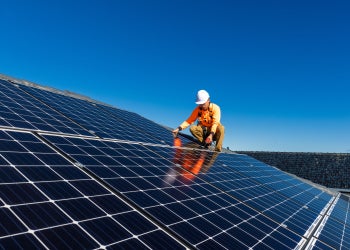
Masdar signs renewables deals in Montenegro
28 July 2026
Abu Dhabi Future Energy Company (Masdar) and Montenegro’s state power utility Elektroprivreda Crne Gore (EPCG) have signed agreements to advance renewable energy projects in Montenegro.
The agreements cover the joint development of two solar projects with a combined capacity of 150MW.
The companies have also signed a framework agreement to explore the development of more than 400MW of pumped hydro energy storage projects.
The projects will be the first to be progressed through a 50:50 joint venture planned by Masdar and EPCG.
The two companies signed a joint venture agreement in April as part of a wider 2GW renewable energy partnership in Montenegro.
The latest agreements were signed in the presence of Sultan Al-Jaber, UAE minister of industry and advanced technology and chairman of Masdar, and Admir Sahmanovic, Montenegro’s minister of energy and mining.
Masdar has an existing presence in Montenegro through its investment in the 72MW Krnovo wind farm.
European expansion
The developer has been accelerating foreign investment plans in 2026. As part of its European expansion plans, it signed an agreement with Spanish energy firm Repsol in June to acquire a 49.99% stake in a local renewable energy portfolio.
The deal valued the portfolio at €849m ($982m).
The portfolio comprises 705MW of operational capacity, including 13 wind farms with a combined capacity of 402MW and six solar photovoltaic solar parks with a total capacity of 303MW.
All the assets entered operation in 2025 and the first quarter of 2026. The portfolio also includes a pipeline of future wind, solar and battery storage projects with a combined capacity of more than 565MW.
Growth in Asia
In April, Masdar signed a binding agreement with France’s TotalEnergies to establish a $2.2bn joint venture to develop, build and operate renewable energy projects across Asia.
The combined business will have 3GW of operational capacity and 6GW of projects in advanced development, targeted for commissioning by 2030.
In June, Masdar broke ground on a 1GW wind farm in Kazakhstan’s Zhambyl region, marking the company’s first renewable energy project in the country.
The $1.4bn development is one of the largest integrated wind and battery energy storage projects in Central Asia. It will combine a 1GW wind farm with a 600 MWh battery energy storage system.
Masdar is targeting a global renewable energy portfolio of 100GW by 2030. It recently reached 65GW, two-thirds of the way to that target.
The company plans to deploy an additional $30bn-$35bn in equity and project finance by 2030, adding an average of 10GW of new capacity each year.
https://image.digitalinsightresearch.in/uploads/NewsArticle/17792896/main.jpg -
Geopolitics tests Dubai property with hotels hardest hit
28 July 2026
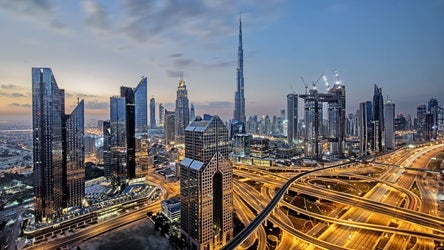
Dubai’s residential market cooled sharply in the second quarter of 2026, and the hospitality sector recorded its steepest downturn in years, according to US-based real estate research firm CBRE’s latest UAE market review. Office and industrial real estate, however, continued to defy a weaker macroeconomic backdrop, the report said.
The figures, published on 28 July, mark a turning point for a residential sector that has driven much of Dubai’s post-pandemic growth story.
Transaction volumes fell 29% year-on-year to just under 37,000 sales in the second quarter, down from more than 51,000 in the same period last year.
Total transaction values dropped even further, to AED88bn ($24bn) from close to AED154bn ($42bn) in the second quarter of 2025.
Rents have moved into negative territory faster than prices. While sales values were still up 1.9% year-on-year, average residential rents fell 2.6% annually and 6.2% quarter-on-quarter.
About 18,000 new units were completed in the first half of the year, adding to supply just as demand and transaction activity were softening.
The contrast with Abu Dhabi is stark. The capital’s residential values rose 21.6% year-on-year, powered by 24.4% growth in apartment prices, while rents climbed a further 3.6%.
Sales values reached AED32bn ($8.7bn), up 150% on the same quarter last year, with transaction volumes up around 80%.
Off-plan sales accounted for roughly 83% of deals and 85% of value, underscoring investor appetite for new launches even as Dubai’s own off-plan pipeline slows.
Hospitality bears the brunt
The hospitality sector recorded the most pronounced downturn of any asset class tracked in the review. Regional geopolitical disruption weighed heavily on international travel demand and airline operations through the first half of the year, with UAE-wide hotel occupancy down 27.7 percentage points year-on-year to June and revenue per available room (RevPAR) down 31.8%, according to CoStar data cited in the report.
Dubai absorbed the sharpest declines, reflecting its greater reliance on international visitor flows, while Abu Dhabi held up comparatively better on the strength of domestic demand and events-led tourism.
Operators have responded with staycation packages, domestic tourism campaigns and refurbishment programmes aimed at protecting market positioning ahead of an anticipated recovery in international arrivals.
Office and industrial hold strong
Away from housing and hotels, the picture is markedly different. Dubai office rents rose 13% year-on-year, with prime rents up 16% and occupancy at about 94%, as demand concentrated in DIFC, Tecom and DMCC continues to outpace the delivery of new Grade A stock.
Abu Dhabi’s office market performed even more strongly, with rents up nearly 16% and occupancy at 96%, driven by ADGM-based financial services firms including hedge funds.
With less than 300,000 square metres (sq m) of new office space due between 2026 and 2027, both emirates face a supply squeeze that is likely to sustain rental growth into next year.
Retail occupancy remained resilient at about 98% in Dubai and 95% in Abu Dhabi despite softer tourism flows and shifting consumer spending, with Dubai rents up around 3% year-on-year.
A new wave of retail supply is in the pipeline, led by Al-Khail Avenue in Dubai and the first phase of Saadiyat Grove in Abu Dhabi.
Industrial and logistics stand out
Underpinned by government-led localisation programmes, the UAE industrial exports reached AED262bn ($71bn) in 2025, with Operation300bn and Make it in the Emirates (MIITE) continuing to draw manufacturing and logistics investment.
Abu Dhabi secured AED48.5bn ($13.2bn) in commitments through MIITE alongside new logistics agreements at Kezad. At the same time, Dubai recorded strong rental growth across Dubai Industrial City, Dubai Investments Park and National Industries Park.
CBRE now forecasts a marginal UAE GDP contraction of 0.04% for 2026, reflecting disruption to trade, tourism and aviation, though it expects a strong rebound in 2027 as regional conditions normalise.
 READ THE JULY 2026 MEED BUSINESS REVIEW – click here to view PDF
Stress test for Gulf aviation; Mixed performance as country outlooks diverge in the Levant; GCC tourism sector pivots from crisis to recovery mode.
Distributed to senior decision-makers in the region and around the world, the July 2026 edition of MEED Business Review includes:
> AIRPORTS: Dubai and Riyadh reaffirm airport ambitions> INDUSTRY REPORT: Dubai eyes tourism sector recovery> DATA CENTRES: Big Tech falls short on data centre promise> LEADERSHIP: Aramco’s citizen developers accelerate digital changeTo see previous issues of MEED Business Review, please click herehttps://image.digitalinsightresearch.in/uploads/NewsArticle/17792437/main.jpg -
Kuwait extends deadlines for power infrastructure packages
28 July 2026
Kuwait’s Public Authority for Housing Welfare (PAHW) has extended the bid submission deadline for two tenders covering power transmission works at the South Saad Al-Abdullah residential development.
The first tender covers the supply, installation and maintenance of 10 main 132/11kV transformer substations for the third phase of the development.
The bid deadline has been extended to 19 August. The original deadline was 5 August.
The second tender covers the supply, installation and maintenance of 10 main 132/11kV transformer substations for the fourth phase of the project.
The bid deadline for this project has also been moved to 19 August.
Both projects were initially tendered in May. As reported by MEED, PAHW previously issued addendums for both substation tenders, revising the qualification requirements for bidders.
According to the revised requirements, contractors must be approved by Kuwait’s Ministry of Electricity, Water & Renewable Energy and have experience supplying and installing at least 10 132kV substations in Kuwait.
The addendums also introduced requirements related to transformer and gas-insulated switchgear manufacturing approvals, as well as operational performance records for installed equipment
Sabah Al-Ahmad residential city
Meanwhile, bids were submitted on 16 July for two 132kV underground cable tenders for the South Sabah Al-Ahmad residential development.
PAHW had tendered the contracts in May.
The first cable tender covers the supply, extension and maintenance of 132kV underground cables feeding eight main transformer substations serving the N1, N6 and N11 districts in the project’s fourth phase.
According to sources, Egytech Cables, a subsidiary of Egypt’s Elsewedy Electric, was the lowest bidder with an offer of $42.37m.
The other bidders include:
- TBEA Shandong Luneng Taishan Cable (China, $44.06m)
- Riyadh Cables (Saudi Arabia, $44.57m)
- The Contractor General Trading & Contracting (Kuwait, $46.26)
The second cable tender covers the supply, extension and maintenance of 132kV underground cables linked to substations serving the N5, N6, N8 and N10 districts in the project’s third phase.
Egytech Cables submitted the lowest offer of $39.95m. TBEA Shandong Luneng Taishan Cable submitted a bid of $41.89m along with Riyadh Cables ($42.05m) and The Contractor General Trading & Contracting ($44.97m).
https://image.digitalinsightresearch.in/uploads/NewsArticle/17786669/main.jpg -
Ashghal tenders northern Smaisma infrastructure consultancy
28 July 2026
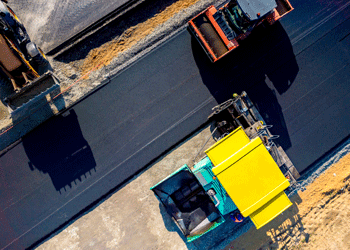
Qatar’s Public Works Authority (Ashghal) has issued a tender for consultancy services related to infrastructure development in the northern Smaisma area.
The tender was issued on 19 July, with a bid submission deadline of 8 September.
The scope covers construction supervision consultancy services for package seven (A and B).
According to local media reports, the scope of package seven A includes the airstrip road, the coastal road and connections to the existing Al-Khor Expressway, spanning an area of about 18.5 kilometres.
Ashghal floated the main contract tender for this package in March, as MEED reported.
The contract duration is four years from the start of construction.
Package seven B includes foul sewer infrastructure, drainage networks and road development works spanning more than 1.3km.
The latest tender follows Ashghal’s announcement of contract awards for 12 new projects, with a total value exceeding QR4.5bn ($1.2bn).
According to a notice published on its website, these include six building projects, most notably the redevelopment of Hamad General Hospital, with a contract value of about QR1.1bn ($301m).
Other projects awarded include the construction of a post office building in Al-Thumama; renovation works at the Qatar Racing & Equestrian Club and the Qatar Equestrian Federation; and the implementation of Phase 4 of the Al-Uqda Equestrian Complex development.
In the roads and infrastructure sector, four projects have been awarded, led by packages one and two of the road and infrastructure development works in Izghawa and Al-Thumaid.
The awards also include a landscaping project and an air-conditioned walkway at Qatar University, as part of broader public-facilities improvement initiatives.
UK analytics firm GlobalData forecasts that Qatar’s construction industry will expand by 4.3% in 2026, supported by investments in renewable energy and transportation infrastructure.
Meanwhile, the Planning & Statistics Authority reports that Qatar’s construction value-added grew by 6.6% year on year in the first half of 2025.
GlobalData also expects the industry to grow at an average annual rate of 4.6% in 2027-29, supported by investment in construction, energy and infrastructure projects.
https://image.digitalinsightresearch.in/uploads/NewsArticle/17791590/main.gif -
Contractor wins Emaar Oasis The Address villas deal
28 July 2026
Dubai-based Dutco Construction has won a contract to build the third phase of Emaar’s Address Villas Tierra at The Oasis development.
The contract was awarded by Dubai-based real estate developer Emaar Properties.
The scope comprises the construction of 199 Address-branded four-, five- and six-bedroom villas.
Local firm Mirage is the project consultant. Barajeel Engineering Consultants is the architect of record.
Site preparatory works are under way, and the project is slated for completion in 2028.
Dutco is already active at The Oasis. In April last year, Emaar Properties appointed Dutco Construction for the main works on the Mirage package of The Oasis development.
The Mirage package involves the construction of about 202 residential villas and is expected to be completed by the end of 2027.
Local firm X Architects is the project consultant, and Kristina Zanic is the sub-consultant.
Emaar announced The Oasis project in June 2023. The estimated $20bn development will comprise 7,000 residential units, including mansions and villas.
The overall development will cover more than 9.4 million square metres. The developer has said that more than 25% of the land will be dedicated to lakes, canals, parks, jogging tracks, green spaces and other amenities.
https://image.digitalinsightresearch.in/uploads/NewsArticle/17791774/main.png