
MEED celebrates pioneering Middle East news for 69 years
10 February 2026

Register for MEED’s 14-day trial access
MEED celebrates its 69th birthday in early March – a journey characterised by huge transformations and upheavals in the region, but with one constant that MEED has lived by from day one: the goal of helping the world understand what is happening in the Middle East and how to benefit from it.
MEED set out all those years ago to offer the business community and government analysts vital information on economic development and commercial opportunities in the region. While the medium might have changed, morphing from newsletter to newsstand to online, MEED has not deviated from this original, unwavering mission.
In its early days, MEED was the only comprehensive source of information on the Middle East. Now it is the region’s leading subscription-based online business intelligence service, offering – as it has done for decades – the latest business news, interspersed with political updates, comment and analysis.
From newsletter to newsstand
The first issue of Middle East Economic Digest (MEED) was published on 8 March 1957 as a hand-printed newsletter in the wake of the Suez invasion.
 Former editor, the late Abdullah Jonathan Wallace – son of MEED’s founder, Elizabeth Collard (pictured, right) – remembers first working at MEED when he was 15 years old. He would come home from school on Thursday evenings to his mother’s Dickensian office in the then highly unfashionable Covent Garden area of London.
“My job was to fill the 100-or-so envelopes of the subscribers and take them to the post office. Many people would pass by on press day to help collate and staple the newsletter,” he recalled.
Collard, a feisty champion of Arab causes and the driving force behind MEED for its first two decades, had the foresight to realise the potential the Middle East offered to Western business.
A noted economic analyst on the developing world, Collard produced MEED from her one-roomed office on a hand-cranked Ronco printing machine, with the help of two part-time secretaries.
It is no coincidence that the first edition coincided with International Women’s Day, a fitting occasion for a remarkable woman who, by the late 1960s, was brought in to advise Prime Minister Harold Wilson on Middle East affairs.
 Among the friends and relatives who helped staple and stuff envelopes with the 12-page newsletter was Essa Saleh al-Gurg, later to become the UAE’s ambassador to the UK, who was then training as a banker in London.
Lacking any editorial resources, the Middle East Economic Digest was exactly what it said it was: a compilation from newspapers and other reports. Newspapers were flown in weekly from Cairo and Beirut, then translated and condensed. By June 1965, there were still only three staff members.
“Until the oil boom of the early 1970s, when MEED really took off, we were just about making ends meet,” said Wallace. “We could not afford to hire seasoned journalists or experienced commentators and mostly took British graduates straight from university.
“This changed a little when oil peaked around the end of 1979 at $37.42 a barrel ($111 at today's prices), but we still preferred to take on graduates and train them on the job due to our high requirement for balanced reporting and tight, accurate writing, which also needed to be finely nuanced to avoid censorship in some countries.
“In business terms, the economies of Egypt, Algeria, Syria, Iraq, Iran and Turkey dominated the interest of Western exporters in the 1960s, together with the cosmopolitan and stylish Beirut as an entrepot and banking centre.
“The oil-producing states of the GCC hardly registered on the Western business radar when I visited Dubai in 1968. The British had a firm hold on the Trucial States and infrastructure projects were undertaken by UK firms.”
The big issues covered in Wallace’s early years at MEED included the 1967 and 1973 Arab-Israeli conflicts, and the Camp David peace accords in 1978; Nasser’s death in 1970; the Lebanese civil war and the invasion of Lebanon by Syria; the 1980-89 Iran-Iraq War; and the assassinations of King Faisal Bin Abdulaziz al-Saud of Saudi Arabia in 1975 and Egypt's President Anwar Sadat in 1981.
Oil boom
By the mid-1970s, MEED had become the MEED Group and was in the enviable position of receiving half of its revenue in advance from subscriptions. The other half came from advertising. Rising income streams led to expansion, including the launch of the African Economic Digest and the largest photographic library in the Middle East. A conference division was also started, which broke new ground, holding the Gulf's first banking conference in Bahrain in the late 1970s.
“Increased revenue meant we could send our reporters to the region on a regular basis, open a bureau in Dubai and then Paris and Washington, and upgrade our typesetting and production equipment to allow us to print on faster, more sophisticated printing machines,” said Wallace.
Since its launch in 1957, MEED has been tackling news issues head-on with groundbreaking exclusives that shape the Middle East
By mid-1986, when it was acquired by Emap, MEED had far outgrown its early role of monitoring published news reports. It had a staff of 20 full-time journalists and 12 researchers and newsroom assistants, with more than 30 correspondents overseas, mostly in the Middle East itself.
The newsletter of the early days became a weekly magazine, and then, as the media landscape changed, it transformed into a subscription-based online business intelligence service, which now publishes a monthly magazine, MEED Business Review. The business also includes MEED Projects, a subscription-only service offering in-depth project tracking through its database; and MEED Insight, MEED’s premium research division.
Today, MEED is owned by GlobalData, a data analytics and consulting company, headquartered in London, UK, that acquired MEED Media from Ascential PLC in December 2017. The business is still growing, with more than 60 members of staff in its Dubai office.


Register for MEED's guest program now to access this article.
Exclusive from Meed
-
 Saudi Arabia battery storage awards provide fresh lift
24 August 2026
-
 Qatar receives bids for major power grid expansion
24 August 2026
-
 Maaden closes $1bn term loan and credit facility
24 August 2026
-
 Dubai inflation slows to 5.3% in July
24 August 2026
-
 Libya oil project on track for 2027 completion
24 August 2026
All of this is only 1% of what MEED.com has to offer
Subscribe now and unlock all the 153,671 articles on MEED.com
- All the latest news, data, and market intelligence across MENA at your fingerprints
- First-hand updates and inside information on projects, clients and competitors that matter to you
- 20 years' archive of information, data, and news for you to access at your convenience
- Strategize to succeed and minimise risks with timely analysis of current and future market trends

Related Articles
-
Saudi Arabia battery storage awards provide fresh lift
24 August 2026
 Commentary
Mark Dowdall
Power & water editorThe latest battery storage awards provide a welcome injection of investment into Saudi Arabia’s power market, which has seen a sharp slowdown in contract awards this year.
Saudi Power Procurement Company’s four Group 1 storage service agreements, announced last week, are worth more than $1.16bn and cover 2,000MW of capacity.
That is significant against the wider market. According to regional project tracker MEED Projects, Saudi Arabia recorded $19.7bn in power sector contract awards in the first seven months of 2025, compared with just $2.5bn in new awards in the same period this year.
The battery energy storage system (bess) awards therefore account for a sizeable share of the activity recorded so far this year and provide a much-needed source of new contracting activity.
Importantly, this is not a one-off. SPPC issued the request for proposal (RFP) for its second group of bess projects in July, covering six projects with a combined capacity of 3,000MW and 12,000MWh.
With the Group 1 tender taking around 18 months from RFP to contract award, it is reasonable to expect Group 2 contracts to be signed in 2027.
At the same time, the awards for six independent renewable plants under Round 7 of Saudi Arabia’s National Renewable Energy Programme (NREP), with a combined capacity of 5,300MW, are also likely to move into next year, with the latest bid deadlines now extending into September.
Although a substantial pipeline remains in procurement, it is only once these projects move from tender to award and into construction that this pipeline translates into market activity.
It is important that these tenders continue to progress at the pace established by the early rounds of Saudi Arabia’s renewable energy programme and now also SPPC’s independent storage provider bess scheme.
https://image.digitalinsightresearch.in/uploads/NewsArticle/18962923/main.jpg -
Qatar receives bids for major power grid expansion
24 August 2026
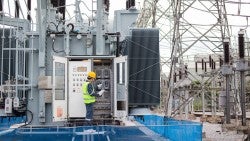
Qatar General Electricity & Water Corporation (Kahramaa) has received bids for several packages under a major power transmission expansion project tendered in April.
The project covers new substations at multiple voltage levels, as well as the supply and installation of 400kV extra-high-voltage power cables. The overall scheme is estimated to cost $650m.
It is being tendered as part of Kahramaa’s 2026 procurement plan, which includes 198 tenders with a total estimated value of QR21.4bn ($5.9bn).
According to sources, bids were submitted for the following packages on 20 August:
- Substation packages S1 and S2, covering new 132/11kV substations (estimated cost: $200m)
- Package S3, covering new 66/11kV substations ($50m)
- Package S4, including a new 400/220/132kV substation, as well as upgrades and modifications to existing 400kV and 220kV substations ($200m)
- Package S5, covering new 132/11kV substations and upgrades to existing 132kV and 66kV substations ($100m)
- Cable packages C1 and C2, covering 400kV cables ($100m)
Kahramaa previously stated that foreign companies not registered in Qatar would be allowed to participate in the bidding, subject to meeting specified conditions, including registration and certification requirements.
In June, the electricity and water utility awarded contracts worth more than QR2.2bn ($604m) to expand the electricity transmission network in the country’s western region.
The engineering, procurement and construction (EPC) works will support the integration of the 2GW Dukhan solar power project into Qatar’s national electricity grid. The scope includes new and upgraded substations, as well as the installation of underground cables and overhead transmission lines.
Kahramaa said contracts were awarded to local firm Voltage Engineering, Turkiye’s Best & Betas Consortium, India’s Larsen & Toubro and South Korea’s LS Cable.
Of Kahramaa’s 2026 procurement plan, electricity transmission projects account for QR8.9bn ($2.4bn) and include the construction of new 400/132kV substations in Al-Wukair and Al-Mashaf, as well as the expansion of 400kV substations at Ras Laffan.
These also cover the installation of 132kV underground cables between Al-Sailiya and Al-Rayyan over a 24-kilometre route, as well as upgrades to the 400kV and 220kV networks.
Additionally, there are 64 planned electricity distribution projects managed by the Electricity Distribution Department that cover the medium-voltage and low-voltage networks throughout Doha and the regional municipalities.
https://image.digitalinsightresearch.in/uploads/NewsArticle/18962223/main.jpg -
Maaden closes $1bn term loan and credit facility
24 August 2026
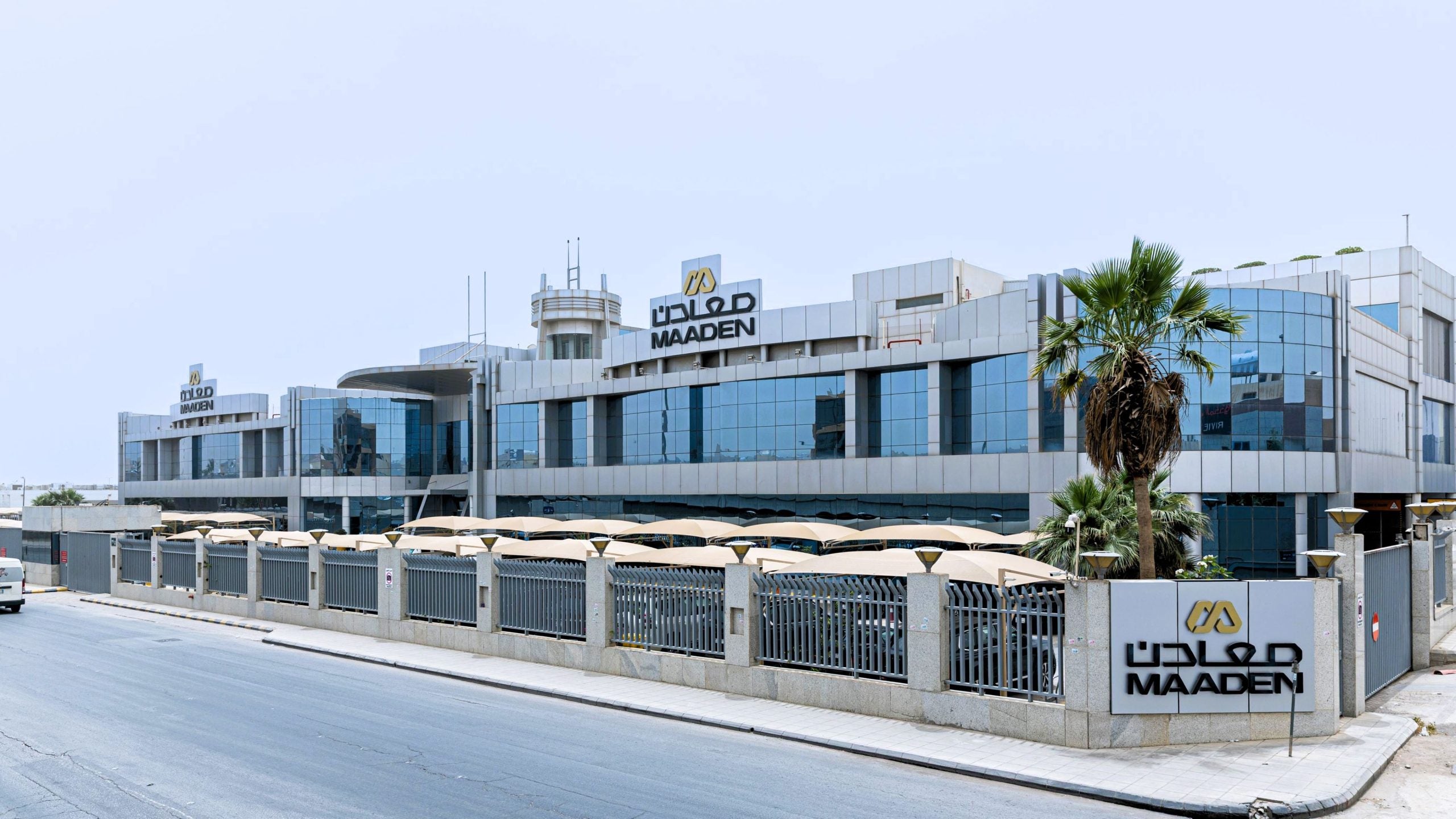
Saudi Arabian Mining Company (Maaden) has announced the closing of its inaugural international syndicated term loan and revolving credit facilities, worth a total of $1bn.
The $500m international term loan facility will support Maaden’s growth agenda and general corporate purposes, including funding growth projects across its portfolio.
The $500m international revolving credit facility, which is expected to remain undrawn, provides additional committed funding capacity “as Maaden continues to scale its business and execute its long-term growth strategy”.
The transaction “was met with strong support from the international banking market, attracting participation from a diverse group of leading international banks across key global financial markets”, including the US, Canada, Europe, China and Japan. The facilities were oversubscribed, Maaden said.
ALSO READ: Maaden and Aramco sign deal to create joint venture
“The level of demand reflects the global banking community’s confidence in Maaden’s financial strength, strategic direction and ambitious growth plans,” the Saudi state miner said in its statement.
“The facilities mark another significant milestone in Maaden’s funding journey – further diversifying its sources of funding and broadening its access to global capital providers as the company continues to advance its long-term growth ambitions.
“Maaden continues to make significant progress across its growth pipeline, expanding production, advancing major projects and accelerating exploration as it builds a world-class mining company at the heart of Saudi Arabia’s economic transformation.”
https://image.digitalinsightresearch.in/uploads/NewsArticle/18962086/main4516.jpg -
Dubai inflation slows to 5.3% in July
24 August 2026
Dubai’s annual inflation rate slowed to 5.3% in July, down from 5.7% in June, as a decline in transport costs eased pressure on consumer prices, according to Emirates NBD.
The bank said the slowdown supported its view that price growth peaked at mid-year, and it expects inflation to continue easing through the rest of 2026. Monthly price growth slowed to 0.1% in July, from 0.4% in June, the weakest pace since February.
Transport was the clearest sign of the moderation. Annual price growth in the category slowed to 11.9% in July, from 18.1% in June, as transport costs fell 3.7% over the month. Fuel and lubricant inflation eased to 24.1% year on year, from 48.3%, tracking a decline in local petrol prices.
Petrol remains the main swing factor in the emirate’s inflation. Transport contributed 1.1 percentage points to headline inflation in July, down from 1.7 percentage points in June. Emirates NBD said the relief may prove temporary, with Super 98 petrol prices climbing 5.9% in August to leave them 33.8% higher than a year earlier. The bank expects headline inflation to edge higher in the August figures before easing again later in the year.
The UAE deregulated petrol and diesel prices in 2015 and reviews them monthly against global prices, meaning changes in global fuel costs pass through to consumers quickly. Transport, which includes fuel, accounts for 9% of Dubai’s consumer price index basket.
Housing remained the largest contributor to inflation even as its impulse faded. Housing and utilities, which account for about two-fifths of the basket, added 2.8 percentage points to headline inflation. Annual price growth in the category slowed to 7.0%, from 7.4% in January.
Food inflation edged up to 7.8% year on year, from 7.6% in June, which the bank attributed to lingering supply-chain disruption from the regional conflict. Inflation in restaurants and hotels accelerated to 4.5% year on year, from 1.7% in June.
Emirates NBD forecasts inflation of 2.9% by year-end but said risks to that projection were tilted to the upside, given lingering pressures in food and housing.
https://image.digitalinsightresearch.in/uploads/NewsArticle/18961735/main1839.jpg -
Libya oil project on track for 2027 completion
24 August 2026
The project to develop a workers’ camp at Libya’s Erawin oil field is on track for completion next year, according to industry sources.
The project, estimated to be worth about $50m, is being executed by the Libyan oil services company Al-Saraya Al-Hamara, headquartered in the city of Sebha.
The Libyan company was awarded the contract in February 2025.
The scope of the project includes:
- Construction of an accommodation camp
- Construction of the camp maintenance warehouse
- Construction of the camp office
- Construction of a fire brigade shelter
- Construction of a kitchen and mess hall
- Construction of a mosque
- Construction of a laundry room
- Construction of a clinic
- Construction of parking facilities
- Installation of a fire and gas system
- Installation of a power generator
- Construction of associated facilities
The client on the project is Zallaf Libya Oil & Gas Exploration & Production Company.
Zallaf Libya Oil & Gas Exploration & Production Company was established in Libya in 2013 and is wholly owned by Libya’s state-owned National Oil Corporation.
The Erawin field development project is located about 800 kilometres south of Tripoli and 100km southwest of the El-Sharara field.
Libya shipped its first cargo of crude from the Erawin oil field in November 2023.
The shipment departed from Libya’s Zawiyah port and consisted of 600,000 barrels of crude.
Australia-based Worley Parsons was appointed as the front-end engineering and design (feed) contractor for the early production facility project in 2019.
https://image.digitalinsightresearch.in/uploads/NewsArticle/18953632/main.jpg