
Read the January 2026 MEED Business Review
7 January 2026
| Download / Subscribe / 14-day trial access |
After nearly a decade of Saudi sovereign wealth vehicle the Public Investment Fund (PIF) taking on the delivery burden of the kingdom’s largest projects, Riyadh is now turning to private sector real estate developers to help deliver its ambitions.
 The shift reflects both opportunity and necessity. The PIF-led model has enabled Saudi Arabia to fast-track its gigaprojects and anchor Vision 2030’s transformation objectives. Riyadh is now looking for the private sector to maintain this momentum.
Changes to legislation on foreign ownership of real estate, the introduction of a white land tax, rental freezes and mortgage-backed securities aim to help the real estate sector evolve into a more diversified industry. Read more on the anticipated surge in Saudi real estate in this month's Agenda section here.
This month’s market focus, meanwhile, covers Oman, and finds Muscat advancing diversification and energy expansion while maintaining fiscal caution.
MEED’s latest issue also includes a round-up of the key technology themes poised to shape 2026, from electric vehicles to battery production.
This edition is bursting with features and interviews. The team talks to Tabreed CEO Khalid Al-Marzooqi; discusses how to manage risk in the GCC construction market; highlights the UAE and Qatar as markets to watch in MEED's Economic Activity Index; and reviews the top deals signed at the Dubai Airshow. Senior executives from Jacobs also provide an exclusive op-ed on the acceleration of Saudi Arabia's rail revolution.
We hope our valued subscribers enjoy the January 2026 issue of MEED Business Review.

Must-read sections in the January 2026 issue of MEED Business Review include:
> AGENDA:
> Saudi real estate to surge in 2026
> Investors focus on residential sector for new deals
|
INDUSTRY REPORT: |
> LEADERSHIP: Saudi Arabia accelerates its rail revolution
> INTERVIEW: Tabreed finishes the year on a high
> CONTRACTORS: Managing risk in the GCC construction market
> ECONOMIC ACTIVITY INDEX: UAE and Qatar emerge as markets to watch
> DUBAI AIRSHOW: Top deals signed at Dubai Airshow 2025
 > MARKET FOCUS OMAN:
> COMMENT: Oman steadies growth with strategic restraint
> GVT & ECONOMY: Oman pursues diversification amid regional concerns
> BANKING: Oman banks feel impact of stronger economy
> OIL & GAS: LNG goals galvanise Oman’s oil and gas sector
> POWER & WATER: Oman prepares for a wave of IPP awards
> CONSTRUCTION: Momentum builds in construction sector
> MEED COMMENTS:
> Offtake remains key hurdle for green hydrogen
> Abu Dhabi capitalises on global attention
> Kuwait’s oil and gas awards surge upward
> Kuwait action hits Petrofac restructure
> GULF PROJECTS INDEX: Saudi caps ninth month of Gulf projects growth
> NOVEMBER 2025 CONTRACTS: Middle East contract awards
> ECONOMIC DATA: Data drives regional projects
> OPINION: The long road to real Middle East peace
> BUSINESS OUTLOOK: Finance, oil and gas, construction, power and water contracts

Register for MEED's guest program now to access this article.
Exclusive from Meed
-
-
 Kuwait tenders major infrastructure packages
23 March 2026
-
 Qiddiya tenders new infrastructure package
23 March 2026
-
 Kuwait’s Mina Al-Ahmadi refinery attacked
23 March 2026
-
All of this is only 1% of what MEED.com has to offer
Subscribe now and unlock all the 153,671 articles on MEED.com
- All the latest news, data, and market intelligence across MENA at your fingerprints
- First-hand updates and inside information on projects, clients and competitors that matter to you
- 20 years' archive of information, data, and news for you to access at your convenience
- Strategize to succeed and minimise risks with timely analysis of current and future market trends

Related Articles
-
Chinese firm announces $1.9bn Abu Dhabi renewables contract
23 March 2026
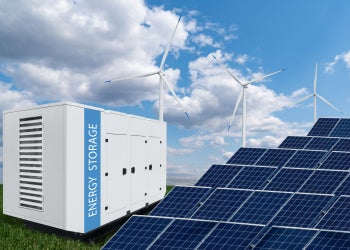
China Power Construction Corporation (PowerChina) has announced details of a contract signed for the engineering, procurement and construction (EPC) works on part of Abu Dhabi’s $6bn round-the-clock solar and battery storage project.
The independent power project (IPP) will combine 5.2GW of solar photovoltaic (PV) capacity with 19GWh of battery storage. Last October, Emirates Water & Electricity Company (Ewec) and Abu Dhabi Future Energy Company (Masdar) broke ground on what will be the world’s largest combined solar and battery energy storage system (bess), designed to supply 1GW of round-the-clock power.
India’s Larsen & Toubro and Beijing-headquartered PowerChina were awarded the EPC contract for the project last year, with PwC Middle East advising Ewec on financial structuring.
According to the Chinese firm, the full project has been divided into two blocks, north and south, indicating at least two major packages.
PowerChina’s contract, valued at about $1.9bn, covers the northern block of the project, which includes 2.1GW of DC-side PV installations and a 7.75GWh bess. The scope includes the design, procurement and construction of substations, PV facilities and battery energy storage systems.
Located in the Mshayrif area of Abu Dhabi, the wider project is designed to supply steady delivery of power between April and October each year, the UAE’s peak electricity demand season due to cooling loads.
This includes serving large energy users that require 24/7 clean electricity, such as fast-growing data centre operators and technology firms driving artificial intelligence deployment in the region.
Ewec will act as the offtaker under a long-term power purchase agreement.
MEED previously reported that China’s CATL (Contemporary Amperex Technology Co), Jinko Solar and JA Solar will supply the bess and PV modules, with Jinko and JA each providing 2.6GW of modules.
The project will avoid 5.7 million tonnes of CO₂ emissions annually and provide enough clean energy to power nearly half a million homes.
Construction is expected to be completed in 2028.
https://image.digitalinsightresearch.in/uploads/NewsArticle/16083288/main.jpg -
Kuwait tenders major infrastructure packages
23 March 2026
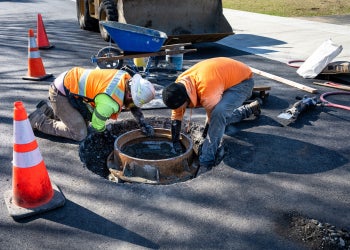
Kuwait’s Ministry of Public Works (MPW) has tendered several contracts for infrastructure works across various parts of the country.
The first tender covers the construction of rainwater drainage systems in the Sabah Al-Ahmad South, Sabah Al-Ahmad, Al-Khairan and Al-Wafra residential areas.
The second tender includes the construction of a treated water system in Kuwait’s southern region.
The third tender covers the construction of a treated water system in Kuwait’s northern region.
The final tender covers the construction of roads, bridges, stormwater drainage, sewage and other services for a section of the Kabd-Sulaibiya Road, as well as a section of the Kabd-Sulaibiya industrial road link.
MPW issued all of these tenders on 22 March, with a bid submission deadline of 21 April.
UK analytics firm GlobalData expects Kuwait’s construction industry to grow by 5.1% in 2026-29, supported by government investment in the oil and gas sector aimed at raising production, as well as investment in the infrastructure sector.
In the short term, growth will be boosted by planned expenditure under the 2025-26 budget, which was approved in March 2025.
The construction industry in Kuwait is expected to record an annual average growth rate of 4.9% in 2026-29, supported by investments in renewable energy, transport, and oil and gas projects.
The commercial construction sector is expected to grow by 4.8% in 2026-29, supported by public and private sector investment in the construction of hotels, retail outlets and office buildings.
 READ THE MARCH 2026 MEED BUSINESS REVIEW – click here to view PDF
Riyadh urges private sector to take greater role; Chemical players look to spend rationally; Economic uptick lends confidence to Cairo’s reforms.
Distributed to senior decision-makers in the region and around the world, the March 2026 edition of MEED Business Review includes:
> RAMADAN: Data disproves the Ramadan slowdown story> INDUSTRY REPORT: Chemicals producers look to cut spending> INDUSTRY REPORT: Global petrochemical project capex set to rise until 2030> MARKET FOCUS: Egypt’s crisis mode gives way to cautious revival> LEADERSHIP: Delivering Saudi Arabia’s next phase of rail growth> INTERVIEW: Abu Dhabi’s Enersol charts acquisitions pathTo see previous issues of MEED Business Review, please click herehttps://image.digitalinsightresearch.in/uploads/NewsArticle/16083252/main.jpg -
Qiddiya tenders new infrastructure package
23 March 2026
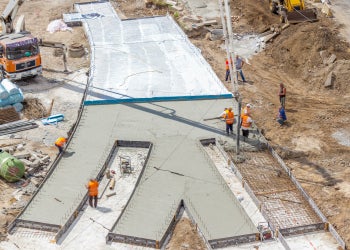
Saudi Arabian gigaproject developer Qiddiya Investment Company (QIC) has tendered a contract inviting firms to bid for new infrastructure works in Qiddiya Entertainment City.
The scope covers two infrastructure development packages in District 0 of Qiddiya Entertainment City, including the construction of four event park-and-ride facilities.
The tender was issued on 11 March, with a bid submission deadline of 22 April.
Lebanese firm Dar Al-Handasah and Saudi-based Sets International are serving as project consultants.
QIC is accelerating plans to develop additional assets at Qiddiya City. Earlier this month, the company set a 16 April deadline for firms to submit prequalification statements for the Qiddiya high-speed rail project in Riyadh.
Previously, MEED reported that QIC had received bids from contractors on 23 February for a SR980m ($261m) contract covering the construction of staff accommodation at Qiddiya Entertainment City.
The project will cover an area of more than 105,000 square metres (sq m).
Last month, QIC started the main construction works on its performing arts centre at Qiddiya Entertainment City.
The Qiddiya City performing arts centre is one of several major projects within the greater Qiddiya development. Other projects include an e-games arena, Prince Mohammed Bin Salman Stadium, a motorsports track, the Dragon Ball and Six Flags theme parks, and Aquarabia.
In December last year, QIC officially opened the Six Flags theme park to the public.
The theme park covers an area of 320,000 sq m and features 28 rides and attractions, 10 of which are thrill rides and 18 designed for families and young children.
The Qiddiya project is a key part of Riyadh’s strategy to boost leisure tourism in the kingdom. According to UK analytics firm GlobalData, leisure tourism in Saudi Arabia has experienced significant growth in recent years.
The kingdom’s tourism sector posted record-breaking numbers last year, with over 130 million domestic and international visitors entering the kingdom, representing a 6% increase over 2024.
 https://image.digitalinsightresearch.in/uploads/NewsArticle/16083013/main.jpg
 -
Kuwait’s Mina Al-Ahmadi refinery attacked
23 March 2026
Register for MEED’s 14-day trial access
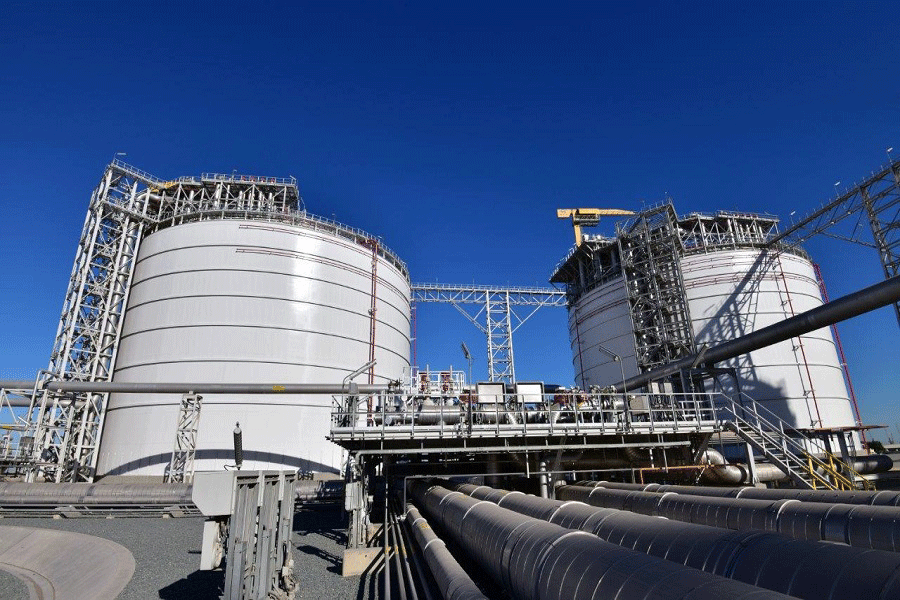
Several units were shut down at Kuwait’s largest oil refinery after it was hit by drones as Iran targeted energy infrastructure across the Gulf, according to a statement from state-owned Kuwait Petroleum Corporation (KPC).
Fires broke out across multiple units at the Mina Al-Ahmadi refinery in the morning of 20 March 2026 following the attack.
The refinery normally processes about 730,000 barrels of oil a day.
There were no casualties as a result of the attack, according to KPC.
Kuwait’s oil and gas sector has been severely disrupted by the ongoing regional conflict.
On 10 March, MEED revealed that the state-owned upstream operator Kuwait Oil Company (KOC) was operating with just 30% of its total workforce in their normal workplaces.
Earlier in the month, KPC also declared force majeure due to difficulties transporting oil and gas through the Strait of Hormuz caused by the conflict.
Force majeure, a French term meaning “superior force”, is a clause included in many international commercial contracts. It allows companies to suspend contractual obligations when extraordinary events occur beyond their control.
https://image.digitalinsightresearch.in/uploads/NewsArticle/16067425/main.gif -
Iraq declares force majeure on foreign-operated oil fields
23 March 2026
Register for MEED’s 14-day trial access
Iraq has declared force majeure on all oil fields developed by foreign oil companies as the US and Israel’s war with Iran disrupts navigation through the Strait of Hormuz.
The initial attack and Iran’s response have slashed Iraq’s exports.
Prior to the war starting on 28 February, Iraq was exporting between 3.3 and 3.5 million barrels a day of crude oil.
Oil sales account for nearly 90% of Iraq’s government revenues.
Earlier this month, two drone strikes hit infrastructure at Iraq’s Majnoon oil field, increasing security concerns in the country’s energy sector.
One of the drones hit a communications tower, and the other hit the office of the US engineering company KBR.
There were no casualties as a result of the attacks.
Foreign workers were evacuated from the site days after the US and Israel’s war with Iran started, and only Iraqi staff are currently working at the site.
Shortly before the war started, KBR announced that it had been awarded a “major contract” by Iraq’s state-owned Basra Oil Company to provide integrated field management services for the Majnoon oil field.
https://image.digitalinsightresearch.in/uploads/NewsArticle/16067302/main.png