
Libya redirects oil after fire at Sharara field
23 March 2026
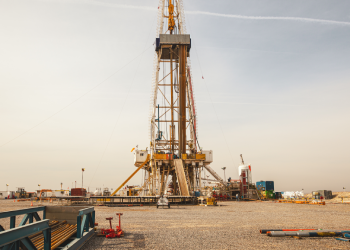
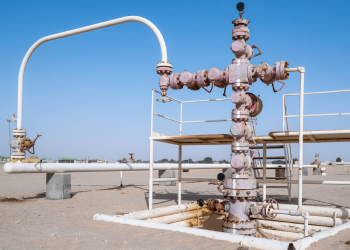
Libya’s state-owned National Oil Corporation (NOC) has redirected flows from the Sharara oil field after a fire broke out, according to a statement.
NOC said that alternative pipelines have been used and production remains stable.
It also said there were no casualties as a result of the fire.
Some oil was redirected using the El-Feel oil field pipeline to the port of Mellitah, while remaining volumes were diverted through the Hamada pipeline to storage tanks in Zawiya.
NOC said the diverted flows would “significantly reduce losses”.
Libya’s crude production averaged 1.37 million barrels a day in 2025, its highest level in more than a decade.
Oil generates more than 90% of the government's revenues, and the North African country has an estimated 48-50 billion barrels of proven reserves.

Register for MEED's guest program now to access this article.
Exclusive from Meed
-
 Kuwait tenders major infrastructure packages
23 March 2026
-
 Qiddiya tenders new infrastructure package
23 March 2026
-
-
 Libya redirects oil after fire at Sharara field
23 March 2026
-
 Oman tenders Sadaf 400kV grid station project
23 March 2026
All of this is only 1% of what MEED.com has to offer
Subscribe now and unlock all the 153,671 articles on MEED.com
- All the latest news, data, and market intelligence across MENA at your fingerprints
- First-hand updates and inside information on projects, clients and competitors that matter to you
- 20 years' archive of information, data, and news for you to access at your convenience
- Strategize to succeed and minimise risks with timely analysis of current and future market trends
Related Articles
-
Kuwait tenders major infrastructure packages
23 March 2026

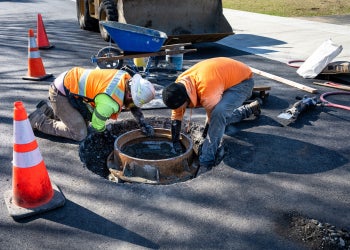
Kuwait’s Ministry of Public Works (MPW) has tendered several contracts for infrastructure works across various parts of the country.
The first tender covers the construction of rainwater drainage systems in the Sabah Al-Ahmad South, Sabah Al-Ahmad, Al-Khairan and Al-Wafra residential areas.
The second tender includes the construction of a treated water system in Kuwait’s southern region.
The third tender covers the construction of a treated water system in Kuwait’s northern region.
The final tender covers the construction of roads, bridges, stormwater drainage, sewage and other services for a section of the Kabd-Sulaibiya Road, as well as a section of the Kabd-Sulaibiya industrial road link.
MPW issued all of these tenders on 22 March, with a bid submission deadline of 21 April.
UK analytics firm GlobalData expects Kuwait’s construction industry to grow by 5.1% in 2026-29, supported by government investment in the oil and gas sector aimed at raising production, as well as investment in the infrastructure sector.
In the short term, growth will be boosted by planned expenditure under the 2025-26 budget, which was approved in March 2025.
The construction industry in Kuwait is expected to record an annual average growth rate of 4.9% in 2026-29, supported by investments in renewable energy, transport, and oil and gas projects.
The commercial construction sector is expected to grow by 4.8% in 2026-29, supported by public and private sector investment in the construction of hotels, retail outlets and office buildings.
 READ THE MARCH 2026 MEED BUSINESS REVIEW – click here to view PDF
Riyadh urges private sector to take greater role; Chemical players look to spend rationally; Economic uptick lends confidence to Cairo’s reforms.
Distributed to senior decision-makers in the region and around the world, the March 2026 edition of MEED Business Review includes:
> RAMADAN: Data disproves the Ramadan slowdown story> INDUSTRY REPORT: Chemicals producers look to cut spending> INDUSTRY REPORT: Global petrochemical project capex set to rise until 2030> MARKET FOCUS: Egypt’s crisis mode gives way to cautious revival> LEADERSHIP: Delivering Saudi Arabia’s next phase of rail growth> INTERVIEW: Abu Dhabi’s Enersol charts acquisitions pathTo see previous issues of MEED Business Review, please click herehttps://image.digitalinsightresearch.in/uploads/NewsArticle/16083252/main.jpg -
Qiddiya tenders new infrastructure package
23 March 2026
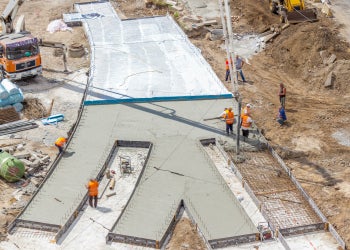
Saudi Arabian gigaproject developer Qiddiya Investment Company (QIC) has tendered a contract inviting firms to bid for new infrastructure works in Qiddiya Entertainment City.
The scope covers two infrastructure development packages in District 0 of Qiddiya Entertainment City, including the construction of four event park-and-ride facilities.
The tender was issued on 11 March, with a bid submission deadline of 22 April.
Lebanese firm Dar Al-Handasah and Saudi-based Sets International are serving as project consultants.
QIC is accelerating plans to develop additional assets at Qiddiya City. Earlier this month, the company set a 16 April deadline for firms to submit prequalification statements for the Qiddiya high-speed rail project in Riyadh.
Previously, MEED reported that QIC had received bids from contractors on 23 February for a SR980m ($261m) contract covering the construction of staff accommodation at Qiddiya Entertainment City.
The project will cover an area of more than 105,000 square metres (sq m).
Last month, QIC started the main construction works on its performing arts centre at Qiddiya Entertainment City.
The Qiddiya City performing arts centre is one of several major projects within the greater Qiddiya development. Other projects include an e-games arena, Prince Mohammed Bin Salman Stadium, a motorsports track, the Dragon Ball and Six Flags theme parks, and Aquarabia.
In December last year, QIC officially opened the Six Flags theme park to the public.
The theme park covers an area of 320,000 sq m and features 28 rides and attractions, 10 of which are thrill rides and 18 designed for families and young children.
The Qiddiya project is a key part of Riyadh’s strategy to boost leisure tourism in the kingdom. According to UK analytics firm GlobalData, leisure tourism in Saudi Arabia has experienced significant growth in recent years.
The kingdom’s tourism sector posted record-breaking numbers last year, with over 130 million domestic and international visitors entering the kingdom, representing a 6% increase over 2024.
 https://image.digitalinsightresearch.in/uploads/NewsArticle/16083013/main.jpg
 -
Iraq declares force majeure on foreign-operated oil fields
23 March 2026
Register for MEED’s 14-day trial access
Iraq has declared force majeure on all oil fields developed by foreign oil companies as the US and Israel’s war with Iran disrupts navigation through the Strait of Hormuz.
The initial attack and Iran’s response have slashed Iraq’s exports.
Prior to the war starting on 28 February, Iraq was exporting between 3.3 and 3.5 million barrels a day of crude oil.
Oil sales account for nearly 90% of Iraq’s government revenues.
Earlier this month, two drone strikes hit infrastructure at Iraq’s Majnoon oil field, increasing security concerns in the country’s energy sector.
One of the drones hit a communications tower, and the other hit the office of the US engineering company KBR.
There were no casualties as a result of the attacks.
Foreign workers were evacuated from the site days after the US and Israel’s war with Iran started, and only Iraqi staff are currently working at the site.
Shortly before the war started, KBR announced that it had been awarded a “major contract” by Iraq’s state-owned Basra Oil Company to provide integrated field management services for the Majnoon oil field.
https://image.digitalinsightresearch.in/uploads/NewsArticle/16067302/main.png -
Oman tenders Sadaf 400kV grid station project
23 March 2026
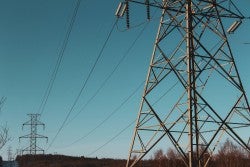
Oman Electricity Transmission Company (OETC) has opened bidding for a contract to build the Sadaf 400kV grid station and associated transmission infrastructure in Al-Wusta governorate.
The tender covers the development of a 400kV grid station and a line-in-line-out connection between the Suwaihat and Duqm Industrial grid stations.
The scope of work includes the design, procurement, construction, installation, testing and commissioning of the project on a turnkey engineering, procurement and construction basis.
Contractors are required to have completed at least two 400kV grid station projects of similar scope within the past 10 years.
The project includes installing a substation control system to enable local and remote monitoring and control of power equipment, including switchgear, transformers and protection systems.
The project forms part of efforts to strengthen transmission infrastructure in Al-Wusta and support growing demand linked to industrial developments in Duqm.
Oman has advanced procurement on several substation projects recently as part of efforts to strengthen transmission infrastructure across the sultanate.
In February, OETC awarded India’s Larsen & Toubro a contract to build the $100m Majan 400/220/132kV grid station.
OETC also recently appointed Oman National Engineering & Investment Company as the main contractor for the construction of a 132/33kV grid station at Sultan Haitham City.
The utility is also seeking consultants for two design-and-supervision contracts for the Wadi Al-Ayn 132/33kV Grid Station and the Batinah 400kV Switching Station in North Al-Sharqiyah and Al-Batinah Governorates, respectively.
The bid submission deadline for these tenders is 24 March.
https://image.digitalinsightresearch.in/uploads/NewsArticle/16030653/main4547.jpg -
 Qatar and Iran’s LNG and gas assets suffer severe attacks
20 March 2026
Register for MEED’s 14-day trial access
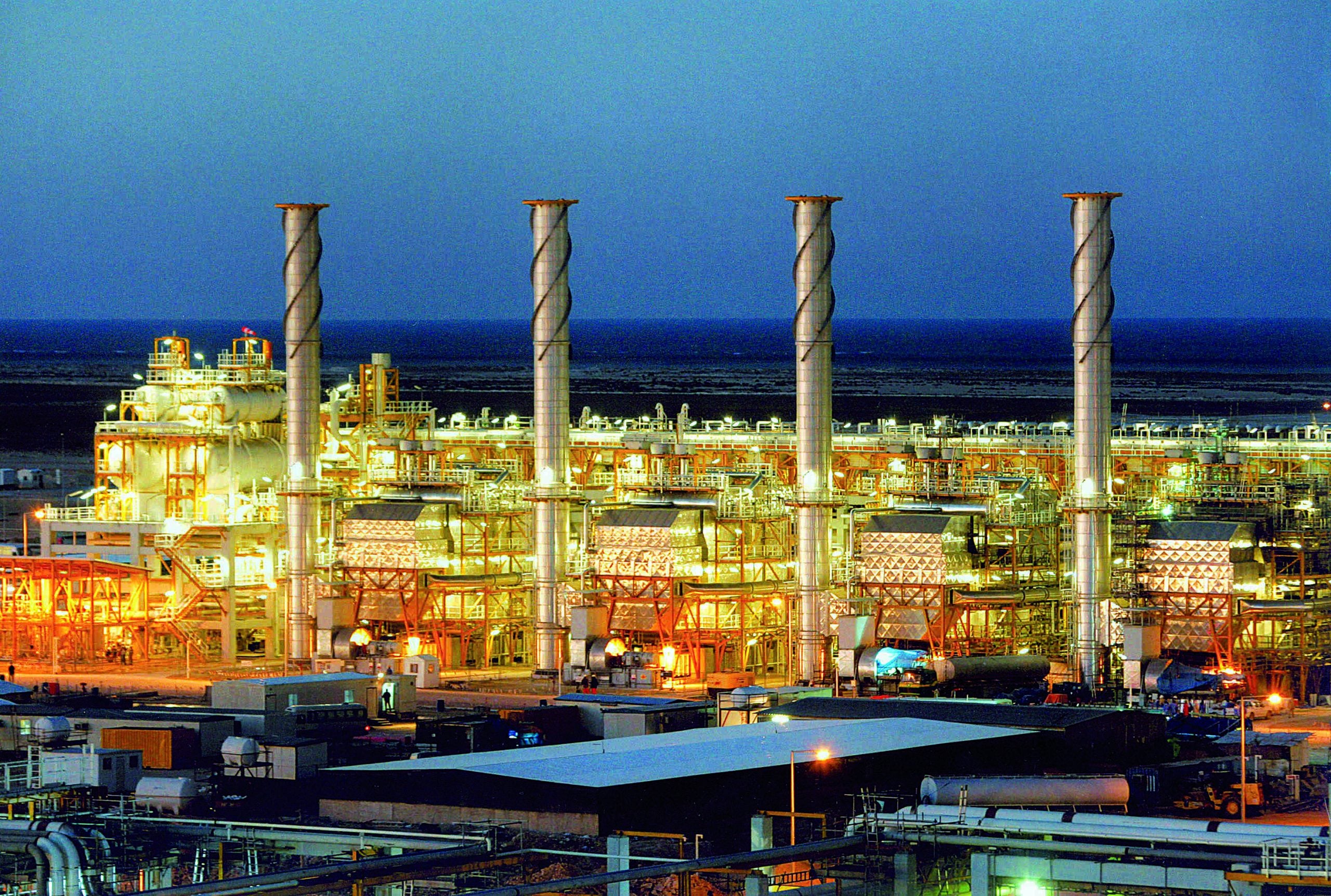
Major gas and liquefied natural gas (LNG) infrastructure in Qatar and Iran has been severely damaged in missile and drone attacks, as the Israel-US-Iran war continues to escalate.
On 18 March, Qatar said Iranian missiles had caused “extensive damage” at Ras Laffan Industrial City, home to the largest LNG production and export facility in the world. State enterprise QatarEnergy currently has a nameplate LNG output capacity of 77.5 million tonnes a year (t/y), with all its processing trains and export infrastructure located in Ras Laffan Industrial City, which lies about 90 kilometres to the north of Doha.
Saad Sherida Al-Kaabi, QatarEnergy’s CEO and minister of state for energy affairs, said the Iranian strikes had knocked out about 17% of its LNG export capacity, causing an estimated $20bn in lost annual revenue.
The repairs to damaged assets will sideline 12.8 million t/y of LNG for three to five years, threatening supplies to European and Asian nations, including China and India, Al-Kaabi told news agency Reuters in an interview.
Qatar’s foreign ministry denounced the Iranian attack as a “dangerous escalation, flagrant violation of state sovereignty, and a direct threat to its national security and regional stability”.
Qatar reserves the right to respond in accordance with the right to self-defence guaranteed under international law, the foreign ministry said in a statement.
At least two of Qatar’s 14 LNG trains and one of its two gas-to-liquids facilities were damaged in the unprecedented Iranian strikes over the past few days, according to Al-Kaabi.
“I never in my wildest dreams would have thought that Qatar would be – Qatar and the region – in such an attack, especially from a brotherly Muslim country in the month of Ramadan, attacking us in this way,” Al-Kaabi told Reuters.
Consequently, QatarEnergy has said it will have to declare force majeure on long-term contracts for up to five years for LNG supplies bound for Italy, Belgium, South Korea and China due to the two damaged trains.
“I mean, these are long-term contracts that we have to declare force majeure. We already declared, but that was a shorter term. Now it’s whatever the period is,” Al-Kaabi said.
QatarEnergy had declared force majeure to certain customers on 4 March after it halted production of LNG and associated products due to previous Iranian attacks on the company’s operating facilities in Ras Laffan Industrial City and Mesaieed Industrial City in Qatar on 2 March.
The following day, the company said it was stopping output of products in the downstream energy value chain, including urea, polymers, methanol, aluminium and other products.
Iran’s South Pars gas facility hit
The latest attack on Qatar’s LNG infrastructure is understood to be retaliation by Iran after its South Pars gas field and related production units were hit by Israeli airstrikes earlier on 18 March.
Iran shares the South Pars field with Qatar, where it is known as the North Field. The natural gas reserve in the Gulf’s waters is estimated to hold 1,800 trillion cubic feet of gas and 50 billion barrels of condensates. QatarEnergy draws all of its gas from the North Field to fuel its giant LNG trains in Ras Laffan.
The strikes on Iran’s South Pars gas field were widely reported in Israeli media to have been carried out by Israel with US consent, although President Donald Trump said he had no prior knowledge of the attack. On the same day, Israeli airstrikes reportedly killed Iran’s intelligence minister and targeted Beirut in some of the most intense bombardment the city has seen in decades.
The attack on the heart of Iran’s gas infrastructure marks a significant escalation in US and Israeli military operations. Until then, the two countries had largely avoided targeting Iran’s oil and gas sector, helping to contain a surge in global energy prices.
Qatar’s foreign ministry spokesperson Majed Al-Ansari described the targeting of the South Pars gas field as a “dangerous and irresponsible step”.
https://image.digitalinsightresearch.in/uploads/NewsArticle/16062557/main3223.jpg