
Lessons learnt from a power plant decommissioning
26 February 2026

Al-Kamil power plant, a 280MW, gas-fired power plant in the Sharqiya region of Oman, was recently decommissioned following nearly 20 years of operations as the country’s second independent power plant.
The plant reached commercial operation in 2002, at which time it started to supply electricity to Nama Power & Water Procurement Company under a 15-year power purchase agreement that was later extended to the end of 2021. No further extension was granted so, in 2022, the decommissioning process was initiated.
Al-Kamil power plant was one of the first privately owned power plants in Oman to be decommissioned. The entire process took significantly longer than planned – three years compared to an initial target of 12 months. This was not unexpected, however, as there were not yet any standard processes to follow. Everything was being done for the first time, and proper procedures had to be established.
Starting decommissioning
The decommissioning of a power plant is a complex process and can take as much time to complete as it takes to build a plant. It involves environmental considerations, health and safety protocols, detailed surveys, de-energisation, dismantling, demolition, waste management and the segregation and storage of secondary valuables.
 Careful planning and management are essential to ensure that decommissioning is accomplished safely, cost-effectively and in accordance with all government environmental standards.
Consulting on the decommissioning of Al-Kamil were Dubai’s Golden Sands Marketing Consulting (GSMC), appointed in 2021, alongside Abu Dhabi’s Sustainable Water & Power Company (SWPC) and Dubai’s Tractebel Engineering Company (TEC).
One of the first steps that GSMC undertook was to prepare a master plan covering the entire decommissioning process (see right).
A site investigation was undertaken by GSMC and SWPC early in the process to determine the condition of the power assets and the overall site.
The Al-Kamil power plant was found to have been well maintained, with no major health, safety, security and environment (HSSE) issues.
SWPC prepared the dismantling guidelines covering all plant equipment, and these were reviewed by TEC. The guidelines covered three main phases: the shut down and isolation of all assets; the de-
energisation process; and the dismantling of the plant equipment, its removal from site and the demolition of all remaining civil works.
GSMC designed a sales strategy for the plant equipment, taking into consideration the secondary market for power-related equipment, as well as the scrap market in Oman. A competitive procurement process was also followed in an effort to maximise sales revenues from plant equipment.
A separate tender was issued to appoint a demolition contractor to remove the remaining civil works, and once this work was complete, a local environmental engineering company undertook a final environmental report to demonstrate that the site was properly cleared and ready for handover to the original owner, the Housing & Urban Planning Ministry.
Final results
The decommissioning project went well in terms of HSSE considerations, with no fatalities, no lost-time injuries and no first aid injuries over the more than 243,000 total workhours at the site.
There were no material environmental spills or incidents to report, and all above- and below-ground structures were demolished and safely removed from the site in accordance with local requirements.
The final environmental report, completed just before handover, showed that the site was effectively in the same condition as it was when originally taken over at the start of construction.
The decommissioning was also successful from a financial perspective, as revenues from the sale of plant equipment and diesel fuel were beyond what was required to cover the costs associated with the decommissioning process.
Lessons learnt
Many lessons were learnt during the process that can benefit future power plant decommissioning efforts in the region.
> Notify key stakeholders early: Key stakeholders are those that have a vested interest in the project, either through ownership of certain assets on site, such as grid connection assets, or via regulation, such as the environmental authority. Many of these stakeholders take time to respond, so notifying key stakeholders early in the process can ensure that unnecessary delays are avoided.
> Prioritise HSSE: For any future decommissioning project, HSSE must be a top priority, and this should be the focus throughout the entire decommissioning process – at all levels of work and management.
The site manager at Al-Kamil installed a 24/7 closed-circuit television camera, which proved to be extremely effective in terms of monitoring progress and identifying potential HSSE issues before they became an incident. This simple and cost-effective practice should be replicated for all future decommissioning projects.
> Appoint the environmental consultant early in the process: It is advisable to appoint an environmental consultant early in the process. The consultant is needed to coordinate activities with the local environmental authority and obtain a no-objection letter or certificate, complete an environmental management report and an update of the environmental impact assessment, which includes an environmental baseline.
Ideally, these reports and environmental authority approvals should be completed well before any work is under way at the site. This information is also useful to potential bidders for the sale of equipment, or to contractors involved in the dismantling and demolition process.
> Submit an environmental management plan for approval: It is unlikely that any environmental authority will provide a no-objection letter or certificate without reviewing the environmental plan. It is therefore necessary to complete the plan early, prior to informing the environmental authority. This can minimise potential delays in starting the decommissioning process.
As a general practice, an environmental consultant should be brought on board early in the process, ideally once the overall master plan is approved by the company.
> Establish a proactive steering committee: This was done at Al-Kamil and proved to be effective when it came to overseeing project progress and dealing with issues as they arose. Certain members of the steering committee visited the site regularly and undertook spot HSSE inspections.
At Al-Kamil, the overall decommissioning was relatively straightforward as the plant was in a remote area. However, decommissioning a power plant in a busier location, or when part of the power plant remains in operation, is more challenging. Under these circumstances, a steering committee is vital.
> Set realistic delivery and completion timelines: Decommissioning a power plant is a complex process. The initial timeline to complete the process for Al-Kamil was one year, which was the best estimate at the time as there were no benchmarks or references in Oman. However, the actual completion time turned out to be three years – longer than the approximately 2.5 years it took to build the plant, from the start of construction in early 2001 to full commercial operation in July 2003.
Realistic delivery dates should be set for contractors, suppliers and others involved in the decommissioning process. This is likely to result in better pricing, as bidders tend to factor in higher contingencies with shorter or fast-track delivery dates. More realistic delivery dates also help management to allocate staff resources and manage the decommissioning budget.
Finally, realistic delivery dates help to manage owner and shareholder expectations regarding project completion.
Given the experience with Al-Kamil, a reasonable decommissioning timeline for a power plant is probably close to the actual construction timeline for the plant involved.
> Allow time to maximise revenues from the sale of assets: The market value for Al-Kamil’s power assets was estimated at a value significantly higher than the prevailing scrap value. This was based in part on the value of similar gas turbine units, after adjusting for age, usage and other factors that affect the net market value. However, the company realised a much lower value, even after retendering the equipment sales in an effort to get a better price.
It appears that prices close to the market rate are only achievable if there is time to find a suitable buyer. This can take many months or even years – typically a longer time than the owners of power plants wish to take.
Moreover, as renewables continue to penetrate the market, there is less worldwide demand for used gas turbine units. Prevailing market supply and demand conditions also have a bearing on the sale price for secondary equipment, and this factor needs to be considered.
If time is of the essence, then power plant owners need to accept the fact that the expected revenues will likely be on the low side, although still higher than the scrap value of the assets.
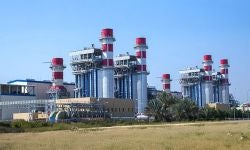
Main image: Picture 1: Al-Kamil power plant as constructed; Picture 2: Post decommissioning

Register for MEED's guest program now to access this article.
Exclusive from Meed
-
 Dubai seeks consultants to develop drainage strategy
18 March 2026
-
 Oman awards power purchase agreements
18 March 2026
-
 DP World awards Jafza warehouse construction deal
18 March 2026
-
-
 Jabal Omar plans next phase of its Mecca development
18 March 2026
All of this is only 1% of what MEED.com has to offer
Subscribe now and unlock all the 153,671 articles on MEED.com
- All the latest news, data, and market intelligence across MENA at your fingerprints
- First-hand updates and inside information on projects, clients and competitors that matter to you
- 20 years' archive of information, data, and news for you to access at your convenience
- Strategize to succeed and minimise risks with timely analysis of current and future market trends

Related Articles
-
Dubai seeks consultants to develop drainage strategy
18 March 2026
Dubai Municipality has issued a request for qualifications (RFQ) for a study to develop a sustainable urban drainage systems (Suds) strategy across the emirate.
The bid submission deadline is 9 April.
The tender, issued through the Sewerage and Recycled Water Projects Department, covers the development of a strategy and conceptual implementation plan for Suds in Dubai.
It follows a separate RFQ issued by the municipality in March for consultancy services to study the emirate’s sewage treatment strategy.
The Suds project, designated TF-23-D1, aims to support the emirate’s flood protection and drainage infrastructure by promoting a more sustainable approach to stormwater management.
The scope of work includes a review of international best practices in Suds and their applicability to Dubai. It also involves undertaking a Suds opportunity study and carrying out catchment-scale modelling and financial evaluation for a pilot study area.
Consultants will be required to develop Suds design guidelines, specifications and standard drawings. The project also includes establishing a strategy, policy, legal and regulatory framework to support a Suds implementation roadmap.
Dubai Municipality said the initiative represents “a significant step towards a more resilient, sustainable and forward-looking stormwater management approach for Dubai.”
The study forms part of a broader review of Dubai’s water and wastewater infrastructure. Earlier this month, the municipality issued a separate consultancy tender (P115-D1) to assess the emirate’s sewage treatment and recycled water distribution strategy.
The study will focus on infrastructure requirements to support future population growth.
This includes identifying locations for potential future facilities such as treatment plants and pumping stations.
The bid submission deadline is 23 March.
https://image.digitalinsightresearch.in/uploads/NewsArticle/16027434/main.jpg -
Oman awards power purchase agreements
18 March 2026
Oman’s Nama Power & Water Procurement Company (PWP) has issued letters of award (LoA) for new power purchase agreements (PPAs) to three independent power producers (IPPs), according to regulatory filings.
The new PPAs will extend the operating life of existing gas-fired power plants beyond the expiry of their current contracts.
The projects have a combined capacity of about 3,500MW.
The agreements have been awarded to Phoenix Power Company, Al-Batinah Power Company and Al-Suwadi Power Company.
Phoenix Power Company operates the 2,000MW Sur IPP. It is owned by a consortium of international and regional investors, including Japan’s Marubeni Corporation and Chubu Electric Power, Qatar’s Nebras Power, Qatar Electricity & Water Company and Multitech of Oman’s Bahwan Engineering Company.
Al-Batinah Power Company and Al-Suwadi Power Company operate the 750MW Sohar 2 IPP and the 750MW Barka 3 IPP, respectively.
According to regional projects tracker MEED Projects, Nama PWP signed the original PPA for the Barka 3 project in 2010 with a consortium led by Gaz de France (GDF) Suez under a special purpose vehicle (SPC) called Al-Suwadi Power Company.
The shareholders comprised GDF Suez (46%), Bahwan Engineering Company (22%), Shikoku Electric Power Corporation (11%), Sojitz Corporation (11%) and the Public Authority for Social Insurance (10%).
In 2015, GDF Suez was rebranded as Engie following a strategic shift towards low-carbon energy and utilities.
All three companies said the new PPAs will run for 15 years under agreed commercial terms. Acceptance of the LOAs has been requested by 18 March 2026.
The new agreements for Sohar 2 and Barka 3 will take effect on 1 April 2028 and run until 31 March 2043. The agreement for the Sur IPP will commence on 1 April 2029 and run until 31 March 2044.
The awards form part of Nama PWP’s 2028-29 procurement programme. The programme aims to secure firm generation capacity from existing assets whose current PPAs are due to expire during that period.
In Oman, IPP projects are developed under a build-own-operate model. This allows plant operators to continue running assets beyond the initial PPA term, either through contract extensions or by selling power into a future electricity market.
https://image.digitalinsightresearch.in/uploads/NewsArticle/16027001/main.jpg -
DP World awards Jafza warehouse construction deal
18 March 2026
Dubai-based ports operator DP World has awarded a contract to build a multi-tenant warehouse development at Jebel Ali Freezone in Dubai, UAE.
The contract was awarded to local firm Group Amana.
The development spans 141,916 square metres (sq m) and comprises 187 units across seven blocks.
These comprise warehouses, light industrial units, a retail shop, a mosque and other associated infrastructure.
The new contract builds on their existing partnership to deliver the logistics park at Jeddah Islamic Port in Saudi Arabia.
In February last year, MEED exclusively reported that Dubai’s DP World and the Saudi Ports Authority (Mawani) had awarded a SR347m ($92m) design-and-build contract to Group Amana for the project.
The scope of the contract covers construction work on the buildings under package two of the project’s first phase.
Earlier this week, MEED reported that DP World has kept its 2026 capital expenditure budget at nearly $3bn, focusing on two domestic assets and four overseas projects.
The company said in a statement that the priority developments include Jebel Ali and Drydocks World in Dubai.
Earlier this month, the group announced record financial results for 2025, with revenue up 22% to $24.4bn and adjusted earnings before interest, taxes, depreciation and amortisation (Ebitda) up 18% to $6.4bn, delivering a 26.3% margin.
DP World said this performance was driven by strong momentum across its ports and terminals and logistics business.
The group’s gross throughput rose 5.8% to 93.4 million 20-foot equivalent units.
Profit for the year increased 32.2% to $1.96bn, and operating cash flow grew 14% to $6.3bn.
Return on capital employed increased to 9.9% in 2025, up from 8.9% in 2024, reflecting stronger earnings despite ongoing geopolitical and trade uncertainty.
https://image.digitalinsightresearch.in/uploads/NewsArticle/16026660/main.png -
Egyptian firm starts building Sal’s Riyadh logistics centre
18 March 2026
Egyptian contractor Rowad Modern Engineering, a subsidiary of the Elsewedy Electric Group, has begun construction on the expansion of Saudi Logistics Services Company (Sal) facilities at King Khalid International airport in Riyadh.
The scope of work includes the rehabilitation and upgrade of existing infrastructure, as well as the construction of new supporting facilities and services.
Sal started the tendering process for its SR4.2bn ($1bn) logistics zone in the north of Riyadh in September last year, as MEED reported.
UAE-based Global Engineering Consultants is the project consultant.
The logistics hub aims to meet the demand for customised warehouses located near King Khalid International airport and the Riyadh Metro.
The project is in line with Vision 2030 and the National Transport & Logistics Strategy, which aims to support the kingdom’s logistics sector and enhance Saudi Arabia’s position as a global logistics hub.
Sal and Sela signed an agreement to develop the project in March last year.
This was followed by another lease agreement for the project, which will span about 1.57 million square metres.
According to an official statement: “The lease will extend for 30 years, which is further extendable to an additional 15 years upon agreement of both parties.”
GlobalData expects the kingdom’s construction industry to record an annual average growth rate of 5.2% in 2025-28, supported by investments in transport, electricity, housing and tourism infrastructure projects, as well as the $850bn-plus gigaprojects programme.
Growth will also be supported by government investments in rail, dams, industrial and road infrastructure projects.
The industrial sector is estimated to grow by 3.3% in 2025-28, supported by investments in the development of manufacturing, logistics, chemicals and pharmaceuticals plants.
https://image.digitalinsightresearch.in/uploads/NewsArticle/16026154/main.gif -
Jabal Omar plans next phase of its Mecca development
18 March 2026
Saudi Arabian developer Jabal Omar Development Company is carrying out planning for phase seven of its Jabal Omar master development in Mecca, according to a fourth-quarter 2025 financial presentation.
The company said phase seven will be a mixed-use scheme comprising hotels, retail and residential components, but did not disclose a breakdown of the project elements.
Jabal Omar plans to use a development partnership model for the phase to minimise capital expenditure.
Separately, the developer said it is targeting the delivery of 1,346 hotel keys and more than 20,000 square metres of gross leasing area in phase four by 2027.
Rotana Jabal Omar Makkah, comprising 655 keys, is due to be fully operational in the first quarter of 2026, after 450 keys began operating in the final week of December 2025.
The 1,141-key Sofitel is scheduled to become operational in the fourth quarter of 2026, while the 20,000 square metres of gross leasable area is expected to be ready in 2027.
Jabal Omar estimates its 2026 capital expenditure at SR1.1bn ($293m), with spending expected to fall once the phase four hotels are completed.
https://image.digitalinsightresearch.in/uploads/NewsArticle/16026145/main.png