
Kuwait reviews 1.1GW solar prequalifications
25 April 2024
Kuwait’s Electricity, Water & Renewable Energy Ministry (MEWRE), through the Kuwait Authority for Partnership Projects (Kapp), is still reviewing the prequalification applications it has received for a contract to develop and operate a 1,100MW solar independent power producer (IPP) scheme.
The project comprises the Al-Dibdibah and Shagaya renewable energy phase three, zone one project, Kapp said when it issued the request for qualifications to interested bidders in January.
The 1,100MW solar photovoltaic (PV) IPP project is located in Jahra governorate, approximately 100 kilometres from the capital, Kuwait City.
"They are still evaluating the prequalification submissions," one source tells MEED, without disclosing when the ministry or KAPP expects to publish the list of prequalified bidders for the contract.
In August 2022, a team led by London-headquartered consultancy firm EY won the transaction advisory contract for the next phases of Kuwait’s renewable energy programme.
London-headquartered DLA Piper is the legal adviser, while Norwegian engineering services firm DNV is the client’s technical and environmental adviser.
The Kuwait Institute for Scientific Research (Kisr), in partnership with the electricity ministry, developed the first phase of SREP. This comprised a 50MW parabolic trough CSP plant and a wind and solar PV plant, each with a 10MW capacity.
2030-50 strategy
Kuwait aims to have a renewable energy installed capacity of 22,100MW by 2030 as part of its new 20-year strategy that ends in 2050, which was announced in March.
Electricity, Water & Renewable Energy Minister Salem Falah Al Hajraf confirmed that the strategy also involves the installation of distributed or rooftop solar farms, with the state procuring the energy output from solar photovoltaic (PV) farms.
Kuwait's current overall power generation installed capacity is about 20GW.

Register for MEED's guest program now to access this article.
Exclusive from Meed
-
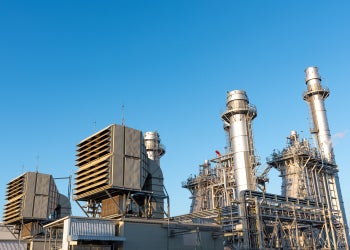 Acwa signs Mauritania gas IPP agreements
2 July 2026
-
-

-
-
All of this is only 1% of what MEED.com has to offer
Subscribe now and unlock all the 153,671 articles on MEED.com
- All the latest news, data, and market intelligence across MENA at your fingerprints
- First-hand updates and inside information on projects, clients and competitors that matter to you
- 20 years' archive of information, data, and news for you to access at your convenience
- Strategize to succeed and minimise risks with timely analysis of current and future market trends

Related Articles
-
Acwa signs Mauritania gas IPP agreements
2 July 2026
Saudi Arabia's Acwa has announced it has signed the public-private partnership (PPP) and power purchase agreement (PPA) for the 230MW N'diago combined-cycle gas turbine (CCGT) power plant in Nouakchott, Mauritania.
The agreements cover the development, financing, construction and operation of the project. They were signed in Nouakchott in the presence of senior officials from the Mauritanian government and Acwa chairman Mohammad Abunayyan.
The project is Mauritania's first large-scale gas-fired independent power project (IPP). It is also expected to be the country's first major gas-fired power plant procured through a PPP structure.
The CCGT plant will provide 230MW of baseload generation capacity. It will use Mauritania's domestic natural gas resources to supply the national grid.
Sepaarately, the Mauritanian Electricity Company (Somelec) has been advancing procurment for the construction of a 50MW solar power and battery enery storage systems (Bess) IPP project. In May, it issued an expression of interest (EoI) request.
Mauritania currently has several wind and solar power projects in the early study stages, according to regional project tracker MEED Projects.
There are also plans to build a 1,200MW wind power plant near port Etienne in the bay province of Nouadhibou, for which, China Energy Engineering was appointed as the main contractor in 2024.
Meanwhile, Acwa's portfolio comprises 111 assets that are operational, under construction or in advanced development. These represent investments of SR468.9bn ($125bn).
According to the company, it has a power generation capacity of 98GW, including 52.3GW of renewable energy, and manages 9.7 million cubic metres a day of desalinated water globally.
https://image.digitalinsightresearch.in/uploads/NewsArticle/17525605/main.jpg -
Contractor wins Jeddah road expansion deal in Riyadh
2 July 2026

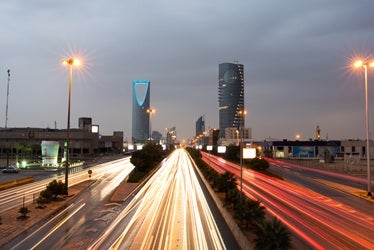
The Royal Commission for Riyadh City (RCRC) has awarded a contract for the Jeddah Road Development Project in Riyadh.
Local construction firm Saudi Pan Kingdom (Sapac) won the contract.
Spanning 29 kilometres, the scheme includes 14 bridges and five lanes.
Designed to handle up to 353,000 vehicles a day, the road is expected to be completed by 2028, with mobilisation works already under way.
The project forms part of the third package of the RCRC’s Riyadh Main and Ring Road Axes Development Programme, which was announced in January.
The other schemes include:
> Taif Road Development Project: The project stretches 15km and includes four bridges, each with four lanes. It also features two tunnels. It will have a capacity of up to 200,000 vehicles a day and will enhance connectivity between Riyadh’s southern and western districts and the city centre.
> Thumamah Road Development Project: The eastern section of the project will span 8km and include three bridges and three tunnels, linking the northern and eastern parts of Riyadh. The project will have a daily capacity of up to 200,000 vehicles.
> King Abdulaziz Road Development Project: The northern section of the project stretches 4.7km and will include four bridges, four lanes and one tunnel, with a capacity of up to 450,000 vehicles per day.
> Othman Bin Affan Road Development Project: The northern section will span 4.3km and include seven bridges and other related upgrades to enhance traffic flow across northern Riyadh. The project will have a daily capacity of up to 500,000 vehicles.
> Second phase of engineering enhancements for congested areas: This project targets eight locations across the city’s road network, where advanced engineering solutions will be applied to reduce congestion and improve intersection performance, increasing traffic capacity by 40% to 60%.
The contract for the Jeddah Road Development Project is the latest of several high-profile deals awarded by the RCRC recently. In May, it awarded an estimated SR5bn ($1.3bn) contract to construct the Sheikh Jaber Al-Sabah Road project in Riyadh.
That contract went to a joint venture of Riyadh-based Al-Rashid Trading & Contracting Company (RTCC) and Turkiye’s IC Ictas.
Stretching 12km, the project runs from Khurais Road to Al-Thumama Road and is a key component of the Second Eastern Ring Road scheme.
Works include five interchanges: Prince Bandar, King Abdullah, Imam Abdullah, Dammam Road and Al-Thumama.
In 2021, Saudi Arabia’s Crown Prince Mohammed Bin Salman Bin Abdulaziz Al-Saud said the population of Riyadh would double to 15-20 million people by 2030.
He directed government entities to work closely with the RCRC to prepare the city’s development strategy.
The RCRC’s major projects include Riyadh Metro, Riyadh Art, Sports Boulevard, King Salman International Park, Green Riyadh and several road development projects in the capital.
 READ THE JULY 2026 MEED BUSINESS REVIEW – click here to view PDF
Stress test for Gulf aviation; Mixed performance as country outlooks diverge in the Levant; GCC tourism sector pivots from crisis to recovery mode.
Distributed to senior decision-makers in the region and around the world, the July 2026 edition of MEED Business Review includes:
> AIRPORTS: Dubai and Riyadh reaffirm airport ambitions> INDUSTRY REPORT: Dubai eyes tourism sector recovery> DATA CENTRES: Big Tech falls short on data centre promise> LEADERSHIP: Aramco’s citizen developers accelerate digital changeTo see previous issues of MEED Business Review, please click herehttps://image.digitalinsightresearch.in/uploads/NewsArticle/17523376/main.jpg -
Dubai announces First Al-Khail road development project
2 July 2026
Dubai’s Executive Council has announced the First Al-Khail Street Development project, which will run parallel to Sheikh Zayed Road.
The scheme comprises a 15-kilometre elevated carriageway with three lanes in each direction.
According to a Dubai Media Office statement, “The project will provide access to areas including Al-Barsha, Al-Quoz, Business Bay and Meydan.”
“It is expected to serve more than 2.6 million people and reduce travel time on Sheikh Zayed Road by 51% during peak hours,” the statement added.
Designed to accommodate more than 9,000 vehicles an hour, construction is expected to begin in the third quarter of 2027, with completion targeted for 2030.
The development forms part of a wider AED18bn ($5bn) programme covering initiatives related to culture, trade, infrastructure, Emiratisation, finance, investment, urban planning and the city’s population census.
Projects approved by The Executive Council:
– Dubai Cultural Strategy
– Dubai Customs Strategy
– First Al Khail Street Development Plan
– ‘Dubai Population Now’ Real-Time Population Census and Growth Monitoring Initiative
– Emirati Talents Strategy in Private Education
– Dubai… pic.twitter.com/665ARlV3cK— Dubai Media Office (@DXBMediaOffice) July 1, 2026
https://image.digitalinsightresearch.in/uploads/NewsArticle/17523587/main.jpg -
Contractors submit Saudi Landbridge Riyadh section bids
2 July 2026
Contractors submitted proposals on 30 June for a design-and-build contract to construct the Riyadh Rail Link, a new north-to-south railway line across the capital.
The scope includes a 35-kilometre double-track line connecting SAR’s North-South Railway to the Eastern Railway network.
Issued on 29 January, the tender also covers the procurement, construction and installation of associated infrastructure, including viaducts, civil works, utility diversions/installations, signalling systems and other related works.
Once delivered, the Riyadh Rail Link is expected to become a key component of the Saudi Landbridge railway.
In January, SAR said it would deliver the Saudi Landbridge project through a “new mechanism” by 2034, after failing to reach an agreement with a Chinese consortium to construct it, as MEED reported.
In an interview with local media, SAR CEO Bashar Bin Khalid Al-Malik said the consortium failed to meet local content requirements, and that the project would instead be delivered in several phases under a different procurement model.
Negotiations have been under way between Saudi Arabia and China-backed investors interested in developing the scheme through a public-private partnership (PPP). Al-Malik put the project cost at about SR100bn ($26.6bn).
Overall, it comprises more than 1,500km of new track. A core element is a 900km railway between Riyadh and Jeddah, providing the capital with direct freight access to King Abdullah Port on the Red Sea.
Other key elements include upgrading the existing Riyadh-Dammam line, a bypass around the capital known as the Riyadh Link, and a connection between King Abdullah Port and Yanbu.
The Saudi Landbridge is one of the kingdom’s most anticipated project programmes. First announced in 2004, it was put on hold in 2010 before being revived a year later. Rights-of-way issues, route alignment and the high cost have been among the main stumbling blocks.
READ THE JULY 2026 MEED BUSINESS REVIEW – click here to view PDFStress test for Gulf aviation; Mixed performance as country outlooks diverge in the Levant; GCC tourism sector pivots from crisis to recovery mode.
Distributed to senior decision-makers in the region and around the world, the July 2026 edition of MEED Business Review includes:
> AIRPORTS: Dubai and Riyadh reaffirm airport ambitions> INDUSTRY REPORT: Dubai eyes tourism sector recovery> DATA CENTRES: Big Tech falls short on data centre promise> LEADERSHIP: Aramco’s citizen developers accelerate digital changeTo see previous issues of MEED Business Review, please click herehttps://image.digitalinsightresearch.in/uploads/NewsArticle/17522174/main.jpg -
Contractor appointed for Abu Dhabi Riviera residences
1 July 2026
Dubai-based real estate developer Mered has appointed Turkiye’s Sera Group as the main contractor for its Riviera Residences project on Al-Reem Island in Abu Dhabi.
The development will comprise more than 400 one- to three-bedroom apartments and 11 villas.
Lebanese engineering firm Dar Al-Handasah is the project consultant, while Switzerland’s Herzog & de Meuron is the architect.
The enabling works are being carried out by local contractor NSCC International.
Mered and Sera Group are also working together on the Iconic Tower project in Dubai Internet City, where the developer awarded the main contract in December 2024.
The 67-storey tower is being built on a site covering about 6,368 square metres.
Local firm Mirage is the project consultant, while Singapore-based Hirsch Bedner Associates is the project architect.
Dubai-based Chawla Architectural & Consulting Engineers is the architect of record, and Omnium International is the quantity surveyor.
The foundation works were carried out by local firm Dutch Foundations.
Mered’s latest contract awards in the UAE market come amid heightened real estate and construction activity, with schemes worth more than $323bn at the execution or planning stages, according to UK-based analytics firm GlobalData.
GlobalData forecasts that output from the UAE’s residential construction sector will grow by 3% in real terms in 2026-29, supported by infrastructure, energy and utilities developments, as well as residential construction projects.
READ THE JULY 2026 MEED BUSINESS REVIEW – click here to view PDFStress test for Gulf aviation; Mixed performance as country outlooks diverge in the Levant; GCC tourism sector pivots from crisis to recovery mode.
Distributed to senior decision-makers in the region and around the world, the July 2026 edition of MEED Business Review includes:
> AIRPORTS: Dubai and Riyadh reaffirm airport ambitions> INDUSTRY REPORT: Dubai eyes tourism sector recovery> DATA CENTRES: Big Tech falls short on data centre promise> LEADERSHIP: Aramco’s citizen developers accelerate digital changeTo see previous issues of MEED Business Review, please click herehttps://image.digitalinsightresearch.in/uploads/NewsArticle/17509888/main.jpg