
Kuwait extends deadlines for power infrastructure packages
28 July 2026
Kuwait’s Public Authority for Housing Welfare (PAHW) has extended the bid submission deadline for two tenders covering power transmission works at the South Saad Al-Abdullah residential development.
The first tender covers the supply, installation and maintenance of 10 main 132/11kV transformer substations for the third phase of the development.
The bid deadline has been extended to 19 August. The original deadline was 5 August.
The second tender covers the supply, installation and maintenance of 10 main 132/11kV transformer substations for the fourth phase of the project.
The bid deadline for this project has also been moved to 19 August.
Both projects were initially tendered in May. As reported by MEED, PAHW previously issued addendums for both substation tenders, revising the qualification requirements for bidders.
According to the revised requirements, contractors must be approved by Kuwait’s Ministry of Electricity, Water & Renewable Energy and have experience supplying and installing at least 10 132kV substations in Kuwait.
The addendums also introduced requirements related to transformer and gas-insulated switchgear manufacturing approvals, as well as operational performance records for installed equipment
Sabah Al-Ahmad residential city
Meanwhile, bids were submitted on 16 July for two 132kV underground cable tenders for the South Sabah Al-Ahmad residential development.
PAHW had tendered the contracts in May.
The first cable tender covers the supply, extension and maintenance of 132kV underground cables feeding eight main transformer substations serving the N1, N6 and N11 districts in the project’s fourth phase.
According to sources, Egytech Cables, a subsidiary of Egypt’s Elsewedy Electric, was the lowest bidder with an offer of $42.37m.
The other bidders include:
- TBEA Shandong Luneng Taishan Cable (China, $44.06m)
- Riyadh Cables (Saudi Arabia, $44.57m)
- The Contractor General Trading & Contracting (Kuwait, $46.26)
The second cable tender covers the supply, extension and maintenance of 132kV underground cables linked to substations serving the N5, N6, N8 and N10 districts in the project’s third phase.
Egytech Cables submitted the lowest offer of $39.95m. TBEA Shandong Luneng Taishan Cable submitted a bid of $41.89m along with Riyadh Cables ($42.05m) and The Contractor General Trading & Contracting ($44.97m).

Register for MEED's guest program now to access this article.
Exclusive from Meed
-
 Adnoc steps up crude expansion
15 October 2026
-
 Joint venture wins Oman desalination contract
15 October 2026
-
 Adnoc funnels billions into boosting gas processing
15 October 2026
-
 Morocco extends deadline for El-Menzel pumped-storage plant
15 October 2026
-
 Contractors given extension on Riyadh airport aviation complex
15 October 2026
All of this is only 1% of what MEED.com has to offer
Subscribe now and unlock all the 153,671 articles on MEED.com
- All the latest news, data, and market intelligence across MENA at your fingerprints
- First-hand updates and inside information on projects, clients and competitors that matter to you
- 20 years' archive of information, data, and news for you to access at your convenience
- Strategize to succeed and minimise risks with timely analysis of current and future market trends
Related Articles
-
Adnoc steps up crude expansion
15 October 2026

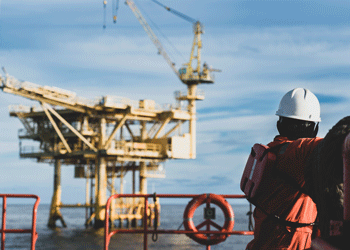
Abu Dhabi National Oil Company (Adnoc Group) is entering a new phase of upstream investment as the UAE’s withdrawal from Opec opens the way for greater oil production flexibility. After spending an estimated $37bn on upstream projects in 2023 and 2024, the state-owned energy company continues to invest heavily in expanding crude production capacity and developing domestic gas supplies.
The investment programme supports two key targets: raising crude production capacity to 5 million barrels a day (b/d) by 2027 and achieving gas self-sufficiency by the end of the decade.
Following the UAE’s withdrawal from Opec in May 2026, Adnoc Group has nearly matched its 2024 upstream project spending level so far this year and is on course to surpass it by a significant margin.
The UAE had invested billions of dollars in expanding crude production capacity, but output quotas under the Opec+ framework had constrained its ability to translate that capacity into higher production and additional oil revenues in a high-price environment.
The UAE’s exit from Opec gives Adnoc greater flexibility to utilise its spare capacity, accelerate progress towards its 5 million b/d target and potentially exceed it. The company is positioning itself to capitalise on rising oil demand while retaining the flexibility to respond to market conditions.
Robust offshore spending
So far this year, Adnoc Offshore has awarded major contracts for projects involving the Satah Al-Razboot (Sarb) deep gas development, the expansion of the Nasr oil field and an increase in the Upper Zakum oil field’s output capacity to 1.5 million b/d.
Adnoc reached a final investment decision (FID) on the Sarb project in January and awarded the main engineering, procurement and construction (EPC) contract to US-based McDermott International. The contract is estimated to be worth around $500m, sources told MEED.
The project is expected to deliver 200 million cubic feet a day (cf/d) of gas by the end of the decade – enough to power more than 300,000 homes.
The scope includes the EPC of an offshore wellhead tower with four gas production wells, which will be connected to Das Island for processing through Adnoc Gas facilities. The works also include the installation of pipelines and intra-field connections linking the Sarb field to Das Island.
Also in January, Adnoc Offshore awarded McDermott a $942m contract for the Nasr-115 project, which will increase production capacity at the Nasr offshore field to 115,000 b/d. The field is located about 130 kilometres northwest of Abu Dhabi.
McDermott’s scope covers engineering, procurement, construction and installation services for two topside structures, a new manifold tower, a jacket, a bridge, associated pipelines, subsea cables and brownfield modifications.
UZ 1.5MMBD project
Located 84km offshore Abu Dhabi, Upper Zakum is the world’s second-largest offshore oil field and fourth-largest oil field overall. The UZ 1.5MMBD project is Adnoc Offshore’s latest crude production expansion scheme at the Upper Zakum field.
The project scope is divided into three packages. The first EPC package covers surface facilities required on the field’s existing artificial islands, including integrated gas-lift compressors, produced-water reinjection units, water treatment plants, pre-assembled manifolds and related facilities.
The second package covers offshore facilities and comprises several segments of subsea pipelines and subsea cables.
The third package covers work on Adnoc’s existing Zirku Island and will require additional oil tanks, a water treatment unit, an export gas compressor, a condensate treatment unit, and associated power and utilities facilities.
Adnoc Offshore awarded the first and third EPC packages of the UZ 1.5MMBD project to Spanish contractor Tecnicas Reunidas, while Abu Dhabi-based NMDC Energy won the second package. The overall scheme is estimated to be worth more than $10bn.
Umm Shaif Gas Cap
Gas production has also been a key capex area this year, with Adnoc and its foreign partners reaching a $6.2bn FID in July for a major project to produce up to 600 million cf/d of natural gas by developing the Umm Shaif Gas Cap in Abu Dhabi.
The Umm Shaif Gas Cap reserve lies within the offshore Umm Shaif and Nasr hydrocarbons concession, in which Adnoc is the majority stakeholder. Other stakeholders in the concession are Italy’s Eni, France’s TotalEnergies and China National Petroleum Corporation.
Adnoc said the FID includes three EPC packages totalling $5.1bn for large-scale offshore infrastructure, awarded to the following contractors:
- First offshore package – fabrication of a 30,000-tonne gas compression system: Larsen & Toubro Energy Hydrocarbon (India) / Lamprell (Saudi Arabia/UAE)
- Second offshore package – fabrication of another 30,000-tonne gas compression system: McDermott (US)
- Onshore package – EPC of gas inlet and processing systems on Das Island: China Petroleum Engineering & Construction Company (CPECC)
As part of the FID, Adnoc also awarded a $365m contract to its subsidiary Adnoc Drilling for a 14-well drilling and integrated drilling services scope, to be delivered over 18 months using three existing rigs.
Separate from the Umm Shaif Gas Cap development, Adnoc Offshore is preparing to issue the main tender for the next expansion phase of the Umm Shaif oil and gas field offshore Abu Dhabi.
Contractors expressed interest to Adnoc Offshore in June in participating in the main tendering exercise for the Umm Shaif long-term development plan 2.1 (LTDP-2.1) project.
The project’s primary objective is to maintain Umm Shaif’s oil production capacity at approximately 390,000 b/d, while enabling peak output of up to 430,000 b/d.
The project includes constructing a new combined artificial island at Umm Shaif, equipped with drilling, processing, utilities and supporting infrastructure. It also includes installation of an optimised crude-stabilisation train at Adnoc’s existing Das Island facilities.
Located about 150km northwest of Abu Dhabi city, Umm Shaif is one of Adnoc’s oldest offshore oil-producing assets. In 2022, the company marked the 60th anniversary of the UAE’s first export of Umm Shaif crude, which took place in July 1962.
https://image.digitalinsightresearch.in/uploads/NewsArticle/20634497/main.gif -
Joint venture wins Oman desalination contract
15 October 2026
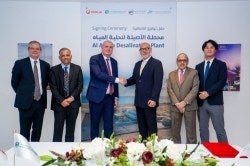
Bahwan Veolia Water, a joint venture of France’s Veolia and Oman’s Bahwan Engineering Company, has signed a five-year operations and maintenance (O&M) contract for the Al-Asilah desalination plant in the sultanate.
The Al-Asilah plant has a production capacity of 80,000 cubic metres a day and helps supply drinking water to about 600,000 residents across South Al-Sharqiyah governorate. It also has an on-site solar farm to support lower-carbon water production.
The plant entered commercial operation in January 2022 under a build-own-operate arrangement. A consortium of Bahwan Engineering and Japan-headquartered JGC Corporation developed it.
South Korea’s Doosan Heavy Industries & Construction, now known as Doosan Enerbility, carried out the engineering, procurement and construction (EPC) works.
Oman’s first independent water project (IWP), the Sur IWP, also serves residents in Al-Sharqiyah governorate.
The main contract for the project was awarded in 2007, with Veolia carrying out EPC works and acting as shareholder in Sharqiyah Desalination Company, which owns the plant.
Bahwan Veolia Water signed a 22-year O&M agreement for the project that same year.
https://image.digitalinsightresearch.in/uploads/NewsArticle/20631273/main.jpg -
Adnoc funnels billions into boosting gas processing
15 October 2026
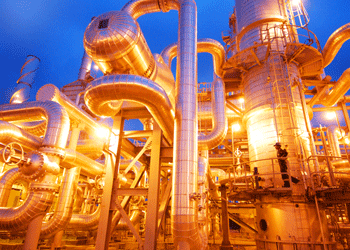
Abu Dhabi National Oil Company (Adnoc Group) is accelerating investment in gas processing and associated downstream infrastructure as demand in the UAE rises and the government prioritises lower-carbon energy growth.
Rising gas consumption in the UAE is being driven by rapid population growth, greater household electrification, expanding industrial bases and demand from gas-intensive downstream segments such as petrochemicals, fertilisers and metals.
Power generation and water desalination are also key sources of demand, while new industrial zones – as well as data centres supporting the expansion of artificial intelligence (AI) use in the country – add further baseload requirements.
Adnoc Gas, Adnoc Group’s gas processing subsidiary, is leading the UAE’s push to expand gas processing capacity and is executing a major capital expenditure (capex) programme worth $28bn over 2026-30.
As part of that capex plan, Adnoc Gas achieved a final investment decision (FID) on the second and third phases of its Rich Gas Development (RGD) programme earlier this year.
Adnoc Gas awarded $8.2bn of engineering, procurement and construction (EPC) contracts for the second and third phases of the RGD programme. These cover a new gas processing train at the Habshan complex and a natural gas liquids fractionation train at the Ruwais gas processing facility, respectively.
Under the awards, China-based Wison Engineering will execute phase 2 under a $3.9bn contract, while Italy’s Tecnimont has secured the $4.3bn phase 3 contract.
Adnoc Gas has also reiterated its $5bn capex for the first phase of the RGD scheme, which is under construction. The company awarded $5bn of engineering, procurement and construction management contracts in three tranches for phase 1 of the RGD programme in June last year, marking the company’s largest-ever capital investment.
Across all three phases, Adnoc Gas has committed a total of $13.2bn to the RGD programme.
Bab Gas Cap development
Looking ahead, Adnoc Gas is advancing towards FID on the estimated $8bn Bab gas cap development. The project will process up to 1.85 billion cubic feet a day (cf/d) of raw feed gas once Adnoc Group begins extracting reserves from four underdeveloped onshore reservoirs at the Bab field: Thammama A, B and H (projected to yield a combined 1.45 billion cf/d) and Thammama F (projected at 396 million cf/d).
Because existing trains at the Habshan complex cannot accommodate these supplementary volumes, the project entails building a processing plant approximately 170 kilometres from Abu Dhabi city, alongside pipeline networks and ancillary units.
Adnoc Gas has split the EPC scope into four packages, with technical bids due on 16 November:
- Package 1: Main Bab gas cap processing plant
- Package 2: Early civil works
- Package 3: Pipeline network
- Package 4: Non-process facilities and associated infrastructure
Four contractor consortiums prequalified to bid for the main contracts:
- Larsen & Toubro Energy Hydrocarbon (India) / Samsung E&A (South Korea)
- Saipem (Italy) / NMDC Energy (UAE)
- Technip Energies (France) / JGC Corporation (Japan) / Sinopec (China)
- Tecnimont (Italy) / China Petroleum Engineering & Construction Corporation
Gas pipeline investments
Adnoc Group continues to invest in projects to enhance its gas transmission networks across the UAE, following its $3.5bn-plus capex on the Estidama programme earlier this decade to expand its sales-gas network in the country.
Adnoc Gas recently awarded the main contract for a project to build a new pipeline that will supply gas from the Habshan scraper launcher station at its Habshan gas compression complex in Abu Dhabi to the Al-Nouf customer receiving station, for delivery to Emirates Water & Electricity Company (Ewec).
The proposed 56-inch, 127km pipeline will help the UAE’s state utility, Ewec, meet additional gas demand to power the second phase of an AI data centre in Abu Dhabi, as well as support the relocation of some of its key assets in the Mirfa area of the emirate.
Adnoc Gas awarded the EPC contract for the project to India-based Kalpataru Projects International.
Separately, Adnoc is moving ahead with plans to build an oil pipeline network that will transport crude from its main offshore oil processing islands in the Gulf to its onshore crude export terminal at Jebel Dhanna, Abu Dhabi.
The planned network will source crude from Zirku Island and Das Island, where Adnoc gathers and treats oil produced at Abu Dhabi’s offshore fields, among other processing hubs, and transport it about 300km inland to the Jebel Dhanna terminal.
The proposed pipelines will eventually connect to the West-East crude pipeline network currently being built from Jebel Dhanna to the emirate of Fujairah, which is expected to be commissioned in 2027.
Boosting chemicals output
Meanwhile, following major investments over the past three years to set up specialty chemical plants under the first phase of its chemical derivatives complex in Ruwais Industrial City, Taziz is firming up plans for the second phase of the complex.
Taziz has partnered with local conglomerate Alpha Dhabi to undertake a joint feasibility and market study and, subject to FIDs and regulatory approvals, the second phase of the Taziz Industrial Chemicals Zone could produce up to 14 new chemicals, with total output capacity of about 2.2 million tonnes a year (t/y).
The chemicals under study include styrene and polystyrene, acrylic acid and derivatives, polyols, methylene diphenyl diisocyanate (MDI), epoxy resins and linear alpha-olefins. These are widely used across construction, automotive, packaging, consumer goods, infrastructure and advanced manufacturing.
Taziz, Germany-based chemicals producer Covestro and XRG – all wholly or majority-owned subsidiaries of Adnoc Group – have launched a joint feasibility study to assess the development of a world-scale MDI plant in Ruwais Industrial City.
The partners aim to establish a facility in the Taziz Industrial Chemicals Zone with a production capacity of 660,000 t/y of MDI. The study will evaluate the technical, commercial and economic feasibility of the proposed plant, with the aim of informing a future investment decision.
https://image.digitalinsightresearch.in/uploads/NewsArticle/20622502/main.gif -
Morocco extends deadline for El-Menzel pumped-storage plant
15 October 2026
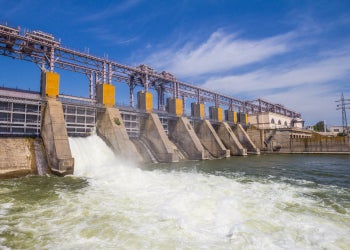
Morocco’s Office National de l’Electricite (One) has extended the deadline for contractors to submit bids for the 362MW El-Menzel pumped-storage hydropower project.
The new deadline is 25 November. Bids were previously due on 28 October.
The project is located about 35 kilometres southeast of Sefrou in the Fes-Meknes region. The engineering, procurement and construction contract covers engineering, equipment supply, construction, installation and commissioning.
The scope includes two reversible pump-turbine units, upper and lower reservoirs, underground water conduits, a 400kV substation and a transmission line connecting the facility to the national grid.
One tendered the project in July following an earlier prequalification process that began in May 2023, when six consortiums submitted applications.
Three consortiums were subsequently prequalified to bid for the main contract. These include:
- China International Water & Electric Corporation (China) / Yellow River Engineering Consulting Company (China) / Harbin Electric International Company (China) / Harbin Electric Machinery Company (China) / Jet Contractors (Morocco)
- Sinohydro (China) / Andritz Hydro (Austria)
- Webuild (Italy) / Dongfang Electric International Corporation (China)
The project aims to support Morocco’s renewable energy programme and help the country reach its target of sourcing 52% of its energy mix from renewables by 2030. It is being financed by the African Development Bank and Germany’s KfW Development Bank.
One already operates the 464MW Afourer and 350MW Abdelmoumen pumped-storage stations, while the 300MW Ifahsa project is under development.
In August, the Office National de l’Electricite et de l’Eau Potable (Onee) approved a MD248bn ($26.4bn) investment programme for 2026-30. The spending plan covers electricity and drinking water infrastructure.
The programme allocates $21.9bn to electricity projects and $4.5bn to drinking water infrastructure. According to Onee, the private sector will finance about 72% of the investment.
The electricity programme includes $11.1bn of investment to develop 11.6GW of renewable energy capacity and 2.6GW of energy storage. It also provides for 2,230MWh of battery energy storage systems, the El-Menzel pumped-storage hydropower plant and 3,744MW of gas-fired generation to support grid flexibility.
https://image.digitalinsightresearch.in/uploads/NewsArticle/20621738/main.jpg -
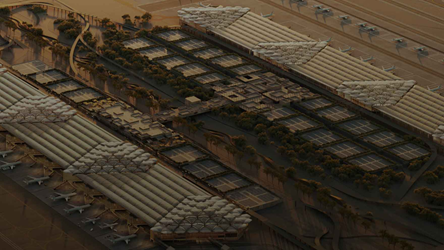
Contractors given extension on Riyadh airport aviation complex
15 October 2026
Contractors have been given an extension until 19 November to submit proposals for an estimated SR3bn ($817m) contract to build an aviation complex within the King Salman International airport master development in Riyadh.
Government-owned aviation organisation Saudi Royal Aviation (SRA) tendered the contract in August, with an initial bid submission deadline of 8 October.
Phase one of the programme comprised the concept design stage, which the design consultant has completed.
SRA is now seeking to deliver the second phase, which covers design development, detailed design, procurement, construction, testing, commissioning and close-out of the works.
The scope covers 30 landside buildings, including 16 screening areas and gates, plus 15 airside buildings, including four gates.
The assets include maintenance hangars, workshops, office and administrative buildings (including interior fit-out), warehouses, storage, security and catering facilities, aprons and access roads, and site utilities and civil works.
King Salman International airport will provide primary utilities to designated tie-in points, with the contractor taking responsibility from there.
Although the site is within King Salman International airport’s boundaries, it is classified as landside and is a greenfield development. The contractor must therefore meet airport security, safety and access requirements, in addition to SRA’s own clearance processes.
Project scale
The King Salman International airport project covers an area of about 57 square kilometres (sq km), allowing for six parallel runways, and will include the existing terminals at King Khalid International airport. It will also include 12 sq km of airport support facilities, residential and recreational facilities, retail outlets and other logistics real estate.
The airport aims to accommodate up to 100 million passengers by 2030. The goal for cargo is to process 2 million tonnes a year by 2030.
Saudi Arabia plans to invest significantly in its aviation sector. The Saudi Aviation Strategy, announced by the General Authority of Civil Aviation, aims to triple Saudi Arabia’s annual passenger traffic to 330 million travellers by 2030.
It also aims to increase air cargo traffic to 4.5 million tonnes and raise the country’s total air connections to more than 250 destinations.
https://image.digitalinsightresearch.in/uploads/NewsArticle/20619953/main.png