
Iraq under pressure as oil exports slashed
4 March 2026
 Analysis
Wil Crisp
Oil & gas reporter
Register for MEED’s 14-day trial access
Iraq’s oil and gas sector is facing mounting challenges as production levels drop sharply amid the US and Israel’s ongoing war with Iran.
In the south of the country, oil exports have been paralysed by the closure of the Strait of Hormuz, and, in the country’s northern region of Iraqi Kurdistan, exports via the Iraq-Turkiye Pipeline (ITP) have fallen to zero.
Industry insiders are expecting the impact to be felt for some time to come.
On 2 March, Iran’s Revolutionary Guard Corps (IRGC) said the Strait of Hormuz is closed and warned that any vessel attempting to pass through will be attacked.
Ebrahim Jabari, a senior adviser to the IRGC’s commander-in-chief, said: “The strait is closed. If anyone tries to pass, the heroes of the Revolutionary Guard and the regular navy will set those ships ablaze.”
Stakeholders in Iraq’s oil and gas sector believe that the closure of the Strait by Iran is likely to have a long-term impact on companies operating in the south of the country.
One source said: “The outlook for the companies operating in the south is very bad right now.
“Potentially, a lot of companies in the south are going to be very anxious about the Strait of Hormuz for a very long time.
“There are hardly any other export routes they can use, and even if Iran’s military capabilities are substantially eroded, it’s going to be very hard to defend ships that are passing through there.”
On 3 March, the decision was taken to completely stop production at the South Rumaila field, after Iran’s IRGC declared the Strait of Hormuz closed.
The Rumaila oil field, which is made up of North Rumaila and South Rumaila, is the second-biggest oil field in the world.
The oil field normally has the capacity to produce 1.2 million barrels a day (b/d), but has cut production by at least 700,000 b/d due to overloaded storage.
Also in the south of the country, there have been cuts to production at the West Qurna 2 and Maysan fields.
Pipeline problem
The main export route for oil producers in Iraqi Kurdistan is the ITP.
This key pipeline, which reopened on 27 September last year, was closed again after production from the region dropped dramatically due to multiple oil fields closing as a safety precaution.
The fields that have temporarily stopped production include the Atrush and Sarsang fields.
Canada-based ShaMaran Petroleum Corporation, which holds stakes in both fields, said that the closures were due to “the deterioration in the regional security environment”.
On top of this, the Iraqi Kurdistan’s Shaikan field, which London-listed Gulf Keystone Petroleum operates, has stopped production due to security concerns.
Shaikan is one of Iraqi Kurdistan’s largest producing fields and produced more than 41,500 b/d in 2025.
“When it comes to the outlook for future oil exports, the calculation is completely different for these companies in Iraqi Kurdistan compared to the companies in the south of the country,” said one source.
“It’s possible that the pipeline will be easier to open in the near future than the Strait of Hormuz.
“It’s not so close to Iran and, so far, no damage has been sustained by the pipeline or the oil fields.
“With prices so high right now, everyone involved in exporting oil via the pipeline is highly motivated to see it restarted.”
The disruption to global oil and gas supplies caused by the Iran conflict has driven global oil prices up by around 15%, with Brent crude oil briefly rising above $85 a barrel on 3 March, the highest it has been since July 2024.
One source said: “These high oil prices are going to be a nightmare for consumers – but if you are an oil company, it’s an opportunity to make some serious money.
“However, you can only make that money if you can ship your oil – and a lot of oil companies in Iraq are going to struggle to do just that.”
Another source said: “There’s nothing technically wrong with the Kurdistan fields or the pipeline at the moment, and a lot of people believe they could be brought back online relatively quickly.
“The pipeline has only been shut down because of the oil field closures. All of the oil that is currently being produced in Iraqi Kurdistan is being used domestically.”
Key staff at Iraqi Kurdistan’s oil companies remain in the country, and the companies are planning quick restarts to cash in on current high prices, according to sources.
One said: “While many of these companies have plans in place for evacuations by land to Turkiye if the situation worsens, right now it seems more likely that things will stabilise and the companies will bring their fields back online soon.
“Workers have been told to stay inside – but many are used to the threat of drone and rocket attacks, and they are still going to the pub and living their lives as normal.”
Uncertain future
While many stakeholders in Iraqi Kurdistan believe the outlook for oil companies in the region is better than in the south of the country, significant challenges remain, and the situation could change dramatically due to the chaotic nature of the ongoing conflict.
One factor that is likely to remain challenging in Iraqi Kurdistan is logistics for key personnel.
One source said: “Airport closures and flight cancellations are likely to dog this region for some time to come, so getting people in and out is expected to remain difficult.”
Another concern is potential attacks on oil fields by militant groups in the region that are loyal to Iran.
“We’ve seen that Iran wants to lash out and do damage to oil assets in nearby countries – so an attack on key fields in Iraqi Kurdistan would not be a surprise,” the source added.
An attack on the ITP pipeline itself could dramatically change the outlook for Iraqi Kurdistan.
Drone attacks or rockets could potentially put the pipeline out of action for months, dealing a serious blow to the outlook for the region’s oil companies.
While the future for the oil sector in both federal Iraq and the Kurdistan region remains highly uncertain, it is clear to everyone involved that the disruptions to the country’s oil and gas sector are causing severe economic damage to the oil-reliant country.
On 3 March, Baghdad-based research organisation Eco Iraq Observatory estimated that Iraq was losing $128m a day after the shutdown of the Rumaila and Kurdistan fields.
It said a one-week shutdown could cost the Iraqi treasury nearly $900m, and a month could result in losses exceeding $3.8bn.
With Iraq relying on oil for more than 90% of government revenues, it is likely that the country will rapidly enter an economic crisis if it does not find a way to bring exports back online over the coming days.


Register for MEED's guest program now to access this article.
Exclusive from Meed
-
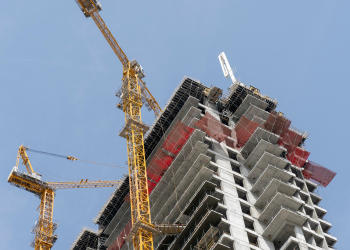 Arada completes Sokoon buildings construction
26 March 2026
-
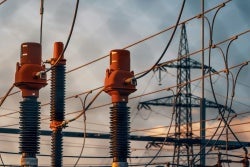 Local contractor wins Medina substation contract
26 March 2026
-
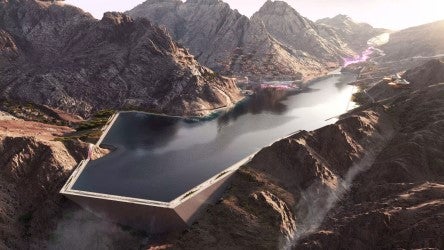 Neom terminates $5bn Trojena dams contract with WeBuild
26 March 2026
-
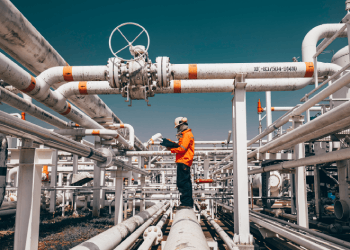 Iraq gas field project disrupted by regional conflict
26 March 2026
-

All of this is only 1% of what MEED.com has to offer
Subscribe now and unlock all the 153,671 articles on MEED.com
- All the latest news, data, and market intelligence across MENA at your fingerprints
- First-hand updates and inside information on projects, clients and competitors that matter to you
- 20 years' archive of information, data, and news for you to access at your convenience
- Strategize to succeed and minimise risks with timely analysis of current and future market trends
Related Articles
-
Arada completes Sokoon buildings construction
26 March 2026
Sharjah-based private real estate developer Arada has announced the completion of five additional buildings in the Naseej District of its Aljada development.
Kuwaiti firm Mohammad Abdulmohsen Al-Kharafi & Sons secured the construction contract for the Sokoon buildings in 2023, replacing Airolink Building Contracting as the project’s main contractor.
The first four Sokoon buildings were completed in December 2023.
In April last year, Arada also announced the completion of all eight Tiraz buildings in the Naseej District. The Tiraz buildings comprise 920 homes, including studios, one-bedroom and two-bedroom apartments.
With the completion of the five Sokoon buildings, Aljada’s total number of completed residential units has risen to more than 8,200.
Spanning 2.2 square kilometres, Aljada features residential districts, retail spaces, educational institutions, healthcare services and other facilities.
https://image.digitalinsightresearch.in/uploads/NewsArticle/16141382/main.png -
Local contractor wins Medina substation contract
26 March 2026
Danway Saudi Arabia has won a contract with National Grid SA to construct a new 110/13.8kV substation in Medina.
The contract is valued at more than SR100m ($26.7m) and covers the construction of the King Abdulaziz Road substation, including design, engineering, supply, installation, testing and commissioning.
The project is expected to take approximately 23 months to complete.
Key components include 110kV gas-insulated switchgear (GIS), 50/67MVA 110/13.8kV power transformers and 13.8kV switchgear.
National Grid SA is a wholly owned subsidiary of Saudi Energy, formerly Saudi Electricity Company. It owns and operates the kingdom’s high-voltage transmission network and is responsible for grid planning, interconnection and system reliability.
The operator recently appointed another local firm, Nesma Infrastructure & Technology, as the contractor for the construction of two 380kV double-circuit overhead transmission lines in Riyadh, connecting an existing substation to a wind power substation, referred to as Samha Wind BSP.
As MEED understands, National Grid SA is also due to begin construction on the replacement of 132kV oil-filled underground cable circuits between several substations in the Central Operation Area in Murabba in Riyadh.
Riyadh-based Keir International is the engineering, procurement and construction contractor for the project.
https://image.digitalinsightresearch.in/uploads/NewsArticle/16139578/main.jpg -
Neom terminates $5bn Trojena dams contract with WeBuild
26 March 2026
Register for MEED’s 14-day trial access
Neom has terminated its contract with Italian contractor Webuild for the construction of three dams feeding a freshwater lake, as well as ‘The Bow’ architectural structure at Trojena in northwest Saudi Arabia.
In a statement posted on its website, Webuild said: “The termination will become effective on 29 March. As of that date, the works are approximately 30% complete, with a remaining project backlog for Webuild of approximately €2.8bn ($3.2bn).”
Neom awarded Webuild a SR20bn ($5bn) contract to build the dams in late 2023, which MEED exclusively reported at the time.
The termination is the latest in a series of high-profile contract cancellations by Neom in recent weeks. Earlier this week, Neom terminated its contract with Malaysian contractor Eversendai Corporation for the steel structural works on the Ski Village project in Trojena.
In a statement published on its website, Eversendai said it had received an official notice that the termination would take effect from 26 March.
In January this year, Saudi Arabia confirmed the postponement of the 2029 Asian Winter Games, which were scheduled to be held at Trojena. Trojena was chosen to host the event in October 2022.
Neom has also cancelled contracts for the construction of the tunnel sections of The Line in northwest Saudi Arabia.
In a stock exchange filing dated 13 March, South Korean contractor Hyundai E&C said Neom cancelled its contract on 29 December last year.
Hyundai E&C was executing the drill-and-blast section of The Line’s tunnels in a joint venture with Greece’s Archirodon and South Korean counterpart Samsung C&T.
These developments follow a wider strategic review of Neom last year, as Saudi Arabia reassesses priorities under its Vision 2030 programme.
With tighter liquidity at the sovereign wealth fund level, resources are being redirected towards projects linked to the Fifa World Cup 2034, Expo 2030, and essential housing, healthcare and education initiatives.
 https://image.digitalinsightresearch.in/uploads/NewsArticle/16140200/main.jpg
 -
Iraq gas field project disrupted by regional conflict
26 March 2026

Register for MEED’s 14-day trial access
Progress on Iraq’s project to develop the strategically important Akkas gas field has been disrupted by security issues related to the US and Israel’s ongoing war with Iran, according to industry sources.
Work activity at the project site has been significantly reduced due to security concerns, and the project is now expected to take longer to complete.
Iraq held a ceremony in January this year to mark the restart of drilling operations at the site as part of the field development project.
In July last year, Iraq’s Oil Ministry announced signing a contract with the US-based oil field services provider SLB to develop production at Iraq’s Akkas gas field.
Under the terms of the deal, SLB will drill wells at the Akkas field, aiming to initially raise production to 100 million cubic feet a day (cf/d).
Many of SLB’s non-Iraqi employees have now been evacuated from the country.
Over the long term, Iraq is targeting gas production of 400 million cf/d from the field.
The contract with SLB replaces a previous deal with Ukraine-based Ukrzemresurs, which has been terminated.
It also covers the construction of surface infrastructure and pipelines to connect Akkas to central processing units.
The gas produced at Akkas will be used to fuel the Anbar combined-cycle power plant, which is under construction by the Electricity Ministry.
Akkas gas field development
The Akkas gas field, located in Anbar province in western Iraq, has 5.6 trillion cubic feet of proven reserves. The field was discovered in 1992 and began production in 1993.
Since then, Iraq’s plans to develop the Akkas gas field to its full potential have experienced several setbacks.
In April last year, the Iraqi Oil Ministry signed an agreement with Ukrzemresurs to develop the field.
At the time, the Oil Ministry said that the partners were aiming to produce 100 million cf/d in the first two years, as per the agreement, with output targeted to increase to 400 million cf/d within four years.
Prior to Ukrzemresurs, South Korean company Kogas was responsible for developing the field.
Rights to the field were originally awarded to a consortium of Kogas and Kazakhstan’s state-owned oil company KazMunaiGas (KMG) in the third licensing round, which was launched in October 2011.
KMG pulled out, leaving Kogas as the sole investor and operator on new contract terms.
When the deal with Ukrzemresurs was originally announced last year, it was negatively received by some Iraqi politicians, with the Oil and Gas Committee in Iraq’s parliament rejecting the contract signing.
At the time, Ali Al-Mashkour, a member of the Oil and Gas Committee, told Iraq’s Shafaq News Agency: “This contract involves a great waste of Iraq’s wealth, and there will be a waste of Iraq’s oil, and this confirms that Iraq is once again failing to choose reputable companies to work with in the most important economic field in the country.”
He added: “We will work to uncover and expose the suspicions in this contract during the next stage, especially since this contract was made by some representatives for specific interests, which we will reveal soon with evidence.”
Plans to sign the contract to develop the Akkas gas field with a Ukrainian company were first announced by the Oil Ministry in September 2023, but Ukrzemresurs was not named at the time.
Iraq’s government is trying to transform the country into a gas-exporting nation. Currently, Iraq is reliant on Iran for gas imports.
Both Saudi Arabia and the US, which are looking to contain Iranian influence in the region, have been supporting Iraq in developing its non-associated gas fields as this will reduce Iraq’s economic reliance on Iran.
https://image.digitalinsightresearch.in/uploads/NewsArticle/16138892/main.png -
Dubai seeks contractors for Nadd Hessa stormwater project
26 March 2026
Dubai Municipality has invited contractors to prequalify for a contract to build a sewerage and stormwater system in the Nadd Hessa area.
The project is being procured through the Sewerage and Recycled Water Projects Department.
The submission deadline is 2 April.
Nadd Hessa is an emerging development area, located between Dubai Silicon Oasis and Academic City along the E311 corridor.
It has been earmarked for future residential expansion, with enabling infrastructure now being tendered to support planned housing and community developments in the area.
The scheme, known as DS 328/1–C1, covers the construction of sewerage and stormwater infrastructure, including approximately 12.4 kilometres of sewerage lines with diameters of up to 400 millimetres.
The scope also includes about 14km of stormwater lines with diameters of up to 1,000 millimetres.
In addition, the project involves around 500 metres of microtunnelling works for both sewerage and stormwater networks.
The municipality is currently prequalifying contractors for several upcoming water projects, including the expansion of the Jebel Ali sewage treatment plant (STP) phases one and two.
The upgraded facility will be capable of treating an additional sewage flow of 100,000 cubic metres a day (cm/d).
Bid submissions for this project are also due by 2 April.
In addition, the authority is planning a broader review of Dubai’s water and wastewater infrastructure to support future population growth, including identifying locations for future infrastructure.
Two separate consultancy tenders were issued in March.
One involves a study to develop a sustainable urban drainage systems strategy across the emirate. The other covers a review of the emirate’s sewage treatment and recycled water distribution strategy.
https://image.digitalinsightresearch.in/uploads/NewsArticle/16138660/main.jpg