
Iraq power sector turns a page
12 May 2025

In April and May, the world’s top gas turbine original equipment manufacturers signed preliminary agreements with the Iraqi government to build or add a combined total of 38GW of power generation capacity in Iraq, which is more than the country’s known installed capacity.
US-based GE Vernova has agreed to build up to 24GW of combined-cycle gas turbine (CCGT) power plants in the country, while Germany’s Siemens Energy will develop about 14GW.
Separately, several gigawatts of solar photovoltaic (PV) plant projects are in various stages of implementation, or are being negotiated by the Iraqi government and private developers and investors such as the UAE’s Abu Dhabi Future Energy Company (Masdar), France’s Total Energies, QatarEnergy and US-based UGT Renewables.
There is also a plan to roll out a major solar procurement round this summer, in which 150 companies have reportedly expressed interest in bidding.
“There was a meeting over a month ago, where the prime minister instructed the governors to allow investors to negotiate with the local governments to build solar and wind farms and connect these to low- to medium-voltage grids,” says an Iraq energy expert based outside the country.
This helps to explain the announcement made by Wasit Province in early May, which said it has launched tenders for 25 solar and wind projects with a combined capacity of 3GW.
Yet, the fact remains that Iraq has virtually zero operational solar or wind power capacity on its grid to date, and continues to experience extended power outages, particularly in the summer months, when peak demand outstrips available capacity.
“It feels like we’ve been here before," the independent consultant says, noting that he has heard similar announcements and deals in the past few years.
“The main difference that we’re looking for is the seriousness and political will to implement and execute these proposed projects, which will have to include establishing funding sources.”
Many share the same sentiment, due to the slow pace of project implementation following years of intermittent and violent conflicts in parts of the country.
This makes it easy to overlook some of the recent advances that have been made on certain projects in Iraq's power sector.
Firms including GE Vernova and Siemens Energy, as well as a significant number of Chinese engineering, procurement and construction (EPC) contractors, have been making progress on projects to rehabilitate or modernise existing electricity generation plants, while several greenfield projects are also being planned or negotiated.
Siemens Energy broke ground on a new CCGT plant in Nasiriyah in Iraq’s southern Dhi Qar Governorate in early April. Meanwhile, GE Vernova is carrying out a project at the 1,250 MW Bazyan power plant, in the Iraqi Kurdistan region, to complete the first upgrade of the advanced gas proven technology running on its 9E.03 gas turbine fleet.
The winning contractor for Iraq’s first waste-to-energy (WTE) public-private-partnership project, Shanghai-based SUS International, also broke ground on the project in late March.
Waste-to-energy
The pace at which the contract to design, build, own and operate Iraq’s first WTE project was tendered and awarded defied expectations: the process of prequalifying bidders began in August 2022, the contract was awarded in January 2025 and the project broke ground three months later.
Located in Nahrawan, in Baghdad, the estimated $500m project will have a design capacity of 3,000 tonnes a day (t/d).
The facility will feature three incineration lines and a 100MW steam turbine generator set, and is expected to generate 780,000 megawatt-hours (MWh) of electricity a year.
The project has a two-year construction period and a 25-year investment period.
Baghdad Municipality will provide 3,000 t/d of municipal solid waste, and the energy purchase fee will be based on committee recommendations, covering landfill costs and environmental and public health requirements.
Payment will be managed by the ministries of health, electricity and the environment, as well as Baghdad Municipality, for a maximum production of 100MW, with further negotiations required if production exceeds this limit.
The Iraqi cabinet has authorised the National Investment Commission to issue the investment licence for the project and sign the contract with the winning bidder, SUS Environment.
Artawi solar project
The highly anticipated 1GW solar project in the southern Basra region has also reached the construction stage.
The project is a key part of TotalEnergy’s $27bn energy projects programme in Iraq, which includes a treatment facility for associated natural gas from five southern oil fields – West Qurna 2, Majnoon, Artawi, Tuba and Luhais; the $4bn common seawater supply project; and the development of the Artawi oil field.
In August last year, TotalEnergies awarded China Energy Engineering International Group the EPC contract for the project at the Artawi field, which is also known as Ratawi.
A month later, QatarEnergy signed an agreement with TotalEnergies to acquire a 50% interest in the project, with TotalEnergies retaining the remaining 50%.
The 1GW Artawi solar scheme will be developed in phases that will come online between 2025 and 2027. It will have the capacity to provide electricity to about 350,000 homes in Iraq’s Basra region.
The project, consisting of 2 million bifacial solar panels mounted on single-axis trackers, will include the design, procurement, construction and commissioning of the PV power station site and 132kV booster station.
Multi-faceted issue
Addressing Iraq’s significant power deficit – which some estimates put at up to 29% – carries major geopolitical, economic and sustainability implications.
The US and its Gulf allies are keen to wean Iraq off its dependence on energy imports from Iran. Efforts to achieve this include a project to interconnect Iraq's electricity grid with that of the GCC Interconnection Authority.
Moreover, Iraq's overall recovery and political stability rely on the reconstruction of its infrastructure, from roads, railways and ports to schools, healthcare facilities and water and sanitation projects. All of these require a reliable power supply, which, in turn, will further drive electricity demand.
In addition to deploying renewable energy to meet future demand, Iraq has initiated steps to explore the development of a power generation plant using flare gas.
In March last year, the Electricity Ministry signed a preliminary agreement with Siemens Energy and US firm SLB, formerly Schlumberger, to explore such a project.
To be located in Southern Iraq, the planned flare gas-to-power project will help reduce carbon dioxide emissions and capture value from gas that would otherwise be wasted.
MEED understands the planned flare gas-to-power plant could have a generation capacity of up to 2,000MW, and may require 250 million standard cubic feet of gas a day.

Register for MEED's guest program now to access this article.
Exclusive from Meed
-
 Firms submit Dubai multibillion-dollar road scheme interest
19 October 2026
-
 Bahrain awards Sitra 400kV grid contracts
19 October 2026
-
 Algeria tenders 310km Tamanrasset railway
16 October 2026
-
 Joint venture wins $246m RCRC bridges contract
16 October 2026
-
 Humain tenders 100MW Riyadh AI data centre
16 October 2026
All of this is only 1% of what MEED.com has to offer
Subscribe now and unlock all the 153,671 articles on MEED.com
- All the latest news, data, and market intelligence across MENA at your fingerprints
- First-hand updates and inside information on projects, clients and competitors that matter to you
- 20 years' archive of information, data, and news for you to access at your convenience
- Strategize to succeed and minimise risks with timely analysis of current and future market trends
Related Articles
-
Firms submit Dubai multibillion-dollar road scheme interest
19 October 2026
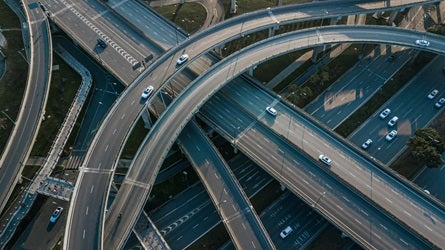
Contractors submitted expressions of interest on 10 October for a design-and-build contract for a multibillion-dollar new road that will run parallel to Sheikh Zayed Road.
Dubai’s Roads & Transport Authority (RTA) held an online meeting after the submissions to prepare for the prequalification phase of tendering, expected to start in a few weeks.
The scope covers about 30 kilometres (km) of works.
These include about 15km of viaduct along First Al-Khail Street and more than 14.5km of bridge ramps, along with other associated infrastructure works.
The RTA floated the expression of interest notice to contractors in early September.
The project is another significant initiative aimed at alleviating pressure on the existing Sheikh Zayed Road section from Hadiqa Street to Hessa Street.
Dubai has previously explored bold concepts to expand capacity on Sheikh Zayed Road, including proposals to introduce double-decker sections to add extra lanes without widening the existing corridor.
The idea was discussed in the context of rising congestion and limited right-of-way along one of the city’s busiest arterial roads, with elevated decks potentially carrying through traffic while existing at-grade lanes served local access.
The plans ultimately became standalone schemes, with subsequent efforts focusing instead on corridor-wide upgrades, interchange improvements and complementary public transport expansions to manage demand more sustainably.
The latest project aligns with Dubai’s continued investment in upgrading and expanding its road network to keep pace with rapid population growth and rising commuting demand.
Planning for growth
Dubai launched the 2040 Urban Master Plan in March 2021, referencing studies indicating that the emirate’s population will reach 5.8 million by 2040, up from 3.3 million in 2020. The daytime population is set to increase from 4.5 million in 2020 to 7.8 million in 2040.
In December 2022, Sheikh Mohammed Bin Rashid Al-Maktoum, Vice President and Prime Minister of the UAE and Ruler of Dubai, approved the 20-Minute City Policy as part of the second phase of the Dubai 2040 Urban Master Plan.
In addition to the road projects, the RTA’s Dubai Metro Blue Line extension and Dubai Metro Gold Line form part of Dubai’s plans to improve residents’ quality of life by cutting journey times, as outlined in the policy.
The policy aims for residents to have 80% of their daily requirements within a 20-minute journey, on foot or by bicycle. This goal will be achieved by developing integrated service centres with all necessary facilities and increasing population density around mass transit stations.
https://image.digitalinsightresearch.in/uploads/NewsArticle/20745908/main.jpg -
Bahrain awards Sitra 400kV grid contracts
19 October 2026
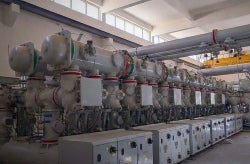
Bahrain’s Electricity & Water Authority (EWA) has awarded two contracts related to the establishment of new Sitra 400kV grid substations, according to sources.
The first contract covers transformer and reactor works including the supply and installation of three 400 kV, 500 MVA power transformers along with associated reactors. The package covers design, manufacturing, supply, transportation, erection, testing, and commissioning.
Switzerland-headquartered Hitachi Energy has been appointed as the main contractor for these works after submitting a bid of BD17.8m ($47.1m) in April, as reported by MEED.
Germany’s Siemens Energy previously submitted the only other offer of BD23.9m ($63.2m).
The second contract involves 400kV and 220kV feeder cable works for the same Sitra 400kV grid substations. The package covers the design, manufacture, supply, transportation, installation, testing and commissioning of 400kV and 220kV feeder cables.
Earlier this year, MEED reported that three South Korean companies had made offers for the feeder cable packages, with Iljin Electric submitting the lowest bid of BD35m ($92.7m).
It is understood that the contractor has now been appointed to carry out the main works for the project.
The works are part of the broader “Establishment of New 400 kV Grid Substations & Subsystem” initiative, aiming to bolster the power grid’s capacity and support integration with new power and water infrastructure at Sitra.
In September 2025, Siemens Energy won a contract worth BD48.1m ($127m) to build a 400kV transmission substation in Sitra to provide the transmission link for the planned Sitra independent water and power plant (IWPP), which is expected to generate at least 1,200MW of electricity.
Bahrain’s fourth IWPP is being procured by EWA under a public-private partnership framework for 20-25 years.
The combined-cycle gas turbine plant includes a seawater reverse osmosis desalination facility, which will have a production capacity of 30 million imperial gallons a day of potable water.
Last month, MEED exclusively reported on proposed first-year tariffs for the project following the opening of financial bids. Saudi Arabia’s Acwa submitted the lowest offer for both the power and water components.
This includes a first-year power tariff of BD17.1652 ($45.65) a megawatt-hour and a water tariff of BD0.4915 ($1.307) a cubic metre.
Abu Dhabi National Energy Company (Taqa) submitted a first-year power tariff of BD17.48190 ($46.49) a megawatt-hour and a water tariff of BD0.54285 ($1.444 ) a cubic metre.
The main contract for the build-own-operate project is expected to be awarded by the end of the year.
https://image.digitalinsightresearch.in/uploads/NewsArticle/20673857/main.jpg -
Algeria tenders 310km Tamanrasset railway
16 October 2026
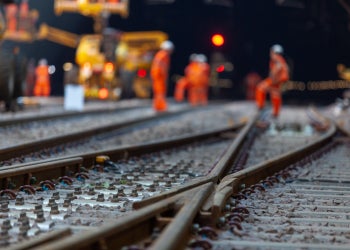
Algeria’s state railway project developer, Agence Nationale d’Etudes et de Suivi de la Realisation des Investissements Ferroviaires (Anesrif), has invited national and international contractors to bid for the construction of a 310-kilometre (km) railway line between Hotel Station and Moulay Lahcen Station.
The planned line is a key segment of the proposed railway corridor connecting El-Menea, In-Salah and Tamanrasset across the southern wilayas of In-Salah and Tamanrasset.
The tender notice was issued on 12 October, with bids due by 10 November.
The tender is open to single contractors and consortiums. To qualify, single firms must have executed at least 200km of new railway lines or track-doubling works since 2010, with accepted project certificates covering sections of at least 100km, along with a cumulative 800 metres of railway bridges with individual spans exceeding 30 metres.
Bidders must also provide at least two rail-tamping machines, two ballast regulators, and a project director with an engineering degree and at least five years of railway construction management experience.
From a commercial and classification perspective, single bidders and consortium leaders must hold a category-nine (IX) professional qualification in public works.
Bidders must also demonstrate an average annual turnover in construction of at least DZ260bn ($1.96bn) across the 2023-2025 financial period.
For joint ventures, the cumulative turnover of all members must meet the $1.96bn threshold, with the consortium leader accounting for at least $1.3bn.
Offers must be accompanied by a bid bond exceeding 1% of the total bid value for submissions exceeding $7.4m, with proposals remaining valid for 90 days beyond the submission date.
https://image.digitalinsightresearch.in/uploads/NewsArticle/20665591/main.jpg -
Joint venture wins $246m RCRC bridges contract
16 October 2026
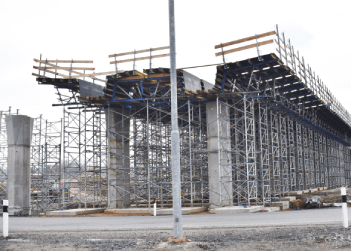
A joint venture of local contractor Mofarreh Group and Turkey-based Gulsan Holding has won an estimated SR923m ($246m) contract from the Royal Commission for Riyadh City (RCRC) to construct a series of grade-separated steel flyovers across the capital.
The contract, known as Package 2 (Groups 2 and 3), is part of RCRC’s urgent bridges programme under the wider project to build steel bridges at 10 junctions across Riyadh.
The works have a 12-month execution timeline to fast-track traffic decongestion across major arterial corridors.
The joint venture’s scope covers the engineering and construction of grade-separated steel bridge interchanges across seven key intersections:
- IC04: Al-Khair Road and King Salman Bin Abdulaziz Road
- IC05: Prince Turki Road and Imam Saud Road
- IC06: Al-Takhassosi Road and Saeed Al-Sulami Road
- IC07: Khurais Road and Al-Hareth Bin Abdullah Road
- IC08: Khurais Road and Ash-Sharq Road
- IC09: Khurais Road and Marmar Road
- IC10: Al-Kharj Road and Al-Hilla Road
The total length of the flyovers is 8.86 kilometres, excluding Junction IC10.
In addition to the structural steel superstructures, concrete bridge foundations, decks and approach ramps, the contract includes retaining walls, utility diversions, temporary phased traffic arrangements, associated roadworks, drainage networks, roadway lighting, intelligent transportation systems and landscaping.
The client received commercial proposals from several local and international contractors. Other bidders included:
- Masco
- Nesma & Partners
- Al-Omaier Trading & Contracting Company
- Yuksel Saudia
- Batco
- Modern Building Leaders
- Sapac
The urgent bridges initiative is part of Riyadh’s rapid transport infrastructure programme to improve traffic throughput, enhance safety and ease vehicular congestion across central and ring-road corridors ahead of major events, including Expo 2030 and the 2034 Fifa World Cup.
In July, Mofarreh Group and Turkiye’s Gulsan Holding formed a joint venture to bid for and deliver transport infrastructure projects in Riyadh for RCRC.
The joint venture said it will target road, bridge, viaduct and interchange projects.
Mofarreh will provide local market access and operational capacity, while Gulsan will contribute international experience in large-scale transport projects.
The companies said the new venture will support knowledge transfer and localisation, and promote the use of international engineering and construction standards aligned with Saudi Arabia’s Vision 2030 infrastructure and sustainability goals.
https://image.digitalinsightresearch.in/uploads/NewsArticle/20663255/main.png -
Humain tenders 100MW Riyadh AI data centre
16 October 2026
Register for MEED’s 14-day trial access
Saudi artificial intelligence infrastructure developer Humain has issued a request for proposals for an engineering, procurement and construction (EPC) contract to deliver a 100MW artificial intelligence (AI) data centre facility in Riyadh’s Al-Saad area.
The tender was issued on 17 September, with bids due by 8 November.
The contract includes core-and-shell works; civil works; mechanical, electrical and plumbing installation; testing and commissioning; and site infrastructure across a 350,200-square-metre plot.
The project also includes an optional expansion phase that could raise total site capacity to 200MW.
The initial 100MW development is split into two equal 50MW phases, structured across two single-storey IT buildings housing four 25MW data halls.
Phase one targets a ready-for-service date by October 2028, followed by phase two in January 2029.
Under the optional phase three, an additional 100MW facility would be brought online by July 2029.
The data centre will be designed to support high-density graphics processing unit clusters and AI-compute workloads, with rack densities of 240kW to 250kW.
The facility will be built to Uptime Institute Tier III topology and LEED Silver standards as a baseline, targeting LEED Gold.
The operational design targets an annualised power usage effectiveness below 1.35.
Power will be delivered through four 33kV connections supplied by Saudi Electricity Company from two separate high-voltage/medium-voltage primary substations. The scope requires 15 transformers, 15 static 2,250kW IT uninterruptible power supply (UPS) units, and 450kW mechanical UPS systems with lithium-ion battery storage for each 25MW block.
Backup emergency diesel generators will be provided on an owner-furnished, contractor-installed basis, with the EPC contractor handling their installation, connection and testing. Fuel storage will provide 24 hours of autonomous run-time, split between on-site underground bulk tanks and generator belly tanks.
Thermal management combines air and liquid cooling. High-density server racks will be equipped with direct-to-chip liquid cooling loops using coolant distribution units and technical water distribution, paired with air-cooled chillers operating in dual high- and low-temperature loops, alongside fan-wall units.
The total construction timeline is capped at 25 months from site handover or contract signing, with pre-execution early mobilisation scheduled to start in January 2027.
https://image.digitalinsightresearch.in/uploads/NewsArticle/20661045/main.jpg