
Iraq opens Najaf-Karbala railway PPP bids
29 July 2024
Register for MEED's 14-day trial access
Iraq's National Investment Commission (NIC) has opened bids for the Najaf-Karbala metro project.
The railway link will run from Najaf International airport and will terminate in Karbala city centre. The 90-kilometre metro line will have four main stations.
The project will be developed using a design, build, operate, maintain, finance and transfer model.
The bid opening ceremony was held last week and was attended by chairman of the NIC, Haider Mohammed Makkiya; Nasser Al-Asadi, advisor for transportation affairs to the Iraqi prime minister; along other representatives from the government entities.
Project consultants and presumed bidders, including Spain's Imathia Construccion, Iran’s Milad Group and Qatar’s Urbacon, also attended the ceremony.
The Najaf-Karbala metro line is one of the two projects that were tendered by the NIC on a public-private partnership (PPP) basis earlier this year. The other project was the Baghdad Metro scheme.
Last week, MEED reported that the NIC had awarded an estimated $2.5bn contract to develop and operate the Baghdad Metro project.
In a statement published by local media, the NIC revealed that the contract was awarded to a consortium comprising France’s Systra, Societe Nationale des Chemins de fer Francais (SNCF) and Alstom; Spain’s Talgo and Sener; and Turkish contractors.
Germany's Deutsche Bank is the project finance adviser.
Malaysian consulting firms ConsultantHSS and HSS Engineering are working on both projects.

Register for MEED's guest program now to access this article.
Exclusive from Meed
-
 Syria in talks for refinery project worth $6bn-8bn
9 November 2026
-
 Three Libya oil and gas projects see developments
9 November 2026
-
 Saudi Arabia signs $403m Syria infrastructure loans
9 November 2026
-
 Frontrunners emerge for Saudi substation projects
9 November 2026
-
 Contractor wins $197m Doha infrastructure works
6 November 2026
All of this is only 1% of what MEED.com has to offer
Subscribe now and unlock all the 153,671 articles on MEED.com
- All the latest news, data, and market intelligence across MENA at your fingerprints
- First-hand updates and inside information on projects, clients and competitors that matter to you
- 20 years' archive of information, data, and news for you to access at your convenience
- Strategize to succeed and minimise risks with timely analysis of current and future market trends
Related Articles
-
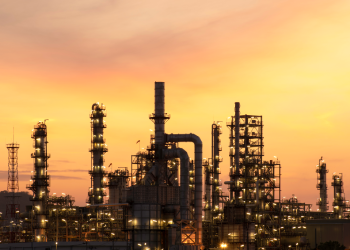
Syria in talks for refinery project worth $6bn-8bn
9 November 2026
Discussions are under way with international companies to develop a refinery in Syria’s Furqlus area, worth $6bn-8bn, according to a senior official at state-owned Syrian Petroleum Company (SPC).
The project will be “very large” and, after completion, will replace Syria’s Homs refinery, according to SPC’s deputy executive president for refining affairs, Tariq Shalash Al-Abdullah, who spoke to Syria’s state-owned daily newspaper Al-Thawra Al-Souriya.
He said the international companies currently involved in talks about the planned refinery project specialise in design work, engineering and technical studies.
He also stated that, for large-scale projects of this type, consortiums are typically formed from a group of companies with complementary interests in study, manufacturing, financing, implementation and operation.
In June, SPC published an invitation for companies to submit proposals to finance, build and operate the refinery under a build-operate-transfer agreement.
The tender document published by SPC said the refinery would have the capacity to process 210,000 barrels a day (b/d).
It also said the facility would be developed with the option to add an “ancillary petrochemical complex”.
Al-Abdullah said the refinery’s total investment value would depend on the equipment's country of origin, adding that the equipment could potentially be procured from the US, Europe or China.
Another factor that could alter the project’s value is the technology licences selected for the project, according to Al-Abdullah.
The refinery project is expected to take around four years to develop from the date of signing the contract and completing other related preparatory activities.
The project will be developed on a site that covers 400 hectares, according to the document that was published by SPC in June.
SPC invited companies to submit three separate documents relating to their proposals.
These were:
- A package outlining the company’s qualifications and legal documents
- A technical proposal
- A financial and investment proposal
According to the tender document, the scope of the refinery project includes developing:
- Three independent atmospheric distillation units, each with a capacity of 70,000 b/d
- Two vacuum distillation units
- Hydrotreating units
- Sulphur recovery units
- A base oil unit
- Power and steam generation facilities
- A grid interconnection substation
- A safe shutdown system
- An environmental water treatment system
- A gas recovery system
- A unit to produce nitrogen and oxygen
- A fire water network
- Maintenance and repair workshops
- Tank farm and storage facilities
Under the plans outlined in SPC’s tender document, at least 85% of the refinery’s products should meet Euro-5 specifications.
SPC is also seeking a “plan for the establishment and integration of an advanced petrochemical complex”, which would be connected to the refinery, according to the document.
Because of this, it said the refinery design must allow diversion of some light and heavy naphtha and liquid petroleum gas (LPG) to be used as feedstock for the future petrochemical complex.
The petrochemical complex is planned to use 20% to 40% of the naphtha and LPG.
https://image.digitalinsightresearch.in/uploads/NewsArticle/21263584/main.png -
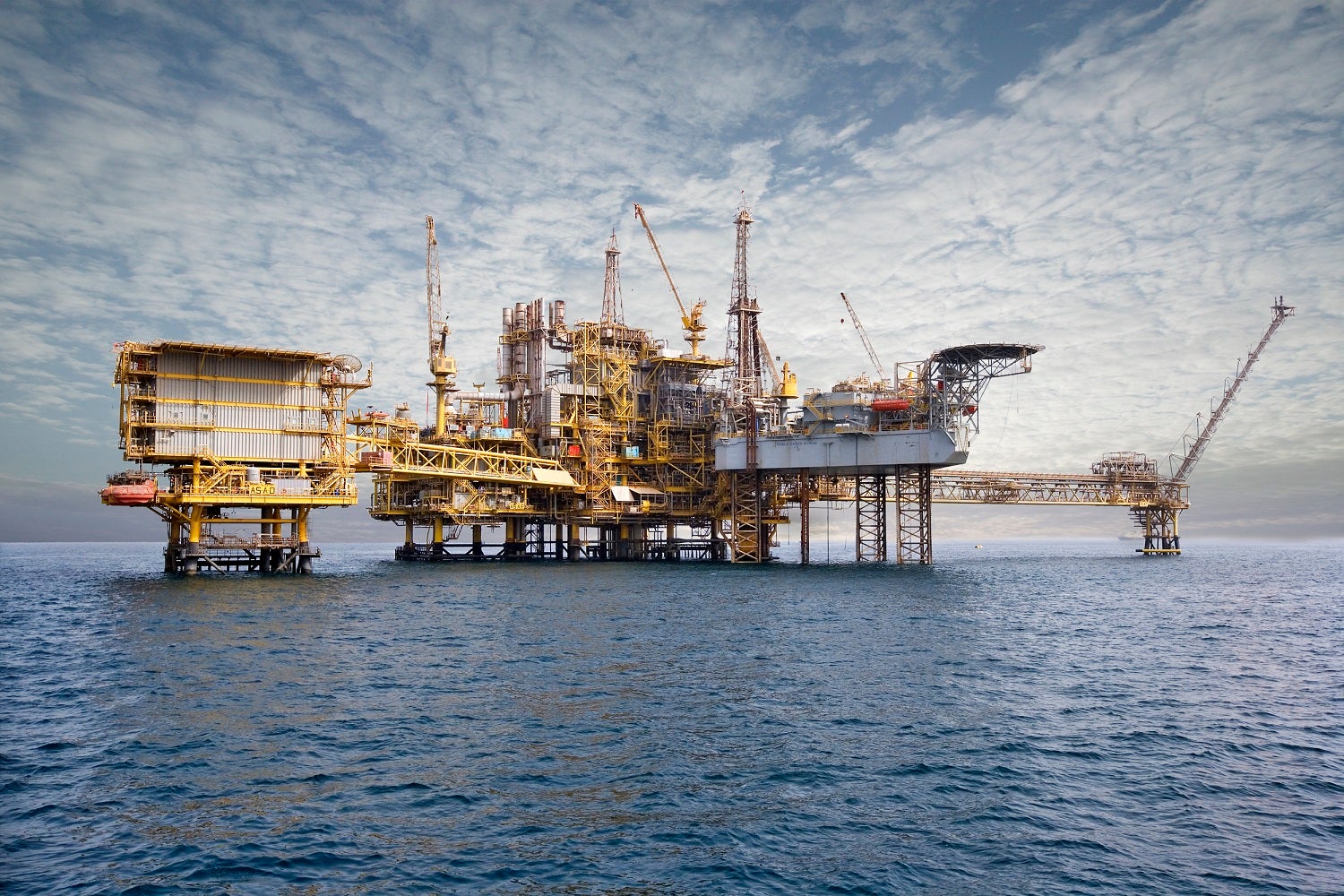
Three Libya oil and gas projects see developments
9 November 2026

Three key oil and gas projects in Libya have seen developments amid an uptick in activity in the North African country’s hydrocarbon sector.
The contract scopes include seismic work, subsea pipeline development and drilling services.
An invitation to prequalify has been issued for a project to provide two-dimensional (2D) and three-dimensional (3D) offshore seismic surveying services.
The survey area is the Libyan Offshore Area O1, located in the Sirte Basin.
The winner of the contract will be responsible for:
- Acquisition of approximately 6,100 square kilometres (sq km) of 3D full-fold marine seismic data
- Acquisition of approximately 3,000 sq km of 2D full-fold marine seismic data
The client on the project is the Italian oil and gas company Eni.
In a statement posted on the website of Libya’s National Oil Corporation (NOC), it said: “The objective of the survey is to acquire, within the required operational window from September 2027 to March 2028, high-quality broadband seismic data to improve the imaging of Cretaceous reservoir sequences and support future exploration activities.”
The deadline to submit prequalification documents is 2 December 2026.
Deadline extended
Libya’s Mellitah Oil & Gas Company (MOG) has extended the deadline for companies to submit prequalification documents for a major offshore package as part of its Mellitah complex expansion and CO2 management integrated development project, which is estimated to be worth about $8bn.
The previous deadline of 5 November 2026 has been extended to 3 December 2026.
MOG, a joint venture of NOC and Eni, is the project client.
The package, known as WP4B1, focuses on developing offshore pipelines and subsea systems for the E offshore installation and CO2 project.
The turnkey contract will use the engineering, procurement, installation and commissioning (EPIC) model.
As part of the Mellitah complex expansion and CO2 management integrated development project, two offshore structures – Structure A and Structure E – will be developed in Libya’s offshore block NC 41.
Structure A is also known as wellhead production fixed platform A (WHPA) and Structure E is also known as production platform E (PPE).
Structure A is in the central-western part of the area, about 80 kilometres (km) from the Libyan coast, with a water depth of 95-105 metres.
Structure E is located in the central-eastern part of the area, about 130km from the Libyan coast, in a water depth of 205-235 metres.
The scope of the wider project includes:
- A new production platform installed in about 220 metres of water depth as part of the development of Structure E (Package WP1)
- A new wellhead platform installed in 96 metres of water as part of the development of Structure A (Package WP2)
- Modification of the existing Sabratha platform (Package WP3)
- Sealines and subsea systems extending from the Sabratha platform to Structure A (Package WP4A1)
- Sealines and subsea systems for Structure E and the CO2 system (Package WP4B1)
- Supply of seamless carbon steel pipes for CO2 injection from the Mellitah complex to Sabratha platform (Package WP4B2)
- Subsea Production Systems (SPS) for Structure E and CO2 (Package WP4B3)
- Upgrading the existing onshore Mellitah complex (WP5)
The package known as WP4B1 has been broken down into two phases.
The first phase focuses on the installation of the project’s subsea CO2 pipeline and its related system network.
The second phase of WP4B1 is focused on the pipeline to structure E and its related subsea system network.
Monitoring drilling
MOG has also issued a separate invitation for prequalification relating to a contract to provide hydrogen sulphide monitoring services for offshore drilling.
The contract focuses on providing H2S monitoring services for 18 offshore development wells as part of the “Structures A&E” project.
Four of the wells will be subsea wet wells and a further 14 will be dry tree wells.
The deadline for submitting prequalification documents is 3 December 2026.
The work will be carried out in the zone known as Area D, Block NC41.
H2S monitoring in the oil and gas industry involves tracking H2S gas concentrations in the air using electronic sensors and detectors to protect workers, prevent fatal exposures and avoid equipment damage.
https://image.digitalinsightresearch.in/uploads/NewsArticle/21263383/main.jpg -
Saudi Arabia signs $403m Syria infrastructure loans
9 November 2026
The Saudi Fund for Development (SFD) has signed six concessional loan agreements worth more than $403m to support power, water, healthcare, housing and other infrastructure projects in Syria.
The agreements include a $90m project to rehabilitate generating units at the Aleppo thermal power plant. The project is expected to benefit about 5 million people by restoring power-generation capacity and strengthening the stability of the national electricity grid.
The Aleppo thermal power plant has five generating units and an installed capacity of approximately 1,100MW. It is understood that at least three of the five generating units are out of operation and require rehabilitation. According to local media reports, rehabilitating these three units is estimated to take 18-24 months.
A further $30m will be allocated to upgrading Syria’s drinking water metering system. The project involves supplying and installing 300,000 smart water meters across several governorates, benefiting approximately 1.5 million people.
The remaining agreements cover civil defence, housing, healthcare and public finance.
A $105m loan will support the construction, rehabilitation and equipping of 25 civil defence centres across several governorates. The project is expected to benefit more than 7 million people and strengthen emergency response and disaster management capabilities.
A further $60m will finance the rehabilitation of up to 10,000 damaged housing units in various areas of the country.
The healthcare sector will receive $100m to rehabilitate, construct and equip hospitals and health centres. The funding will support restoring essential and specialised healthcare services and expanding access to medical facilities.
The final agreement, worth more than $18m, will support the digital transformation and institutional development of Syria’s Ministry of Finance by implementing an integrated financial services system.
The agreements were signed by SFD CEO Sultan Al-Marshad and Syrian Finance Minister Mohammed Yisr Barnieh in Riyadh on 5 November.
The financing is part of Saudi Arabia’s wider support for Syria’s recovery. In September 2025, the kingdom provided two grants to Syria to supply crude oil and cover part of government employees’ salaries for three months.
That same month, Saudi Arabia’s Acwa and Water Transmission Company (WTCO) signed a technical services agreement with Syria’s Ministry of Energy and German engineering group Fichtner to study the country’s water resources and identify future desalination and water transmission projects.
The work will examine the potential for desalination and water transmission capacity of up to 1.2 million cubic metres a day. WTCO has said the proposed transmission network could extend for about 400 kilometres.
https://image.digitalinsightresearch.in/uploads/NewsArticle/21211540/main0549.jpg -
Frontrunners emerge for Saudi substation projects
9 November 2026
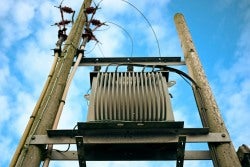
China’s TBEA Shandong Luneng Taishan Cable Company (TBEA) and Egypt’s Elsewedy have submitted the lowest bids for two substation projects in Riyadh Province, estimated to cost a combined $100m, sources have confirmed to MEED.
The $50m Qiddiya 2 Bulk Supply Point (BSP) project will provide a new bulk supply point to meet electricity demand in the Qiddiya development area. The scope includes constructing a main substation building and outdoor electrical yard, along with power transformers, high- and medium-voltage switchgear, protection and control systems, and supervisory control and data acquisition links.
The $50m Thadeq photovoltaic (PV) substation project will support grid connections and power exports from the Thadeq solar PV development. The scope includes a control building, outdoor switchyard, power transformers, switchgear, protection systems and Scada integration.
It is understood that both projects involve the construction of 380kV BSP substations.
Saudi Energy is the client for both projects.
The two tenders were issued earlier this year, with bids submitted in August and November for the Thadeq PV and Qiddiya 2 BSPs, respectively.
At Qiddiya, the additional infrastructure will support the development of entertainment, tourism, sports and residential facilities. Trading & Development Partnership is also developing a separate 380/132kV substation, known as BSP #9078, at Qiddiya.
The Thadeq project is part of the infrastructure required to connect new solar generation capacity to the national grid.
Saudi Energy has tendered several other 380kV substations and associated transmission lines this year, including projects serving planned solar and wind developments in the kingdom’s central, western and southern regions.
Bids were recently submitted for a separate BSP expansion project at Qurayyat in Al-Jawf Province, involving the construction of a 400kV substation to support higher power demand and improve grid reliability in the area.
https://image.digitalinsightresearch.in/uploads/NewsArticle/21210408/main.jpg -
Contractor wins $197m Doha infrastructure works
6 November 2026
Register for MEED’s 14-day trial access
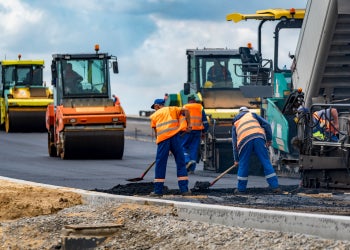
Qatar’s Public Works Authority (Ashghal) has awarded an estimated QR722m ($197m) contract to develop roads and infrastructure north of Al-Rifaa Street in Doha.
The contract was awarded to local firm Tadmur Contracting Company.
Six other contractors submitted bids:
- Qatar Trading & Contracting Group ($244m)
- Iris Construction Tourism Industry & Trade ($259m)
- Lotus Trading & Contracting ($260m)
- Generic Engineering Technologies & Contracting ($261m)
- Alghanim International / National Industrial Contracting ($268m)
- Hamad Bin Khalid Contracting Company ($281m)
The scope of work covers the construction of more than 34 kilometres of roads, dedicated plot developments, site clearance, backfill and earthworks.
The package also requires the installation of surface and groundwater drainage systems, a foul-water drainage network and treated sewage effluent lines.
In addition, the contractor will deliver a dedicated pumping station, an emergency flood area pond, 3,735 car parking spaces, road cross-sectional elements and verge parking bays.
Secondary infrastructure works include electrical distribution, water mains, utility lines, manholes, gully pots and house connections, along with kerbing, road pavement works, landscaping, street lighting, road markings and directional signage.
https://image.digitalinsightresearch.in/uploads/NewsArticle/21204827/main.jpg