
Iran war erodes LNG’s image of reliability
9 March 2026
 Commentary
Wil Crisp
Oil & gas reporter
The 28 February attack by the US and Israel on Iran, and the chaotic conflict that has ensued, has dramatically eroded the image of liquefied natural gas (LNG) as a stable and reliable source of energy, removing around 20% of global LNG supply from the market.
Within the Middle East and North Africa (Mena) region, disruption to LNG production and distribution has left countries including Egypt and Kuwait with serious concerns over energy supplies.
Beyond the Mena region, major economies in Europe and Asia are also badly impacted by an absence of shipments from Qatar, one of the world’s biggest LNG producers, which stopped production of LNG on 2 March due to military attacks on several facilities.
Qatar subsequently declared force majeure on 4 March, helping to push benchmark gas prices to multi-year highs. The Dutch Title Transfer Facility (TTF) rose by more than 80%, hitting its highest levels since fuel markets spiked following Russia’s 2022 invasion of Ukraine, while Asian LNG spot prices also hit three-year highs.
The latest wave of turmoil for countries that are reliant on LNG has undermined the image of the fuel as a flexible and reliable source of energy, which was widely regarded as one of its key advantages.
When Kuwait signed its 15-year LNG supply contract deal with Qatar in 2020, Saad Sherida Al-Kaabi, the president and chief executive of Qatar Petroleum, said: “We are confident that the exceptional reliability of our LNG supplies will provide KPC [Kuwait Petroleum Corporation] with the required flexibility and supply security to fuel the State of Kuwait’s impressive growth.”
Similarly, in Egypt last year, when Prime Minister Mostafa Madbouli made an announcement about bringing a third floating LNG import terminal online, an official government statement said that the terminals would be “ensuring stable energy for households and industry”.
The latest crisis has highlighted that, in some ways, the LNG market can be even more dramatically disrupted by geopolitical issues than the oil market.
Unlike the oil market, where producers such as Saudi Arabia maintain spare capacity and US shale producers quickly ramp up production if prices move higher, LNG facilities typically operate close to full capacity, leaving few options to boost production if other producers go offline.
On top of this, compared to the oil market, much more of the production relies on a relatively small number of producers and transport routes.
Kuwait’s gas crunch
In recent years, Kuwait has invested billions of dollars in an energy strategy that has made it structurally reliant LNG imports, and the centerpiece of the country’s LNG infrastructure is its $2.9bn Al-Zour import terminal, which was brought online in July 2021.
It is the country’s first permanent facility to import LNG and has allowed the country to take delivery of large volumes of gas.
Between March 2025 and February 2026, Kuwait imported 7,352 kilotonnes (kt) of LNG, making it the second-biggest importer in the Mena region after Egypt, according to data recorded by the market analytics company Energy Aspects.
The vast majority of Kuwait’s imports came from Qatar, with significant additional volumes also coming from Oman and Nigeria.
Now, as a result of fallout from the Iran war, Kuwait is going to face serious issues surrounding gas imports, at least in the short term.
With the Qatari LNG export facilities offline, the Al-Zour facility can’t receive shipments from Qatar, and due to Iran’s Revolutionary Guard Corps (IRGC) effectively closing the Strait of Hormuz, ships cannot reach Kuwait’s import terminal from Oman or Nigeria.
The gas shortage in Kuwait is also likely to be exacerbated by Kuwait cutting oil production due to an inability to export crude via the Strait of Hormuz.
On 7 March, state-owned KPC said it had implemented a precautionary reduction in crude oil production due to “threats against safe passage of ships through the Strait of Hormuz”.
Shutting in production at oil fields will mean that the country will not be able to gather as much associated gas that is produced alongside the crude oil and feeds some domestic power stations.
Just how severe the consequences of Kuwait’s gas crunch will be remains to be seen.
Several of Kuwait’s gas power plants have been designed to be able to run on fuel oil in emergencies, so it is possible that the country will be able avoid widespread blackouts.
When these powers stations are switched to oil they are usually less efficient and have more maintenance issues.
Last summer, even without a major gas shortage, the country was forced to resort to rolling power cuts across some regions due to high electricity demand and insufficient generating capacity.
Egypt uncertainty
Egypt, the Mena region’s biggest LNG importer, is also going to face uncertainty over its LNG supplies in coming months.
Between March 2025 and February 2026, Egypt imported 9,440kt of LNG, but unlike Kuwait, the majority of its imports are purchased through more short-term agreements, mainly with third parties like trading houses.
Last year, it was reported that Egypt had signed deals for around 150 cargoes through to the summer of 2026.
While much of Egypt’s LNG is likely to come from the US, and won’t be directly impacted by the effective closure of the Strait of Hormuz, the recent surge in LNG prices could mean that the North African country will struggle to afford shipments.
Slava Kiryushin, an international oil and gas lawyer and a partner at the London-headquartered law firm HFW, says that the imports Egypt has already signed contracts for will only provide a partial buffer to the new higher price environment.
“While having existing deals in place is likely to help to mitigate Egypt’s exposure to the recent surge in LNG prices, it is unlikely that these deals will cover all of the country’s gas demand.
“Because of this, Egypt is likely to need to buy volumes on the spot market, where it will face much higher payments.”
Exacerbating the need for increased LNG imports, on 28 February Israel shut down production from its offshore gas fields due to security concerns, cutting pipeline exports to Egypt.
Prior to the fields being taken offline, Egypt was importing about 1.1 billion cubic feet a day (bcf/d) from the Tamar and Leviathan fields.
On 4 March, addressing concerns about energy supplies in the country, Madbouly said that Egypt had just concluded “several contracts” to procure gas shipments at “preferential prices” in cooperation with a range of countries and international companies.
However, he did not provide details about exact pricing of the deals.
Qatar deal
On top of the LNG deals Egypt has with trading houses, in January, Egypt signed a memorandum of understanding (MoU) with Qatar related to 2026 LNG imports.
The preliminary deal included plans for 24 LNG deliveries through the summer of this year, when energy demand typically peaks.
Now, the shuttering of Qatar’s export terminals and the effective closure of the Strait of Hormuz is casting a shadow over the deal and there is increased uncertainty over whether these deliveries will be executed.
Egyptian chemicals
As well as impacting power generation in Egypt, the higher gas prices are also likely to cause problems for Egypt’s petrochemicals sector, where natural gas is used as a feed stock.
In June last year, when Israel cut gas flows to Egypt after strikes on Iran, several major urea producers in Egypt were forced to stop production.
Misr Fertilizers Production Company (Mopco) is one of the companies that could feel the brunt of the gas shortage.
It is Egypt’s largest producer of nitrogen-based fertilisers and, in November last year, said that it was planning to invest $200m-$250m in 2026 and 2027, increasing its production capacity in the country.
Jordan and Bahrain
Jordan and Bahrain are also likely to be exposed to the surge in global LNG prices. They each respectively imported 665.7kt and 641.2kt of LNG between March 2025 and February 2026.
Both countries have recently invested in their capacity to import LNG, and were anticipating ramping up imports prior to the latest spike in international prices.
In April last year, Bahrain LNG Import Terminal (BLNG) received its first delivery of LNG since the terminal was officially commissioned in 2019. And, amid plans to boost imports to meet domestic demand, Spain-headquartered Noatum was awarded a five-year contract by state-owned Bapco Upstream in November to run marine services at the facility.
In Jordan, a new floating LNG import terminal (FSRU) arrived at the country’s Aqaba port in August 2025.
At the time, Sufian Batayneh, the general director of the country’s National Electric Power Company (Nepco), said that the terminal would benefit the region by providing LNG to operate Jordan’s power plants, as well as allowing the shipments of gas via pipeline to Egypt.
Now, with the global price of LNG at multi-year highs, it seems possible that both Jordan and Bahrain will have to choose between paying significantly higher prices for imports or scaling back their plans for increased deliveries.
Ongoing vulnerabilities
The latest disruption to the LNG markets has highlighted vulnerabilities to the global LNG supply chain and has undermined the image of stability that was previously seen a key reason why many countries have been making it a central pillar of their energy strategies.
Just how bad the economic damage will be for the Mena nations that are reliant on LNG imports will largely depend on how long it takes to bring Qatar’s export facilities back online and effectively reopen the Strait of Hormuz.
If the current disruption to the global LNG market does persist for an extended period of time and significant damage is done to economies like Kuwait and Egypt, other countries in the region may well think twice before committing to the development of LNG import infrastructure as a central part of their energy strategy.

Register for MEED's guest program now to access this article.
Exclusive from Meed
-
 Oman dam strategy tested by heavy rainfall
30 March 2026
-
 Risk accelerates Saudi spending shift
27 March 2026
-
 Remaking construction in Saudi Arabia
27 March 2026
-

-
 March 2026: Data drives regional projects
27 March 2026
All of this is only 1% of what MEED.com has to offer
Subscribe now and unlock all the 153,671 articles on MEED.com
- All the latest news, data, and market intelligence across MENA at your fingerprints
- First-hand updates and inside information on projects, clients and competitors that matter to you
- 20 years' archive of information, data, and news for you to access at your convenience
- Strategize to succeed and minimise risks with timely analysis of current and future market trends

Related Articles
-
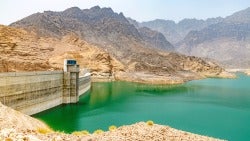
Oman dam strategy tested by heavy rainfall
30 March 2026

Oman has steadily expanded its dam infrastructure capacity over the past decade, but recent rainfall suggests the system is also being tested by how water arrives and is managed.
Last week, the Ministry of Agriculture, Fisheries & Water Resources said it would release water from dams when levels exceed 75%, a routine measure that helps manage flood risk as wadis surge.
Following heavy storms, several dams have been reported to exceed 90% capacity, increasing the likelihood that water is released rather than retained and thus reducing the overall benefit of intense rainfall events.
According to MEED Projects, 15 major dams and three reservoir schemes have been completed in Oman since 2009.
Contract awards
In 2025, contract awards for dam projects in the sultanate reached $100m for just the third time in the past decade.
Muscat-based Premier International Projects won two of the three contracts awarded for projects last year.
These include the construction of a recharge dam at Wadi Keed (Wilayat Bahla) in Ad Dakhiliyah Governorate and a flood protection dam (Neyabat Lima) in Musandam Governorate.
The Neyabat Lima scheme, at 355 metres long and 37.3 metres high, will provide about 5.5 million cubic metres of storage and is designed as much to manage flood flows as to capture runoff.
A third contract was awarded to state-owned Egyptian contractor Arab Contractors, covering flood protection dams at Wadi Al-Zyhimi in North Al-Batinah Governorate. All three projects are scheduled for commissioning in 2028.
In addition to the Wadi Al-Zyhimi project, construction is advancing on two other projects as Oman adds more targeted storage.
The Deem strategic reservoir in Muscat will provide 150,000 cubic metres of capacity, equivalent to two days of demand, when it comes online next year.
Meanwhile, the $108m Wadi Aday Gorge (G2) dam, due for completion this year, is aimed at protecting built-up areas downstream of Al-Amerat.
Project pipeline
Looking ahead, new tenders indicate that this phase of expansion is not yet complete.
The ministry recently opened bidding for a contract to build a flood protection dam at Wadi Rijma in Liwa, North Batinah. The Wadi Rijma scheme is one of four schemes backed by a $632m loan from the Islamic Development Bank.
The dam projects are:
- The Wadi Al-Khoud Flood Protection Dam (AK01) in Seeb
- The Wadi Rijma Flood Protection Dam (R2A) in Liwa
- The Wadi Majlas Flood Protection Dam in Qurayat
- The Wadi Ahin Flood Protection Dam in Saham North
Further contracts worth about $170m are expected to be awarded in the near term, covering both recharge and flood protection dams. Should these contracts be awarded, as expected in 2026, it will be the first time investment in water storage projects has surpassed $100m in consecutive years.
Beyond this, up to 10 projects remain in the front-end engineering and design stage, the largest of which involves a $100m recharge dam in Wilayat Samail and Izki in Ad Dakhiliyah Governorate. Most of these are due to come online by the end of the decade.
https://image.digitalinsightresearch.in/uploads/NewsArticle/16161125/main.jpg -
Risk accelerates Saudi spending shift
27 March 2026
 Commentary
John Bambridge
Analysis editorThe headline story of Saudi Arabia’s project economy in 2026 is what is no longer being built: The Line deferred. The Mukaab suspended. Trojena stripped of its marquee event. Saudi Arabia’s construction sector is in a period of readjustment, pivoting away from prestige-driven capital expenditure towards deliverable priorities.
Operation Epic Fury changes none of this. The pivot was already under way following the Public Investment Fund’s board review in late 2024, which cut budgets across more than 100 investee companies by up to 60%. However, the Iran war has helped accelerate and clarify the shift.
Grasping the full picture of this pivot, it is less austere than it might appear. Project awards declined in 2025, but remained above historical averages, resulting in a net gain for the sector.
Activity generally remains strong. Saudi Arabia’s rail network is expanding on multiple fronts: the Jeddah Metro Blue Line has returned to procurement, while high-speed and national rail projects are advancing. Desalination capacity is forecast to nearly double by 2031, and wind power contract values surged by 175% in 2025. Saudi Aramco is maintaining high capital expenditure in 2026, focused on offshore projects and gas production.
These programmes may not attract the global attention of a 170-kilometre mirrored city, but they share something gigaprojects often lacked: a clear functional return. Water security, energy diversification, transport connectivity and domestic gas supply are the load-bearing infrastructure of a modern economy. The kingdom is now building that infrastructure again in earnest.
The closure of the Strait of Hormuz has made the strategic logic of this reorientation even harder to ignore. Glitzy projects do not secure borders. By contrast, a country that cannot guarantee the security of its export corridors is strongly incentivised to invest in infrastructure that supports its domestic economic base and strengthens resilience. Every desalination plant, rail link and gigawatt of renewable capacity reduces Saudi Arabia’s exposure to external shocks.
The medium-term direction was already clear: capital was being redeployed from speculative projects towards infrastructure with bankable returns. That rationale has now gained additional strategic weight.
As Saudi Arabia’s project economy matures, what is emerging is less photogenic but far more defensible: the infrastructure backbone that Vision 2030 always required, and that the kingdom’s exposure to regional instability now demands. The Iran war did not create this shift, but it has removed any remaining argument for reversing it.
MEED’s April 2026 report on Saudi Arabia includes:
> GVT &: ECONOMY: Riyadh navigates a changed landscape
> BANKING: Testing times for Saudi banks
> UPSTREAM: Offshore oil and gas projects to dominate Aramco capex in 2026
> DOWNSTREAM: Saudi downstream projects market enters lean period
> POWER: Wind power gathers pace in Saudi Arabia
> WATER: Sharakat plan signals next phase of Saudi water expansion
> CONSTRUCTION: Saudi construction enters a period of strategic readjustment
> TRANSPORT: Rail expansion powers Saudi Arabia’s infrastructure pushTo see previous issues of MEED Business Review, please click herehttps://image.digitalinsightresearch.in/uploads/NewsArticle/16163037/main.gif -
Remaking construction in Saudi Arabia
27 March 2026
As the Public Investment Fund (PIF) took a leading role in developing projects following the launch of Vision 2030, it quickly realised that Saudi Arabia’s construction sector needed support if the kingdom was to achieve its broader economic ambitions.
The PIF’s National Development Division (NDD) is the entity tasked with building capacity and capability in the construction sector to support PIF projects and other strategically important schemes in the kingdom.
“Our job is to facilitate the development of the local value chains, which are essential to support the development and operations of PIF portfolio companies,” says Leyla Abdimomunova, head of real estate and construction, National Development Division, PIF.
The scale of this undertaking requires a multi-front strategy, targeting everything from consultancy services and contracting capacity to raw materials and advanced technologies.
“The focus is on design and construction services, building materials, construction equipment and the value chain for all things in construction technology. This work requires engagements with stakeholders within the PIF portfolio: development and contracting companies where PIF has a share,” says Abdimomunova. “We also work closely with governmental stakeholders – including the Ministry of Municipalities & Housing, the Ministry of Investment and the Ministry of Industry & Mineral Resources – alongside our private sector partners, to ensure alignment across the ecosystem.
“This collaboration approach is essential to addressing market challenges holistically and creating an environment where businesses can invest, grow and participate more effectively in Saudi Arabia’s development,” she notes.
Unified strategy
The integrated approach was born out of necessity.
“When we started this work five years ago, the initial challenge we dealt with was the shortage of the local supply of construction services and materials,” says Abdimomunova.
To bridge the gap, the NDD looked to both support local players and attract international firms.
“The focus was on the localisation of the supply chain, bringing the manufacturing capacity into the kingdom by either expanding the existing capacities of local players or installing new capacity together with local players, but also bringing foreign investments into the country to set up factories,” she says.
On the services side, the challenge was reputational. Riyadh had to convince the world’s best builders that the Saudi market had fundamentally changed. While courting global giants, the NDD also had to address the fragmentation of the domestic market.
“We found that there were two primary obstacles in our portfolio: a high concentration of contractors on one hand, and underutilised capabilities of the local contractors on the other hand.”
The challenge was moving the large number of small and medium-sized enterprises (SMEs) from the periphery to the core of the PIF’s portfolio of projects.
“In order to overcome these obstacles, a lot of focus was on attracting international contractors – those that were not working in the kingdom at the time – in order to expand and diversify the pool of contractors, while also putting a lot of effort into building up the capabilities within the local market,” Abdimomunova notes.
“The local contracting market is very fragmented. A large proportion of contractors are SMEs, and only the large Saudi contractors are predominantly known inside the kingdom.
“We put in place programmes to support the development of the medium-sized contractors and increase their visibility to our development companies,” she says.
A lot of effort went into making sure contractors have access to financing
Leyla Abdimomunova, National Development Division, PIFThe NDD has also introduced practical upskilling and financial tools. “We put in place a few tools, working together with ecosystem partners. For example, the Prequalification Platform, which was launched and is being operated with the Saudi Contractors Authority, [and] contractor upskilling bootcamps that have been delivered by our development companies to provide contractors with the basic understanding needed to be able to bid for projects.
“A lot of effort went into making sure contractors have access to financing,” Abdimomunova adds.
Indeed, addressing the finances of the construction sector was another critical area for the NDD.
 By moving beyond traditional methods and practices, it has introduced more flexible liquidity options for the industry.
 “We launched the Contractor Financing Programme to expand access to financing and strengthen liquidity for contactors supporting Saudi Arabia’s development pipeline.
“In partnership with the National Infrastructure Fund, we introduced guarantee mechanisms to unlock additional bank lending capacity, alongside a new product for the region: surety bonds – as an insurance alternative to traditional bank guarantees,” says Abdimomunova.
“Since receiving regulatory approval last year, 34 surety bonds have already been issued, helping contractors participate more effectively in large-scale projects.”
Adjusting priorities
With the foundational work established, the NDD is now shifting its focus towards streamlining the experience for international companies and tackling the sector’s long-standing structural hurdles.
Looking ahead, the NDD intends to tackle the perennial problems of the industry – payment delays and productivity – to ensure that the transformation of the sector is permanent.
“Going forwards, our work will go one level deeper, focusing on resolving structural challenges and strengthening the underlying enablers that support private sector participation.
“We are working closely with our partners across Saudi Arabia to ensure these improvements are sustainable, scalable and embedded not only within the PIF’s ecosystem, but across the broader national economy,” Abdimomunova concludes.
https://image.digitalinsightresearch.in/uploads/NewsArticle/16160974/main.gif -
Contractor appointed for Morocco grand stadium rail station
27 March 2026
Moroccan construction firm Jet Contractors has won a contract to build a railway station at the Grand Stade Hassan II stadium in Benslimane, as part of the Kenitra-Marrakech high-speed rail project.
The estimated $45m deal was awarded by the Moroccan National Railways Office (ONCF).
The new station will serve the 115,000-seat Grand Stade Hassan II and will allow passengers to travel from Casablanca and Rabat in 20 minutes using the high-speed rail network.
It is expected to handle around 12 million passengers a year. Construction of the station is scheduled for completion in 2028.
Construction work on the main stadium started in June last year, when a joint venture of local contractors Travaux Generaux de Construction de Casablanca and Societe Generale des Travaux du Maroc was awarded a $320m contract for the next stage of works on the stadium. The venue will be one of the hosts for the 2030 Fifa World Cup.
The stadium is being built on a 100-hectare site in the El-Mansouria area of Benslimane Province, 38 kilometres north of Casablanca.
Morocco has been investing heavily in upgrading its infrastructure for the football World Cup, which it is co-hosting with Spain and Portugal.
Morocco was effectively confirmed as a host country alongside Spain and Portugal in October 2023, after the group emerged as the sole bidder for the event. The official selection was announced in December last year.
Along with building a stadium in Benslimane, the Moroccan government plans to revamp six existing stadiums in Agadir, Casablanca, Fez, Marrakech, Rabat and Tangier, and upgrade air, road and rail projects.
Last year, Morocco’s transport and logistics minister unveiled a MD96bn ($9.5bn) investment plan to transform the country’s rail infrastructure by 2030.
The announcement followed the award of about MD20bn-worth of contracts in November 2024 – mostly to local and Chinese firms – for civil works packages on the Marrakech-Kenitra high-speed rail line.
The link will extend the Al-Boraq railway, a high-speed rail line between Tangier, Rabat and Casablanca. The line started operating in 2018 and was Africa’s first high-speed railway system.
https://image.digitalinsightresearch.in/uploads/NewsArticle/16159882/main.jpg -
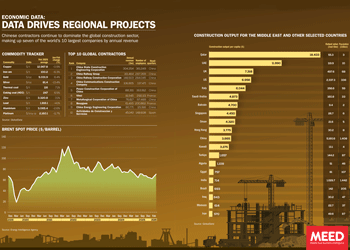
March 2026: Data drives regional projects
27 March 2026
Click here to download the PDF
Includes: Commodity tracker | Top 10 global contractors | Brent spot price | Construction output
MEED’s April 2026 report on Saudi Arabia includes:
> GVT &: ECONOMY: Riyadh navigates a changed landscape
> BANKING: Testing times for Saudi banks
> UPSTREAM: Offshore oil and gas projects to dominate Aramco capex in 2026
> DOWNSTREAM: Saudi downstream projects market enters lean period
> POWER: Wind power gathers pace in Saudi Arabia
> WATER: Sharakat plan signals next phase of Saudi water expansion
> CONSTRUCTION: Saudi construction enters a period of strategic readjustment
> TRANSPORT: Rail expansion powers Saudi Arabia’s infrastructure pushTo see previous issues of MEED Business Review, please click herehttps://image.digitalinsightresearch.in/uploads/NewsArticle/16146608/main.gif